
4 n n n closeopen questions convergentdivergent questions

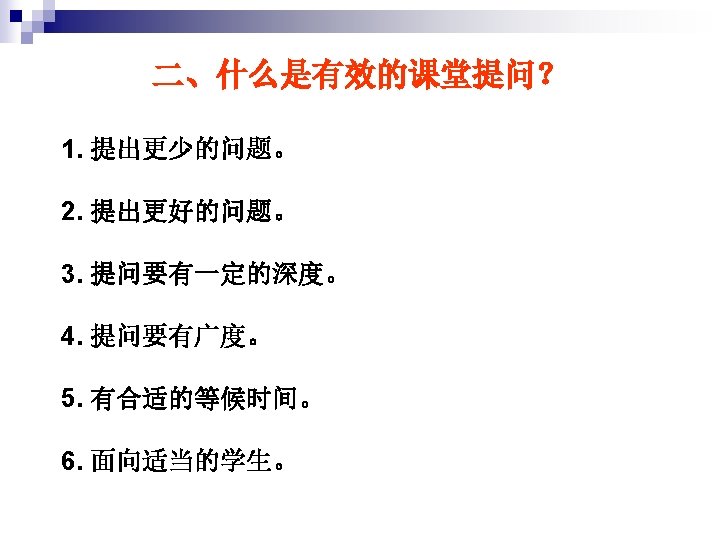
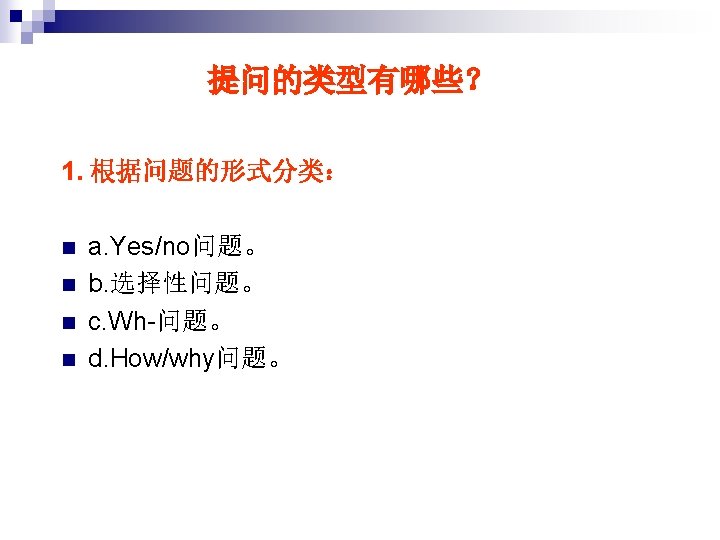
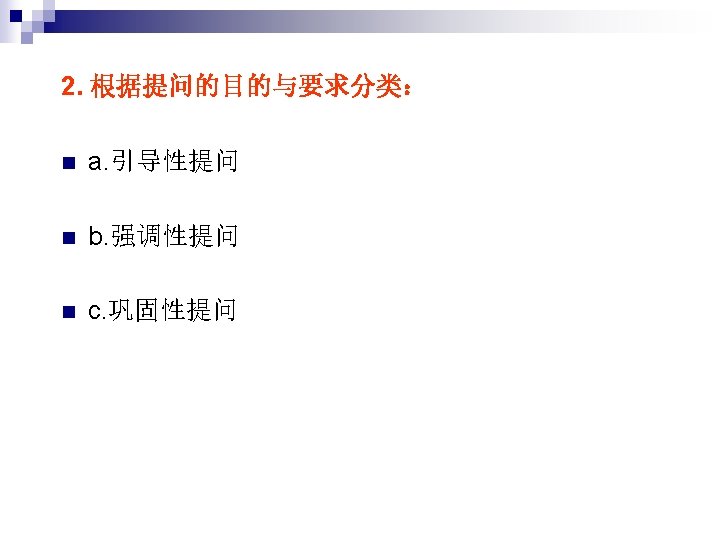
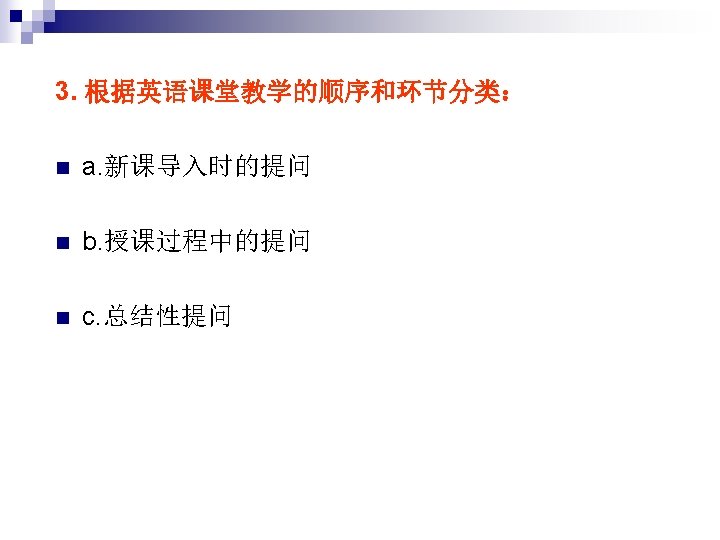
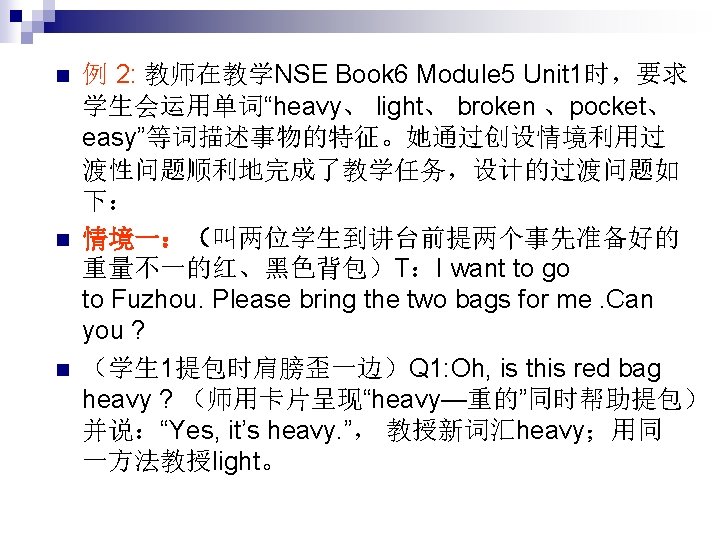
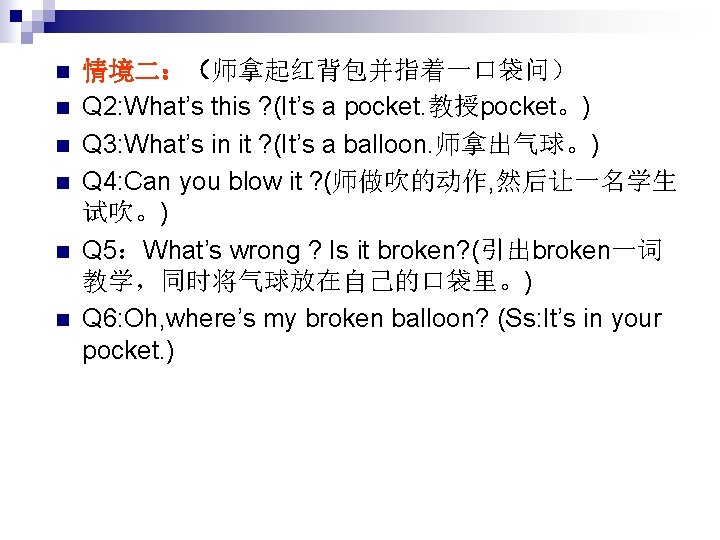
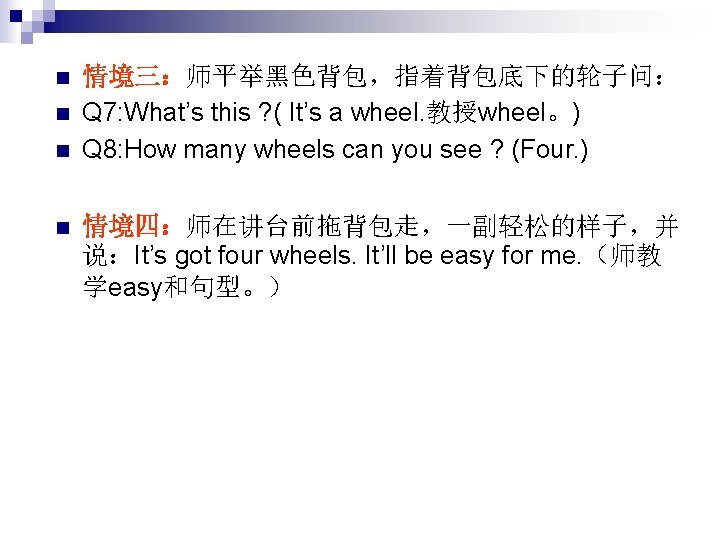
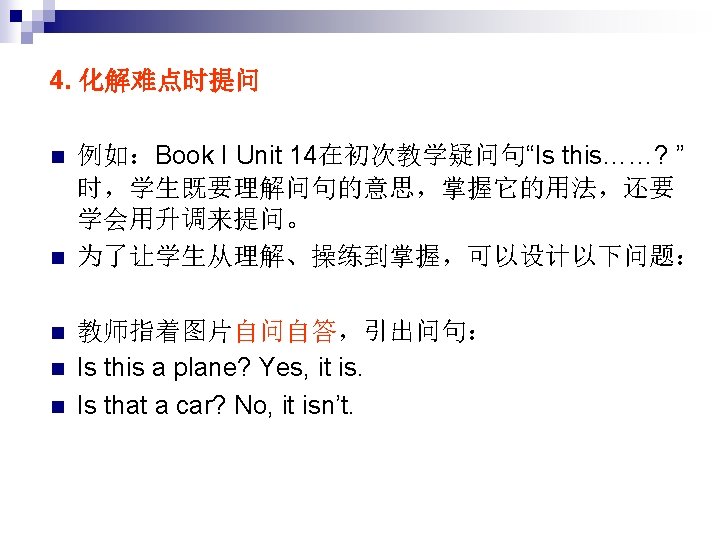
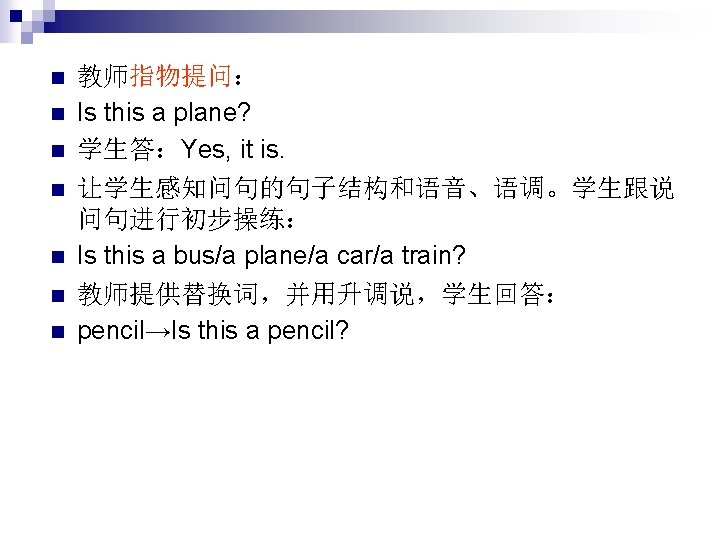
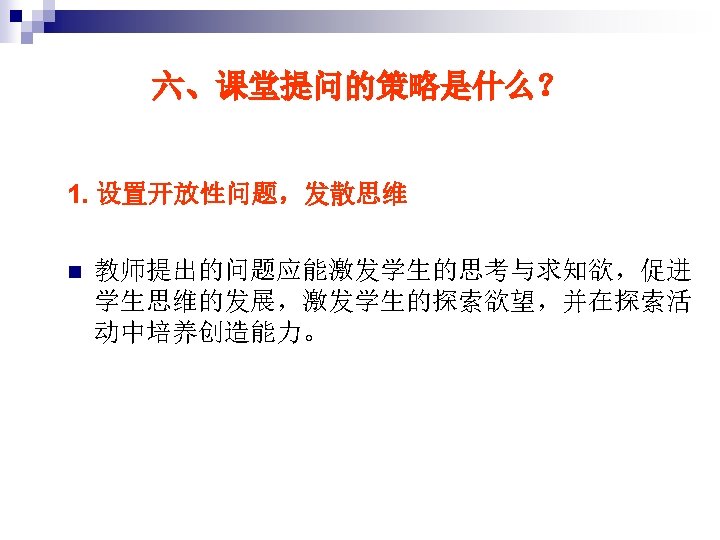
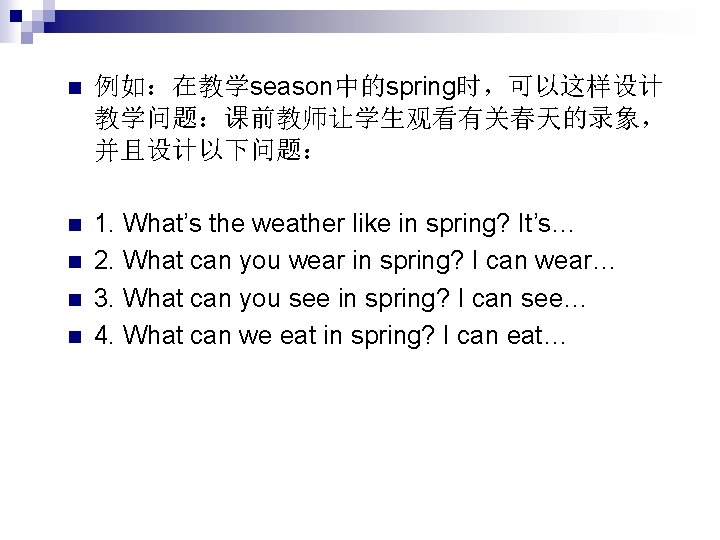
- Slides: 56
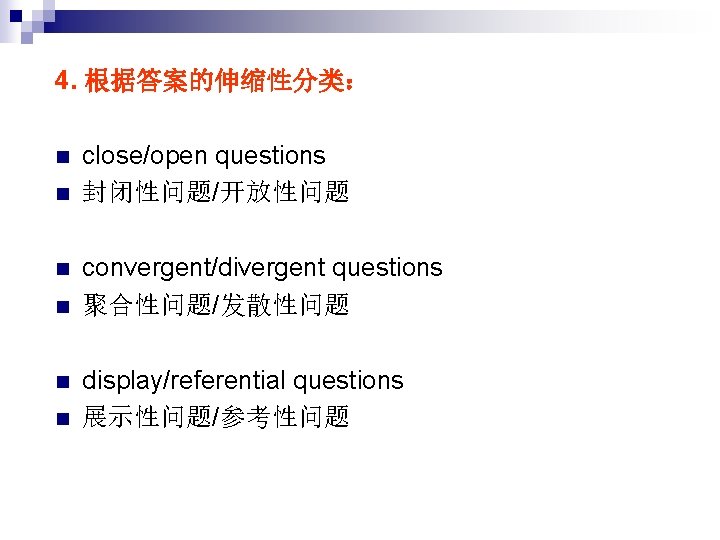
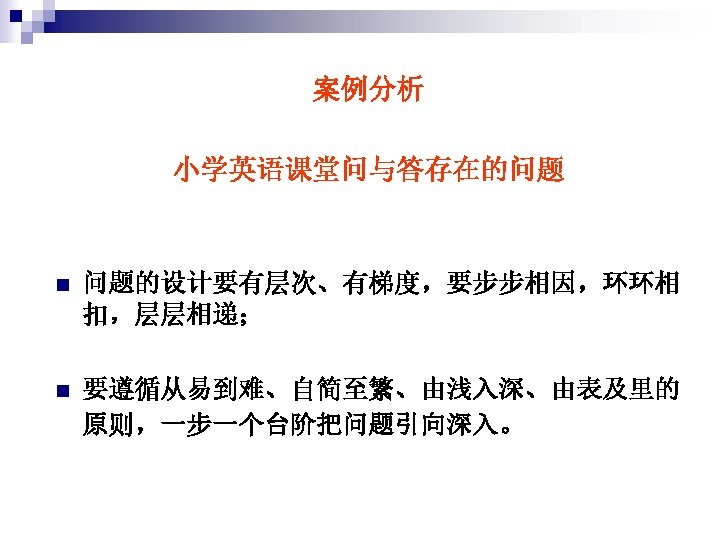
4. 根据答案的伸缩性分类: n n n close/open questions 封闭性问题/开放性问题 convergent/divergent questions 聚合性问题/发散性问题 display/referential questions 展示性问题/参考性问题
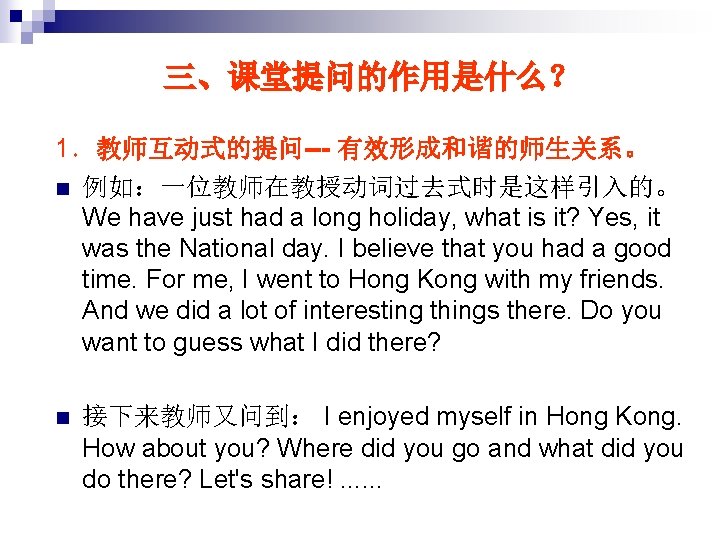
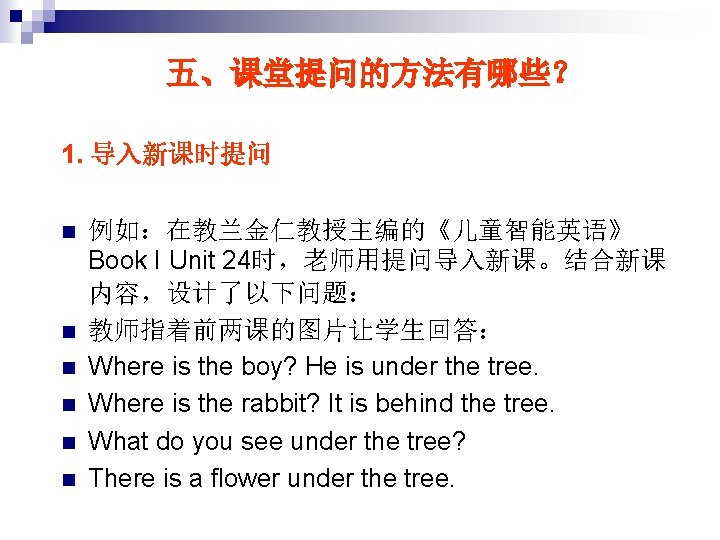
三、课堂提问的作用是什么? 1.教师互动式的提问--- 有效形成和谐的师生关系。 n 例如:一位教师在教授动词过去式时是这样引入的。 We have just had a long holiday, what is it? Yes, it was the National day. I believe that you had a good time. For me, I went to Hong Kong with my friends. And we did a lot of interesting things there. Do you want to guess what I did there? n 接下来教师又问到: I enjoyed myself in Hong Kong. How about you? Where did you go and what did you do there? Let's share!. . .
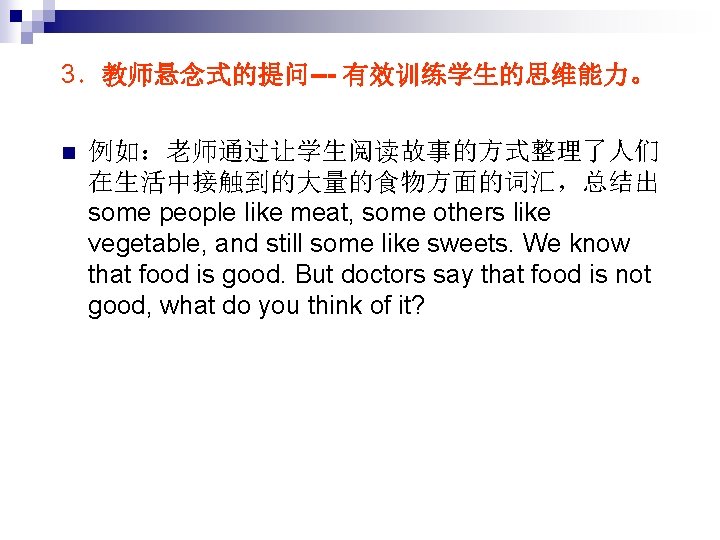
3.教师悬念式的提问--- 有效训练学生的思维能力。 n 例如:老师通过让学生阅读故事的方式整理了人们 在生活中接触到的大量的食物方面的词汇,总结出 some people like meat, some others like vegetable, and still some like sweets. We know that food is good. But doctors say that food is not good, what do you think of it?
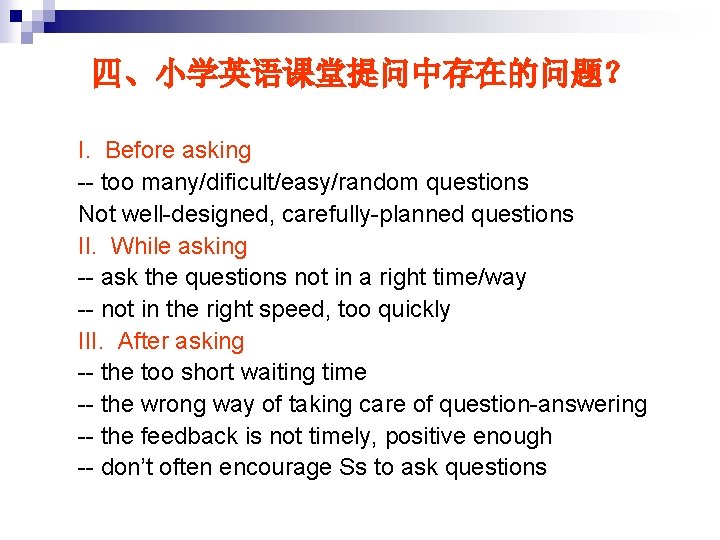
四、小学英语课堂提问中存在的问题? I. Before asking -- too many/dificult/easy/random questions Not well-designed, carefully-planned questions II. While asking -- ask the questions not in a right time/way -- not in the right speed, too quickly III. After asking -- the too short waiting time -- the wrong way of taking care of question-answering -- the feedback is not timely, positive enough -- don’t often encourage Ss to ask questions
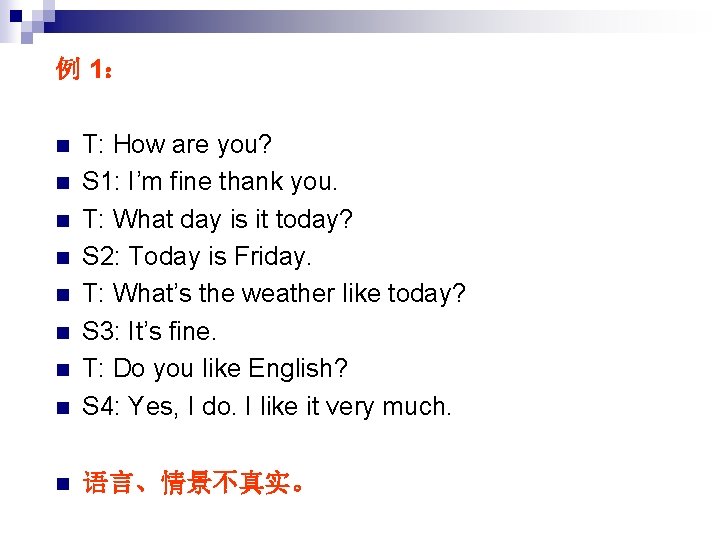
例 1: n T: How are you? S 1: I’m fine thank you. T: What day is it today? S 2: Today is Friday. T: What’s the weather like today? S 3: It’s fine. T: Do you like English? S 4: Yes, I do. I like it very much. n 语言、情景不真实。 n n n n
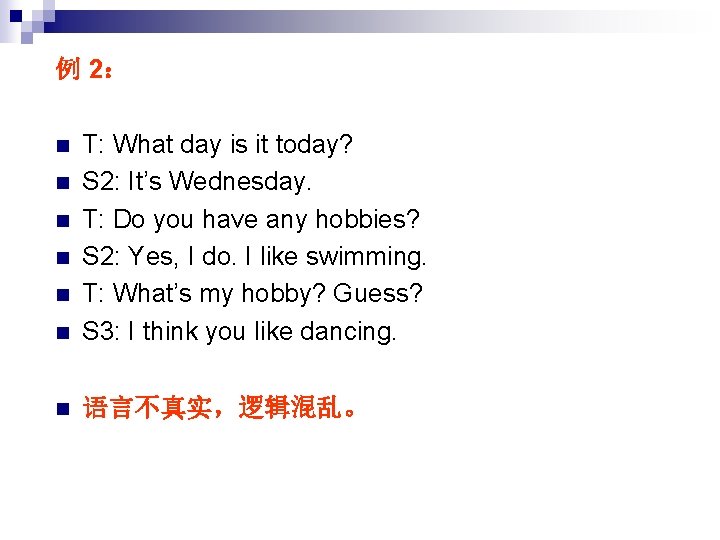
例 2: n T: What day is it today? S 2: It’s Wednesday. T: Do you have any hobbies? S 2: Yes, I do. I like swimming. T: What’s my hobby? Guess? S 3: I think you like dancing. n 语言不真实,逻辑混乱。 n n n
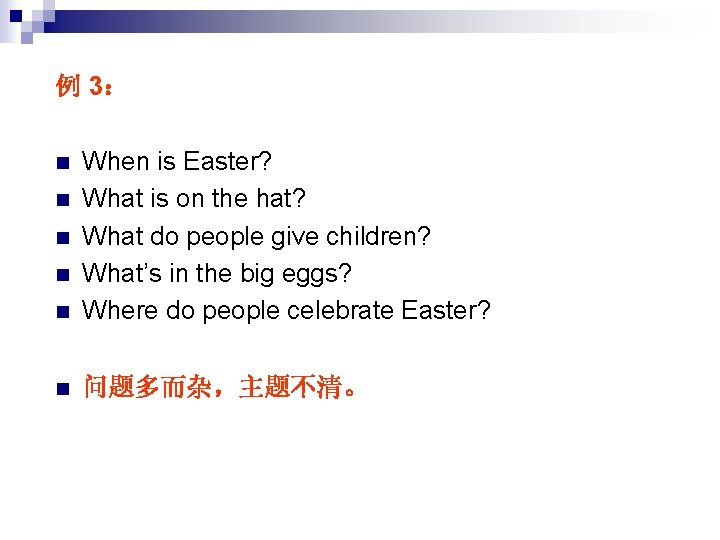
例 3: n When is Easter? What is on the hat? What do people give children? What’s in the big eggs? Where do people celebrate Easter? n 问题多而杂,主题不清。 n n
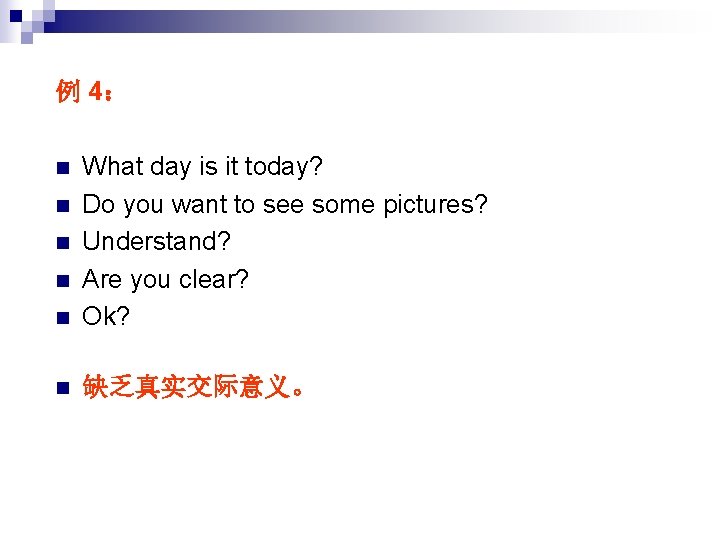
例 4: n What day is it today? Do you want to see some pictures? Understand? Are you clear? Ok? n 缺乏真实交际意义。 n n
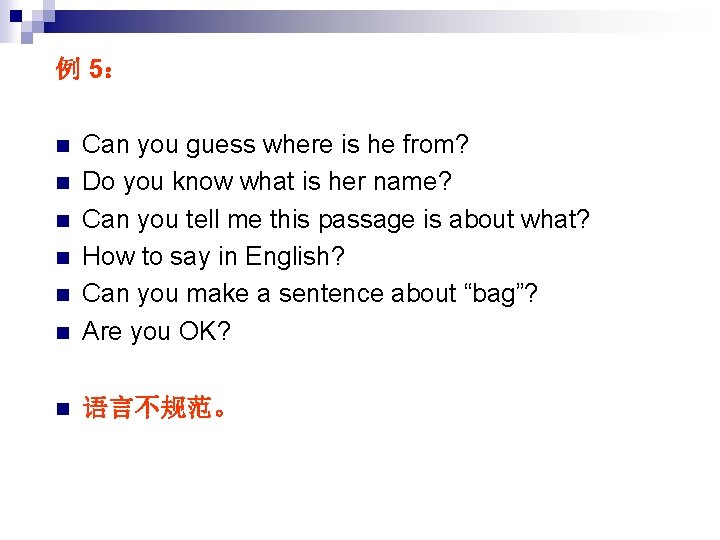
例 5: n Can you guess where is he from? Do you know what is her name? Can you tell me this passage is about what? How to say in English? Can you make a sentence about “bag”? Are you OK? n 语言不规范。 n n n
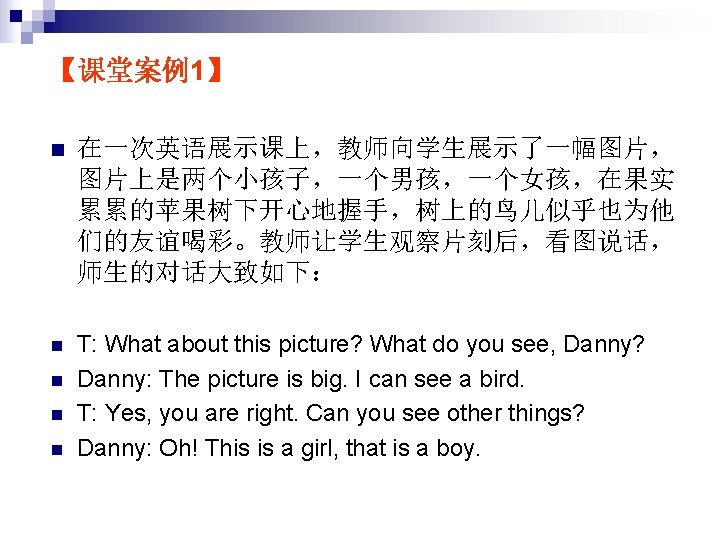
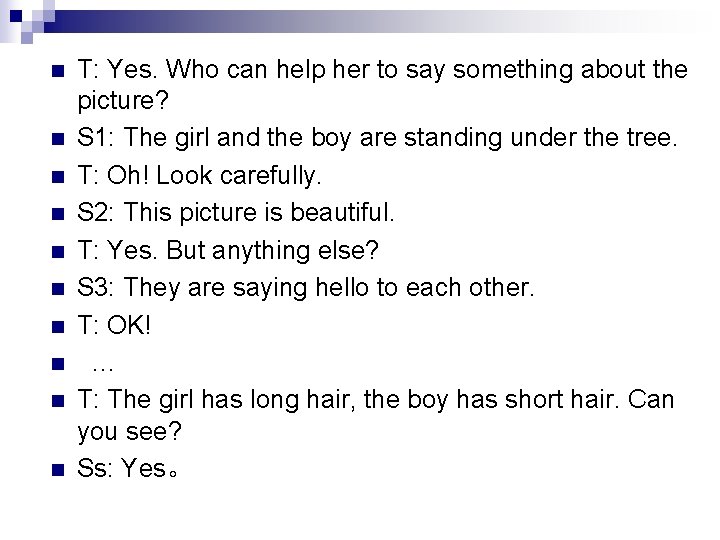
n n n n n T: Yes. Who can help her to say something about the picture? S 1: The girl and the boy are standing under the tree. T: Oh! Look carefully. S 2: This picture is beautiful. T: Yes. But anything else? S 3: They are saying hello to each other. T: OK! … T: The girl has long hair, the boy has short hair. Can you see? Ss: Yes。
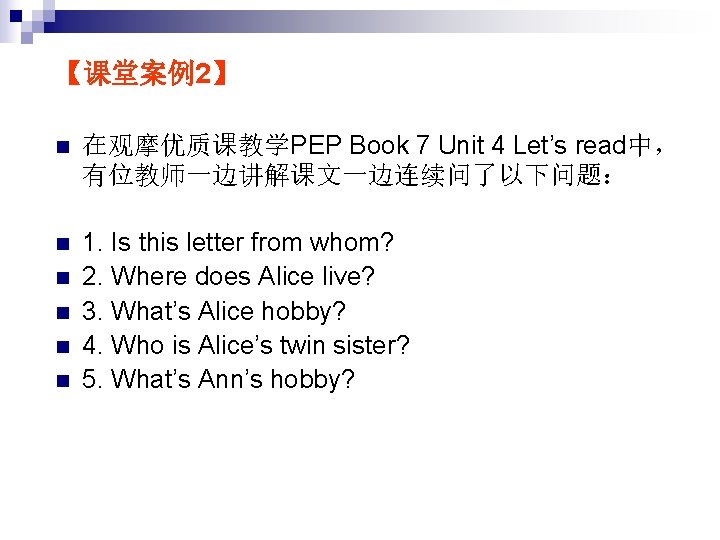
【课堂案例2】 n 在观摩优质课教学PEP Book 7 Unit 4 Let’s read中, 有位教师一边讲解课文一边连续问了以下问题: n 1. Is this letter from whom? 2. Where does Alice live? 3. What’s Alice hobby? 4. Who is Alice’s twin sister? 5. What’s Ann’s hobby? n n
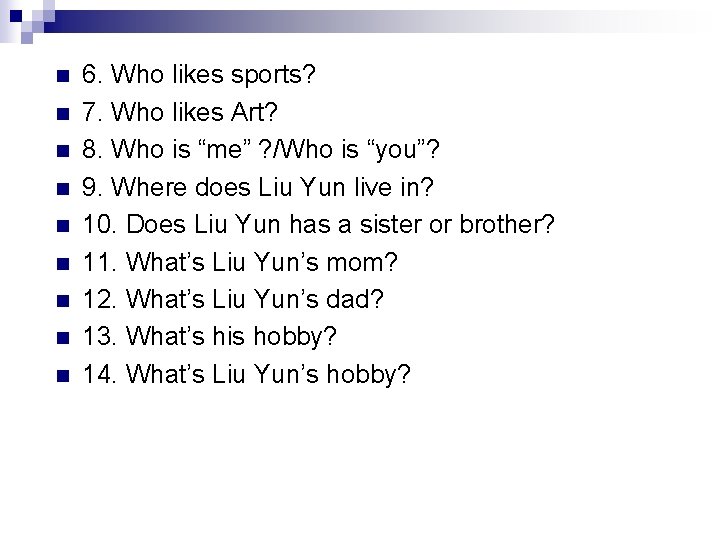
n n n n n 6. Who likes sports? 7. Who likes Art? 8. Who is “me” ? /Who is “you”? 9. Where does Liu Yun live in? 10. Does Liu Yun has a sister or brother? 11. What’s Liu Yun’s mom? 12. What’s Liu Yun’s dad? 13. What’s his hobby? 14. What’s Liu Yun’s hobby?
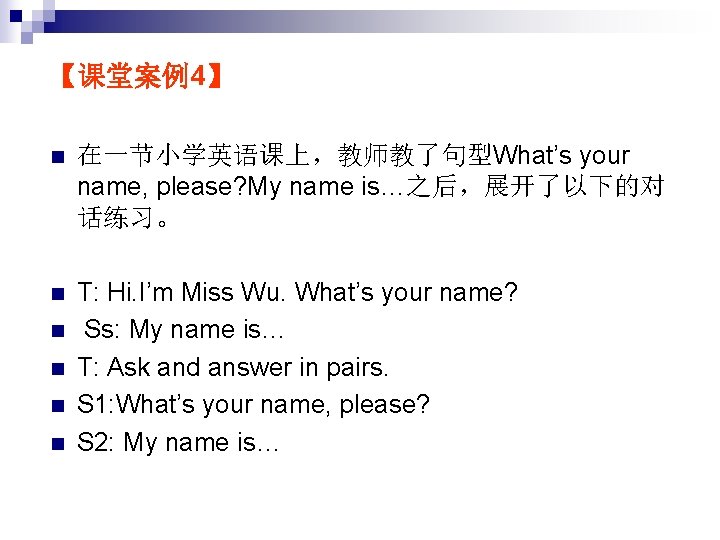
【课堂案例4】 n 在一节小学英语课上,教师教了句型What’s your name, please? My name is…之后,展开了以下的对 话练习。 n T: Hi. I’m Miss Wu. What’s your name? Ss: My name is… T: Ask and answer in pairs. S 1: What’s your name, please? S 2: My name is… n n
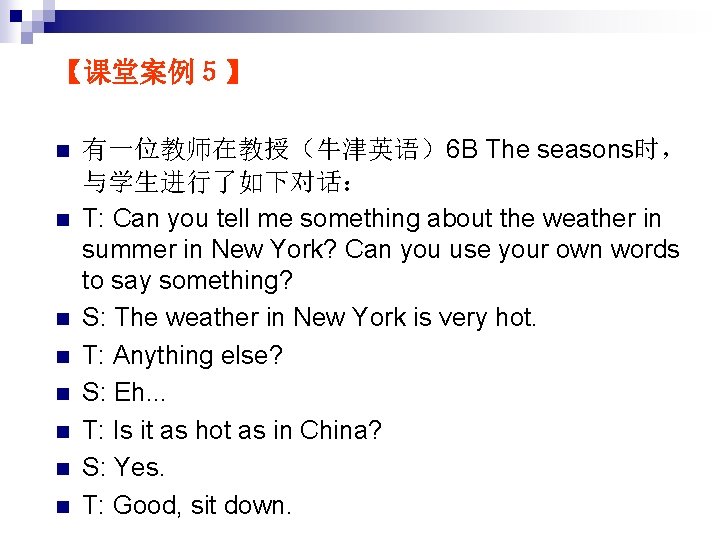
【课堂案例5】 n n n n 有一位教师在教授(牛津英语)6 B The seasons时, 与学生进行了如下对话: T: Can you tell me something about the weather in summer in New York? Can you use your own words to say something? S: The weather in New York is very hot. T: Anything else? S: Eh. . . T: Is it as hot as in China? S: Yes. T: Good, sit down.
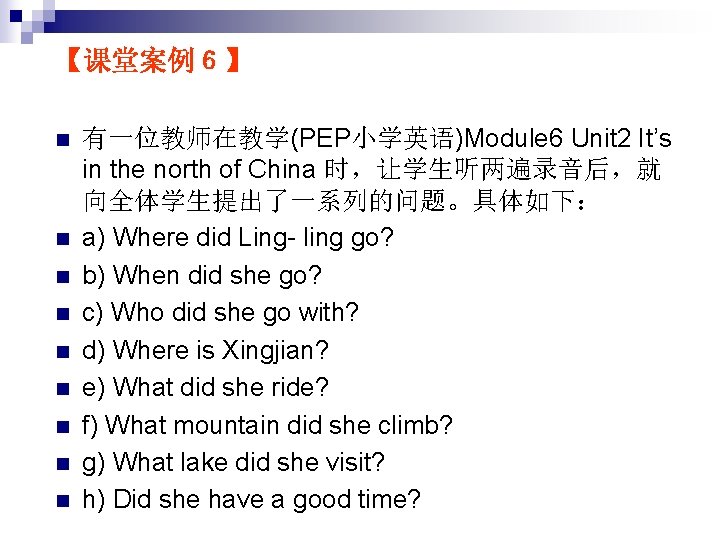
【课堂案例6】 n n n n n 有一位教师在教学(PEP小学英语)Module 6 Unit 2 It’s in the north of China 时,让学生听两遍录音后,就 向全体学生提出了一系列的问题。具体如下: a) Where did Ling- ling go? b) When did she go? c) Who did she go with? d) Where is Xingjian? e) What did she ride? f) What mountain did she climb? g) What lake did she visit? h) Did she have a good time?
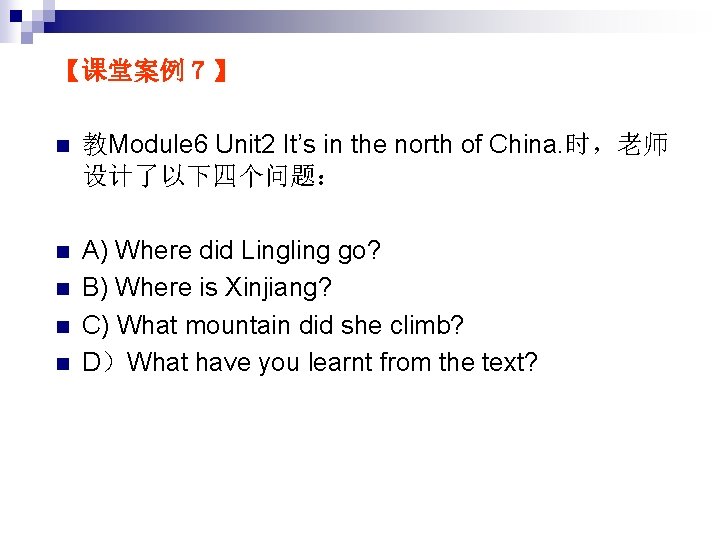
【课堂案例7】 n 教Module 6 Unit 2 It’s in the north of China. 时,老师 设计了以下四个问题: n A) Where did Lingling go? B) Where is Xinjiang? C) What mountain did she climb? D)What have you learnt from the text? n n n
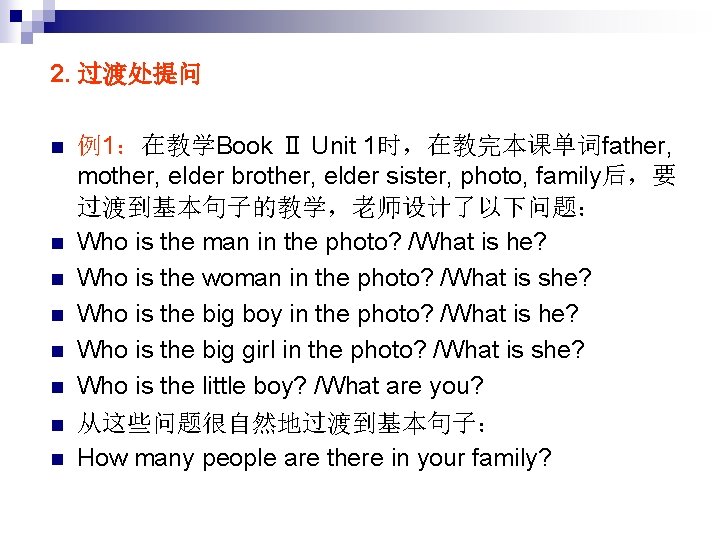
2. 过渡处提问 n n n n 例1:在教学Book Ⅱ Unit 1时,在教完本课单词father, mother, elder brother, elder sister, photo, family后,要 过渡到基本句子的教学,老师设计了以下问题: Who is the man in the photo? /What is he? Who is the woman in the photo? /What is she? Who is the big boy in the photo? /What is he? Who is the big girl in the photo? /What is she? Who is the little boy? /What are you? 从这些问题很自然地过渡到基本句子: How many people are there in your family?
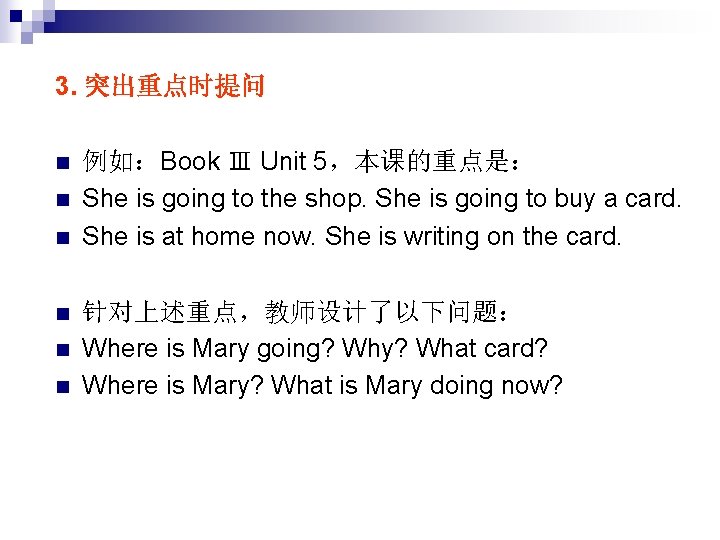
3. 突出重点时提问 n n n 例如:Book Ⅲ Unit 5,本课的重点是: She is going to the shop. She is going to buy a card. She is at home now. She is writing on the card. 针对上述重点,教师设计了以下问题: Where is Mary going? Why? What card? Where is Mary? What is Mary doing now?
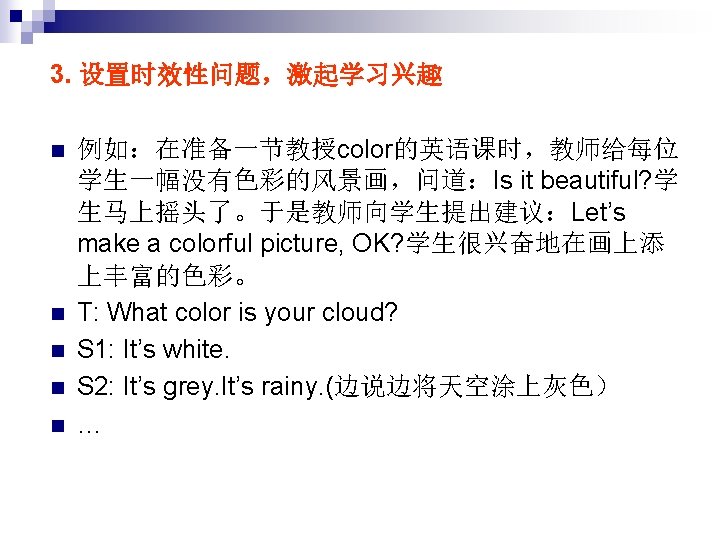
n 例如:在教学season中的spring时,可以这样设计 教学问题:课前教师让学生观看有关春天的录象, 并且设计以下问题: n 1. What’s the weather like in spring? It’s… 2. What can you wear in spring? I can wear… 3. What can you see in spring? I can see… 4. What can we eat in spring? I can eat… n n n
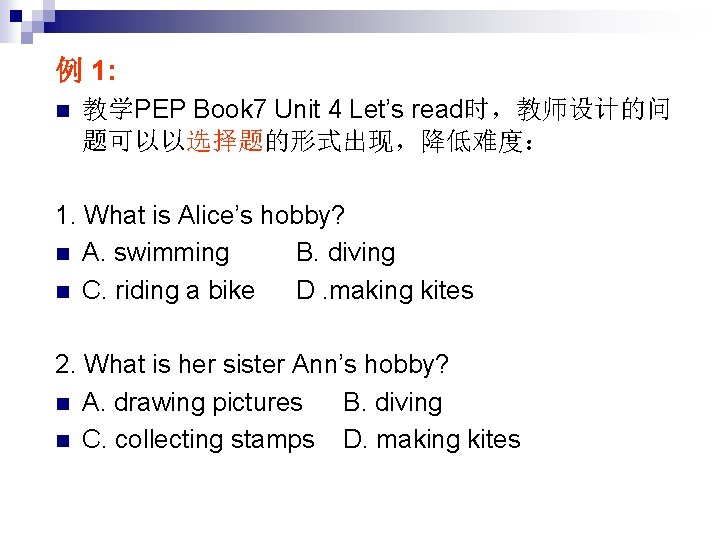
例 1: n 教学PEP Book 7 Unit 4 Let’s read时,教师设计的问 题可以以选择题的形式出现,降低难度: 1. What is Alice’s hobby? n A. swimming B. diving n C. riding a bike D. making kites 2. What is her sister Ann’s hobby? n A. drawing pictures B. diving n C. collecting stamps D. making kites
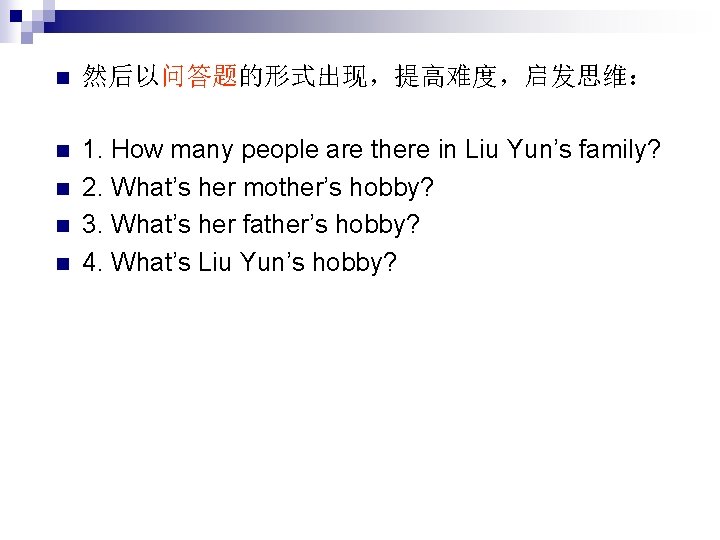
n 然后以问答题的形式出现,提高难度,启发思维: n 1. How many people are there in Liu Yun’s family? 2. What’s her mother’s hobby? 3. What’s her father’s hobby? 4. What’s Liu Yun’s hobby? n n n
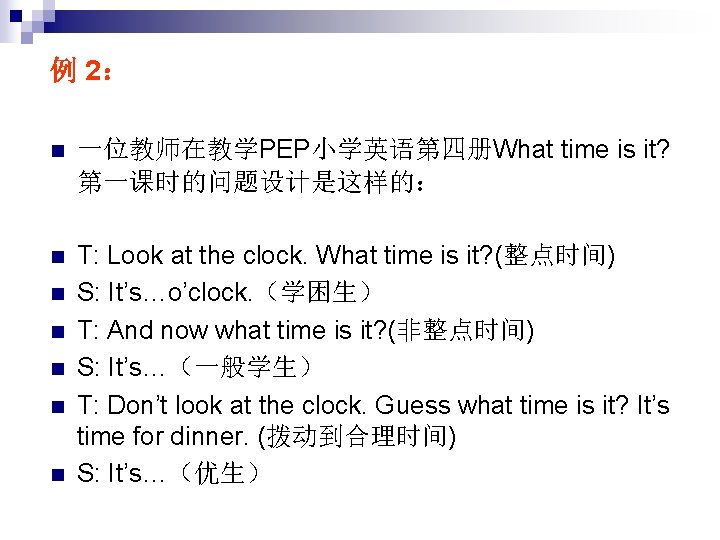
例 2: n 一位教师在教学PEP小学英语第四册What time is it? 第一课时的问题设计是这样的: n T: Look at the clock. What time is it? (整点时间) S: It’s…o’clock. (学困生) T: And now what time is it? (非整点时间) S: It’s…(一般学生) T: Don’t look at the clock. Guess what time is it? It’s time for dinner. (拨动到合理时间) S: It’s…(优生) n n n
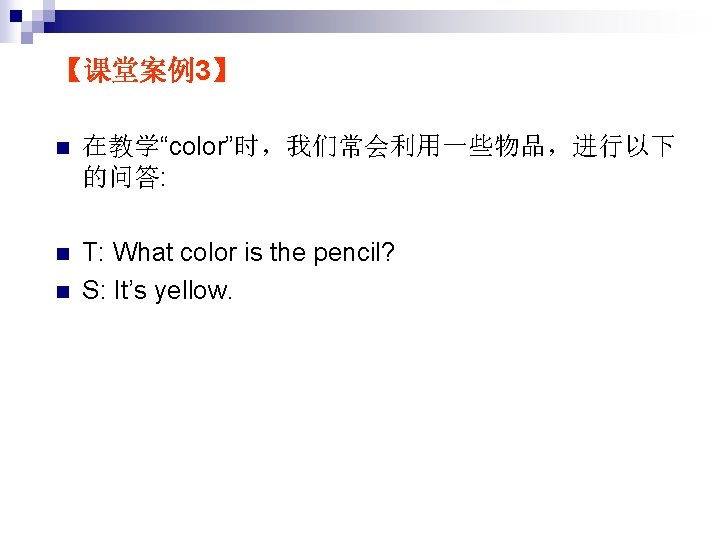
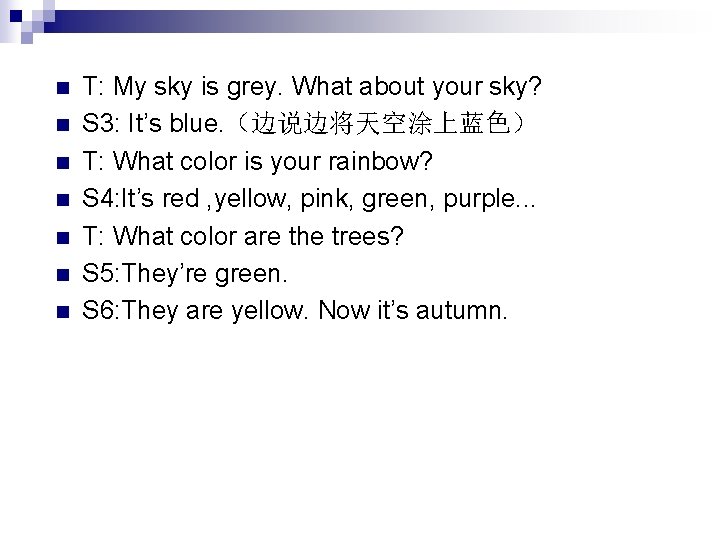
n n n n T: My sky is grey. What about your sky? S 3: It’s blue. (边说边将天空涂上蓝色) T: What color is your rainbow? S 4: It’s red , yellow, pink, green, purple. . . T: What color are the trees? S 5: They’re green. S 6: They are yellow. Now it’s autumn.
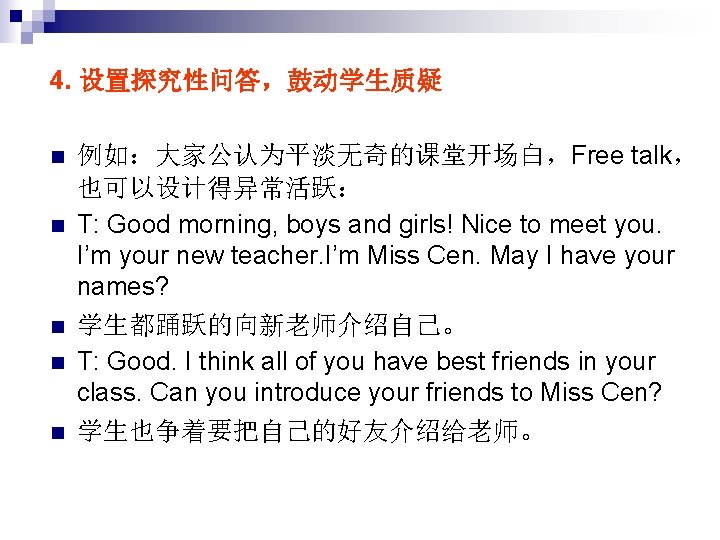
4. 设置探究性问答,鼓动学生质疑 n n n 例如:大家公认为平淡无奇的课堂开场白,Free talk, 也可以设计得异常活跃: T: Good morning, boys and girls! Nice to meet you. I’m your new teacher. I’m Miss Cen. May I have your names? 学生都踊跃的向新老师介绍自己。 T: Good. I think all of you have best friends in your class. Can you introduce your friends to Miss Cen? 学生也争着要把自己的好友介绍给老师。
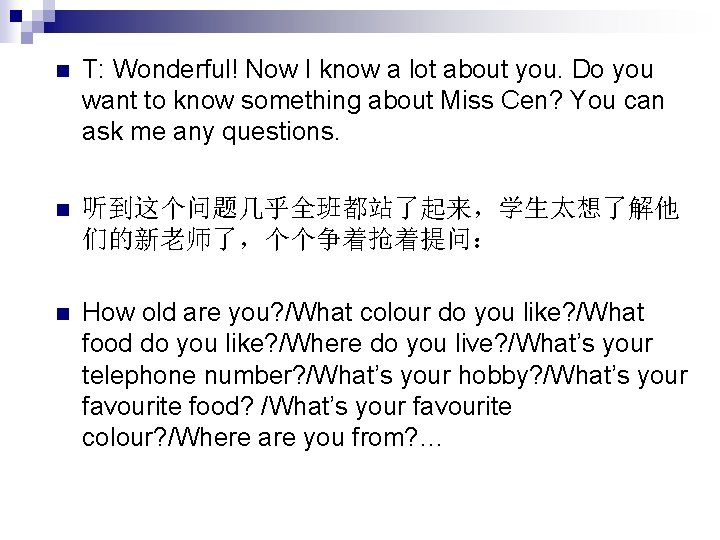
n T: Wonderful! Now I know a lot about you. Do you want to know something about Miss Cen? You can ask me any questions. n 听到这个问题几乎全班都站了起来,学生太想了解他 们的新老师了,个个争着抢着提问: n How old are you? /What colour do you like? /What food do you like? /Where do you live? /What’s your telephone number? /What’s your hobby? /What’s your favourite food? /What’s your favourite colour? /Where are you from? …
Thanks for your attention!