
4 Market Outcomes and Tax Incidence Previously Different


- Slides: 53
4 Market Outcomes and Tax Incidence
Previously • Different elasticity measures: – – Price elasticity of demand Income elasticity of demand Cross-price elasticity of demand Price elasticity of supply • Adding elasticity to our demand-supply models provides additional insight.
Dutch Auction • Before we begin some new material, we are going to auction off this bundle of goods. – We will hold a Dutch auction. – Note that prices start high and fall. – The first one to bid at the current price wins and pays that price.
Big Questions 1. What are consumer surplus and producer surplus? 2. When is a market efficient? 3. Why do taxes create deadweight loss in otherwise efficient markets?
What Are Consumer and Producer Surplus? • Welfare economics – The study of how the allocation of resources affects economic well-being • Welfare is composed of two measures of market value: – Consumer surplus – Producer surplus
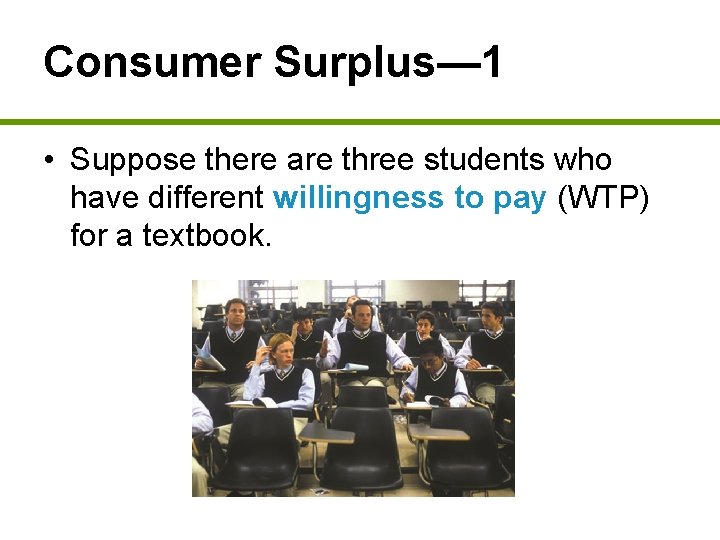
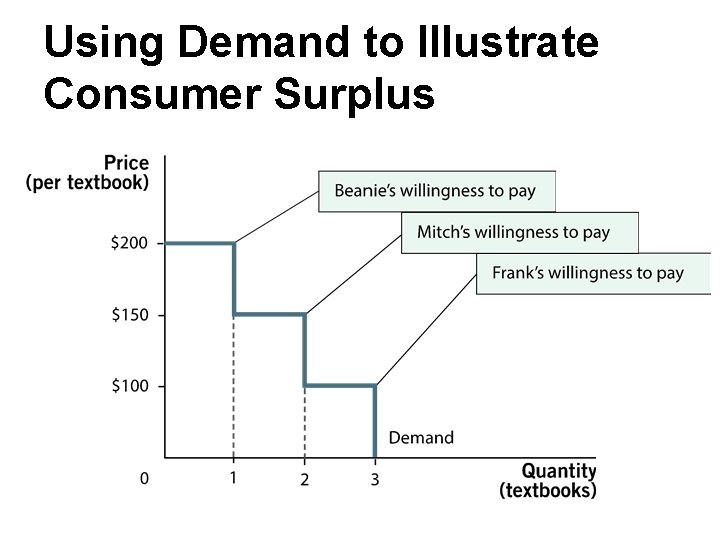
Consumer Surplus— 1 • Suppose there are three students who have different willingness to pay (WTP) for a textbook.
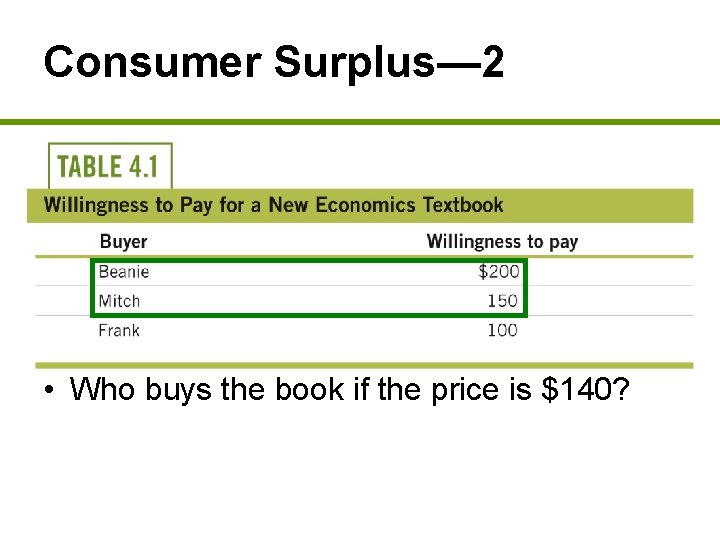
Consumer Surplus— 2 • Who buys the book if the price is $140?
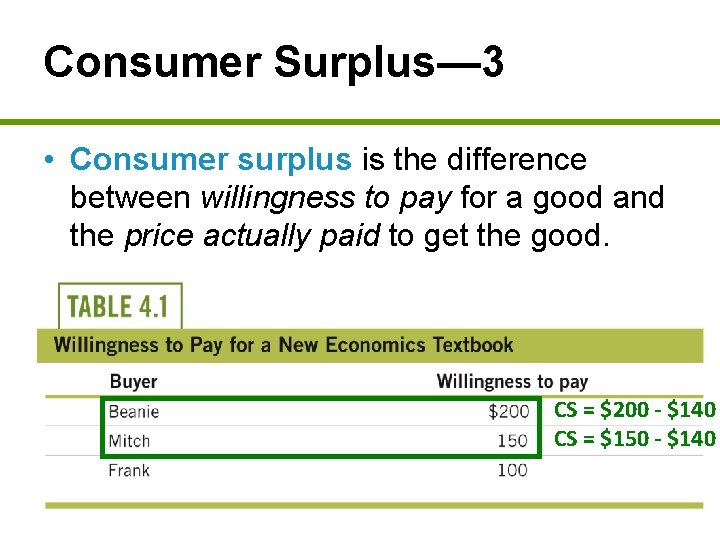
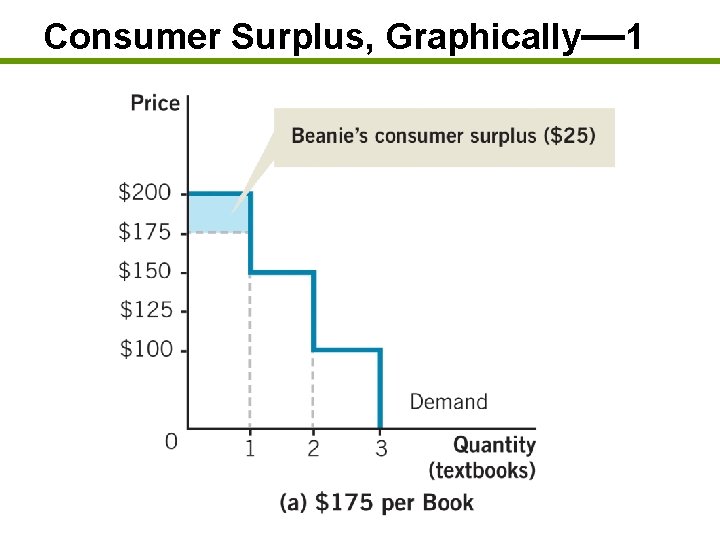
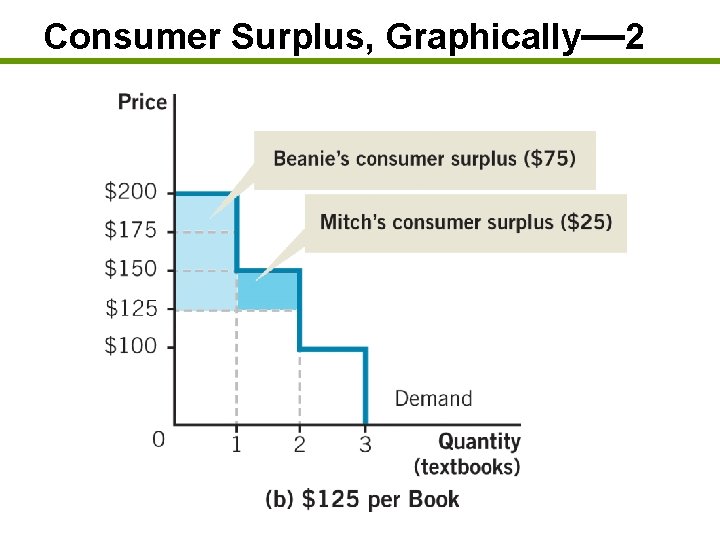
Consumer Surplus— 3 • Consumer surplus is the difference between willingness to pay for a good and the price actually paid to get the good. CS = $200 - $140 CS = $150 - $140
Using Demand to Illustrate Consumer Surplus
Consumer Surplus, Graphically— 1
Consumer Surplus, Graphically— 2
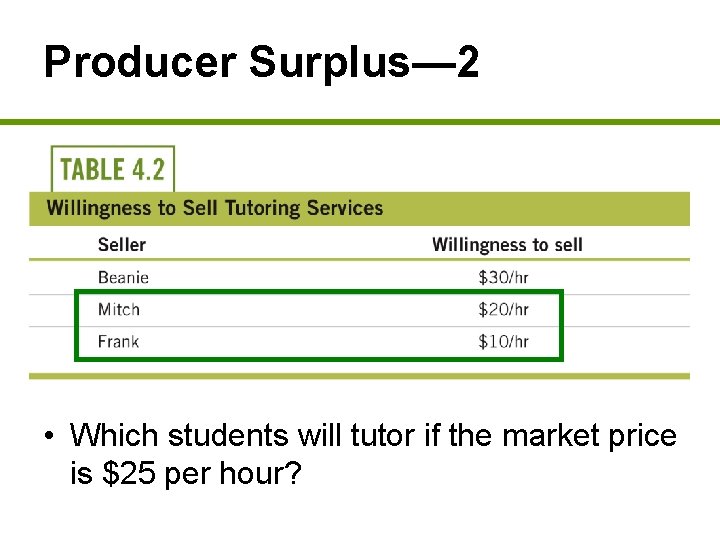
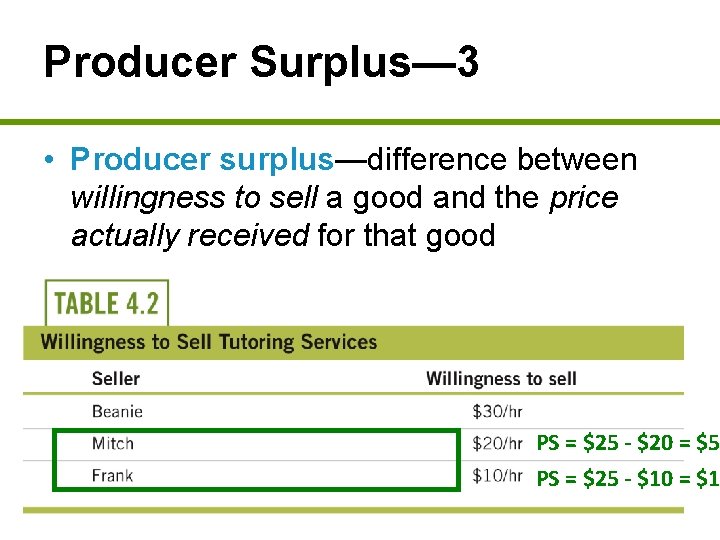
Producer Surplus— 1 • Instead of buying a textbook, suppose Beanie, Mitch, and Frank are thinking about tutoring. • What is their willingness to sell (WTS)?
Producer Surplus— 2 • Which students will tutor if the market price is $25 per hour?
Producer Surplus— 3 • Producer surplus—difference between willingness to sell a good and the price actually received for that good PS = $25 - $20 = $5 PS = $25 - $10 = $1
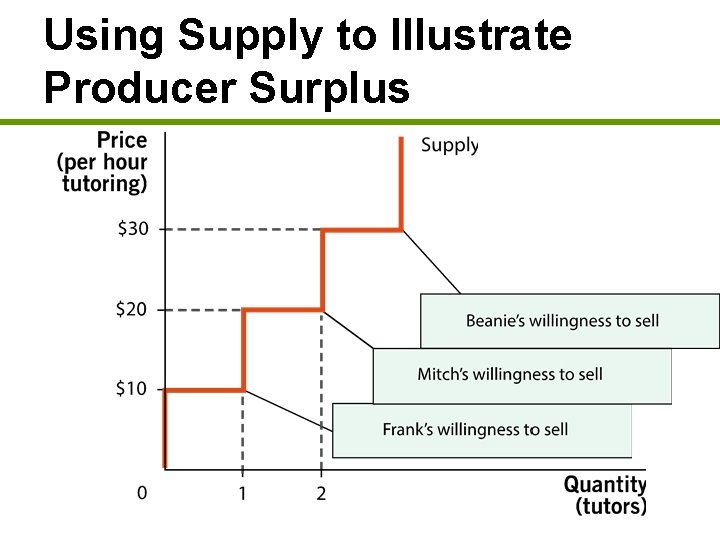
Using Supply to Illustrate Producer Surplus
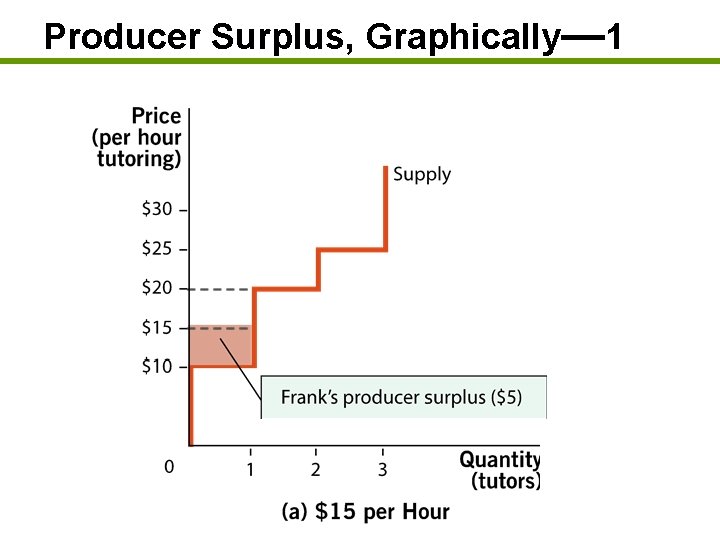
Producer Surplus, Graphically— 1
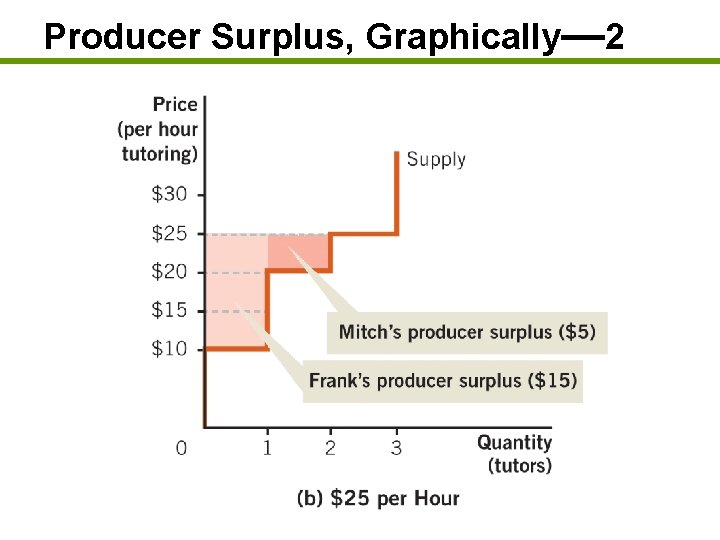
Producer Surplus, Graphically— 2
Practice What You Know— 1 • The height of the demand curve at any quantity can be thought of as the A. willingness to buy. B. willingness to sell. C. consumer surplus. D. producer surplus.
Practice What You Know— 2 • The difference between the price the good was sold at and the minimum price the firm would have accepted for the good is called A. willingness to sell. B. product markup. C. producer surplus. D. price-cost margin.
Economics in The Bourne Identity • How much money would you want for driving a stranger to Paris?
Economics in Just Go With It • How much would you want to be paid to pretend you are someone’s daughter or son?
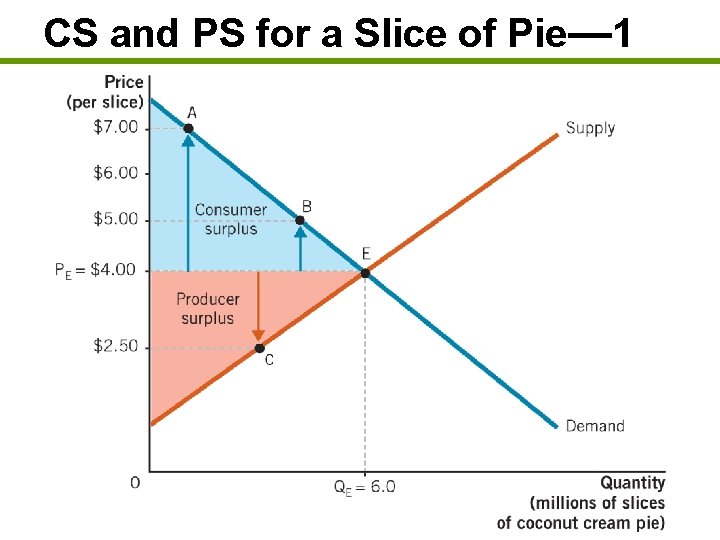
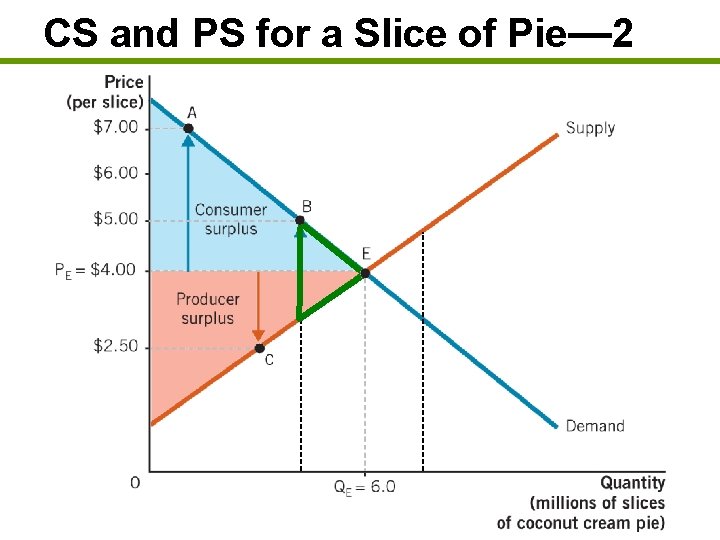
When Is a Market Efficient? • How do economists measure social welfare? – Total surplus = CS + PS – CS and PS represents the gains from participating in the market. – Want to show total surplus is maximized in markets without government intervention – An outcome is efficient when an allocation of resources maximizes total surplus.
CS and PS for a Slice of Pie— 1
CS and PS for a Slice of Pie— 2
Economics in The Office, “Christmas Party” • Secret Santa versus Yankee Swap
Music Break: The Beatles, “Taxman” • How do taxes influence people’s behavior?
Taxation, Welfare, and Deadweight Loss • Why do we pay taxes? • What are some different types of taxes? • What are excise taxes?
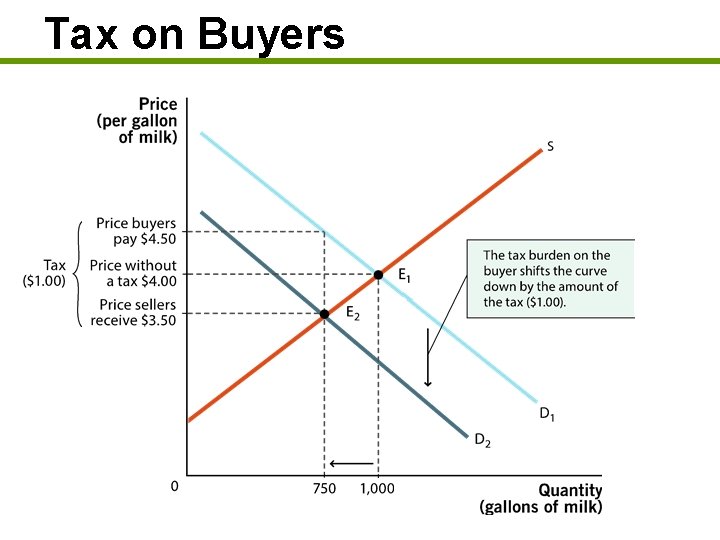
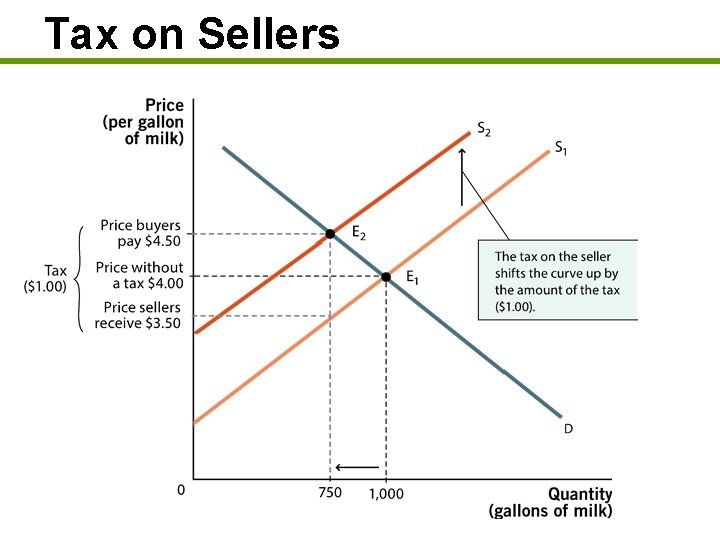
Tax Incidence • Suppose the government imposes an excise tax on milk. – Who pays for the tax? • Tax incidence – The burden of taxation on the party who pays the tax through higher prices – Occurs regardless of whom the tax is actually levied on
Tax on Buyers
Tax on Sellers
Comparing Both Cases • Tax levied on consumers: – Some of the burden is passed to producers since the market price falls. • Tax levied on a business: – The firm will attempt to raise prices to pass some of the burden to consumers. • Incidence: – Incidence is the same.
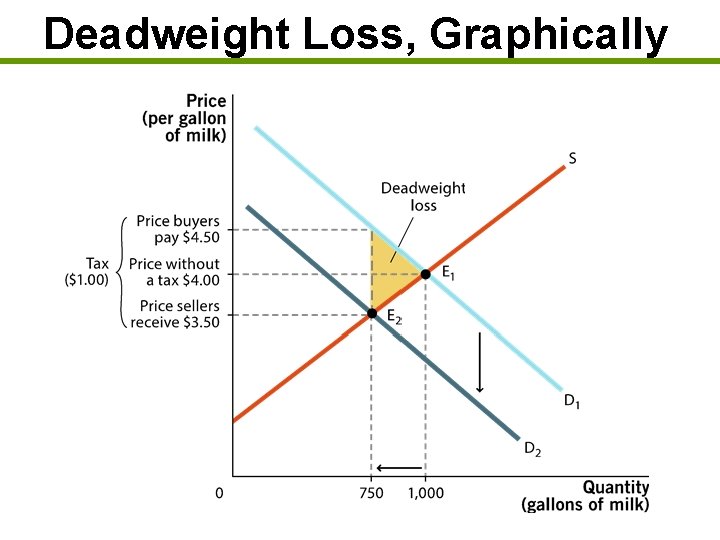
Deadweight Loss • So far we have shown that a tax hurts both buyers and sellers. – Buyers pay a higher price, and sellers receive a lower price. • What did we miss? • Deadweight loss: – The decrease in economic activity caused by market distortions.
Deadweight Loss, Graphically
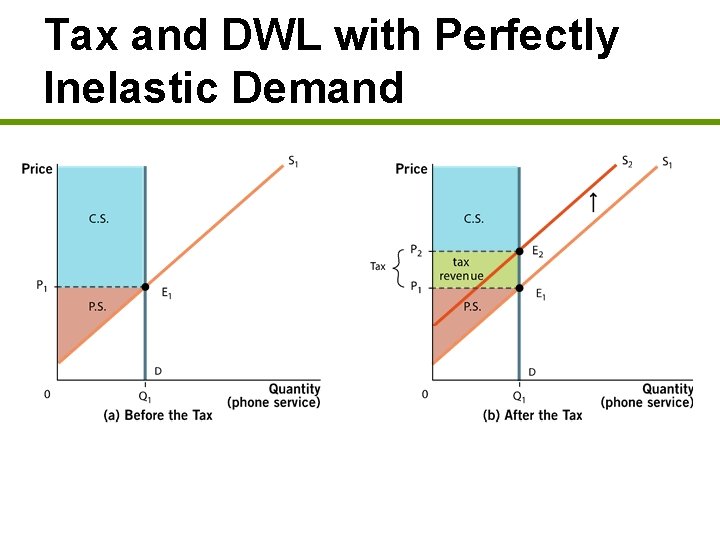
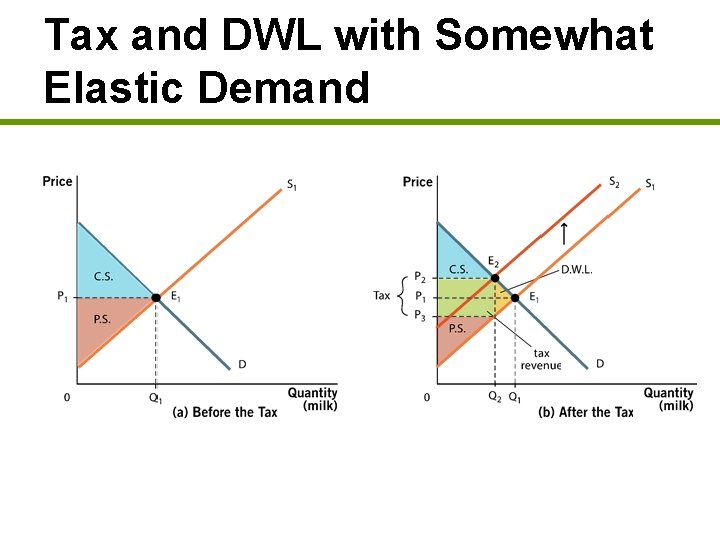
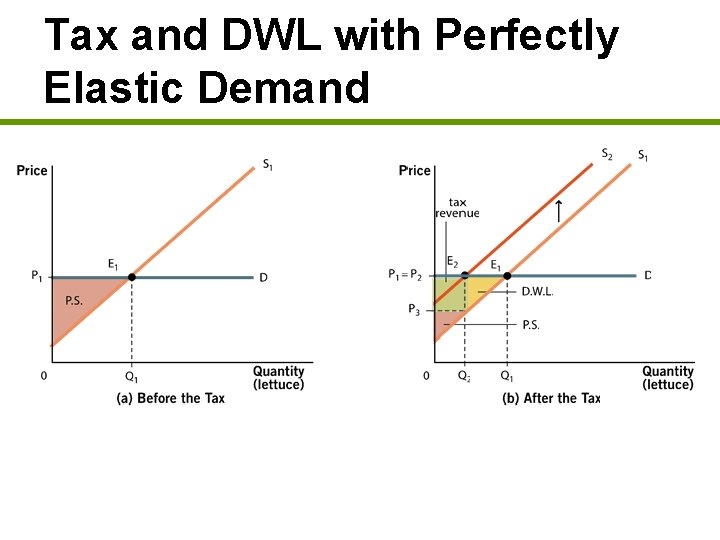
Tax, Deadweight Loss, and Elasticity— 1 • How does tax incidence and DWL change depend on the elasticity of demand? – When demand is inelastic (elastic), QD is relatively unresponsive (responsive) to a change in price. – The more inelastic demand is, the greater the burden on consumers and the smaller the DWL.
Tax and DWL with Perfectly Inelastic Demand
Tax, Deadweight Loss, and Elasticity— 2 • Why would the government want to tax a good with almost perfectly inelastic demand? – No substitution (ensures steady tax revenue) – Purchases will not change very much – So that there is little or no deadweight loss – Do we tax Brussels sprouts or cigarettes?
Tax and DWL with Somewhat Elastic Demand
Tax and DWL with Perfectly Elastic Demand
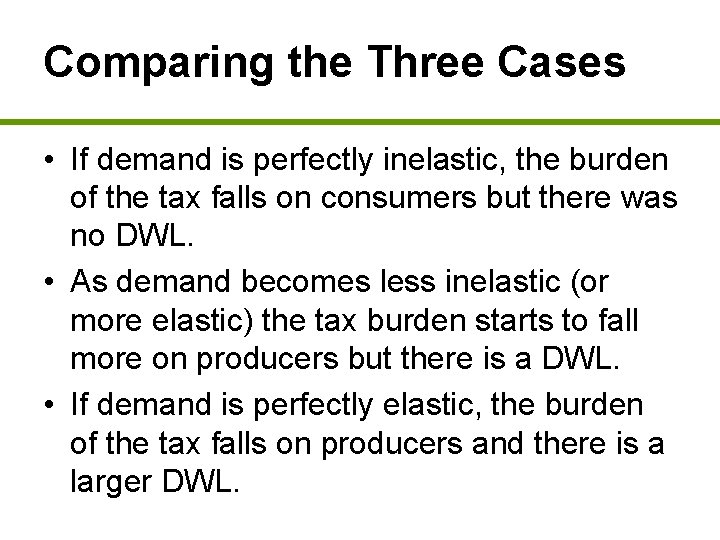
Comparing the Three Cases • If demand is perfectly inelastic, the burden of the tax falls on consumers but there was no DWL. • As demand becomes less inelastic (or more elastic) the tax burden starts to fall more on producers but there is a DWL. • If demand is perfectly elastic, the burden of the tax falls on producers and there is a larger DWL.
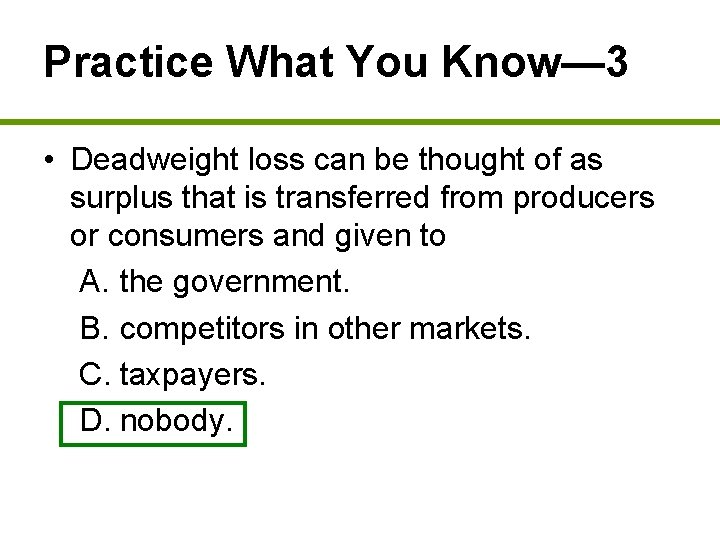
Practice What You Know— 3 • Deadweight loss can be thought of as surplus that is transferred from producers or consumers and given to A. the government. B. competitors in other markets. C. taxpayers. D. nobody.
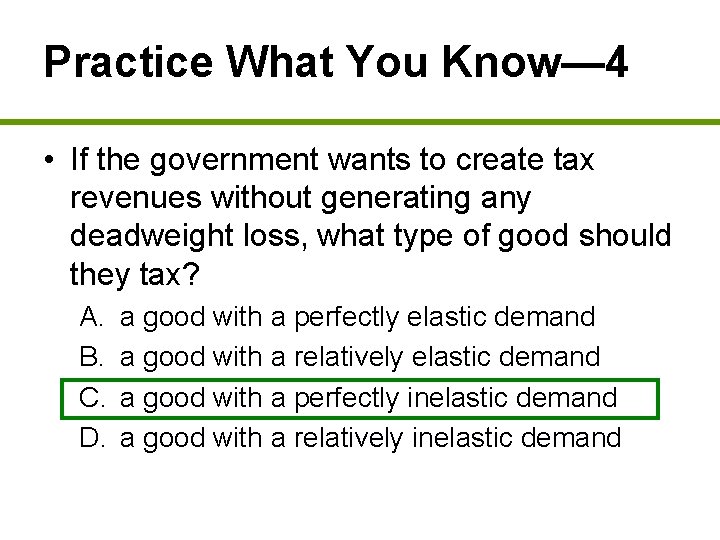
Practice What You Know— 4 • If the government wants to create tax revenues without generating any deadweight loss, what type of good should they tax? A. B. C. D. a good with a perfectly elastic demand a good with a relatively elastic demand a good with a perfectly inelastic demand a good with a relatively inelastic demand
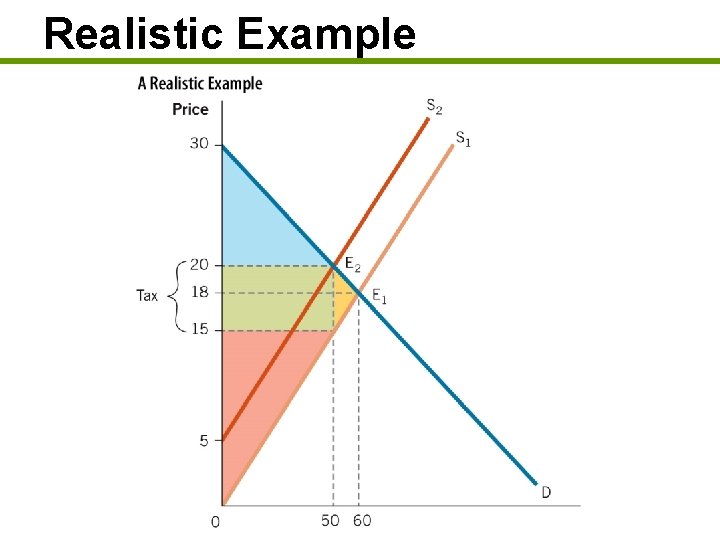
Interaction of Demand Supply Elasticity • What would happen if we varied the elasticity of the supply curve as well as the demand curve? • Compare the elasticity of demand with the elasticity of supply.
Realistic Example
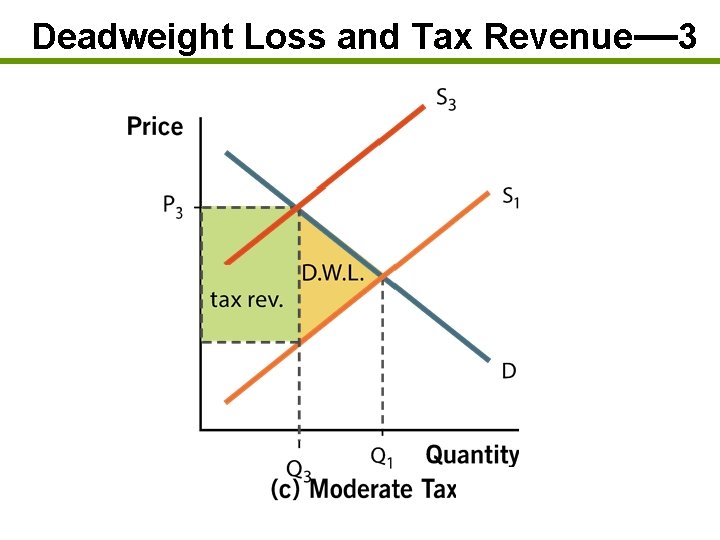
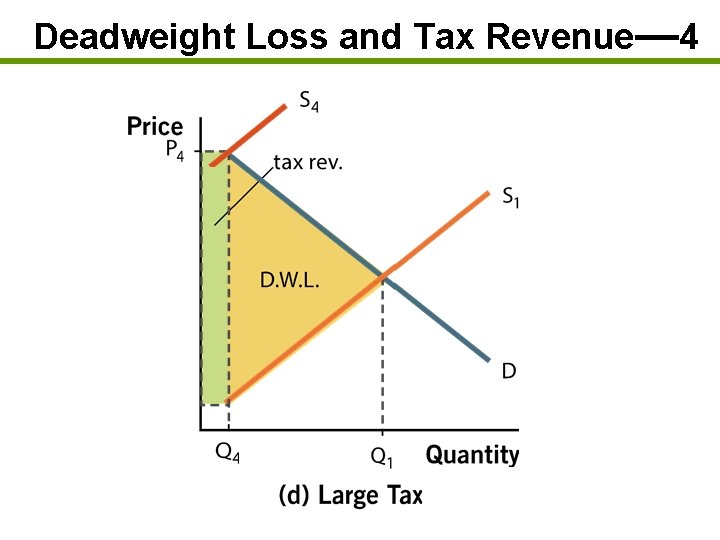
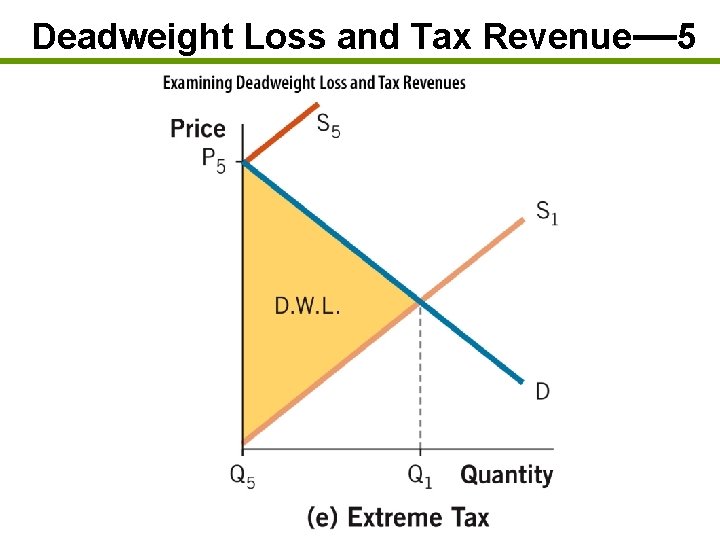
Balancing Deadweight Loss and Tax Revenues • What happens if the government increases a tax? – Tradeoff between tax revenue and DWL • Ireland (2002): 15 cent tax on plastic bags
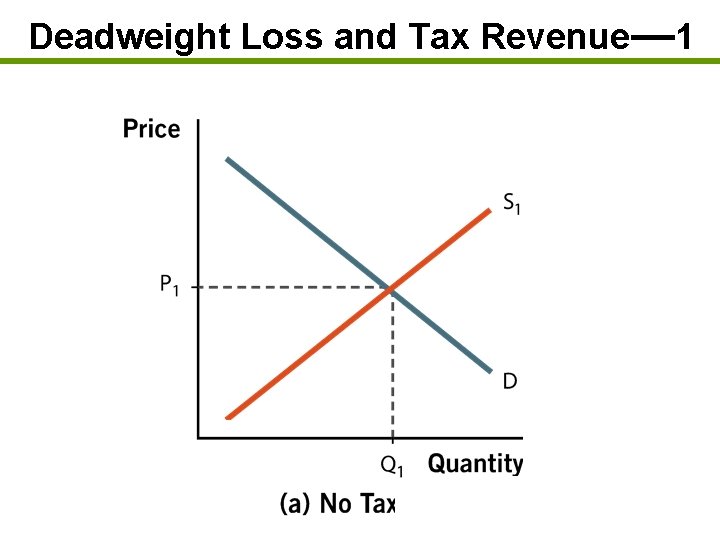
Deadweight Loss and Tax Revenue— 1
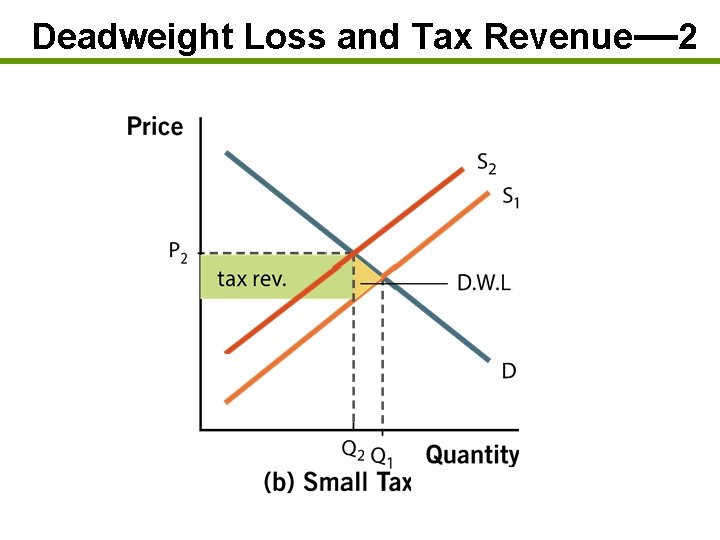
Deadweight Loss and Tax Revenue— 2
Deadweight Loss and Tax Revenue— 3
Deadweight Loss and Tax Revenue— 4
Deadweight Loss and Tax Revenue— 5
Real-World Example: Smoking Tax versus Smoking Ban • Why tax a good if it reduces efficiency in the market by creating deadweight loss? • Which policy, tax or ban, would be more effective at reducing smoking?
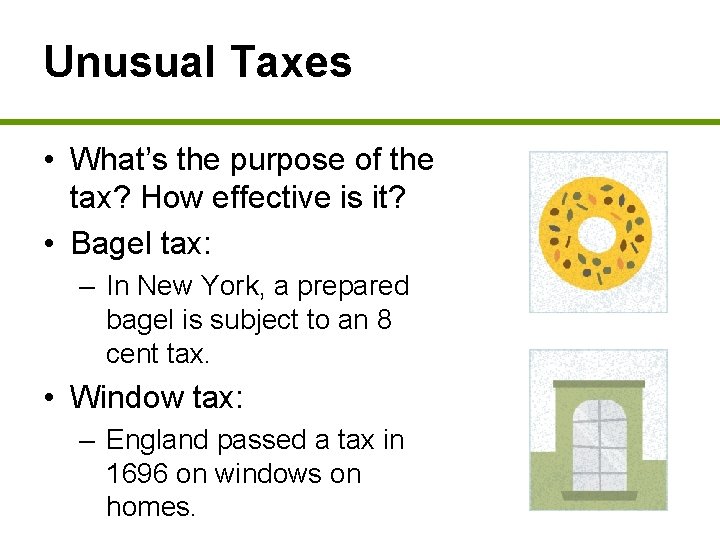
Unusual Taxes • What’s the purpose of the tax? How effective is it? • Bagel tax: – In New York, a prepared bagel is subject to an 8 cent tax. • Window tax: – England passed a tax in 1696 on windows on homes.
Economics in Seinfeld, “The Deal” • Jerry and Kramer give Elaine birthday gifts. Money or a bench?
Conclusion • Unregulated markets are beneficial because they generate the largest possible total surplus. • Taxing specific goods leads to a deadweight loss, which reflects reduced economic activity. • Society must balance the benefits of government services that taxes pay for with the costs of the inefficiencies created in the market.