
4 Making a living How and why is
- Slides: 29
4. Making a living How and why is work changing in different places? How can the environmental impacts of changing work be managed more sustainably?
Unit 4 – Changing Employment This unit will explore the world of work. We will look at the different types of jobs and how to classify them. By considering where different employment sectors are found in the world, we’ll understand how development impacts on employment and wealth creation. We will look at industrialisation in countries and consider why this is happening. Finally we will consider the impacts of changing employment on MEDC’s and LEDC’s.
Homework: Research NIC’s What are they? Where are they located? What characteristics/common features do they share?
How can we classify jobs? In pairs discuss: How can we classify these jobs? Can you list them in 4 groups? What do they have in common?
Outcomes: All will know how we can classify jobs All will consider where particular types of jobs are found and how these are linked to development All will understand the Clark Fisher Model and it’s limitations
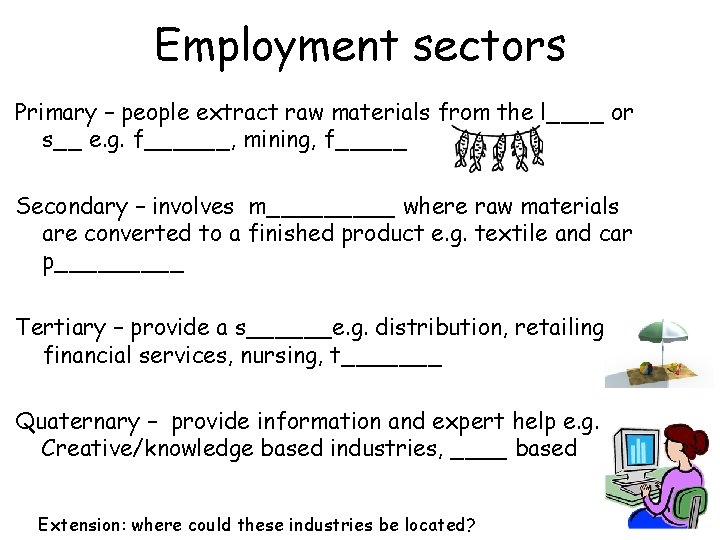
Employment sectors Primary – people extract raw materials from the l____ or s__ e. g. f______, mining, f_____ Secondary – involves m_____ where raw materials are converted to a finished product e. g. textile and car p_____ Tertiary – provide a s______e. g. distribution, retailing, financial services, nursing, t_______ Quaternary – provide information and expert help e. g. Creative/knowledge based industries, ____ based Extension: where could these industries be located?
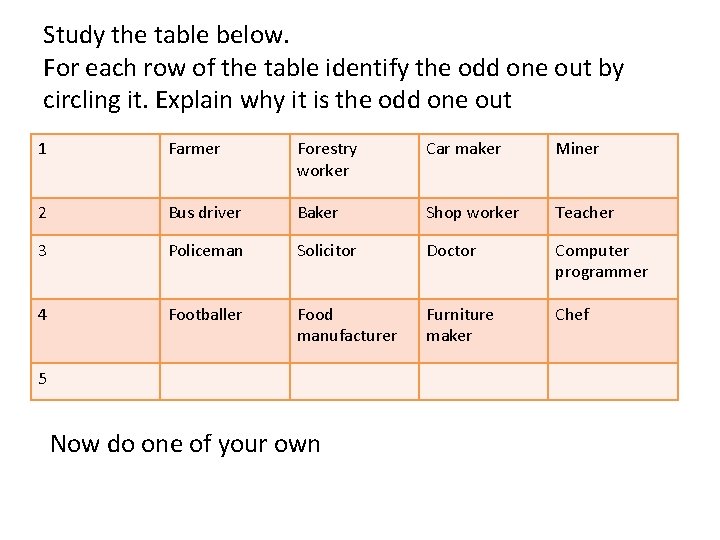
Study the table below. For each row of the table identify the odd one out by circling it. Explain why it is the odd one out 1 Farmer Forestry worker Car maker Miner 2 Bus driver Baker Shop worker Teacher 3 Policeman Solicitor Doctor Computer programmer 4 Footballer Food manufacturer Furniture maker Chef 5 Now do one of your own
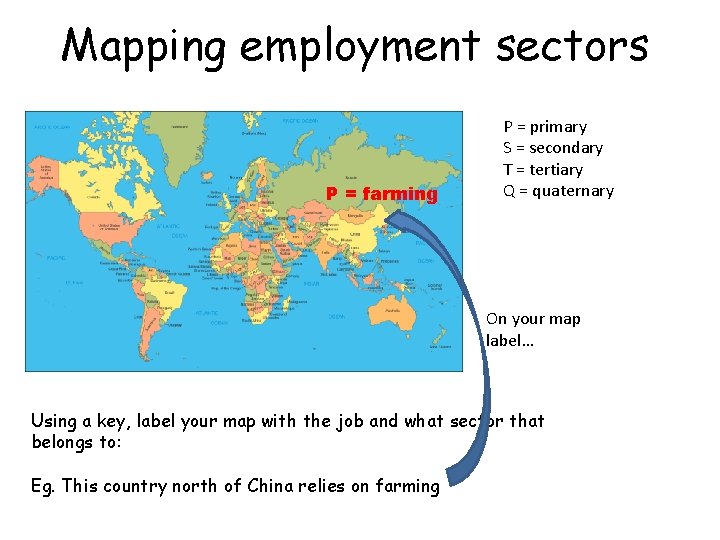
Mapping employment sectors P = farming P = primary S = secondary T = tertiary Q = quaternary On your map label… Using a key, label your map with the job and what sector that belongs to: Eg. This country north of China relies on farming
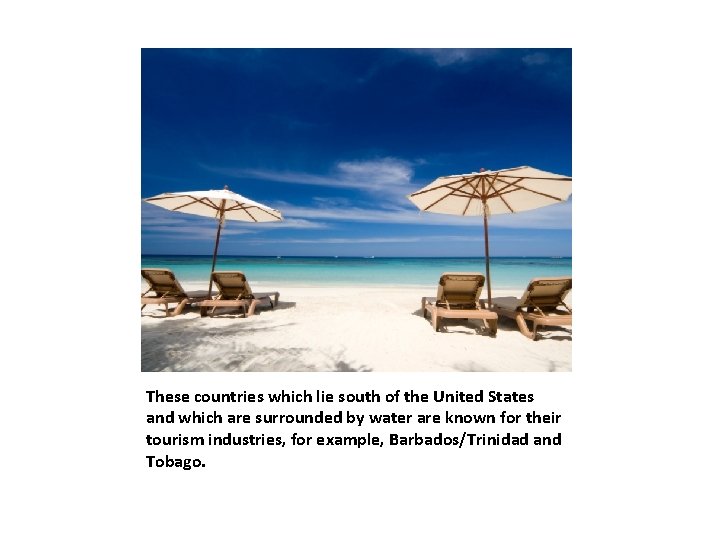
These countries which lie south of the United States and which are surrounded by water are known for their tourism industries, for example, Barbados/Trinidad and Tobago.
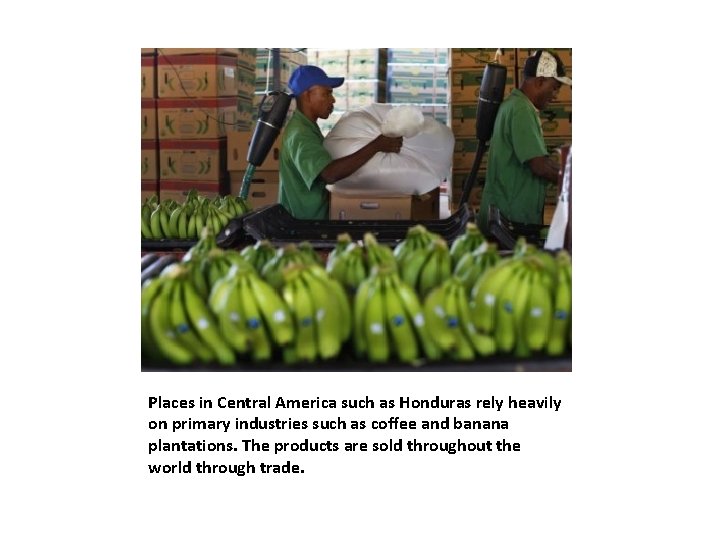
Places in Central America such as Honduras rely heavily on primary industries such as coffee and banana plantations. The products are sold throughout the world through trade.
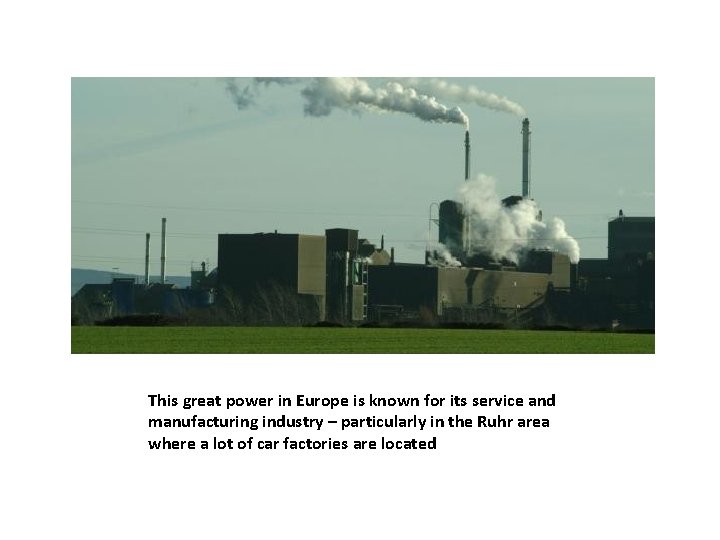
This great power in Europe is known for its service and manufacturing industry – particularly in the Ruhr area where a lot of car factories are located
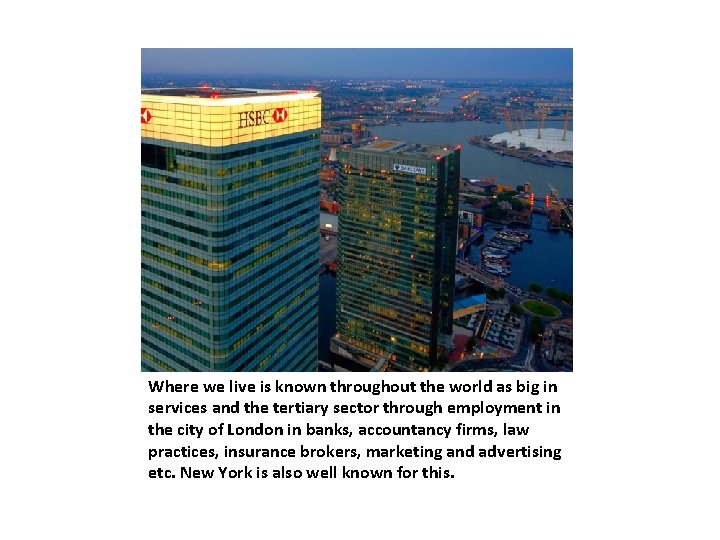
Where we live is known throughout the world as big in services and the tertiary sector through employment in the city of London in banks, accountancy firms, law practices, insurance brokers, marketing and advertising etc. New York is also well known for this.
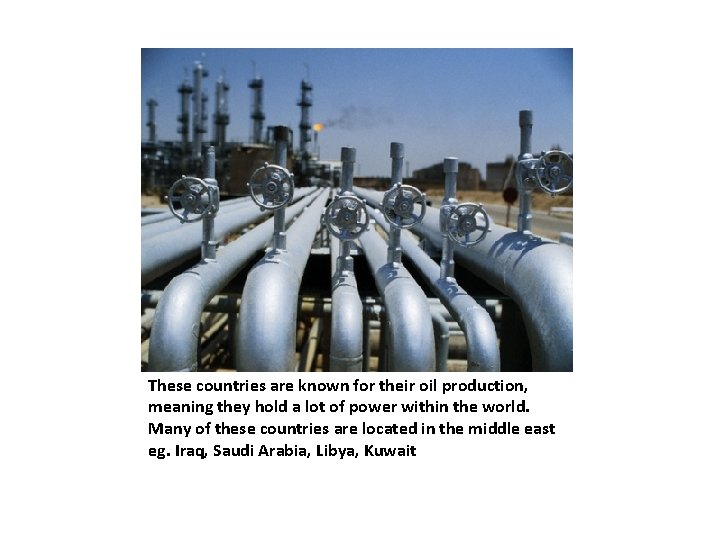
These countries are known for their oil production, meaning they hold a lot of power within the world. Many of these countries are located in the middle east eg. Iraq, Saudi Arabia, Libya, Kuwait
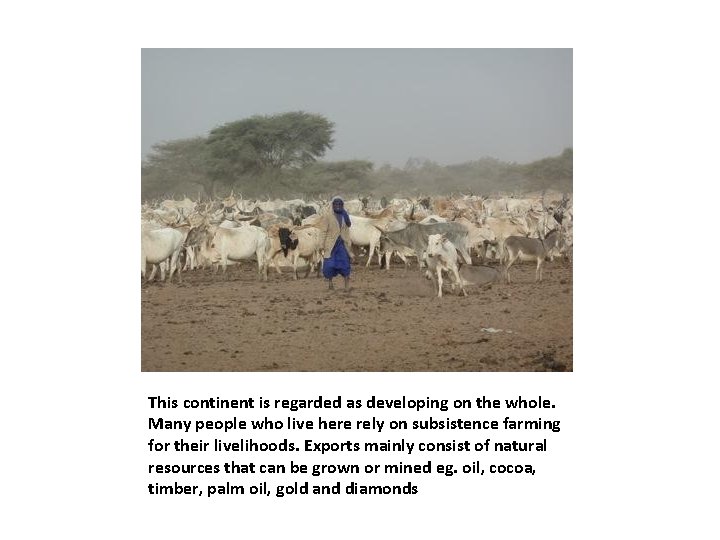
This continent is regarded as developing on the whole. Many people who live here rely on subsistence farming for their livelihoods. Exports mainly consist of natural resources that can be grown or mined eg. oil, cocoa, timber, palm oil, gold and diamonds
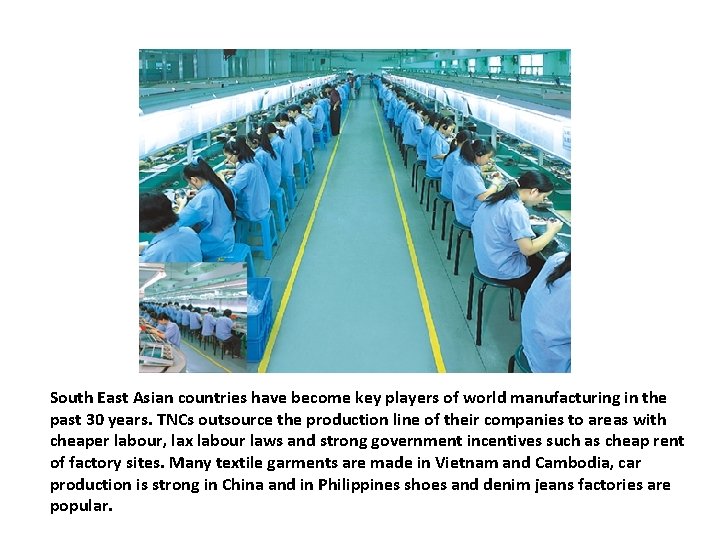
South East Asian countries have become key players of world manufacturing in the past 30 years. TNCs outsource the production line of their companies to areas with cheaper labour, lax labour laws and strong government incentives such as cheap rent of factory sites. Many textile garments are made in Vietnam and Cambodia, car production is strong in China and in Philippines shoes and denim jeans factories are popular.
Using your map showing prominent industries, consider: Where are they located? How developed are these countries? What reasons can you think of to explain the location of this industry?
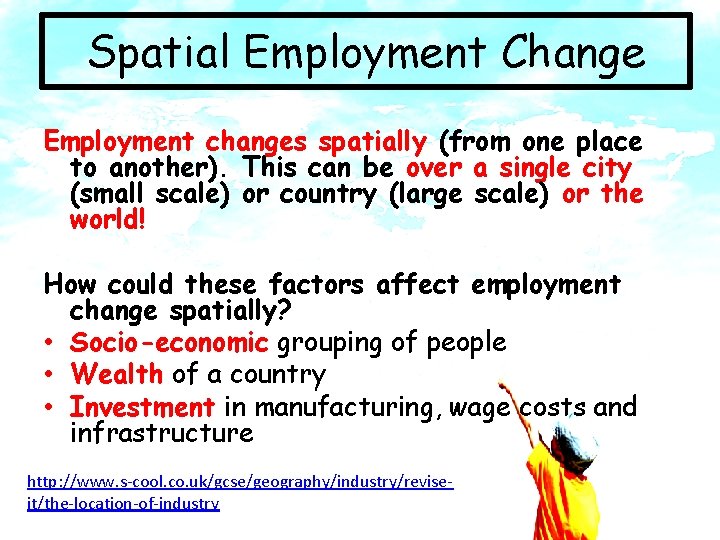
Spatial Employment Change Employment changes spatially (from one place to another). This can be over a single city (small scale) or country (large scale) or the world! How could these factors affect employment change spatially? • Socio-economic grouping of people • Wealth of a country • Investment in manufacturing, wage costs and infrastructure http: //www. s-cool. co. uk/gcse/geography/industry/reviseit/the-location-of-industry
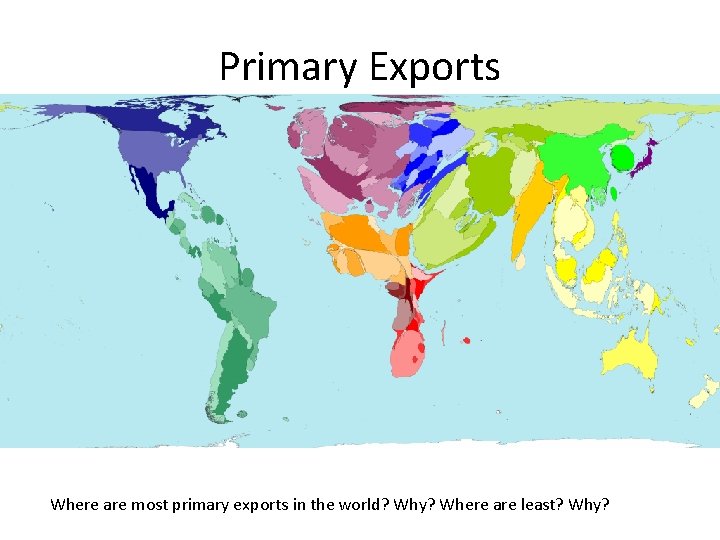
Primary Exports Where are most primary exports in the world? Why? Where are least? Why?
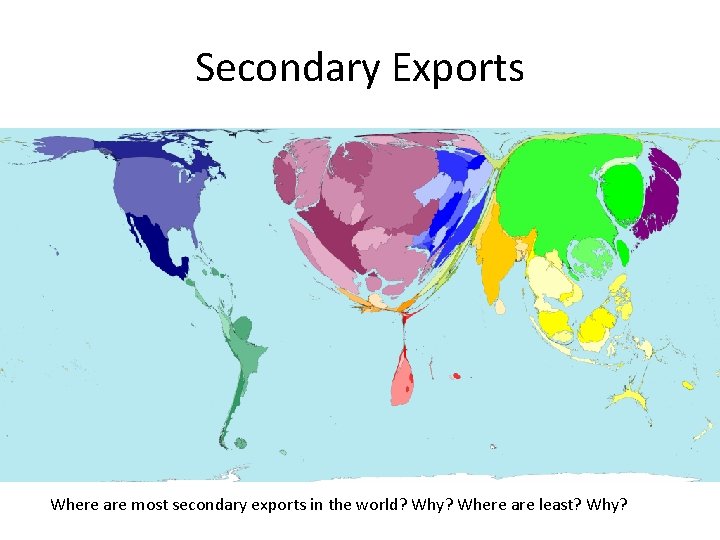
Secondary Exports Where are most secondary exports in the world? Why? Where are least? Why?
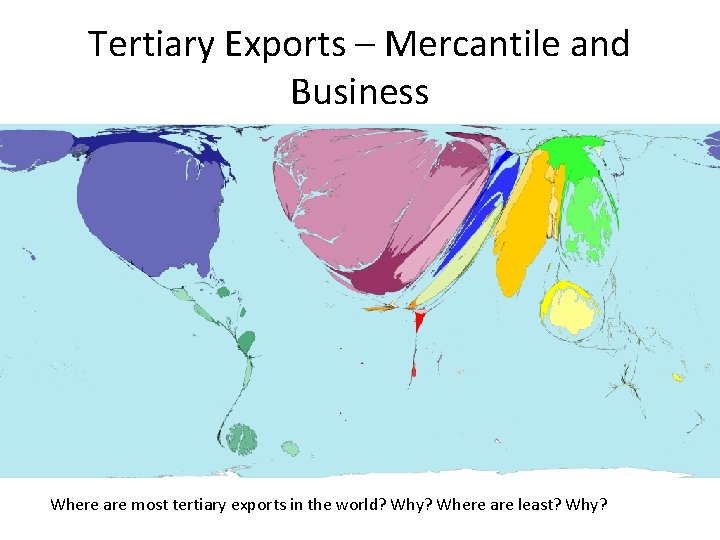
Tertiary Exports – Mercantile and Business Where are most tertiary exports in the world? Why? Where are least? Why?
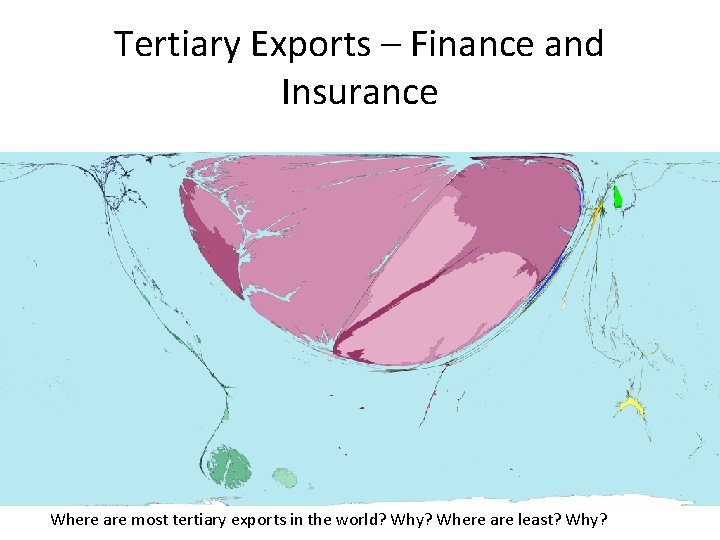
Tertiary Exports – Finance and Insurance Where are most tertiary exports in the world? Why? Where are least? Why?
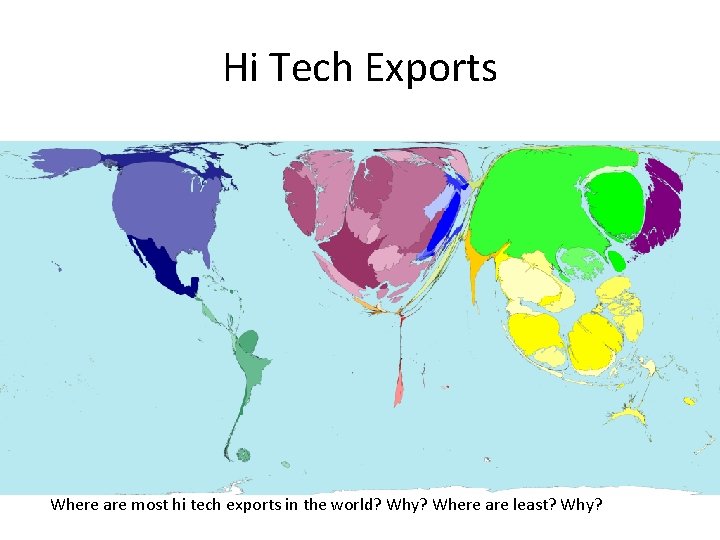
Hi Tech Exports Where are most hi tech exports in the world? Why? Where are least? Why?
We have learnt how industry can be classified using a four-way division. Over time, the percentage of the population of a country working in these different sectors of industry will change as the country develops.
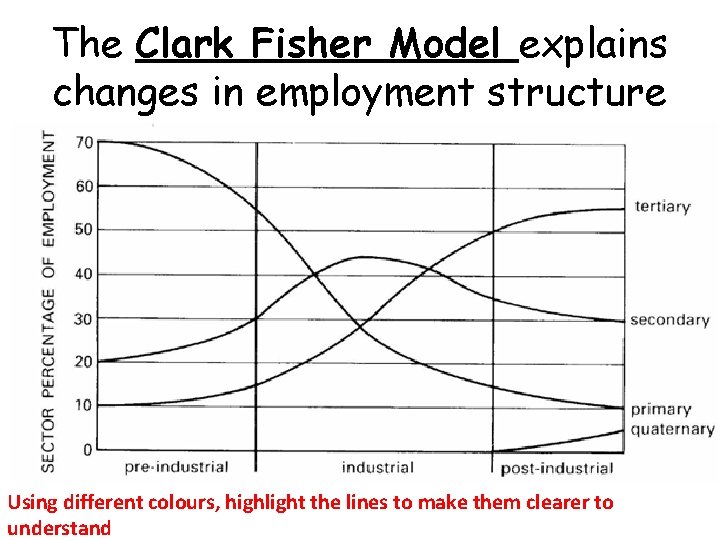
The Clark Fisher Model explains changes in employment structure Using different colours, highlight the lines to make them clearer to understand
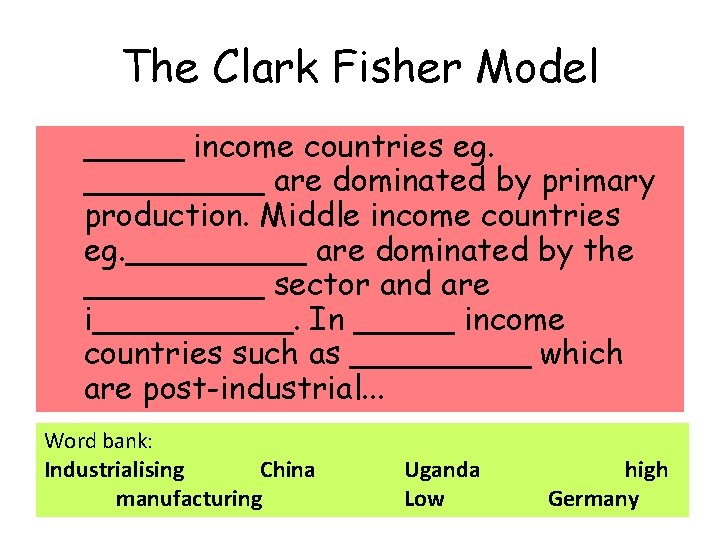
The Clark Fisher Model _____ income countries eg. _____ are dominated by primary production. Middle income countries eg. _____ are dominated by the _____ sector and are i_____. In _____ income countries such as _____ which are post-industrial. . . Word bank: Industrialising China manufacturing Uganda Low high Germany
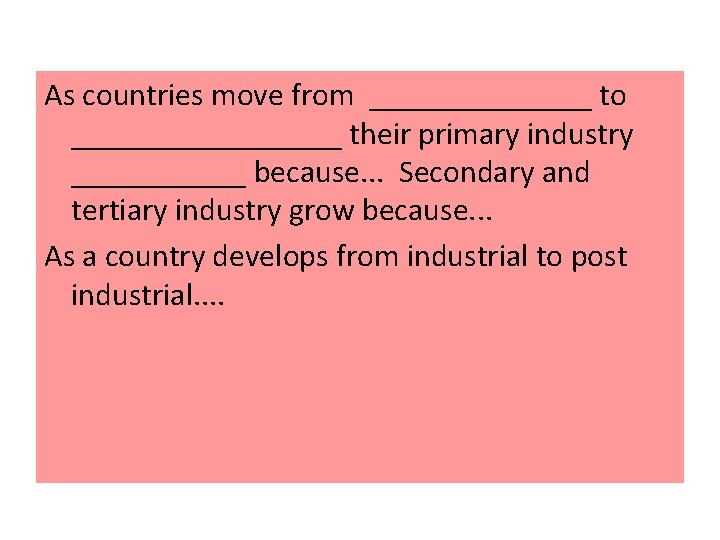
As countries move from _______ to _________ their primary industry ______ because. . . Secondary and tertiary industry grow because. . . As a country develops from industrial to post industrial. .
In pairs discuss: 1. How useful is the Fisher Clark Model? 2. Would all countries follow the model? 3. Are there any exceptions? 4. Can you think of an LEDC whose economy is based on a tertiary/quaternary industry? 5. Why has this happened? 6. To what extent do you think China’s manufacturing growth is due to investment from MEDC’s?
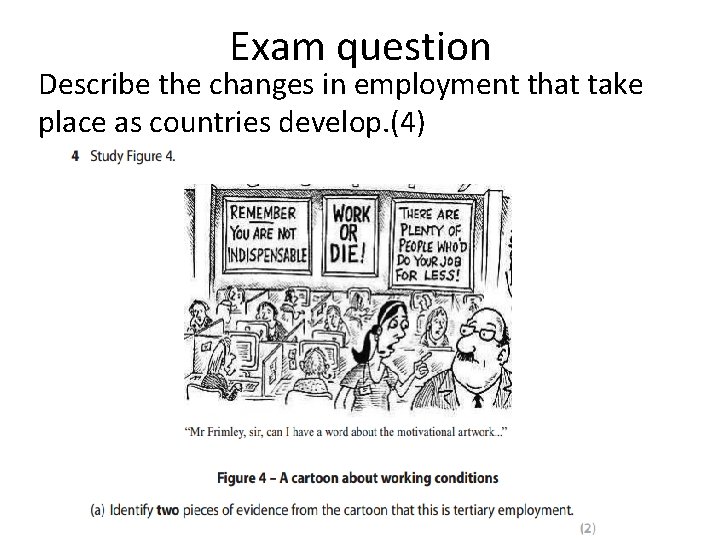
Exam question Describe the changes in employment that take place as countries develop. (4)
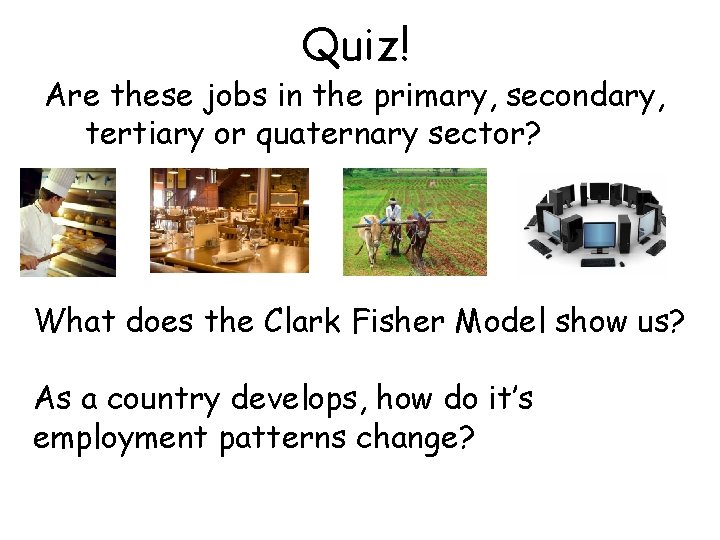
Quiz! Are these jobs in the primary, secondary, tertiary or quaternary sector? What does the Clark Fisher Model show us? As a country develops, how do it’s employment patterns change?