
4 Electric potential 4 1 Electric electrostatic potential
- Slides: 8
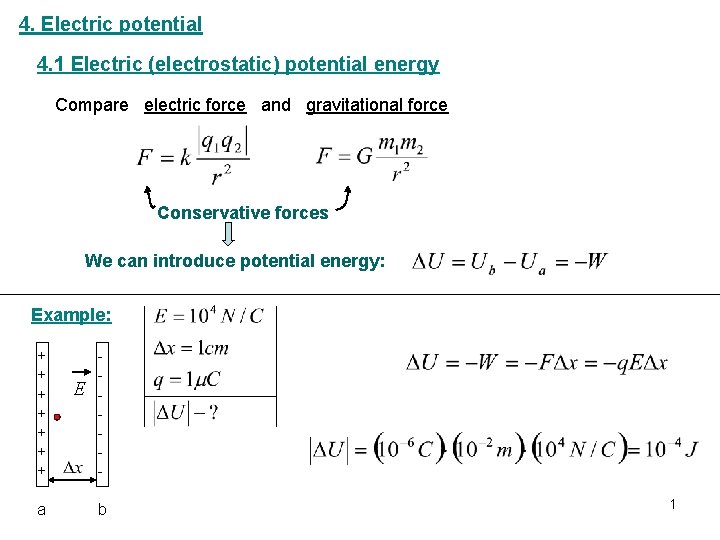
4. Electric potential 4. 1 Electric (electrostatic) potential energy Compare electric force and gravitational force Conservative forces We can introduce potential energy: Example: + + + + a E b 1
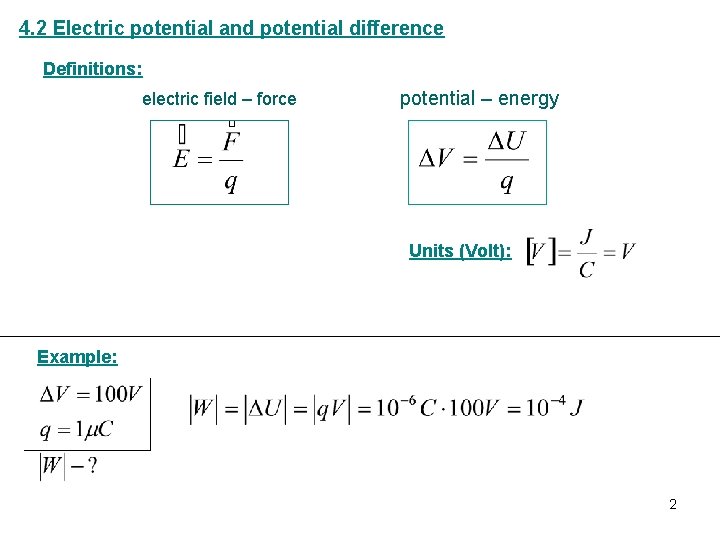
4. 2 Electric potential and potential difference Definitions: electric field – force potential – energy Units (Volt): Example: 2
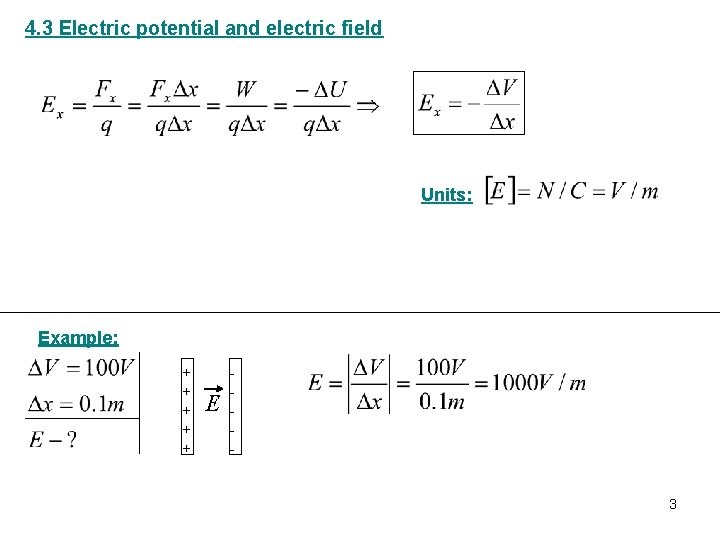
4. 3 Electric potential and electric field Units: Example: + + + E 3
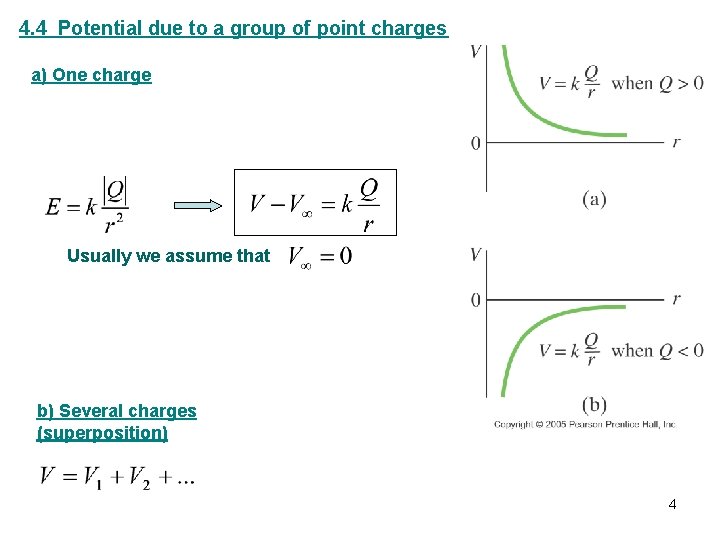
4. 4 Potential due to a group of point charges a) One charge Usually we assume that b) Several charges (superposition) 4
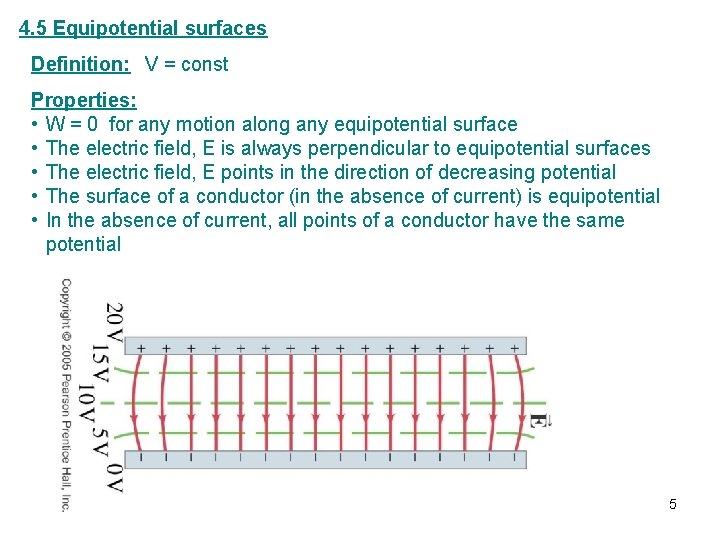
4. 5 Equipotential surfaces Definition: V = const Properties: • W = 0 for any motion along any equipotential surface • The electric field, E is always perpendicular to equipotential surfaces • The electric field, E points in the direction of decreasing potential • The surface of a conductor (in the absence of current) is equipotential • In the absence of current, all points of a conductor have the same potential 5
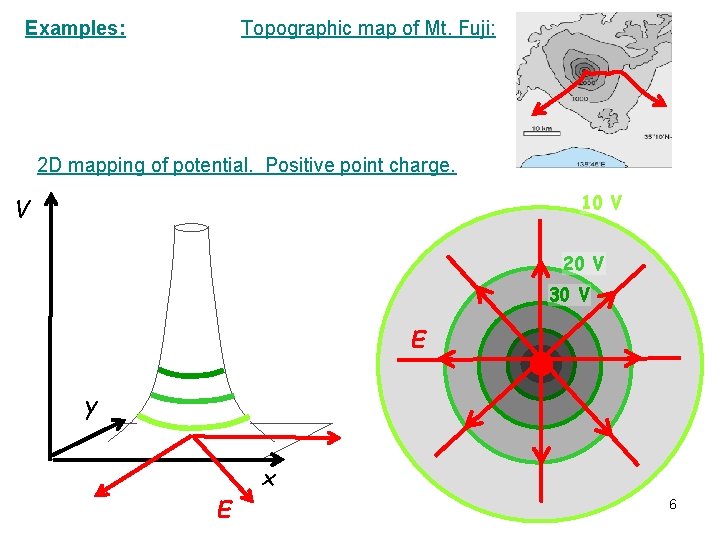
Examples: Topographic map of Mt. Fuji: 2 D mapping of potential. Positive point charge. 10 V V 20 V 30 V E y E x 6
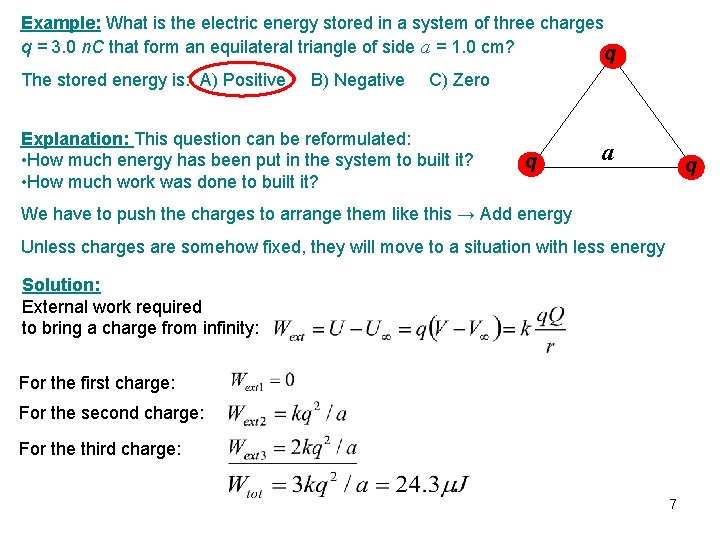
Example: What is the electric energy stored in a system of three charges q = 3. 0 n. C that form an equilateral triangle of side a = 1. 0 cm? q The stored energy is: A) Positive B) Negative C) Zero Explanation: This question can be reformulated: • How much energy has been put in the system to built it? • How much work was done to built it? q a q We have to push the charges to arrange them like this → Add energy Unless charges are somehow fixed, they will move to a situation with less energy Solution: External work required to bring a charge from infinity: For the first charge: For the second charge: For the third charge: 7
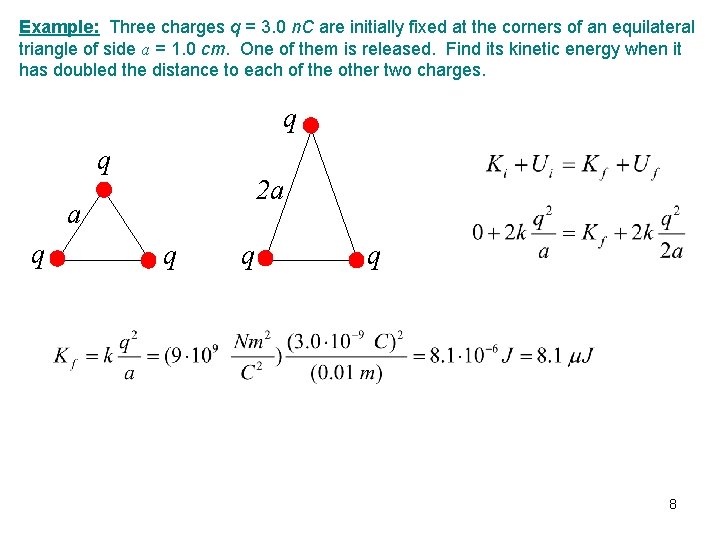
Example: Three charges q = 3. 0 n. C are initially fixed at the corners of an equilateral triangle of side a = 1. 0 cm. One of them is released. Find its kinetic energy when it has doubled the distance to each of the other two charges. q q 2 a a q q 8