
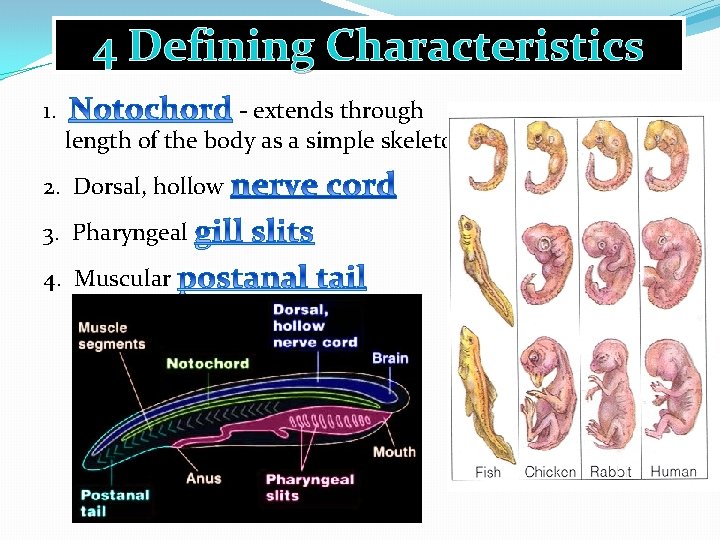
4 Defining Characteristics 1 extends through length of
- Slides: 28
4 Defining Characteristics 1. - extends through length of the body as a simple skeleton 2. Dorsal, hollow 3. Pharyngeal 4. Muscular
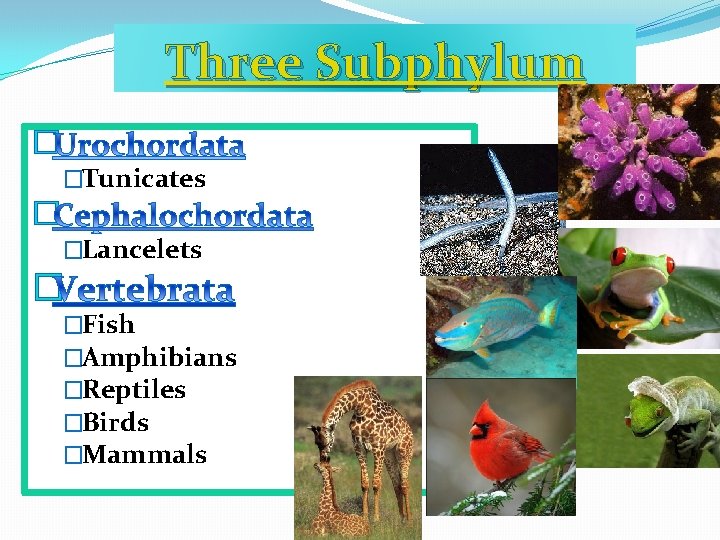
Three Subphylum � �Tunicates � �Lancelets � �Fish �Amphibians �Reptiles �Birds �Mammals
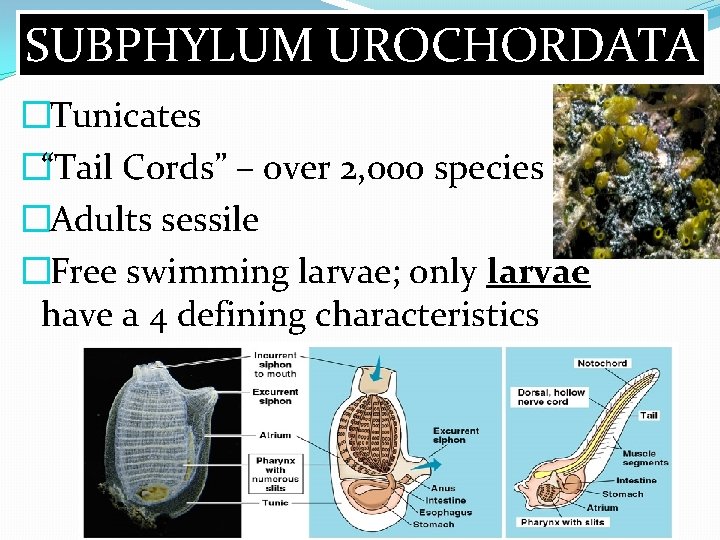
SUBPHYLUM UROCHORDATA �Tunicates �“Tail Cords” – over 2, 000 species �Adults sessile �Free swimming larvae; only larvae have a 4 defining characteristics
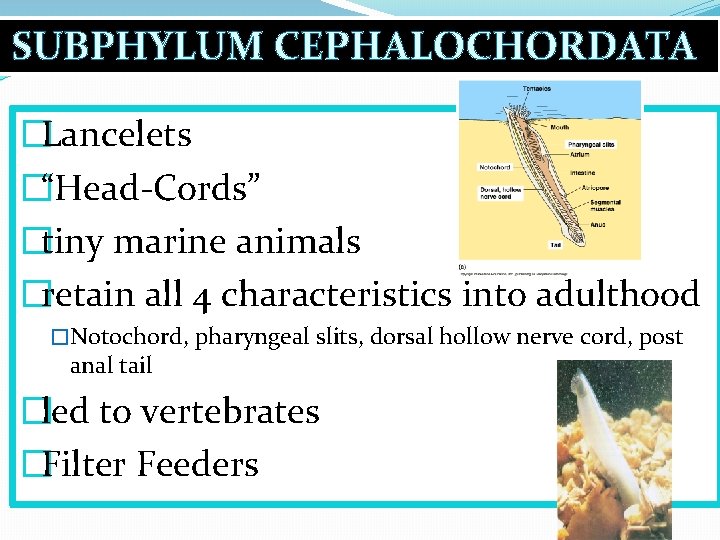
SUBPHYLUM CEPHALOCHORDATA �Lancelets �“Head-Cords” �tiny marine animals �retain all 4 characteristics into adulthood �Notochord, pharyngeal slits, dorsal hollow nerve cord, post anal tail �led to vertebrates �Filter Feeders
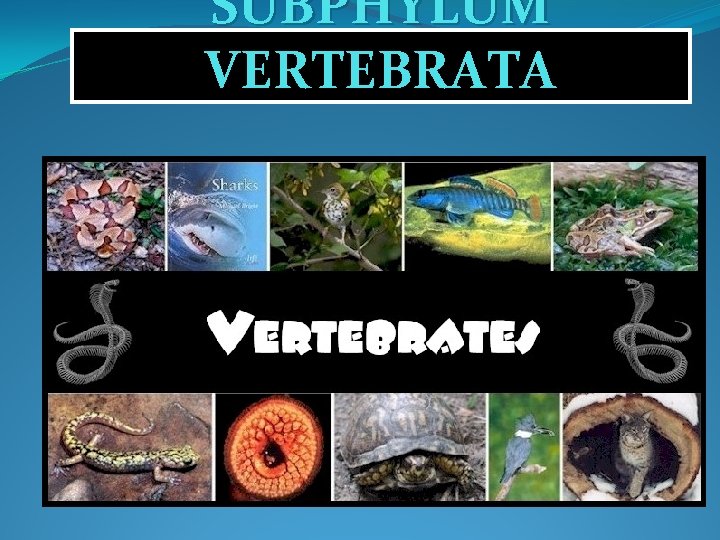
SUBPHYLUM VERTEBRATA
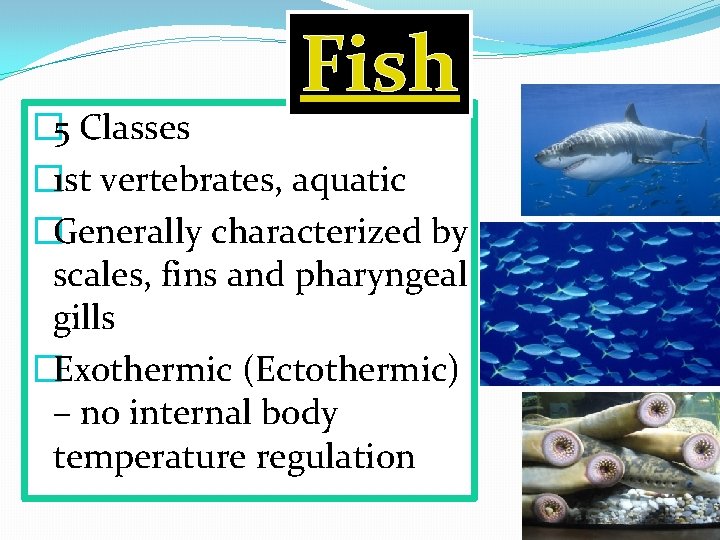
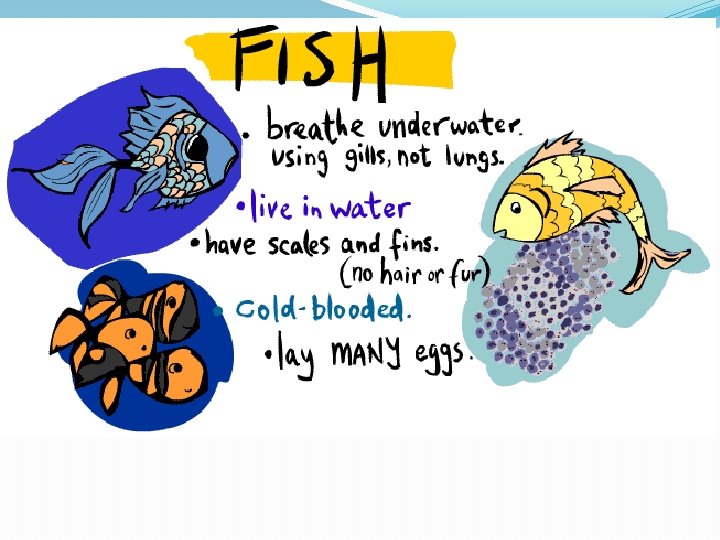
Fish � 5 Classes � 1 st vertebrates, aquatic �Generally characterized by scales, fins and pharyngeal gills �Exothermic (Ectothermic) – no internal body temperature regulation
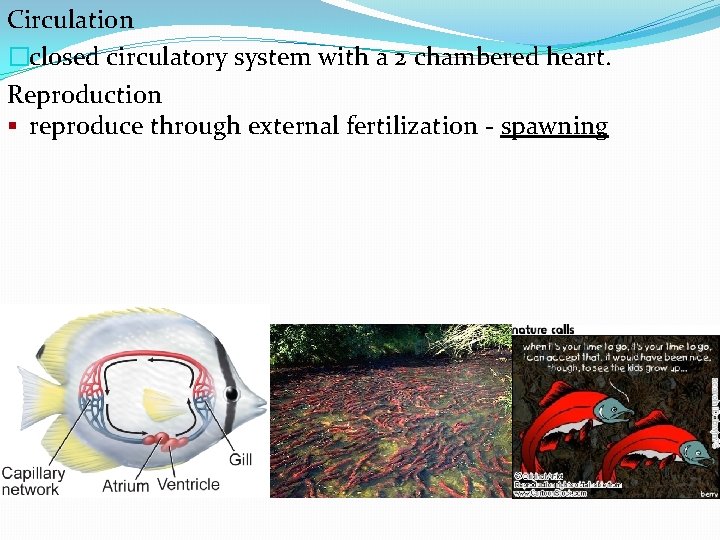
Circulation �closed circulatory system with a 2 chambered heart. Reproduction § reproduce through external fertilization - spawning
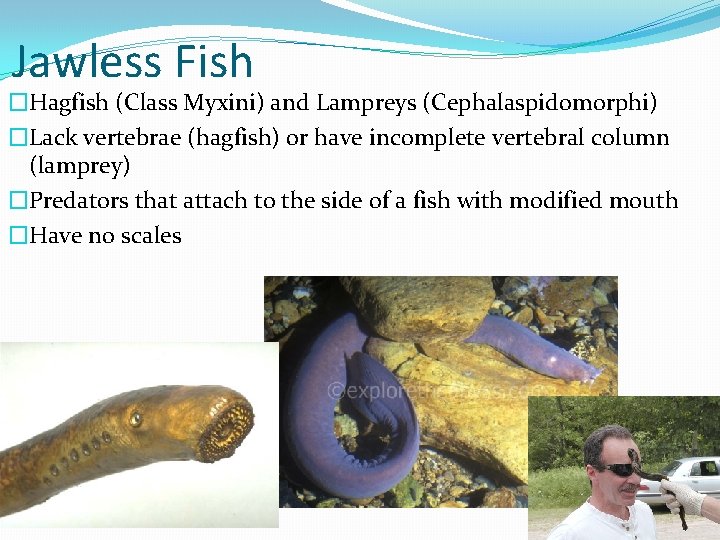
Jawless Fish �Hagfish (Class Myxini) and Lampreys (Cephalaspidomorphi) �Lack vertebrae (hagfish) or have incomplete vertebral column (lamprey) �Predators that attach to the side of a fish with modified mouth �Have no scales
Hagfish no vertebrae has a skull
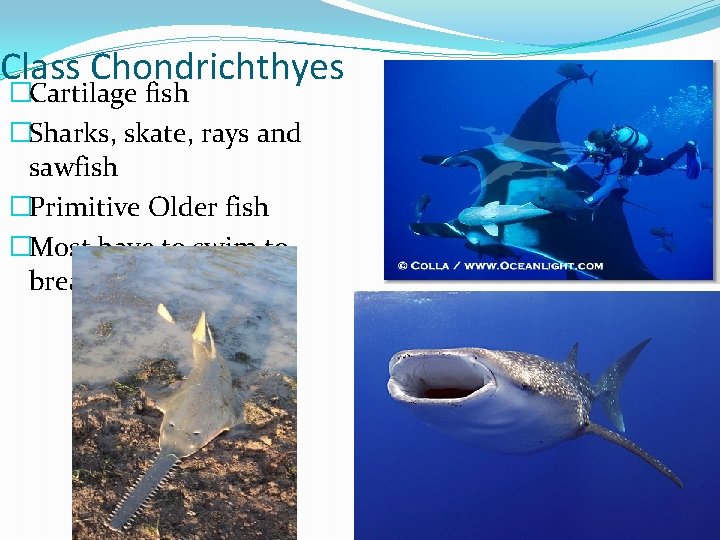
Class Chondrichthyes �Cartilage fish �Sharks, skate, rays and sawfish �Primitive Older fish �Most have to swim to breathe
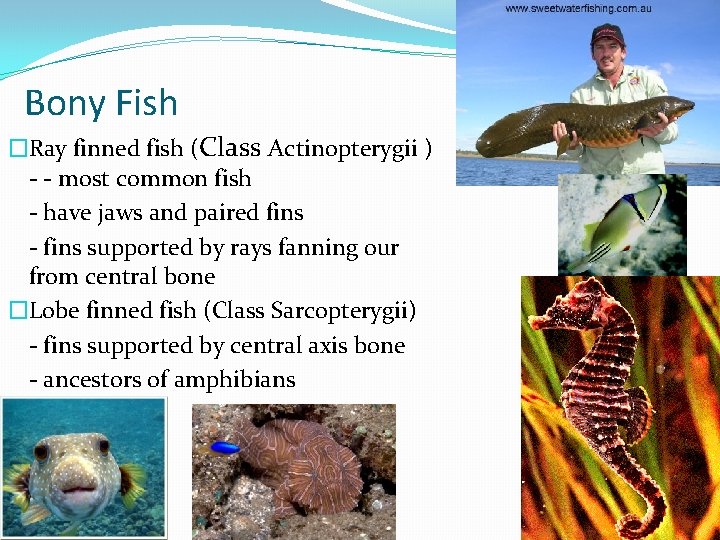
Bony Fish �Ray finned fish (Class Actinopterygii ) - - most common fish - have jaws and paired fins - fins supported by rays fanning our from central bone �Lobe finned fish (Class Sarcopterygii) - fins supported by central axis bone - ancestors of amphibians
Walking Fish - Grunion
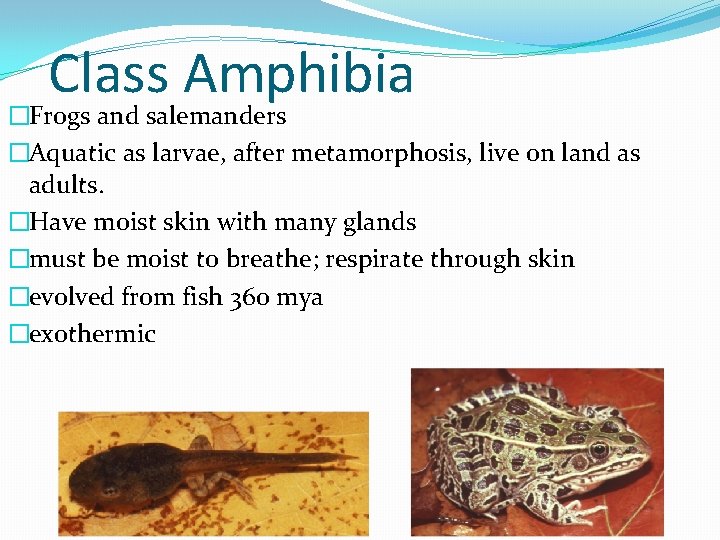
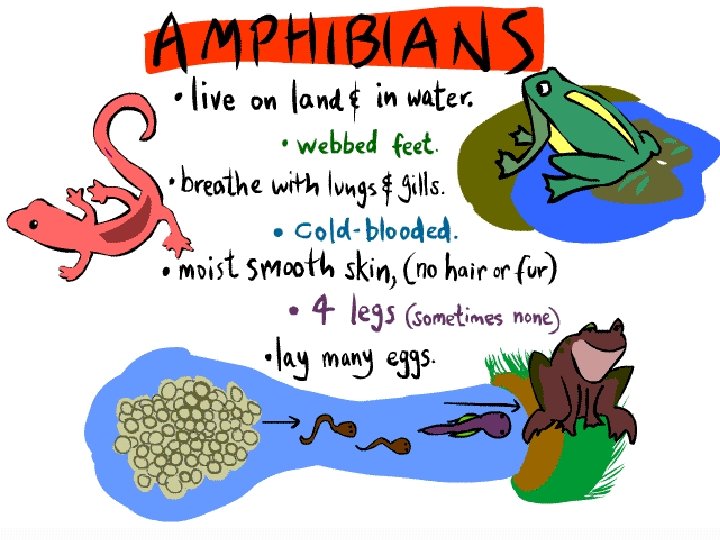
Class Amphibia �Frogs and salemanders �Aquatic as larvae, after metamorphosis, live on land as adults. �Have moist skin with many glands �must be moist to breathe; respirate through skin �evolved from fish 360 mya �exothermic
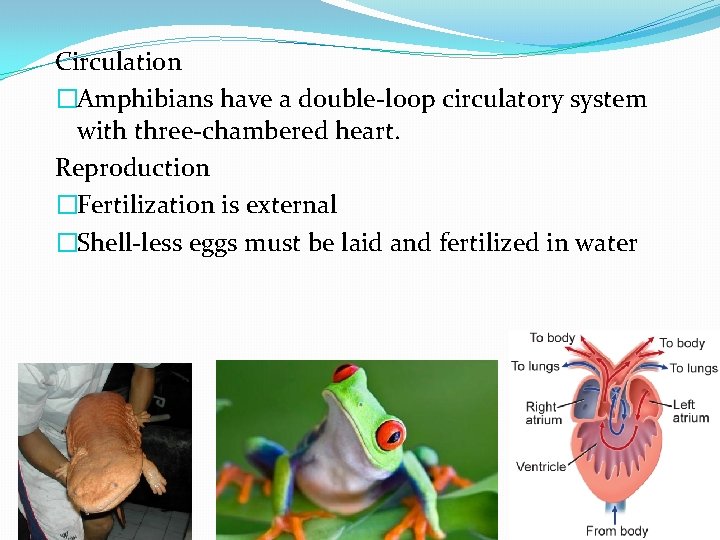
Circulation �Amphibians have a double-loop circulatory system with three-chambered heart. Reproduction �Fertilization is external �Shell-less eggs must be laid and fertilized in water
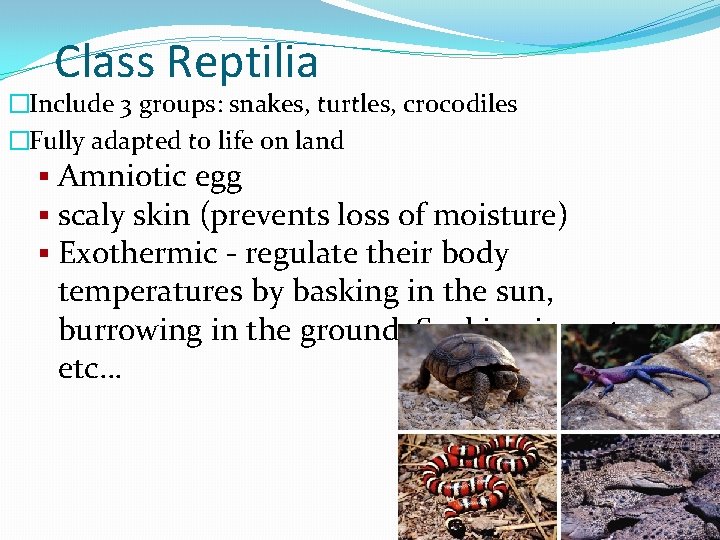
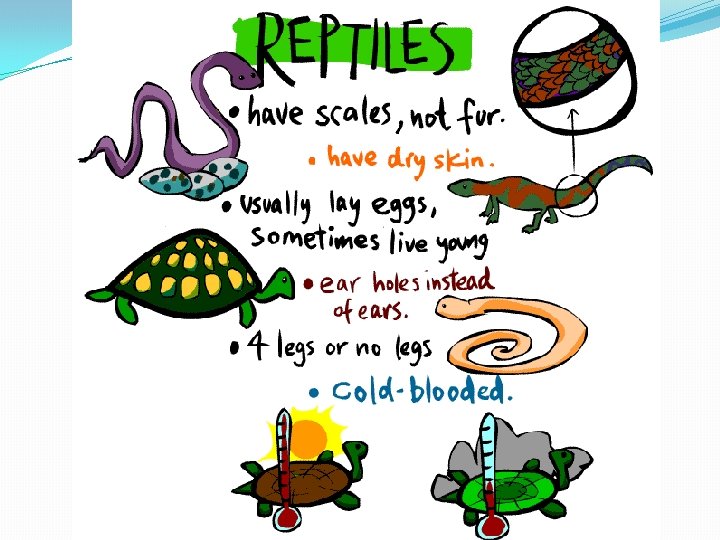
Class Reptilia �Include 3 groups: snakes, turtles, crocodiles �Fully adapted to life on land § Amniotic egg § scaly skin (prevents loss of moisture) § Exothermic - regulate their body temperatures by basking in the sun, burrowing in the ground. Soaking in water etc…
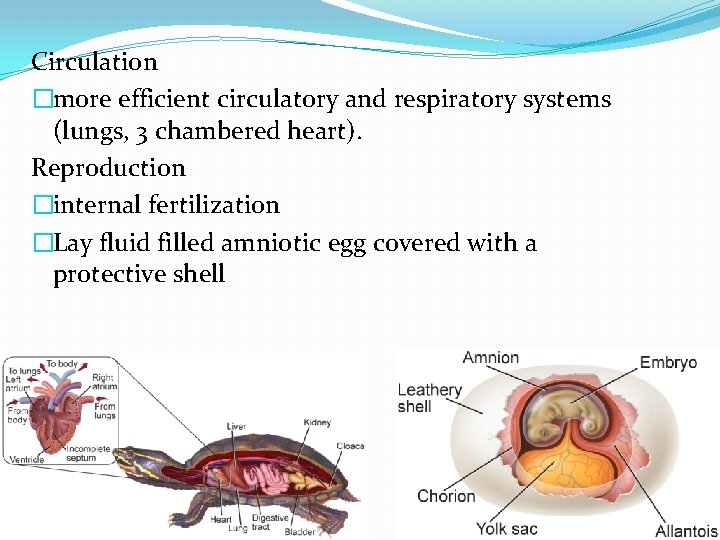
Circulation �more efficient circulatory and respiratory systems (lungs, 3 chambered heart). Reproduction �internal fertilization �Lay fluid filled amniotic egg covered with a protective shell
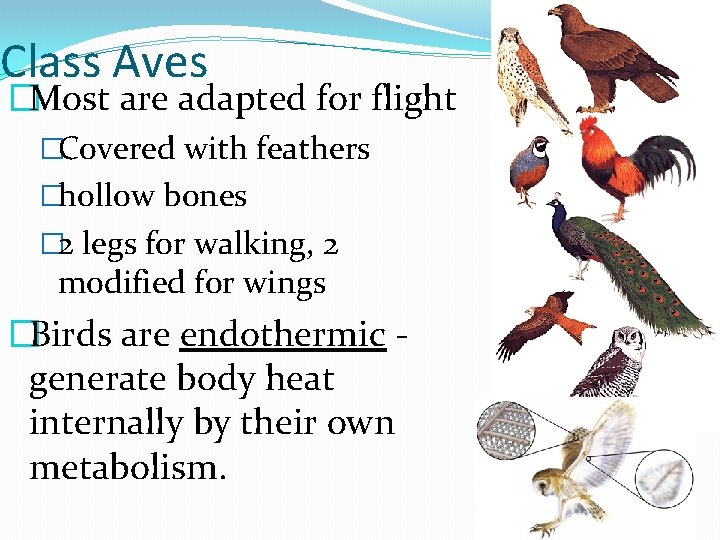
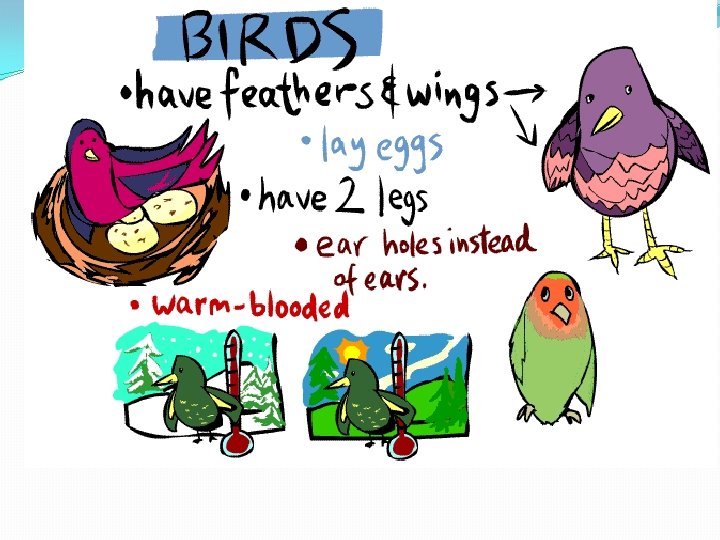
Class Aves �Most are adapted for flight �Covered with feathers �hollow bones � 2 legs for walking, 2 modified for wings �Birds are endothermic generate body heat internally by their own metabolism.
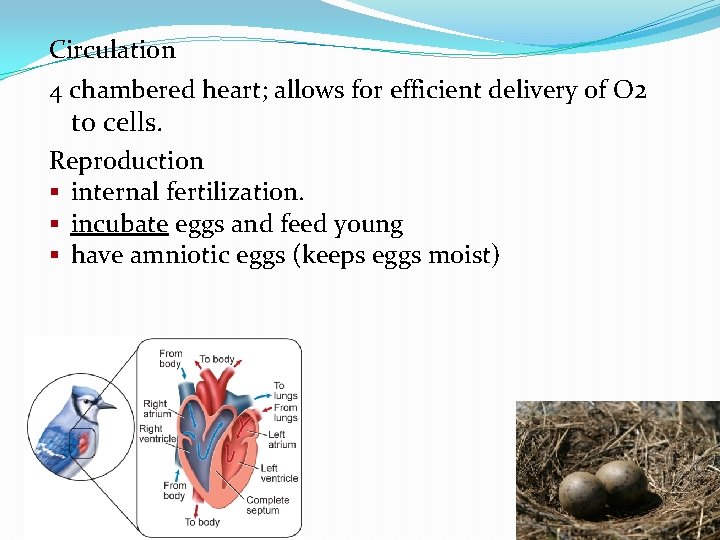
Circulation 4 chambered heart; allows for efficient delivery of O 2 to cells. Reproduction § internal fertilization. § incubate eggs and feed young § have amniotic eggs (keeps eggs moist)
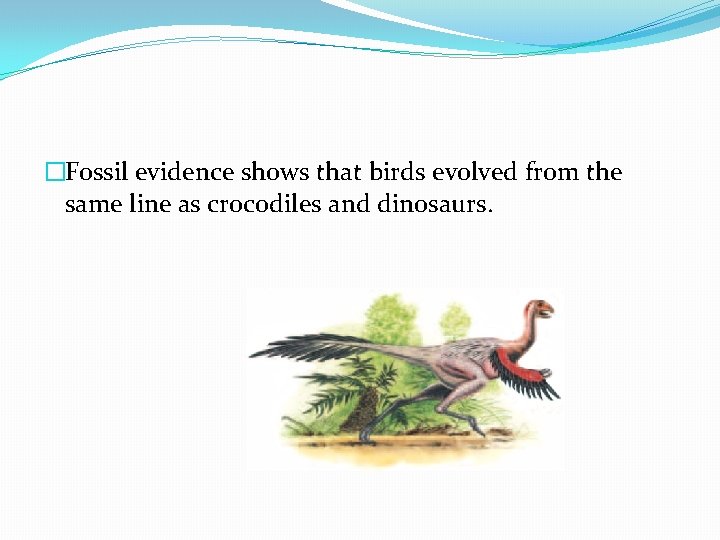
�Fossil evidence shows that birds evolved from the same line as crocodiles and dinosaurs.
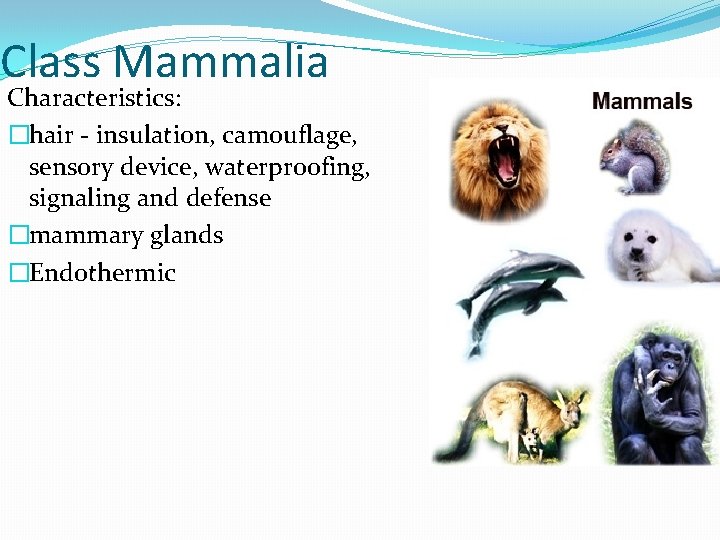
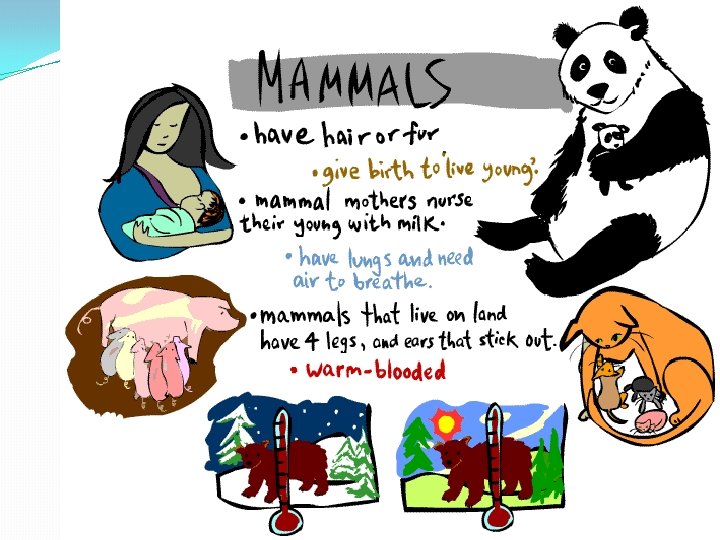
Class Mammalia Characteristics: �hair - insulation, camouflage, sensory device, waterproofing, signaling and defense �mammary glands �Endothermic
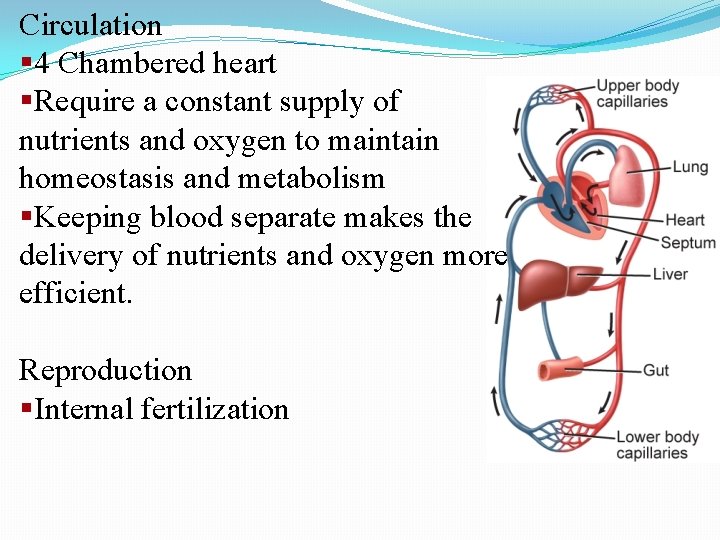
Circulation § 4 Chambered heart §Require a constant supply of nutrients and oxygen to maintain homeostasis and metabolism §Keeping blood separate makes the delivery of nutrients and oxygen more efficient. Reproduction §Internal fertilization
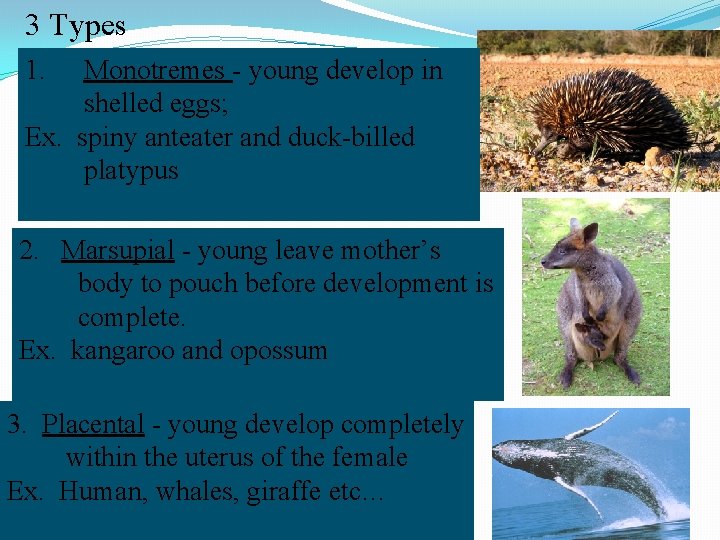
3 Types 1. Monotremes - young develop in shelled eggs; Ex. spiny anteater and duck-billed platypus 2. Marsupial - young leave mother’s body to pouch before development is complete. Ex. kangaroo and opossum 3. Placental - young develop completely within the uterus of the female Ex. Human, whales, giraffe etc…