
4 Building Competitive Advantage Through FunctionalLevel Strategy 1
4 Building Competitive Advantage Through Functional-Level Strategy 1
Functional-Level Strategies aimed at improving the effectiveness of a company’s operations n Improving a company’s ability to attain superior efficiency, quality, innovation, and customer responsiveness n 2
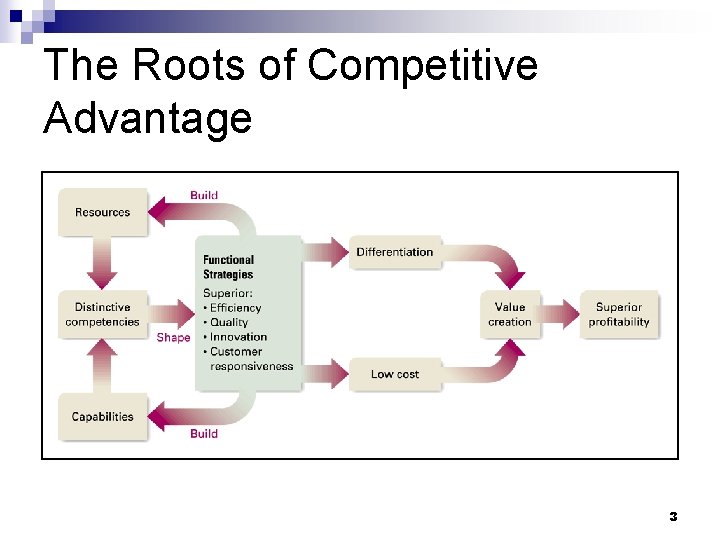
The Roots of Competitive Advantage 3
Achieving Superior Efficiency n Economies of scale ¨ Unit cost reductions associated with a large scale of output Ability to spread fixed costs over a large production volume n Ability of companies producing in large volumes to achieve a greater division of labor and specialization n n Diseconomies of scale ¨ Unit cost increases associated with a large scale of output 4
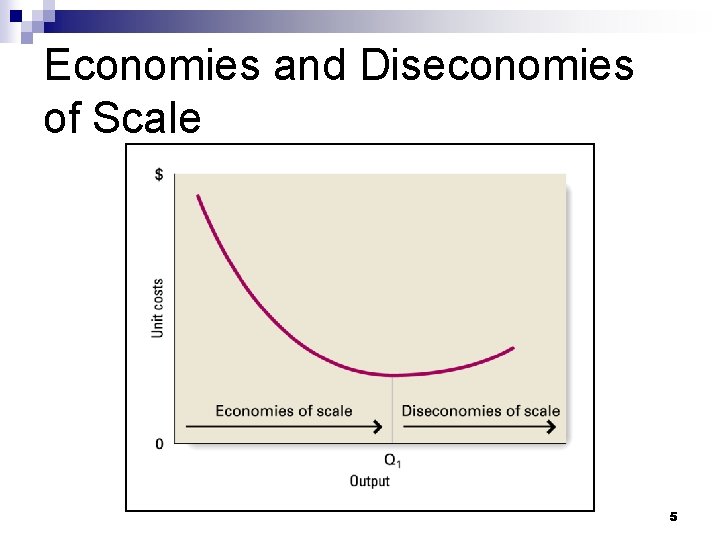
Economies and Diseconomies of Scale 5
Achieving Superior Efficiency (cont’d) n Learning effects ¨ Cost savings that come from learning by doing Labor productivity n Management efficiency n n When changes occur in a company’s production system, learning has to begin again 6
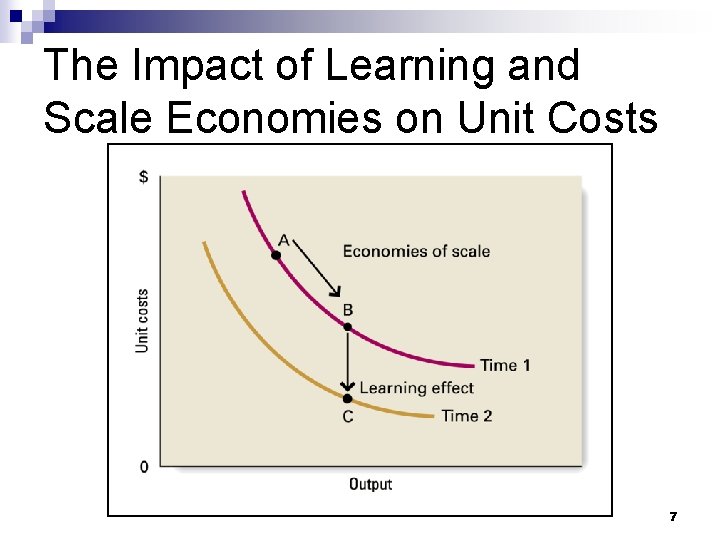
The Impact of Learning and Scale Economies on Unit Costs 7
Achieving Superior Efficiency (cont’d) n The experience curve ¨ The systematic lowering of the cost structure and consequent unit cost reductions that occur over the life of a product n Economies of scale and learning effects underlie the experience curve 8
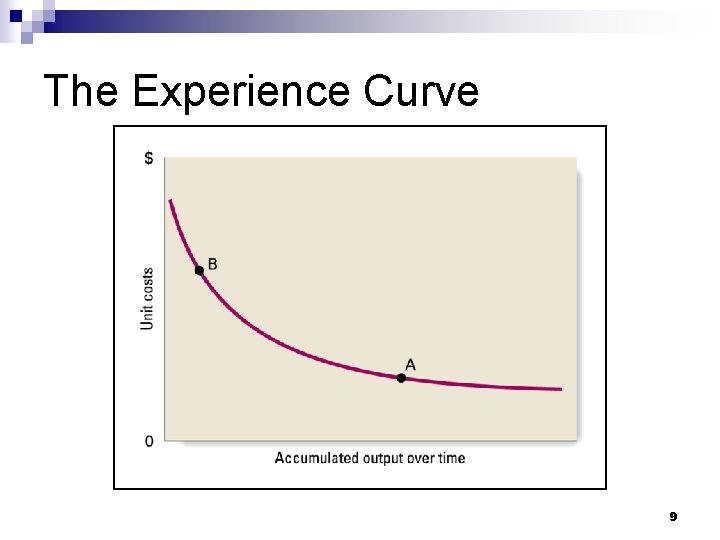
The Experience Curve 9
Achieving Superior Efficiency (cont’d) n Dangers of complacency with the experience curve ¨ It will bottom out ¨ New technologies can make experience effects obsolete ¨ Some technologies may not produce lower costs with higher volumes of output ¨ Flexible manufacturing technologies may allow small manufacturers to product at low unit costs 10
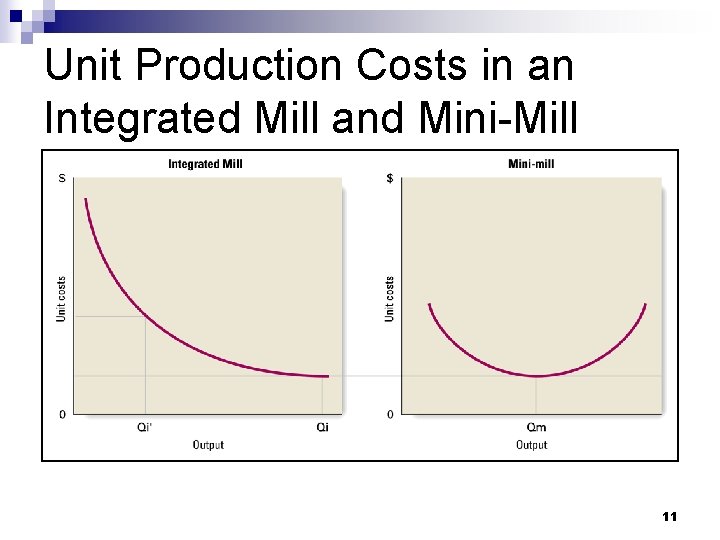
Unit Production Costs in an Integrated Mill and Mini-Mill 11
Achieving Superior Efficiency (cont’d) n Flexible manufacturing (lean production) ¨ Technology that reduces setup times for complex equipment, improves scheduling to increase use of individual machines, and improves quality control ¨ Increases efficiency and lowers unit costs ¨ Mass customization reconciles two goals: low cost and differentiation through product customization 12
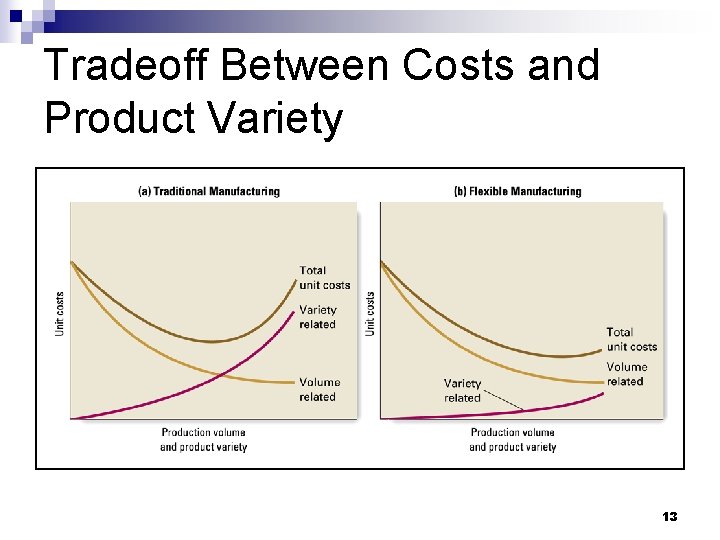
Tradeoff Between Costs and Product Variety 13
Achieving Superior Efficiency (cont’d) n Marketing ¨ Marketing strategy: pricing, promotion, advertising, product design, distribution ¨ Reducing customer defection rates and building customer loyalty 14
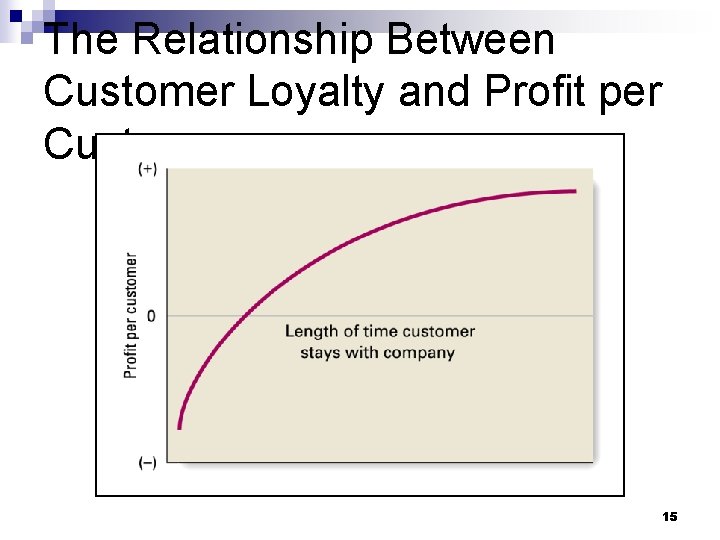
The Relationship Between Customer Loyalty and Profit per Customer 15
Achieving Superior Efficiency (cont’d) n Materials management ¨ Getting inputs and components to a production facility, through the production process, and out through a distribution system to the end user ¨ Just-in-time (JIT) inventory system ¨ Supply chain management 16
Achieving Superior Efficiency (cont’d) n R&D strategy ¨ Designing products that are easy to manufacture ¨ Process innovations 17
Achieving Superior Efficiency (cont’d) n Human resource strategy: employee productivity ¨ Hiring ¨ Training ¨ Self-Managing Teams ¨ Pay for Performance 18
Achieving Superior Efficiency (cont’d) n Information systems and the Internet ¨ Automating interactions between Company and customers n Company and suppliers n n Infrastructure ¨ Company structure, culture, style of strategic leadership, and control system determine context of all value creation activities 19
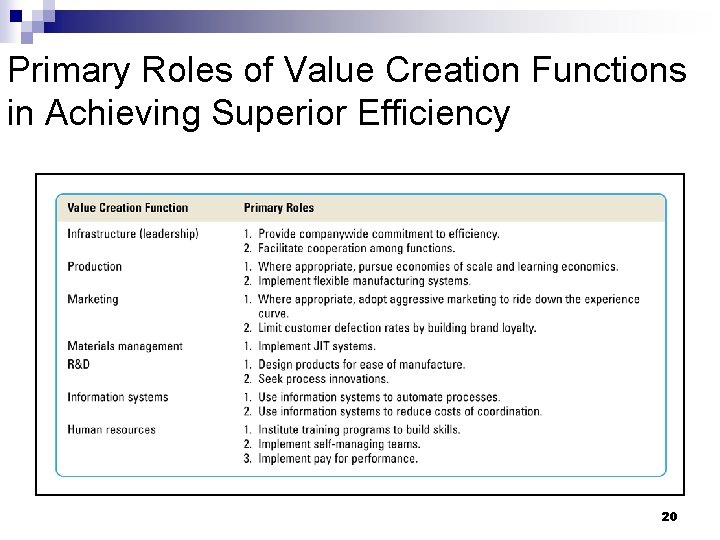
Primary Roles of Value Creation Functions in Achieving Superior Efficiency 20
Achieving Superior Quality n Attaining superior reliability ¨ Total quality management (TQM) Improved quality means that costs decrease n As a result, productivity improves n Better quality leads to higher market share and allows increased prices n This increases profitability n More jobs are created n 21
Implementing Reliability Improvement Methodologies n n n n n Build organizational commitment to quality Focus on the customer Find ways to measure quality Set goals and create incentives Solicit input from employees Identify defects and trace them to source Work with suppliers Design for ease of manufacture Break down barriers among functions 22
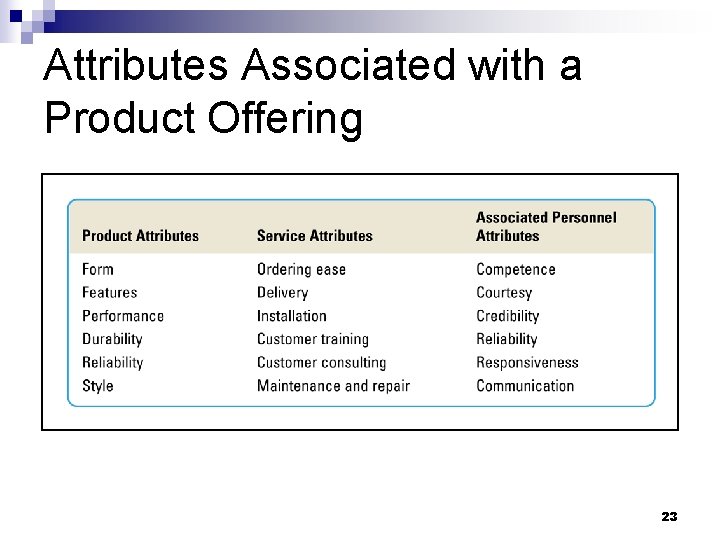
Attributes Associated with a Product Offering 23
Achieving Superior Quality (cont’d) n Developing Superior Attributes ¨ Learn which attributes are most important to customers ¨ Design products and associate services to embody the important attributes ¨ Decide which attributes to promote and how best to position them in consumers’ minds ¨ Monitor competition for improvement in attributes and development of new attributes 24
Achieving Superior Innovation n Innovation can ¨ Result in new products that better satisfy customer needs ¨ Improve the quality of existing products ¨ Reduce costs Innovation can be imitated so it must be continuous n Successful new product launches are major drivers of superior profitability n 25
The High Failure Rate of Innovation n Uncertainty ¨ Quantum innovation vs. incremental innovation Poor commercialization n Poor positioning strategy n Technological Myopia n Slow to Market n 26
Achieving Superior Innovation (cont’d) n Building Competencies in Innovation ¨ Building skills in basic and applied research ¨ Project selection and management 27
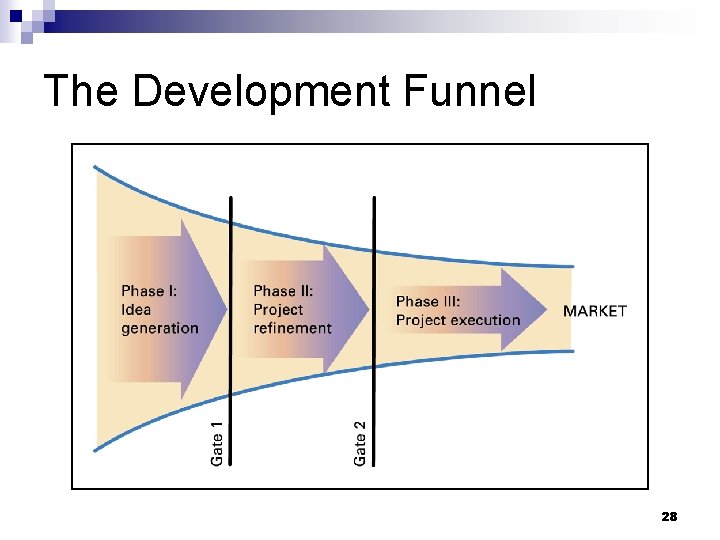
The Development Funnel 28
Achieving Superior Innovation (cont’d) n Building Competencies in Innovation (cont’d) ¨ Cross-functional integration ¨ Product development teams ¨ Partly parallel development processes 29
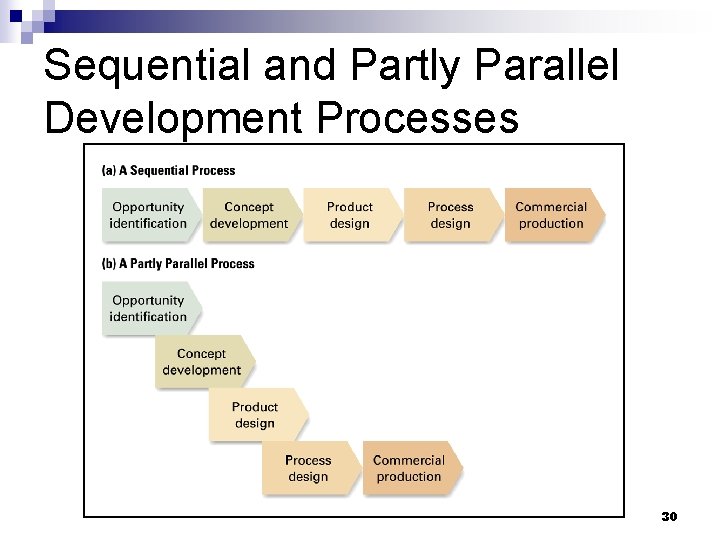
Sequential and Partly Parallel Development Processes 30
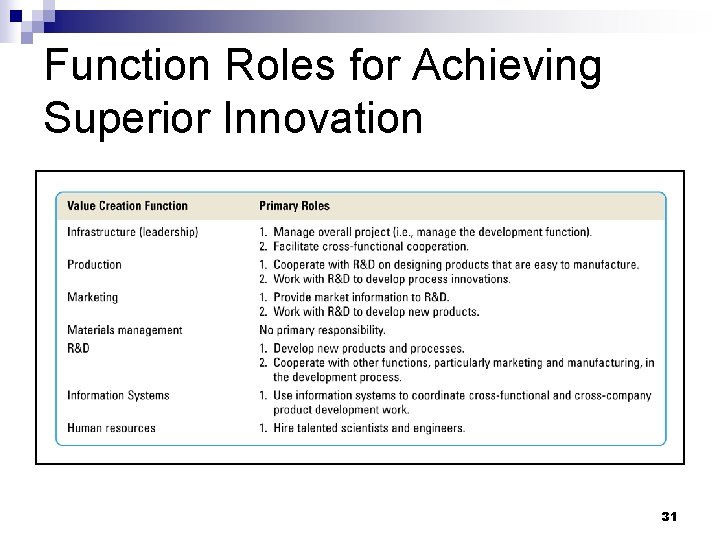
Function Roles for Achieving Superior Innovation 31
Achieving Superior Responsiveness to Customers n Customer focus ¨ Leadership ¨ Employee attitudes ¨ Bringing customers into the company n Satisfying customer needs ¨ Customization ¨ Response time 32
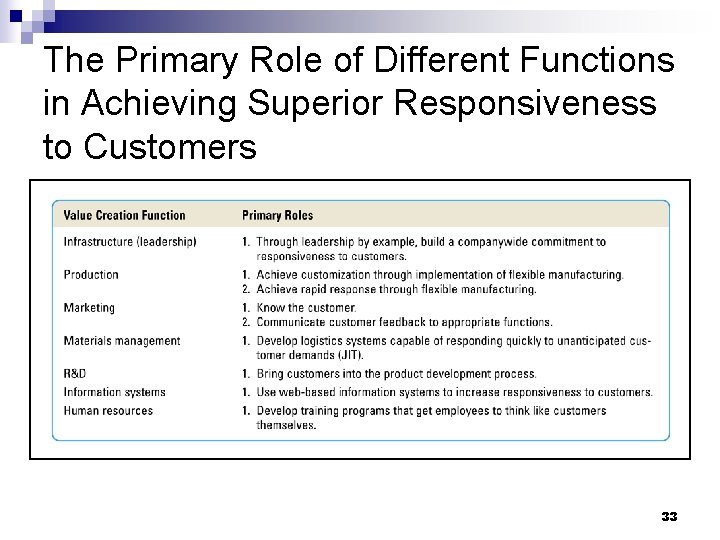
The Primary Role of Different Functions in Achieving Superior Responsiveness to Customers 33
- Slides: 33