
4 Acidbase reaction mechanism Stepbystep animation of acidbase

4. Acid-base reaction mechanism Step-by-step animation of acid-base reactions
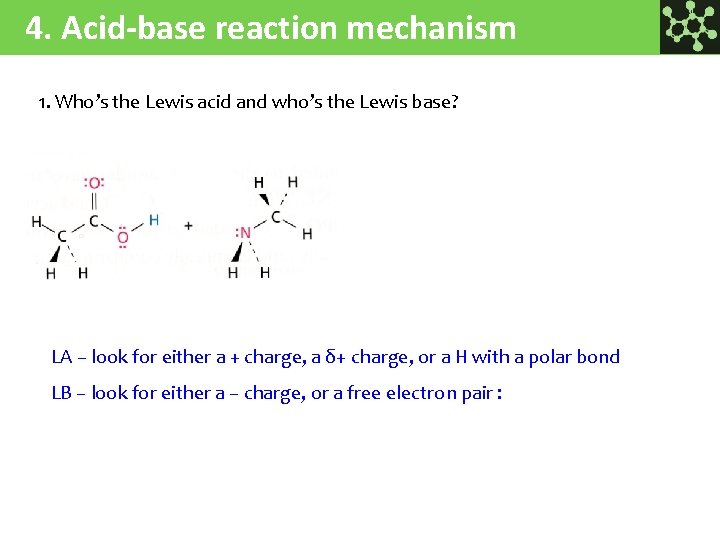
4. Acid-base reaction mechanism 1. Who’s the Lewis acid and who’s the Lewis base? LA – look for either a + charge, a δ+ charge, or a H with a polar bond LB – look for either a – charge, or a free electron pair :
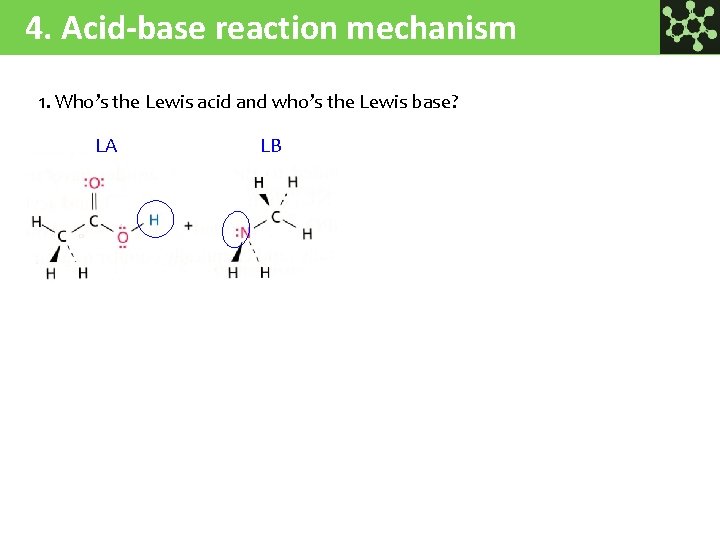
4. Acid-base reaction mechanism 1. Who’s the Lewis acid and who’s the Lewis base? LA LB
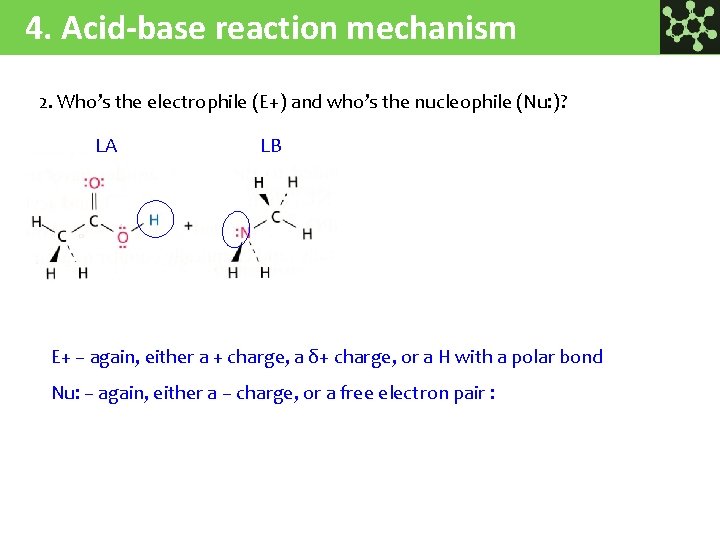
4. Acid-base reaction mechanism 2. Who’s the electrophile (E+) and who’s the nucleophile (Nu: )? LA LB E+ – again, either a + charge, a δ+ charge, or a H with a polar bond Nu: – again, either a – charge, or a free electron pair :
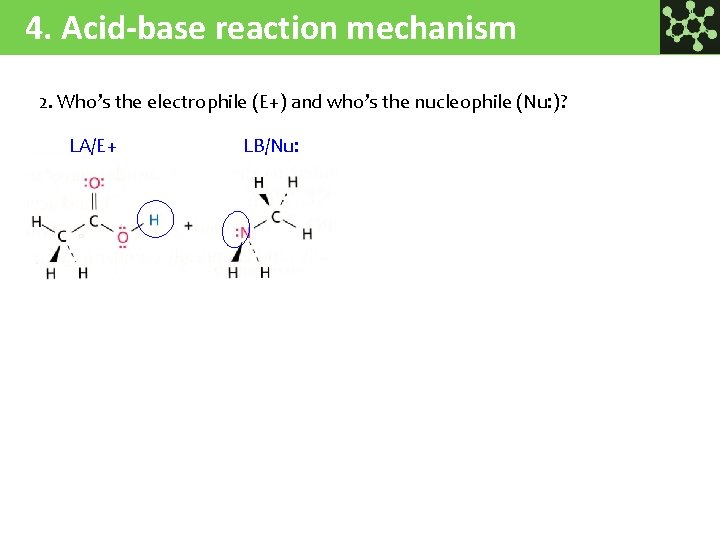
4. Acid-base reaction mechanism 2. Who’s the electrophile (E+) and who’s the nucleophile (Nu: )? LA/E+ LB/Nu:
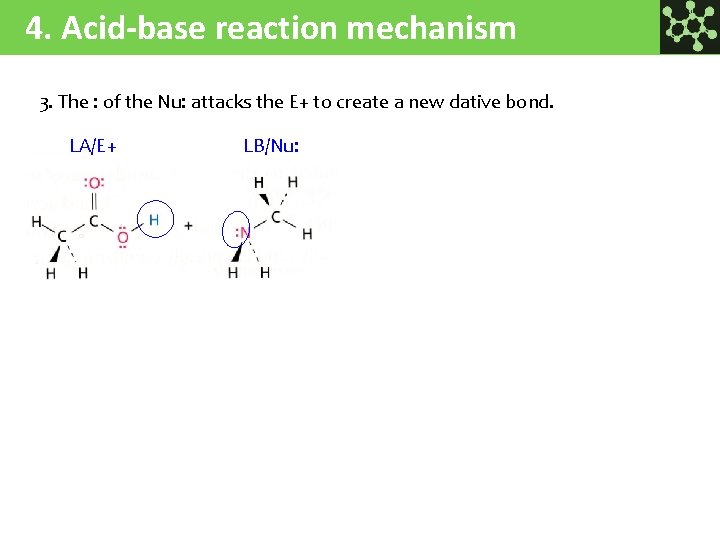
4. Acid-base reaction mechanism 3. The : of the Nu: attacks the E+ to create a new dative bond. LA/E+ LB/Nu:
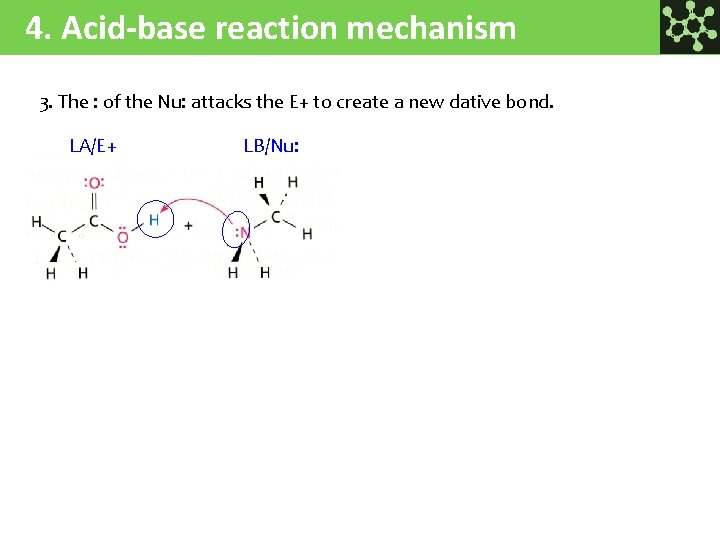
4. Acid-base reaction mechanism 3. The : of the Nu: attacks the E+ to create a new dative bond. LA/E+ LB/Nu:
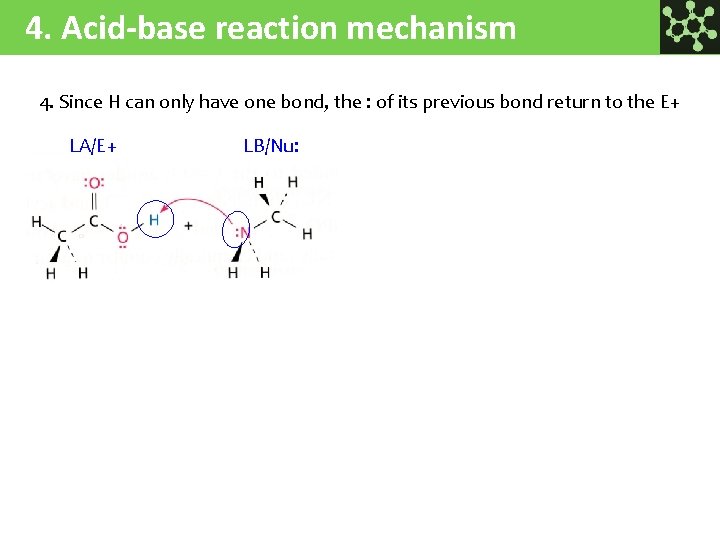
4. Acid-base reaction mechanism 4. Since H can only have one bond, the : of its previous bond return to the E+ LA/E+ LB/Nu:
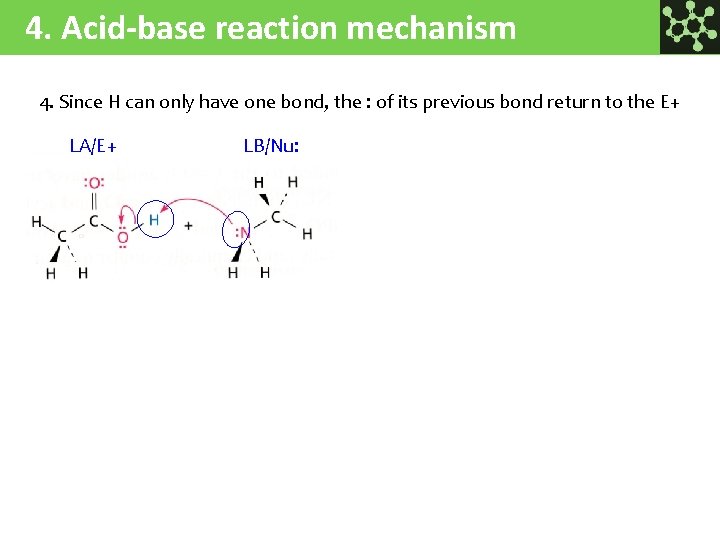
4. Acid-base reaction mechanism 4. Since H can only have one bond, the : of its previous bond return to the E+ LA/E+ LB/Nu:
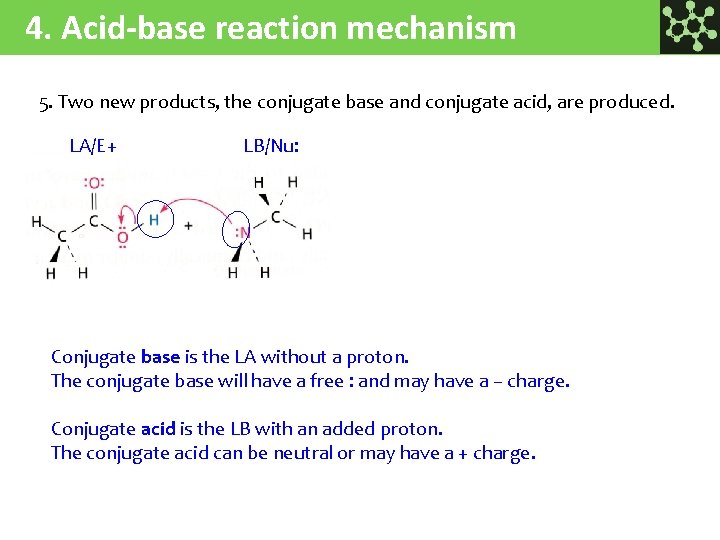
4. Acid-base reaction mechanism 5. Two new products, the conjugate base and conjugate acid, are produced. LA/E+ LB/Nu: Conjugate base is the LA without a proton. The conjugate base will have a free : and may have a – charge. Conjugate acid is the LB with an added proton. The conjugate acid can be neutral or may have a + charge.
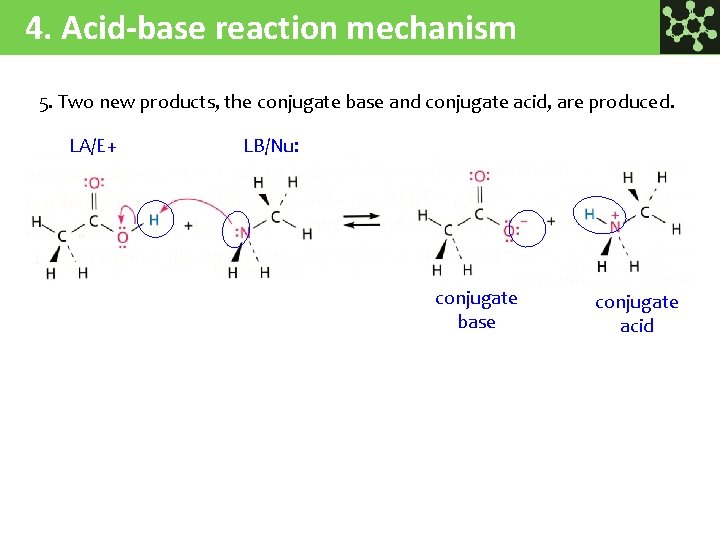
4. Acid-base reaction mechanism 5. Two new products, the conjugate base and conjugate acid, are produced. LA/E+ LB/Nu: conjugate base conjugate acid
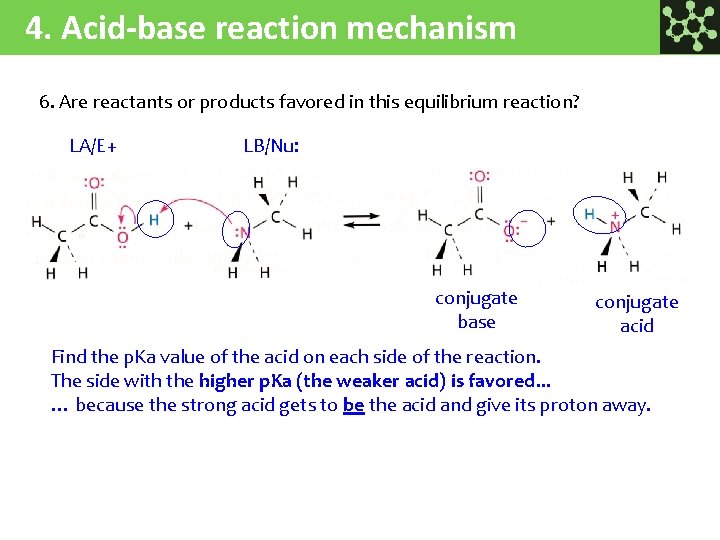
4. Acid-base reaction mechanism 6. Are reactants or products favored in this equilibrium reaction? LA/E+ LB/Nu: conjugate base conjugate acid Find the p. Ka value of the acid on each side of the reaction. The side with the higher p. Ka (the weaker acid) is favored. . . … because the strong acid gets to be the acid and give its proton away.
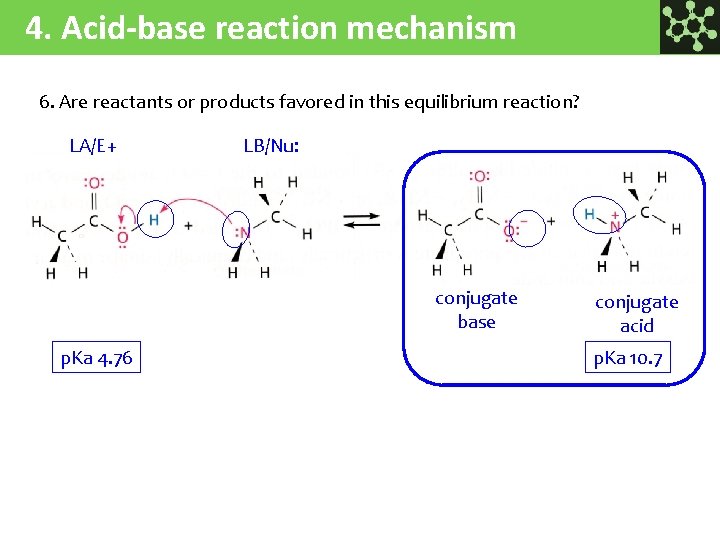
4. Acid-base reaction mechanism 6. Are reactants or products favored in this equilibrium reaction? LA/E+ LB/Nu: conjugate base p. Ka 4. 76 conjugate acid p. Ka 10. 7
- Slides: 13