
4 a Know the general pathway by which
4 a. Know the general pathway by which ribosomes synthesize proteins, using t. RNAs to translate genetic information in m. RNA.
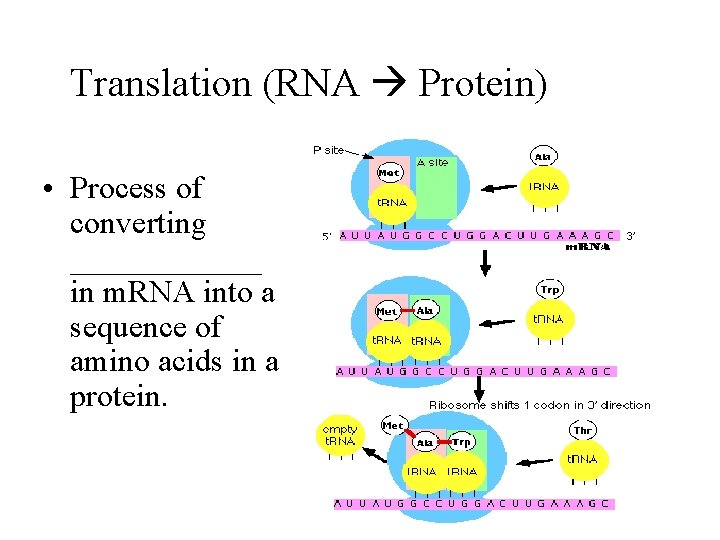
Translation (RNA Protein) • Process of converting ______ in m. RNA into a sequence of amino acids in a protein.
Translation Steps 1. The starting end of the m. RNA strand attaches to a _________. 2. Then, _____ molecules, each carrying a specific amino acid, approach the ribosome. 3. When a t. RNA anticodon pairs w/ the 1 st m. RNA codon, the 2 molecules temporarily join ______. 4. Usually, the 1 st codon on m. RNA is ____, which codes for the amino acid methionine. • AUG signals the ______ of protein synthesis.
Translation Steps 5. When the signal is given, the ribosome ______ along the m. RNA to the next codon 6. A new ____ molecule carrying an amino acid pairs w/ the 2 nd ______ codon 7. When the 1 st & 2 nd amino acids are in place, an ________ joins them by forming a peptide bond between them. 8. As the process continues, a chain of amino acids is formed until the ribosome reaches a _____ codon (UAA, UAG, UGA) on the m. RNA strand.
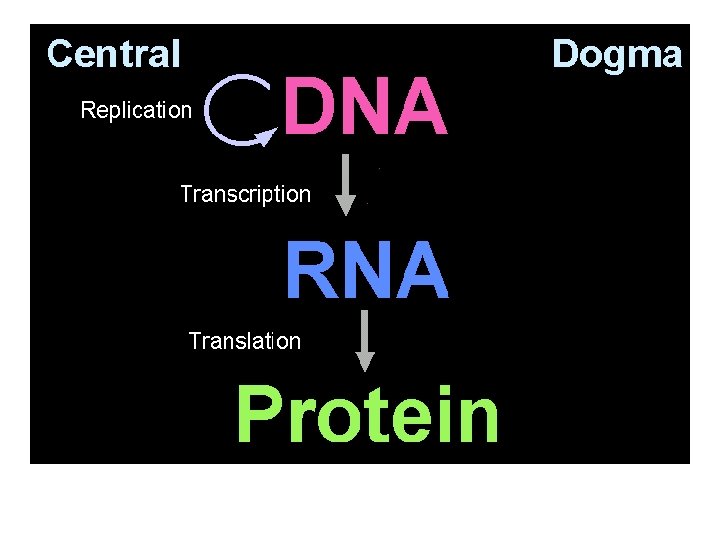
Translation – What is translation? – Translation is the ____ of an m. RNA message into a polypeptide chain (protein). – ________ takes place on ribosomes. – During translation, the cell uses information from _______ to produce proteins.
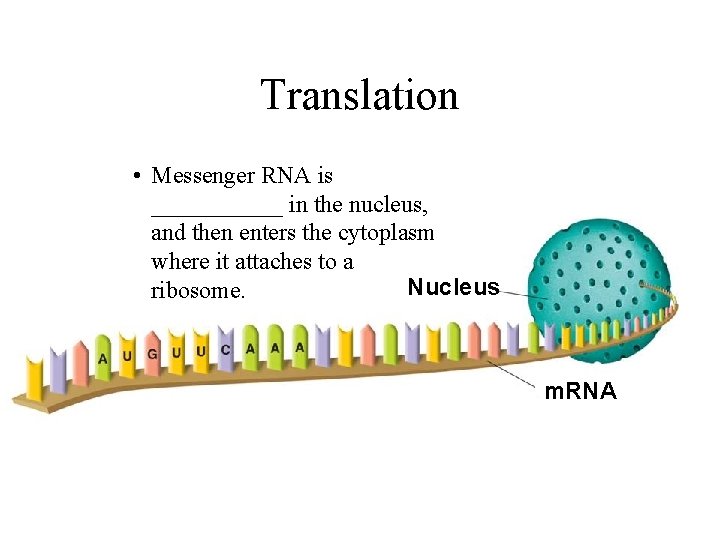
Translation • Messenger RNA is ______ in the nucleus, and then enters the cytoplasm where it attaches to a Nucleus ribosome. m. RNA

Translation • Translation begins when an m. RNA molecule attaches to a ribosome. • As each _____ of the m. RNA molecule moves through the ribosome, the proper amino acid is brought into the ribosome by t. RNA. • In the ribosome, the amino acid is transferred to the growing _______ chain.
Translation • Each t. RNA molecule carries only one kind of _______. • In addition to an amino acid, each t. RNA molecule has _____ unpaired bases. • These bases, called the ______, are complementary to one m. RNA codon.
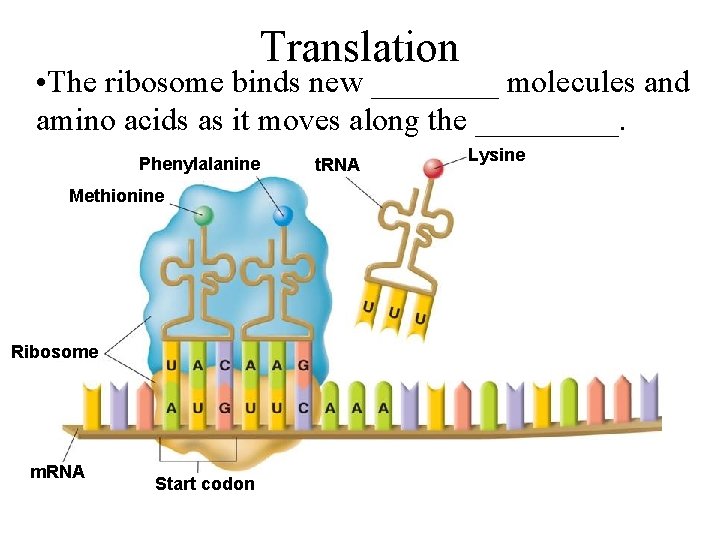
Translation • The ribosome binds new ____ molecules and amino acids as it moves along the _____. Phenylalanine Methionine Ribosome m. RNA Start codon t. RNA Lysine
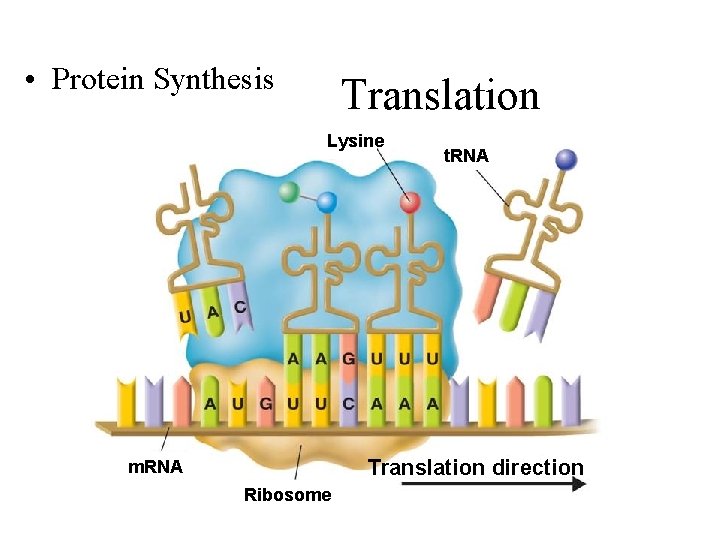
• Protein Synthesis Translation Lysine t. RNA Translation direction m. RNA Ribosome
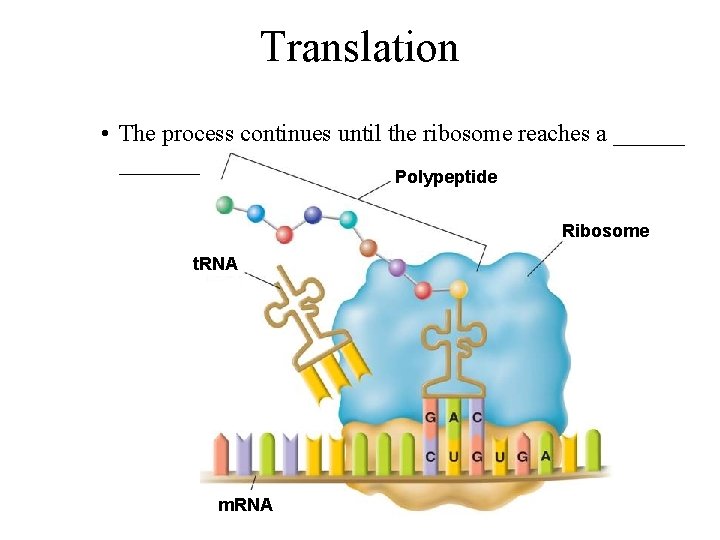
Translation • The process continues until the ribosome reaches a _________. Polypeptide Ribosome t. RNA m. RNA
The Roles of RNA and DNA • The cell uses the_____ “master plan” to prepare _____ “blueprints. ” The _______ stays in the nucleus. • The _____ molecules go to the protein building sites in the cytoplasm—the ribosomes.
Genes and Proteins • Genes contain instructions for assembling proteins. • Many proteins are _______, which catalyze and regulate chemical reactions. • Proteins are each specifically designed to build or operate a component of a ______.
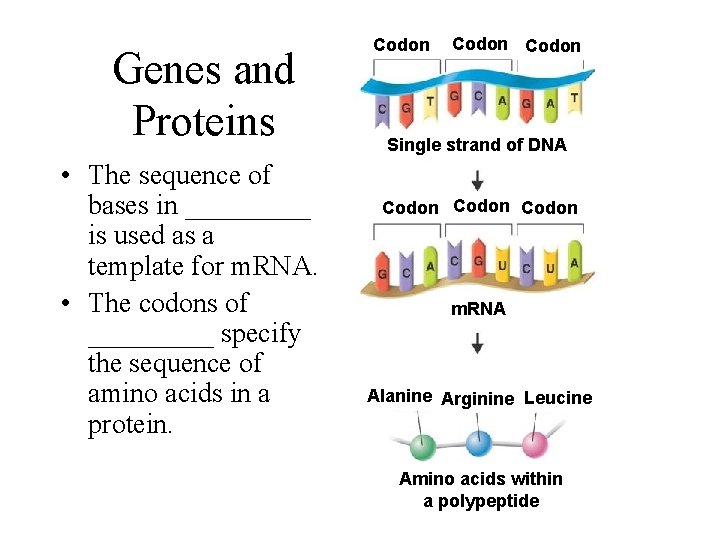
Genes and Proteins • The sequence of bases in _____ is used as a template for m. RNA. • The codons of _____ specify the sequence of amino acids in a protein. Codon Single strand of DNA Codon m. RNA Alanine Arginine Leucine Amino acids within a polypeptide
4 b. Know to apply the genetic coding rules to predict the sequence of amino acids from a sequence of codons in RNA.
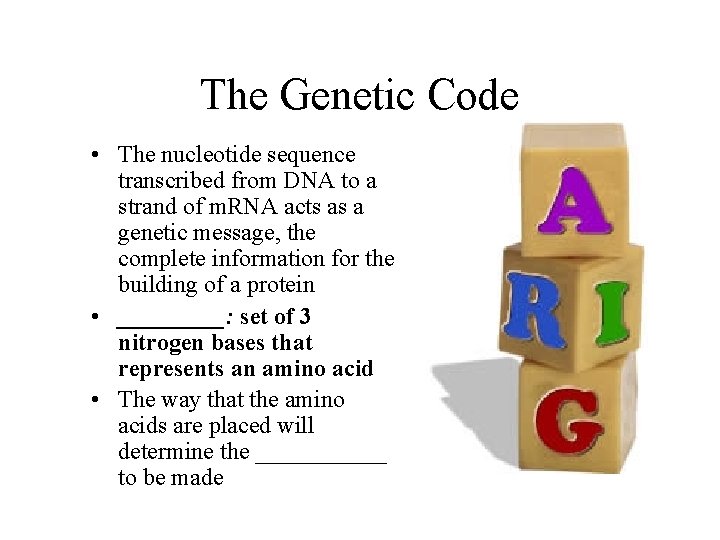
The Genetic Code • The nucleotide sequence transcribed from DNA to a strand of m. RNA acts as a genetic message, the complete information for the building of a protein • _____: set of 3 nitrogen bases that represents an amino acid • The way that the amino acids are placed will determine the ______ to be made
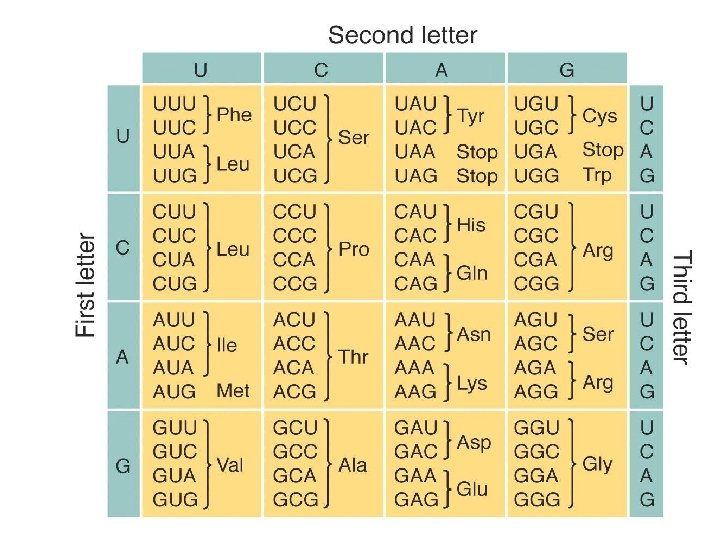
The Genetic Code • The genetic code is the “_______” of m. RNA instructions. • The code is written using four “____” (the bases: A, U, C, and G).
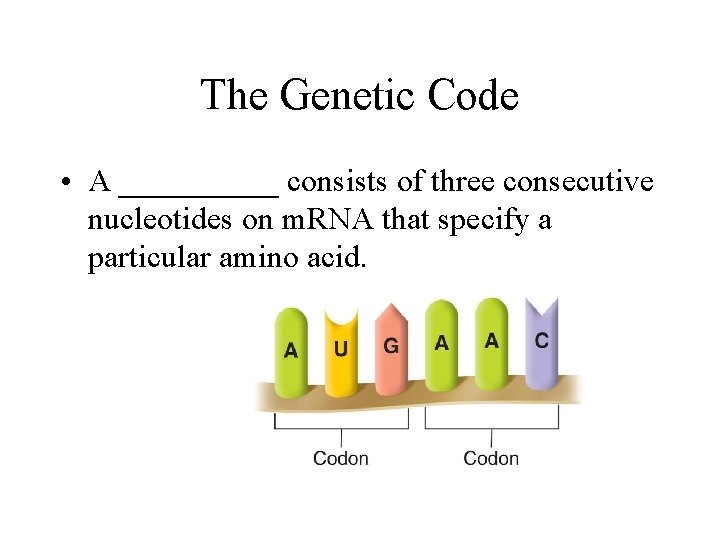
The Genetic Code • A _____ consists of three consecutive nucleotides on m. RNA that specify a particular amino acid.
The Genetic Code • Each codon specifies a particular amino acid that is to be placed on the _______ chain. • Some amino acids can be specified by more than one codon.
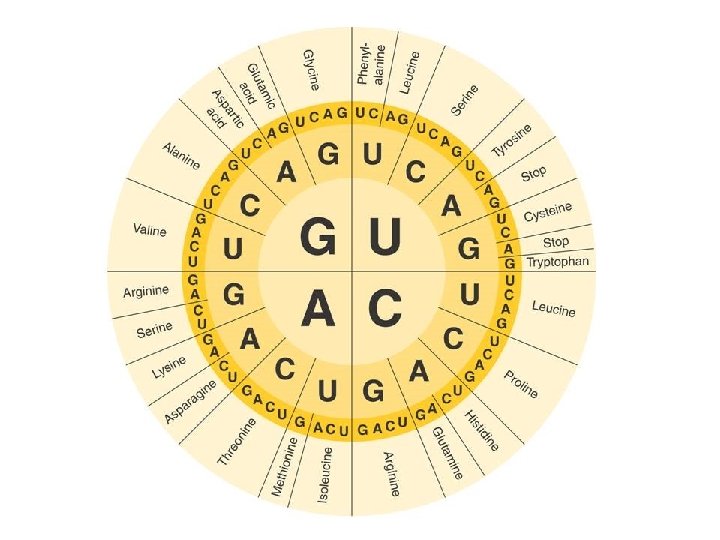
The Genetic Code
The Genetic Code • There is one codon AUG that can either specify the amino acid _________ or serve as a “____” codon for protein synthesis. • There are three “________” codons that do not code for any amino acid. These “stop” codons signify the end of a polypeptide.
4 e. Know proteins can differ from one another in the number & sequence of amino acids.
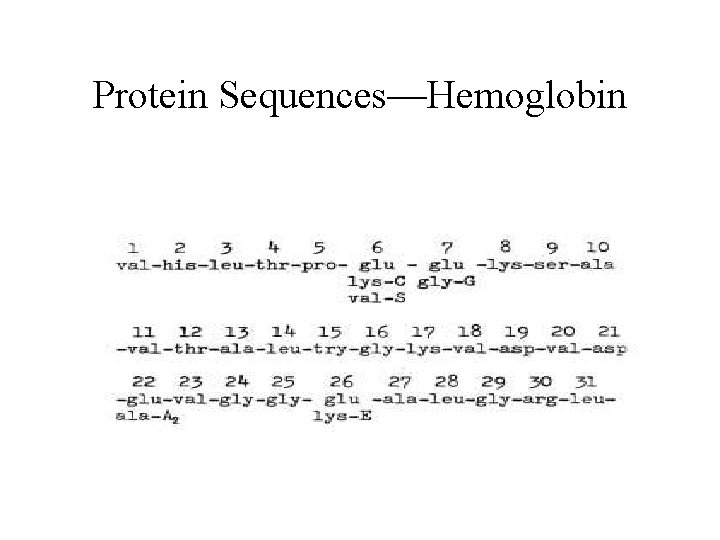
Protein Sequences—Hemoglobin
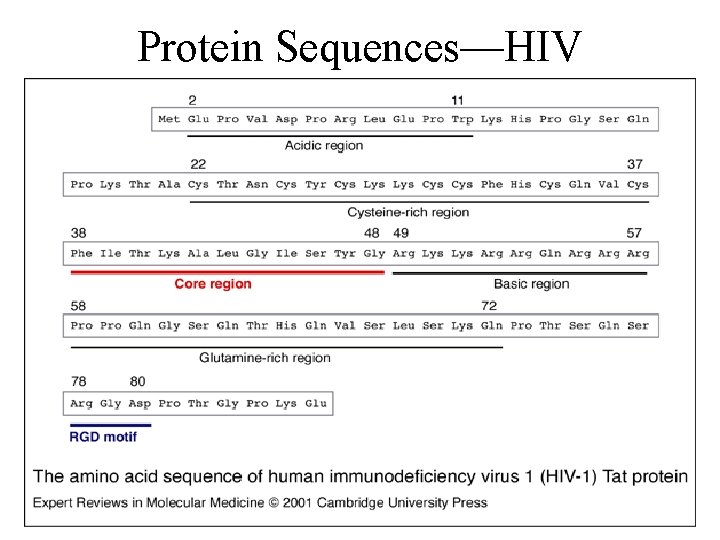
Protein Sequences—HIV
Wrap—Up • Protein molecules vary from about ___ to _______ amino acids in length. • The types, sequences, and numbers of amino acids used determine the type of _____ produced.
- Slides: 27