
4 9 Source Transformations The NodeVoltage Method and
- Slides: 10
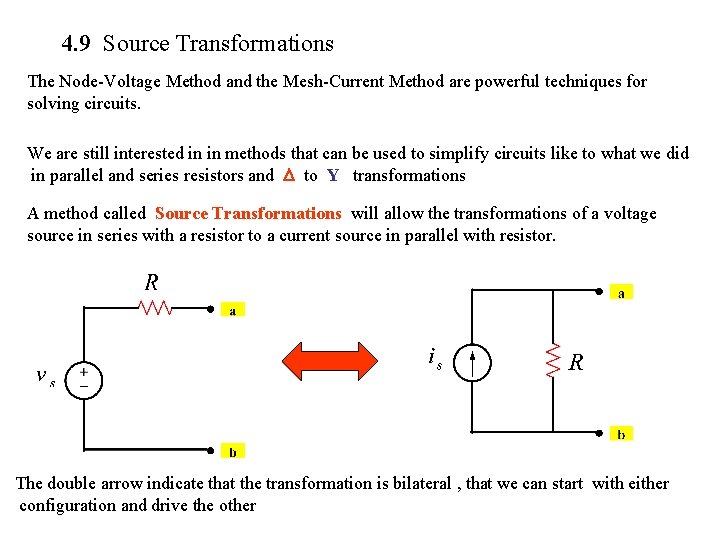
4. 9 Source Transformations The Node-Voltage Method and the Mesh-Current Method are powerful techniques for solving circuits. We are still interested in in methods that can be used to simplify circuits like to what we did in parallel and series resistors and D to Y transformations A method called Source Transformations will allow the transformations of a voltage source in series with a resistor to a current source in parallel with resistor. The double arrow indicate that the transformation is bilateral , that we can start with either configuration and drive the other
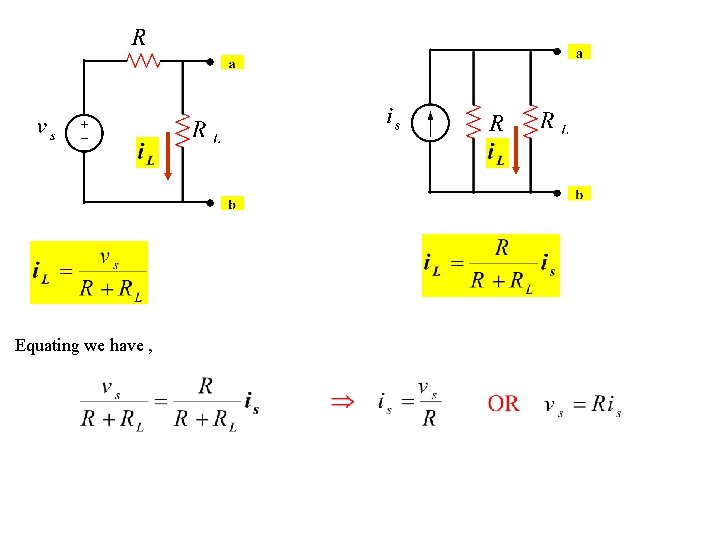
Equating we have ,
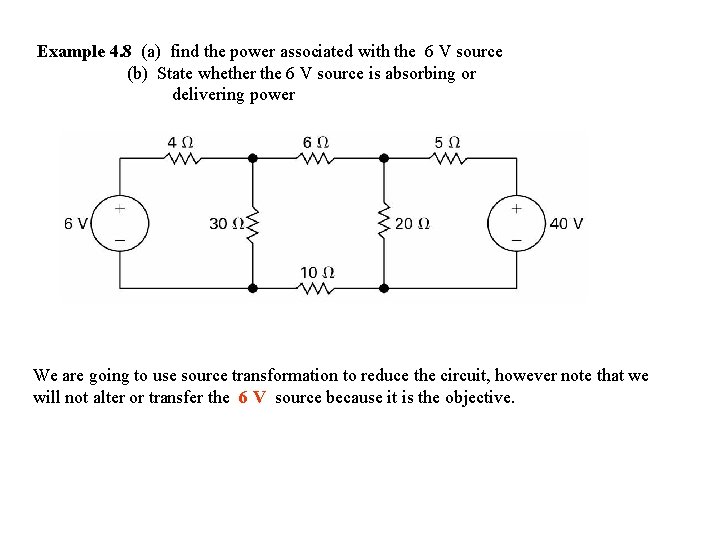
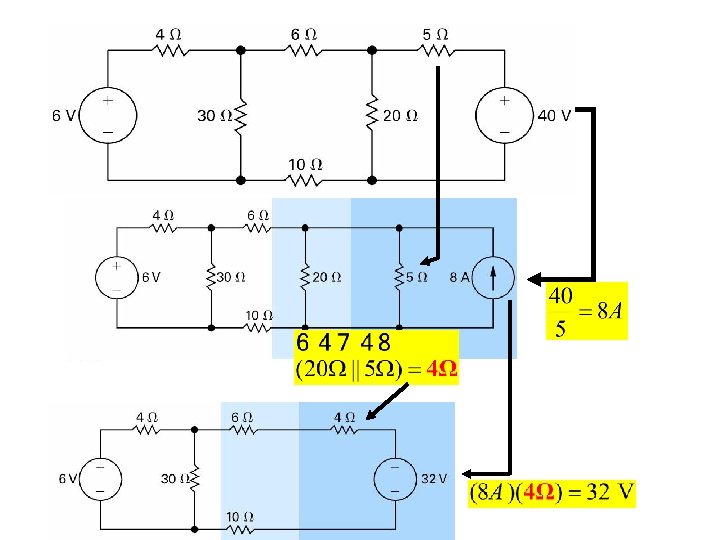
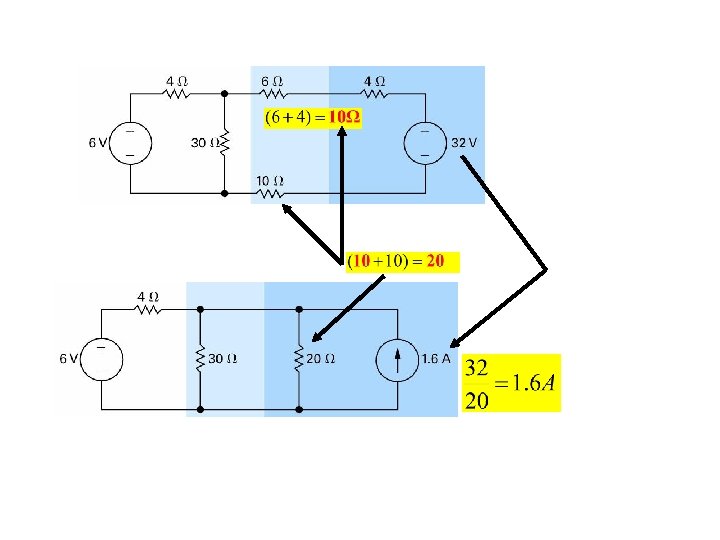
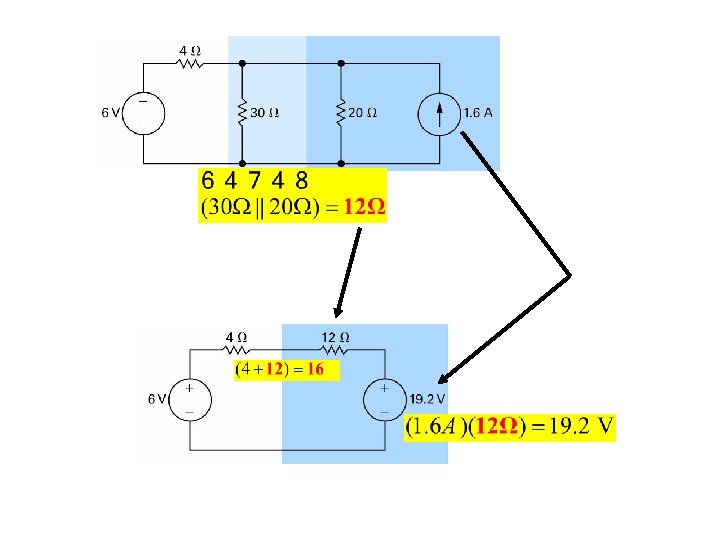
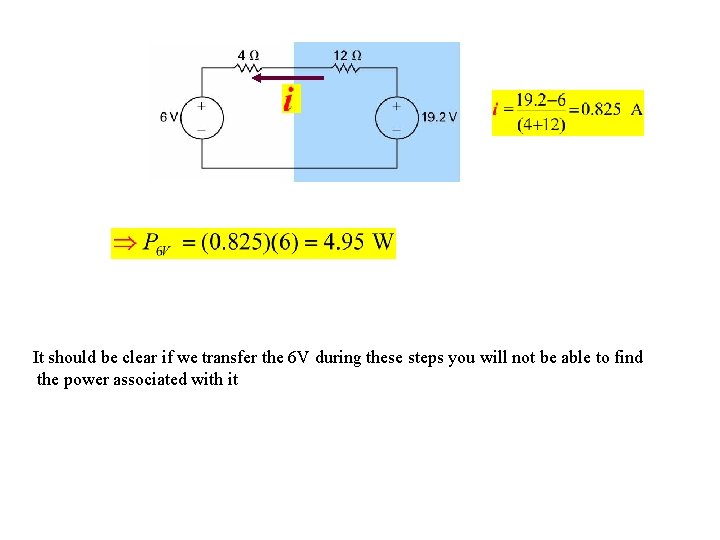
Example 4. 8 (a) find the power associated with the 6 V source (b) State whether the 6 V source is absorbing or delivering power We are going to use source transformation to reduce the circuit, however note that we will not alter or transfer the 6 V source because it is the objective.
It should be clear if we transfer the 6 V during these steps you will not be able to find the power associated with it
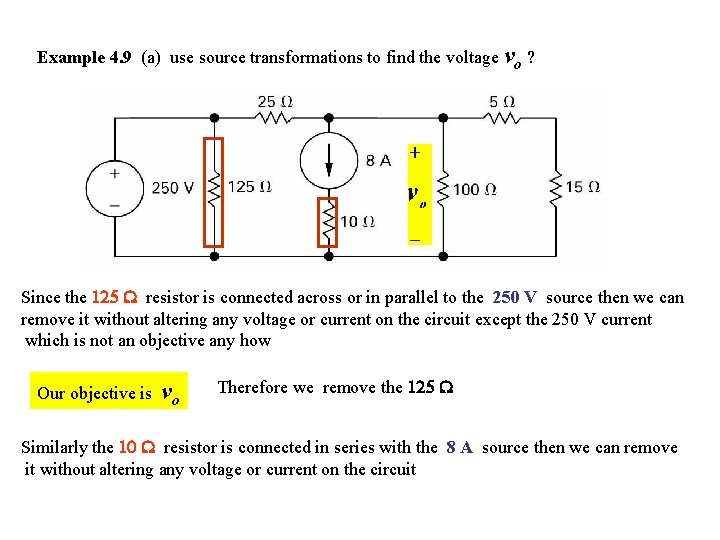
Example 4. 9 (a) use source transformations to find the voltage vo ? Since the 125 W resistor is connected across or in parallel to the 250 V source then we can remove it without altering any voltage or current on the circuit except the 250 V current which is not an objective any how Our objective is vo Therefore we remove the 125 W Similarly the 10 W resistor is connected in series with the 8 A source then we can remove it without altering any voltage or current on the circuit
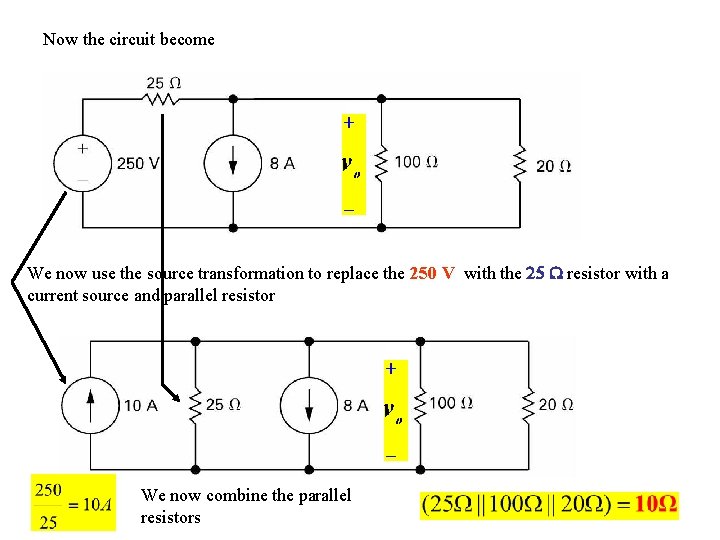
Now the circuit become We now use the source transformation to replace the 250 V with the 25 W resistor with a current source and parallel resistor We now combine the parallel resistors
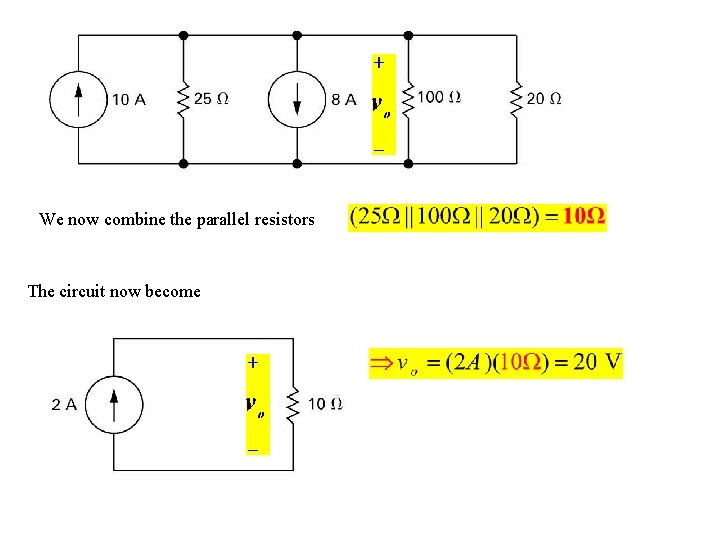
We now combine the parallel resistors The circuit now become