
4 6 Fermentation Comparing Photosynthesis Cellular Respiration Complete
- Slides: 11
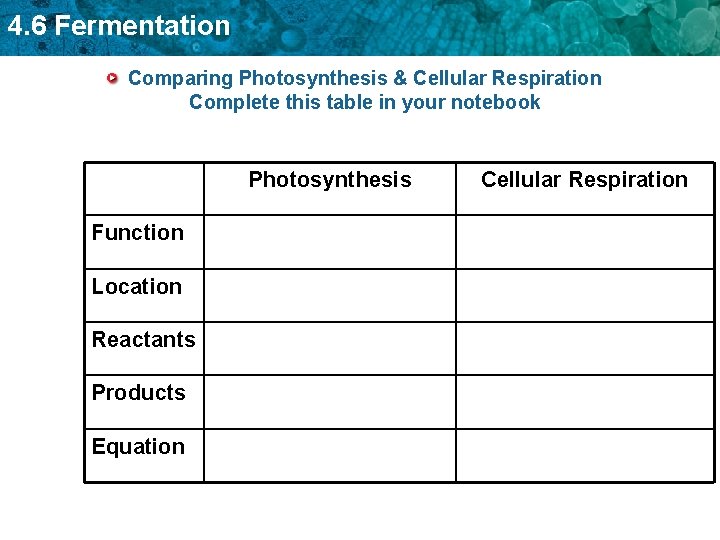
4. 6 Fermentation Comparing Photosynthesis & Cellular Respiration Complete this table in your notebook Photosynthesis Function Location Reactants Products Equation Cellular Respiration
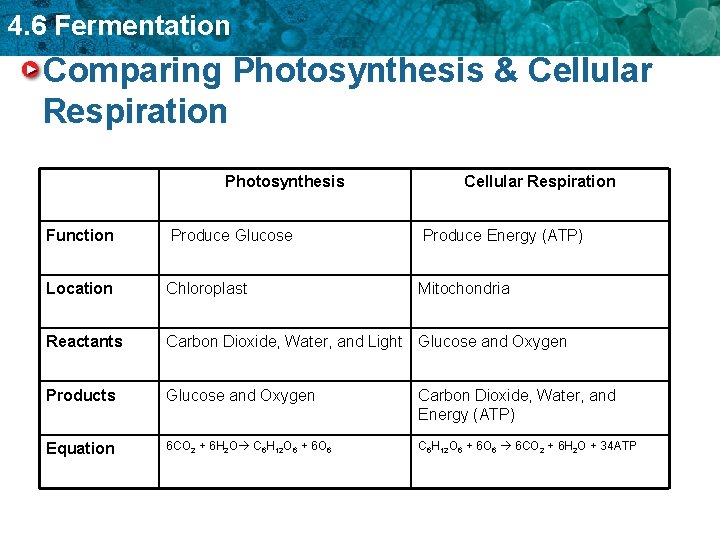
4. 6 Fermentation Comparing Photosynthesis & Cellular Respiration Photosynthesis Cellular Respiration Function Produce Glucose Produce Energy (ATP) Location Chloroplast Mitochondria Reactants Carbon Dioxide, Water, and Light Glucose and Oxygen Products Glucose and Oxygen Carbon Dioxide, Water, and Energy (ATP) Equation 6 CO 2 + 6 H 2 O C 6 H 12 O 6 + 6 O 6 6 CO 2 + 6 H 2 O + 34 ATP
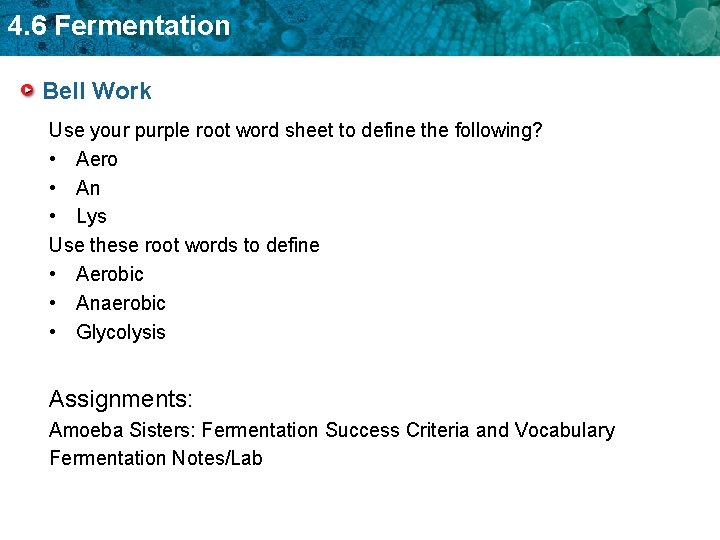
4. 6 Fermentation Bell Work Use your purple root word sheet to define the following? • Aero • An • Lys Use these root words to define • Aerobic • Anaerobic • Glycolysis Assignments: Amoeba Sisters: Fermentation Success Criteria and Vocabulary Fermentation Notes/Lab
4. 6 Fermentation Amoeba Sisters: Fermentation Success Criteria (3) Vocabulary (6)
4. 6 Fermentation KEY CONCEPT Fermentation allows the production of a small amount of ATP without oxygen.
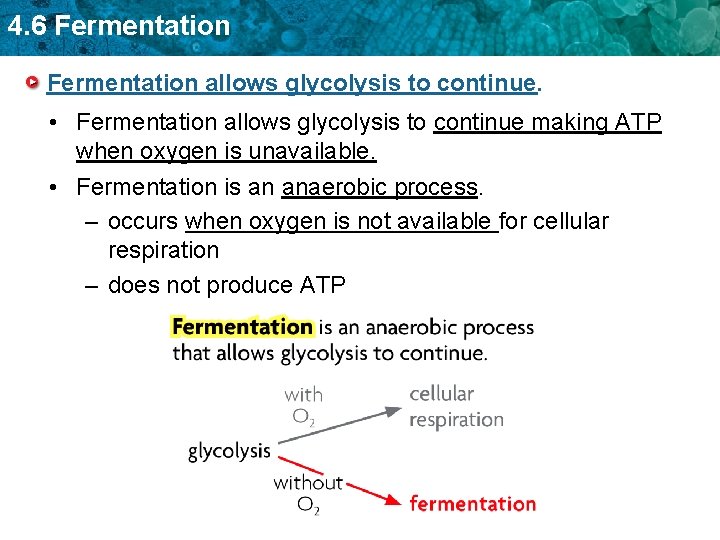
4. 6 Fermentation allows glycolysis to continue. • Fermentation allows glycolysis to continue making ATP when oxygen is unavailable. • Fermentation is an anaerobic process. – occurs when oxygen is not available for cellular respiration – does not produce ATP
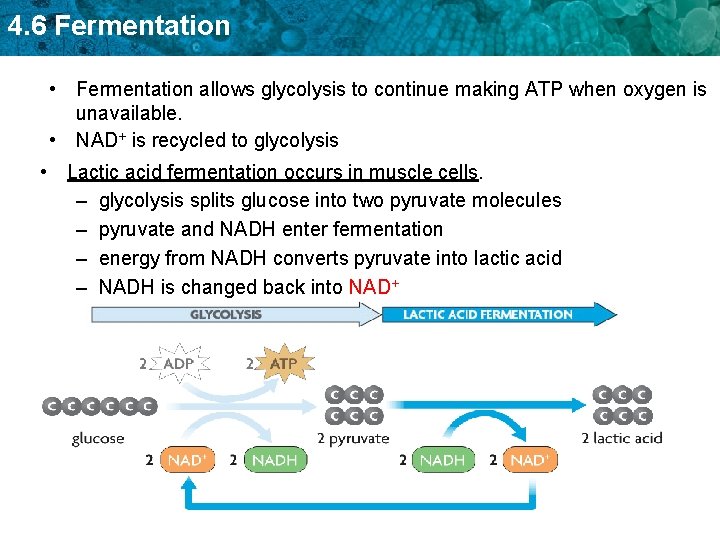
4. 6 Fermentation • Fermentation allows glycolysis to continue making ATP when oxygen is unavailable. • NAD+ is recycled to glycolysis • Lactic acid fermentation occurs in muscle cells. – glycolysis splits glucose into two pyruvate molecules – pyruvate and NADH enter fermentation – energy from NADH converts pyruvate into lactic acid – NADH is changed back into NAD+
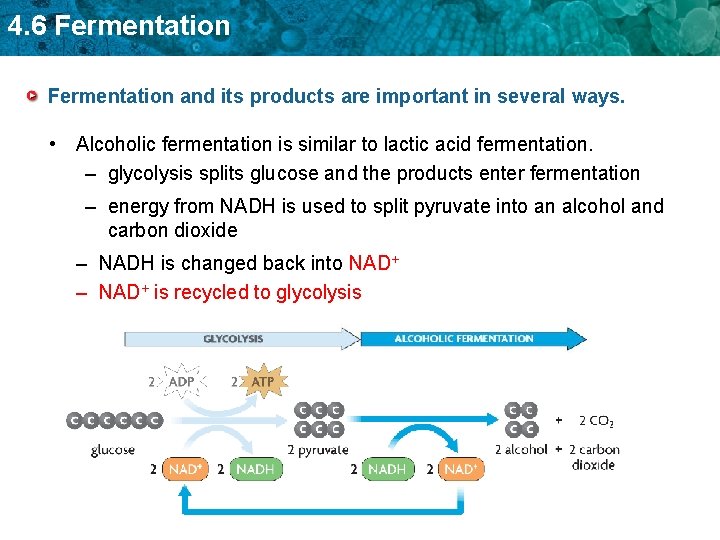
4. 6 Fermentation and its products are important in several ways. • Alcoholic fermentation is similar to lactic acid fermentation. – glycolysis splits glucose and the products enter fermentation – energy from NADH is used to split pyruvate into an alcohol and carbon dioxide – NADH is changed back into NAD+ – NAD+ is recycled to glycolysis
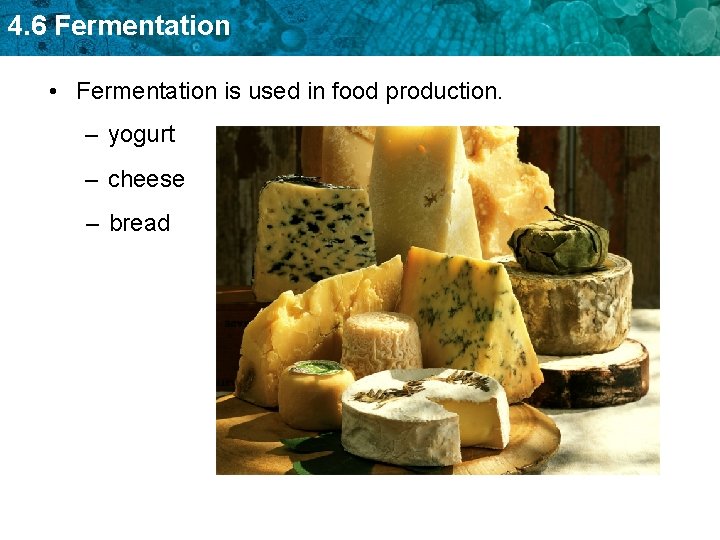
4. 6 Fermentation • Fermentation is used in food production. – yogurt – cheese – bread
4. 6 Fermentation Bell Work: Complete Sentences or no credit What are the two types of fermentation? Name the products made for both types? Assignments: Cellular Respiration/Fermentation Lab – Alternative Assignment: Page 263 in Biology book – Read, Outline, Key questions, Key Concept Questions Cellular Respiration Vocabulary (Due after Lab) Cellular Respiration Review Stamps: Compare/Contrast Table Cellular Respiration Quick Lab
4. 6 Fermentation • https: //jeopardylabs. com/play/photosynthesis-and-cellular -respiration 135