
4 4 Overview of Cellular Respiration KEY CONCEPT
- Slides: 21
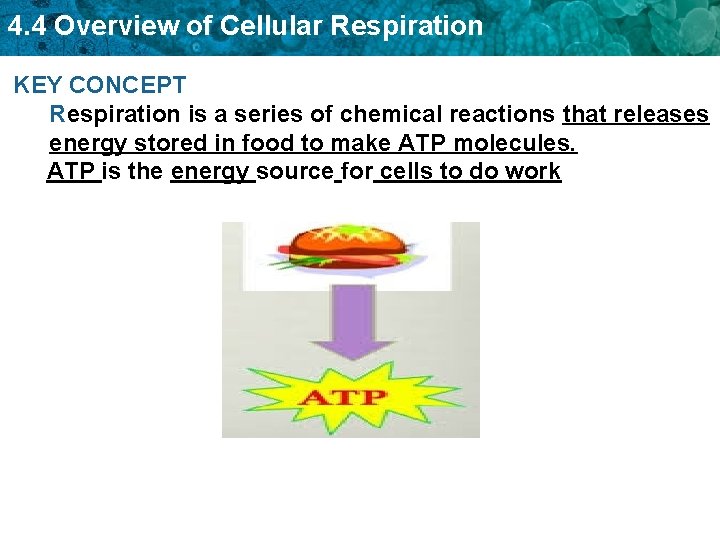
4. 4 Overview of Cellular Respiration KEY CONCEPT Respiration is a series of chemical reactions that releases energy stored in food to make ATP molecules. ATP is the energy source for cells to do work
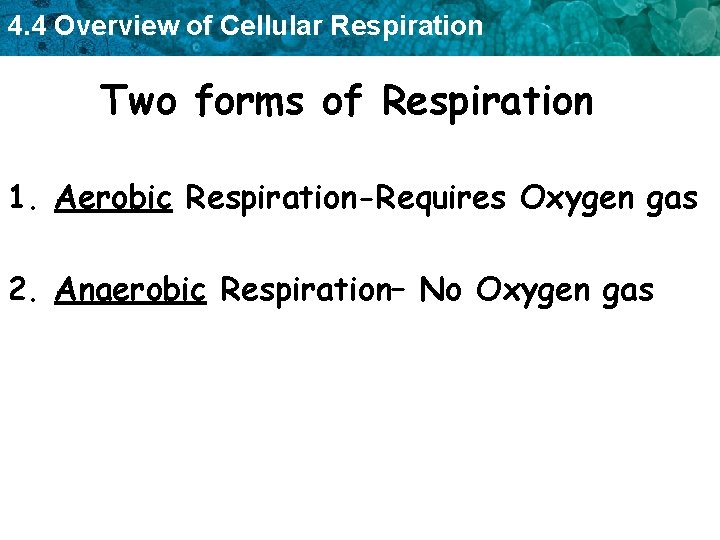
4. 4 Overview of Cellular Respiration Two forms of Respiration 1. Aerobic Respiration-Requires Oxygen gas 2. Anaerobic Respiration– No Oxygen gas
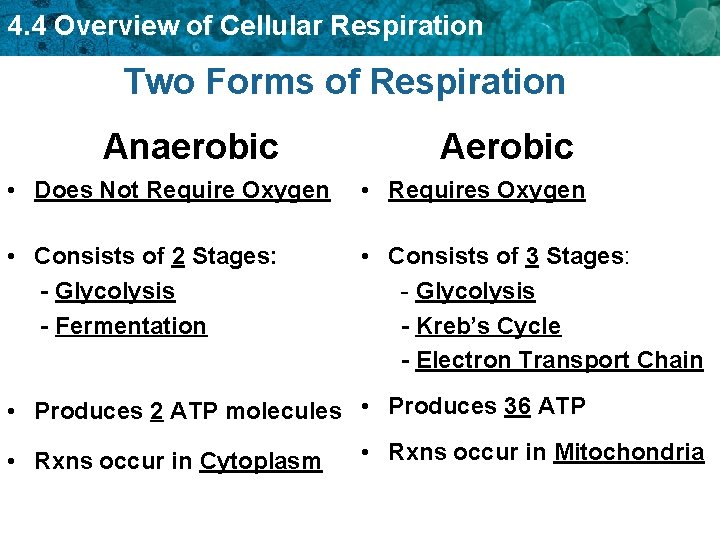
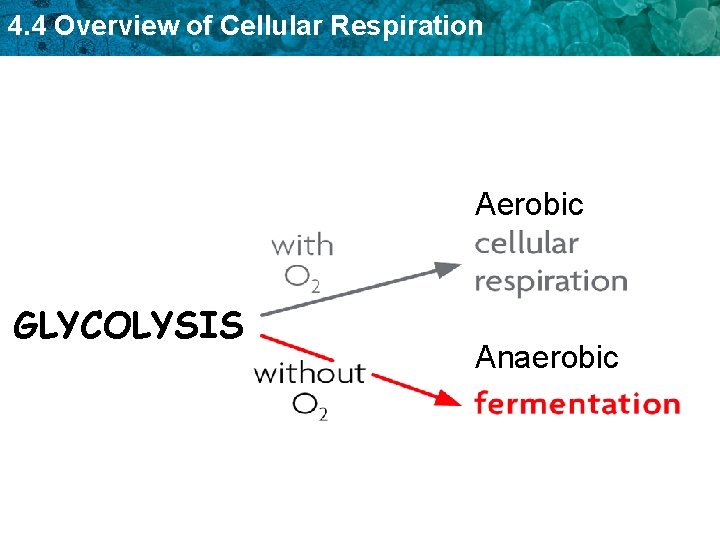
4. 4 Overview of Cellular Respiration Two Forms of Respiration Anaerobic Aerobic • Does Not Require Oxygen • Requires Oxygen • Consists of 2 Stages: - Glycolysis - Fermentation • Consists of 3 Stages: - Glycolysis - Kreb’s Cycle - Electron Transport Chain • Produces 2 ATP molecules • Produces 36 ATP • Rxns occur in Cytoplasm • Rxns occur in Mitochondria
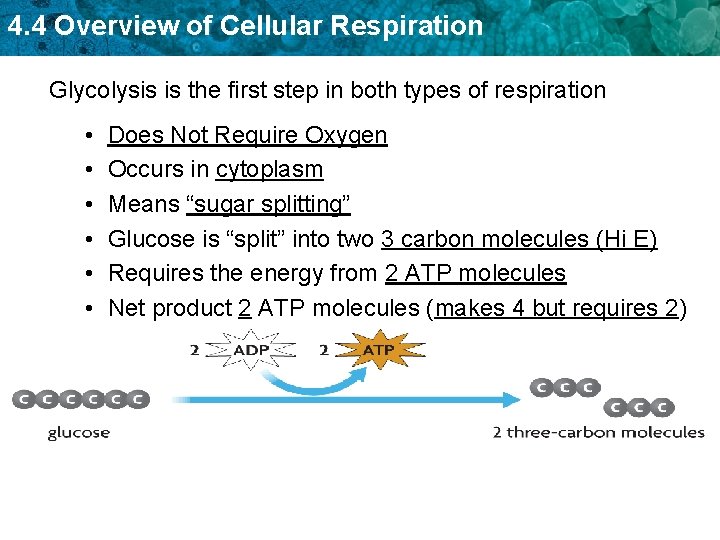
4. 4 Overview of Cellular Respiration Glycolysis is the first step in both types of respiration • • • Does Not Require Oxygen Occurs in cytoplasm Means “sugar splitting” Glucose is “split” into two 3 carbon molecules (Hi E) Requires the energy from 2 ATP molecules Net product 2 ATP molecules (makes 4 but requires 2)
4. 4 Overview of Cellular Respiration Aerobic GLYCOLYSIS Anaerobic
4. 4 Overview of Cellular Respiration With Oxygen
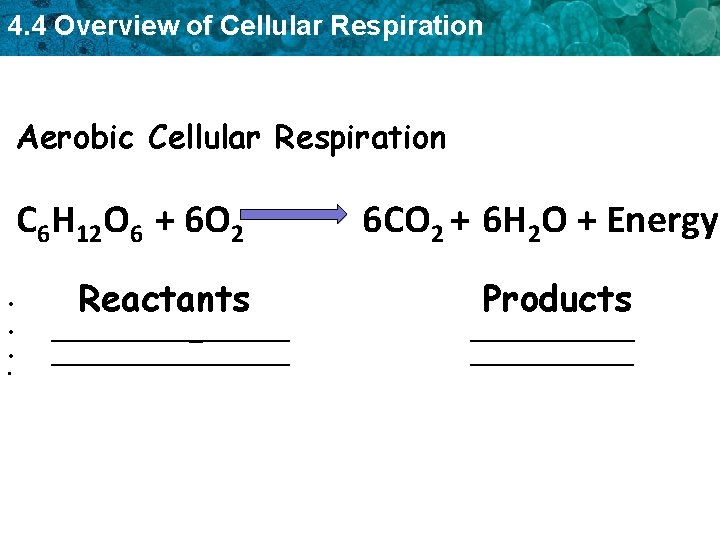
4. 4 Overview of Cellular Respiration Aerobic Cellular Respiration C 6 H 12 O 6 + 6 O 2 • • Reactants ___________________ 6 CO 2 + 6 H 2 O + Energy Products _____________
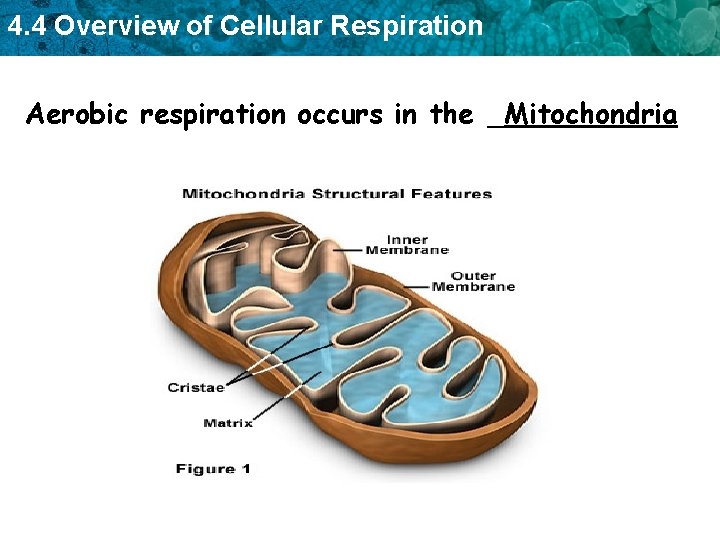
4. 4 Overview of Cellular Respiration Aerobic respiration occurs in the _Mitochondria
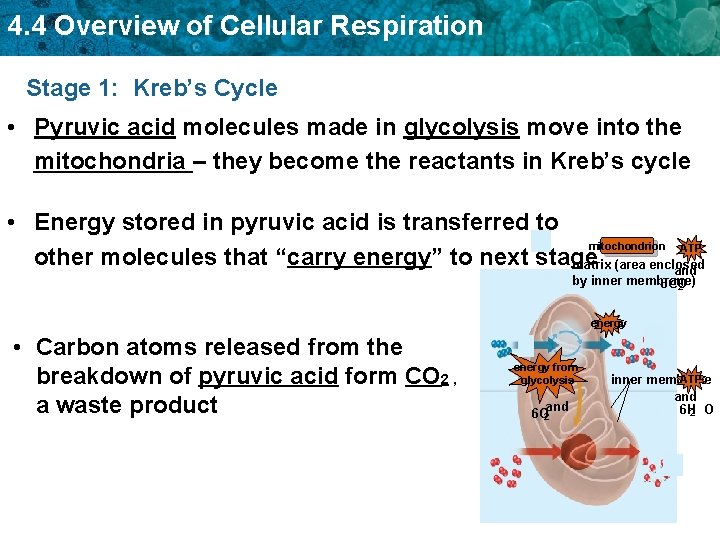
4. 4 Overview of Cellular Respiration Stage 1: Kreb’s Cycle • Pyruvic acid molecules made in glycolysis move into the mitochondria – they become the reactants in Kreb’s cycle • Energy stored in pyruvic acid is transferred to 1 mitochondrion ATP other molecules that “carry energy” to next stage matrix (area enclosed and by inner membrane) 6 CO 2 energy • Carbon atoms released from the breakdown of pyruvic acid form CO 2 , a waste product 3 energy from glycolysis and 6 O 2 2 ATP inner membrane and 6 H 2 O 4
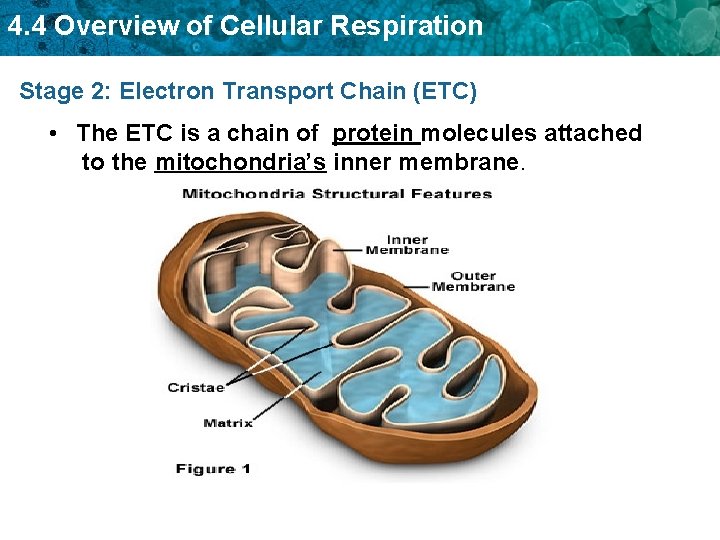
4. 4 Overview of Cellular Respiration Stage 2: Electron Transport Chain (ETC) • The ETC is a chain of protein molecules attached to the mitochondria’s inner membrane.
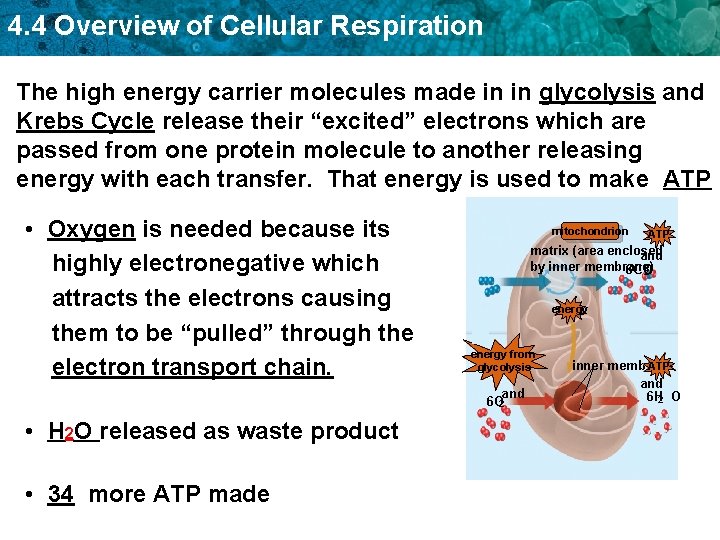
4. 4 Overview of Cellular Respiration The high energy carrier molecules made in in glycolysis and Krebs Cycle release their “excited” electrons which are passed from one protein molecule to another releasing energy with each transfer. That energy is used to make ATP • Oxygen is needed because its highly electronegative which attracts the electrons causing them to be “pulled” through the electron transport chain. 1 • 34 more ATP made ATP matrix (area enclosed and by inner membrane) 6 CO 2 energy 3 energy from glycolysis and 6 O 2 • H 2 O released as waste product mitochondrion 2 ATP inner membrane and 6 H 2 O 4
4. 4 Overview of Cellular Respiration Without Oxygen
4. 4 Overview of Cellular Respiration Anaerobic Respiration - Fermentation • Begins with glycolysis which makes 2 ATP • Occurs in the cytoplasm
4. 4 Overview of Cellular Respiration Anaerobic Respiration - Fermentation • Occurs when Oxygen is not available – anaerobic process • NO additional ATP is made • If no more ATP is made why is fermentation necessary? Replaces molecules needed to keep glycolysis working so 2 ATP can be made
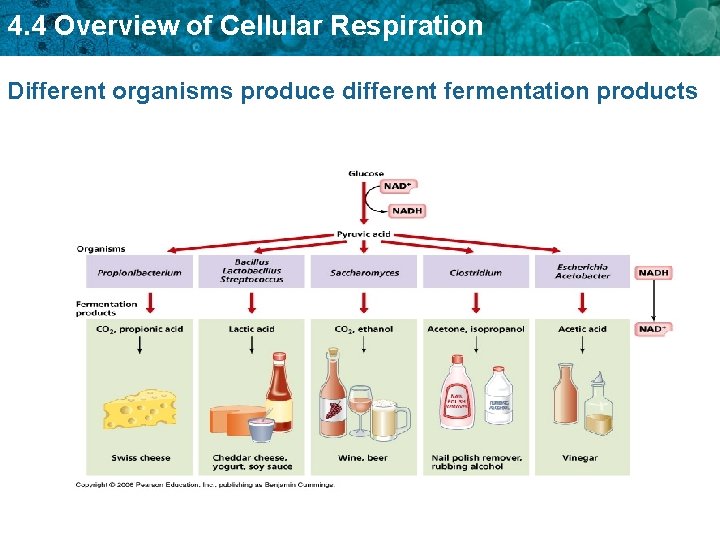
4. 4 Overview of Cellular Respiration Two Types of Fermentation • There are two chemical pathways of fermentation • They are named for the final product made • Alcoholic fermentation Yeast – Bread, Wine Bacteria - Yogurt Lactic Acid fermentation Muscles - “The Burn”
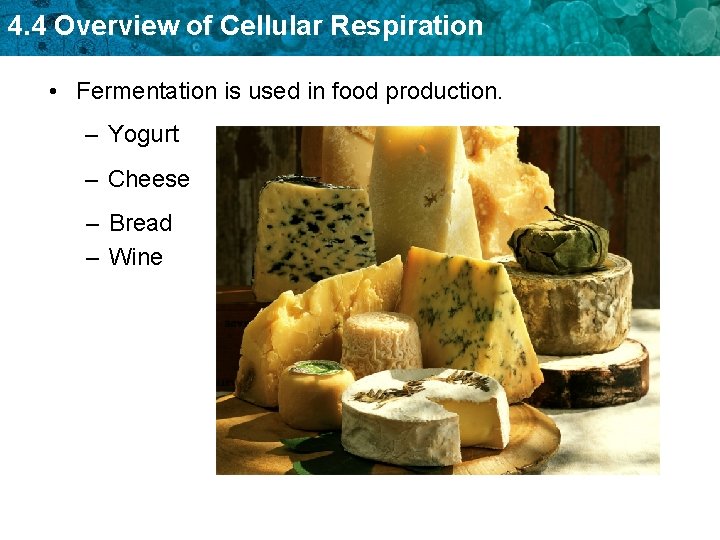
4. 4 Overview of Cellular Respiration • Fermentation is used in food production. – Yogurt – Cheese – Bread – Wine
4. 4 Overview of Cellular Respiration Different organisms produce different fermentation products
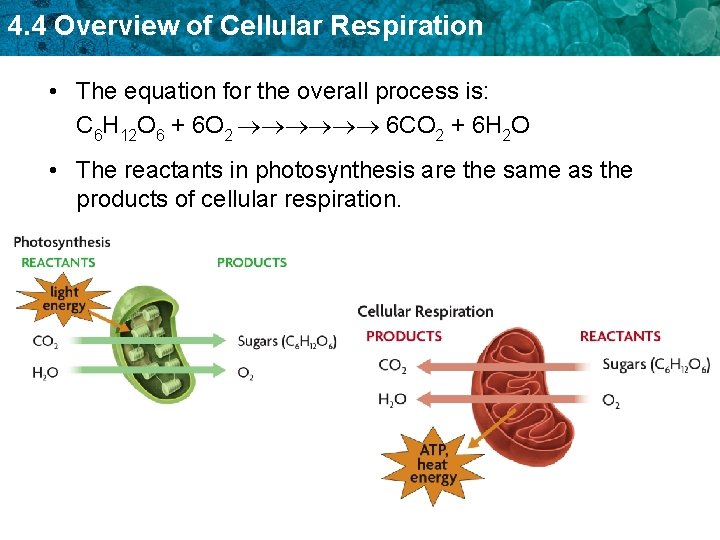
4. 4 Overview of Cellular Respiration • The equation for the overall process is: C 6 H 12 O 6 + 6 O 2 6 CO 2 + 6 H 2 O • The reactants in photosynthesis are the same as the products of cellular respiration.
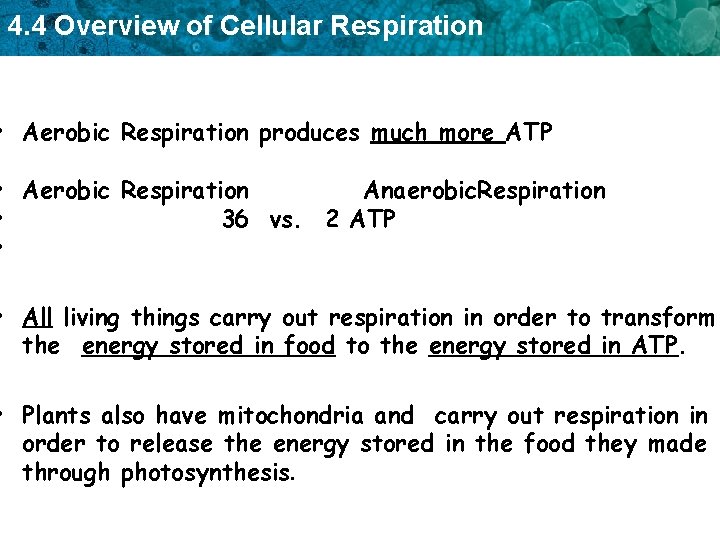
4. 4 Overview of Cellular Respiration • Aerobic Respiration produces much more ATP • Aerobic Respiration Anaerobic. Respiration • 36 vs. 2 ATP • • All living things carry out respiration in order to transform the energy stored in food to the energy stored in ATP. • Plants also have mitochondria and carry out respiration in order to release the energy stored in the food they made through photosynthesis.
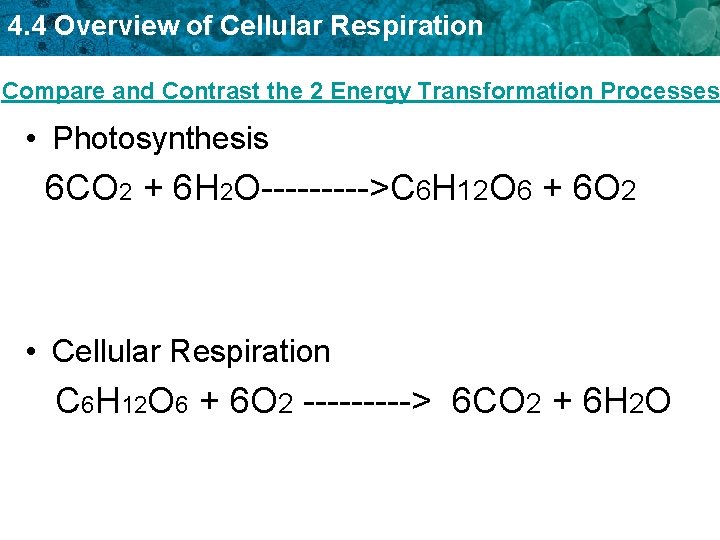
4. 4 Overview of Cellular Respiration Compare and Contrast the 2 Energy Transformation Processes • Photosynthesis 6 CO 2 + 6 H 2 O----->C 6 H 12 O 6 + 6 O 2 • Cellular Respiration C 6 H 12 O 6 + 6 O 2 -----> 6 CO 2 + 6 H 2 O
4. 4 Overview of Cellular Respiration