
4 4 Geologic Time Essential Questions 1 2
- Slides: 11
4. 4 – Geologic Time Essential Questions: 1. 2. What is the Geologic Time Scale? How Has Earth Changed Over Geologic Time?
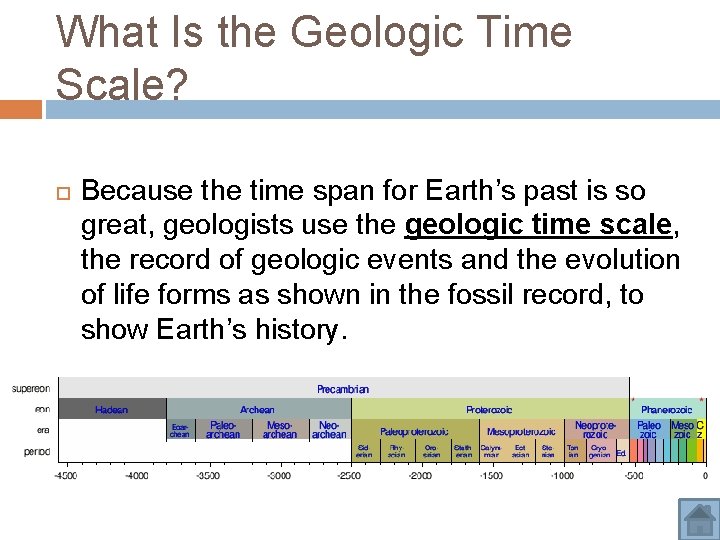
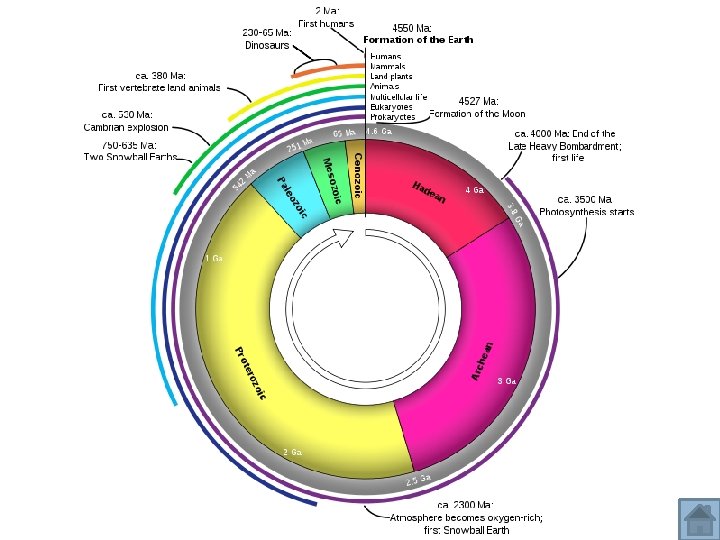
What Is the Geologic Time Scale? Because the time span for Earth’s past is so great, geologists use the geologic time scale, the record of geologic events and the evolution of life forms as shown in the fossil record, to show Earth’s history.
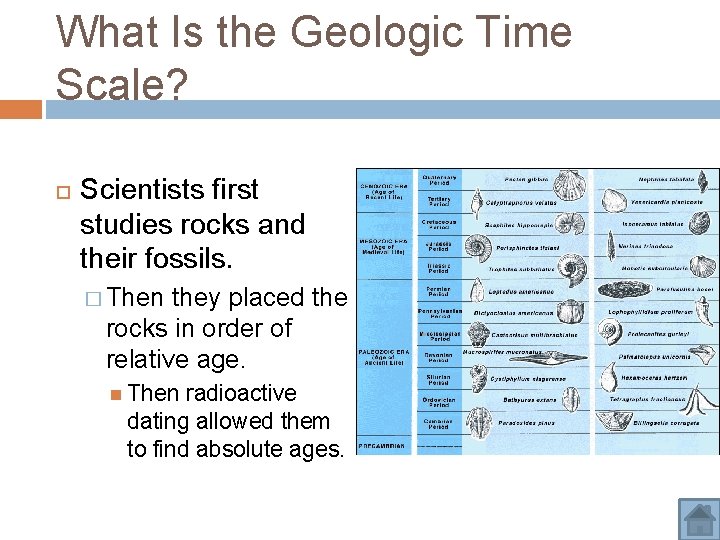
What Is the Geologic Time Scale? Scientists first studies rocks and their fossils. � Then they placed the rocks in order of relative age. Then radioactive dating allowed them to find absolute ages.
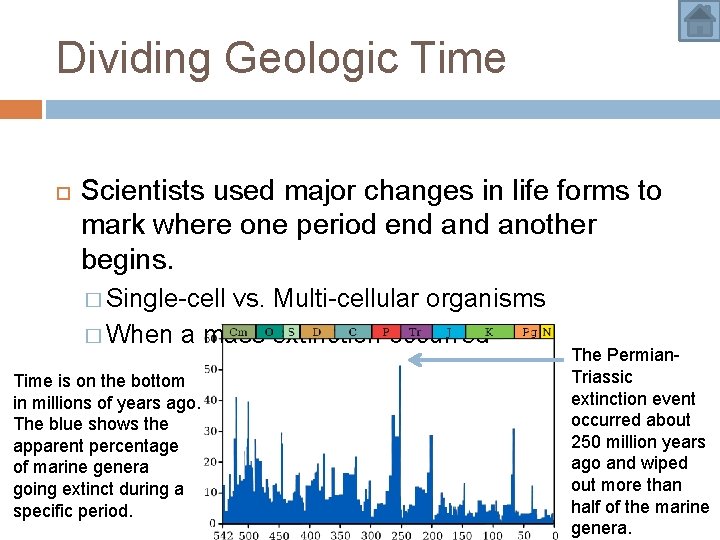
Dividing Geologic Time Scientists used major changes in life forms to mark where one period end another begins. � Single-cell vs. Multi-cellular organisms � When a mass extinction occurred Time is on the bottom in millions of years ago. The blue shows the apparent percentage of marine genera going extinct during a specific period. The Permian. Triassic extinction event occurred about 250 million years ago and wiped out more than half of the marine genera.
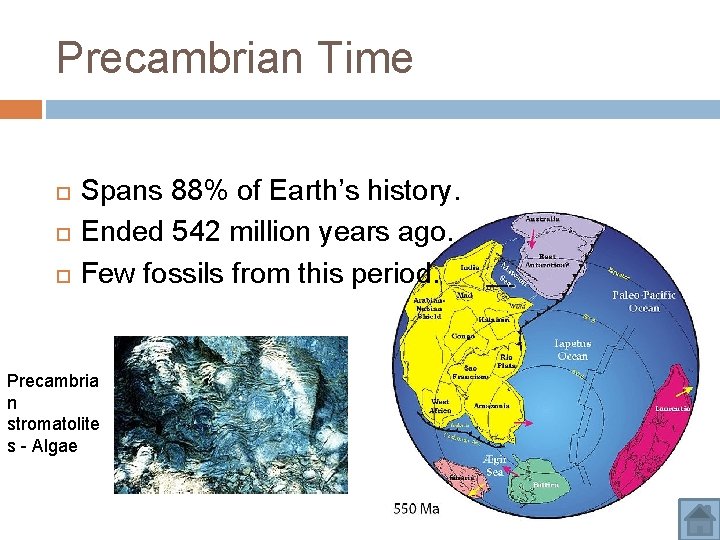
Precambrian Time Spans 88% of Earth’s history. Ended 542 million years ago. Few fossils from this period. Precambria n stromatolite s - Algae
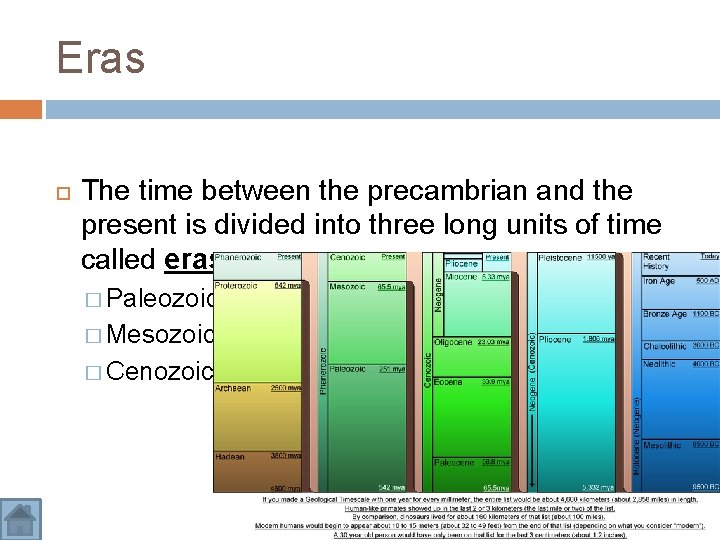
Eras The time between the precambrian and the present is divided into three long units of time called eras. � Paleozoic � Mesozoic � Cenozoic
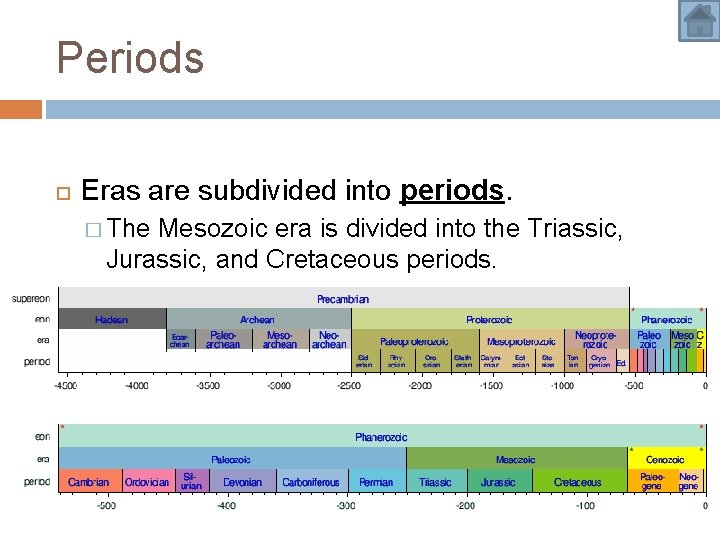
Periods Eras are subdivided into periods. � The Mesozoic era is divided into the Triassic, Jurassic, and Cretaceous periods.
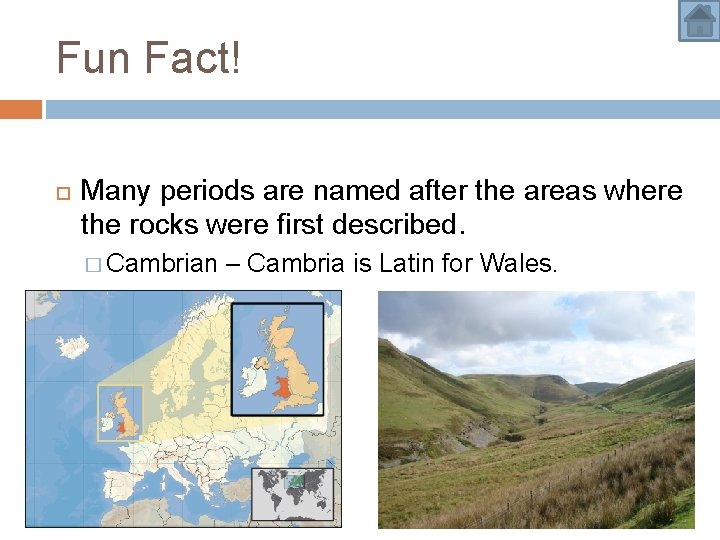
Fun Fact! Many periods are named after the areas where the rocks were first described. � Cambrian – Cambria is Latin for Wales.
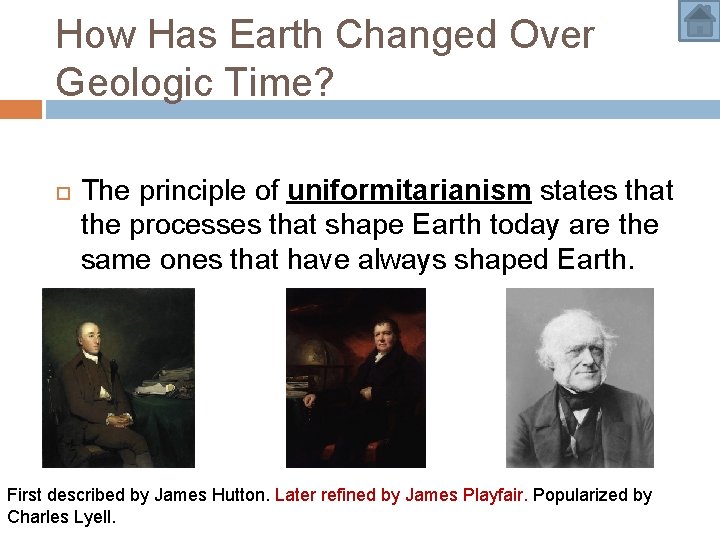
How Has Earth Changed Over Geologic Time? The principle of uniformitarianism states that the processes that shape Earth today are the same ones that have always shaped Earth. First described by James Hutton. Later refined by James Playfair. Popularized by Charles Lyell.
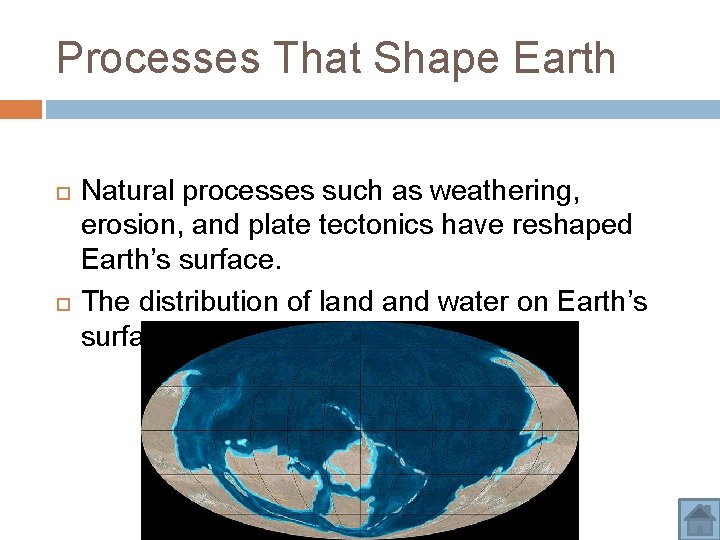
Processes That Shape Earth Natural processes such as weathering, erosion, and plate tectonics have reshaped Earth’s surface. The distribution of land water on Earth’s surface has changed over time.