
4 3 Analyze Conditional Statements Vocabulary a is
• 4. 3: • Analyze Conditional Statements
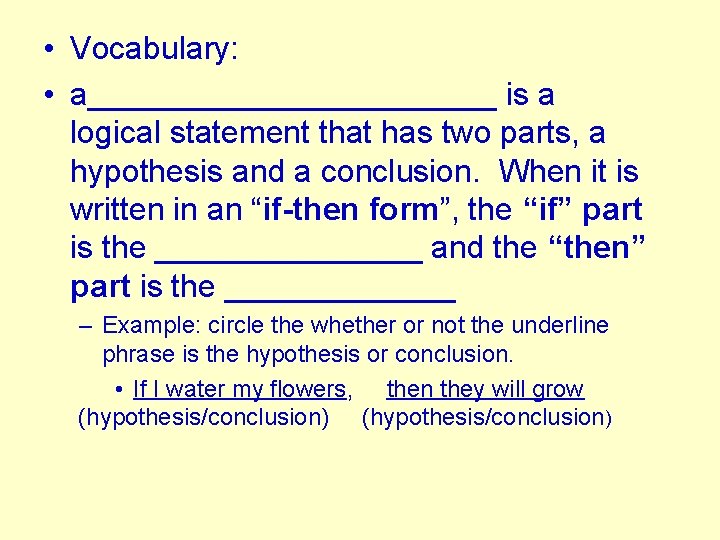
• Vocabulary: • a____________ is a logical statement that has two parts, a hypothesis and a conclusion. When it is written in an “if-then form”, the “if” part is the ________ and the “then” part is the _______ – Example: circle the whether or not the underline phrase is the hypothesis or conclusion. • If I water my flowers, then they will grow (hypothesis/conclusion)
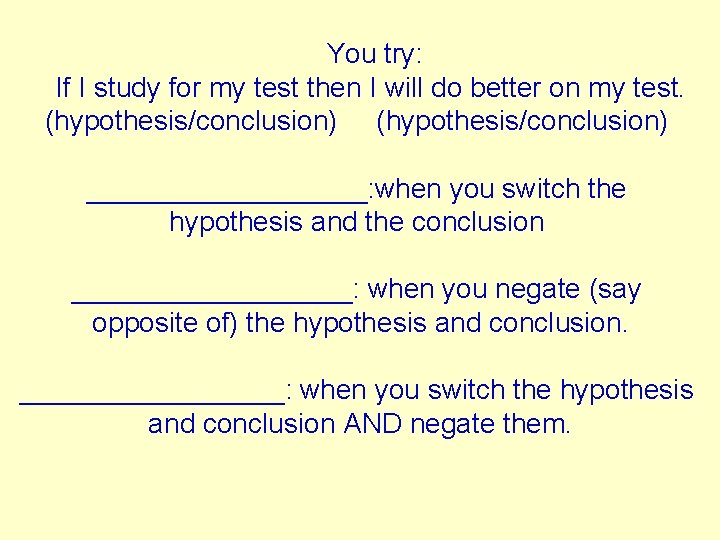
You try: If I study for my test then I will do better on my test. (hypothesis/conclusion) _________: when you switch the hypothesis and the conclusion _________: when you negate (say opposite of) the hypothesis and conclusion. _________: when you switch the hypothesis and conclusion AND negate them.
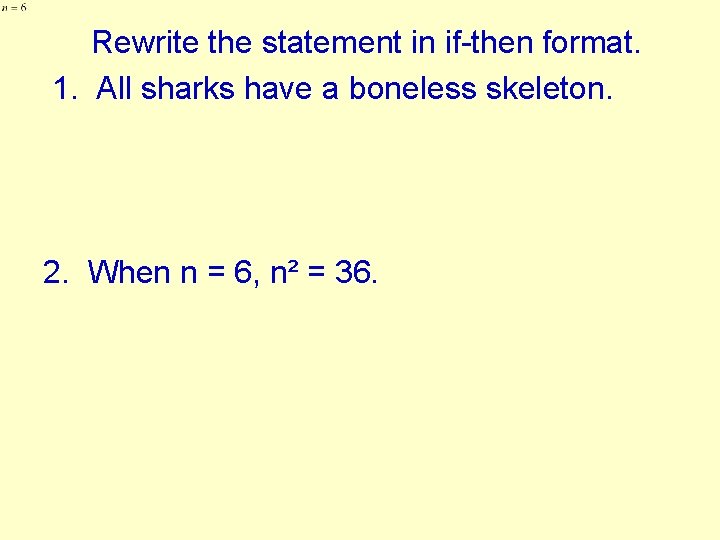
Rewrite the statement in if-then format. 1. All sharks have a boneless skeleton. 2. When n = 6, n² = 36.
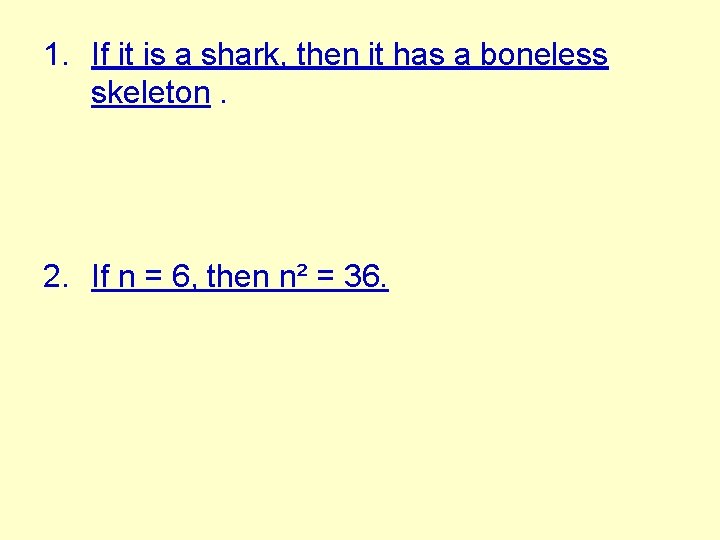
1. If it is a shark, then it has a boneless skeleton. 2. If n = 6, then n² = 36.
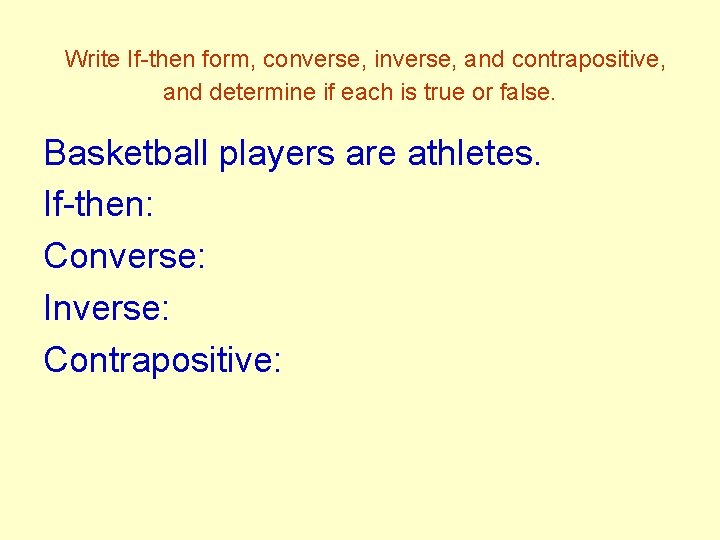
Write If-then form, converse, inverse, and contrapositive, and determine if each is true or false. Basketball players are athletes. If-then: Converse: Inverse: Contrapositive:
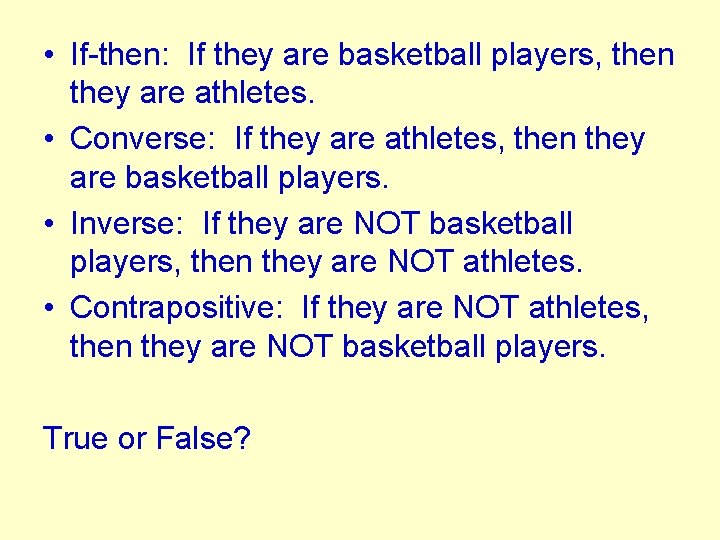
• If-then: If they are basketball players, then they are athletes. • Converse: If they are athletes, then they are basketball players. • Inverse: If they are NOT basketball players, then they are NOT athletes. • Contrapositive: If they are NOT athletes, then they are NOT basketball players. True or False?
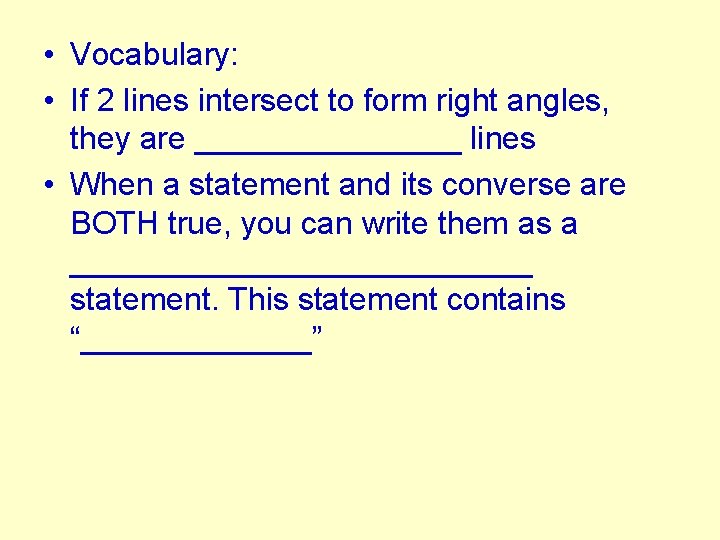
• Vocabulary: • If 2 lines intersect to form right angles, they are ________ lines • When a statement and its converse are BOTH true, you can write them as a _____________ statement. This statement contains “_______”
Write a BICONDITIONAL • If a polygon is equilateral, then all of its sides are congruent. • Converse: • Biconditional:
• Converse: If all of the sides are congruent, then it is an equilateral polygon • BICONDITIONAL: A polygon is equilateral if and only if all of its sides are congruent.
• 4. 4: Apply Deductive Reasoning (note: different than logic in 4. 2: Inductive Reasoning) • Vocabulary: • __________ reasoning uses facts, definitions, accepted properties, and logic to form logical argument. • ______________ if the hypothesis is true, then the conclusion is true – If p, then q – P, therefore q • ______________ – If p, then q – If q, then r – P, therefore r
Law of Detachment: • Example: • If you order desert, then you will get ice cream • Sarah ordered desert • Sarah got ice cream
• Example: • If you run every day, then you will be in good shape. • Sarah runs every day • Sarah is in good shape.
• Example: • If is angle A is acute, then angle A is less than 90 degrees. • Angle B is acute. • Angle B is less than 90 degrees.
You Try: • If an angle measures more than 90 degrees, then it is not acute. • The measure of angle ABC is 120 degrees.
• Angle ABC is not acute.
You Try: • If two lines will never intersect, then they are parallel • Lines AB and CD never intersect.
• Lines AB and CD are parallel.
Law of Syllogism: • Example: • If you wear school colors, then you have school spirit • If you have school spirit, then your team feels great. • If you wear school colors, then your team feels great
• Example: • If you study hard, then you will do well in your classes. • If you do well in your classes, then you will graduate. • If you study hard, then you will graduate.
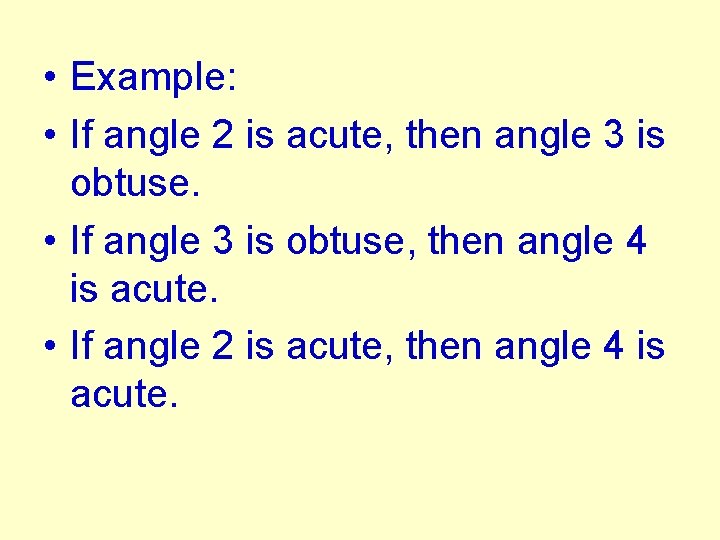
• Example: • If angle 2 is acute, then angle 3 is obtuse. • If angle 3 is obtuse, then angle 4 is acute. • If angle 2 is acute, then angle 4 is acute.
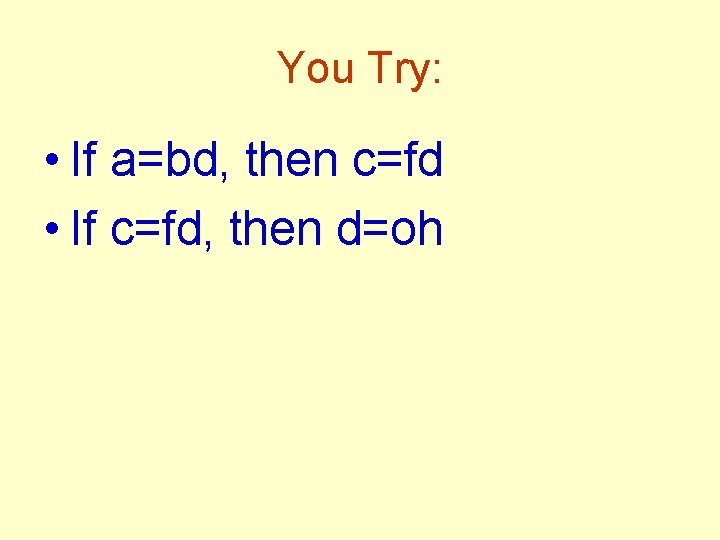
You Try: • If a=bd, then c=fd • If c=fd, then d=oh
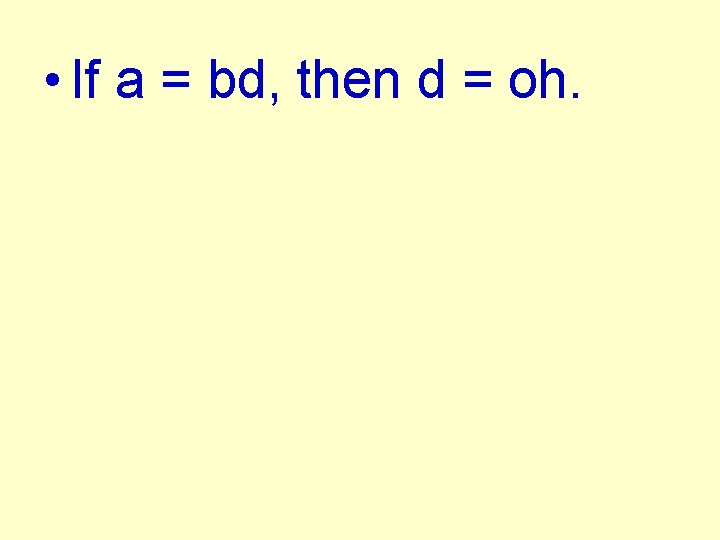
• If a = bd, then d = oh.
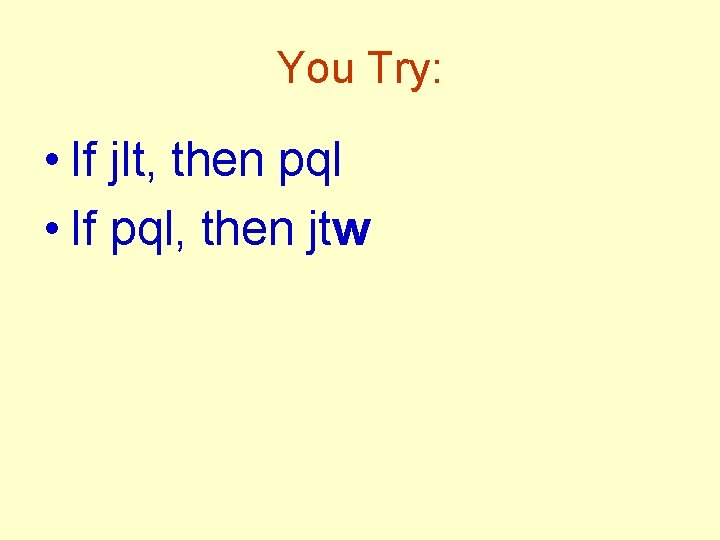
You Try: • If jlt, then pql • If pql, then jtw
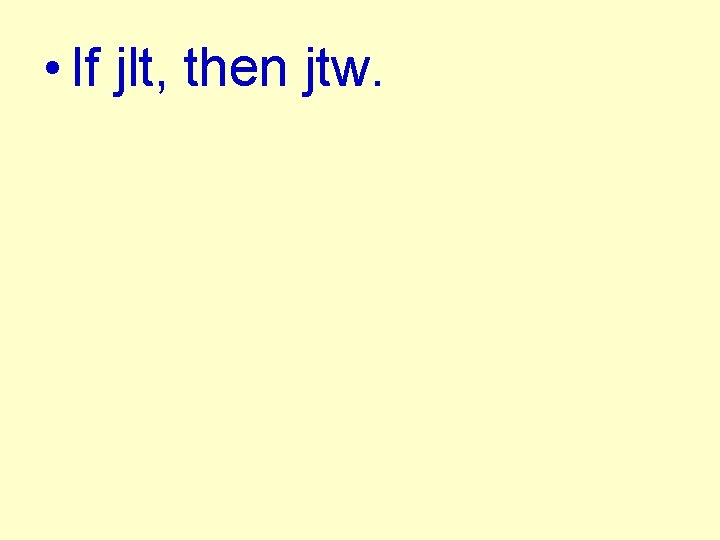
• If jlt, then jtw.
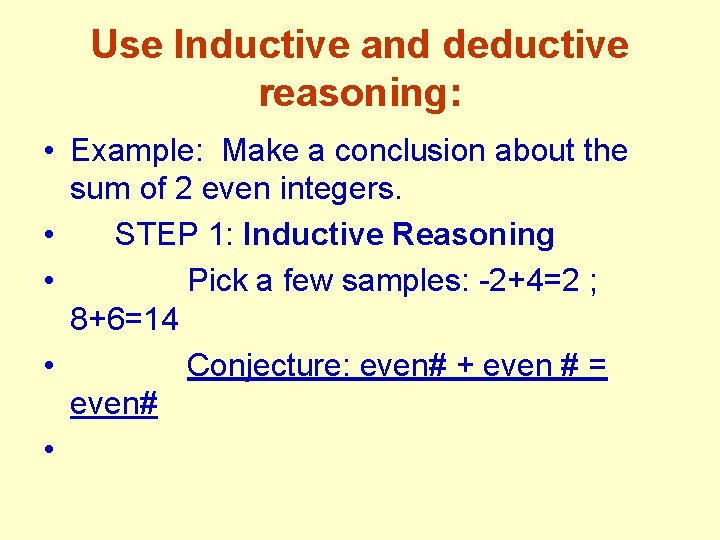
Use Inductive and deductive reasoning: • Example: Make a conclusion about the sum of 2 even integers. • STEP 1: Inductive Reasoning • Pick a few samples: -2+4=2 ; 8+6=14 • Conjecture: even# + even # = even# •
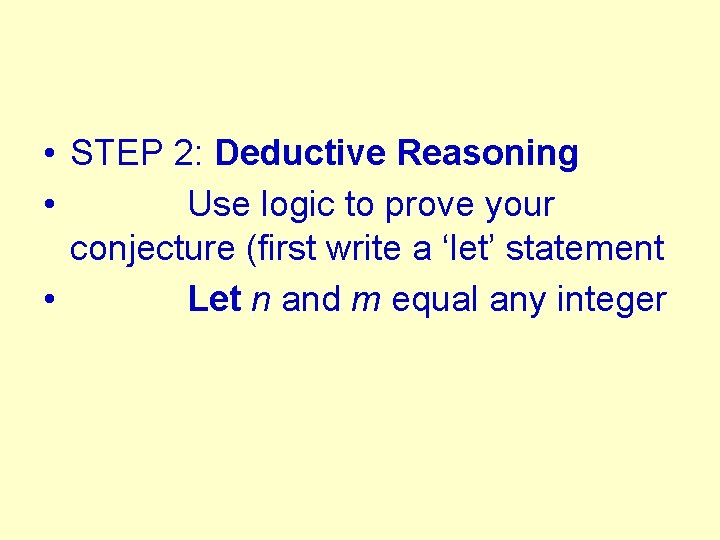
• STEP 2: Deductive Reasoning • Use logic to prove your conjecture (first write a ‘let’ statement • Let n and m equal any integer
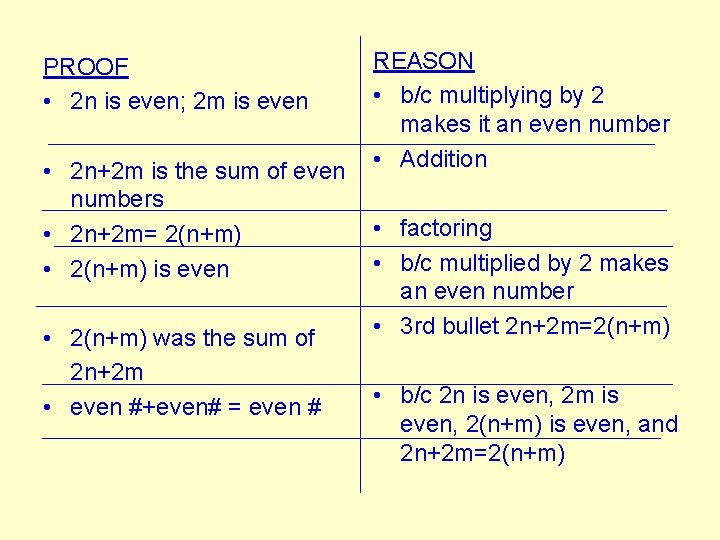
PROOF • 2 n is even; 2 m is even • 2 n+2 m is the sum of even numbers • 2 n+2 m= 2(n+m) • 2(n+m) is even • 2(n+m) was the sum of 2 n+2 m • even #+even# = even # REASON • b/c multiplying by 2 makes it an even number • Addition • factoring • b/c multiplied by 2 makes an even number • 3 rd bullet 2 n+2 m=2(n+m) • b/c 2 n is even, 2 m is even, 2(n+m) is even, and 2 n+2 m=2(n+m)
- Slides: 28