
4 2 Parts of the Eukaryotic Cell How
- Slides: 30
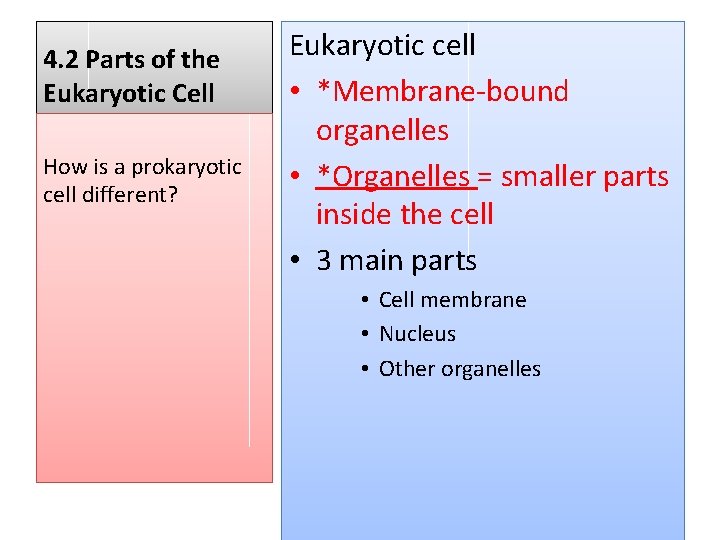
4. 2 Parts of the Eukaryotic Cell How is a prokaryotic cell different? Eukaryotic cell • *Membrane-bound organelles • *Organelles = smaller parts inside the cell • 3 main parts • Cell membrane • Nucleus • Other organelles
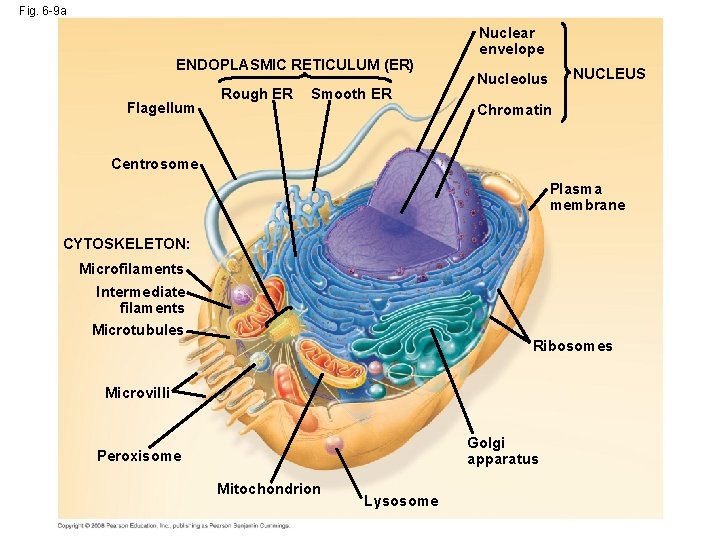
Fig. 6 -9 a ENDOPLASMIC RETICULUM (ER) Flagellum Rough ER Smooth ER Nuclear envelope NUCLEUS Nucleolus Chromatin Centrosome Plasma membrane CYTOSKELETON: Microfilaments Intermediate filaments Microtubules Ribosomes Microvilli Golgi apparatus Peroxisome Mitochondrion Lysosome
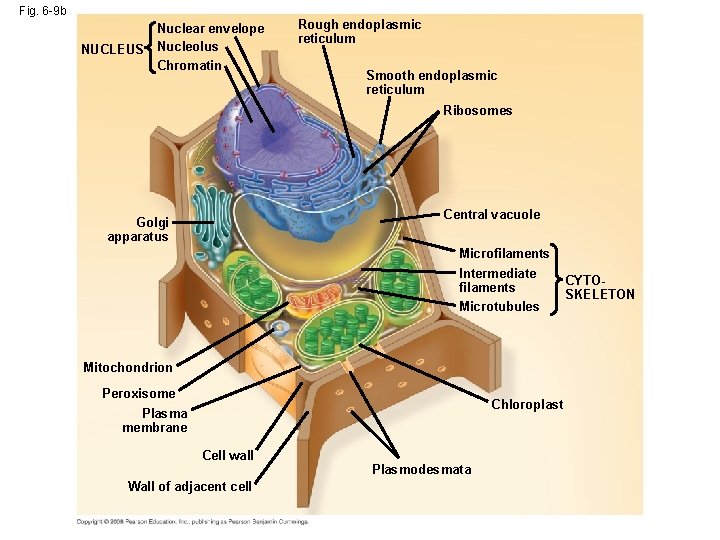
Fig. 6 -9 b NUCLEUS Nuclear envelope Nucleolus Chromatin Rough endoplasmic reticulum Smooth endoplasmic reticulum Ribosomes Central vacuole Golgi apparatus Microfilaments Intermediate filaments Microtubules Mitochondrion Peroxisome Chloroplast Plasma membrane Cell wall Wall of adjacent cell Plasmodesmata CYTOSKELETON
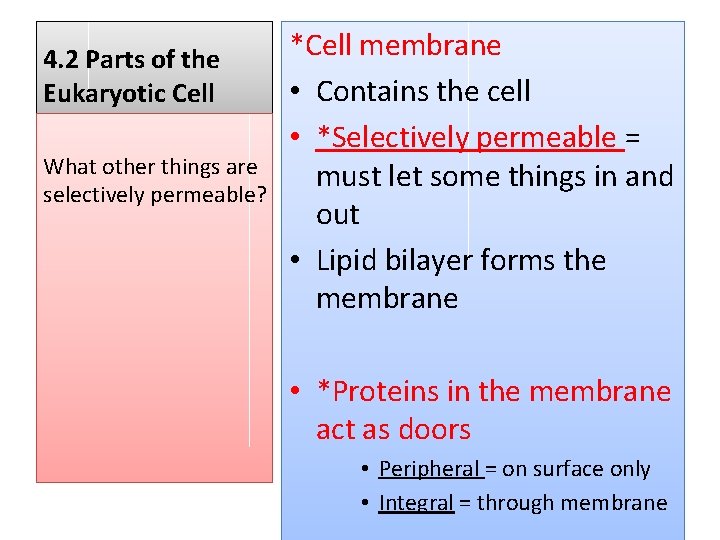
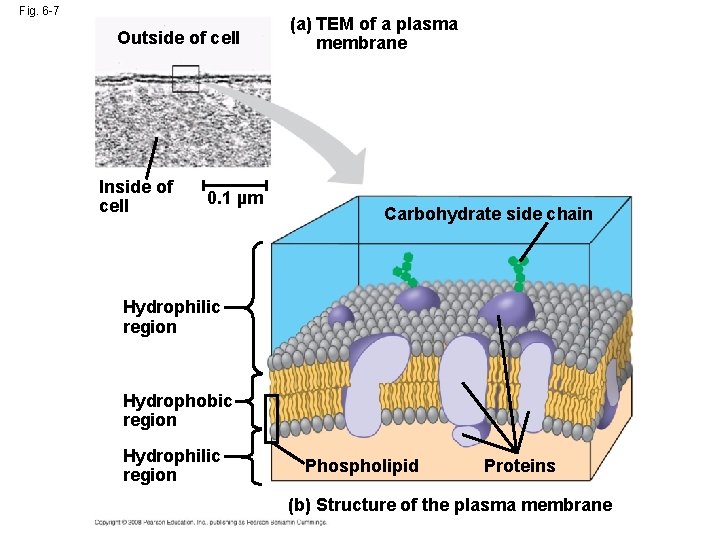
4. 2 Parts of the Eukaryotic Cell What other things are selectively permeable? *Cell membrane • Contains the cell • *Selectively permeable = must let some things in and out • Lipid bilayer forms the membrane • *Proteins in the membrane act as doors • Peripheral = on surface only • Integral = through membrane
Fig. 6 -7 Outside of cell Inside of cell 0. 1 µm (a) TEM of a plasma membrane Carbohydrate side chain Hydrophilic region Hydrophobic region Hydrophilic region Phospholipid Proteins (b) Structure of the plasma membrane
4. 2 Parts of the Eukaryotic Cell *Cytoplasm = cell goo • Cytosol = fluid (water, salts, minerals, biochemicals…) • All cellular interactions and most life interactions occur in watery fluid
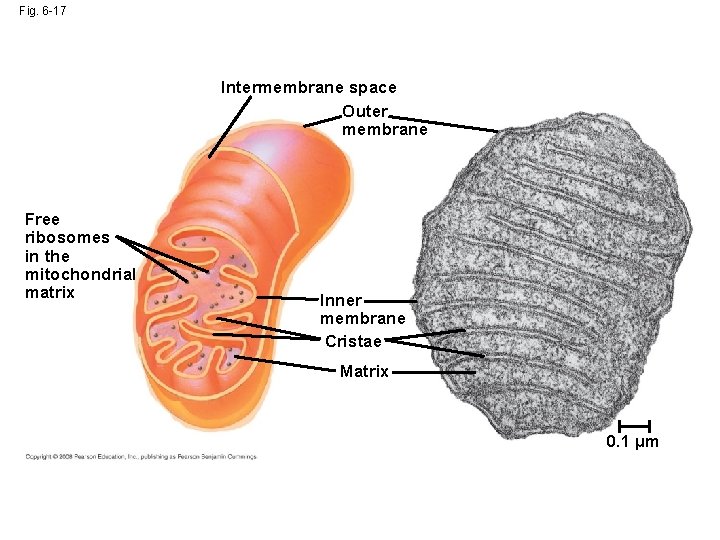
4. 2 Parts of the Eukaryotic Cell *Mitochondria • Cigar shaped with a double membrane • *Power plants of the cell • Produce energy by separating a phosphorus group from ATP • Cristae are folds of inner membrane • Increase surface area • More places for chemical reactions to occur
Fig. 6 -17 Intermembrane space Outer membrane Free ribosomes in the mitochondrial matrix Inner membrane Cristae Matrix 0. 1 µm
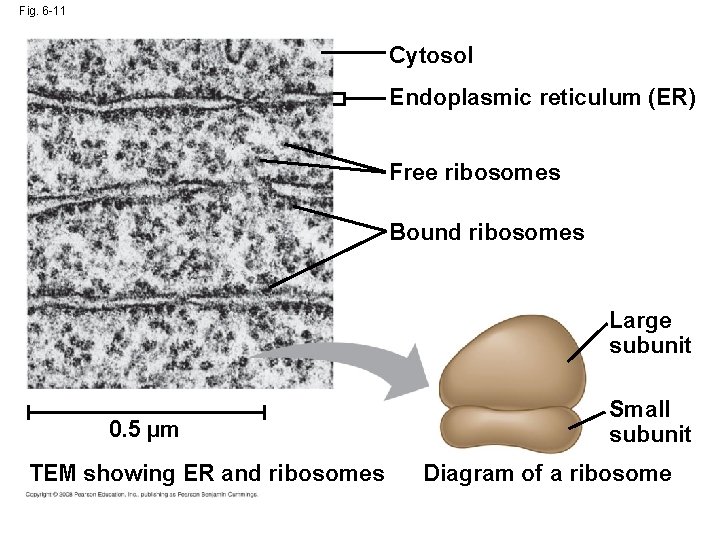
4. 2 Parts of the Eukaryotic Cell *Ribosomes • Not bound by membrane • Proteins bound to RNA • Function in the assembly of proteins • Workers that build proteins
Fig. 6 -11 Cytosol Endoplasmic reticulum (ER) Free ribosomes Bound ribosomes Large subunit 0. 5 µm TEM showing ER and ribosomes Small subunit Diagram of a ribosome
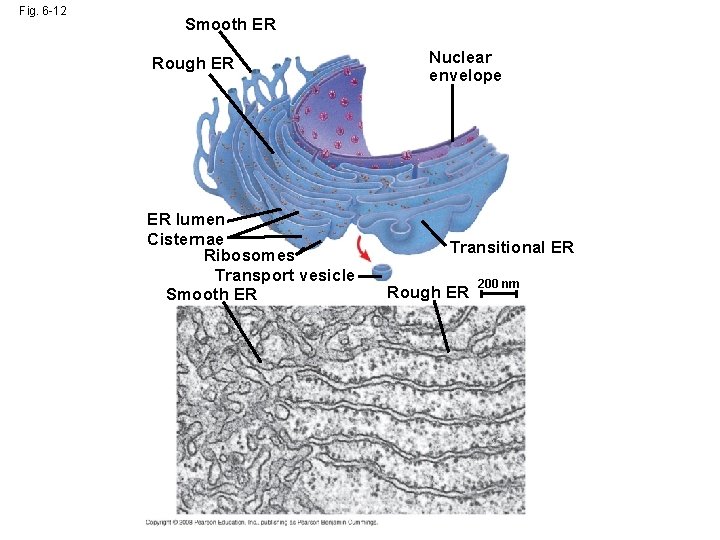
4. 2 Parts of the Eukaryotic Cell *Endoplasmic Reticulum “ in plasma net” • Membranous tubes & sacs • Stuff moves along ER • *Place where proteins can be made • Rough ER has ribosomes on the surfaces • Smooth ER has no ribosomes
Fig. 6 -12 Smooth ER Rough ER ER lumen Cisternae Ribosomes Transport vesicle Smooth ER Nuclear envelope Transitional ER Rough ER 200 nm
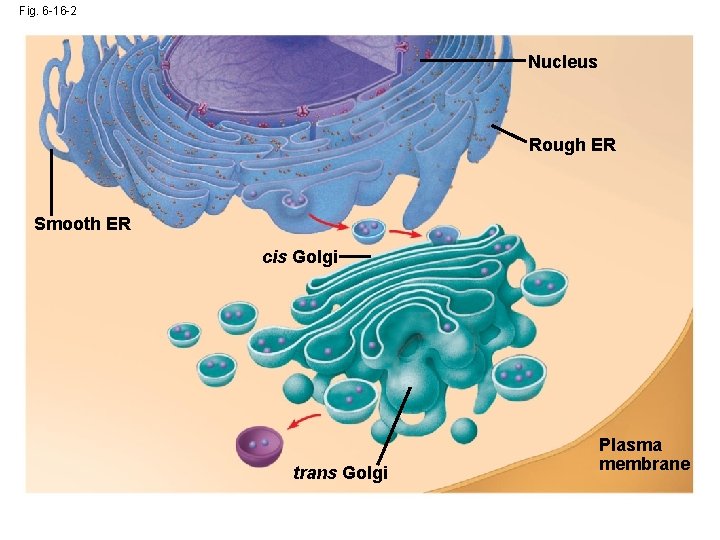
4. 2 Parts of the Eukaryotic Cell *Golgi apparatus • Named after Golgi • Membranous folds & sacs like ER • *Packages proteins and other materials to be sent out of cell • Parts of the membrane break off surrounding proteins
Fig. 6 -16 -2 Nucleus Rough ER Smooth ER cis Golgi trans Golgi Plasma membrane
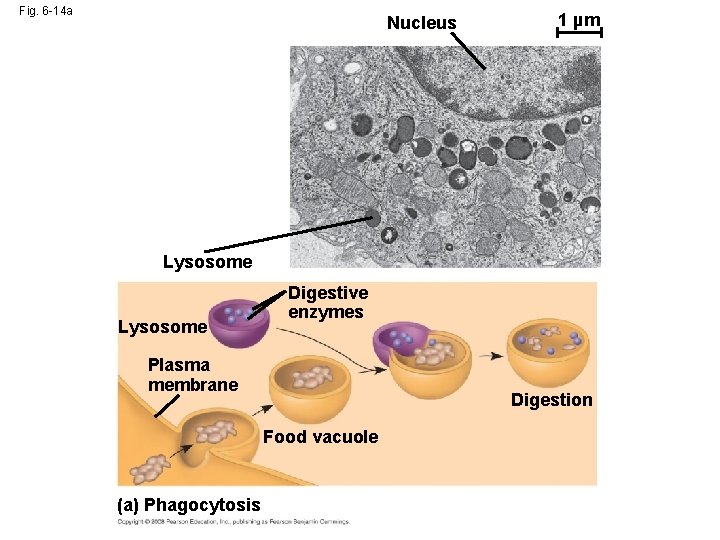
4. 2 Parts of the Eukaryotic Cell *Lysosomes • *Small round membranes that surround enzymes • The enzymes digest other molecules • These are the stomach or food delivery trucks
Fig. 6 -14 a Nucleus 1 µm Lysosome Digestive enzymes Plasma membrane Digestion Food vacuole (a) Phagocytosis
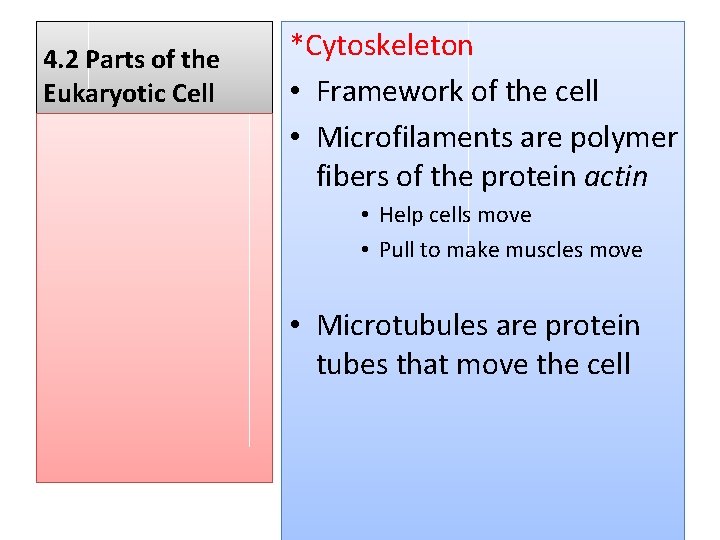
4. 2 Parts of the Eukaryotic Cell *Cytoskeleton • Framework of the cell • Microfilaments are polymer fibers of the protein actin • Help cells move • Pull to make muscles move • Microtubules are protein tubes that move the cell
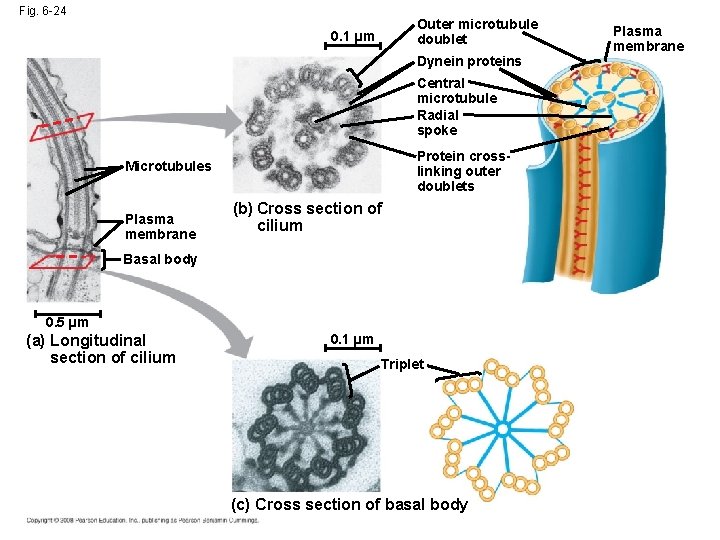
Fig. 6 -24 Outer microtubule doublet 0. 1 µm Dynein proteins Central microtubule Radial spoke Protein crosslinking outer doublets Microtubules Plasma membrane (b) Cross section of cilium Basal body 0. 5 µm (a) Longitudinal section of cilium 0. 1 µm Triplet (c) Cross section of basal body Plasma membrane
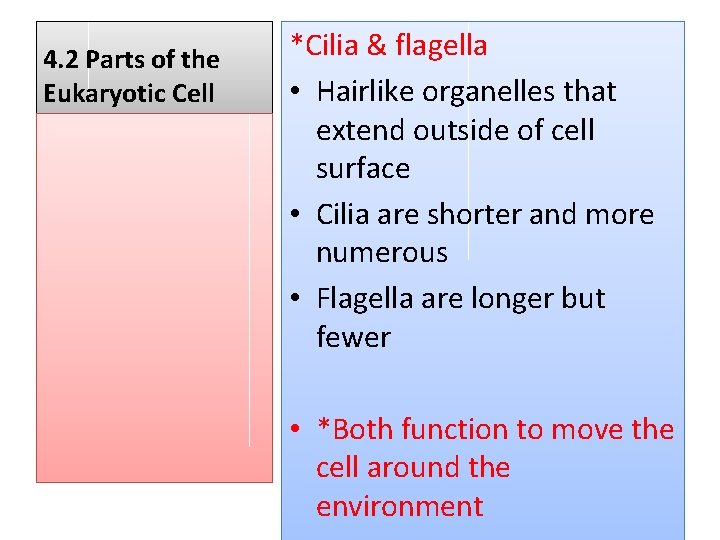
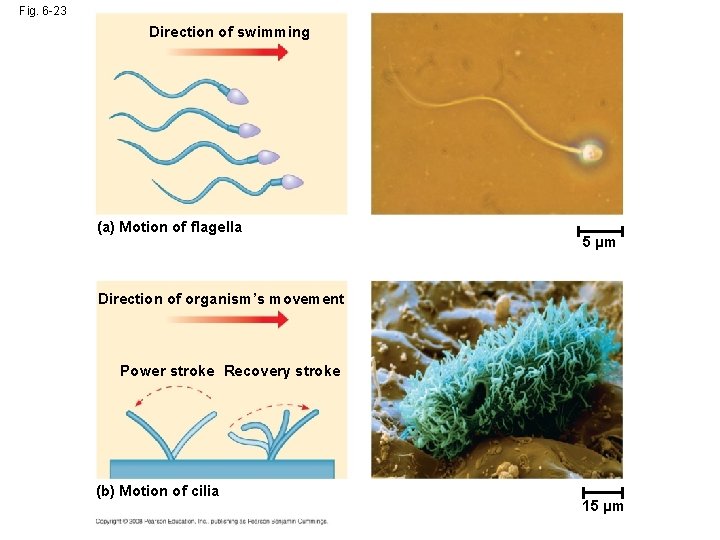
4. 2 Parts of the Eukaryotic Cell *Cilia & flagella • Hairlike organelles that extend outside of cell surface • Cilia are shorter and more numerous • Flagella are longer but fewer • *Both function to move the cell around the environment
Fig. 6 -23 Direction of swimming (a) Motion of flagella 5 µm Direction of organism’s movement Power stroke Recovery stroke (b) Motion of cilia 15 µm
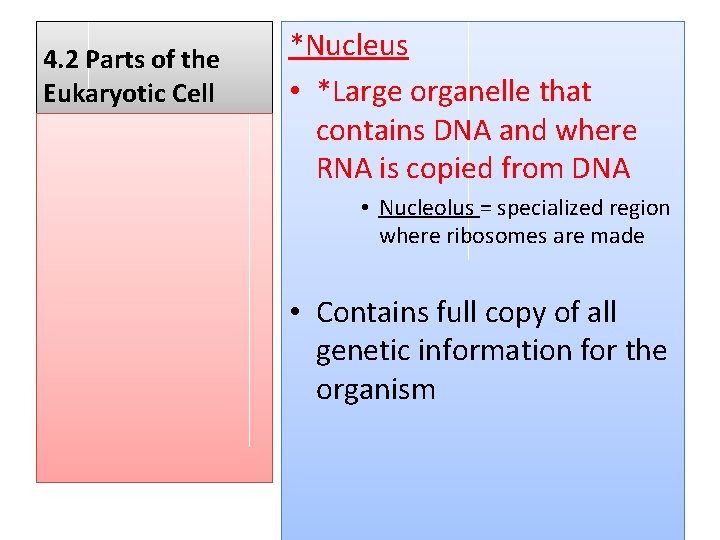
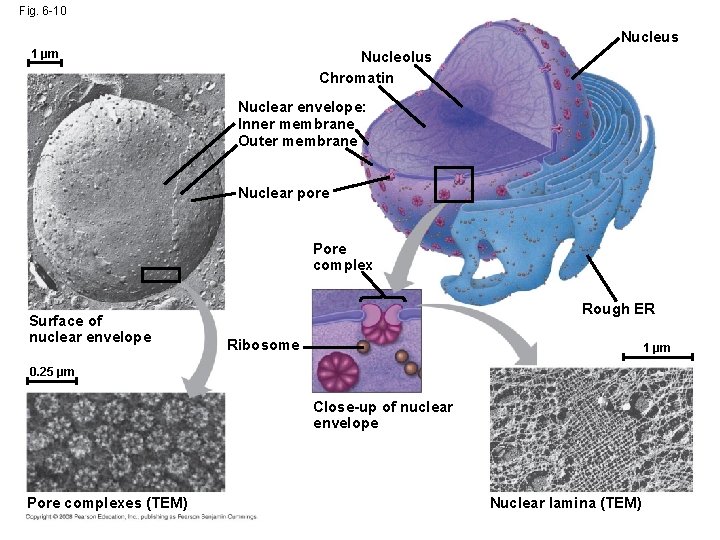
4. 2 Parts of the Eukaryotic Cell *Nucleus • *Large organelle that contains DNA and where RNA is copied from DNA • Nucleolus = specialized region where ribosomes are made • Contains full copy of all genetic information for the organism
Fig. 6 -10 Nucleus 1 µm Nucleolus Chromatin Nuclear envelope: Inner membrane Outer membrane Nuclear pore Pore complex Surface of nuclear envelope Rough ER Ribosome 1 µm 0. 25 µm Close-up of nuclear envelope Pore complexes (TEM) Nuclear lamina (TEM)
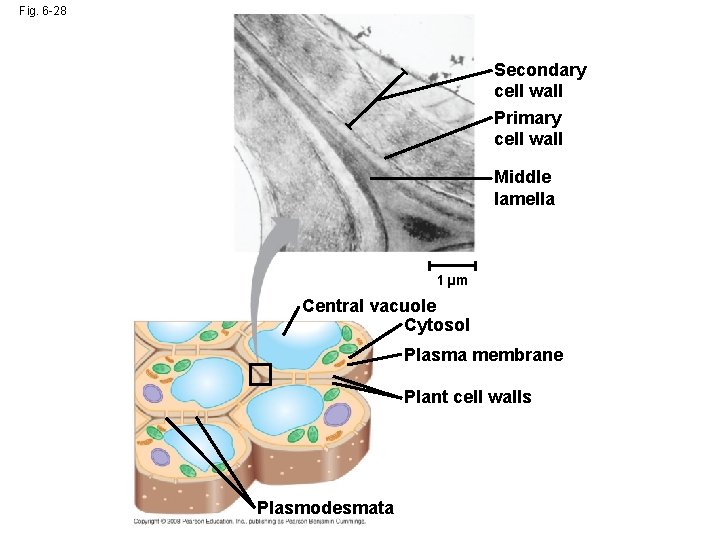
4. 2 Parts of the Eukaryotic Cell *Plant cells have some special structures *Cell wall is a rigid barrier outside the cell membrane • Made of carbohydrate polymers • Give plants structural strength
Fig. 6 -28 Secondary cell wall Primary cell wall Middle lamella 1 µm Central vacuole Cytosol Plasma membrane Plant cell walls Plasmodesmata
4. 2 Parts of the Eukaryotic Cell *Vacuoles are large fluid filled membranes • *Store water and enzymes, and hold waste products
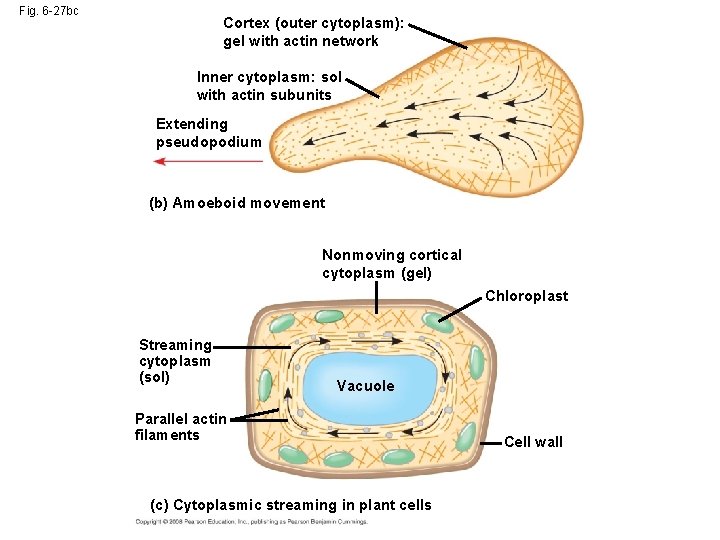
Fig. 6 -27 bc Cortex (outer cytoplasm): gel with actin network Inner cytoplasm: sol with actin subunits Extending pseudopodium (b) Amoeboid movement Nonmoving cortical cytoplasm (gel) Chloroplast Streaming cytoplasm (sol) Vacuole Parallel actin filaments (c) Cytoplasmic streaming in plant cells Cell wall
4. 2 Parts of the Eukaryotic Cell *Plastids are double membrane sacs that store biochemicals or pigments • *Chloroplast is organelle that converts sun energy into chemical energy for plants • * hold chlorophyll
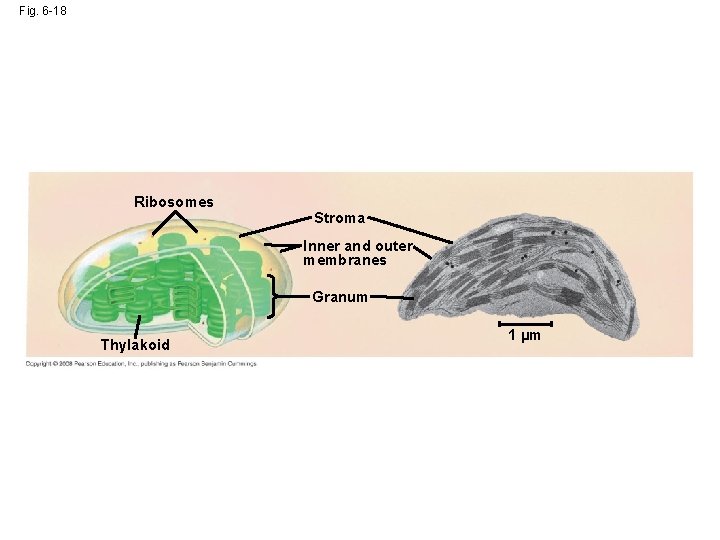
Fig. 6 -18 Ribosomes Stroma Inner and outer membranes Granum Thylakoid 1 µm
4. 2 Parts of the Eukaryotic Cell
4. 2 Parts of the Eukaryotic Cell