
4 1 NOTES HISTORY OF CELL BIOLOGY Cells
4 -1 NOTES: HISTORY OF CELL BIOLOGY
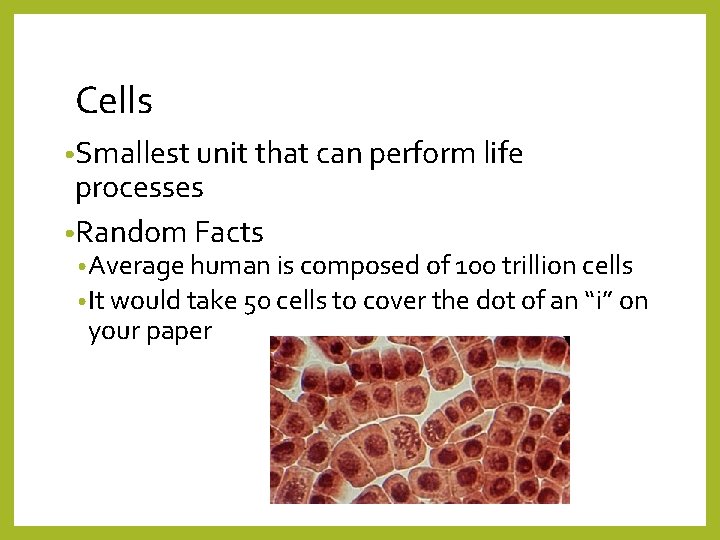
Cells • Smallest unit that can perform life processes • Random Facts • Average human is composed of 100 trillion cells • It would take 50 cells to cover the dot of an “i” on your paper
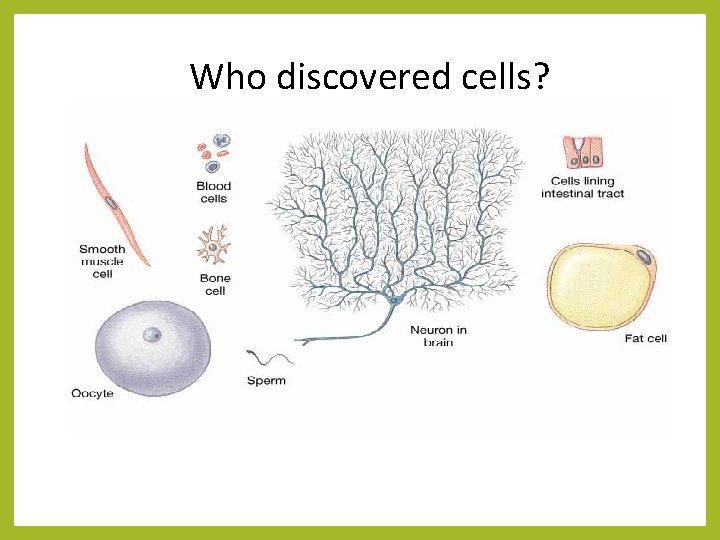
Who discovered cells?
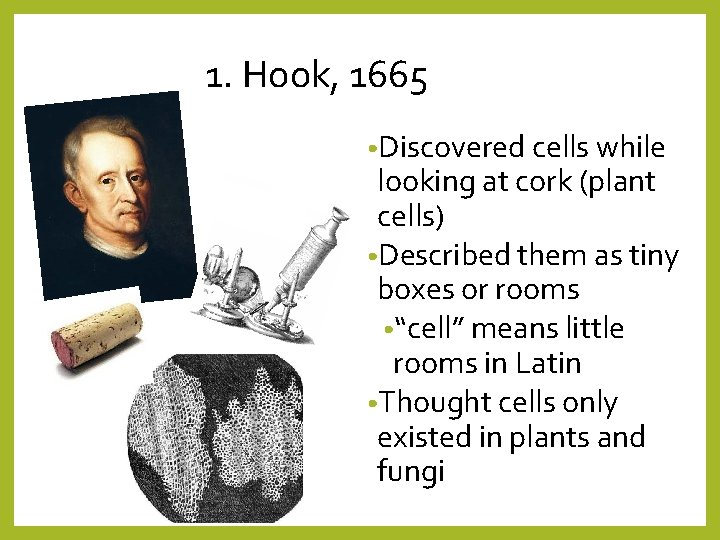
1. Hook, 1665 • Discovered cells while looking at cork (plant cells) • Described them as tiny boxes or rooms • “cell” means little rooms in Latin • Thought cells only existed in plants and fungi
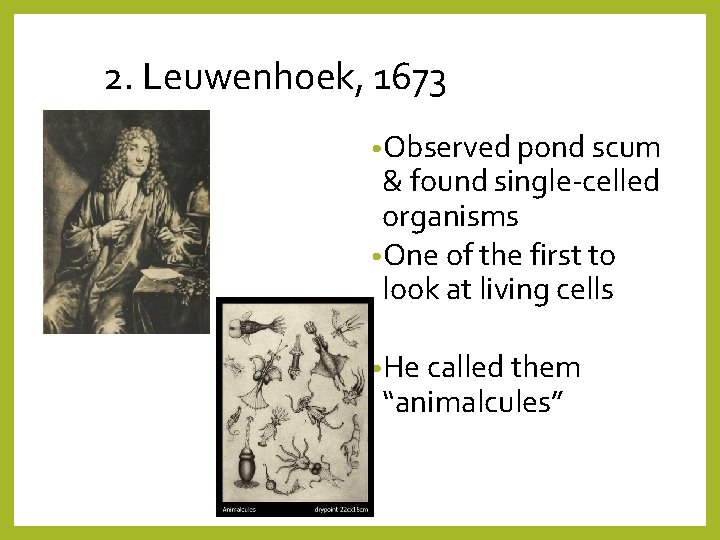
2. Leuwenhoek, 1673 • Observed pond scum & found single-celled organisms • One of the first to look at living cells • He called them “animalcules”

150 -200 Year Gap? ? ? • Between the Hooke/Leuwenhoek discoveries and the mid 19 th century, very little cell advancements were made. • This is probably due to the widely accepted, traditional belief in Spontaneous Generation. • Examples: -Mice from dirty clothes/corn husks -Maggots from rotting meat
19 th Century Advancement • Much doubt existed around Spontaneous Generation • Conclusively disproved by Louis Pasteur
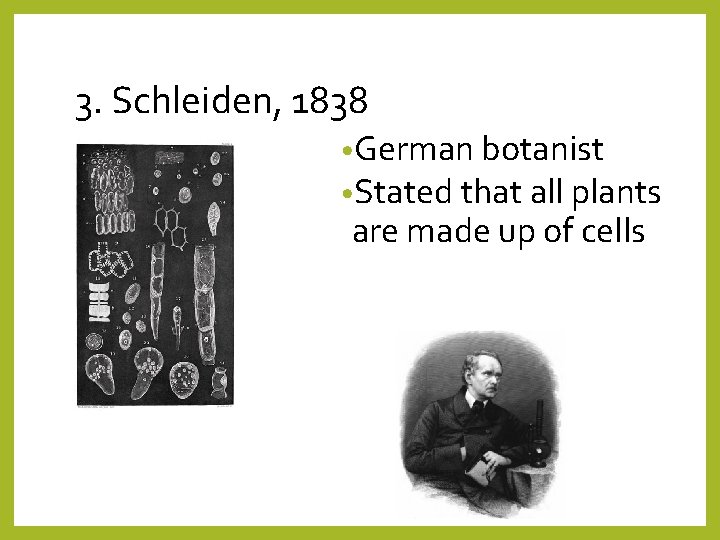
3. Schleiden, 1838 • German botanist • Stated that all plants are made up of cells
4. Schwann, 1839 • German Physiologist • Stated that all animals are made up of cells
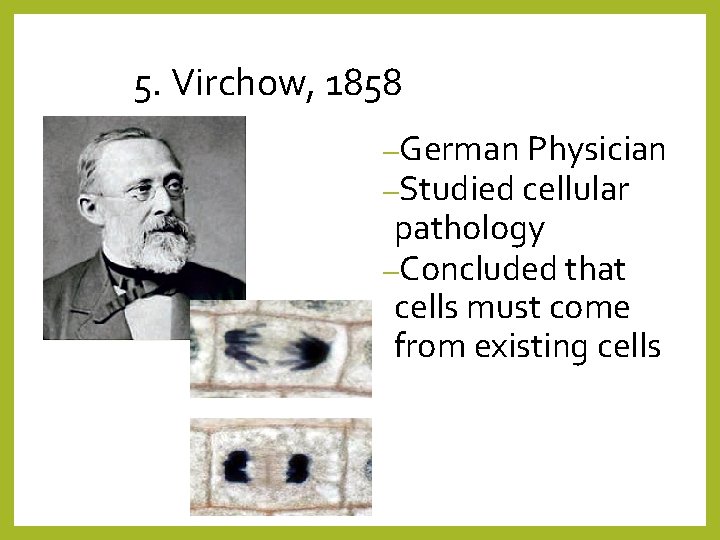
5. Virchow, 1858 –German Physician –Studied cellular pathology –Concluded that cells must come from existing cells
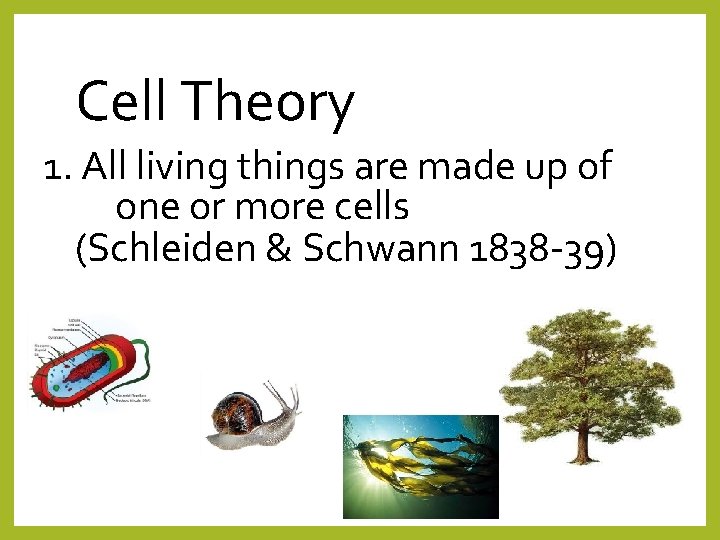
Cell Theory 1. All living things are made up of one or more cells (Schleiden & Schwann 1838 -39)
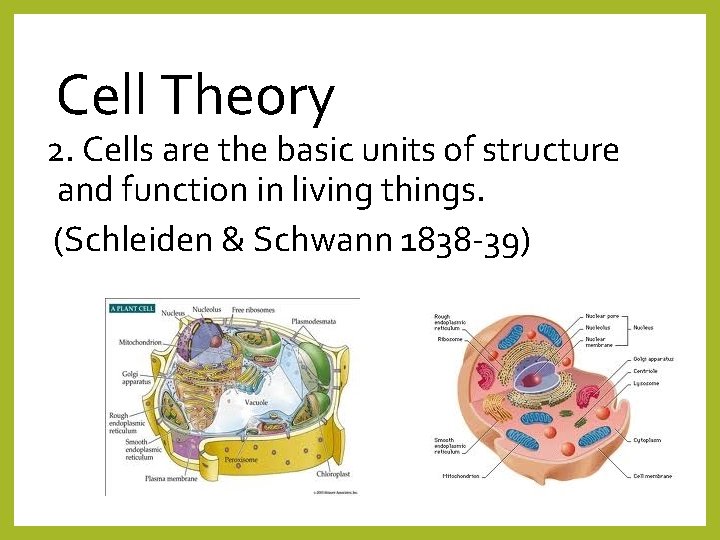
Cell Theory 2. Cells are the basic units of structure and function in living things. (Schleiden & Schwann 1838 -39)

Cell Theory 3. All cells are produced by the division of existing cells. Virchow (1858)

Cell Types and Common Parts
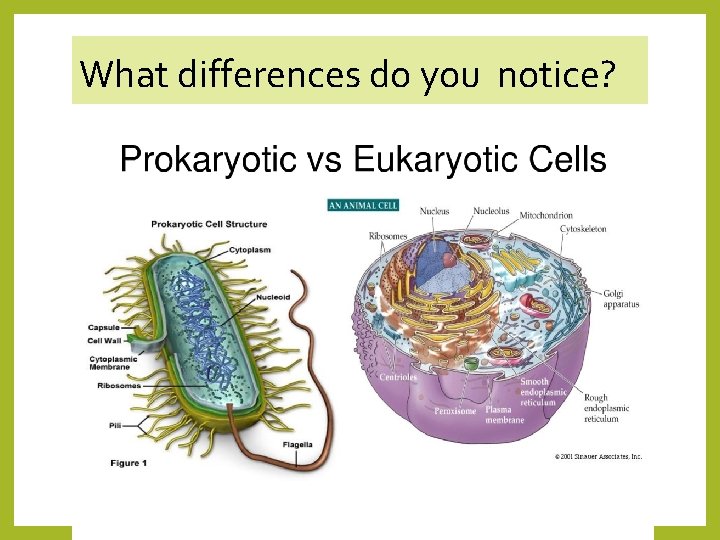
What differences do you notice?
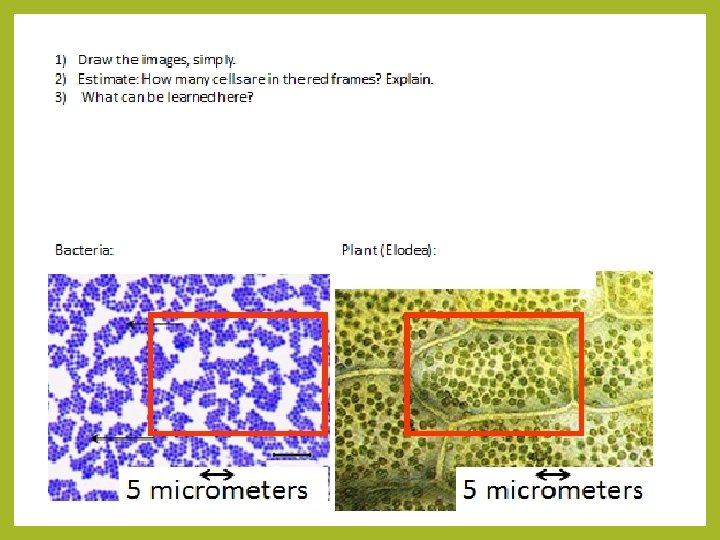
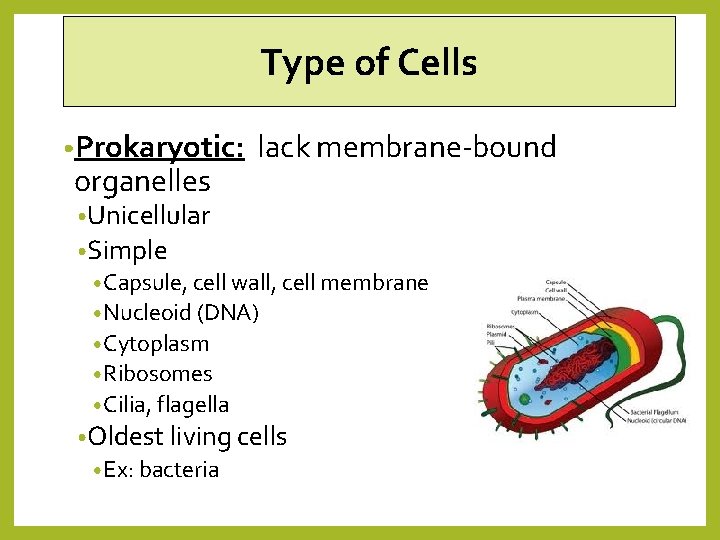
Type of Cells • Prokaryotic: organelles lack membrane-bound • Unicellular • Simple • Capsule, cell wall, cell membrane • Nucleoid (DNA) • Cytoplasm • Ribosomes • Cilia, flagella • Oldest living cells • Ex: bacteria
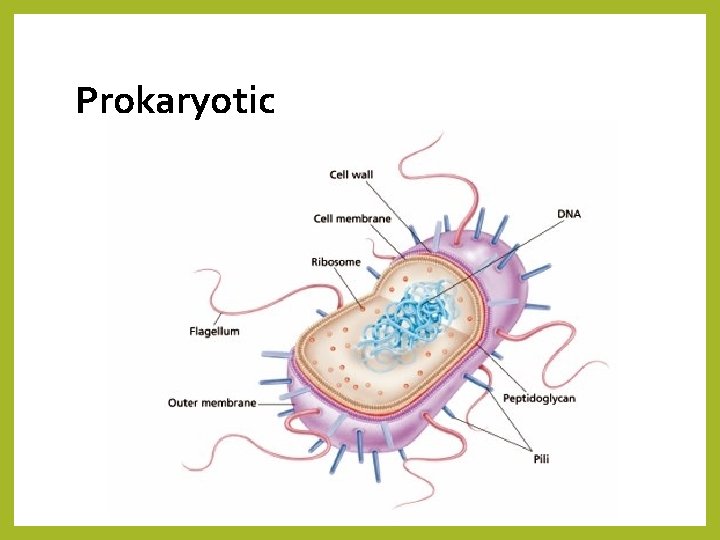
Prokaryotic
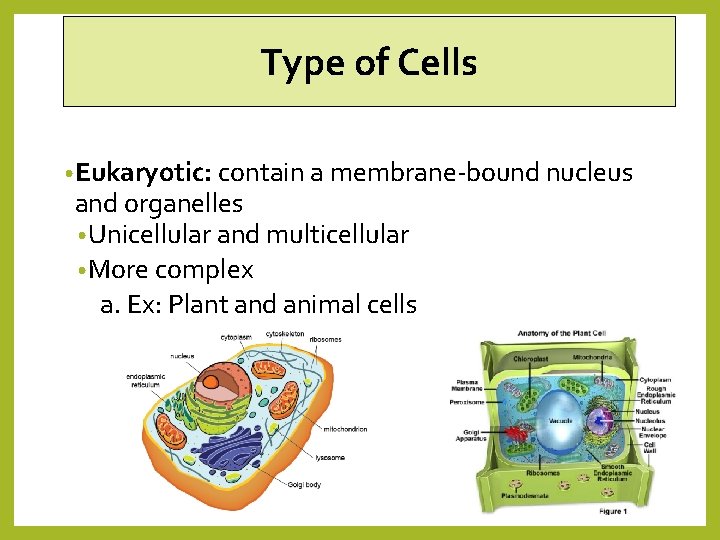
Type of Cells • Eukaryotic: contain a membrane-bound nucleus and organelles • Unicellular and multicellular • More complex a. Ex: Plant and animal cells
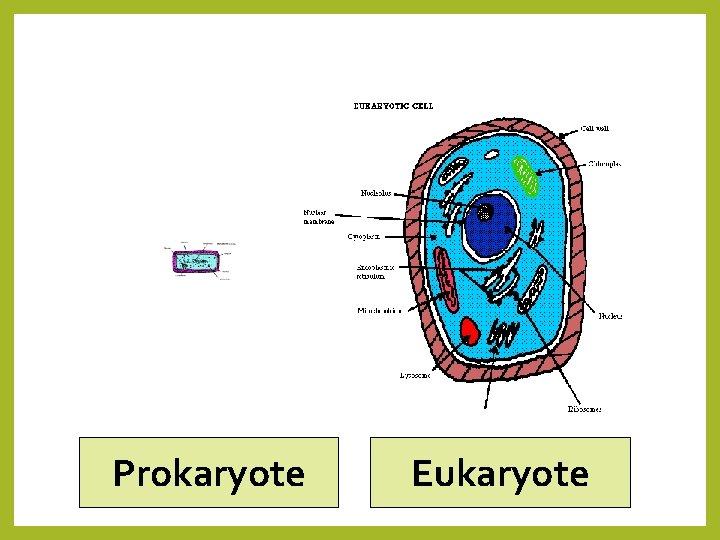
Prokaryote Eukaryote
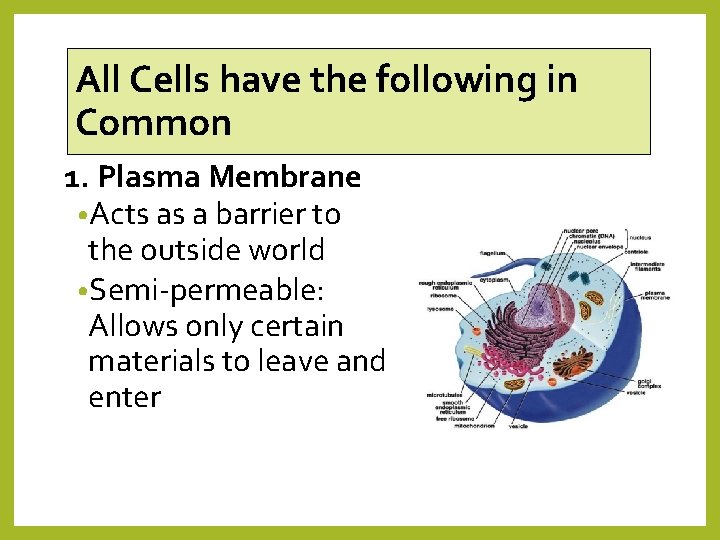
All Cells have the following in Common 1. Plasma Membrane • Acts as a barrier to the outside world • Semi-permeable: Allows only certain materials to leave and enter
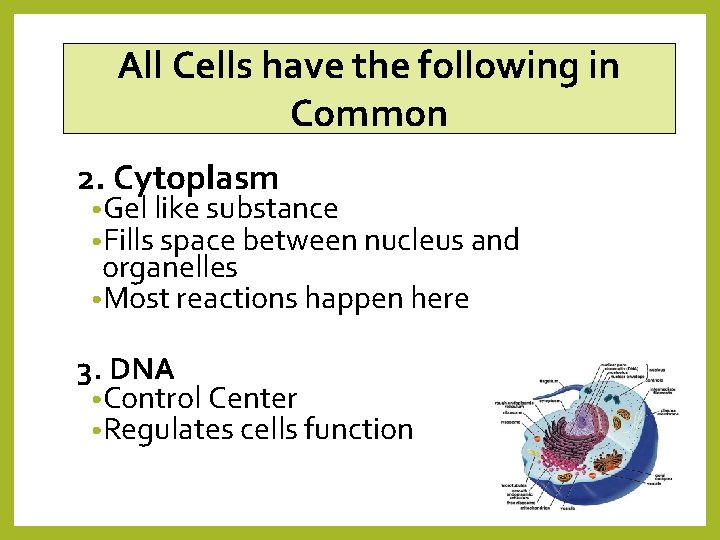
All Cells have the following in Common 2. Cytoplasm • Gel like substance • Fills space between nucleus and organelles • Most reactions happen here 3. DNA • Control Center • Regulates cells function
1. Thinking Maps 2. Prokaryotic Coloring and Reading
- Slides: 23