
4 1 Implicit Differentiation 4 1 1 Definition
- Slides: 22
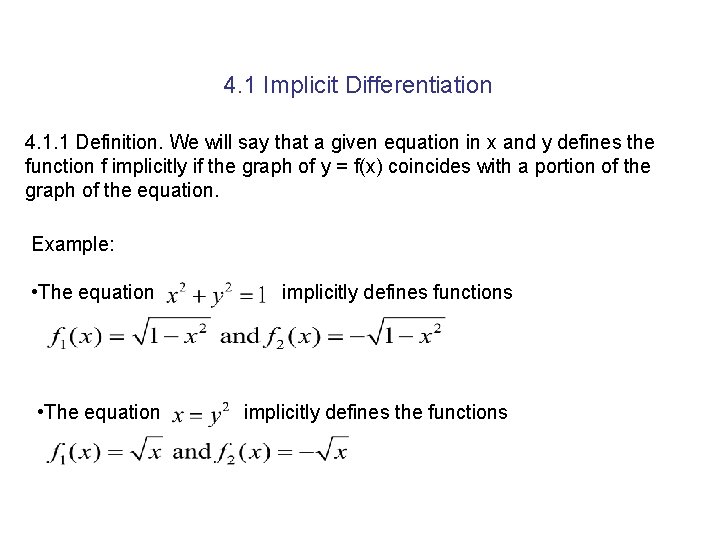
4. 1 Implicit Differentiation 4. 1. 1 Definition. We will say that a given equation in x and y defines the function f implicitly if the graph of y = f(x) coincides with a portion of the graph of the equation. Example: • The equation implicitly defines functions • The equation implicitly defines the functions
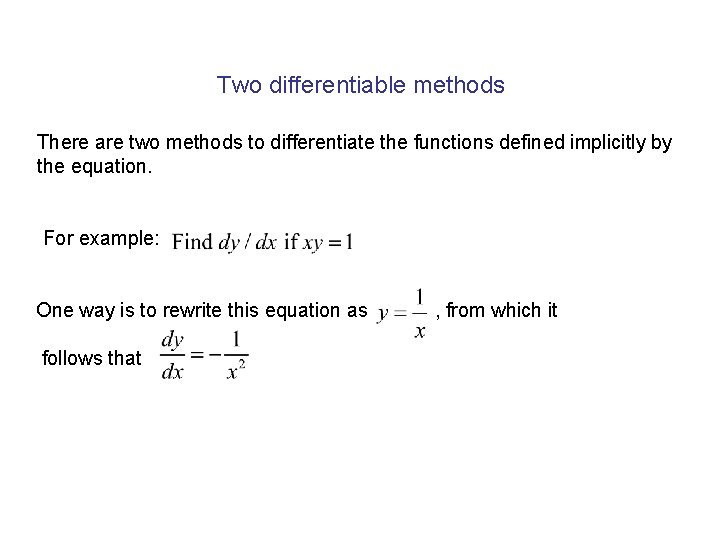
Two differentiable methods There are two methods to differentiate the functions defined implicitly by the equation. For example: One way is to rewrite this equation as follows that , from which it
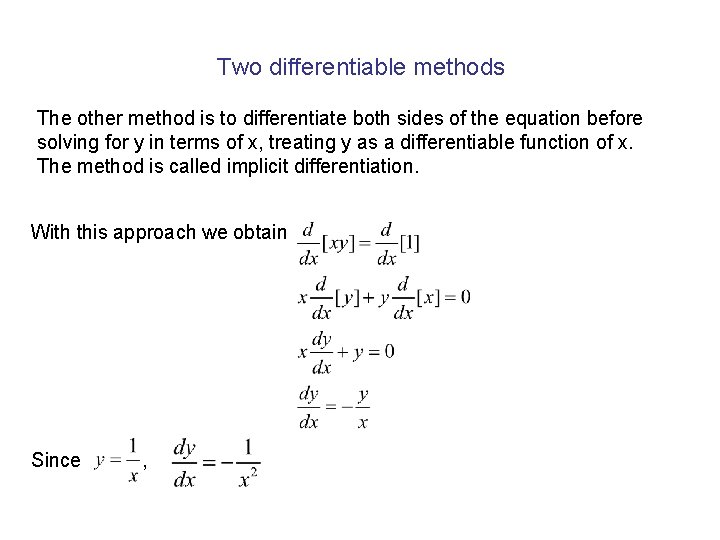
Two differentiable methods The other method is to differentiate both sides of the equation before solving for y in terms of x, treating y as a differentiable function of x. The method is called implicit differentiation. With this approach we obtain Since ,
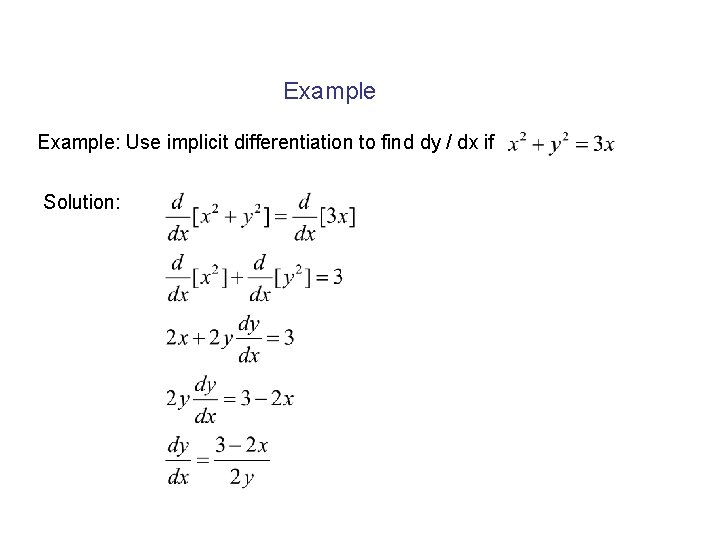
Example: Use implicit differentiation to find dy / dx if Solution:
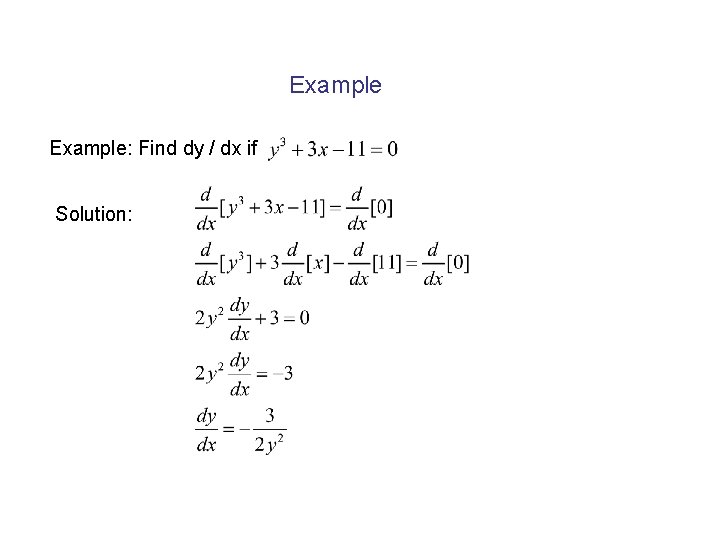
Example: Find dy / dx if Solution:
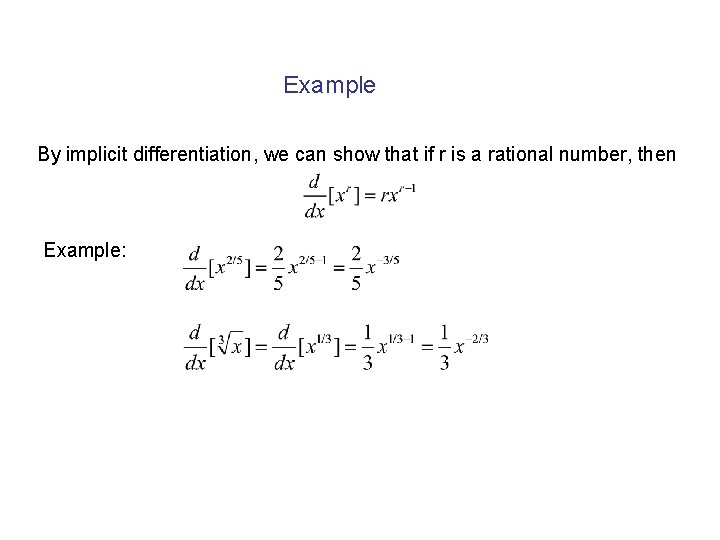
Example By implicit differentiation, we can show that if r is a rational number, then Example:
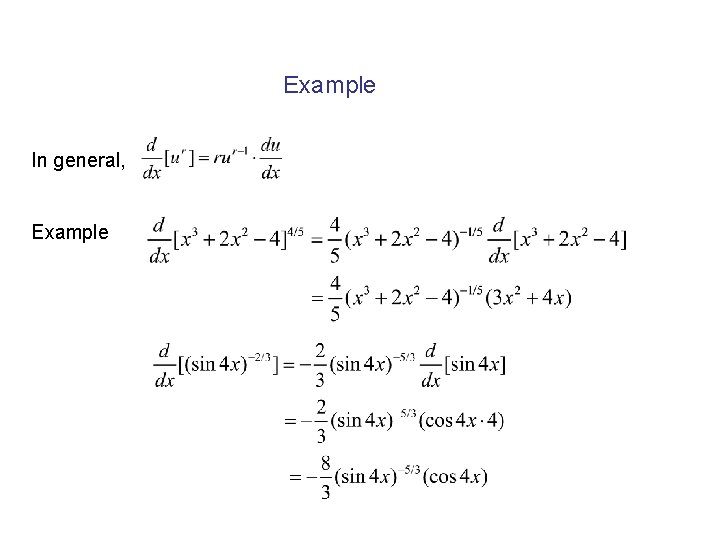
Example In general, Example
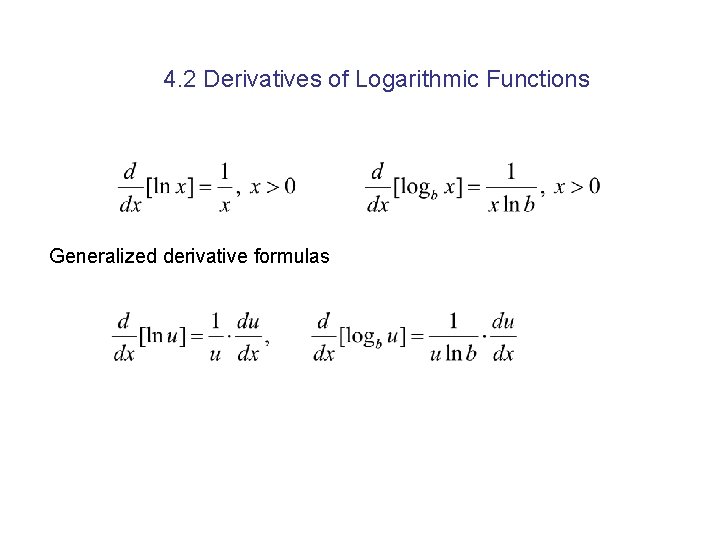
4. 2 Derivatives of Logarithmic Functions Generalized derivative formulas
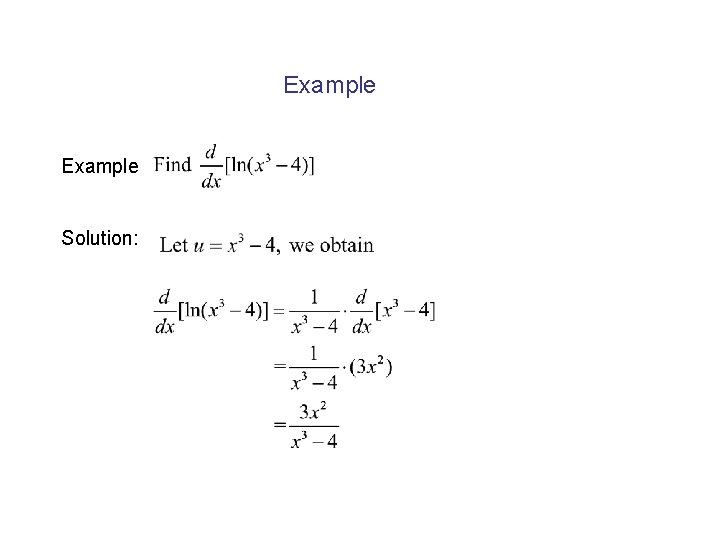
Example Solution:
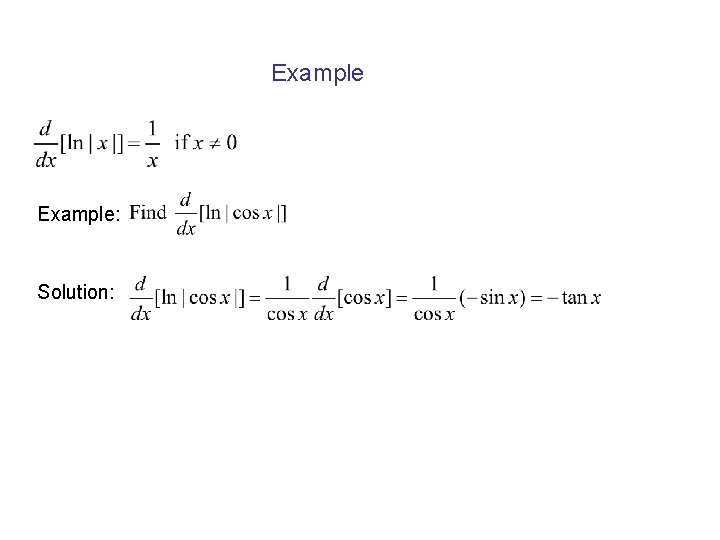
Example: Solution:
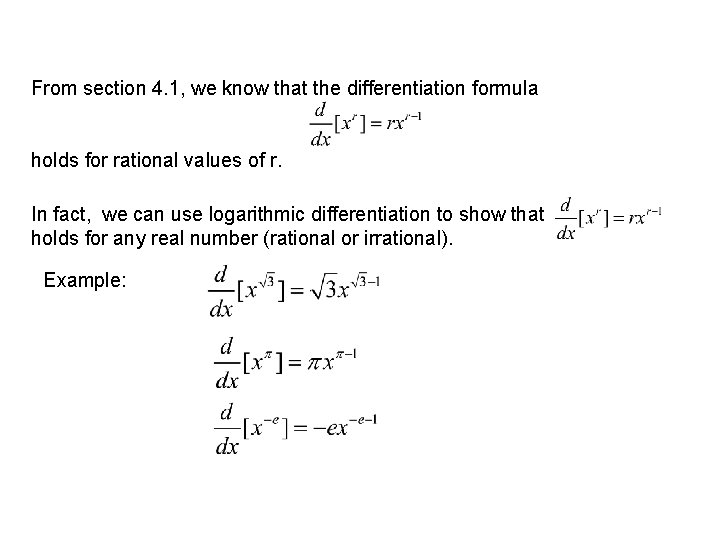
From section 4. 1, we know that the differentiation formula holds for rational values of r. In fact, we can use logarithmic differentiation to show that holds for any real number (rational or irrational). Example:
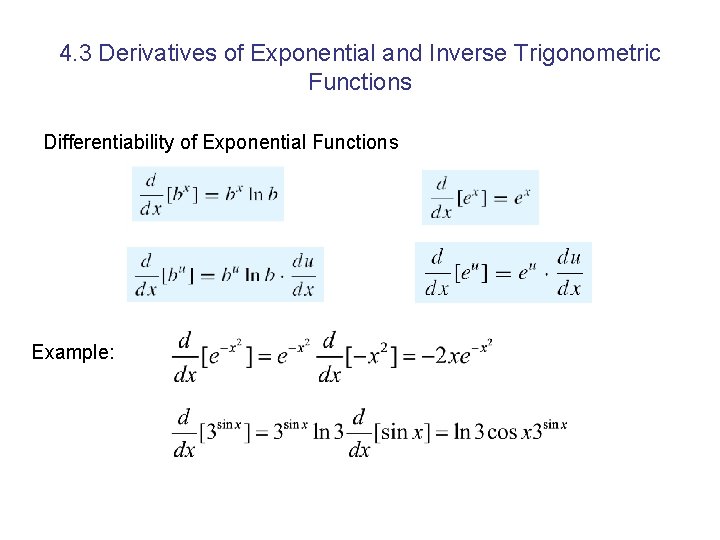
4. 3 Derivatives of Exponential and Inverse Trigonometric Functions Differentiability of Exponential Functions Example:
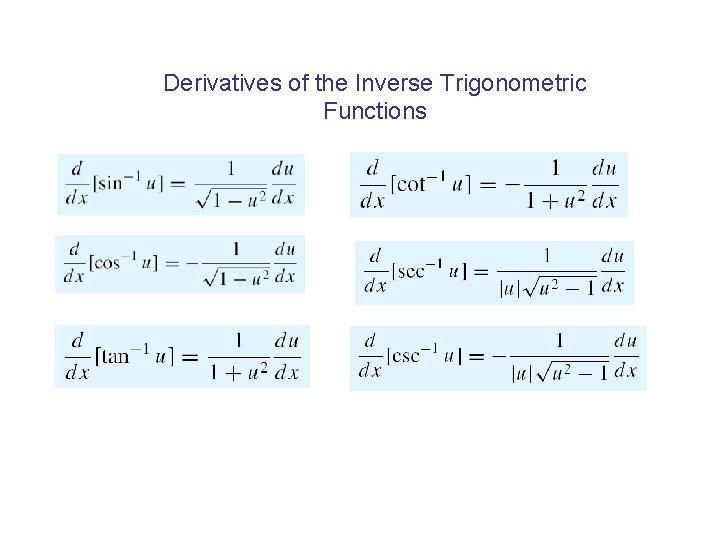
Derivatives of the Inverse Trigonometric Functions
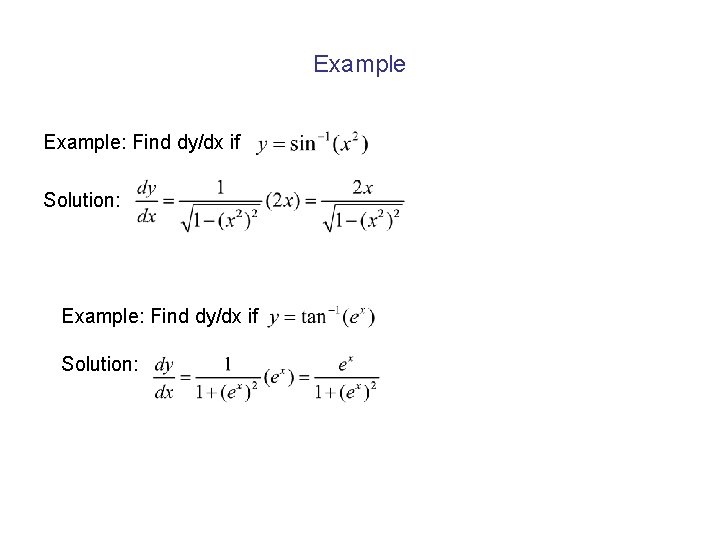
Example: Find dy/dx if Solution:
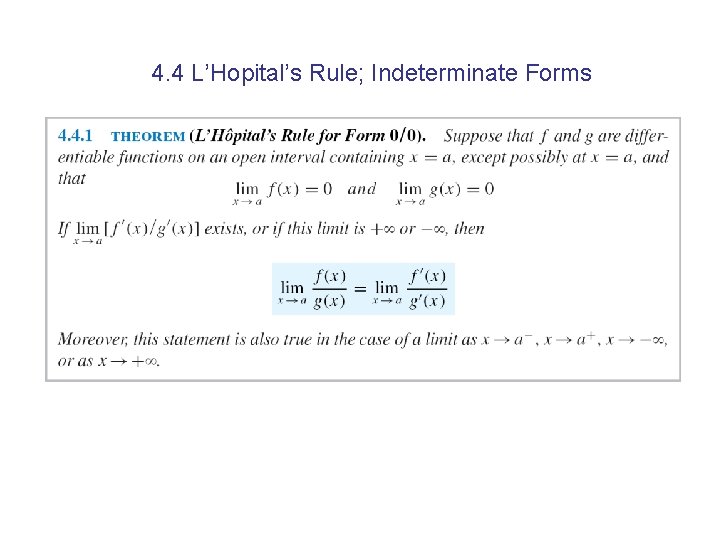
4. 4 L’Hopital’s Rule; Indeterminate Forms
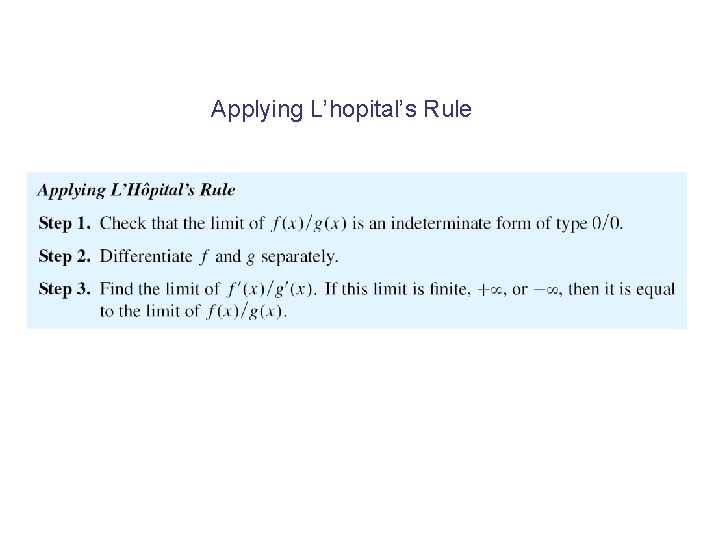
Applying L’hopital’s Rule
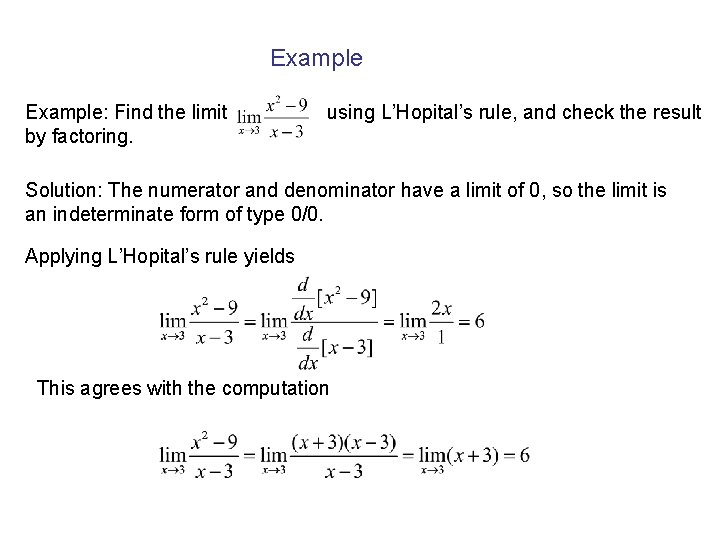
Example: Find the limit by factoring. using L’Hopital’s rule, and check the result Solution: The numerator and denominator have a limit of 0, so the limit is an indeterminate form of type 0/0. Applying L’Hopital’s rule yields This agrees with the computation
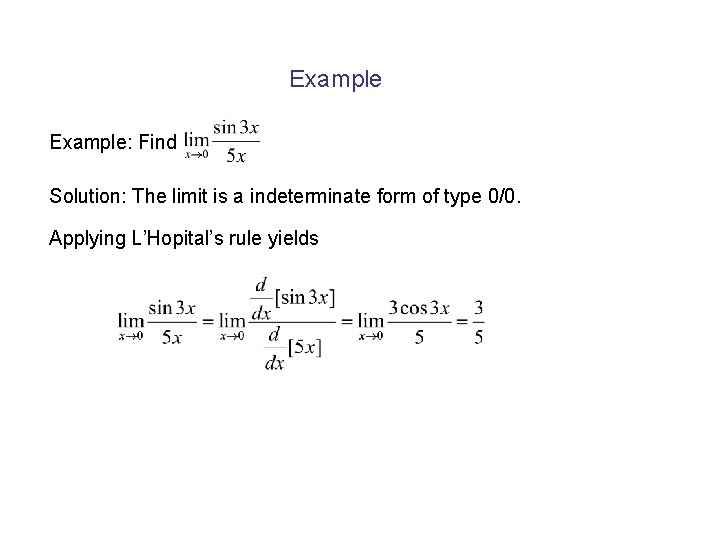
Example: Find Solution: The limit is a indeterminate form of type 0/0. Applying L’Hopital’s rule yields
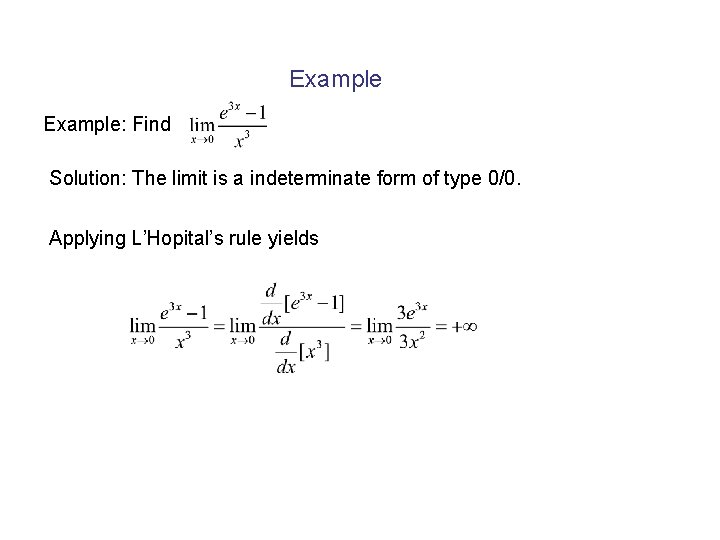
Example: Find Solution: The limit is a indeterminate form of type 0/0. Applying L’Hopital’s rule yields
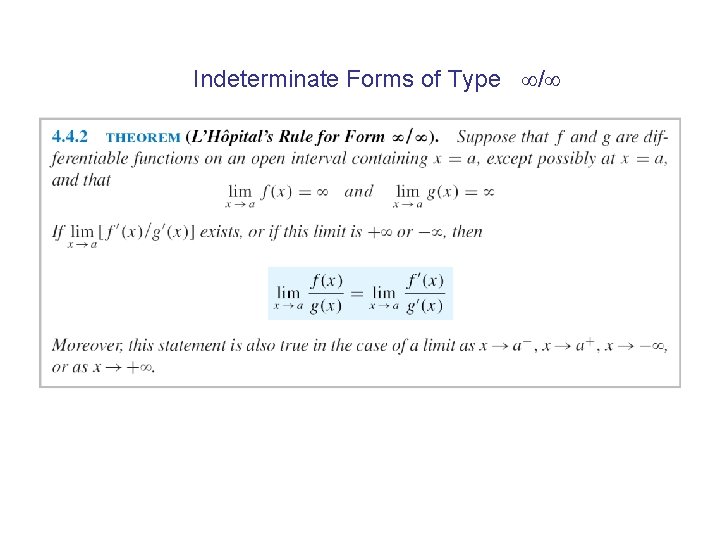
Indeterminate Forms of Type /
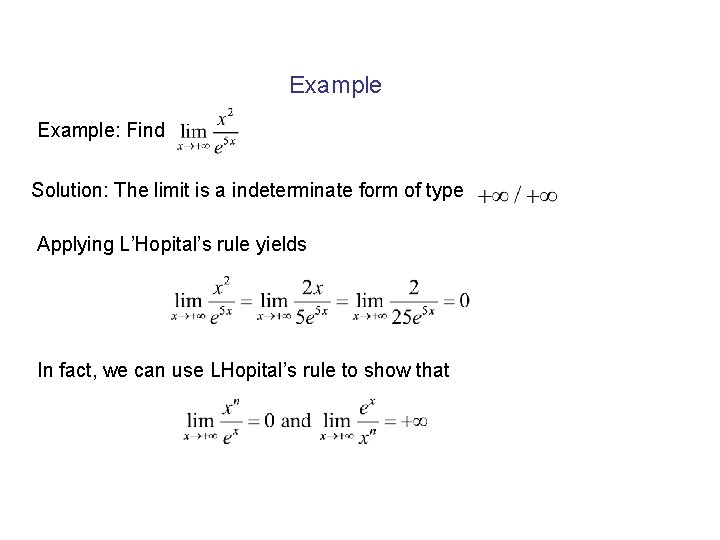
Example: Find Solution: The limit is a indeterminate form of type Applying L’Hopital’s rule yields In fact, we can use LHopital’s rule to show that
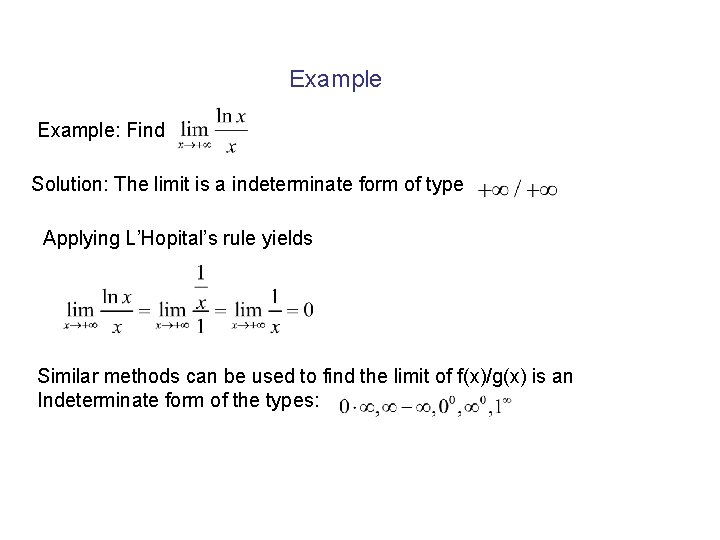
Example: Find Solution: The limit is a indeterminate form of type Applying L’Hopital’s rule yields Similar methods can be used to find the limit of f(x)/g(x) is an Indeterminate form of the types: