
4 1 Economic Development Economic Development What is

- Slides: 34
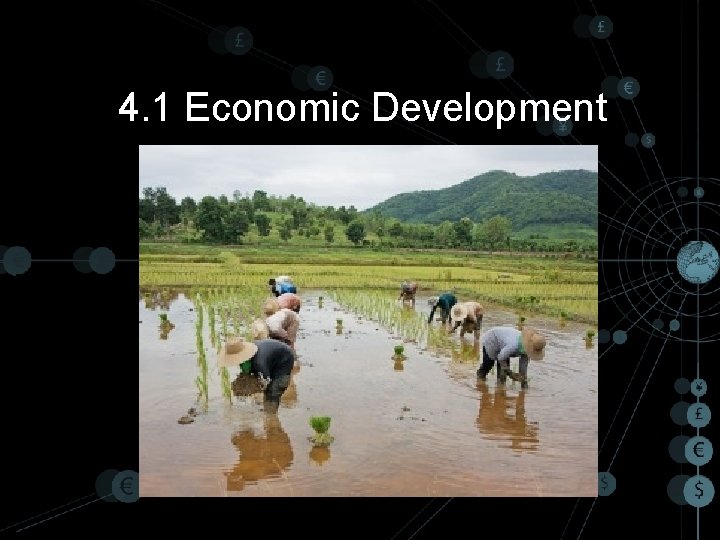
4. 1 Economic Development
Economic Development • What is economic development? • How are economic development and economic growth related? • What do economically less developed countries have in common? • How do economically less developed nations differ from each other? • How is the world going with economic development?
What is economic development? Definition A process to improve the lives of all the people in a country. This involves not only raising living standards, i. e. the production of goods and services, but the promotion of self esteem, dignity and respect, and the enlarging of people’s freedom to choose and to take control of their own lives Growth can be a key driver. Define GDP growth How can growth help lift people out of poverty? Video
Economic development and economic growth What is wrong with GDP? (This is revision) A Nobel prize winning economist discusses GDP https: //www. youtube. com/watch? v=QUa. JMNt. W 6 GA&featu re=youtu. be
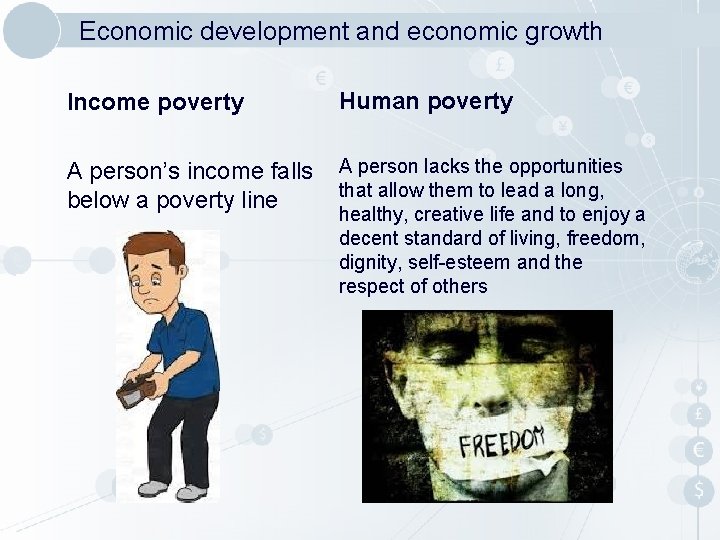
Economic development and economic growth Income poverty Human poverty A person’s income falls below a poverty line A person lacks the opportunities that allow them to lead a long, healthy, creative life and to enjoy a decent standard of living, freedom, dignity, self-esteem and the respect of others
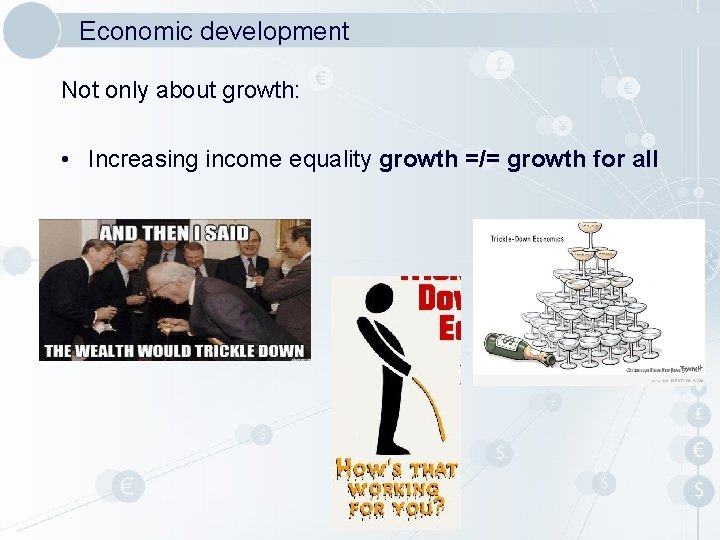
Economic development Not only about growth: • Increasing income equality growth =/= growth for all
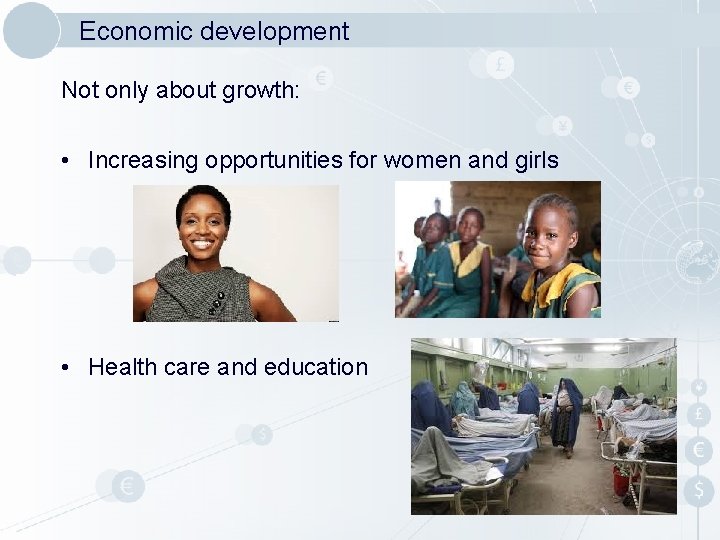
Economic development Not only about growth: • Increasing opportunities for women and girls • Health care and education
Sources of economic growth Sources of growth in economically less developed countries Increases in physical capital (machinery, tools, factories, buildings, road systems, airports, telephone lines) • All of these increase the productivity of labour Draw an increase in labour productivity on an AD-AS diagram
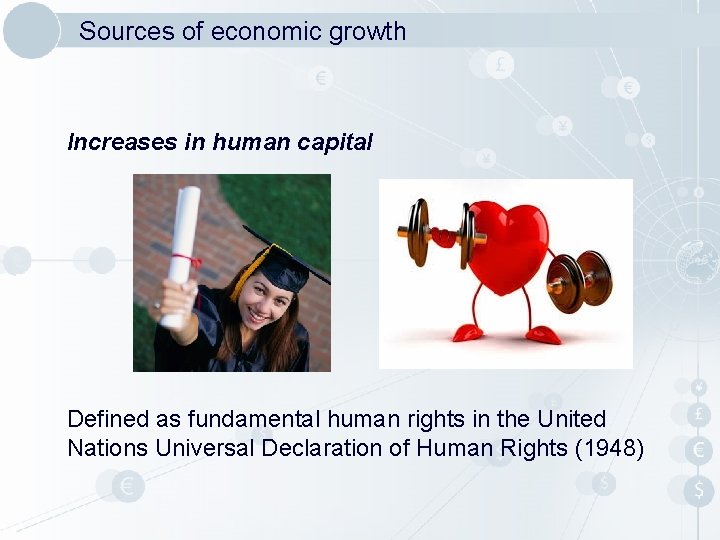
Sources of economic growth Increases in human capital Defined as fundamental human rights in the United Nations Universal Declaration of Human Rights (1948)
Sources of economic growth Increases in human capital In groups, brainstorm positive externalities of education (What benefits can it bring to a poor country? )
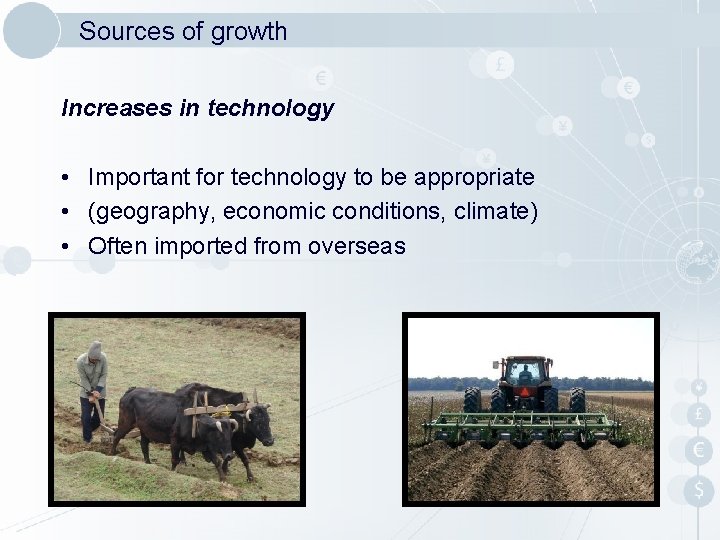
Sources of growth Increases in technology • Important for technology to be appropriate • (geography, economic conditions, climate) • Often imported from overseas
Sources of growth Institutional changes • Robust legal system • Enforcement of laws, contracts, dispute resolution • Property rights • Protection against corruption • Fair and transparent tax system • Access to credit A market economy cannot function without welldeveloped institutions such as these
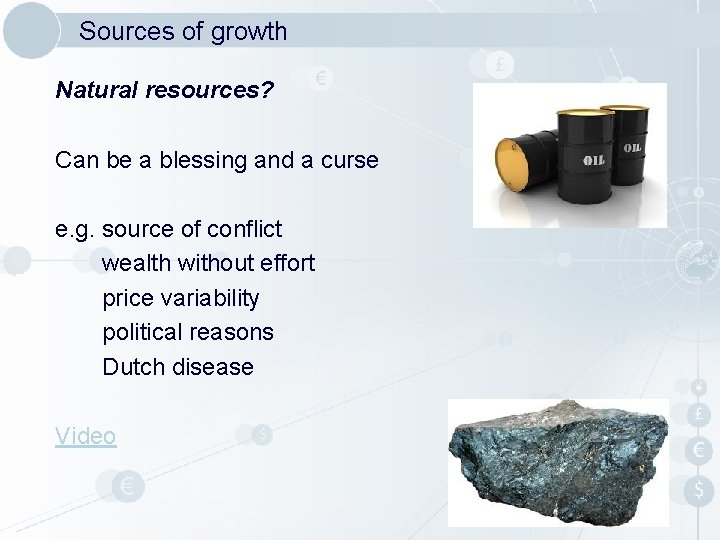
Sources of growth Natural resources? Can be a blessing and a curse e. g. source of conflict wealth without effort price variability political reasons Dutch disease Video
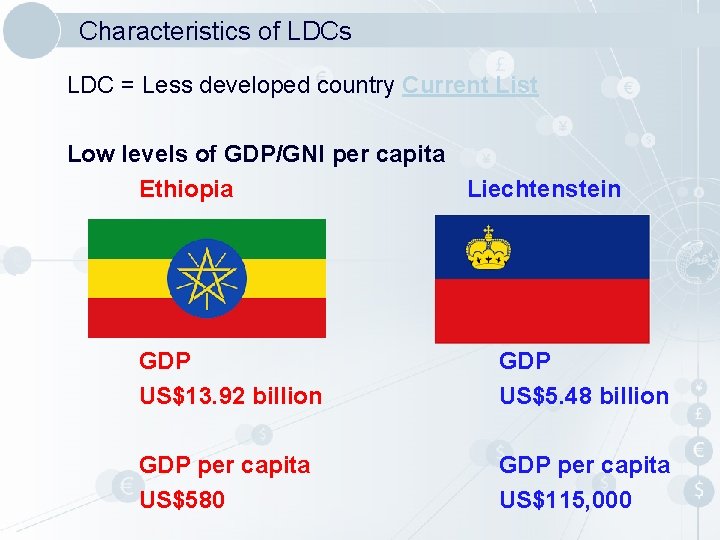
Characteristics of LDCs LDC = Less developed country Current List Low levels of GDP/GNI per capita Ethiopia Liechtenstein GDP US$13. 92 billion GDP US$5. 48 billion GDP per capita US$580 GDP per capita US$115, 000
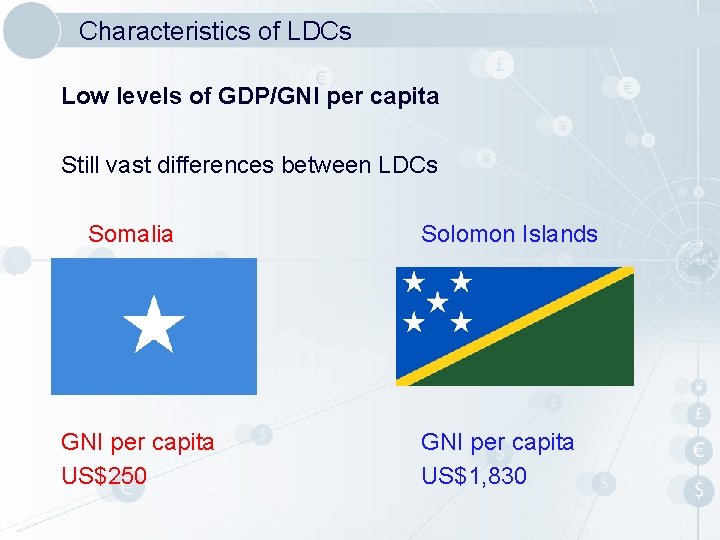
Characteristics of LDCs Low levels of GDP/GNI per capita Still vast differences between LDCs Somalia GNI per capita US$250 Solomon Islands GNI per capita US$1, 830
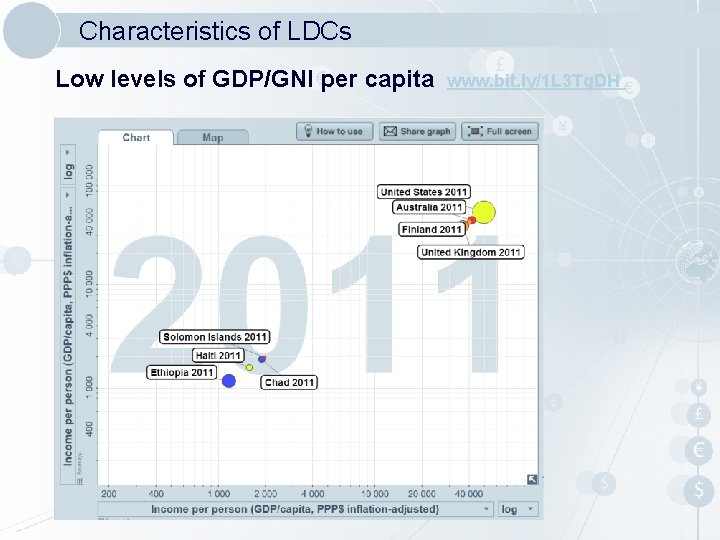
Characteristics of LDCs Low levels of GDP/GNI per capita www. bit. ly/1 L 3 Tq. DH
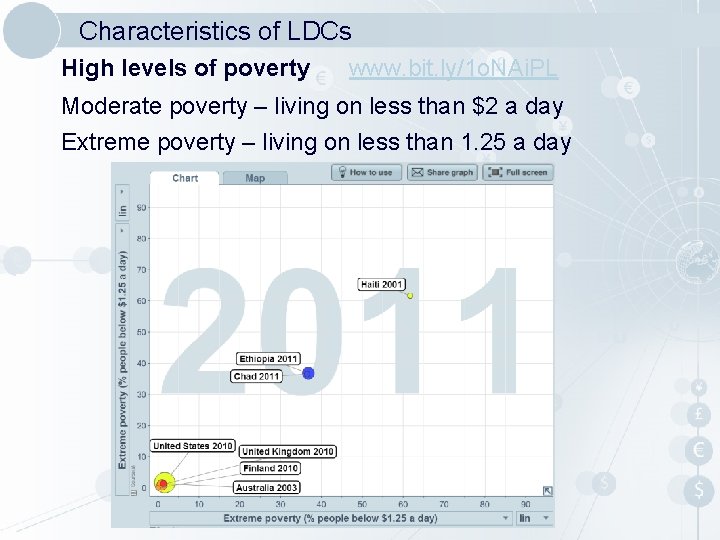
Characteristics of LDCs High levels of poverty www. bit. ly/1 o. NAi. PL Moderate poverty – living on less than $2 a day Extreme poverty – living on less than 1. 25 a day
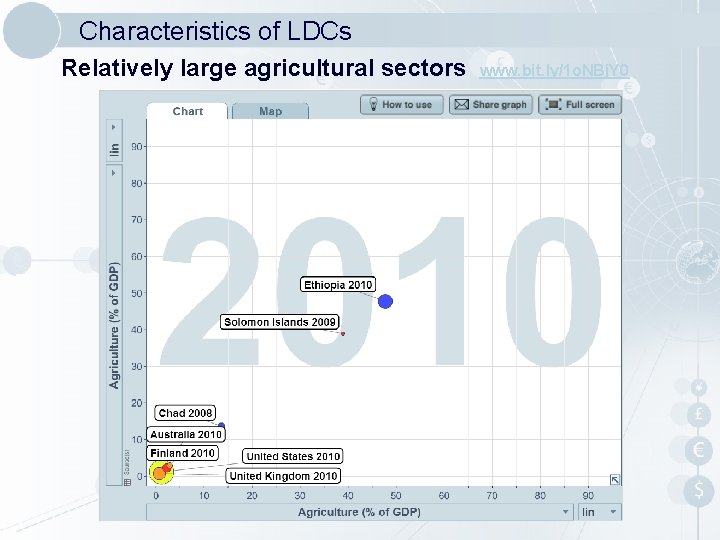
Characteristics of LDCs Relatively large agricultural sectors www. bit. ly/1 o. NBj. Y 0
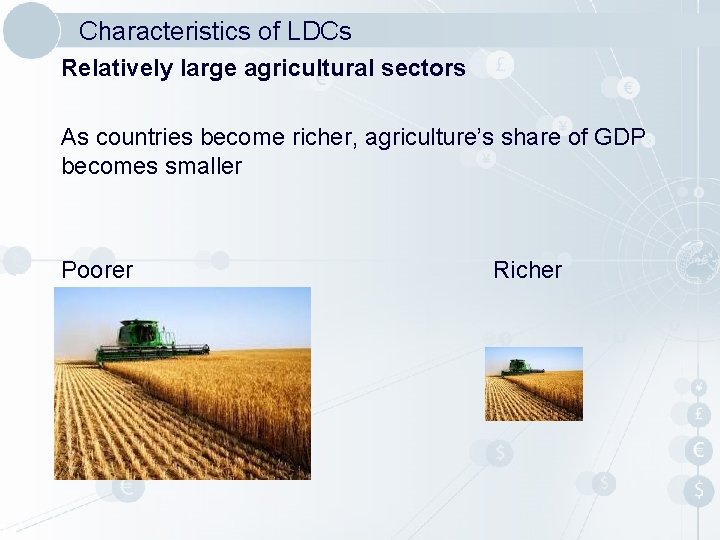
Characteristics of LDCs Relatively large agricultural sectors As countries become richer, agriculture’s share of GDP becomes smaller Poorer Richer
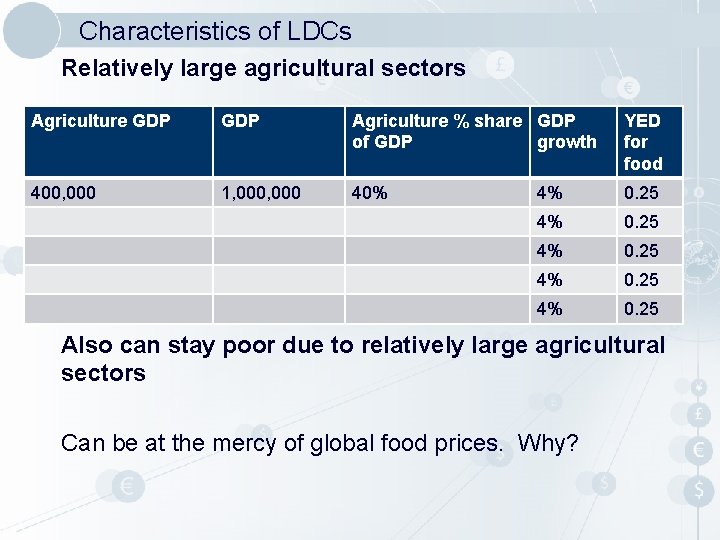
Characteristics of LDCs Relatively large agricultural sectors YED e. g, if income grows at 4%, demand for food might grow by 1%. YED = 0. 25 How can we categorise this good?
Characteristics of LDCs Relatively large agricultural sectors Agriculture GDP Agriculture % share GDP of GDP growth YED for food 400, 000 1, 000 40% 4% 0. 25 Also can stay poor due to relatively large agricultural sectors Can be at the mercy of global food prices. Why?
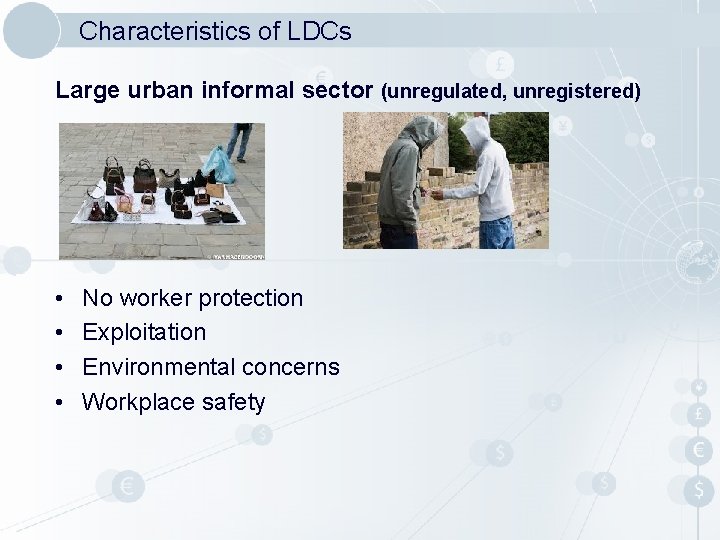
Characteristics of LDCs Large urban informal sector (unregulated, unregistered) • • No worker protection Exploitation Environmental concerns Workplace safety
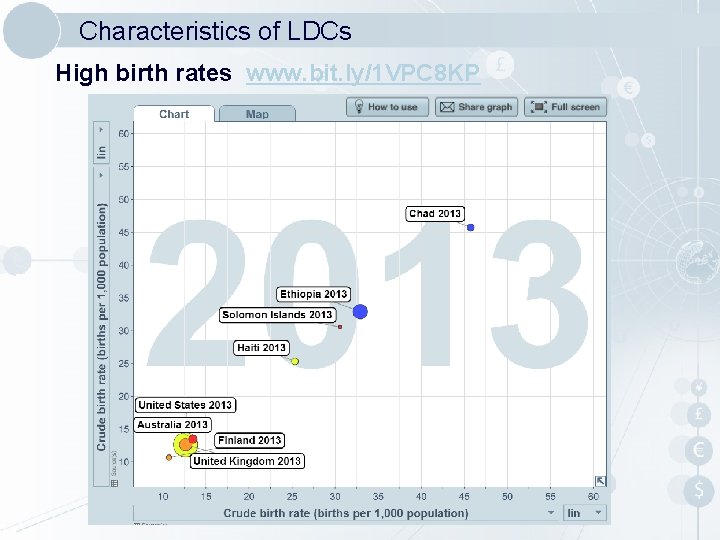
Characteristics of LDCs High birth rates www. bit. ly/1 VPC 8 KP
Characteristics of LDCs High birth rates www. bit. ly/1 VPC 8 KP • • Lack of health care Lack of education High number of dependants stifles S, reducing I Each additional child in a family means less investment in their human capital
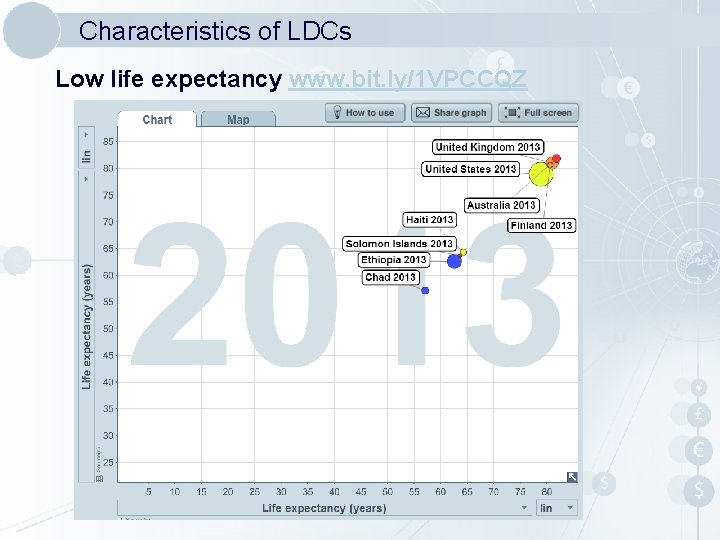
Characteristics of LDCs Low life expectancy www. bit. ly/1 VPCCQZ
Characteristics of LDCs A cycle of poverty (without intervention, poverty breed poverty) Low income • Low productivity • Low competitiveness • Low levels of human capital (health, education) • Low demand for goods and services • Low saving • Low capital investment
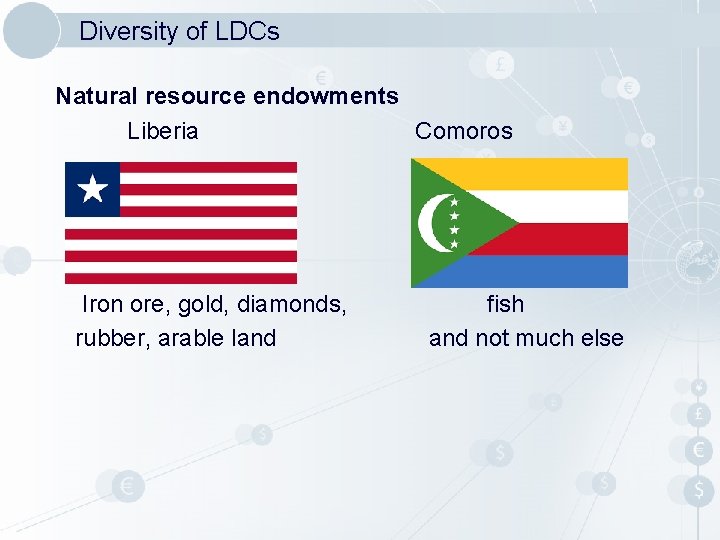
Diversity of LDCs Natural resource endowments Liberia Comoros Iron ore, gold, diamonds, rubber, arable land fish and not much else
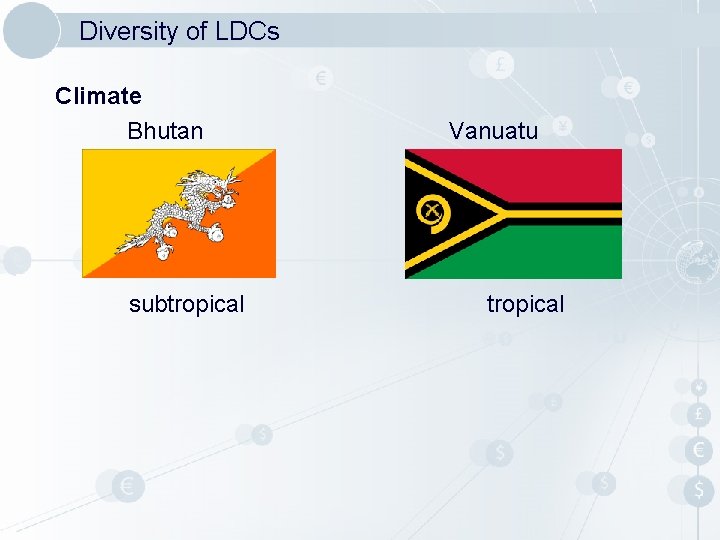
Diversity of LDCs Climate Bhutan subtropical Vanuatu tropical
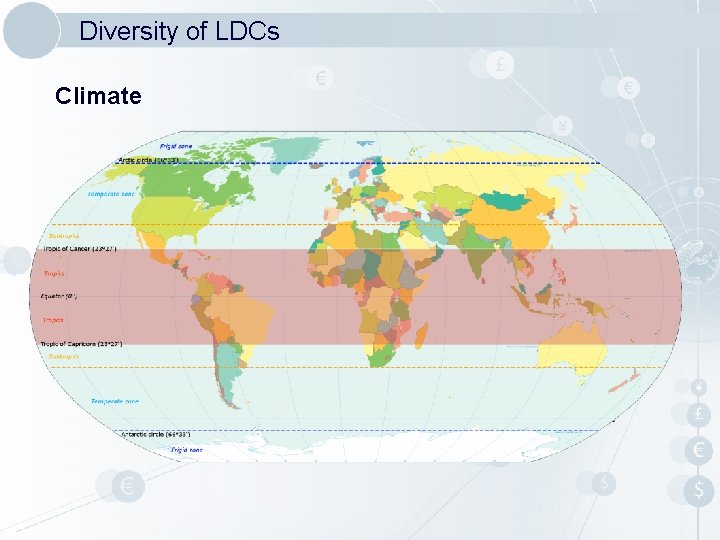
Diversity of LDCs Climate
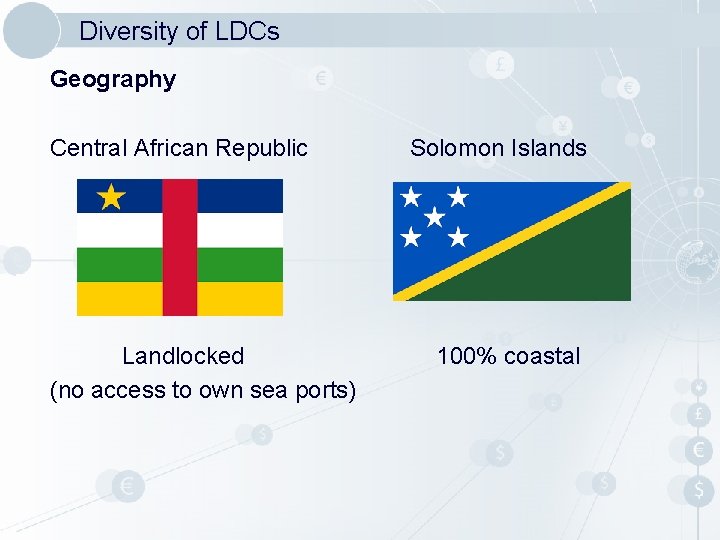
Diversity of LDCs Geography Central African Republic Landlocked (no access to own sea ports) Solomon Islands 100% coastal
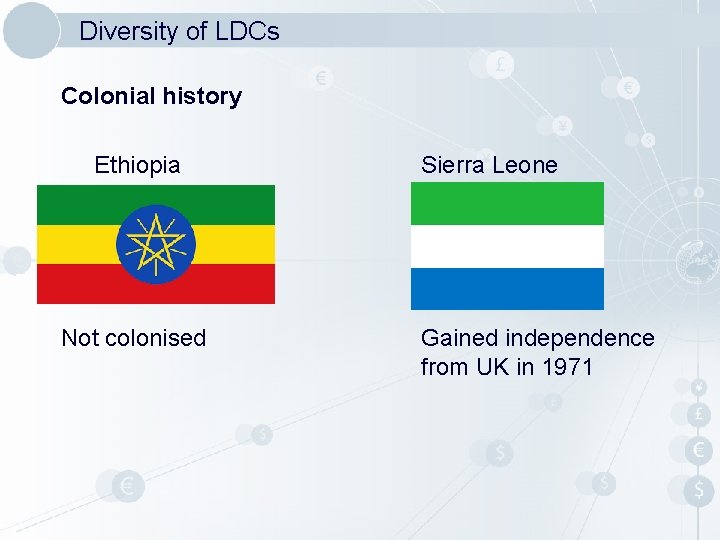
Diversity of LDCs Colonial history Ethiopia Not colonised Sierra Leone Gained independence from UK in 1971
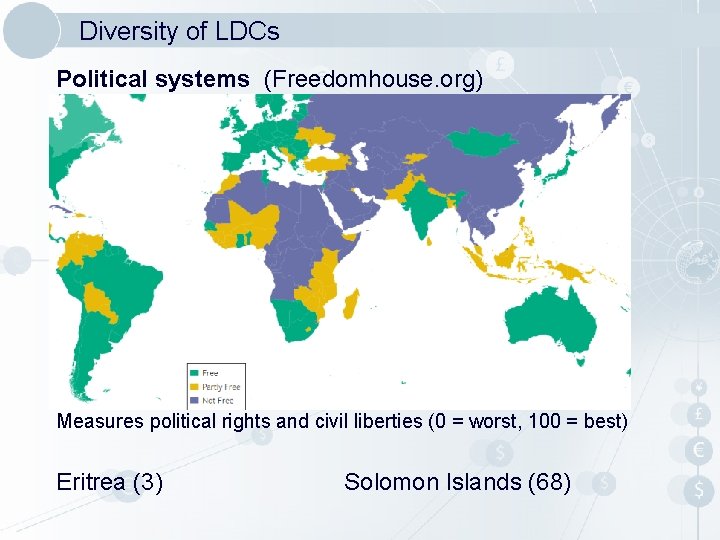
Diversity of LDCs Political systems (Freedomhouse. org) Measures political rights and civil liberties (0 = worst, 100 = best) Eritrea (3) Solomon Islands (68)
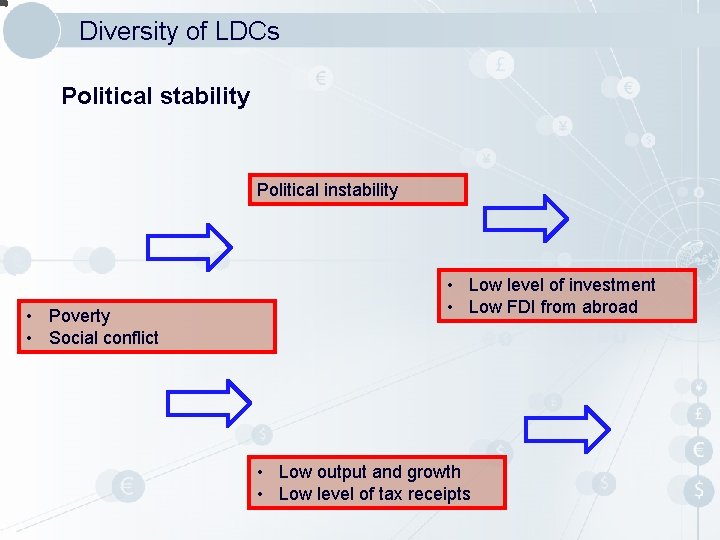
Diversity of LDCs Political stability Political instability • Poverty • Social conflict • Low level of investment • Low FDI from abroad • Low output and growth • Low level of tax receipts
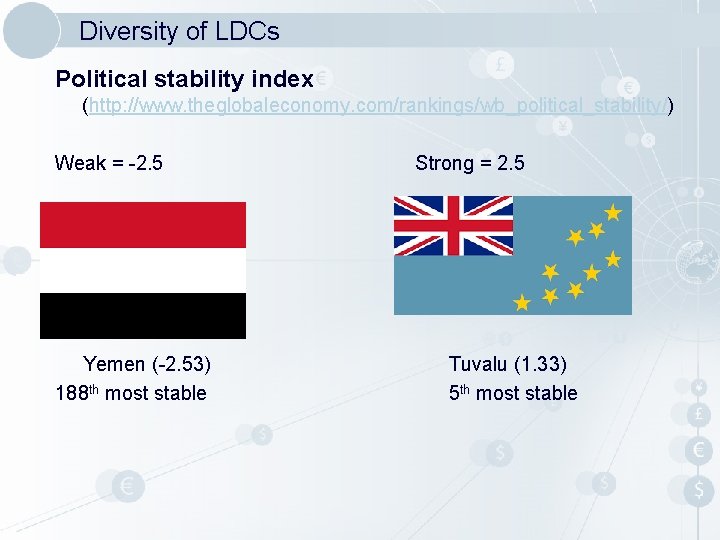
Diversity of LDCs Political stability index (http: //www. theglobaleconomy. com/rankings/wb_political_stability/) Weak = -2. 5 Yemen (-2. 53) 188 th most stable Strong = 2. 5 Tuvalu (1. 33) 5 th most stable