
371 1 0291 An Introduction to Computer Networks
- Slides: 25
371 -1 -0291: An Introduction to Computer Networks Homepage http: //www. cse. bgu. ac. il/Courses/course. asp? ID=63 Handout #1: Introduction Additional Reading Text book: Chaps. 1, 9. 2. 1 Lect-1: Introduction Computer Networks 1
Outline v v An Introduction to the mail system An Introduction to the Internet Important concepts in Networking Key Enablers of Large Networks Lect-1: Introduction Computer Networks 2
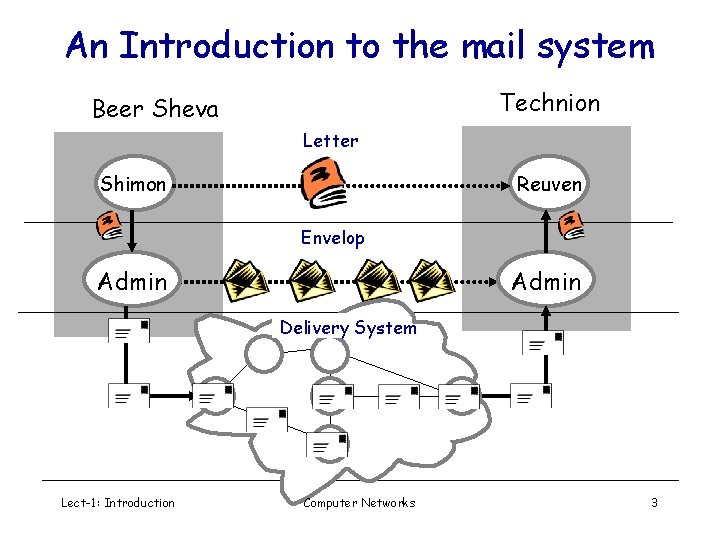
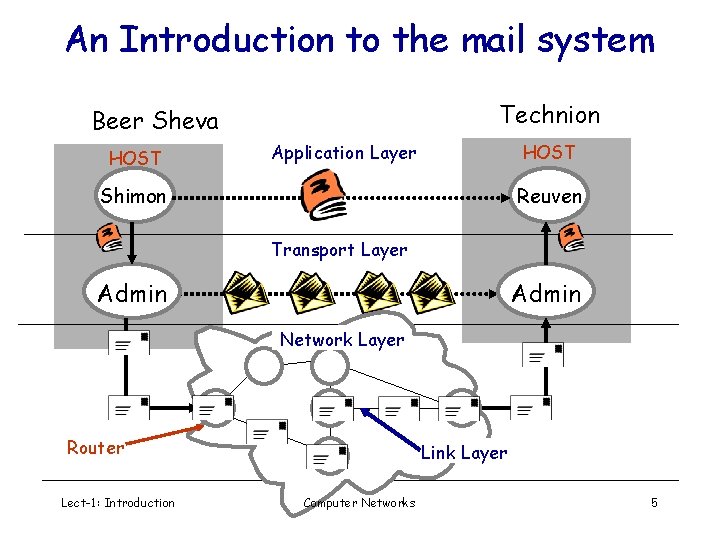
An Introduction to the mail system Technion Beer Sheva Letter Shimon Reuven Envelop Admin Delivery System Lect-1: Introduction Computer Networks 3
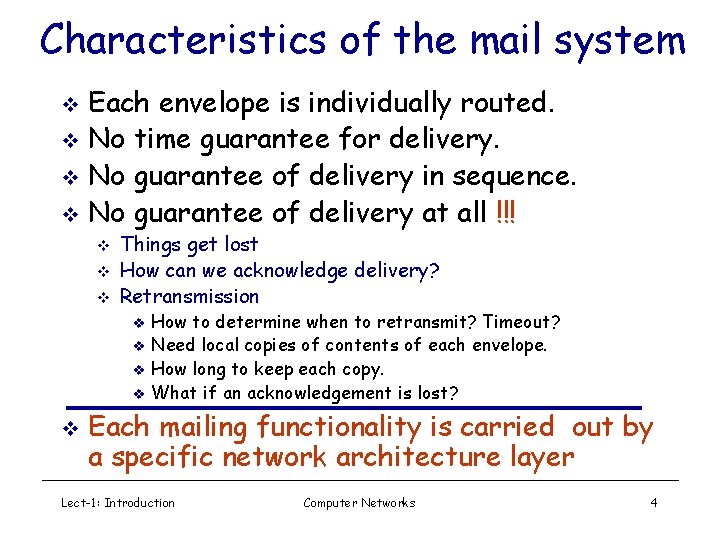
Characteristics of the mail system Each envelope is individually routed. v No time guarantee for delivery. v No guarantee of delivery in sequence. v No guarantee of delivery at all !!! v v Things get lost How can we acknowledge delivery? Retransmission v v v How to determine when to retransmit? Timeout? Need local copies of contents of each envelope. How long to keep each copy. What if an acknowledgement is lost? Each mailing functionality is carried out by a specific network architecture layer Lect-1: Introduction Computer Networks 4
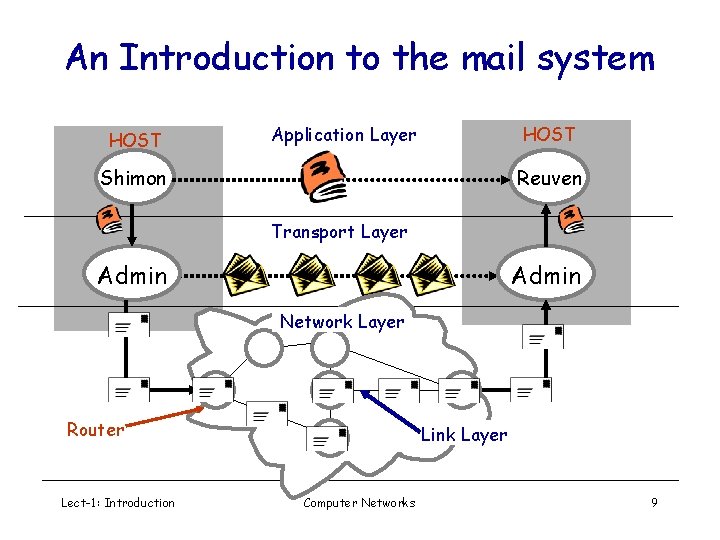
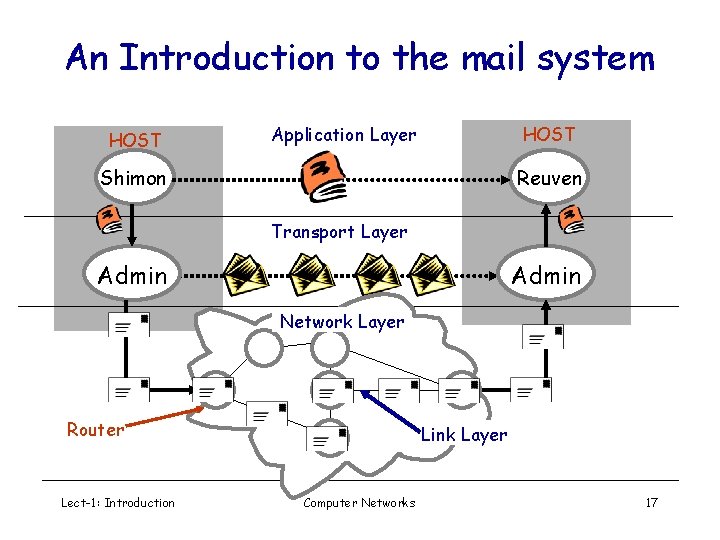
An Introduction to the mail system Technion Beer Sheva HOST Application Layer HOST Shimon Reuven Transport Layer Admin Network Layer Router Lect-1: Introduction Link Layer Computer Networks 5
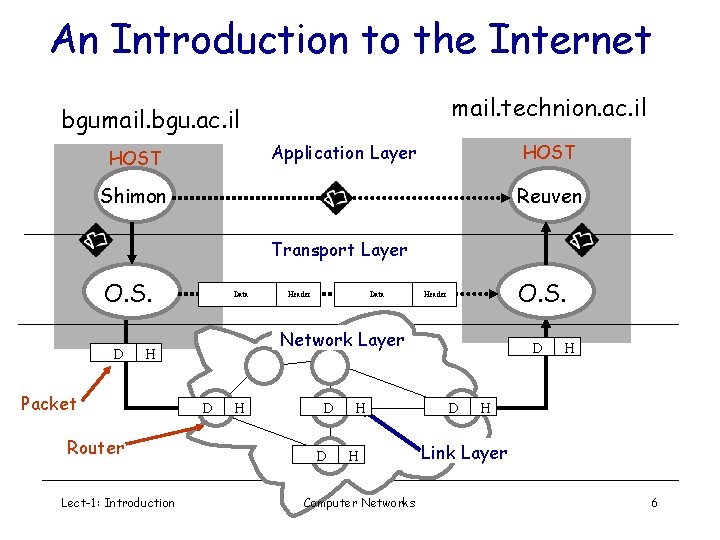
An Introduction to the Internet mail. technion. ac. il bgumail. bgu. ac. il Application Layer HOST Shimon Reuven Transport Layer O. S. D Data Router Lect-1: Introduction Data O. S. Header Network Layer H Packet Header D H D D H H Computer Networks D D H H Link Layer 6
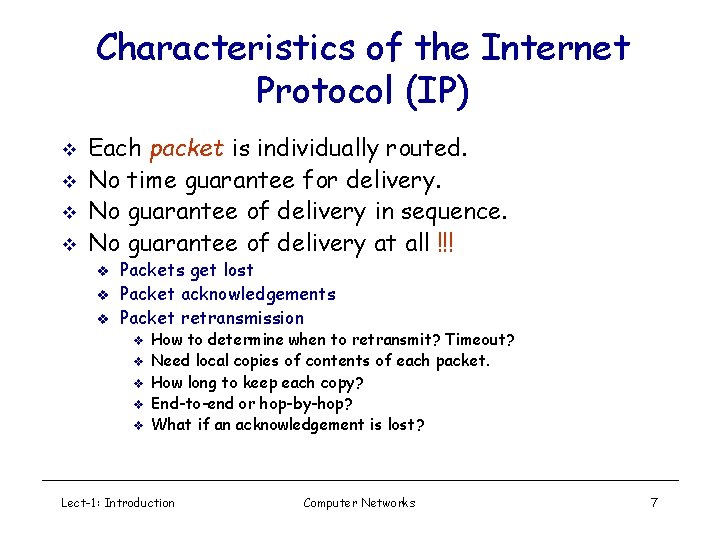
Characteristics of the Internet Protocol (IP) v v Each packet is individually routed. No time guarantee for delivery. No guarantee of delivery in sequence. No guarantee of delivery at all !!! v v v Packets get lost Packet acknowledgements Packet retransmission v v v How to determine when to retransmit? Timeout? Need local copies of contents of each packet. How long to keep each copy? End-to-end or hop-by-hop? What if an acknowledgement is lost? Lect-1: Introduction Computer Networks 7
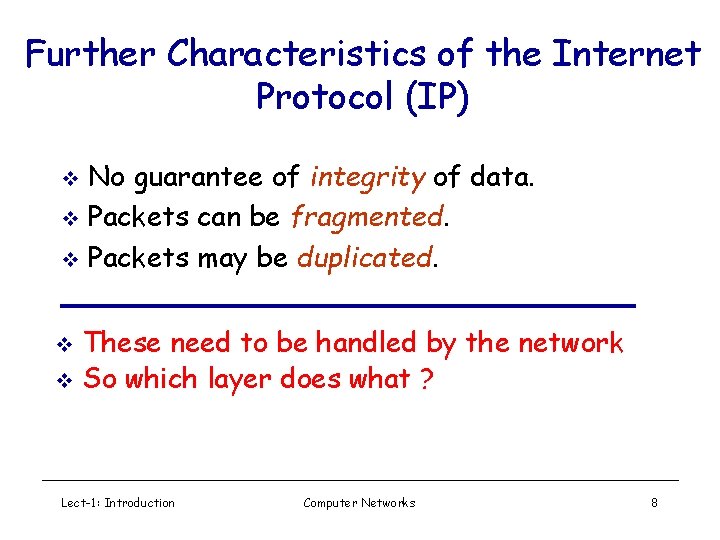
Further Characteristics of the Internet Protocol (IP) No guarantee of integrity of data. v Packets can be fragmented. v Packets may be duplicated. v These need to be handled by the network v So which layer does what ? v Lect-1: Introduction Computer Networks 8
An Introduction to the mail system HOST Application Layer HOST Shimon Reuven Transport Layer Admin Network Layer Router Lect-1: Introduction Link Layer Computer Networks 9
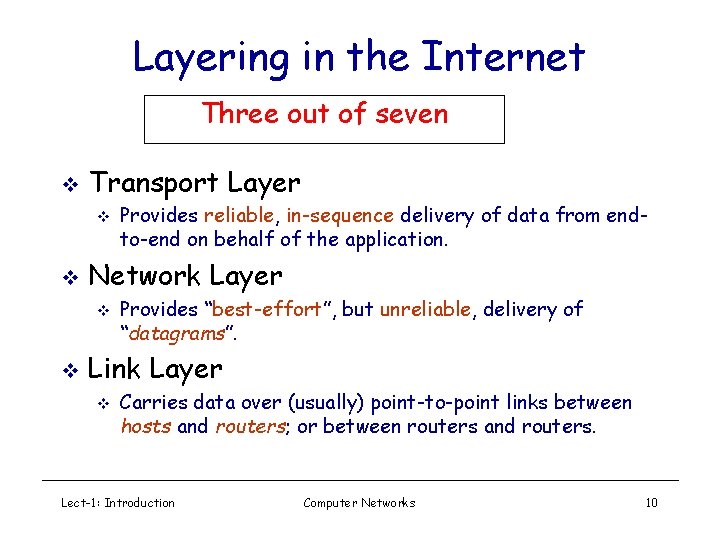
Layering in the Internet Three out of seven v Transport Layer v v Network Layer v v Provides reliable, in-sequence delivery of data from endto-end on behalf of the application. Provides “best-effort”, but unreliable, delivery of “datagrams”. Link Layer v Carries data over (usually) point-to-point links between hosts and routers; or between routers and routers. Lect-1: Introduction Computer Networks 10
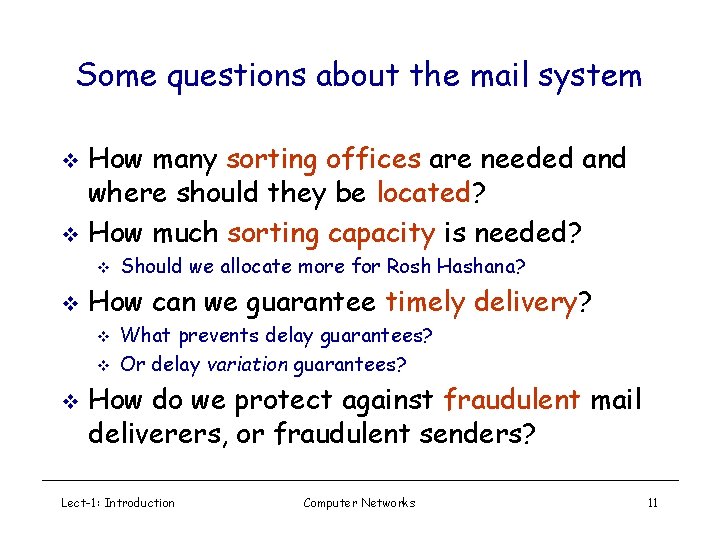
Some questions about the mail system How many sorting offices are needed and where should they be located? v How much sorting capacity is needed? v v v How can we guarantee timely delivery? v v v Should we allocate more for Rosh Hashana? What prevents delay guarantees? Or delay variation guarantees? How do we protect against fraudulent mail deliverers, or fraudulent senders? Lect-1: Introduction Computer Networks 11
Outline v v An Introduction to the mail system An Introduction to the Internet Important concepts in Networking Key Enablers of Large Networks Lect-1: Introduction Computer Networks 12
Important Concepts in Networking Multiplexing v Buffering v Encapsulation v Socket API v Common Applications v Lect-1: Introduction Computer Networks 13
Multiplexing A method of sharing resources among users v Provides a cost-effective resource sharing v Packetizing messages enables Time Mux v Routers enable Space Mux v Lect-1: Introduction Computer Networks 14
Buffering The process of temporarily storing data until a resource becomes available v Enables to overcome random delays and async transmission v Handles temporarily overflow and reduces loss of data v Lect-1: Introduction Computer Networks 15
Encapsulation The process of embedding “data” in a new “message format” v The new message will consist of header+data v Enables hierarchical layering where one layer places its data into another layer format v The latter is responsible to provide its end-toend service to the encapsulated data v Lect-1: Introduction Computer Networks 16
An Introduction to the mail system HOST Application Layer HOST Shimon Reuven Transport Layer Admin Network Layer Router Lect-1: Introduction Link Layer Computer Networks 17
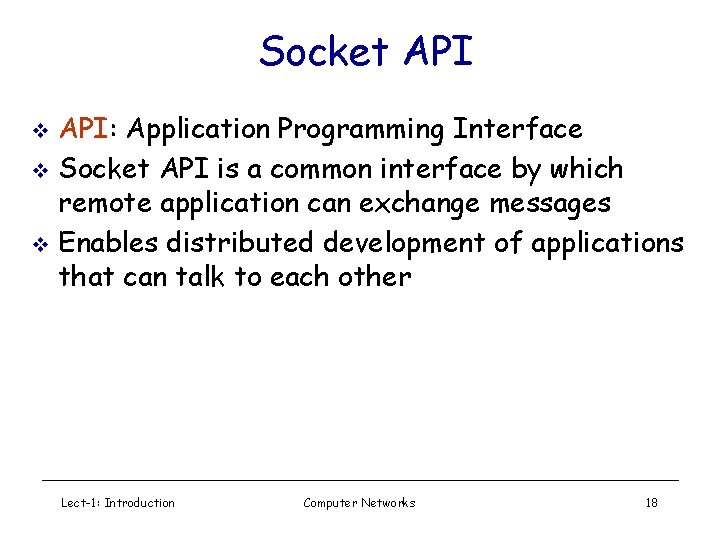
Socket API: Application Programming Interface v Socket API is a common interface by which remote application can exchange messages v Enables distributed development of applications that can talk to each other v Lect-1: Introduction Computer Networks 18
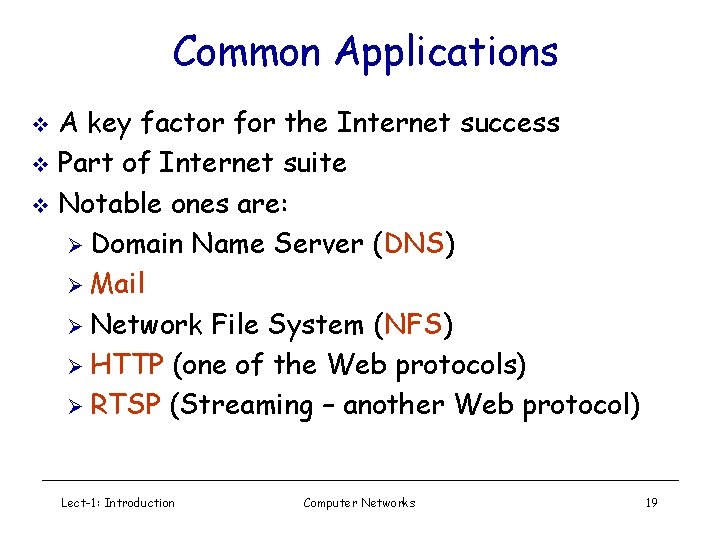
Common Applications A key factor for the Internet success v Part of Internet suite v Notable ones are: Ø Domain Name Server (DNS) Ø Mail Ø Network File System (NFS) Ø HTTP (one of the Web protocols) Ø RTSP (Streaming – another Web protocol) v Lect-1: Introduction Computer Networks 19
Outline v v An Introduction to the mail system An Introduction to the Internet Important concepts in Networking Key Enablers of Large Networks Lect-1: Introduction Computer Networks 20
Three Key Enablers of Networks Digitization of Signals v Economies of Scale v Network Externalities v Lect-1: Introduction Computer Networks 21
Digitization of Signals Any information bearing signal can be represented by a binary string with arbitrarily high accuracy. v Sample + quantize a Digital stream. v Digital data is cheaper to store, manipulate and, most importantly, reliably communicate. v Lect-1: Introduction Computer Networks 22
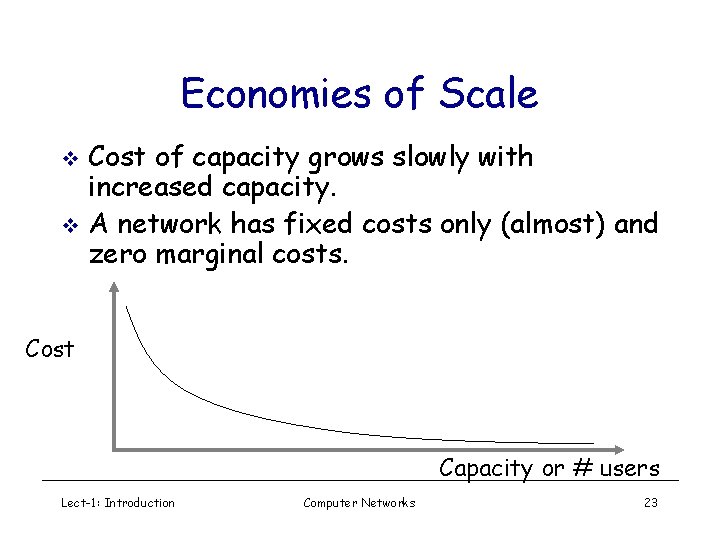
Economies of Scale Cost of capacity grows slowly with increased capacity. v A network has fixed costs only (almost) and zero marginal costs. v Cost Capacity or # users Lect-1: Introduction Computer Networks 23
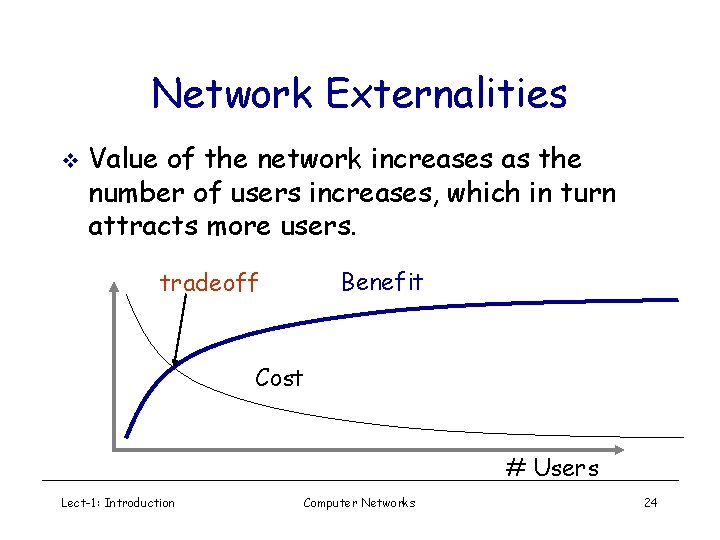
Network Externalities v Value of the network increases as the number of users increases, which in turn attracts more users. Benefit tradeoff Cost # Users Lect-1: Introduction Computer Networks 24
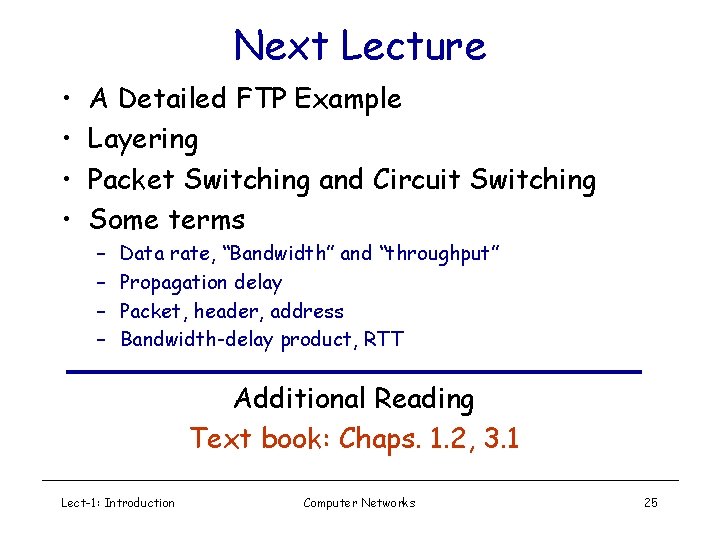
Next Lecture • • A Detailed FTP Example Layering Packet Switching and Circuit Switching Some terms – – Data rate, “Bandwidth” and “throughput” Propagation delay Packet, header, address Bandwidth-delay product, RTT Additional Reading Text book: Chaps. 1. 2, 3. 1 Lect-1: Introduction Computer Networks 25