
360 Degree Sales Cycle How Best to Optimise
360 Degree Sales Cycle
How Best to…. . ? � Optimise the sales pipeline increasing revenues and improving profitablity? � Decrease sales times and the cost of each sales? � Increase sales effectiveness and productivity? � Proactively address threats and pursue addon, up sell, cross sell opportunities? � Profitably manage customers and increase loyalty and lifetime value?
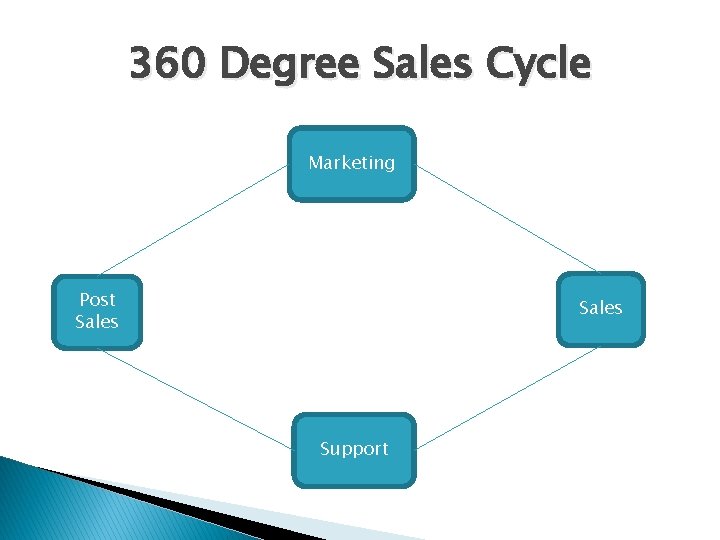
360 Degree Sales Cycle Marketing Post Sales Support
360 Degree…… � Approach ◦ By taking a 360 degree approach to providing services, you not only know why your services are selling, but where they are vulnerable and what you will have to do to keep selling products into the future. � Visibility ◦ Delivers an unmatched, comprehensive view of each sales opportunity by providing complete visibility into a prospect and customers history, milestones, key decision makers, tasks, activities and progress.

360 Degree Sales? �Uses consultative approaches �Seeks to uncover needs �Works as a partner �Provides win-win solutions �Builds relationships…. . . Then sales �Is about building rapport �Adds value to client
Consultative Approaches �Learns about client through questions �Depends �Sees on proactive listening problems through client’s eyes �Maintains �Seeks integrity best solution for customer (versus sales commissions)
Seeks to Uncover Needs �Questioning / Listening skills �Reads ‘between the lines’ for needs implied �Focuses �Offers �Avoids on solution, not products options, lets client choose product based solutions �Provides counsel versus quick
Works as a Partner �Sits on same side of the table as the client �Helps client evaluate options �Sees long term relationship as the focus �Offers recommendations that generate sales
Provides Win- Win Solutions �Isolates needs (versus positions) �Generates additional, creative (attractive) options �Demonstrates win-win paybacks �Focuses on relationship (versus winning the negotiation) �Stays on ‘same side of table’
Builds Relationships, then Sales �People only buy (long term ) from those they trust �Develops relationship of trust, counsel �Seeks first to understand client need �Feeds back client need to demonstrate empathy, understanding �Always maintains integrity
Is about building Rapport �People buy from people they trust �People trust people like themselves �People trust people who are empathetic �People trust people who are credible �Without trust there is no communication “Prescibing without diagnosis is malpractice”

Value added Sales vs Traditional Sales � Relationship based � Long term focused � Solution centred � Depends on integrity, trust � Focuses on adding value � Defers product discussions � Transaction based � Short term sales focused � Product centred � Focuses on ‘closing’ � Begins with product discussions
Adds Value to Client �Brings new data to bear on the problem �Honestly admits when product is not a good match (recommends others) �Takes a business-based approach to solutions �Recommends valuable (profitable) added services, features
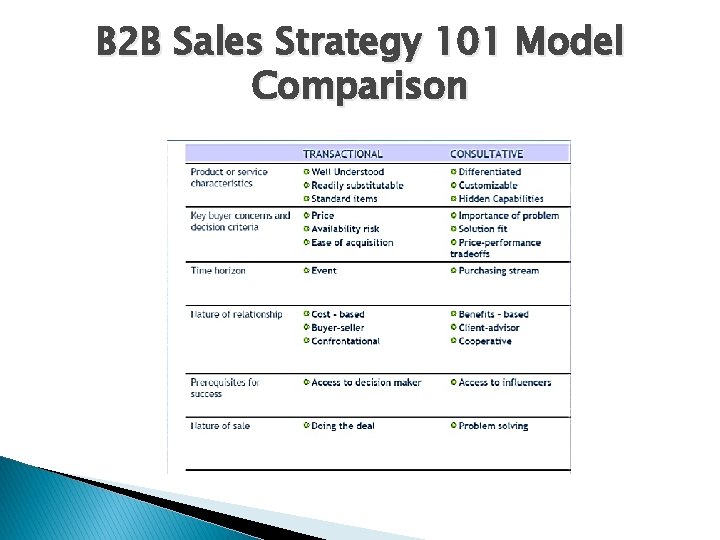
B 2 B Sales Strategy 101 Model Comparison
Your Best Approach �Document what “works” effectively �Develop communications skills �Develop negotiation skills �Develop presentation skills �Instill good work habits �Install measurable targets
Why a 360 Degree Sales Cycle? � Reaches beyond immediate sale, uncovers needs � Builds relationships, loyalty � Takes long term view of the relationship � Puts client and vendor on same side of the table � Focuses on upgrading skills of all sales people � Changes the philosophical approach to sales
360 Degree Sales Cycle The Overview �Know your job responsibilities �Know your company message �Know your competitors
Know Your Job Responsibilities �Understand your products and services �Drive sales of your products and services �Achieve and then exceed your assigned sales quota �Represent the company to the marketplace in a professional manner
Know Your Company Message �Who are we? ◦ Our marketspace and our profile �What are our core values? �What do we do? �What do we bring to the table? ◦ Our mission statement ◦ Our products and services ◦ Our value proposition
Know Your Competitors �Who are our competitors? �What do they do? �What do they bring to the table? � There is competition for all businesswhether local, nation or international � Can be competition of product or service- or competing for the finite dollars available –the priority of best spend in any one budget
360 Degrees Sales Cycle The Process
Sales Process � Prospecting and lead generation � Planning sales calls � Meetings � Post call follow up � Documentation � Presentation � Sign off � Own and implement the sale � After sales service � Post sales follow up � Repeat and up sell
Prospecting & Lead Generation �Identify current customer base �Identify and rank prospects �Identify decision makers �Schedule sales calls
Planning Sales Calls � Research prospect company � Identify audience � Define presales support (engineers for example) � Plan meeting agenda � Plan your objective � Set your follow up objective � Call and confirm your meeting ahead of time
Meetings � Make introductions � Define and then confirm prospect’s objectives � Define your objectives � Review business need � Identify budget � Identify decision maker and decision process � Identify contributing factors � Present possible solutions � Reach consensus: fit; not fit; investigate further
Meetings continued �Common sales errors ◦ Not prospecting ◦ Not conducting pre-meeting research ◦ Not being prepared ◦ Talking too much ◦ Providing irrelevant information ◦ Making the wrong pitch ◦ Not anticipating objections ◦ Not asking for the sale
Meetings continued � So remember……… ◦ Know your product! ◦ Think like your prospect in order to be successful ◦ Remember: Ratio of 2/1 - Two ears/ One mouth ◦ Focus on solving the ‘pain’ ◦ Avoid long-winded proposals ◦ Know when to walk away and move on to the next prospect
Post Call Follow-Up � Send a summary email or letter to your prospect and then follow up with a phone call ◦ ◦ Thank them for the meeting Recap the meeting Review agreed upon next steps State future intentions- ‘where to from here’ � Notify your appropriate internal resources for any next step assistance (eg engineering dept) � Update account files / CRM
Documentation �Prepare appropriate documents �Review the documents with your prospect Present a solid business case that addresses their pains / gains
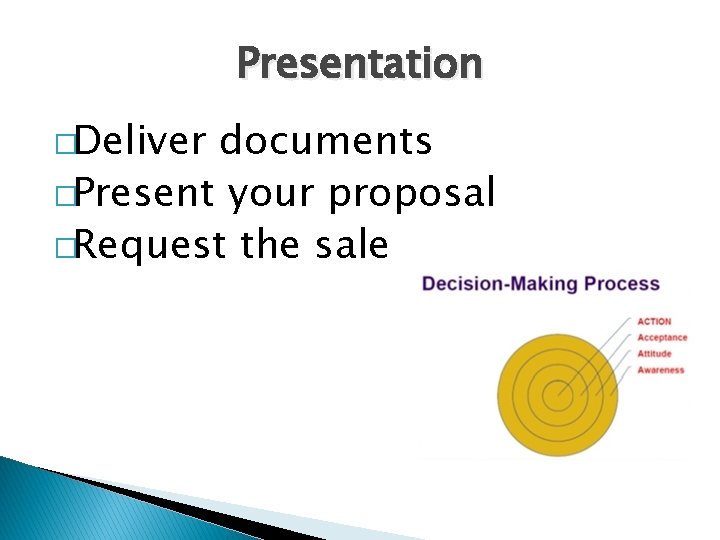
Presentation �Deliver documents �Present your proposal �Request the sale

Sign -off �Sign all documents �Close the sale It is not a sale until all necessary paperwork is in place and the process begun
Own and Implement The Sale �Process necessary paperwork �Follow up the process �Make sure the sale happens – this is your customer and future good will!
After Sales Service �Customer service �Technical support �Billings & collection
Post Sales Follow Up �Ensure your customer is happy �Continue to build the relationship �Strengthen your contacts with the customer �Set reminders for emails, followup, courtesy calls
Repeat and Upsell �Strengthen the relationship �Ask for referrals �Upsell and add more services �Maintain a partnership
� Ph 9005 7079; 0419 283363 smp@somuchpotential. com. au www. somuchpotential. com. au � � � PO Box 180, Tyabb 3913
- Slides: 37