
35 Diffraction and Image Formation Where was modern
- Slides: 12
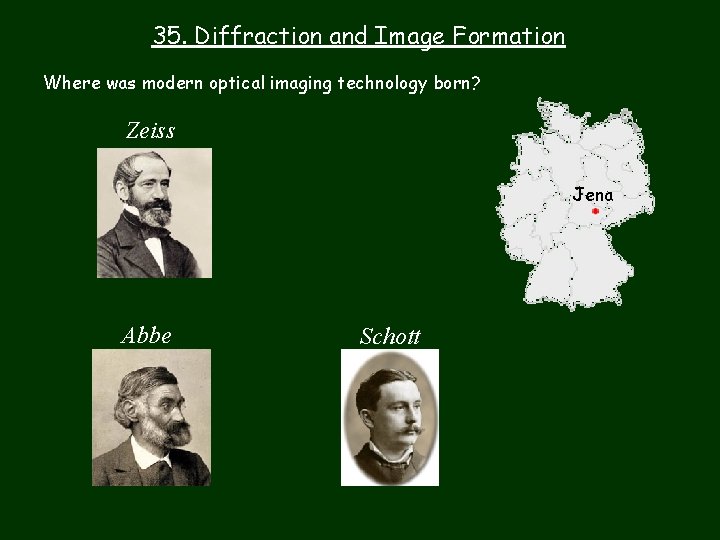
35. Diffraction and Image Formation Where was modern optical imaging technology born? Zeiss Jena Abbe Schott
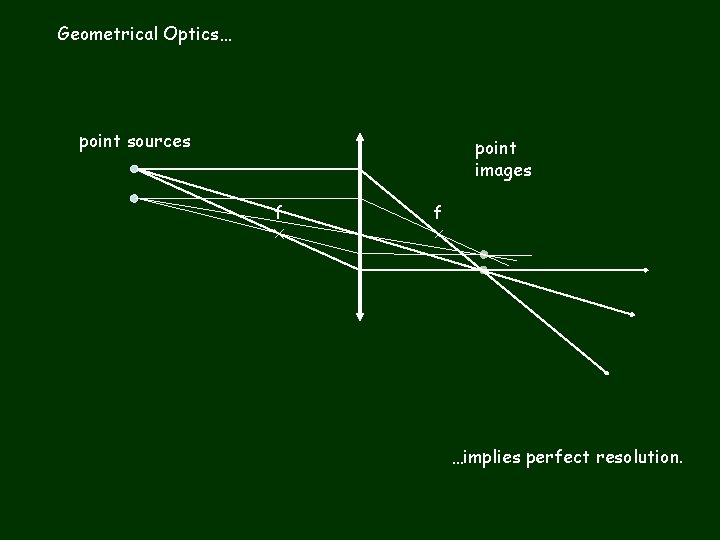
Geometrical Optics… point sources point images f f …implies perfect resolution.
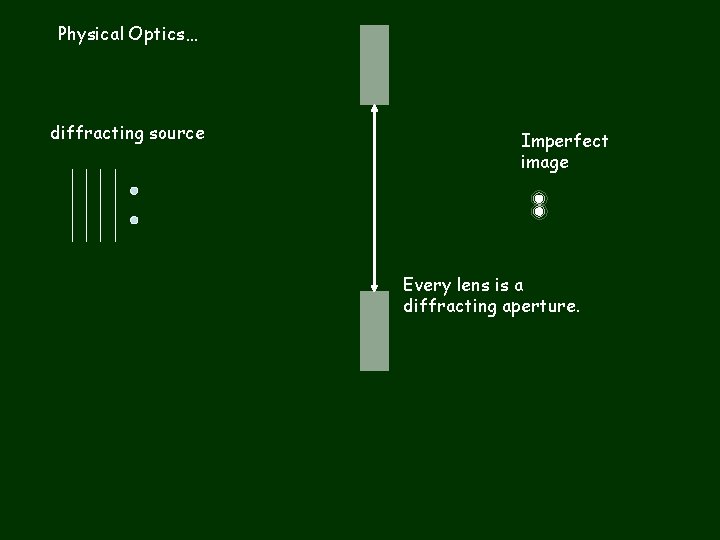
Physical Optics… diffracting source Imperfect image Every lens is a diffracting aperture.
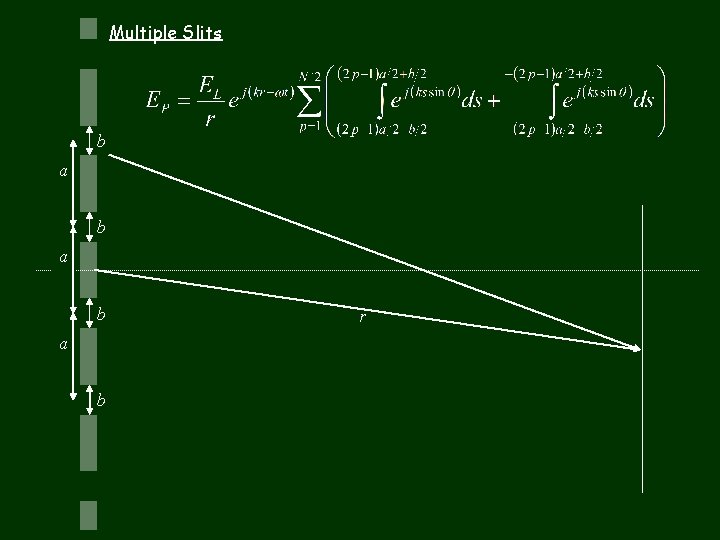
Multiple Slits b a b a b r
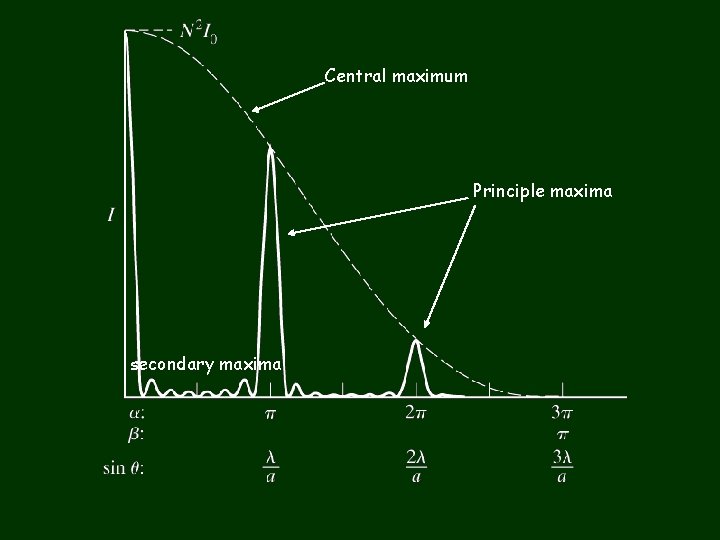
Central maximum Principle maxima secondary maxima
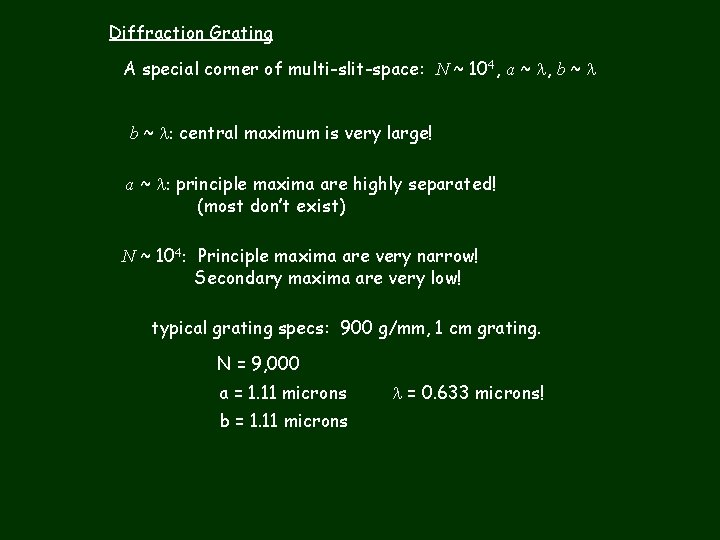
Diffraction Grating A special corner of multi-slit-space: N ~ 104, a ~ l, b ~ l: central maximum is very large! a ~ l: principle maxima are highly separated! (most don’t exist) N ~ 104: Principle maxima are very narrow! Secondary maxima are very low! typical grating specs: 900 g/mm, 1 cm grating. N = 9, 000 a = 1. 11 microns b = 1. 11 microns l = 0. 633 microns!
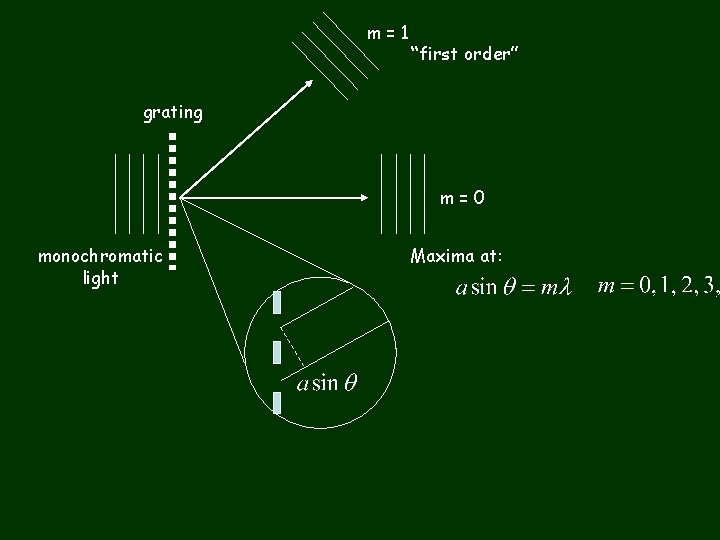
m=1 “first order” grating m=0 monochromatic light Maxima at:
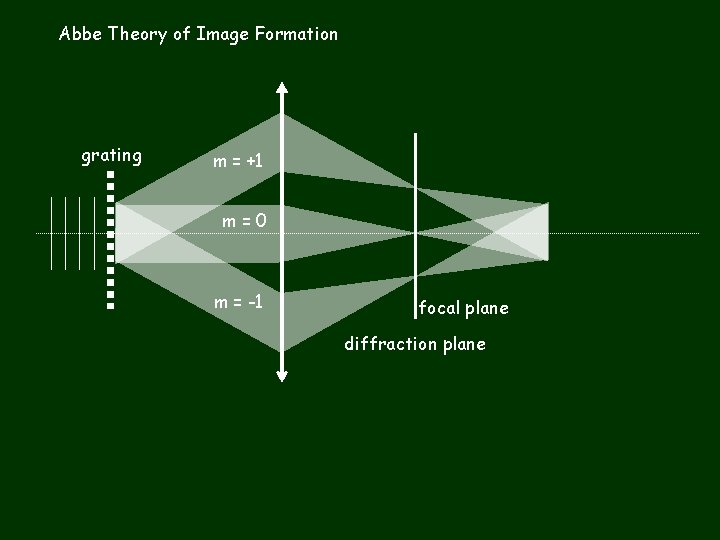
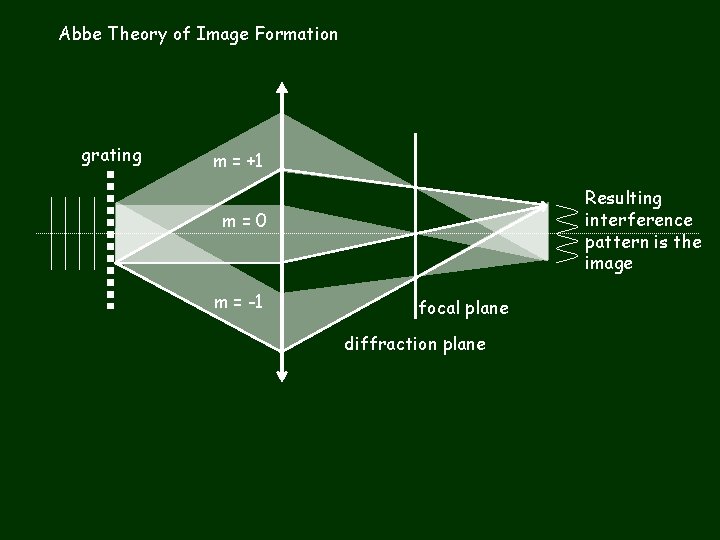
Abbe Theory of Image Formation grating m = +1 m=0 m = -1 focal plane diffraction plane
Abbe Theory of Image Formation grating m = +1 Resulting interference pattern is the image m=0 m = -1 focal plane diffraction plane
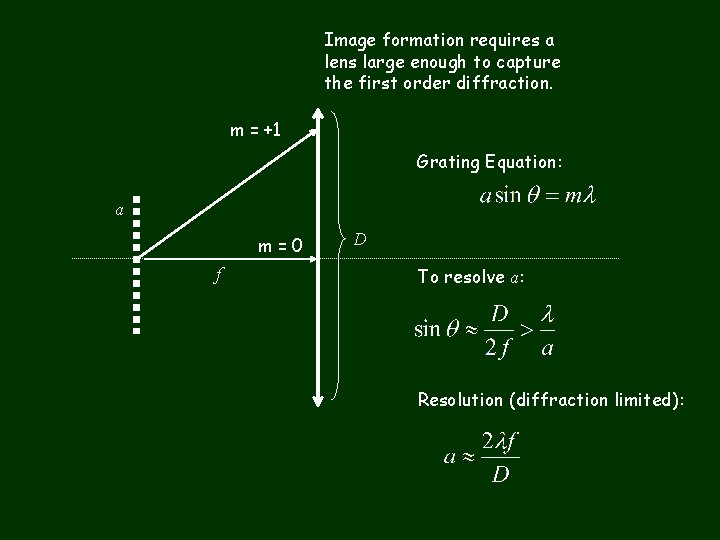
Image formation requires a lens large enough to capture the first order diffraction. m = +1 Grating Equation: a m=0 f D To resolve a: Resolution (diffraction limited):
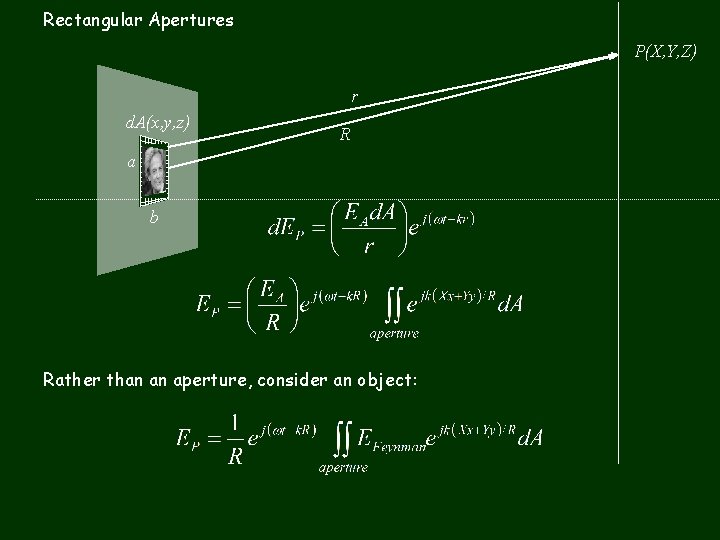
Rectangular Apertures P(X, Y, Z) r d. A(x, y, z) R a b Rather than an aperture, consider an object:
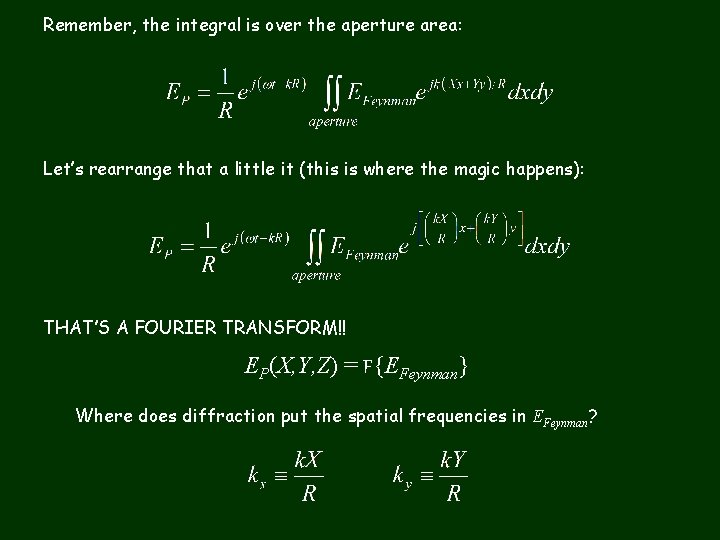
Remember, the integral is over the aperture area: Let’s rearrange that a little it (this is where the magic happens): THAT’S A FOURIER TRANSFORM!! EP(X, Y, Z) = F{EFeynman} Where does diffraction put the spatial frequencies in EFeynman?