
326 Daily Catalyst Pg 40 Prokaryotes 1 Describe
3/26 Daily Catalyst Pg. 40 Prokaryotes 1. Describe the function of the cell membrane and include how it does its job (include the structure). 2. Name two organelles that differ between plant and animal cells. 3. During our ecology unit, we talked about plants as producers. What structure in a plant allows for plants to exhibit phototropism (holds the plant cell shape and allows movement)?
3/26 Class Business Pg. 40 Prokaryotes Quiz #9 on Friday Cell Theory Scientists of the cell theory Organelles Test Corrections due Tuesday Key on the website
3/26 Agenda Pg. 40 Prokaryotes Daily Catalyst Class Business Finish coloring Plant and animal cell review Prokaryote notes
Plants vs. animals Directions: Using your notes, correctly color the plant and animal cells. You may want to label the organelles as a review for Friday’s quiz. Noise: 1 (with partner) Time: 15 minutes
Cell Review Directions: I will display information about plant or animal cells. You will move to the side of the room with the correct answer. Animals are to the left. Plants are in to the right. Both, plants and animals is in the center of the class. Walk and keep talking down
Cell Review Contains a cell wall PLANTS
Cell Review Contains Ribosomes BOTH
Cell Review Contains Lysosomes BOTH
Cell Review Eukaryotic BOTH
Cell Review Contains a Mitochondria BOTH
Cell Review Contains a Chloroplast PLANTS
Cell Review Contains a nucleus BOTH
Cell Review Contains a flagella Animal
3/26 Objective Pg. 40 Prokaryotes Compare and contrast prokaryotic and eukaryotic cells.
Pg. 40 Prokaryotes Key Point #1: Prokaryotes: Pro Before Karyotes Nucleus **Do not contain a NUCLEUS!!**
Most prokaryotes are microscopic, but what they lack in size they more than make up for in numbers. The number of prokaryotes in a single handful of fertile soil is greater than the number of people who have ever lived.
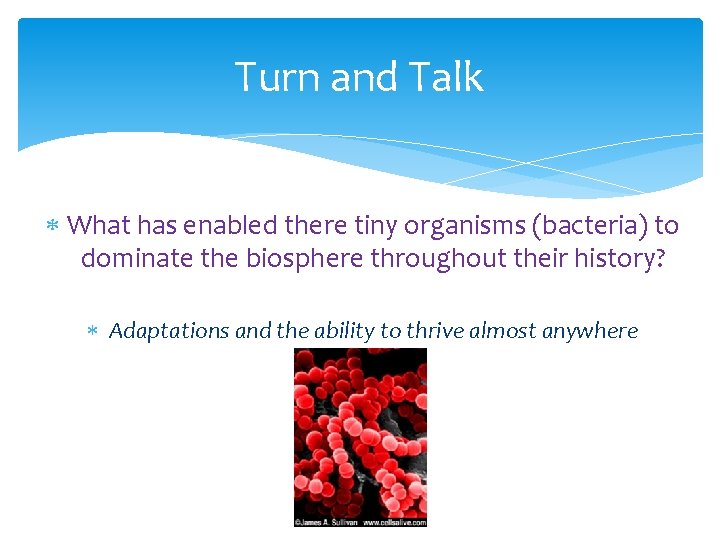
Turn and Talk What has enabled there tiny organisms (bacteria) to dominate the biosphere throughout their history? Adaptations and the ability to thrive almost anywhere
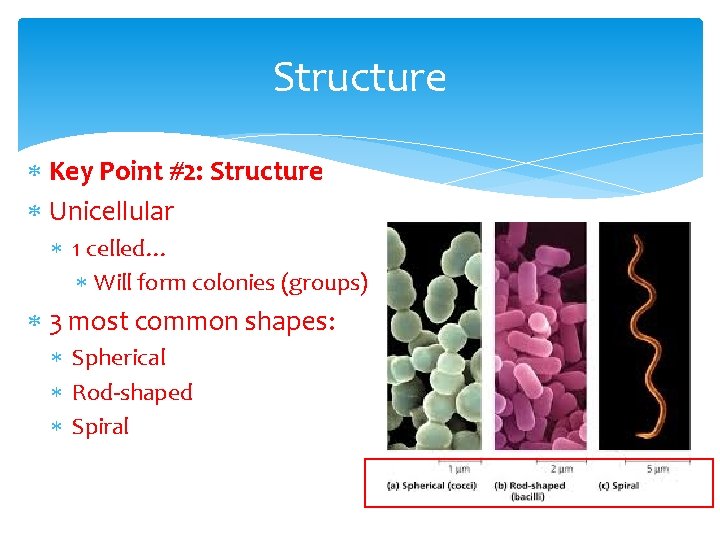
Structure Key Point #2: Structure Unicellular 1 celled… Will form colonies (groups) 3 most common shapes: Spherical Rod-shaped Spiral

Glue in
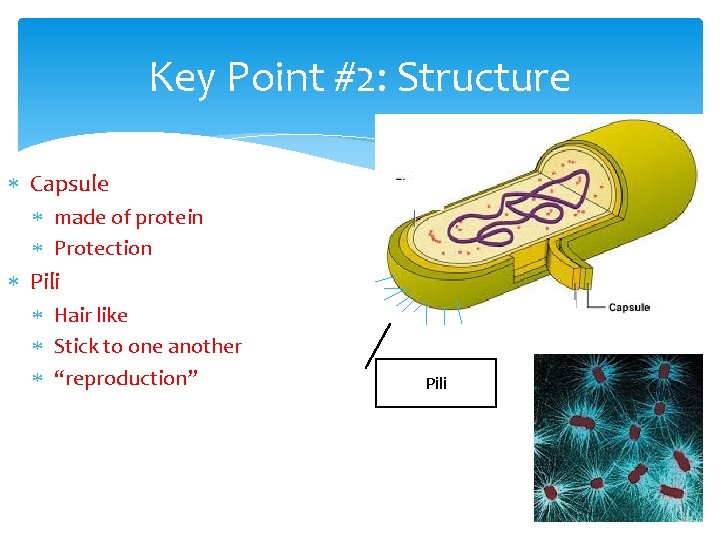
Key Point #2: Structure Capsule made of protein Protection Pili Hair like Stick to one another “reproduction” Pili
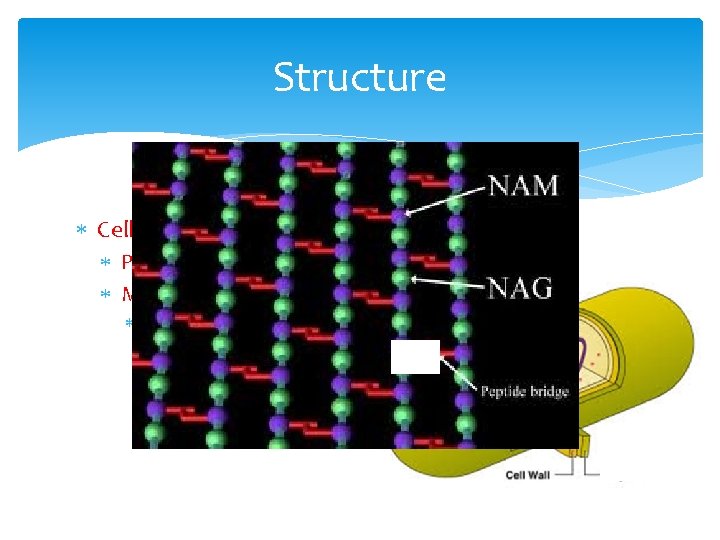
Structure Cell Wall: Peptidoglycan (sugar) Maintains cell shape and strength How does salt preserve food?
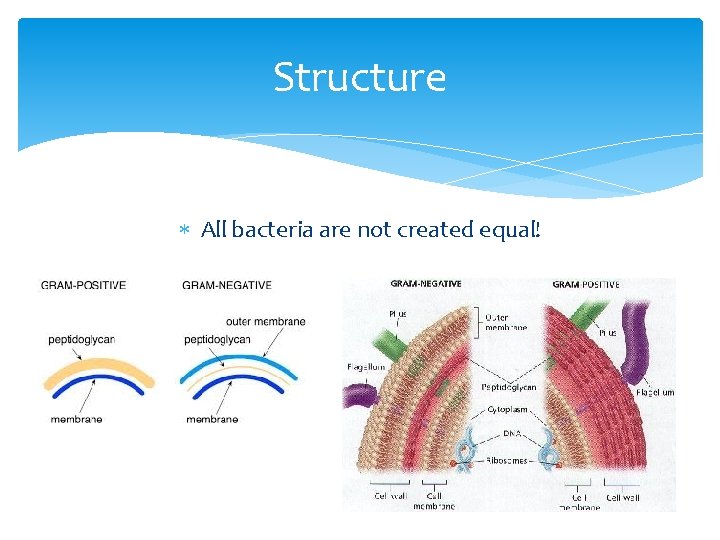
Structure All bacteria are not created equal!
The effectiveness of certain antibiotics, including penicillin, derives from their inhibition of the cell wall building blocks, thus preventing the formation of a functional cell wall, particularly in bacteria. These drugs can destroy bacteria without harming the human body.
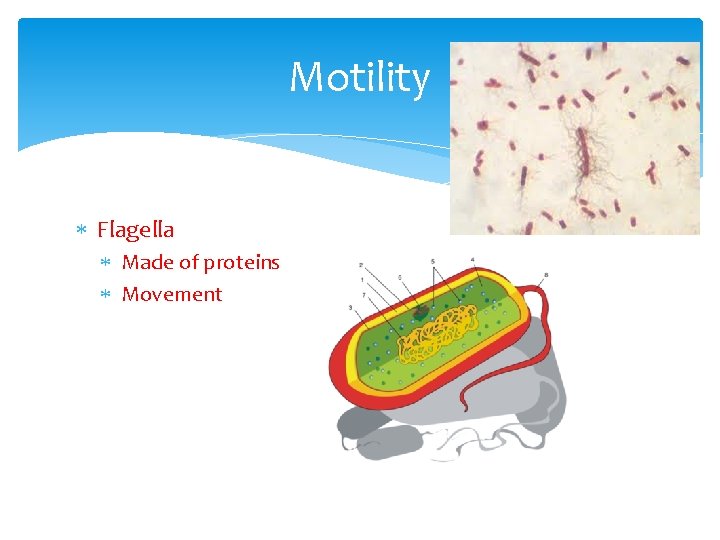
Motility Flagella Made of proteins Movement
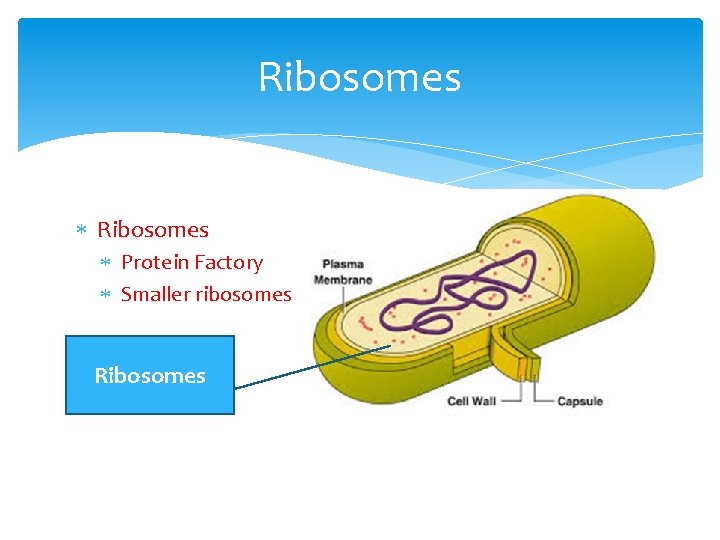
Ribosomes Protein Factory Smaller ribosomes Ribosomes
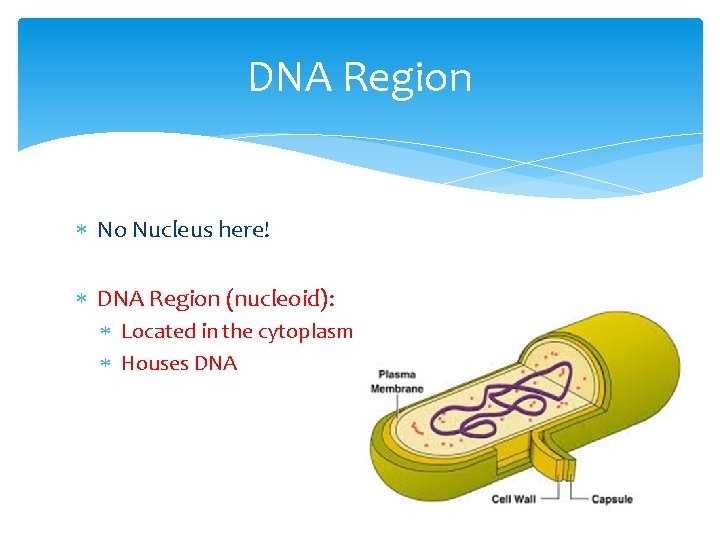
DNA Region No Nucleus here! DNA Region (nucleoid): Located in the cytoplasm Houses DNA
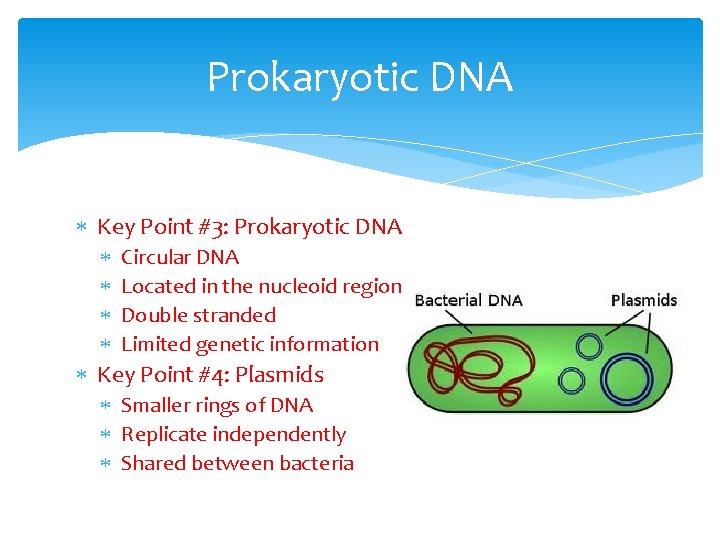
Prokaryotic DNA Key Point #3: Prokaryotic DNA Circular DNA Located in the nucleoid region Double stranded Limited genetic information Key Point #4: Plasmids Smaller rings of DNA Replicate independently Shared between bacteria
The ribosome is similar in both prokaryotes and eukaryotes. In prokaryotes, ribosomes are smaller and fewer in number. Another type of antibiotics, Erythromycin and tetracycline, bind to ribosomes and block protein synthesis in prokaryotes, but not in eukaryotes.
Turn and Talk How do bacteria reproduce? How does this form of reproduction add bacteria in their evolution (think back to the evolution of bacteria resistance).
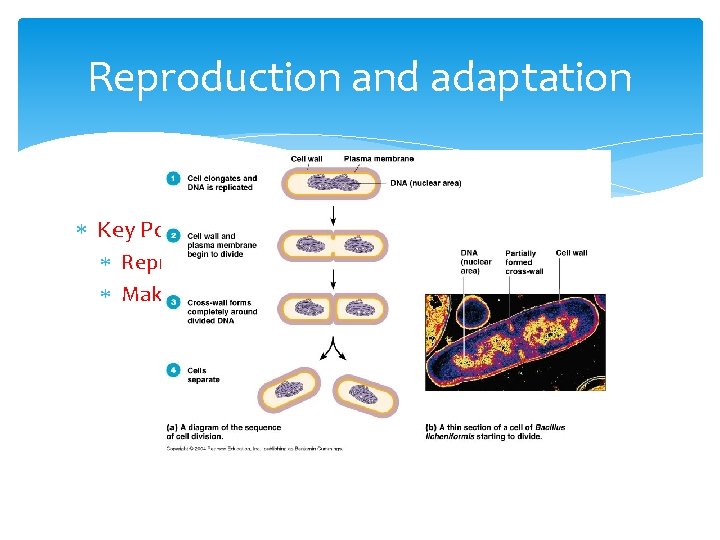
Reproduction and adaptation Key Point #5: Divide by binary fission Reproduce quickly Make exact replicas (clones)
Prokaryotes can adapt quickly to changes in their environment through evolution by natural selection. Because of prokaryotes’ rapid reproduction, mutations that confer greater fitness can swiftly become more common in a population.
Where else have we seen prokaryotes? Think back to ecology! Bacteria convert atmosphere nitrogen (N 2) into ammonia (NH 3), a process called nitrogen fixation (nitrogen cycle). The ammonia is used for amino acids (building blocks) and other organic molecules.
We have only characterized only 4, 500 species of bacteria while a single handful of dirt can contain over 10, 000 species of bacteria. Yes, this will take a lot of time to classify!
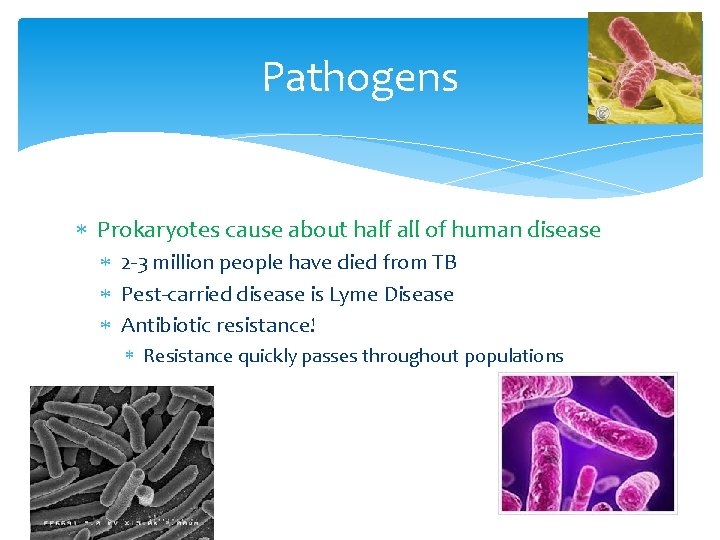
Pathogens Prokaryotes cause about half all of human disease 2 -3 million people have died from TB Pest-carried disease is Lyme Disease Antibiotic resistance! Resistance quickly passes throughout populations
Not all bacteria are bad! When do we use bacteria for good? Convert milk to cheese and yogurt Gene cloning and E. Coli Transgenic plants Venter and designing a prokaryotes that can perform specific tasks Hydrogen for energy
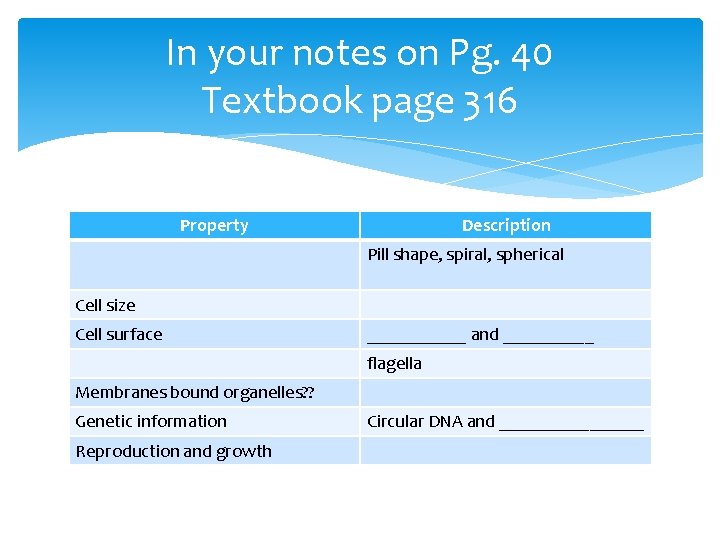
In your notes on Pg. 40 Textbook page 316 Property Description Pill shape, spiral, spherical Cell size Cell surface ______ and _____ flagella Membranes bound organelles? ? Genetic information Reproduction and growth Circular DNA and ________
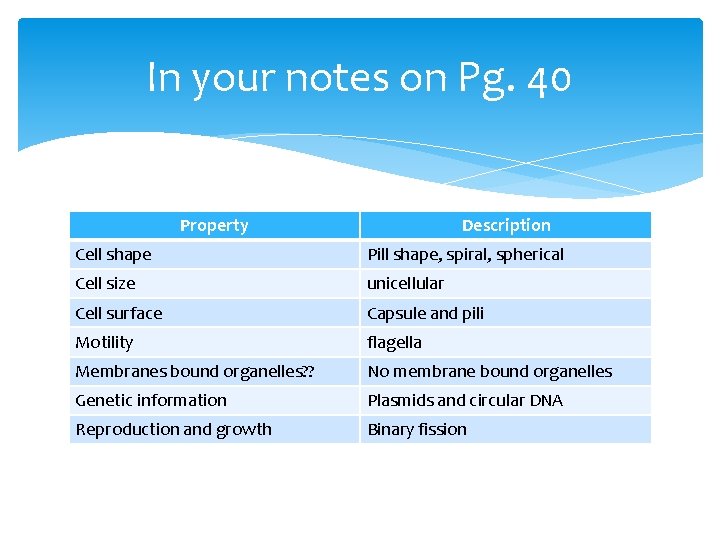
In your notes on Pg. 40 Property Description Cell shape Pill shape, spiral, spherical Cell size unicellular Cell surface Capsule and pili Motility flagella Membranes bound organelles? ? No membrane bound organelles Genetic information Plasmids and circular DNA Reproduction and growth Binary fission
Partner Review The 4 scientists involved with the cell theory The cell theory Major organelles discussed today
- Slides: 38