
31 d Describe the development of Chinese civilization


31 d Describe the development of Chinese civilization under the Zhou, Qin, & Han Dynasties 31 e Explain the impact of Confucianism on Chinese culture including the Examination System, the Mandate of Heaven, the status of peasants, gender status, the status of merchants, & the patriarchal family & the diffusion of Chinese culture to Southeast Asia, Japan, & Korea � WARM-UP:
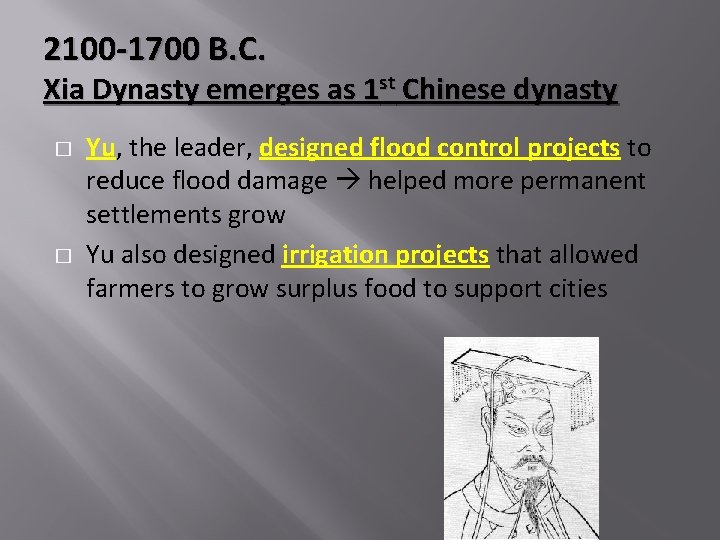
2100 -1700 B. C. Xia Dynasty emerges as 1 st Chinese dynasty � � Yu, the leader, designed flood control projects to reduce flood damage helped more permanent settlements grow Yu also designed irrigation projects that allowed farmers to grow surplus food to support cities
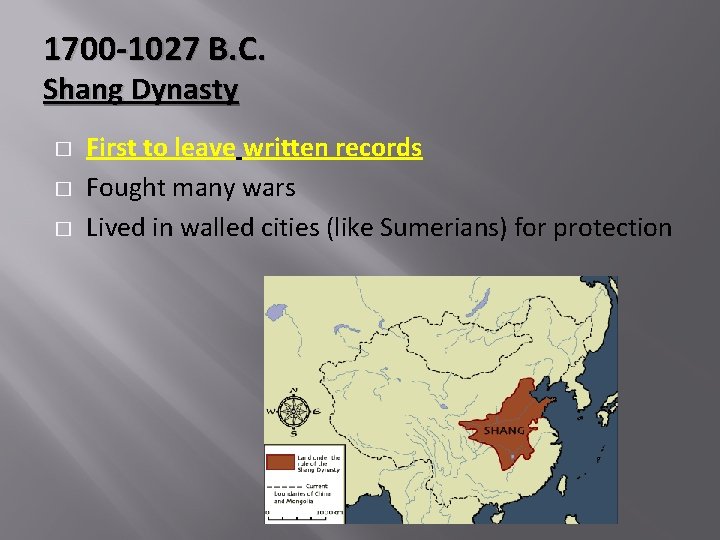
1700 -1027 B. C. Shang Dynasty � � � First to leave written records Fought many wars Lived in walled cities (like Sumerians) for protection
1700 -1027 B. C. Shang Dynasty Culture � Family � � Social Classes � � � Central to Chinese society Respect for one’s parents Women were treated as inferiors Sharply divided between nobles and peasants Ruling class of warrior-nobles headed by a king Religious Beliefs Spirits of family ancestors could bring good fortune or disaster to living family members � Polytheistic – worshipped a supreme god and then many lesser gods �
Zhou Dynasty 1027 B. C. - Zhou begin rule � Claimed authority to take over by declaring the Mandate of Heaven � Rulers had divine approval to be rulers, but a wicked or foolish king could lose the Mandate of Heaven and so lose the right to rule
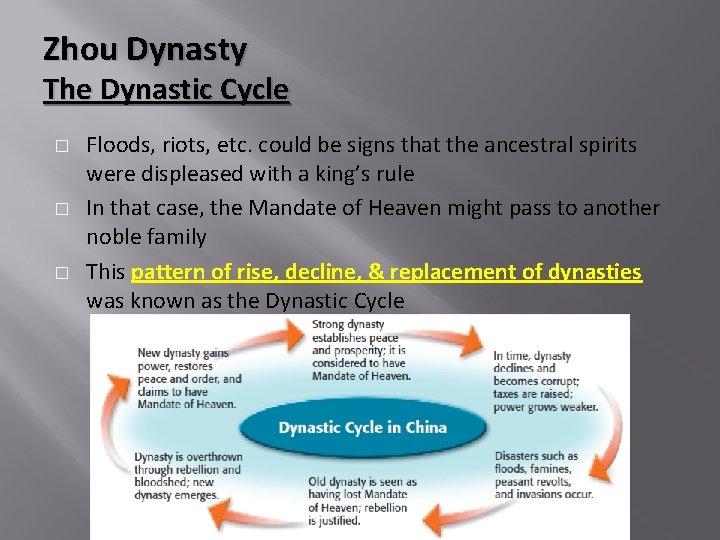
Zhou Dynasty The Dynastic Cycle � � � Floods, riots, etc. could be signs that the ancestral spirits were displeased with a king’s rule In that case, the Mandate of Heaven might pass to another noble family This pattern of rise, decline, & replacement of dynasties was known as the Dynastic Cycle
Zhou Dynasty Territorial Control – How? � Feudalism �Political system where nobles, or lords, are granted the use of lands that legally belong to the king �In return, nobles owe loyalty & military service to the king & protection to the people living on their estates
Zhou Dynasty Improvements in Technology & Trade � Roads & canals built stimulated trade & agriculture � Coined money introduced further improved trade � Blast furnaces developed produced cast iron
Zhou Dynasty 226 B. C. Decline & Fall Nomads from west & north sacked capital � Zhou kings fled, but were powerless to control noble families � Lords fought neighboring lords � �As their power grew, they claimed to be kings in their own territory While Zhou was in
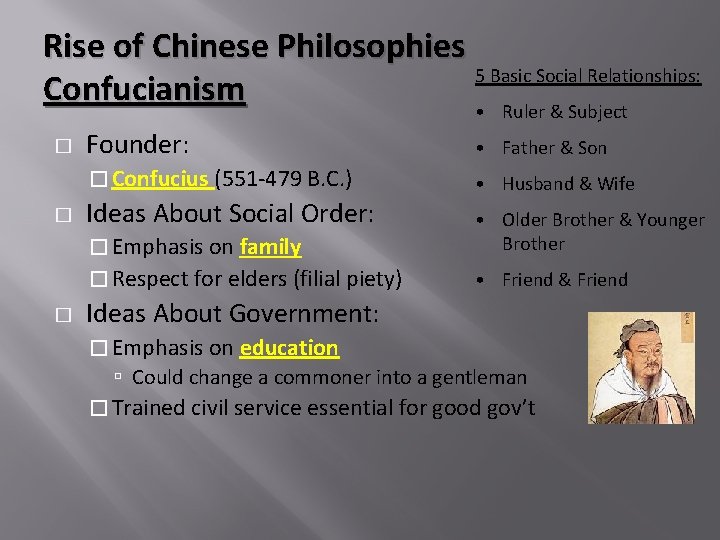
Rise of Chinese Philosophies 5 Basic Social Relationships: Confucianism • Ruler & Subject � � � Founder: • Father & Son � Confucius (551 -479 B. C. ) • Husband & Wife Ideas About Social Order: � Emphasis on family • Older Brother & Younger Brother � Respect for elders (filial piety) • Friend & Friend Ideas About Government: � Emphasis on education Could change a commoner into a gentleman � Trained civil service essential for good gov’t
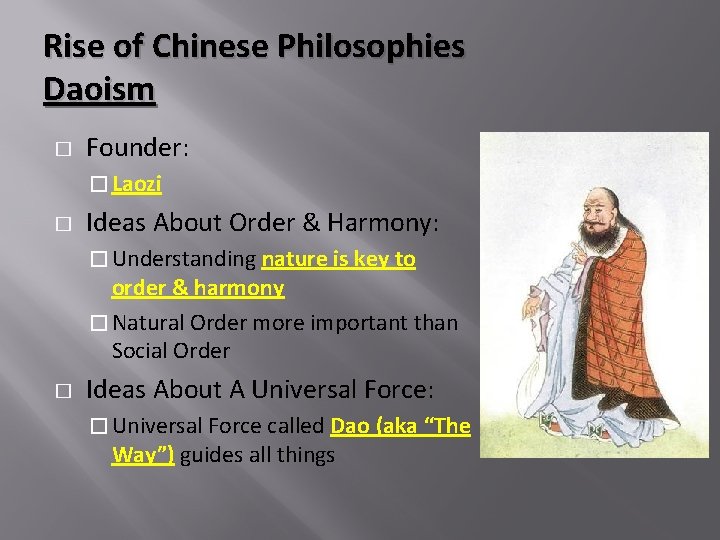
Rise of Chinese Philosophies Daoism � Founder: � Laozi � Ideas About Order & Harmony: � Understanding nature is key to order & harmony � Natural Order more important than Social Order � Ideas About A Universal Force: � Universal Force called Dao (aka “The Way”) guides all things
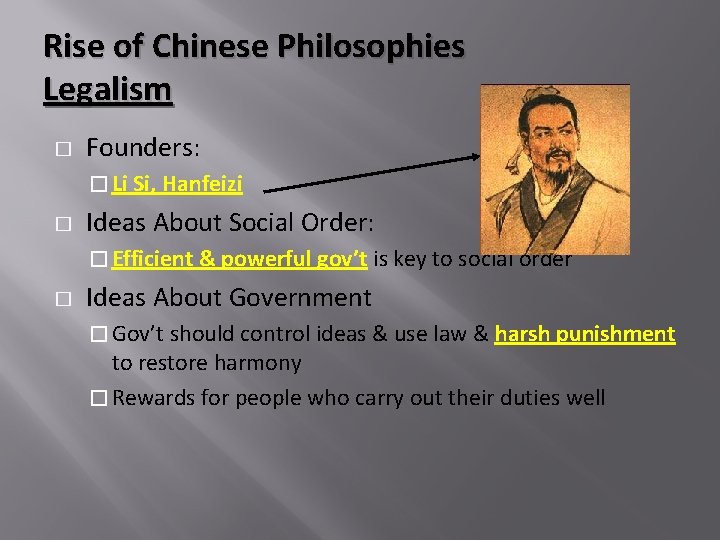
Rise of Chinese Philosophies Legalism � Founders: � Li Si, Hanfeizi � Ideas About Social Order: � Efficient & powerful gov’t is key to social order � Ideas About Government � Gov’t should control ideas & use law & harsh punishment to restore harmony � Rewards for people who carry out their duties well
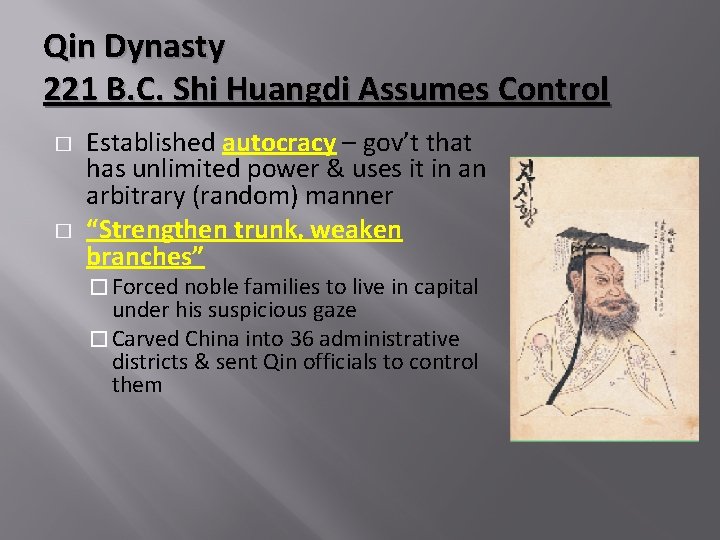
Qin Dynasty 221 B. C. Shi Huangdi Assumes Control � � Established autocracy – gov’t that has unlimited power & uses it in an arbitrary (random) manner “Strengthen trunk, weaken branches” � Forced noble families to live in capital under his suspicious gaze � Carved China into 36 administrative districts & sent Qin officials to control them
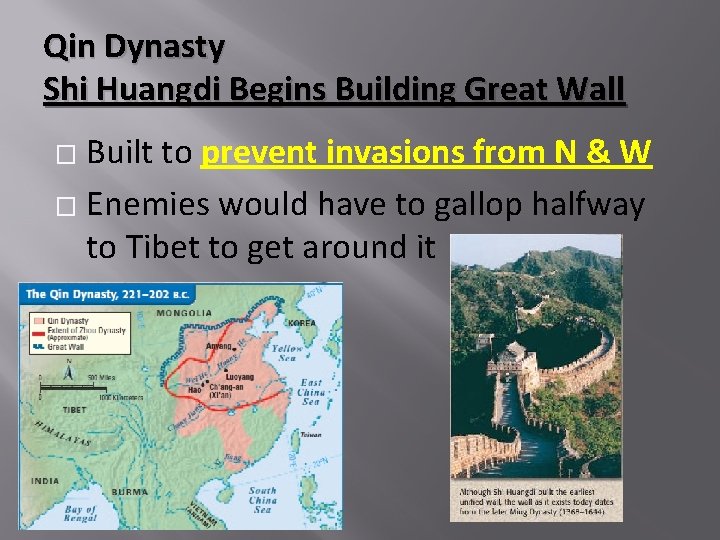
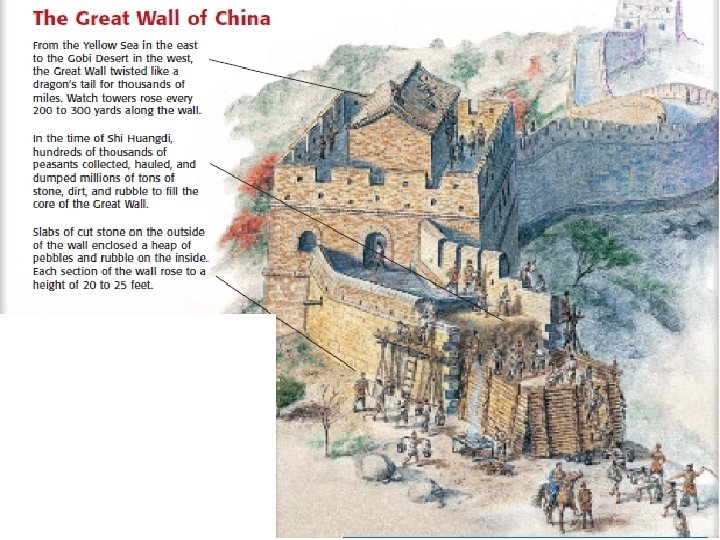
Qin Dynasty Shi Huangdi Begins Building Great Wall Built to prevent invasions from N & W � Enemies would have to gallop halfway to Tibet to get around it �
- Slides: 16