
31 3 Immune Responses Sponge 2 What are
- Slides: 9
31. 3 Immune Responses Sponge # 2 • What are some of the ways pathogens enter the body? • Explain what happens when you get a mosquito bite.
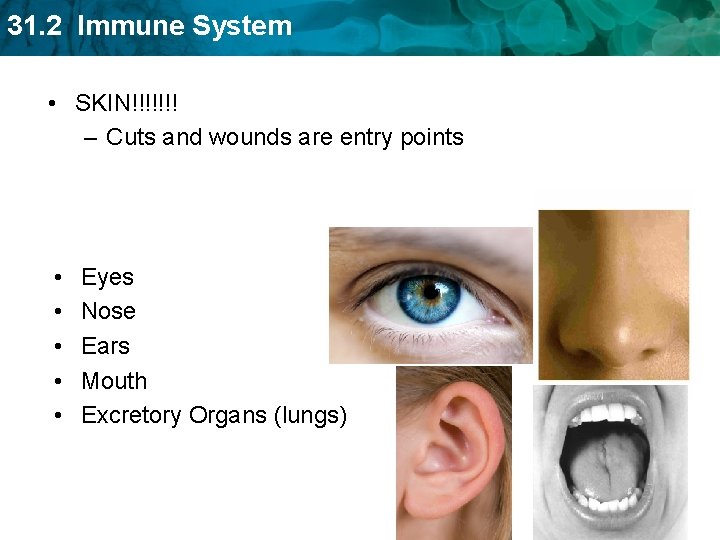
31. 2 Immune System • SKIN!!!!!!! – Cuts and wounds are entry points • • • Eyes Nose Ears Mouth Excretory Organs (lungs)
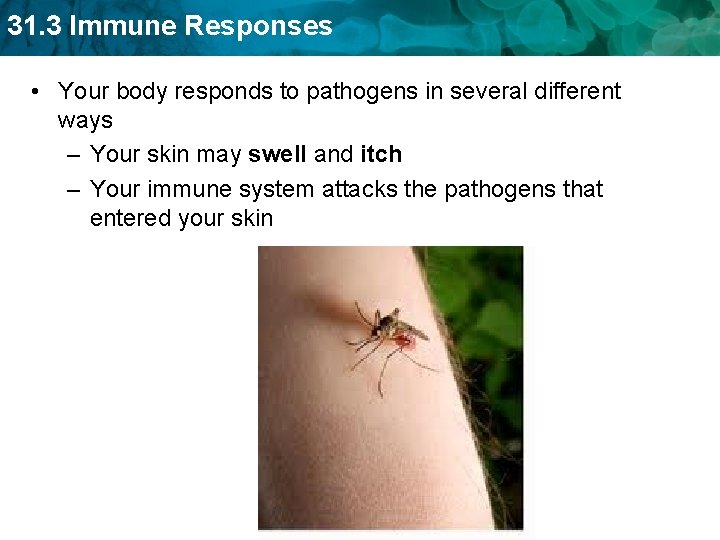
31. 3 Immune Responses • Your body responds to pathogens in several different ways – Your skin may swell and itch – Your immune system attacks the pathogens that entered your skin
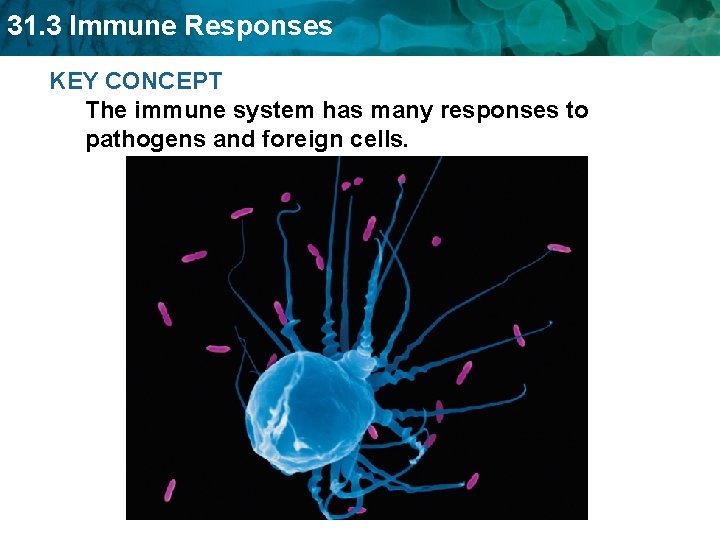
31. 3 Immune Responses KEY CONCEPT The immune system has many responses to pathogens and foreign cells.
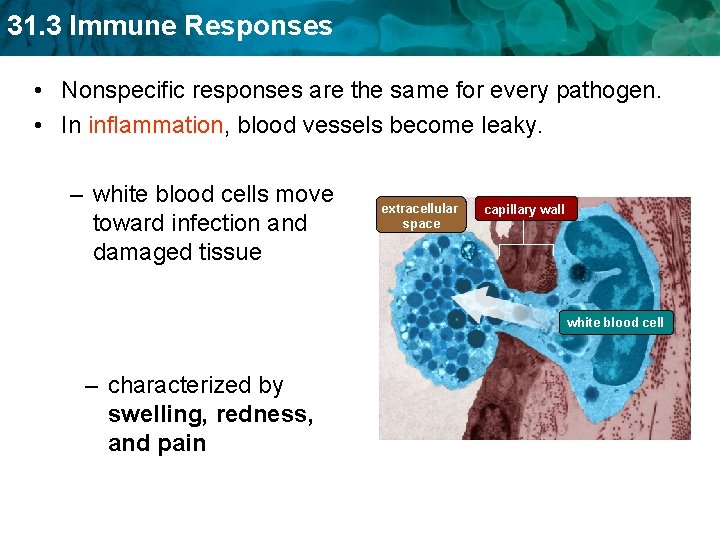
31. 3 Immune Responses • Nonspecific responses are the same for every pathogen. • In inflammation, blood vessels become leaky. – white blood cells move toward infection and damaged tissue extracellular space capillary wall white blood cell – characterized by swelling, redness, and pain
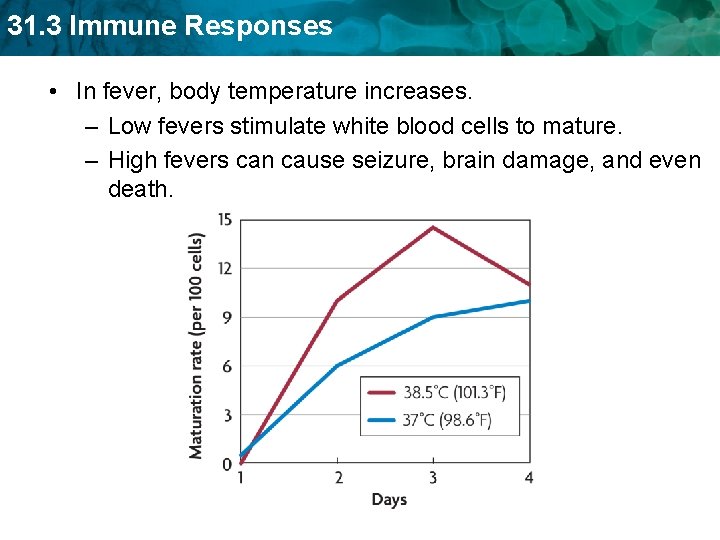
31. 3 Immune Responses • In fever, body temperature increases. – Low fevers stimulate white blood cells to mature. – High fevers can cause seizure, brain damage, and even death.
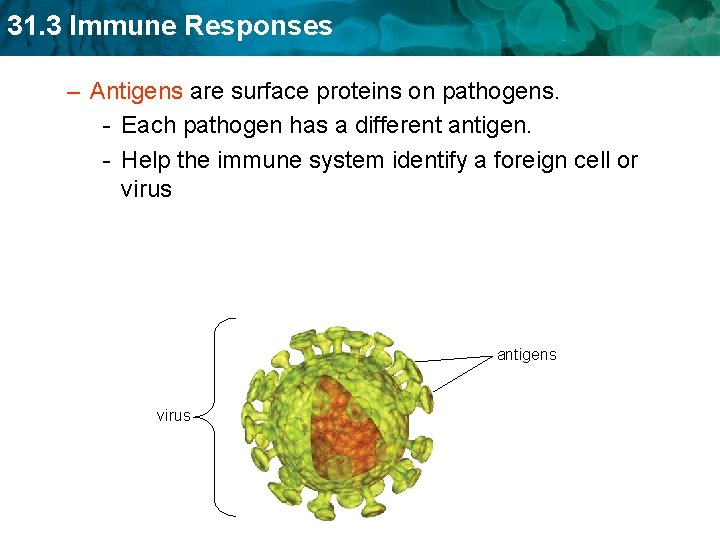
31. 3 Immune Responses – Antigens are surface proteins on pathogens. - Each pathogen has a different antigen. - Help the immune system identify a foreign cell or virus antigens virus
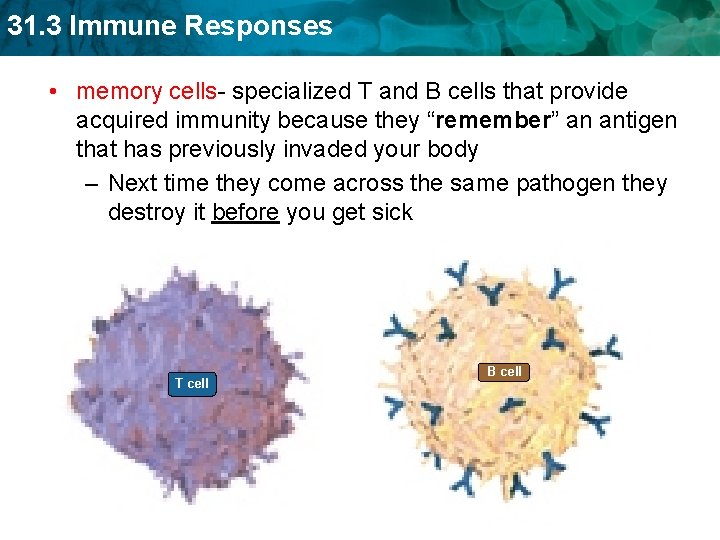
31. 3 Immune Responses • memory cells- specialized T and B cells that provide acquired immunity because they “remember” an antigen that has previously invaded your body – Next time they come across the same pathogen they destroy it before you get sick T cell B cell
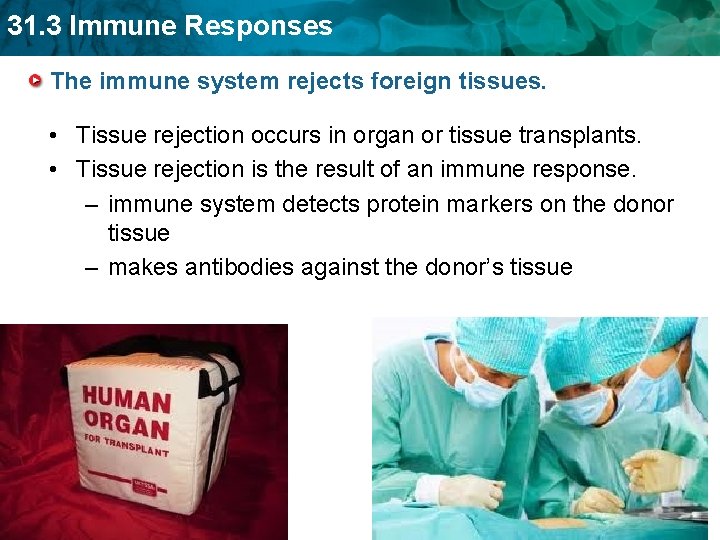
31. 3 Immune Responses The immune system rejects foreign tissues. • Tissue rejection occurs in organ or tissue transplants. • Tissue rejection is the result of an immune response. – immune system detects protein markers on the donor tissue – makes antibodies against the donor’s tissue