
31 1 Pathogens and Human Illness KEY CONCEPT
- Slides: 10
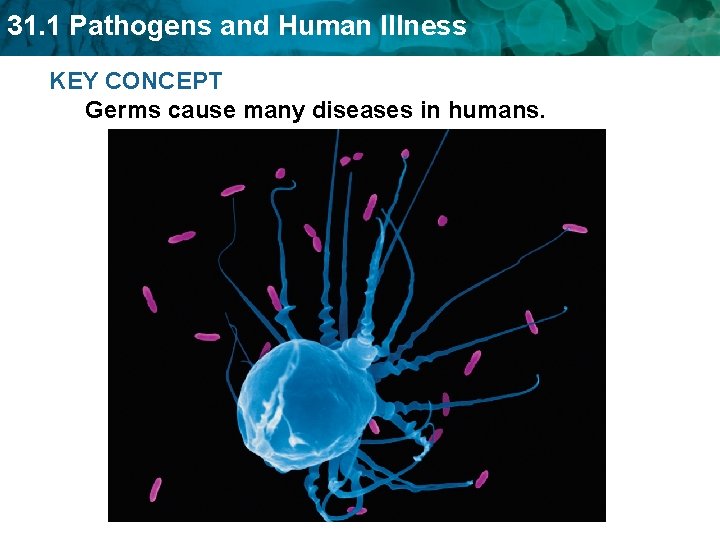
31. 1 Pathogens and Human Illness KEY CONCEPT Germs cause many diseases in humans.
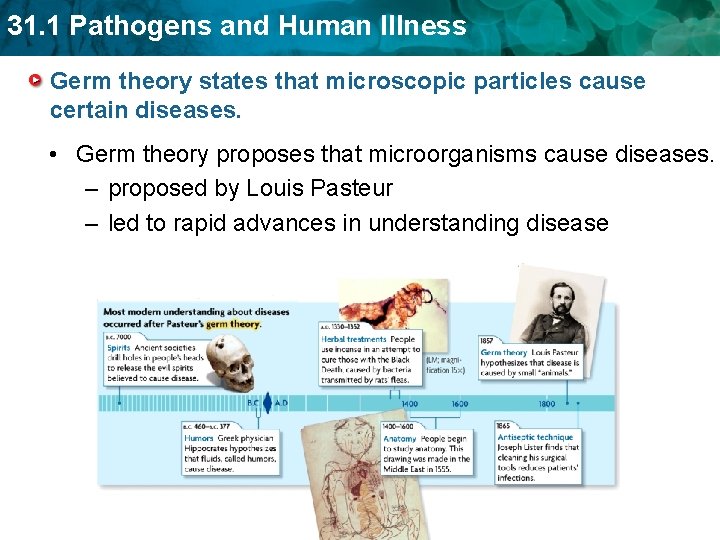
31. 1 Pathogens and Human Illness Germ theory states that microscopic particles cause certain diseases. • Germ theory proposes that microorganisms cause diseases. – proposed by Louis Pasteur – led to rapid advances in understanding disease
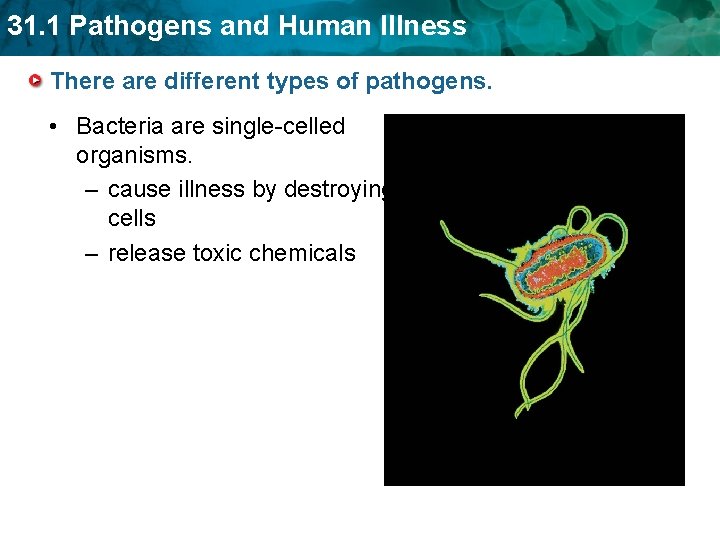
31. 1 Pathogens and Human Illness There are different types of pathogens. • Bacteria are single-celled organisms. – cause illness by destroying cells – release toxic chemicals
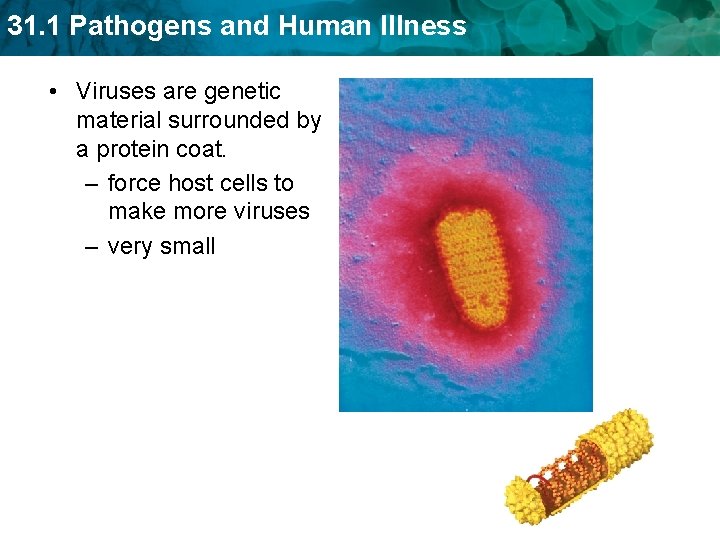
31. 1 Pathogens and Human Illness • Viruses are genetic material surrounded by a protein coat. – force host cells to make more viruses – very small
31. 1 Pathogens and Human Illness • Fungi can be multicellular or single-celled. – take nutrients from host cells – occur in warm and damp places
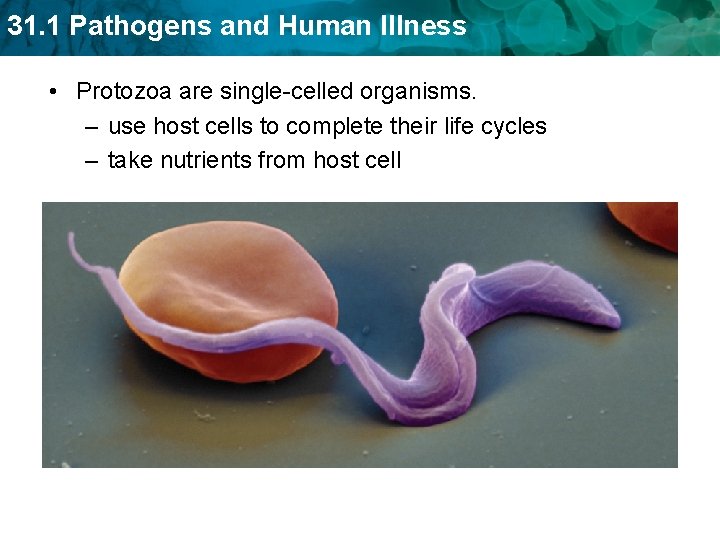
31. 1 Pathogens and Human Illness • Protozoa are single-celled organisms. – use host cells to complete their life cycles – take nutrients from host cell
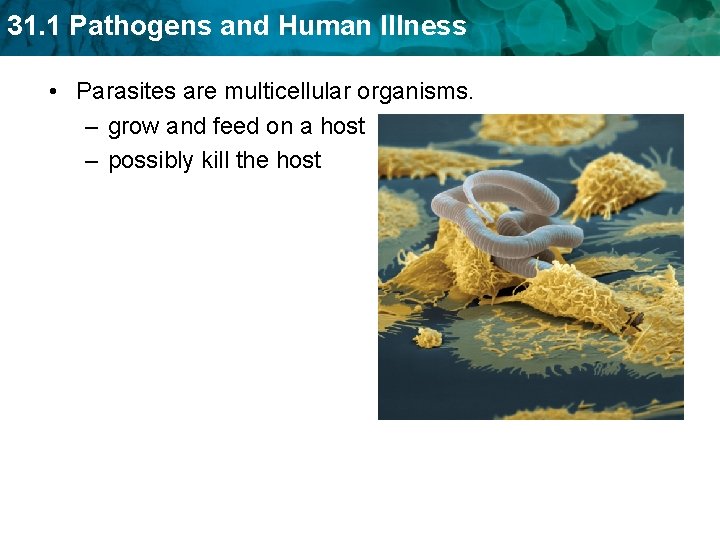
31. 1 Pathogens and Human Illness • Parasites are multicellular organisms. – grow and feed on a host – possibly kill the host
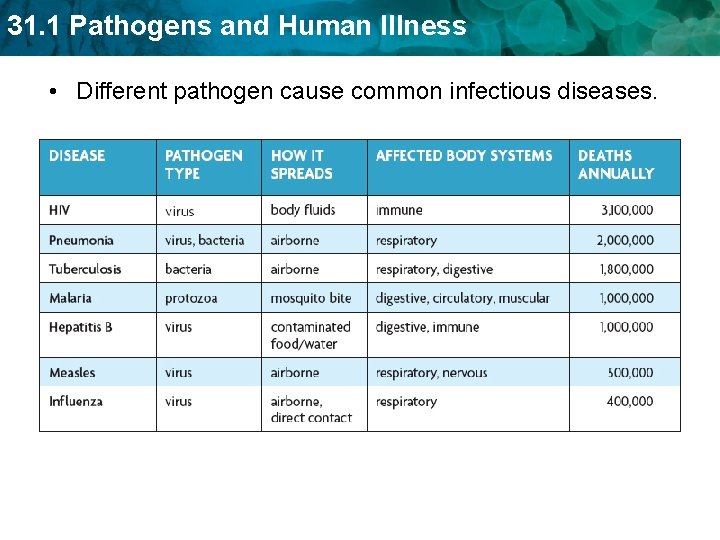
31. 1 Pathogens and Human Illness • Different pathogen cause common infectious diseases.
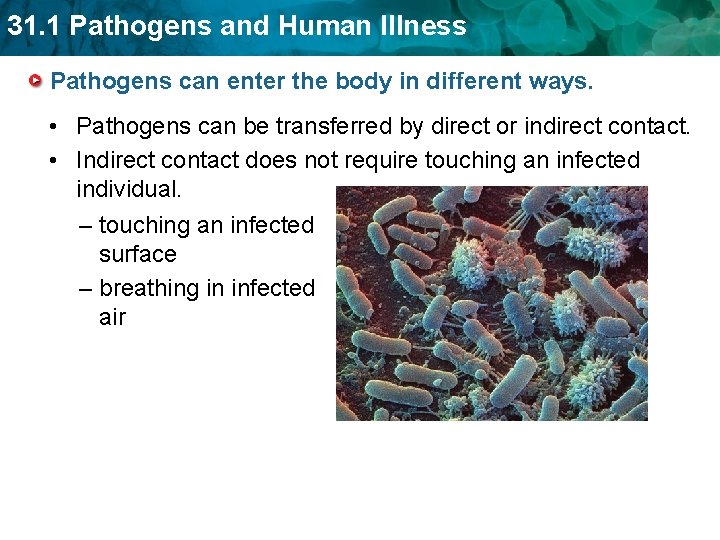
31. 1 Pathogens and Human Illness Pathogens can enter the body in different ways. • Pathogens can be transferred by direct or indirect contact. • Indirect contact does not require touching an infected individual. – touching an infected surface – breathing in infected air
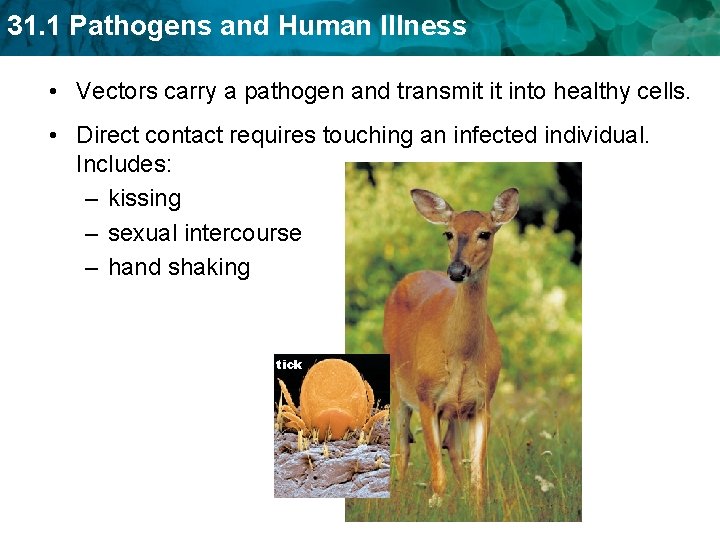
31. 1 Pathogens and Human Illness • Vectors carry a pathogen and transmit it into healthy cells. • Direct contact requires touching an infected individual. Includes: – kissing – sexual intercourse – hand shaking tick