
305 Animal Behaviour Communication Lesson 7 Behaviour Studies
305: Animal Behaviour & Communication Lesson 7: Behaviour Studies
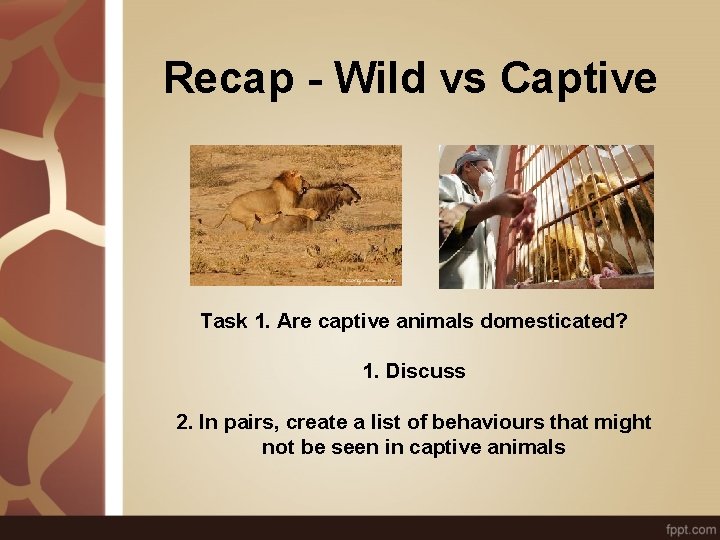
Recap - Wild vs Captive Task 1. Are captive animals domesticated? 1. Discuss 2. In pairs, create a list of behaviours that might not be seen in captive animals
Objectives; • To identify the purpose of ethograms. • Create own ethograms suitable for a behaviour study. • Use ethograms as part of a behavioural observation.
The Study of Behaviour The study of behaviour is known as… ‘Ethology’ ‘ethos’ = character ‘ology’ = study

Ethograms • Ethograms are used by ethologists in order to categorise types of behaviour. • Ethologist will write down the types of behaviour they expect to see, with a clear description of each. • This is so that any other ethologist could identify the same types of behaviour. • The behaviour is given a shorter code name to use when sampling.
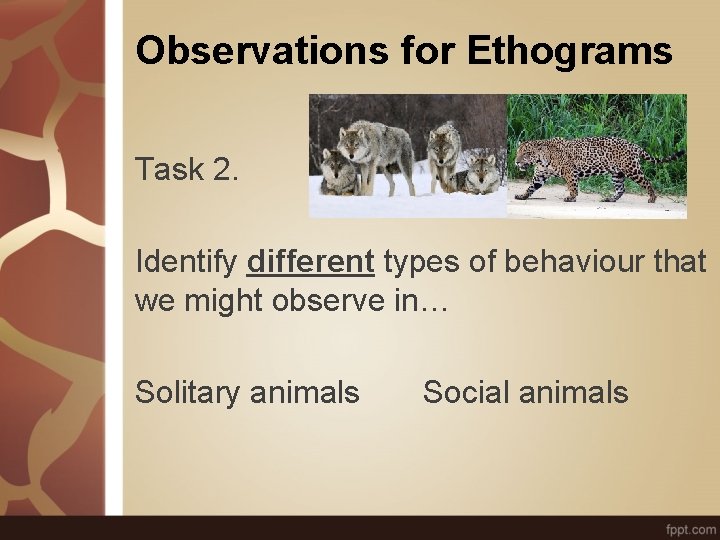
Observations for Ethograms Task 2. Identify different types of behaviour that we might observe in… Solitary animals Social animals
Why use Ethograms? • Allows the behaviours to be quantified in terms of frequency and duration. • It helps to clear up misinterpretations. • It also makes the observer more informed and familiar with the animal’s range of behaviours before conducting a study.
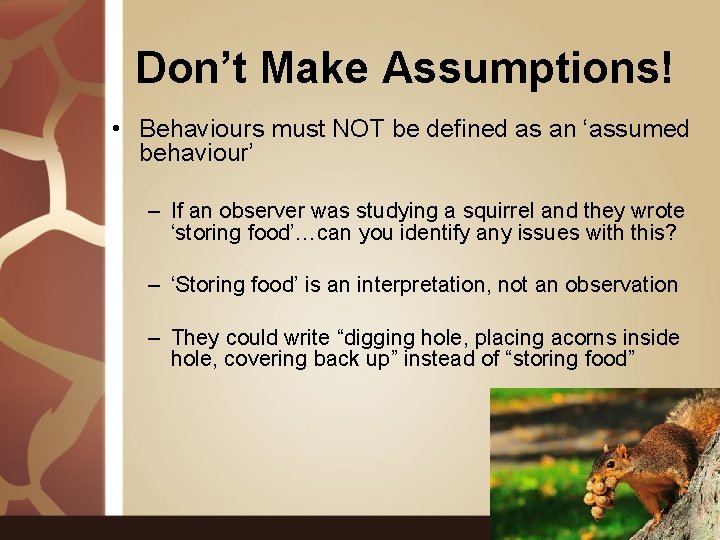
Don’t Make Assumptions! • Behaviours must NOT be defined as an ‘assumed behaviour’ – If an observer was studying a squirrel and they wrote ‘storing food’…can you identify any issues with this? – ‘Storing food’ is an interpretation, not an observation – They could write “digging hole, placing acorns inside hole, covering back up” instead of “storing food”
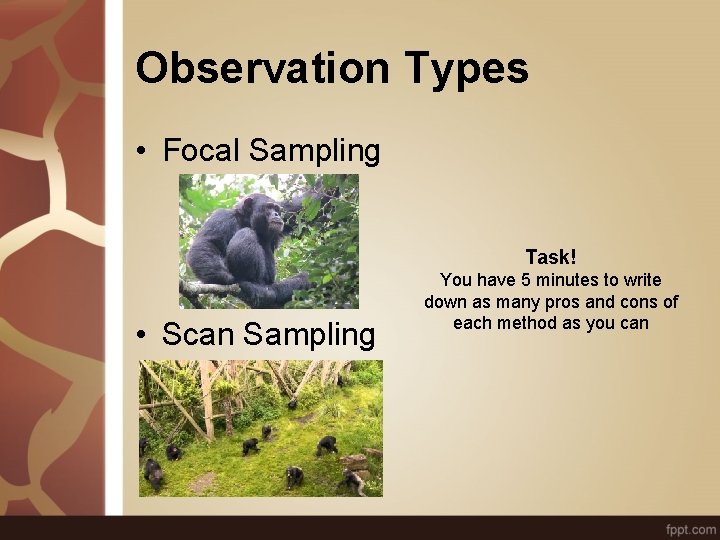
Observation Types • Focal Sampling Task! • Scan Sampling You have 5 minutes to write down as many pros and cons of each method as you can
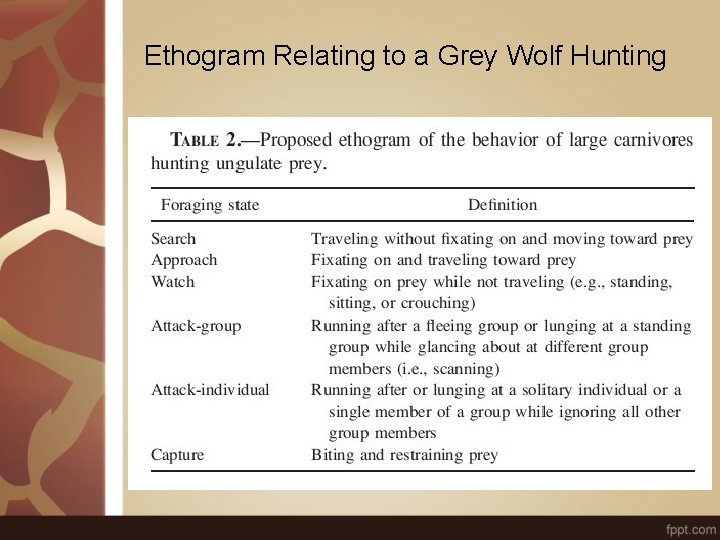
Ethogram Relating to a Grey Wolf Hunting
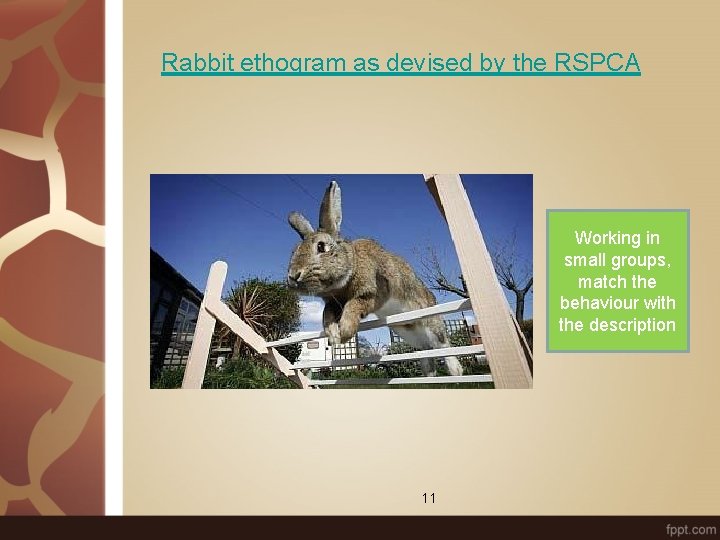
Rabbit ethogram as devised by the RSPCA Working in small groups, match the behaviour with the description 11
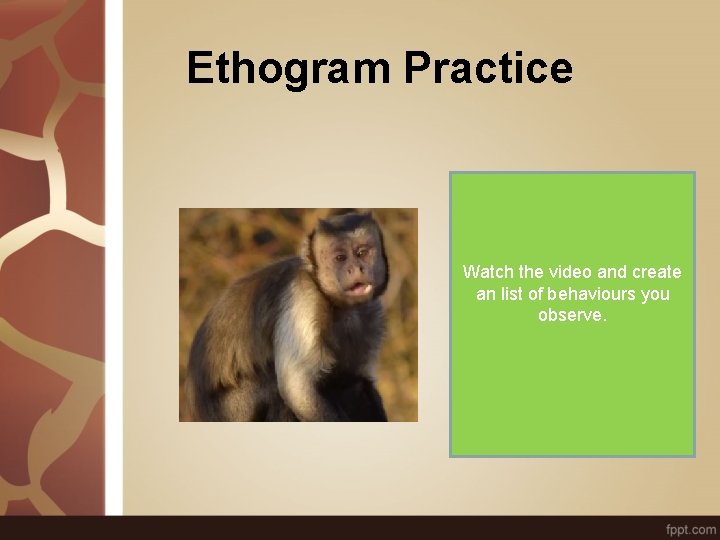
Ethogram Practice Watch the video and create an list of behaviours you observe.
Task • Write a list of definitions for the behaviours you identified on a separate sheet of paper • Hand your definitions to a partner, your partner will attempt to identify the behaviour you have described • Create an ethogram using your behaviour and definition lists
Ethogram and Time Budget Using the ethogram you have just created, watch the video and complete a behavioural study, using either focal or scan sampling.

Any Questions? 15
- Slides: 15