
30 Years More homeless youth But few other
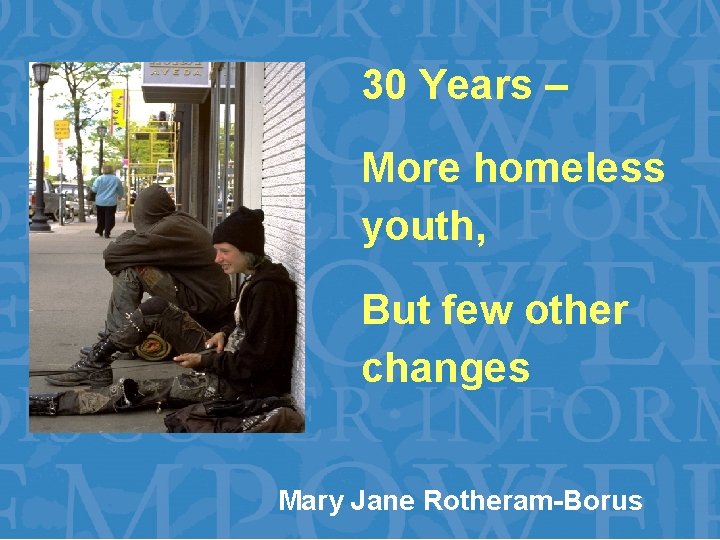
30 Years – More homeless youth, But few other changes Mary Jane Rotheram-Borus
Declaration of the Rights of the Child UN Document Series Symbol: ST/HR/ UN Issuing Body: Secretariat Centre for Human Rights Proclaimed by General Assembly resolution 1386 (XIV) of 20 November 1959
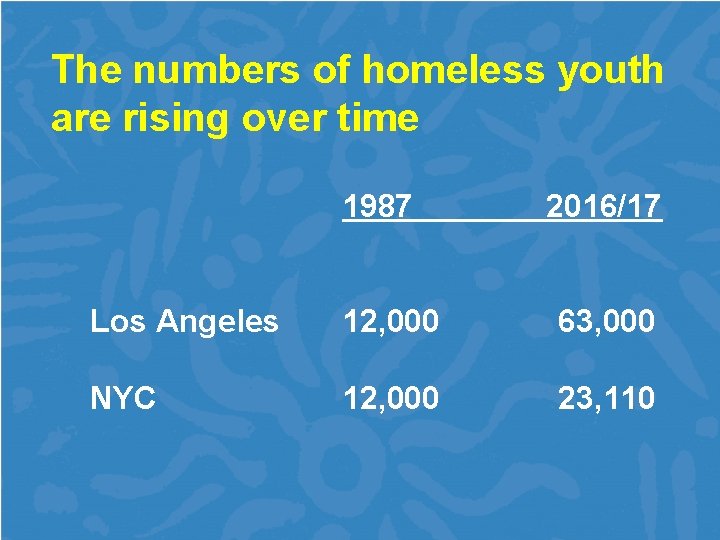
The numbers of homeless youth are rising over time 1987 2016/17 Los Angeles 12, 000 63, 000 NYC 12, 000 23, 110
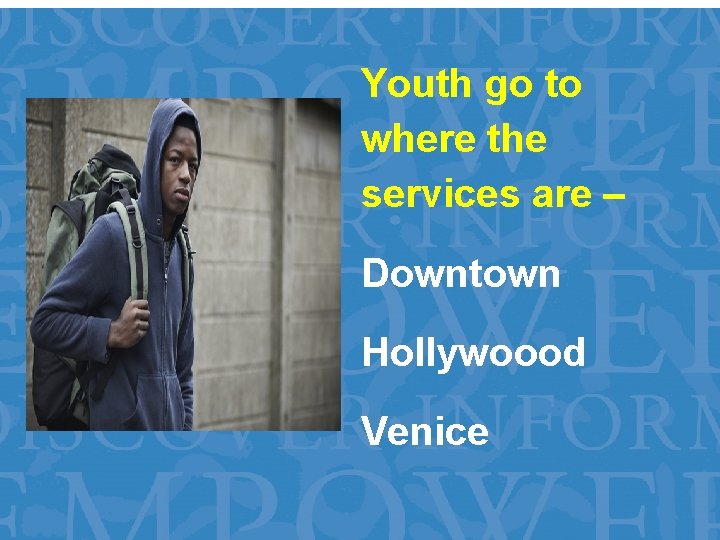
Youth go to where the services are – Downtown Hollywoood Venice
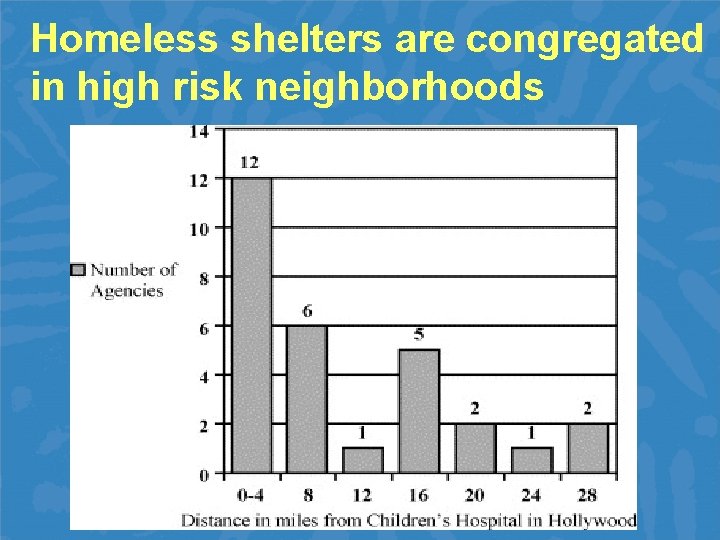
Homeless shelters are congregated in high risk neighborhoods
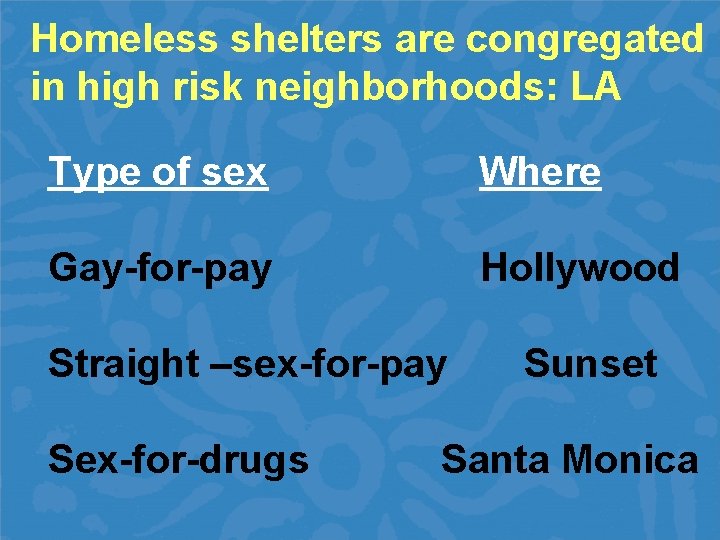
Homeless shelters are congregated in high risk neighborhoods: LA Type of sex Where Gay-for-pay Hollywood Straight –sex-for-pay Sex-for-drugs Sunset Santa Monica
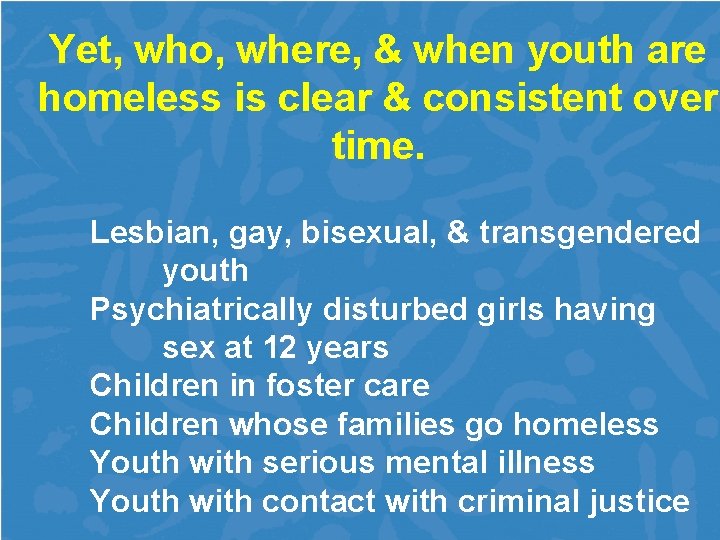
Yet, who, where, & when youth are homeless is clear & consistent over time. Lesbian, gay, bisexual, & transgendered youth Psychiatrically disturbed girls having sex at 12 years Children in foster care Children whose families go homeless Youth with serious mental illness Youth with contact with criminal justice
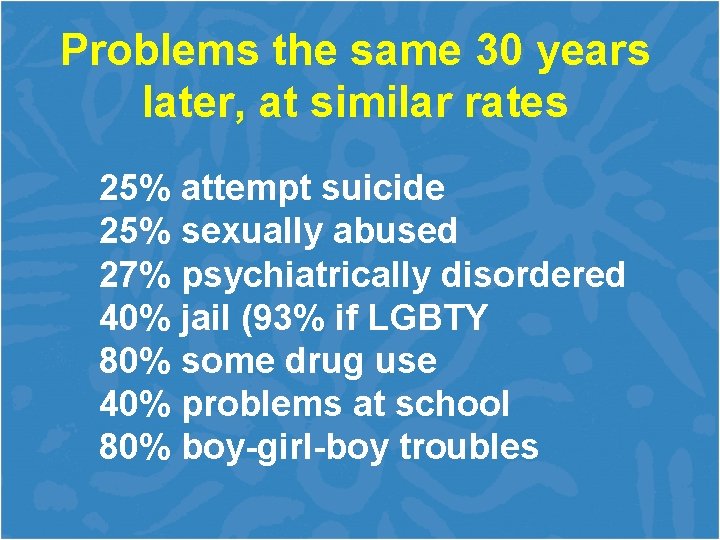
Problems the same 30 years later, at similar rates 25% attempt suicide 25% sexually abused 27% psychiatrically disordered 40% jail (93% if LGBTY 80% some drug use 40% problems at school 80% boy-girl-boy troubles
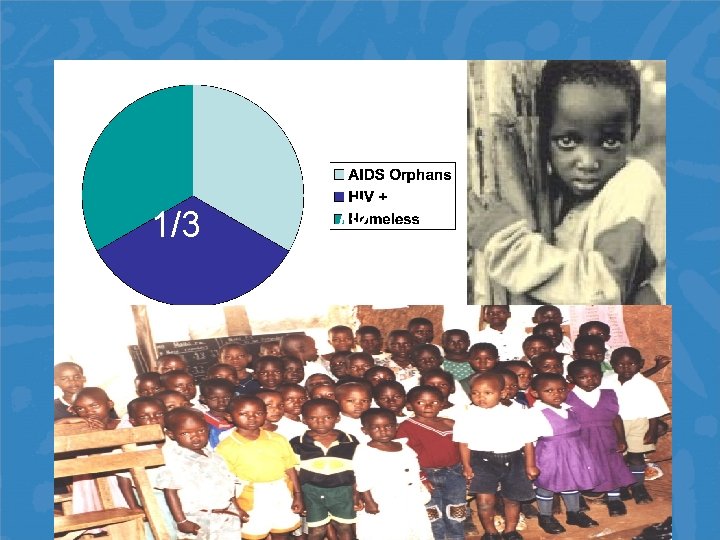
1/3 1/3
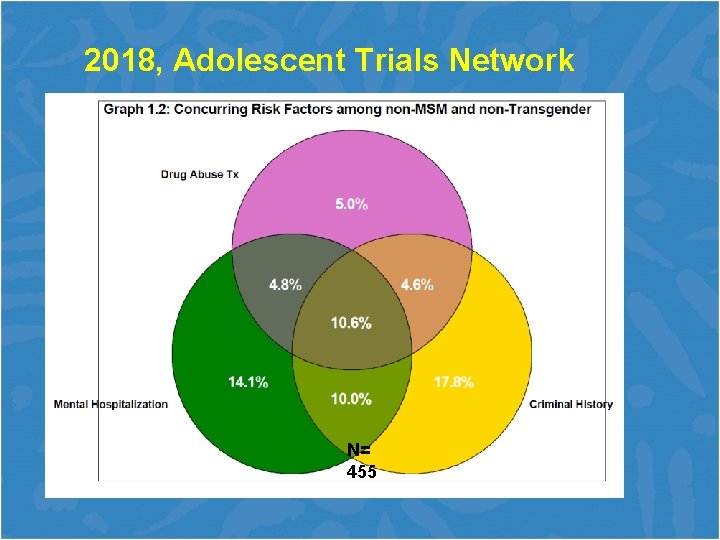
2018, Adolescent Trials Network N= 455
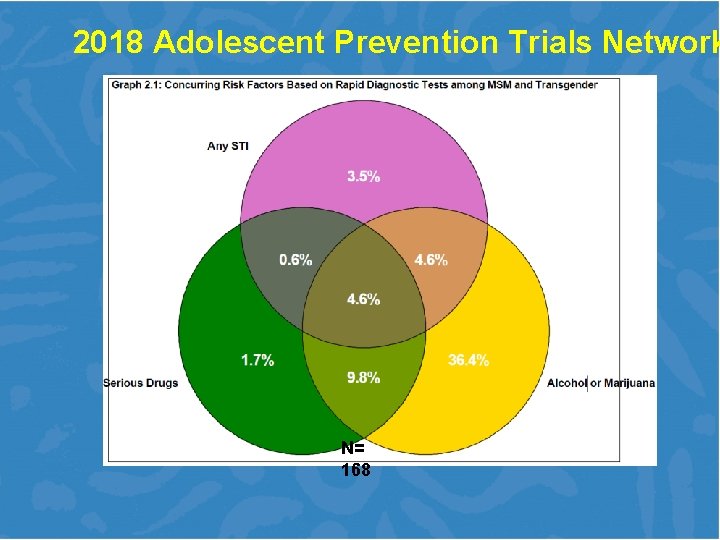
2018 Adolescent Prevention Trials Network N= 168
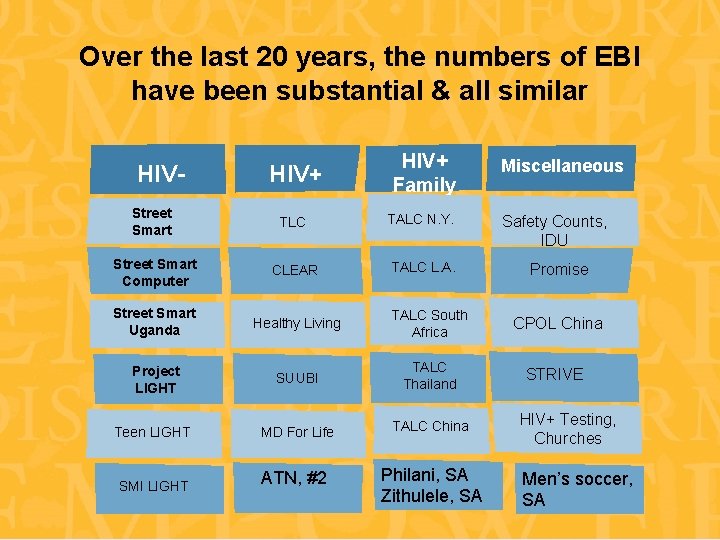
Over the last 20 years, the numbers of EBI have been substantial & all similar HIV+ Family Street Smart TLC TALC N. Y. Street Smart Computer CLEAR TALC L. A. Street Smart Uganda Healthy Living HIV- Project LIGHT SUUBI Miscellaneous Safety Counts, IDU Promise TALC South Africa CPOL China TALC Thailand STRIVE Teen LIGHT MD For Life TALC China SMI LIGHT ATN, #2 Philani, SA Zithulele, SA HIV+ Testing, Churches Men’s soccer, SA
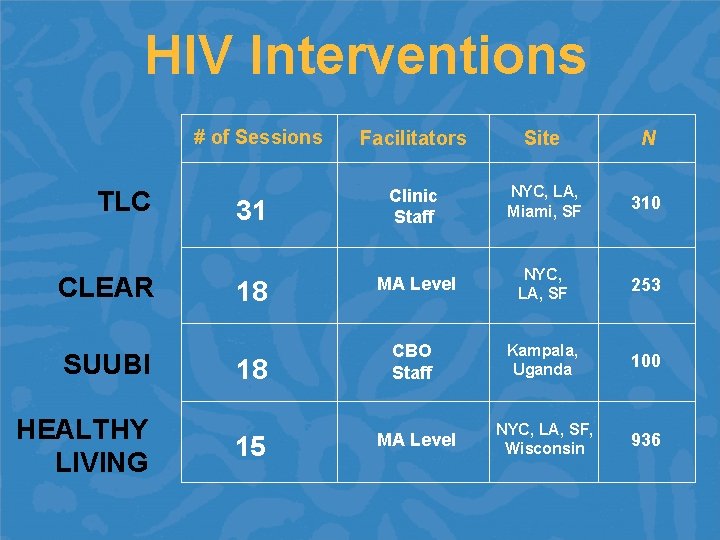
HIV Interventions # of Sessions TLC CLEAR SUUBI HEALTHY LIVING Facilitators Site N 31 Clinic Staff NYC, LA, Miami, SF 310 18 MA Level NYC, LA, SF 253 18 CBO Staff Kampala, Uganda 100 15 MA Level NYC, LA, SF, Wisconsin 936
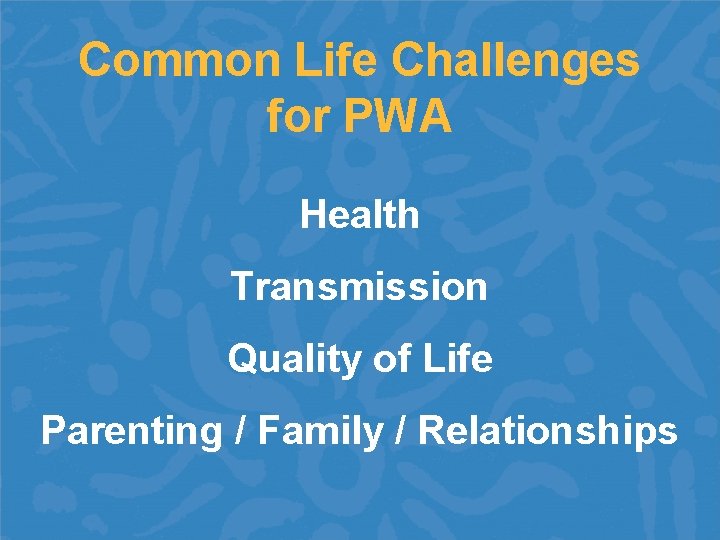
Common Life Challenges for PWA Health Transmission Quality of Life Parenting / Family / Relationships
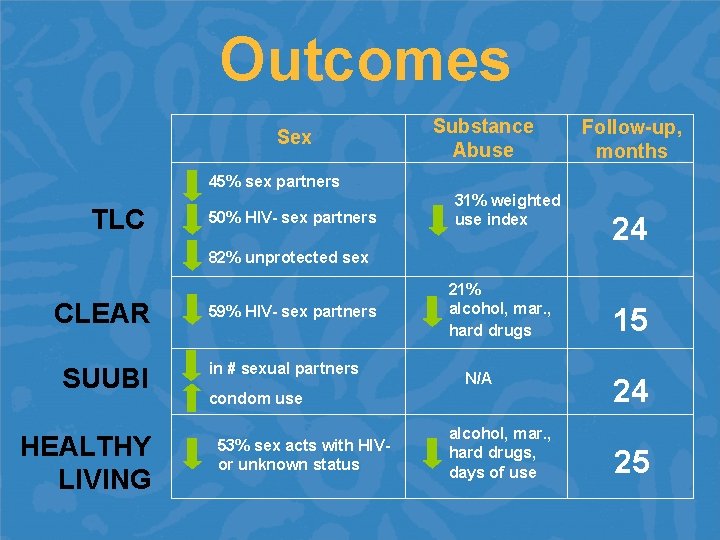
Outcomes Sex Substance Abuse Follow-up, months 45% sex partners TLC 50% HIV- sex partners 31% weighted use index 24 82% unprotected sex CLEAR SUUBI HEALTHY LIVING 59% HIV- sex partners in # sexual partners 21% alcohol, mar. , hard drugs N/A condom use 53% sex acts with HIVor unknown status alcohol, mar. , hard drugs, days of use 15 24 25
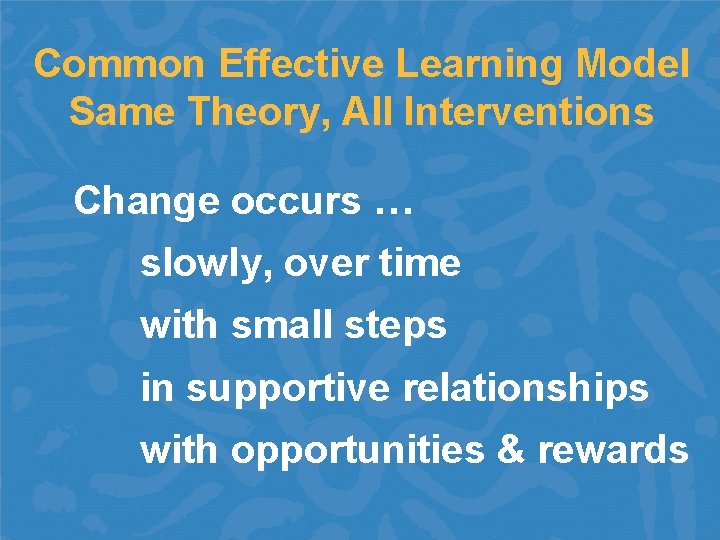
Common Effective Learning Model Same Theory, All Interventions Change occurs … slowly, over time with small steps in supportive relationships with opportunities & rewards
Identified Common Robust Factors in EBI • Selected successful programs • Obtained reliable category definition • Identified common principles & processes • Validated principles, re-review
Common Processes Behavior & cognitive focus Structural activities Goals Cohesiveness
Common Rules • Be prepared • Have + alternatives • Make explicit plans • Judge on facts • Practice self-control
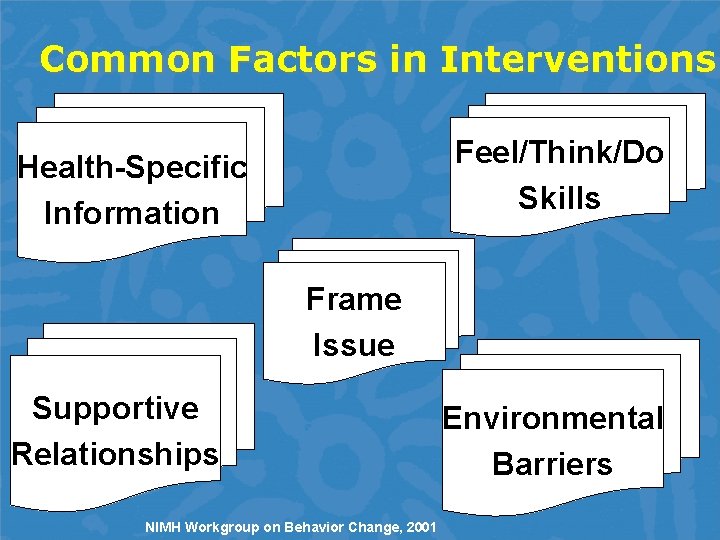
Common Factors in Interventions Feel/Think/Do Skills Health-Specific Information Frame Issue Supportive Relationships NIMH Workgroup on Behavior Change, 2001 Environmental Barriers
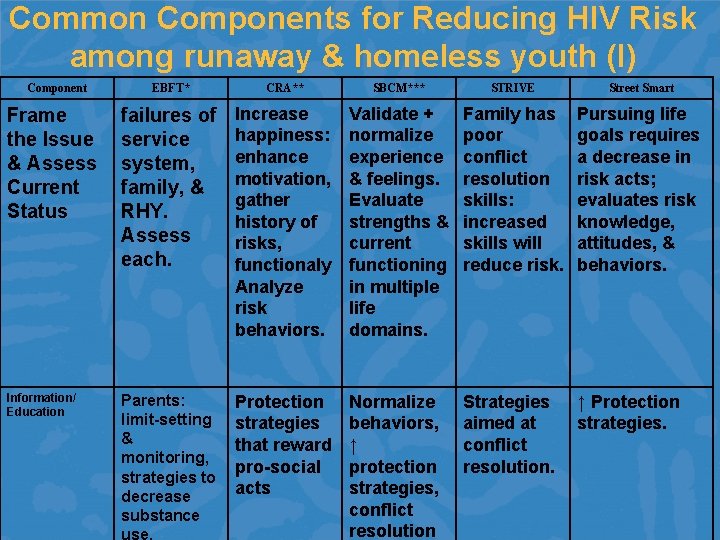
Common Components for Reducing HIV Risk among runaway & homeless youth (I) Component EBFT* CRA** SBCM*** STRIVE Street Smart Frame the Issue & Assess Current Status failures of service system, family, & RHY. Assess each. Increase happiness: enhance motivation, gather history of risks, functionaly Analyze risk behaviors. Validate + normalize experience & feelings. Evaluate strengths & current functioning in multiple life domains. Family has poor conflict resolution skills: increased skills will reduce risk. Pursuing life goals requires a decrease in risk acts; evaluates risk knowledge, attitudes, & behaviors. Information/ Education Parents: limit-setting & monitoring, strategies to decrease substance Protection strategies that reward pro-social acts Normalize behaviors, ↑ protection strategies, conflict resolution Strategies aimed at conflict resolution. ↑ Protection strategies.
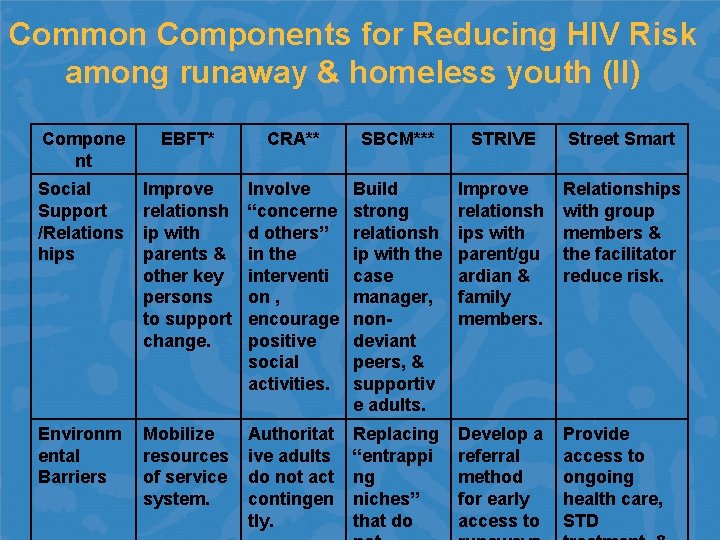
Common Components for Reducing HIV Risk among runaway & homeless youth (II) Compone nt EBFT* CRA** SBCM*** STRIVE Street Smart Social Support /Relations hips Improve relationsh ip with parents & other key persons to support change. Involve “concerne d others” in the interventi on , encourage positive social activities. Build strong relationsh ip with the case manager, nondeviant peers, & supportiv e adults. Improve relationsh ips with parent/gu ardian & family members. Relationships with group members & the facilitator reduce risk. Environm ental Barriers Mobilize resources of service system. Authoritat ive adults do not act contingen tly. Replacing “entrappi ng niches” that do Develop a referral method for early access to Provide access to ongoing health care, STD
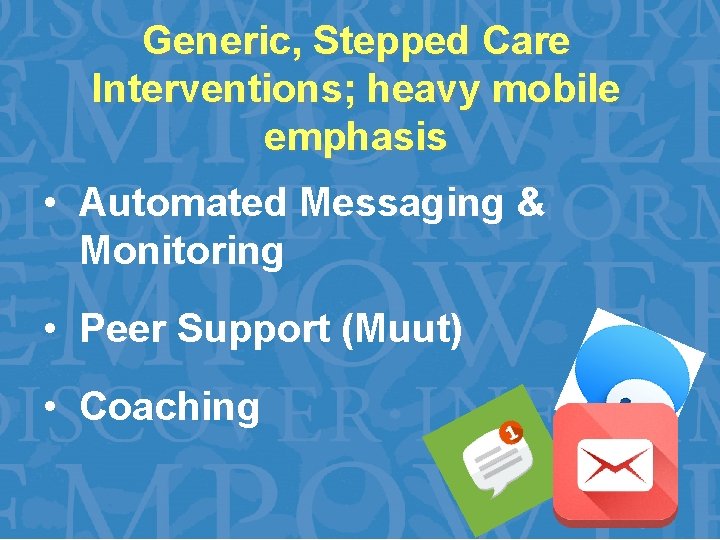
Generic, Stepped Care Interventions; heavy mobile emphasis • Automated Messaging & Monitoring • Peer Support (Muut) • Coaching
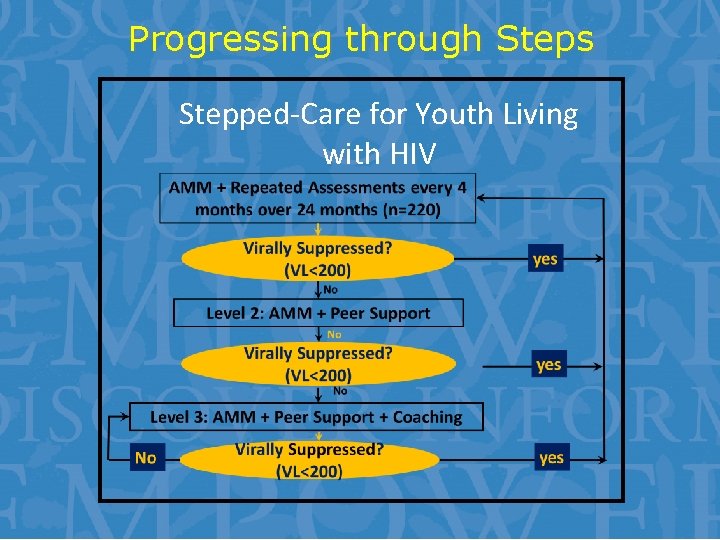
Progressing through Steps Stepped-Care for Youth Living with HIV
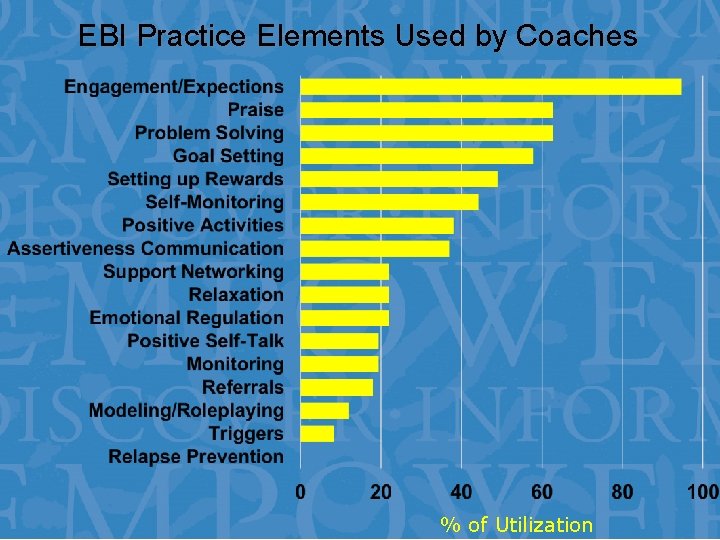
EBI Practice Elements Used by Coaches % of Utilization
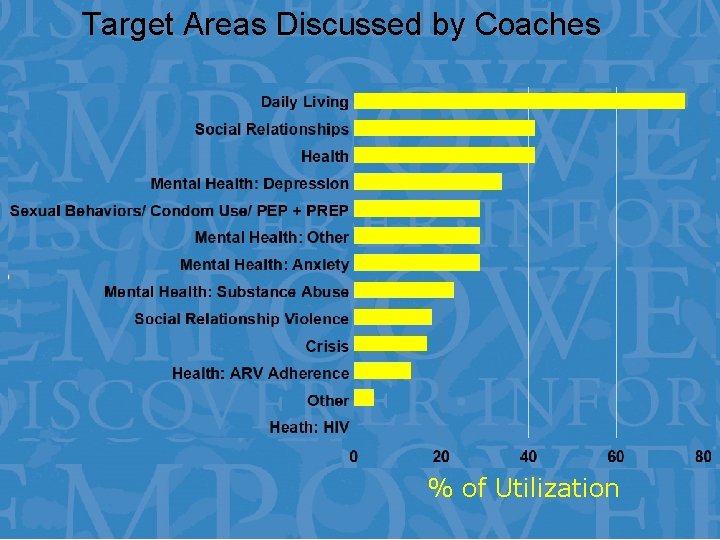
Target Areas Discussed by Coaches % of Utilization
Our current approach is counter the prevailing scientific norms of EBI.
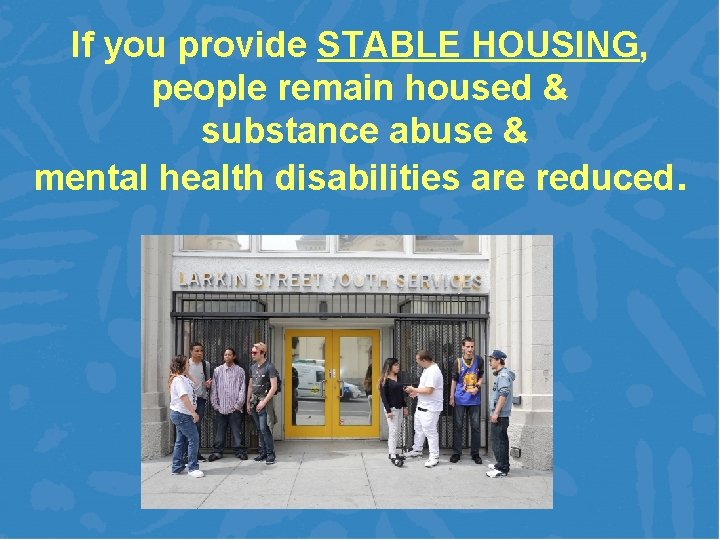
If you provide STABLE HOUSING, people remain housed & substance abuse & mental health disabilities are reduced.
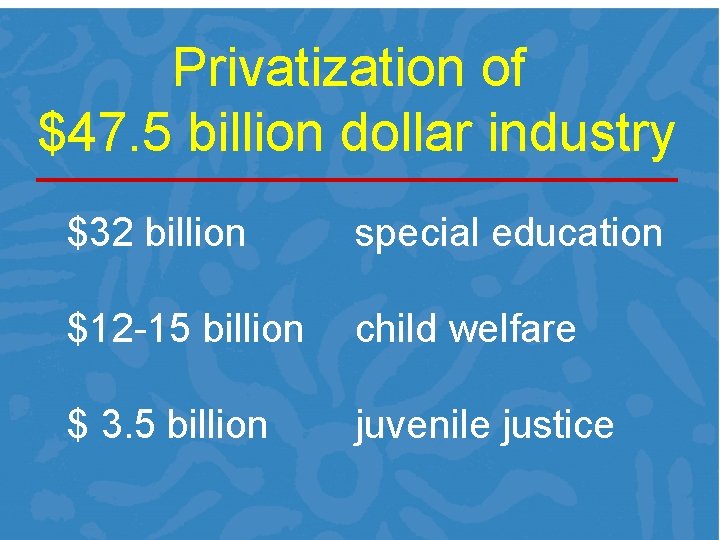
Privatization of $47. 5 billion dollar industry $32 billion special education $12 -15 billion child welfare $ 3. 5 billion juvenile justice
Thank You
- Slides: 30