
30 5 ARTHROPODS OVERVIEW Phylum Arthropoda 1 million





- Slides: 54
30. 5 ARTHROPODS
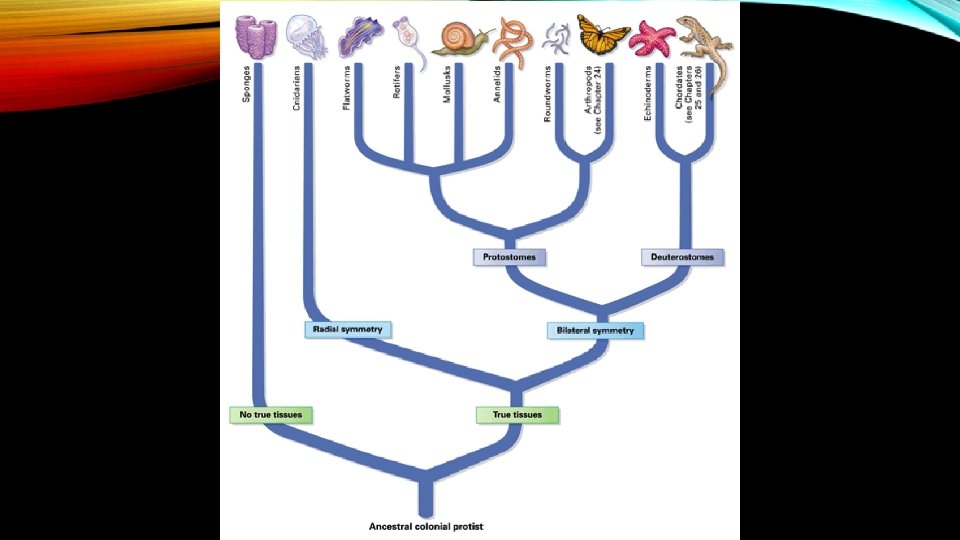
OVERVIEW • Phylum Arthropoda • +1 million species • Are protostomes and coelomates
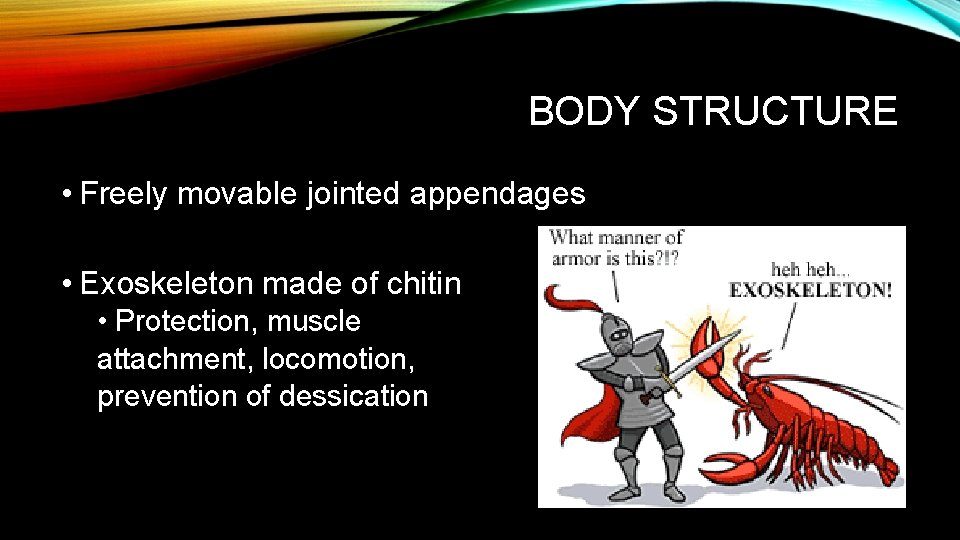
BODY STRUCTURE • Freely movable jointed appendages • Exoskeleton made of chitin • Protection, muscle attachment, locomotion, prevention of dessication
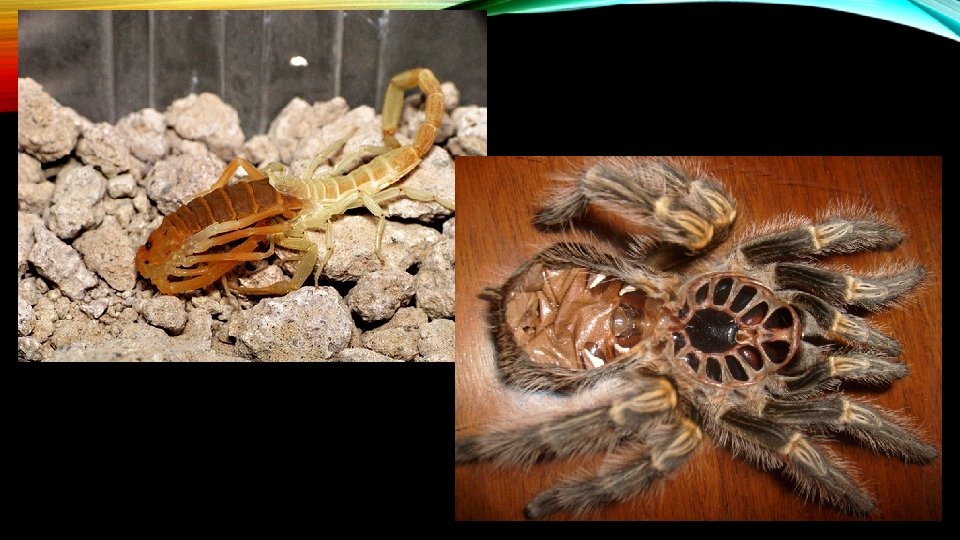
Molting: shedding of exoskeleton • Body secretes new/larger exoskeleton • Starts off soft/wrinkled, then hardens • Segmented, but some fused into regions • Head, thorax, cephalothorax, abdomen • Appendages specialized for function • Reproduction, eating, sensory reception
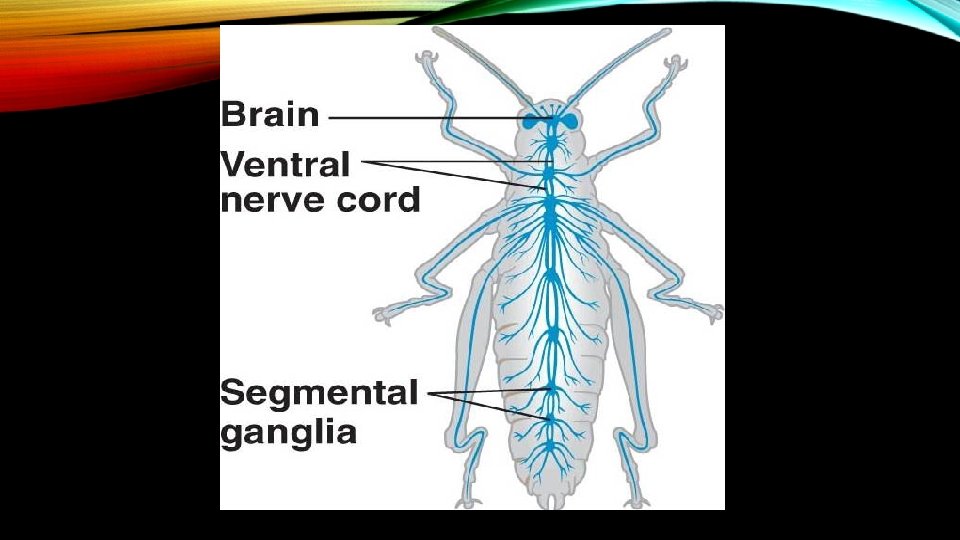
NERVOUS SYSTEM • Well-developed nervous system • Brain and ventral solid nerve cord • Sense organs • Antennae • 2 types of eyes (simple and compound)
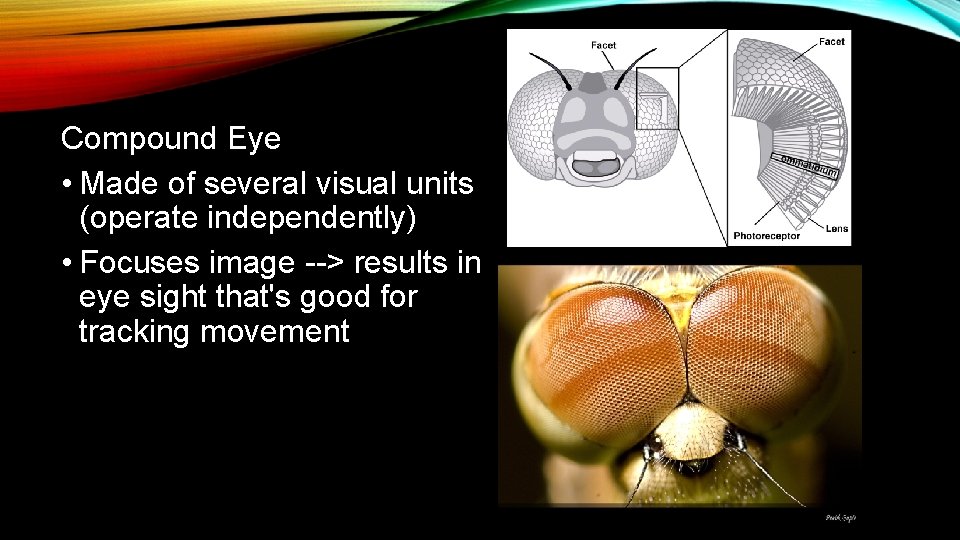
Compound Eye • Made of several visual units (operate independently) • Focuses image --> results in eye sight that's good for tracking movement
CRUSTACEANS
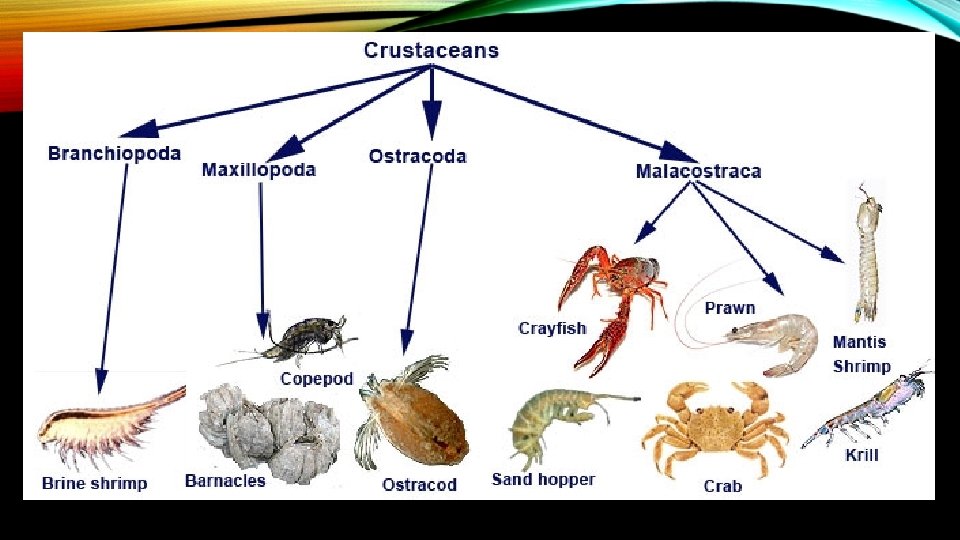
HABITAT Marine • Barnacles, shrimps, crabs, lobsters Freshwater • Crayfish Terrestrial • Sow bug (roly poly bug)
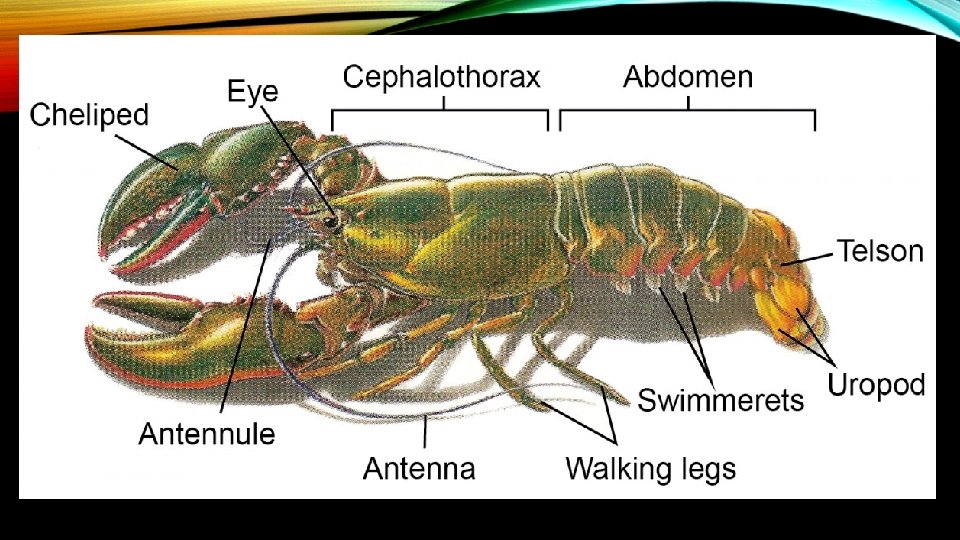
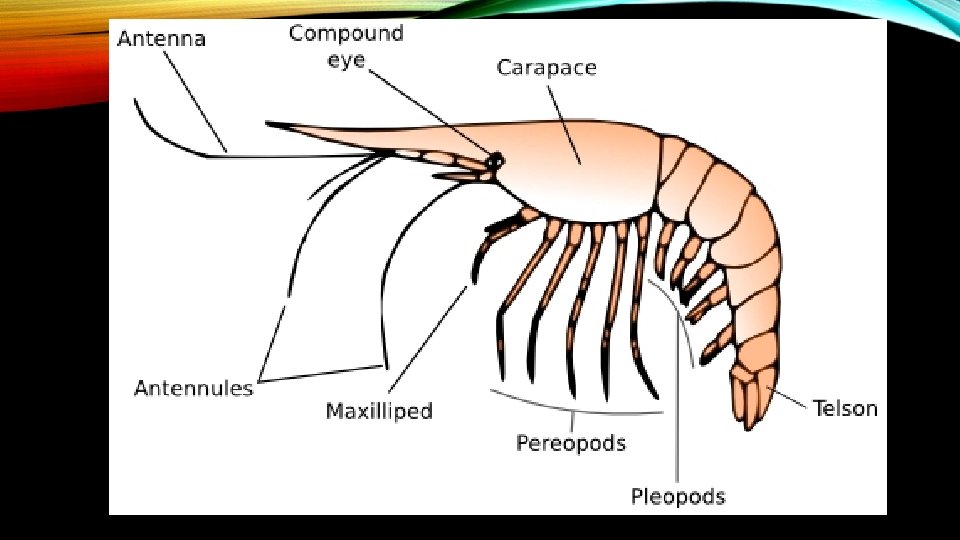
BODY STRUCTURE • Exoskeleton • Head generally has 1 pair of compound eyes and 5 pairs of appendages • Antennae – 1 st two pairs, sensory functions • Other 3 pairs are mouthparts, used for feeding • 2 body regions: cephalothorax and abdomen
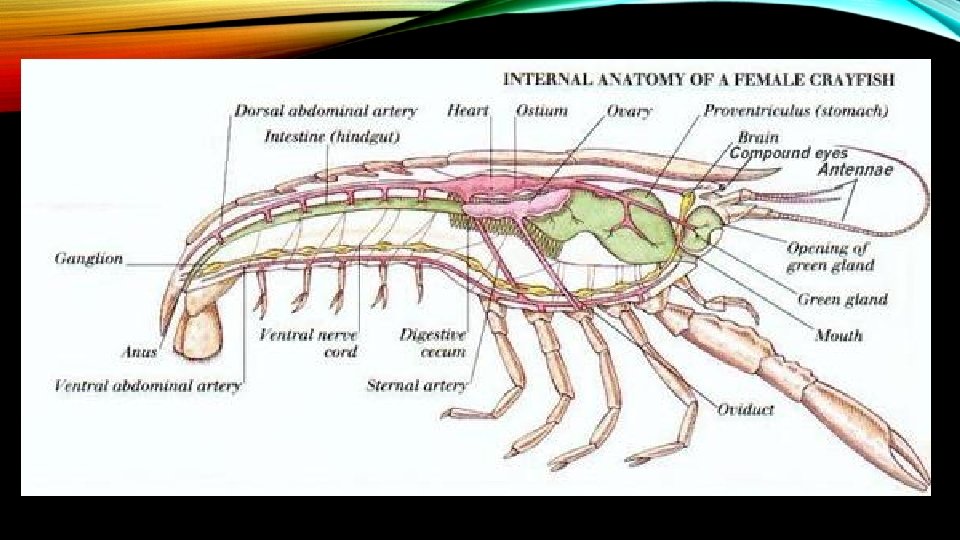
CRAYFISH • Thorax has 5 pairs of walking legs • 1 st – pinching claw • Gills above walking legs • Cephalothorax covered by carapace • Abdominal segments • Swimmerets • Final 2 segments – uropods and telson
FEEDING AND DIGESTION • Divided stomach – one end grinds, the other filters • Green glands on head region excrete metabolic wastes • Coelom reduced to space around reproductive system
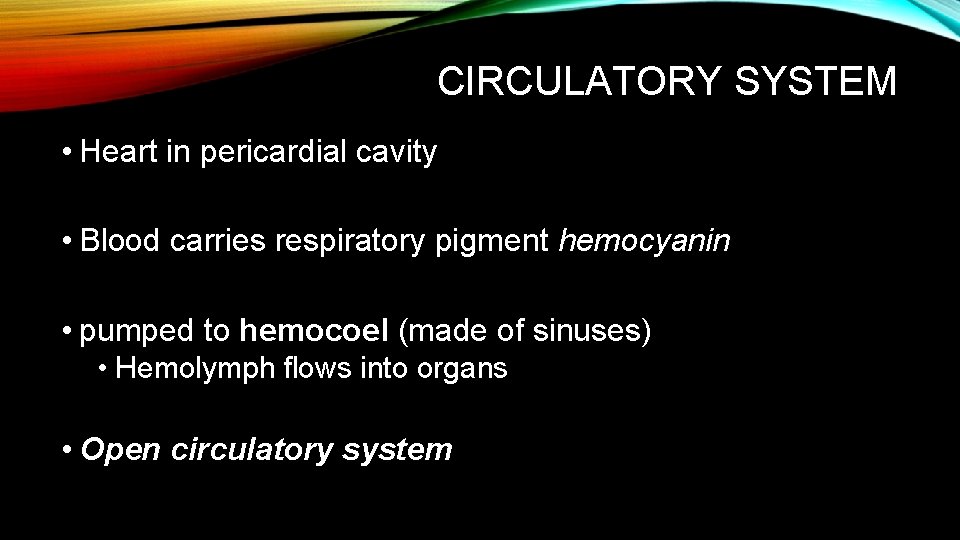
CIRCULATORY SYSTEM • Heart in pericardial cavity • Blood carries respiratory pigment hemocyanin • pumped to hemocoel (made of sinuses) • Hemolymph flows into organs • Open circulatory system
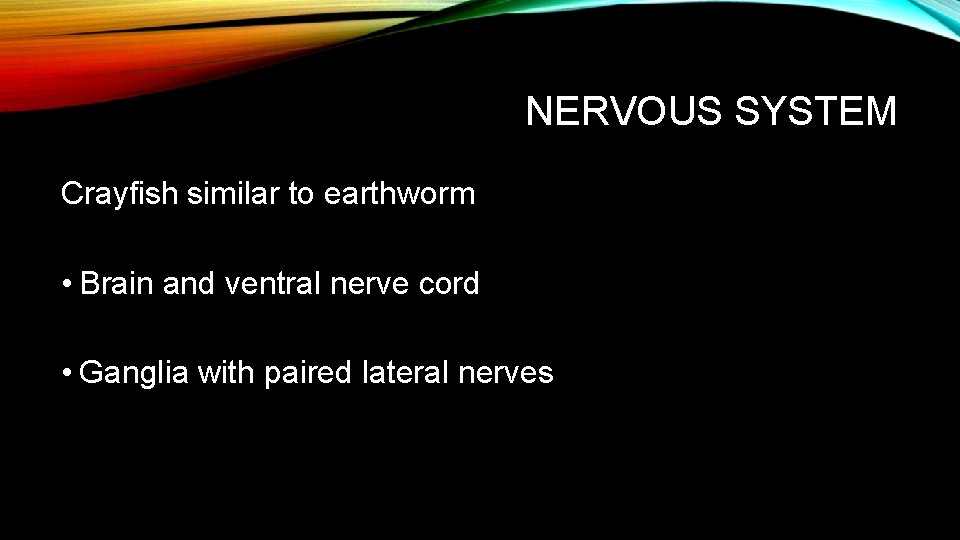
NERVOUS SYSTEM Crayfish similar to earthworm • Brain and ventral nerve cord • Ganglia with paired lateral nerves
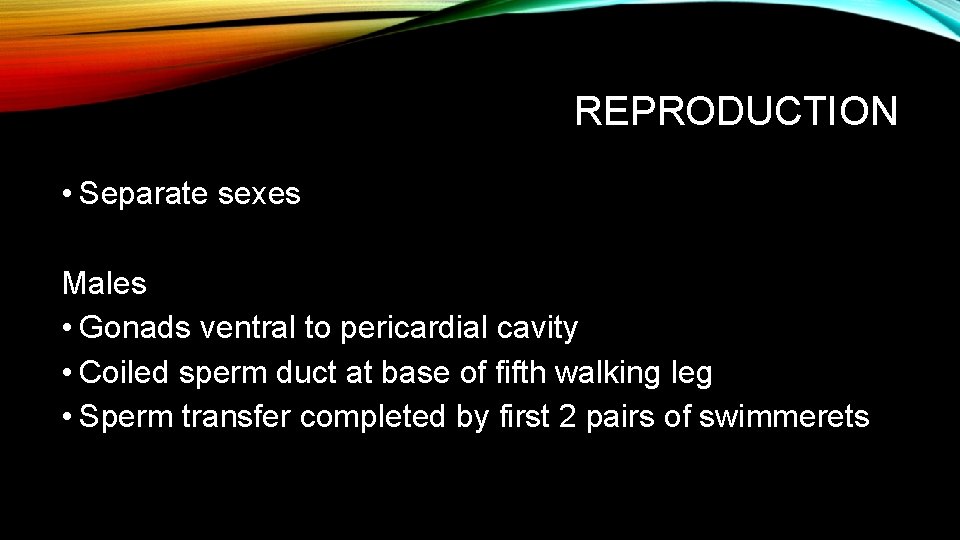
REPRODUCTION • Separate sexes Males • Gonads ventral to pericardial cavity • Coiled sperm duct at base of fifth walking leg • Sperm transfer completed by first 2 pairs of swimmerets
Females • Ovaries open at bases of 3 rd walking legs • Seminal receptacle between fourth and fifth walking legs • Eggs attach to swimmerets of female
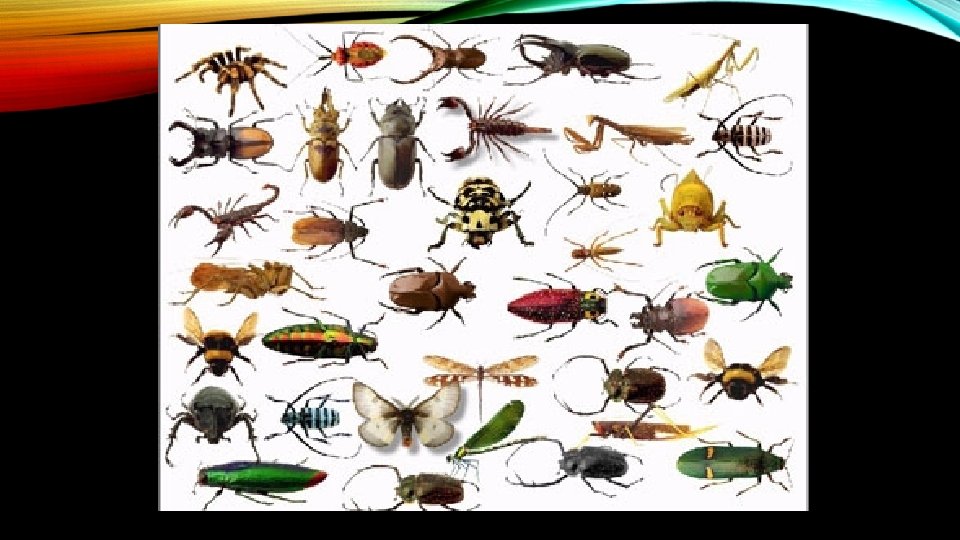
INSECTS
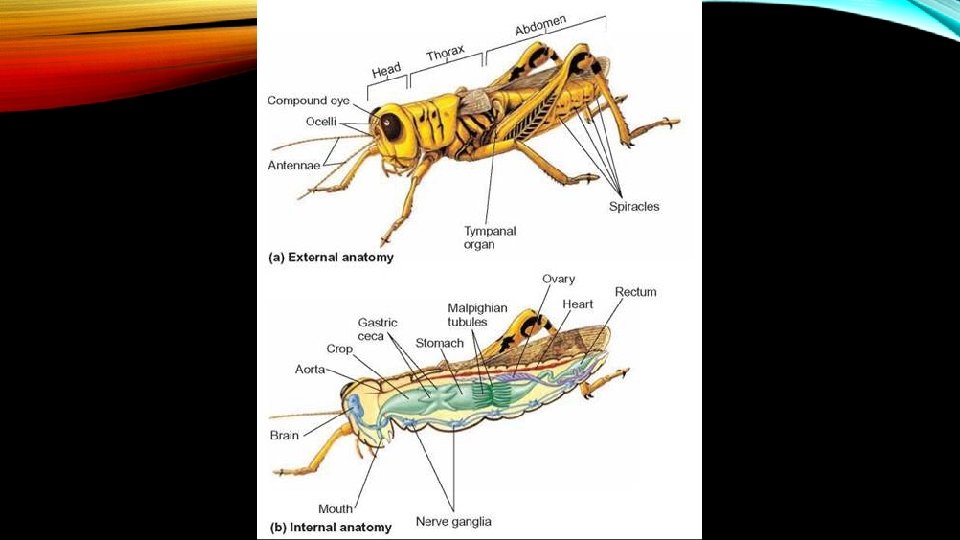
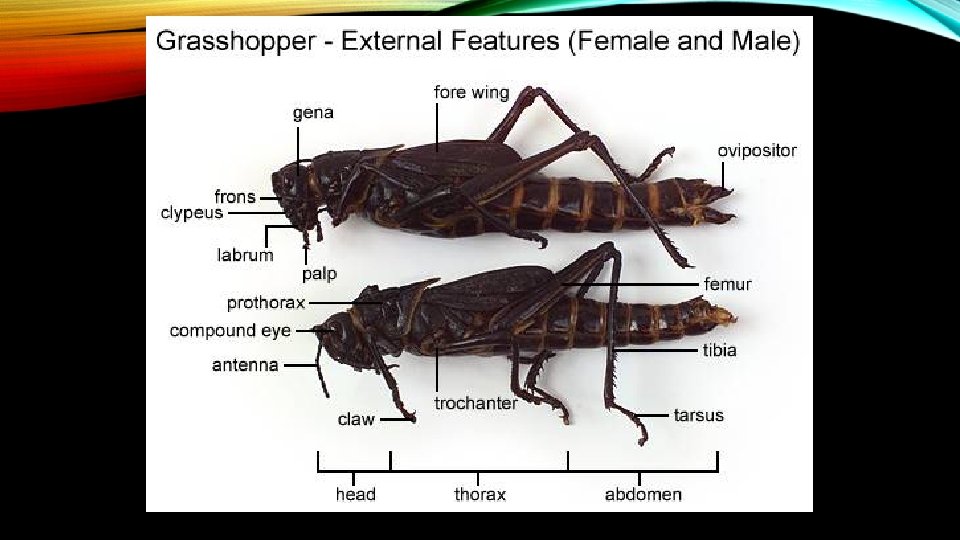
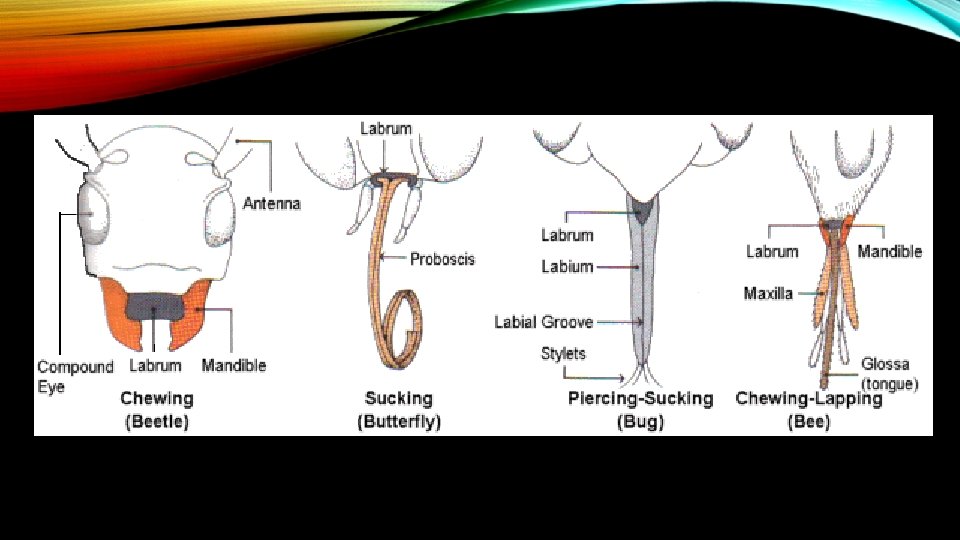
BODY STRUCTURE • Head, thorax, abdomen • Head has pair of sensory antennae, pair of compound eyes, several simple eyes • Mouthparts adapted to lifestyle
• Abdomen holds most internal organs • Thorax has 3 pairs of legs and wings (1 or 2 pairs, or none) • Exoskeleton lighter and contains less chitin
GRASSHOPPER • 3 rd pair of legs for jumping • 2 pairs of wings • Forewings tough/leathery • Broad, thin hindwings • (Lateral surface) 1 st abdominal segment has tympanum for sound waves
Female • Posterior region has 2 pairs of projections • Form ovipositor, which digs hole where eggs are laid
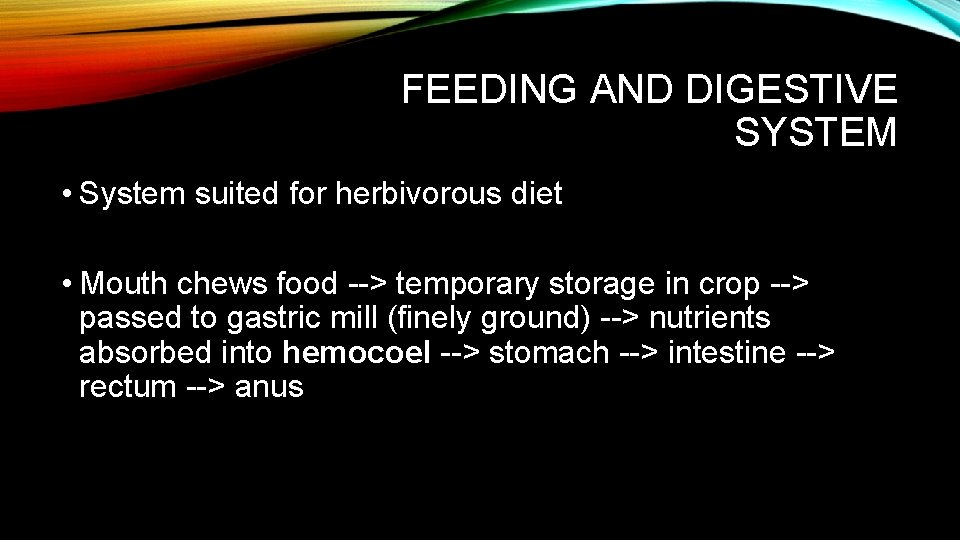
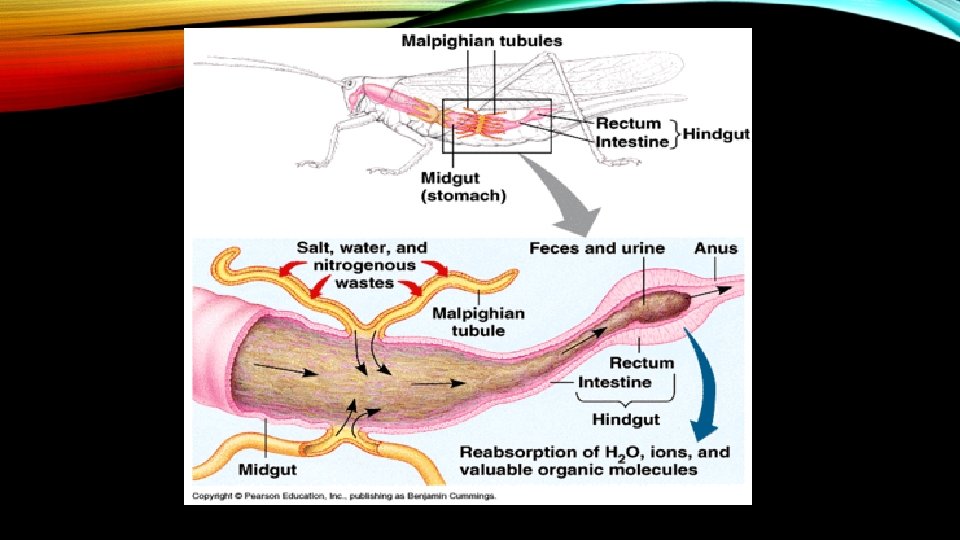
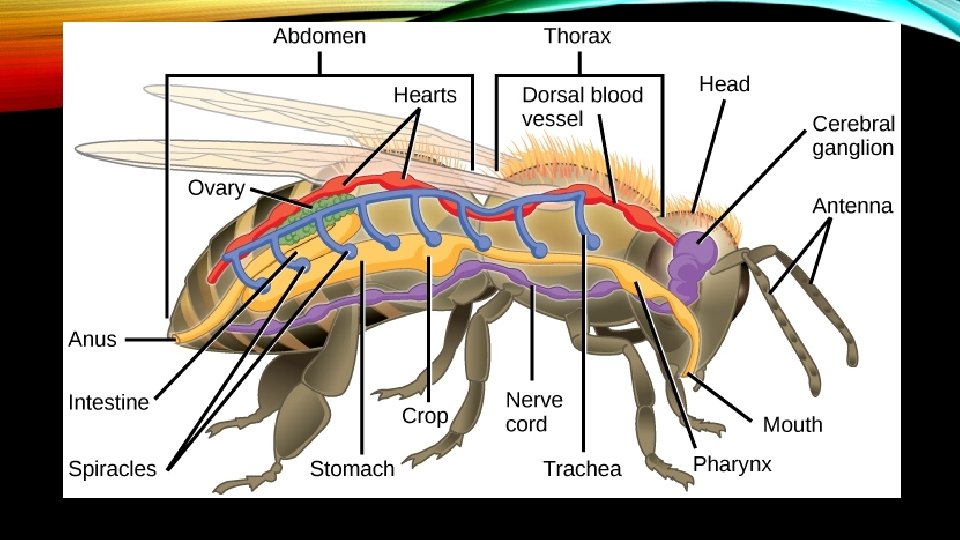
FEEDING AND DIGESTIVE SYSTEM • System suited for herbivorous diet • Mouth chews food --> temporary storage in crop --> passed to gastric mill (finely ground) --> nutrients absorbed into hemocoel --> stomach --> intestine --> rectum --> anus
EXCRETORY SYSTEM Malpighian Tubules: extend into hemocoel and collect nitrogenous wastes • Forms solid nitrogenous waste (Uric acid), conserving water
RESPIRATORY SYSTEM Spiracles: openings in exoskeleton • Air enters trachae • Branch until they end intracellularly • Air pumped by alternating contraction/relaxation of body wall through bladder-like structures (attached to trachae near spiracles) • Air enters anterior 4 spiracles and exits posterior 6 spiracles
CIRCULATORY SYSTEM • Slender, tubular heart (lies against dorsal wall of abdominal exoskeleton) • Pumps hemolymph into aorta, leading to hemocoel • Circulates then returns to heart
REPRODUCTION • Male has penis • Sperm passed to female and stored in seminal receptacle • Internal fertilization prevents gametes/zygotes from drying out • Fertilized eggs deposited in ground with ovipositor
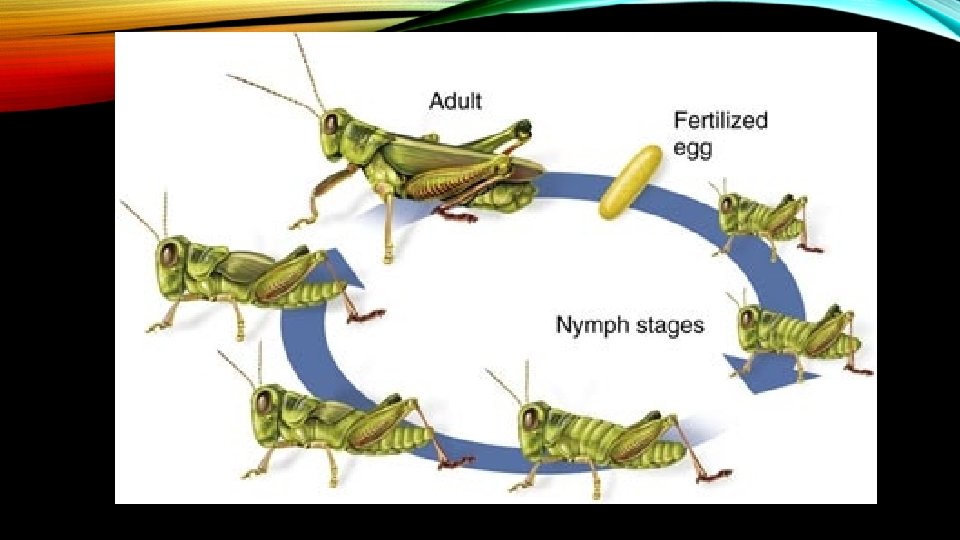
Metamorphosis: change in form/physiology occurring as larvae (immature stage) becomes an adult Gradual Metamorphosis: gradual change in form as they mature • Immature insect called a nymph
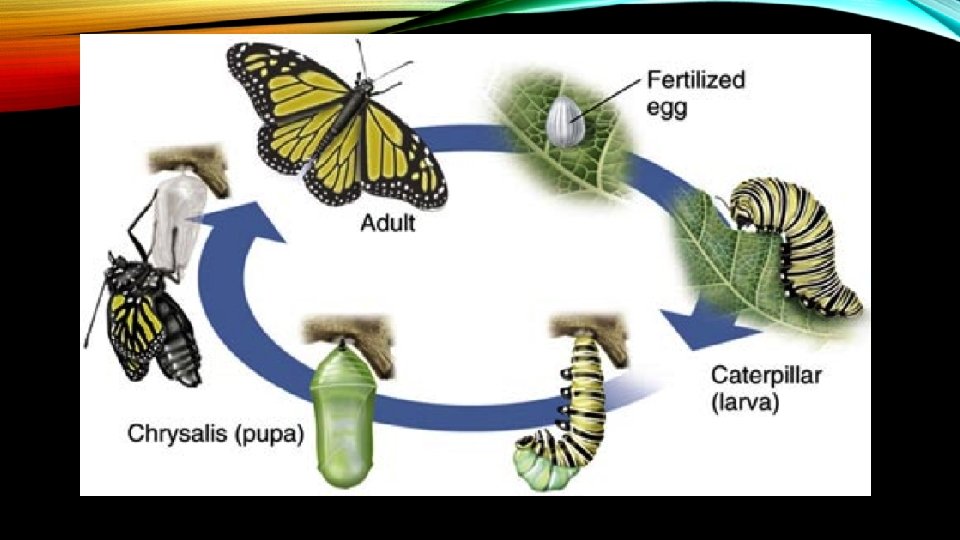
Complete Metamorphosis: drastic changes in form • Begins a worm-like larva (caterpillar), then a case (cocoon), and finally becomes an adult • Larvae and adults have different food sources
COMPARISON TO CRAYFISH
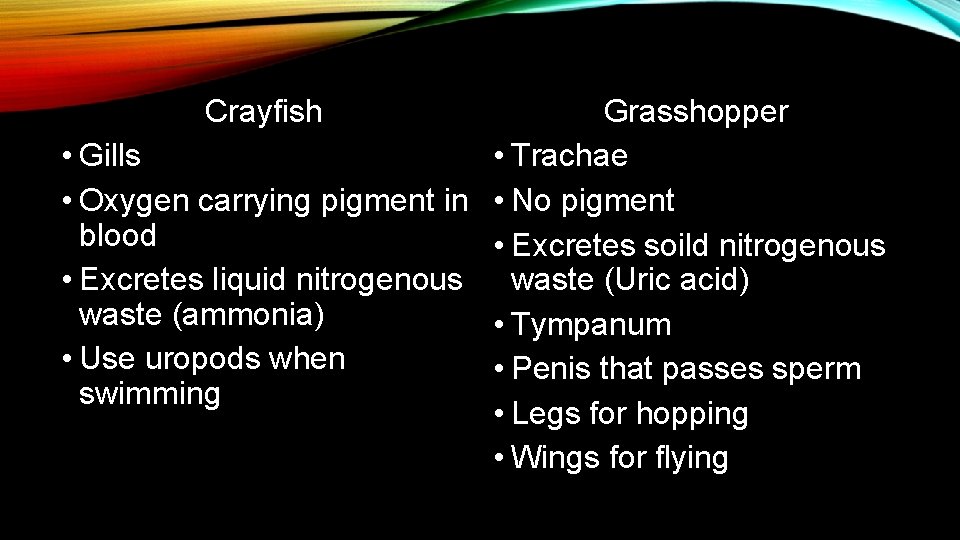
Crayfish Grasshopper • Gills • Trachae • Oxygen carrying pigment in • No pigment blood • Excretes soild nitrogenous • Excretes liquid nitrogenous waste (Uric acid) waste (ammonia) • Tympanum • Use uropods when • Penis that passes sperm swimming • Legs for hopping • Wings for flying
ARACHNIDS Terrestrial spiders, scorpions, ticks, and mites
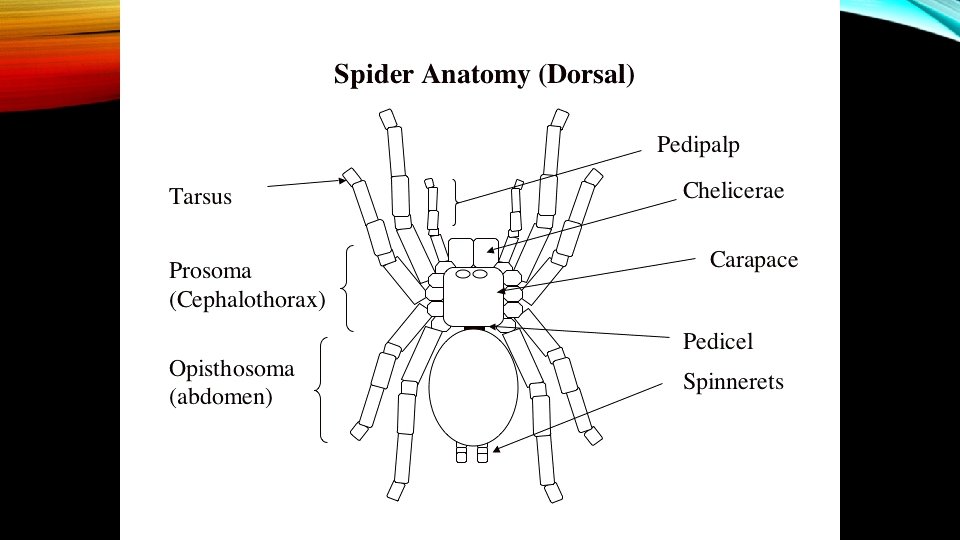
BODY STRUCTURE • Cephalothorax has 6 pairs of appendages • Chelicerae • Pedipalps • 4 pairs of walking legs • Thorax contains internal organs
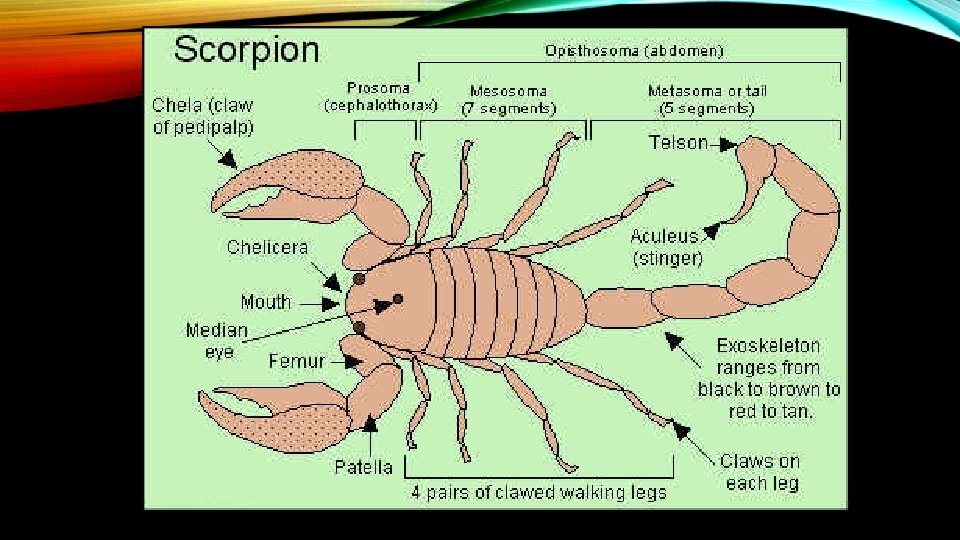
SCORPIONS • Oldest terrestrial Arthropods • Live in tropics, subtropics, and temperate regions • Nocturnal • Pedipalps are long pincers, long abdomen ends with stinger
TICKS AND MITES • Parasites • Suck blood of hosts • Spread diseases like spotted fever or lyme disease
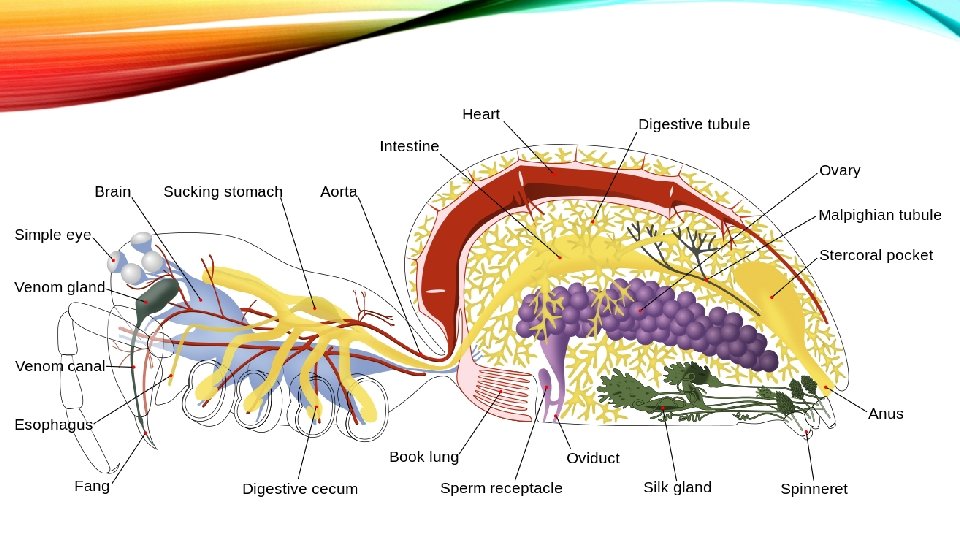
SPIDERS • Narrow waist separates cephalothorax and abdomen • Chelicerae have a fang that delivers venom • Pedipalps assist in sensing or holding prey • Digestive juices liquefy tissues, gets sucked into stomach • Silk threads using for nesting and catching prey
• Malpighian tubes work with rectal glands to reabsorb ions and water (prior to Uric acid excretion) • Inner body wall form lamellae – known as book lungs • Air flows into one side of lamellae and exchange gases with blood flowing in opposite direction