
30 1 Respiratory and Circulatory Functions Sponge 4

- Slides: 20
30. 1 Respiratory and Circulatory Functions Sponge #4 • # 1 -8 on your paper
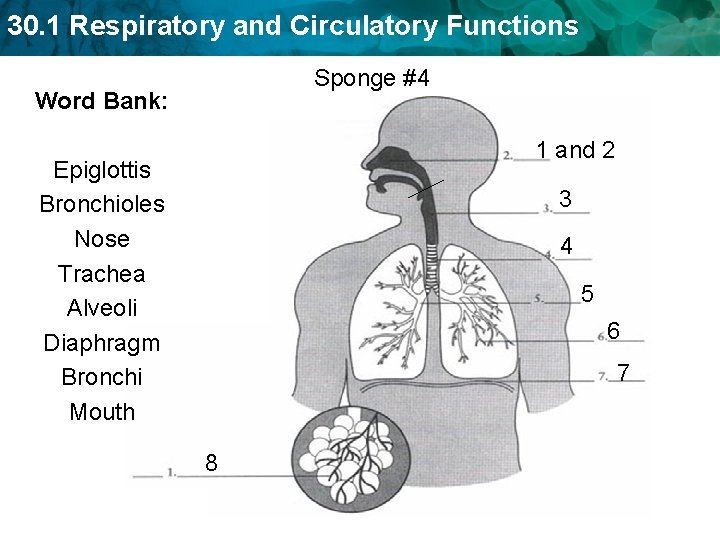
30. 1 Respiratory and Circulatory Functions Sponge #4 Word Bank: 1 and 2 Epiglottis Bronchioles Nose Trachea Alveoli Diaphragm Bronchi Mouth 3 4 5 6 7 8
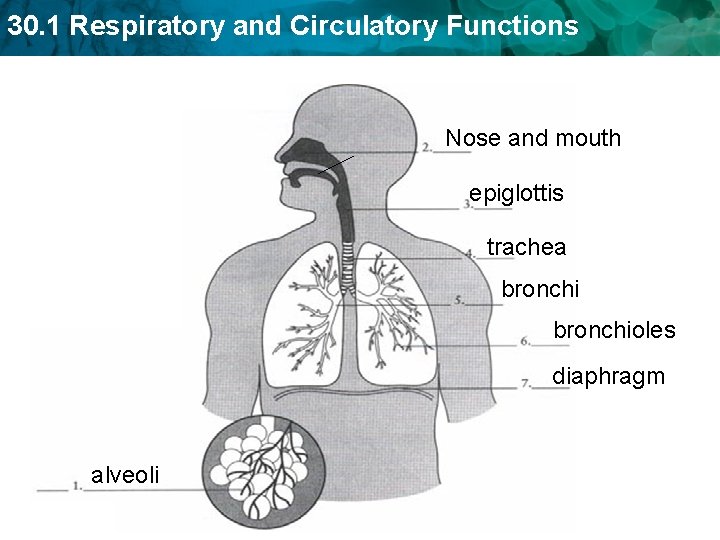
30. 1 Respiratory and Circulatory Functions Nose and mouth epiglottis trachea bronchioles diaphragm alveoli
30. 1 Respiratory and Circulatory Functions Sponge #5 • Think about the muscles in your body: – Do they get tired? – Hurt? – Sore? – Torn? • Now think about your heart. Does it do these things? Take a few minutes to list everything you know or think you know about your heart.
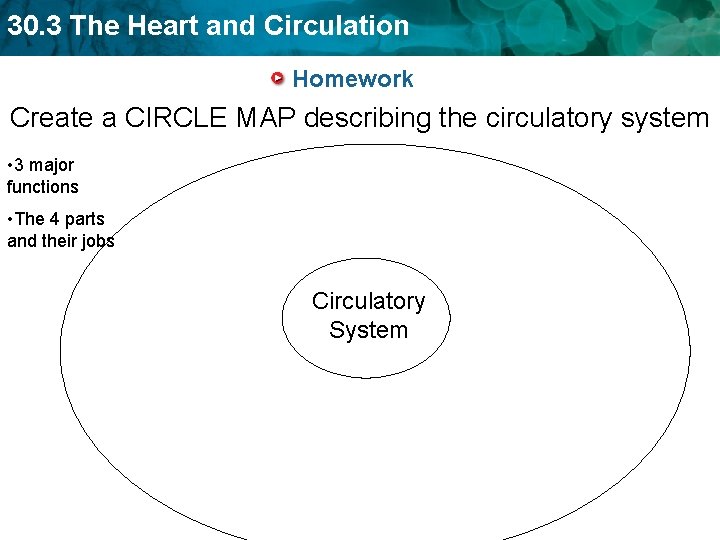
30. 3 The Heart and Circulation Homework Create a CIRCLE MAP describing the circulatory system • 3 major functions • The 4 parts and their jobs Circulatory System
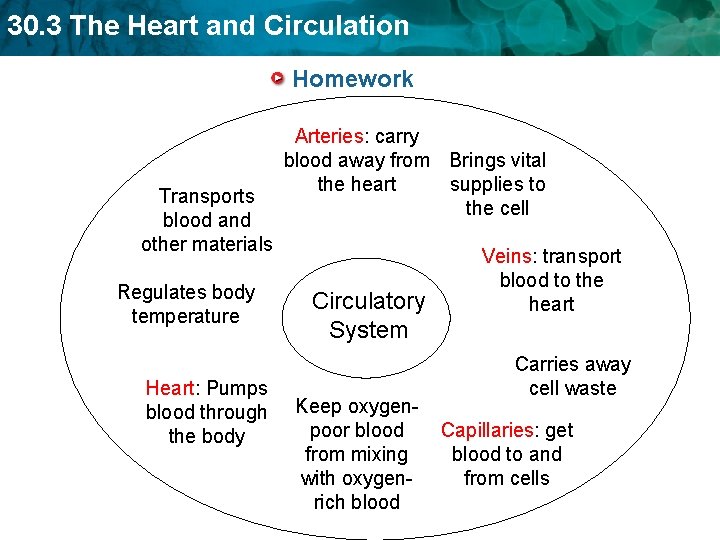
30. 3 The Heart and Circulation Homework Transports blood and other materials Regulates body temperature Heart: Pumps blood through the body Arteries: carry blood away from Brings vital the heart supplies to the cell Circulatory System Keep oxygenpoor blood from mixing with oxygenrich blood Veins: transport blood to the heart Carries away cell waste Capillaries: get blood to and from cells
30. 3 The Heart and Circulation Standard • 9. a Students know how the complementary activity of major body systems provides cells with oxygen and nutrients and removes toxic waste products such as carbon dioxide.
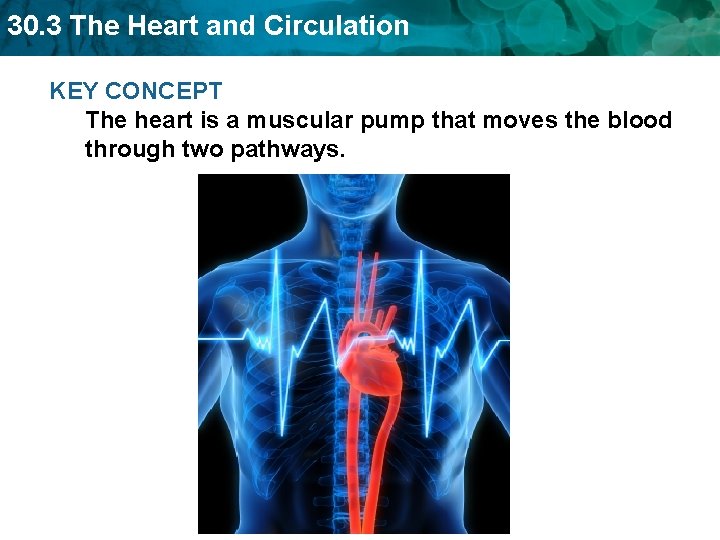
30. 3 The Heart and Circulation KEY CONCEPT The heart is a muscular pump that moves the blood through two pathways.
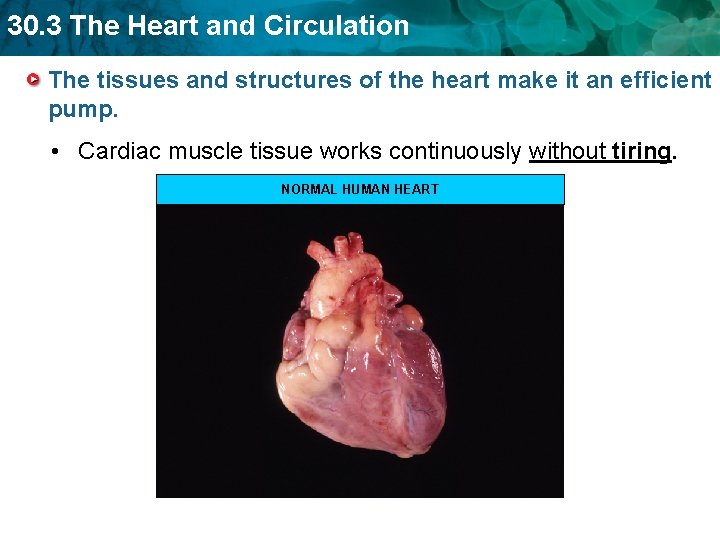
30. 3 The Heart and Circulation The tissues and structures of the heart make it an efficient pump. • Cardiac muscle tissue works continuously without tiring. NORMAL HUMAN HEART
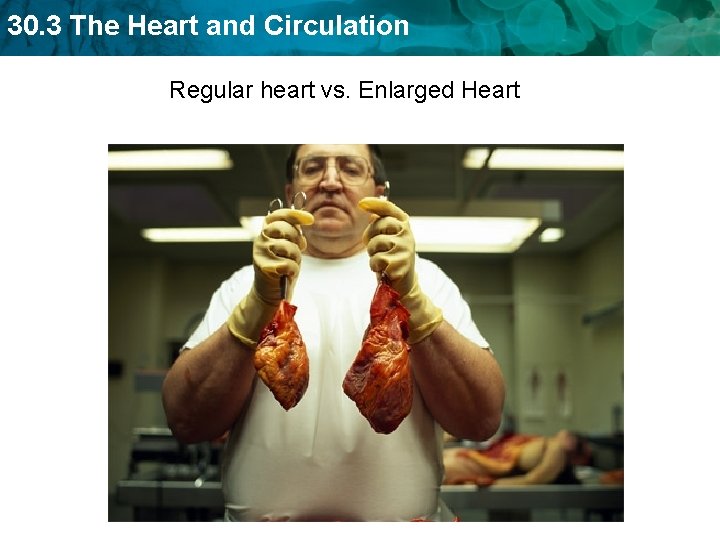
30. 3 The Heart and Circulation Regular heart vs. Enlarged Heart
30. 3 The Heart and Circulation • The heart has four chambers: two atria, two ventricles. • Valves in each chamber prevent backflow of blood. • Muscles squeeze the chambers in a powerful pumping action. pulmonary valve right atrium aortic valve left atrium mitral valve tricuspid right ventricle left ventricle septum
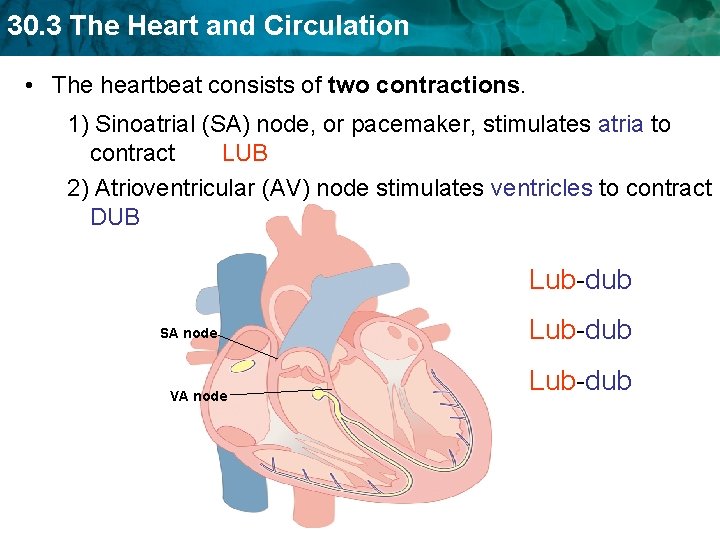
30. 3 The Heart and Circulation • The heartbeat consists of two contractions. 1) Sinoatrial (SA) node, or pacemaker, stimulates atria to contract LUB 2) Atrioventricular (AV) node stimulates ventricles to contract DUB Lub-dub SA node VA node Lub-dub
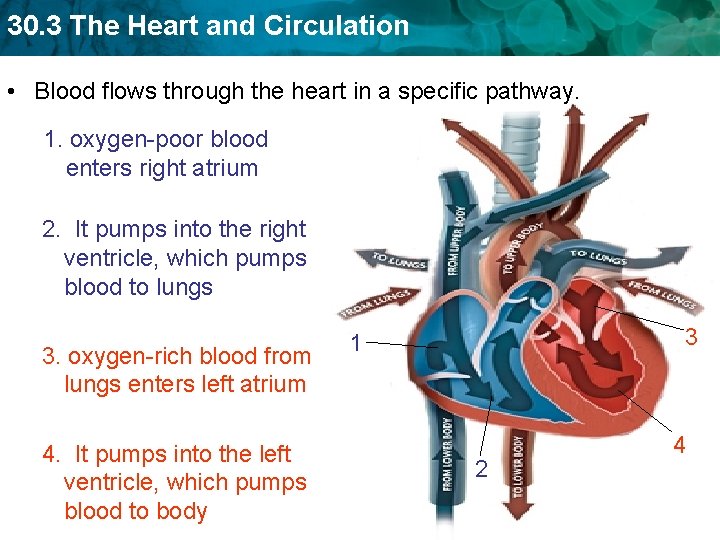
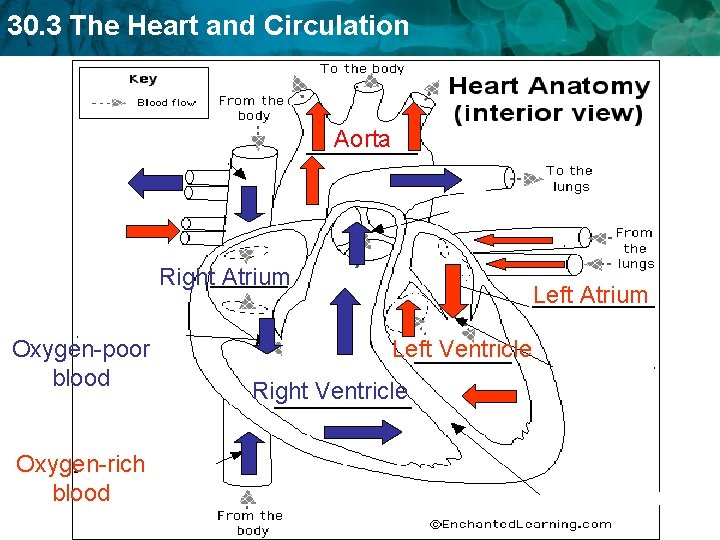
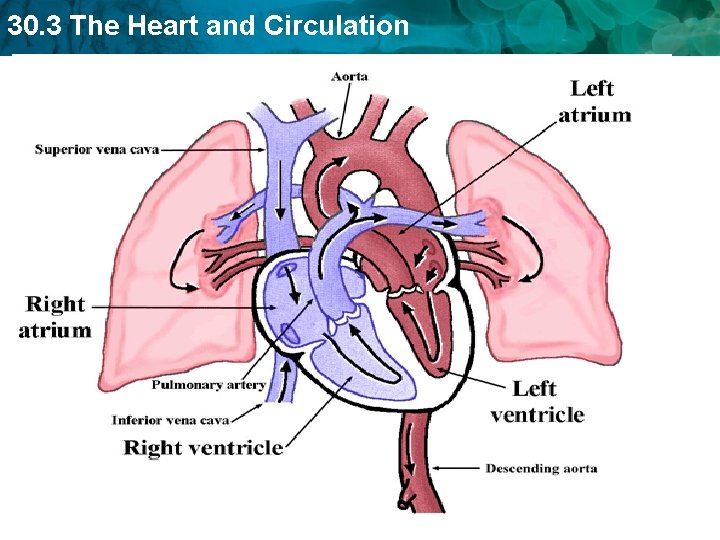
30. 3 The Heart and Circulation • Blood flows through the heart in a specific pathway. 1. oxygen-poor blood enters right atrium 2. It pumps into the right ventricle, which pumps blood to lungs 3. oxygen-rich blood from lungs enters left atrium 4. It pumps into the left ventricle, which pumps blood to body 3 1 2 4
30. 3 The Heart and Circulation Aorta Right Atrium Oxygen-poor blood Oxygen-rich blood Left Atrium Left Ventricle Right Ventricle
30. 3 The Heart and Circulation Sponge #6 • Name the four chambers of the heart • Explain the path of the oxygen-poor blood • Explain the path of the oxygen-rich blood • When the oxygen-poor blood enters the lungs what does it drop off and pick up?
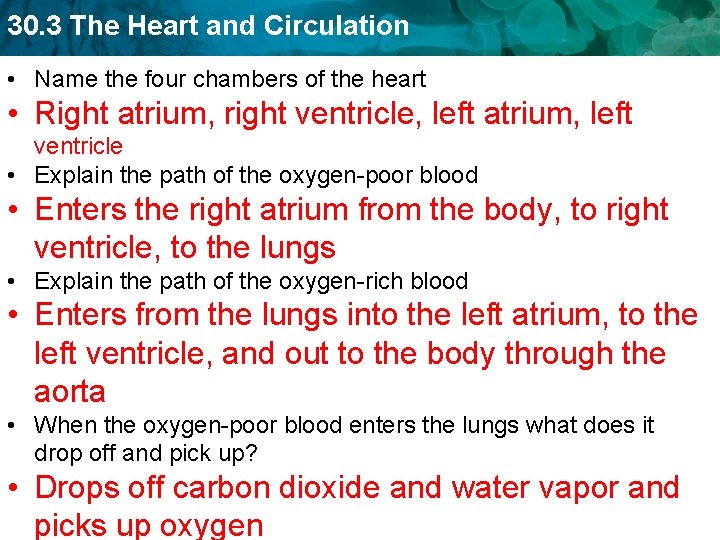
30. 3 The Heart and Circulation • Name the four chambers of the heart • Right atrium, right ventricle, left atrium, left ventricle • Explain the path of the oxygen-poor blood • Enters the right atrium from the body, to right ventricle, to the lungs • Explain the path of the oxygen-rich blood • Enters from the lungs into the left atrium, to the left ventricle, and out to the body through the aorta • When the oxygen-poor blood enters the lungs what does it drop off and pick up? • Drops off carbon dioxide and water vapor and picks up oxygen
30. 3 The Heart and Circulation
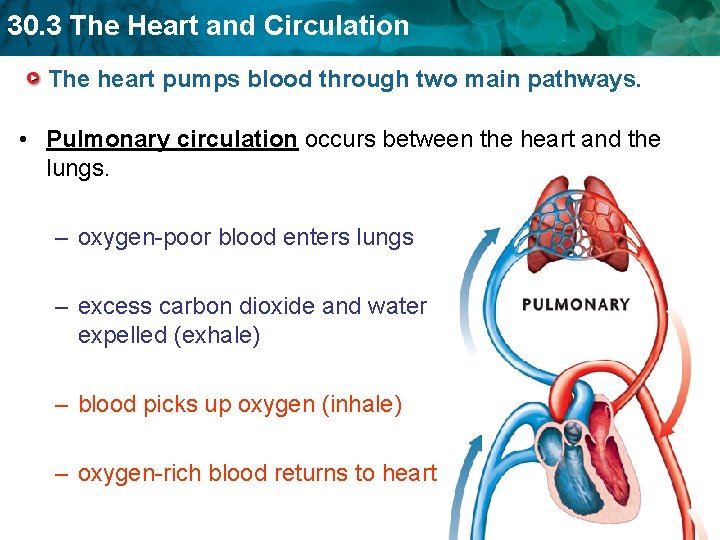
30. 3 The Heart and Circulation The heart pumps blood through two main pathways. • Pulmonary circulation occurs between the heart and the lungs. – oxygen-poor blood enters lungs – excess carbon dioxide and water expelled (exhale) – blood picks up oxygen (inhale) – oxygen-rich blood returns to heart
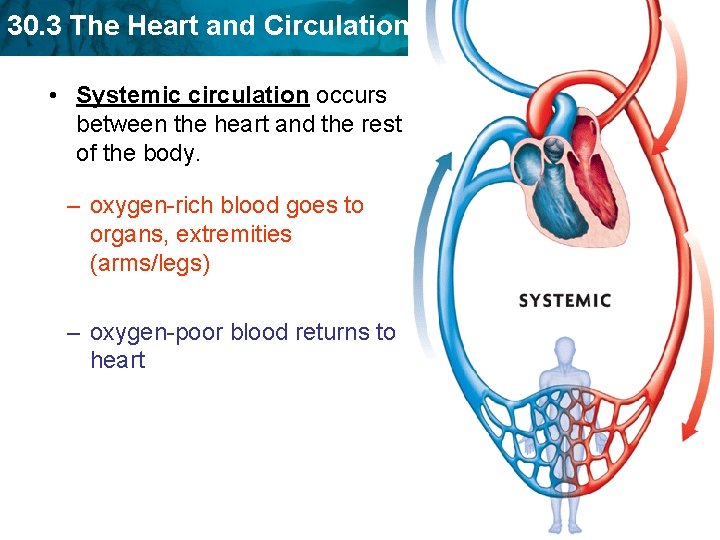
30. 3 The Heart and Circulation • Systemic circulation occurs between the heart and the rest of the body. – oxygen-rich blood goes to organs, extremities (arms/legs) – oxygen-poor blood returns to heart
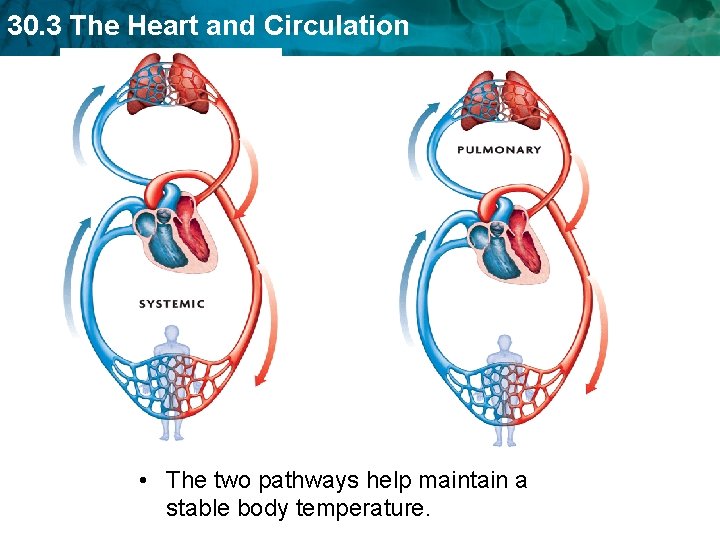
30. 3 The Heart and Circulation • The two pathways help maintain a stable body temperature.