
30 1 Respiratory and Circulatory Functions KEY CONCEPT
- Slides: 38
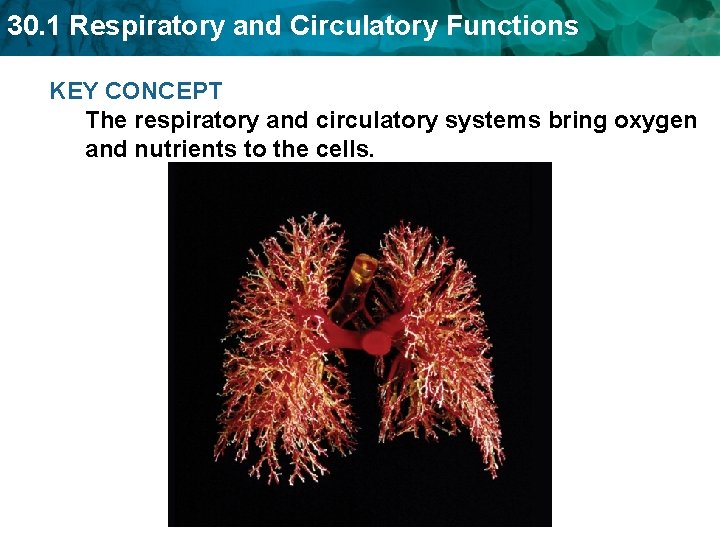
30. 1 Respiratory and Circulatory Functions KEY CONCEPT The respiratory and circulatory systems bring oxygen and nutrients to the cells.
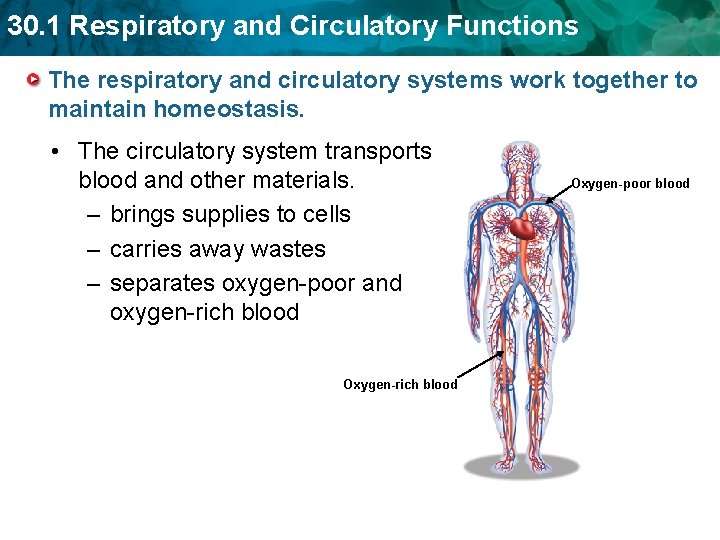
30. 1 Respiratory and Circulatory Functions The respiratory and circulatory systems work together to maintain homeostasis. • The circulatory system transports blood and other materials. – brings supplies to cells – carries away wastes – separates oxygen-poor and oxygen-rich blood Oxygen-poor blood
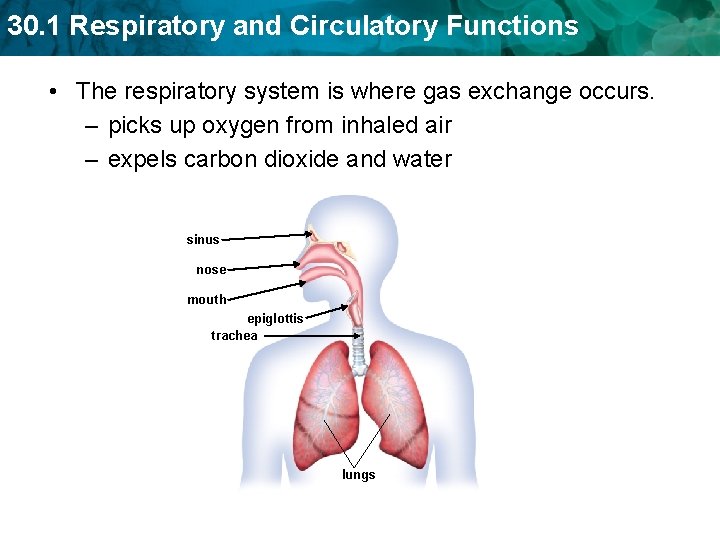
30. 1 Respiratory and Circulatory Functions • The respiratory system is where gas exchange occurs. – picks up oxygen from inhaled air – expels carbon dioxide and water sinus nose mouth epiglottis trachea lungs
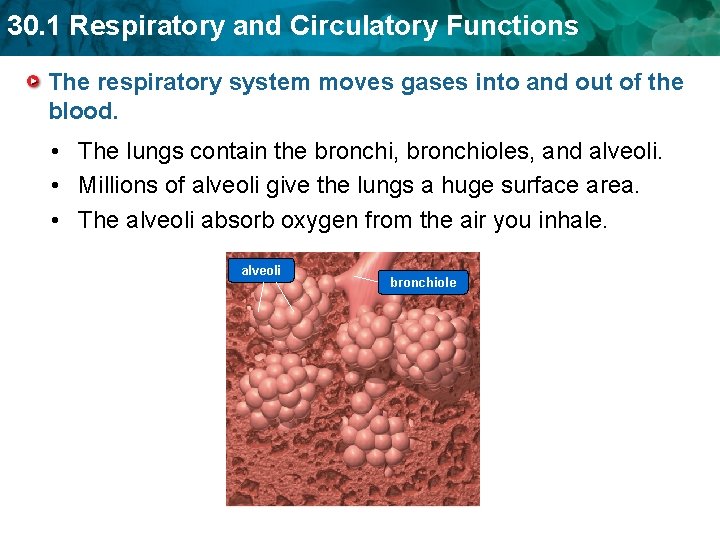
30. 1 Respiratory and Circulatory Functions The respiratory system moves gases into and out of the blood. • The lungs contain the bronchi, bronchioles, and alveoli. • Millions of alveoli give the lungs a huge surface area. • The alveoli absorb oxygen from the air you inhale. alveoli bronchiole
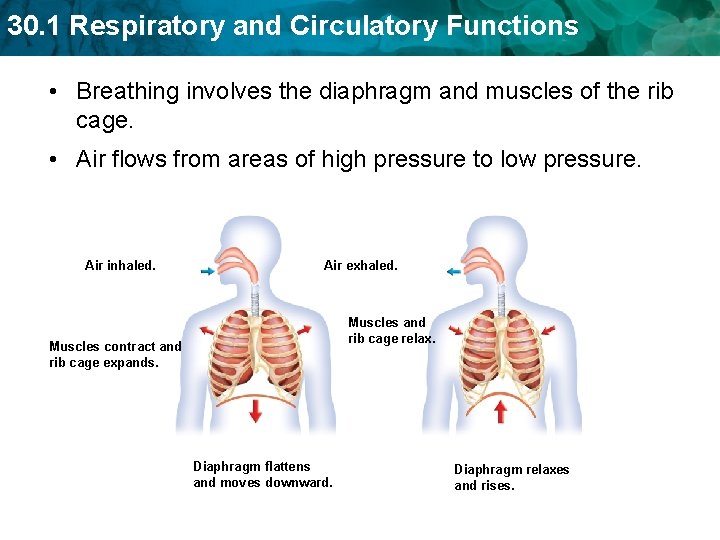
30. 1 Respiratory and Circulatory Functions • Breathing involves the diaphragm and muscles of the rib cage. • Air flows from areas of high pressure to low pressure. Air inhaled. Air exhaled. Muscles and rib cage relax. Muscles contract and rib cage expands. Diaphragm flattens and moves downward. Diaphragm relaxes and rises.
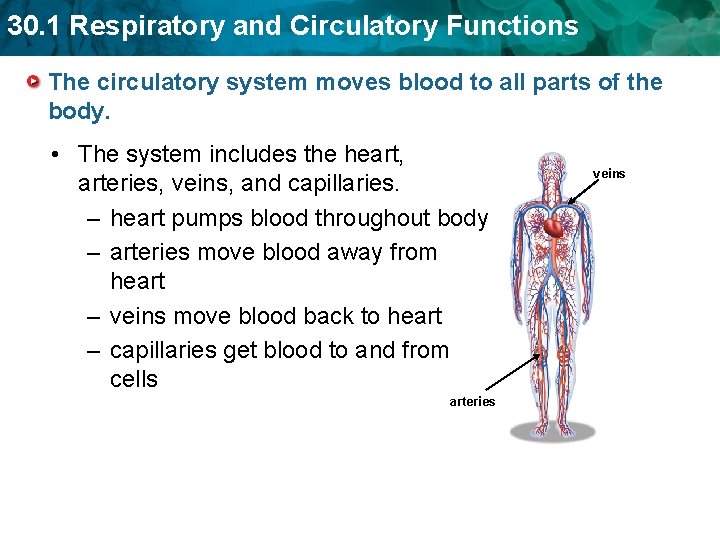
30. 1 Respiratory and Circulatory Functions The circulatory system moves blood to all parts of the body. • The system includes the heart, arteries, veins, and capillaries. – heart pumps blood throughout body – arteries move blood away from heart – veins move blood back to heart – capillaries get blood to and from cells arteries veins
30. 1 Respiratory and Circulatory Functions • There are three major functions of the circulatory system. – transporting blood, gases, nutrients – collecting waste materials – maintaining body temperature
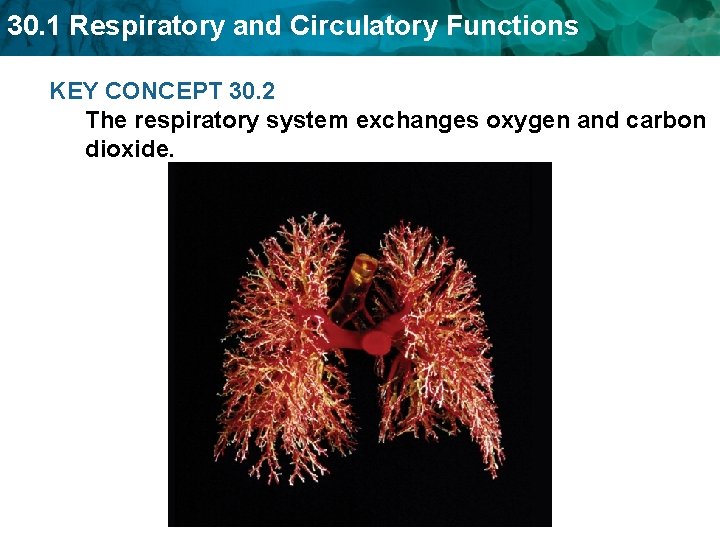
30. 1 Respiratory and Circulatory Functions KEY CONCEPT 30. 2 The respiratory system exchanges oxygen and carbon dioxide.
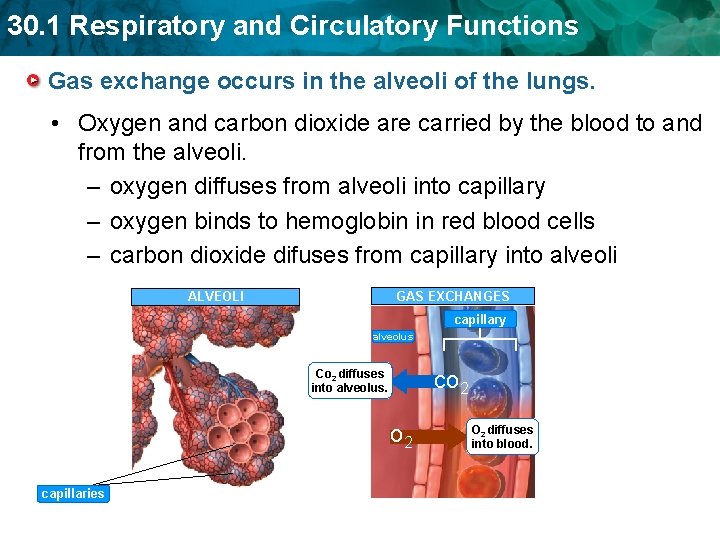
30. 1 Respiratory and Circulatory Functions Gas exchange occurs in the alveoli of the lungs. • Oxygen and carbon dioxide are carried by the blood to and from the alveoli. – oxygen diffuses from alveoli into capillary – oxygen binds to hemoglobin in red blood cells – carbon dioxide difuses from capillary into alveoli GAS EXCHANGES ALVEOLI capillary alveolus co 2 Co 2 diffuses into alveolus. o 2 capillaries O 2 diffuses into blood.
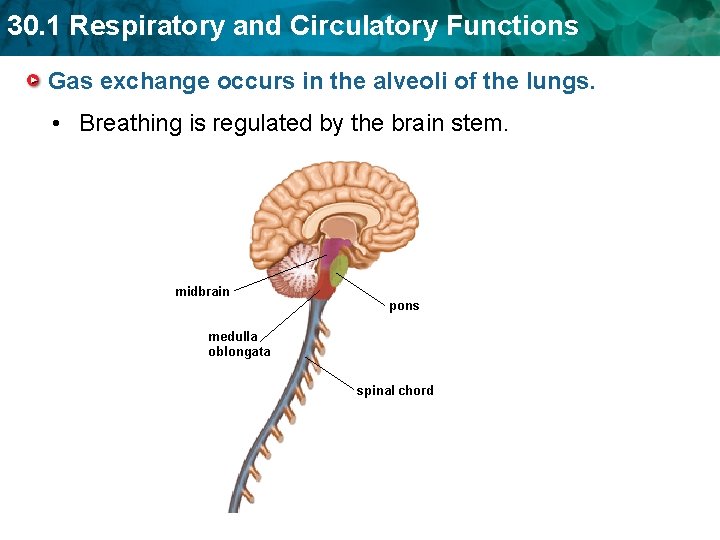
30. 1 Respiratory and Circulatory Functions Gas exchange occurs in the alveoli of the lungs. • Breathing is regulated by the brain stem. midbrain pons medulla oblongata spinal chord
30. 1 Respiratory and Circulatory Functions Respiratory diseases interfere with gas exchange. • Lung diseases reduce airflow and oxygen absorption. – Emphysema destroys alveoli. – Asthma constricts airways. – Cystic fibrosis produces sticky mucus.
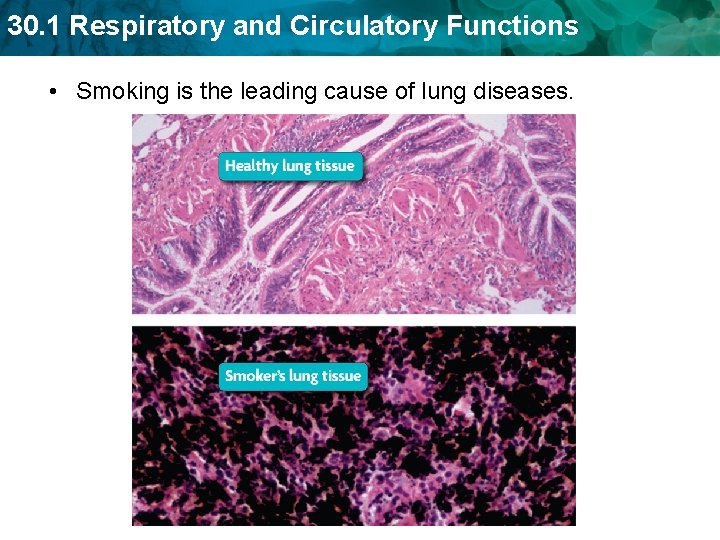
30. 1 Respiratory and Circulatory Functions • Smoking is the leading cause of lung diseases.
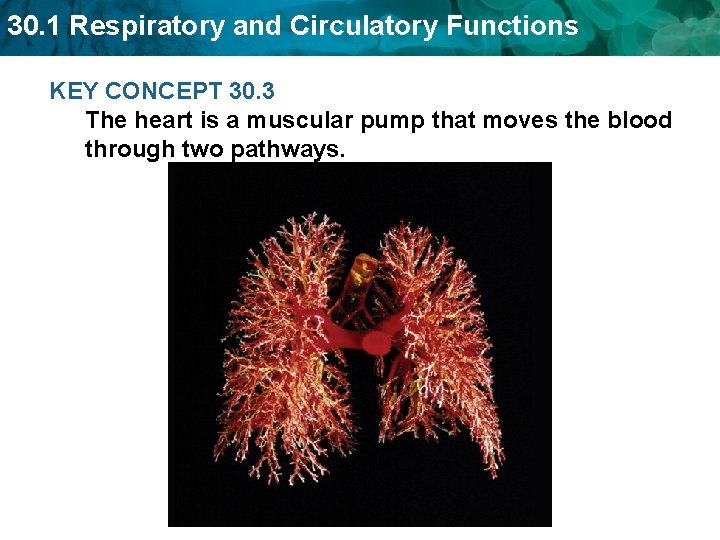
30. 1 Respiratory and Circulatory Functions KEY CONCEPT 30. 3 The heart is a muscular pump that moves the blood through two pathways.
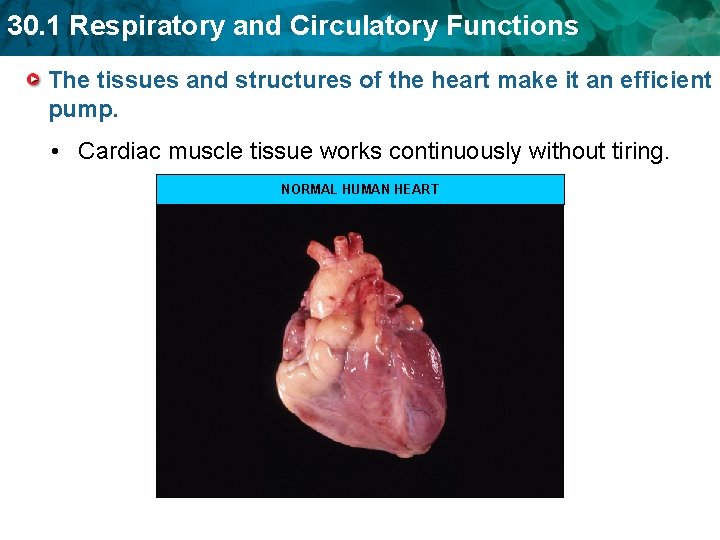
30. 1 Respiratory and Circulatory Functions The tissues and structures of the heart make it an efficient pump. • Cardiac muscle tissue works continuously without tiring. NORMAL HUMAN HEART
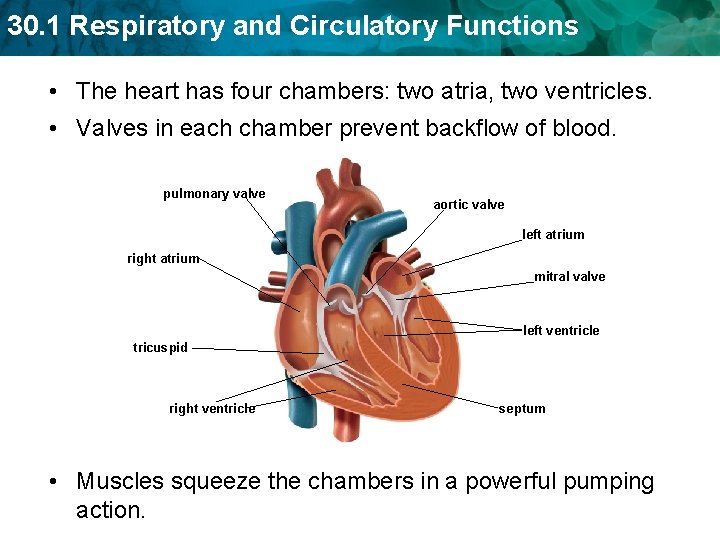
30. 1 Respiratory and Circulatory Functions • The heart has four chambers: two atria, two ventricles. • Valves in each chamber prevent backflow of blood. pulmonary valve aortic valve left atrium right atrium mitral valve left ventricle tricuspid right ventricle septum • Muscles squeeze the chambers in a powerful pumping action.
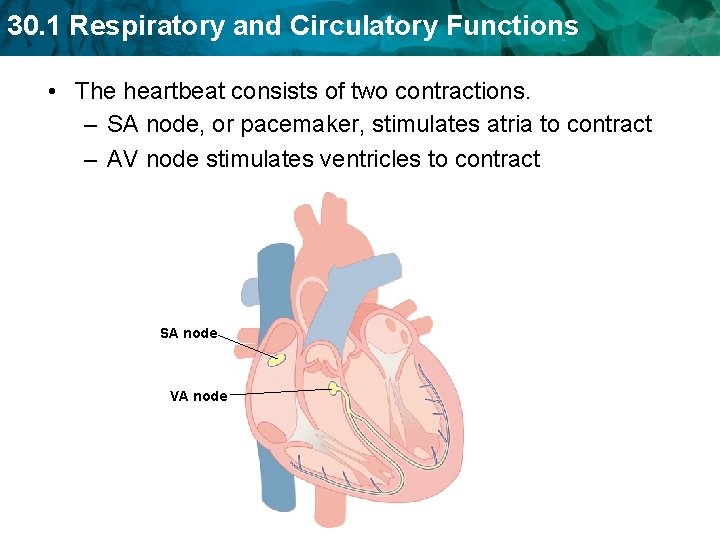
30. 1 Respiratory and Circulatory Functions • The heartbeat consists of two contractions. – SA node, or pacemaker, stimulates atria to contract – AV node stimulates ventricles to contract SA node VA node
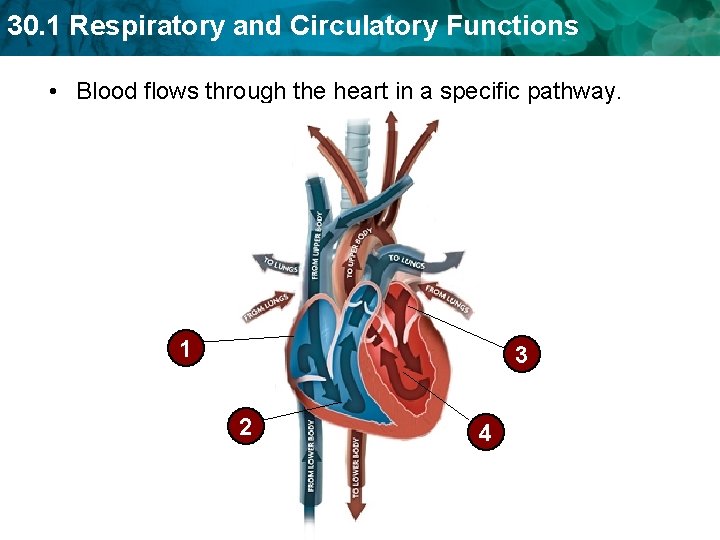
30. 1 Respiratory and Circulatory Functions • Blood flows through the heart in a specific pathway. 1 3 2 4
30. 1 Respiratory and Circulatory Functions • Blood flows through the heart in a specific pathway. – oxygen-poor blood enters right atrium, then right ventricle – right ventricle pumps blood to lungs – oxygen-rich blood from lungs enters left atrium, then left ventricle – left ventricle pumps blood to body
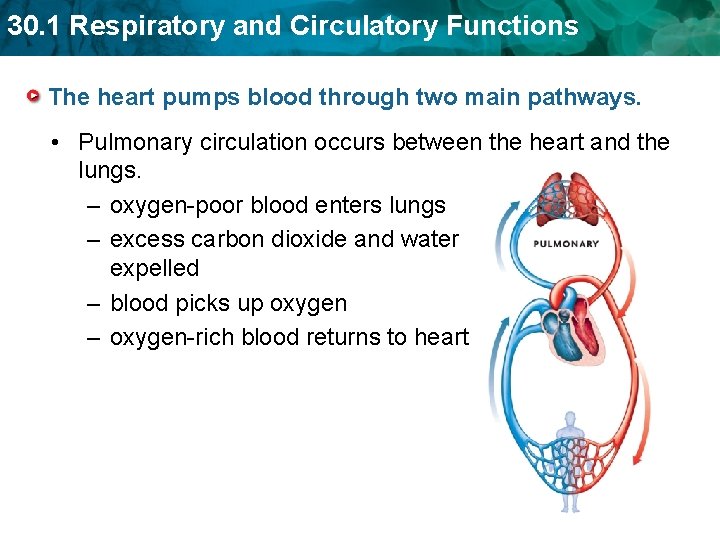
30. 1 Respiratory and Circulatory Functions The heart pumps blood through two main pathways. • Pulmonary circulation occurs between the heart and the lungs. – oxygen-poor blood enters lungs – excess carbon dioxide and water expelled – blood picks up oxygen – oxygen-rich blood returns to heart
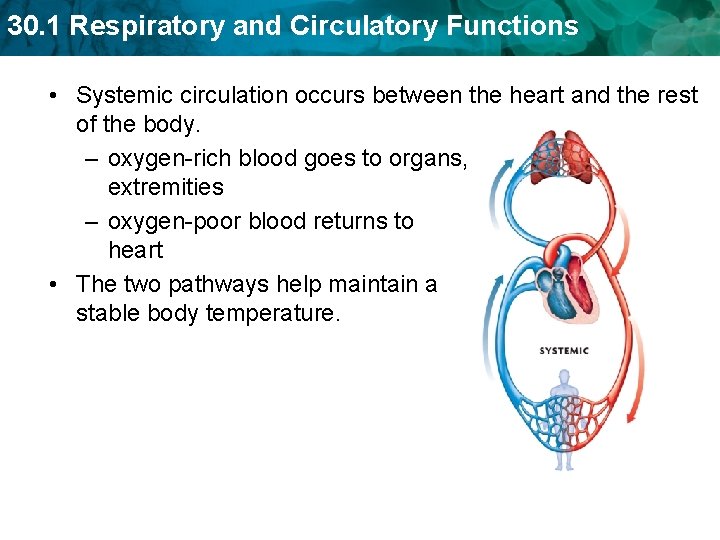
30. 1 Respiratory and Circulatory Functions • Systemic circulation occurs between the heart and the rest of the body. – oxygen-rich blood goes to organs, extremities – oxygen-poor blood returns to heart • The two pathways help maintain a stable body temperature.
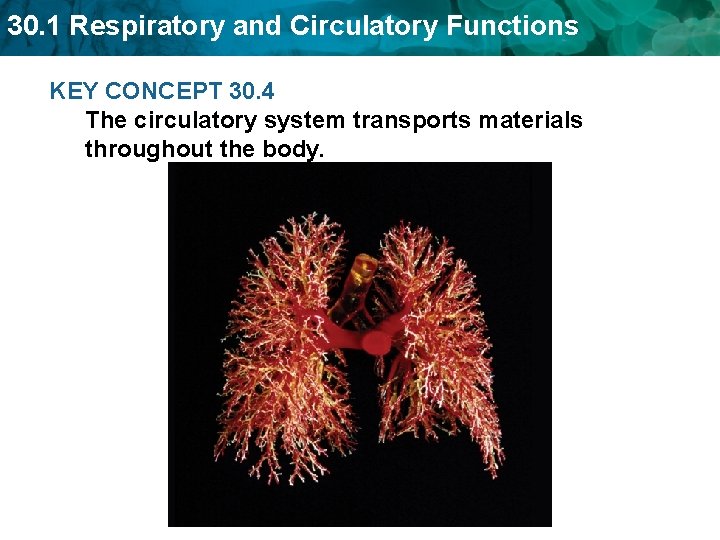
30. 1 Respiratory and Circulatory Functions KEY CONCEPT 30. 4 The circulatory system transports materials throughout the body.
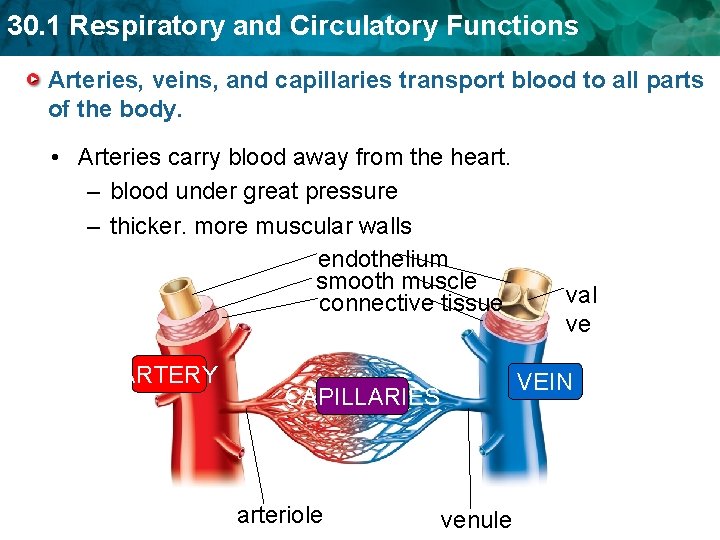
30. 1 Respiratory and Circulatory Functions Arteries, veins, and capillaries transport blood to all parts of the body. • Arteries carry blood away from the heart. – blood under great pressure – thicker, more muscular walls endothelium smooth muscle connective tissue ARTERY VEIN CAPILLARIES arteriole val ve venule
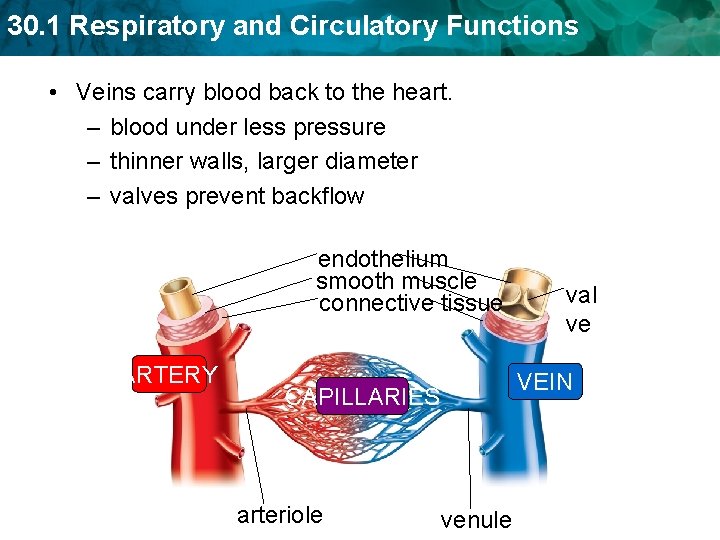
30. 1 Respiratory and Circulatory Functions • Veins carry blood back to the heart. – blood under less pressure – thinner walls, larger diameter – valves prevent backflow endothelium smooth muscle connective tissue ARTERY VEIN CAPILLARIES arteriole val ve venule
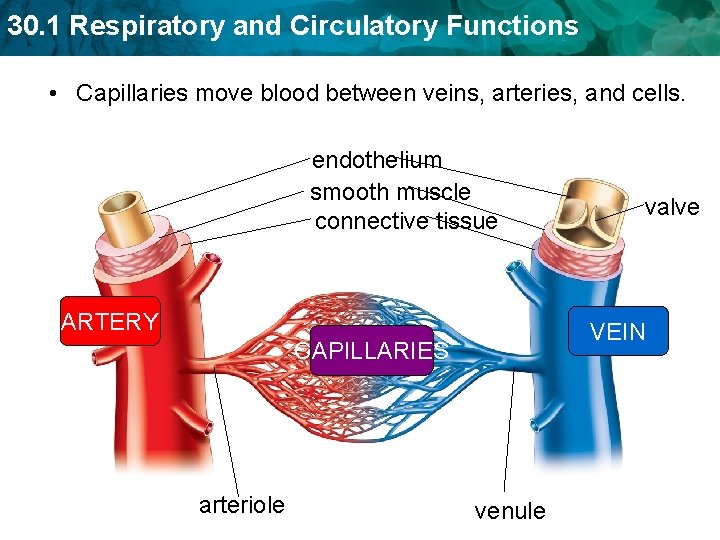
30. 1 Respiratory and Circulatory Functions • Capillaries move blood between veins, arteries, and cells. endothelium smooth muscle connective tissue ARTERY VEIN CAPILLARIES arteriole valve venule
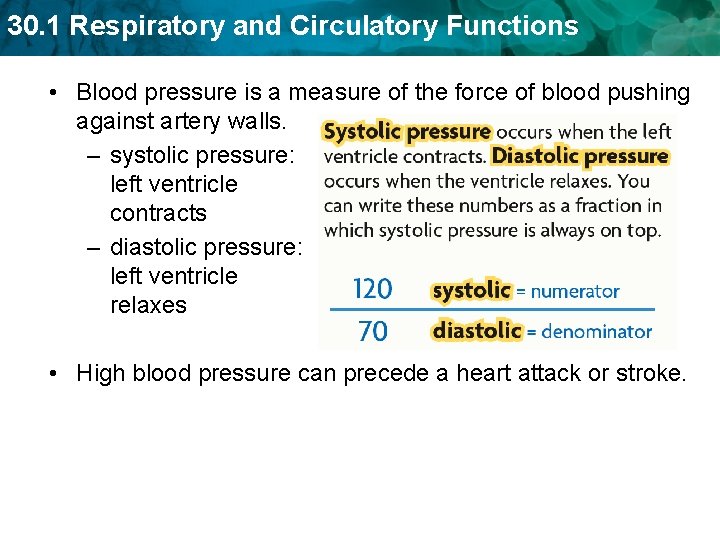
30. 1 Respiratory and Circulatory Functions • Blood pressure is a measure of the force of blood pushing against artery walls. – systolic pressure: left ventricle contracts – diastolic pressure: left ventricle relaxes • High blood pressure can precede a heart attack or stroke.
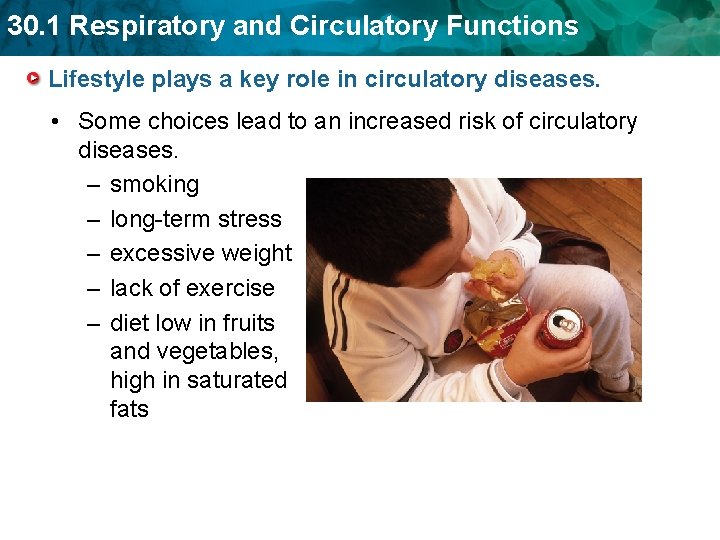
30. 1 Respiratory and Circulatory Functions Lifestyle plays a key role in circulatory diseases. • Some choices lead to an increased risk of circulatory diseases. – smoking – long-term stress – excessive weight – lack of exercise – diet low in fruits and vegetables, high in saturated fats
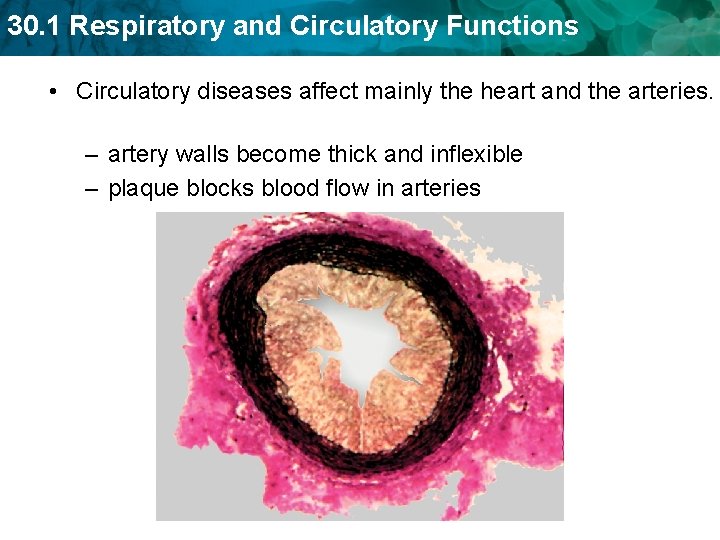
30. 1 Respiratory and Circulatory Functions • Circulatory diseases affect mainly the heart and the arteries. – artery walls become thick and inflexible – plaque blocks blood flow in arteries
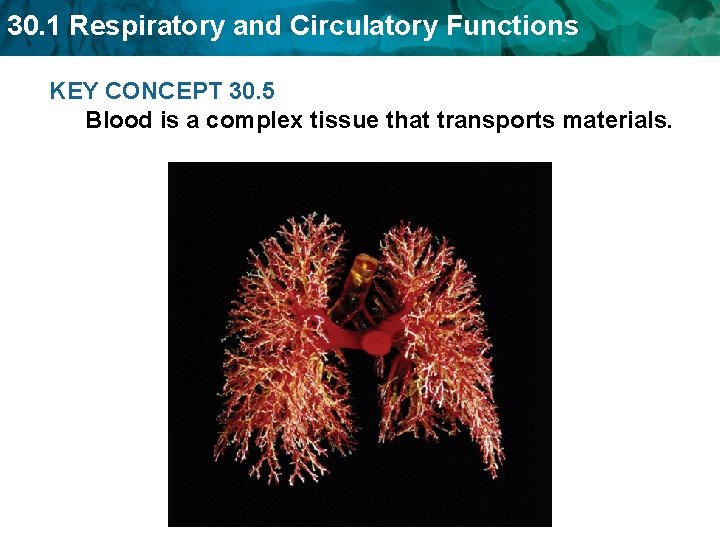
30. 1 Respiratory and Circulatory Functions KEY CONCEPT 30. 5 Blood is a complex tissue that transports materials.
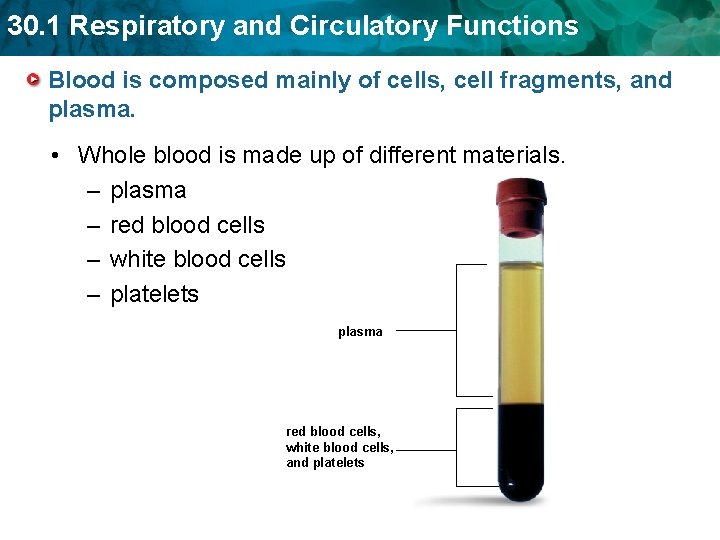
30. 1 Respiratory and Circulatory Functions Blood is composed mainly of cells, cell fragments, and plasma. • Whole blood is made up of different materials. – plasma – red blood cells – white blood cells – platelets plasma red blood cells, white blood cells, and platelets
30. 1 Respiratory and Circulatory Functions • Plasma is a key factor in maintaining homeostasis. – molecules diffuse into and out of plasma – contains proteins that stabilize blood volume – contains clotting factors – contains immune proteins
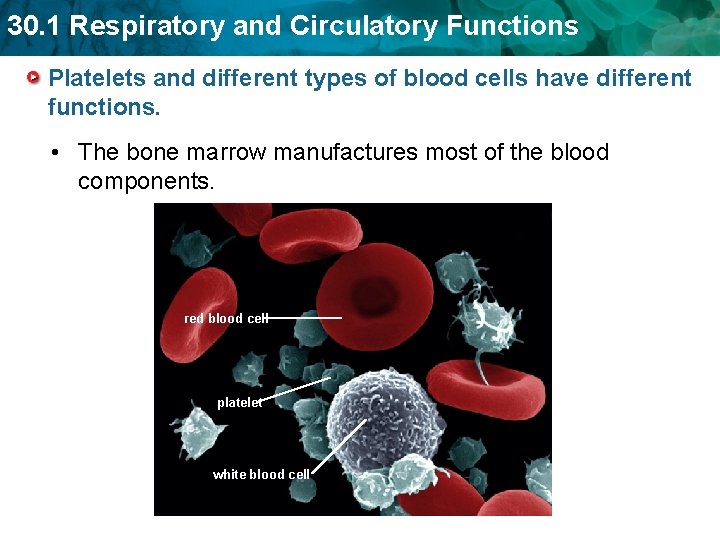
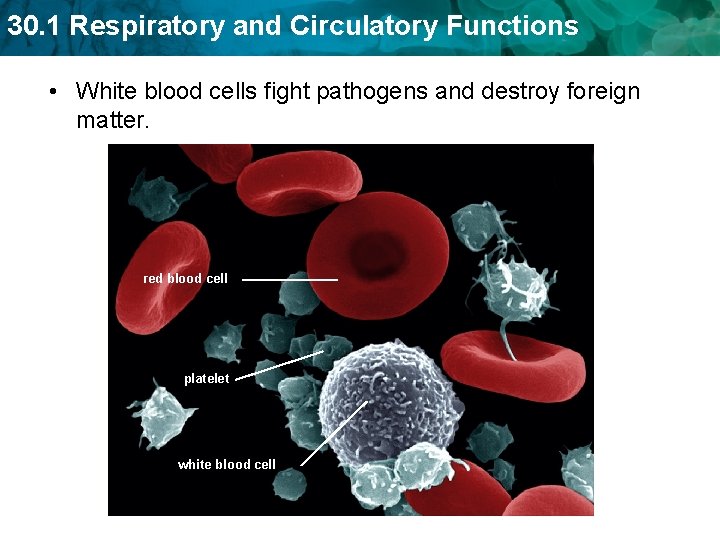
30. 1 Respiratory and Circulatory Functions Platelets and different types of blood cells have different functions. • The bone marrow manufactures most of the blood components. red blood cell platelet white blood cell
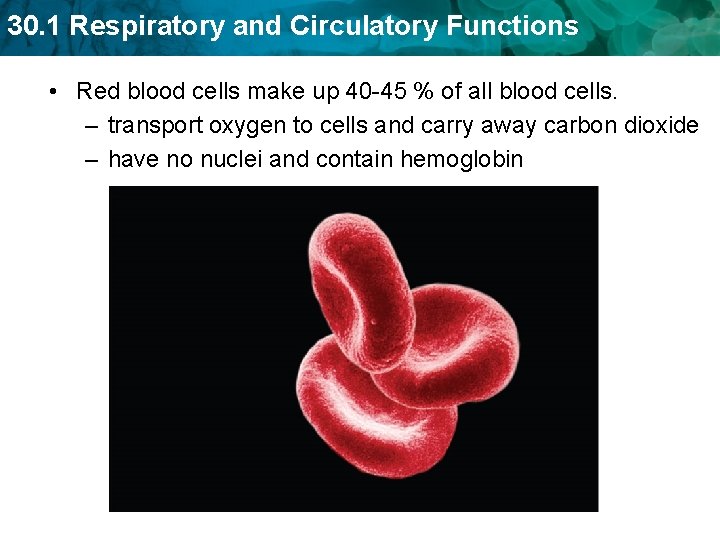
30. 1 Respiratory and Circulatory Functions • Red blood cells make up 40 -45 % of all blood cells. – transport oxygen to cells and carry away carbon dioxide – have no nuclei and contain hemoglobin
30. 1 Respiratory and Circulatory Functions • White blood cells fight pathogens and destroy foreign matter. red blood cell platelet white blood cell
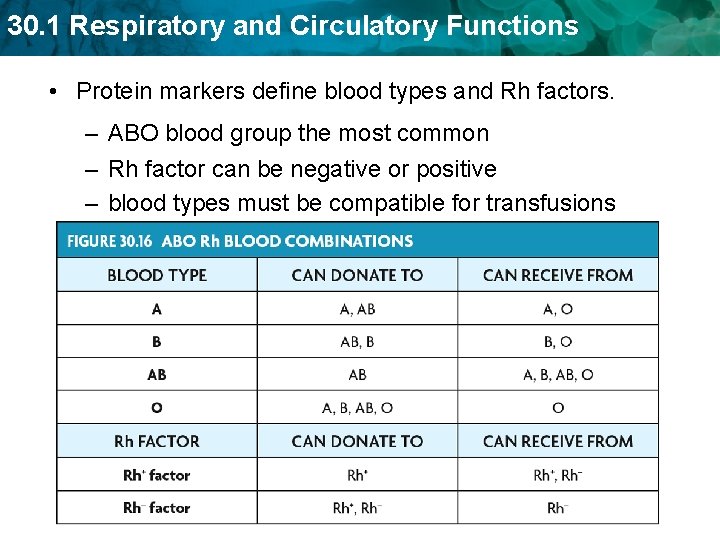
30. 1 Respiratory and Circulatory Functions • Protein markers define blood types and Rh factors. – ABO blood group the most common – Rh factor can be negative or positive – blood types must be compatible for transfusions
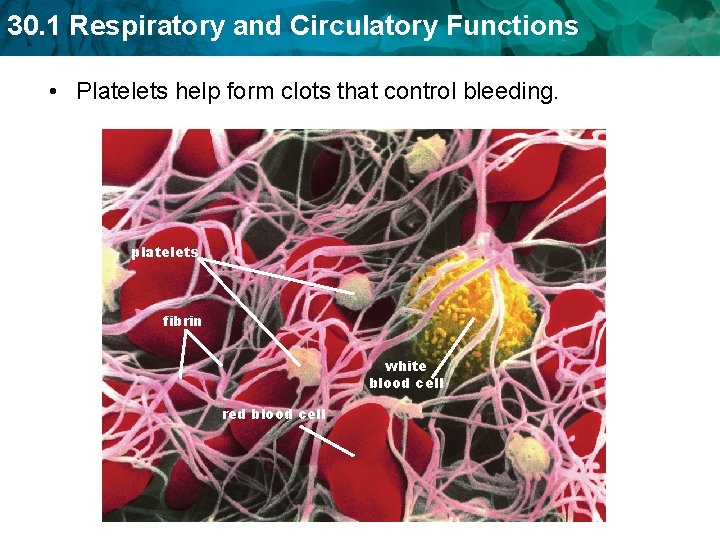
30. 1 Respiratory and Circulatory Functions • Platelets help form clots that control bleeding. platelets fibrin white blood cell red blood cell
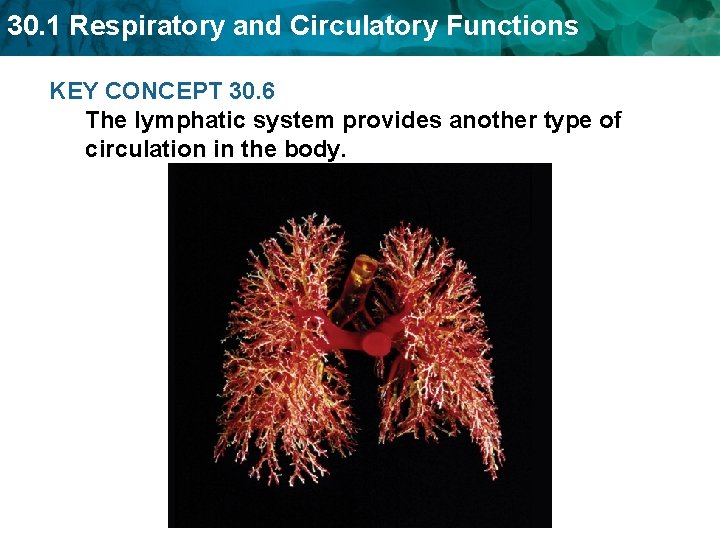
30. 1 Respiratory and Circulatory Functions KEY CONCEPT 30. 6 The lymphatic system provides another type of circulation in the body.
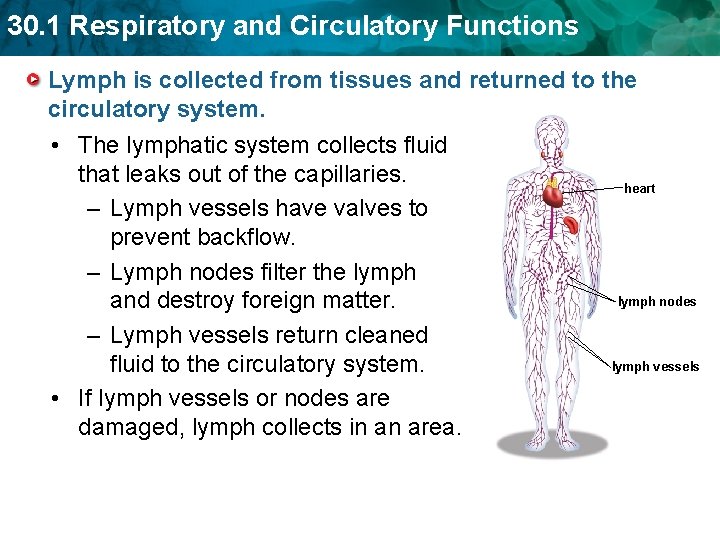
30. 1 Respiratory and Circulatory Functions Lymph is collected from tissues and returned to the circulatory system. • The lymphatic system collects fluid that leaks out of the capillaries. heart – Lymph vessels have valves to prevent backflow. – Lymph nodes filter the lymph nodes and destroy foreign matter. – Lymph vessels return cleaned lymph vessels fluid to the circulatory system. • If lymph vessels or nodes are damaged, lymph collects in an area.
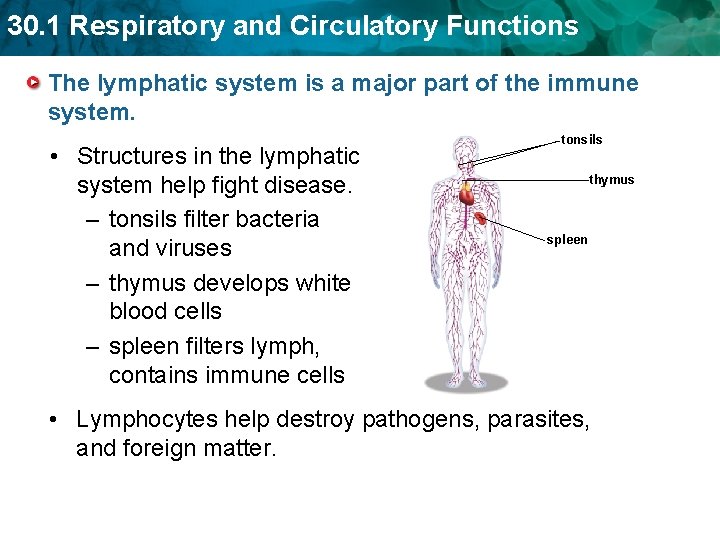
30. 1 Respiratory and Circulatory Functions The lymphatic system is a major part of the immune system. • Structures in the lymphatic system help fight disease. – tonsils filter bacteria and viruses – thymus develops white blood cells – spleen filters lymph, contains immune cells tonsils thymus spleen • Lymphocytes help destroy pathogens, parasites, and foreign matter.