
3 Types of Muscle Tissue Properties of Muscle



- Slides: 27
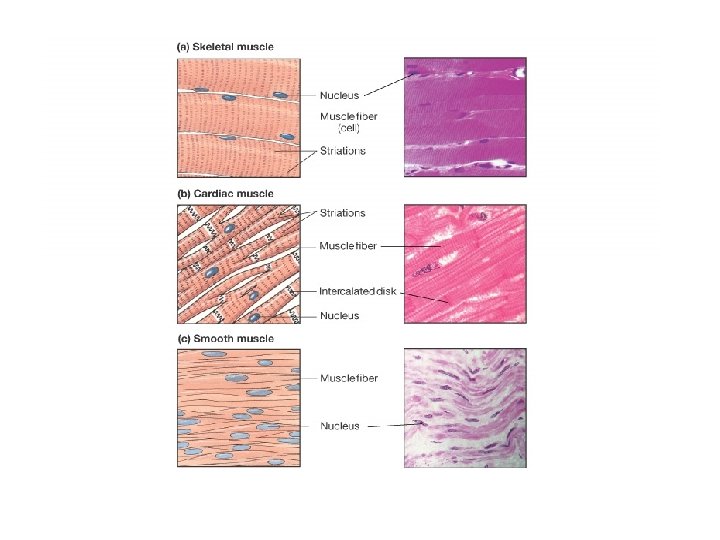
3 Types of Muscle Tissue Properties of Muscle Tissue Skeletal – attached to bone • Contractility Cardiac – the heart • Excitability • Extensibility Smooth – internal organs blood vessels • Elasticity
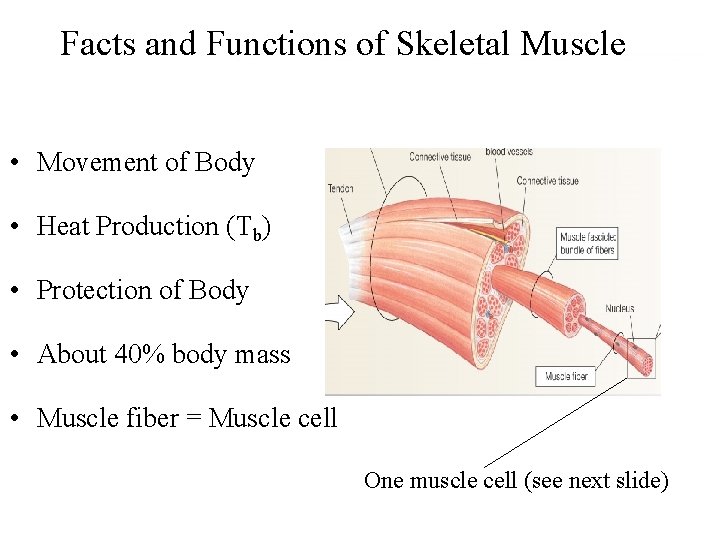
Facts and Functions of Skeletal Muscle • Movement of Body • Heat Production (Tb) • Protection of Body • About 40% body mass • Muscle fiber = Muscle cell One muscle cell (see next slide)
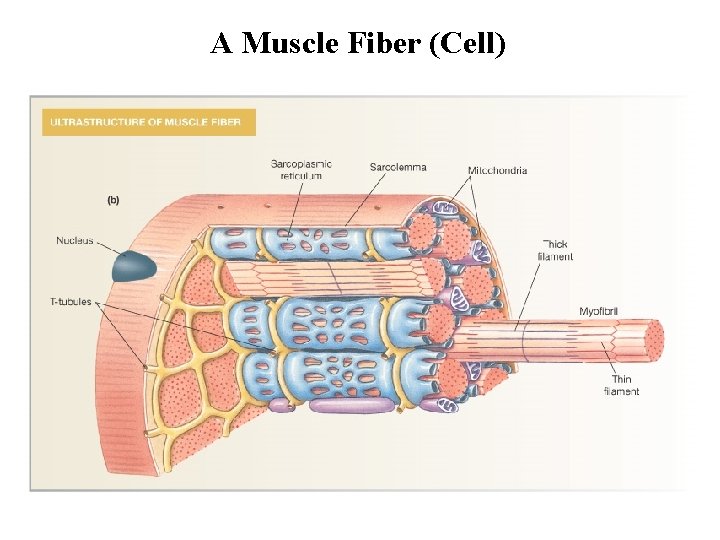
A Muscle Fiber (Cell)
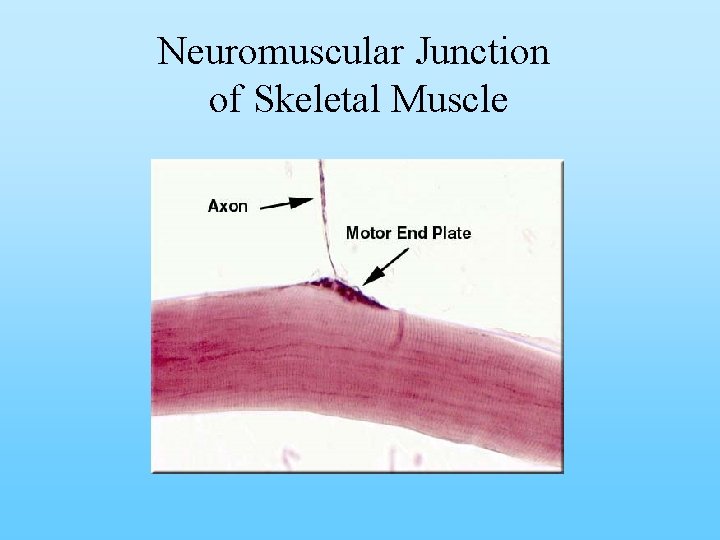
Neuromuscular Junction of Skeletal Muscle
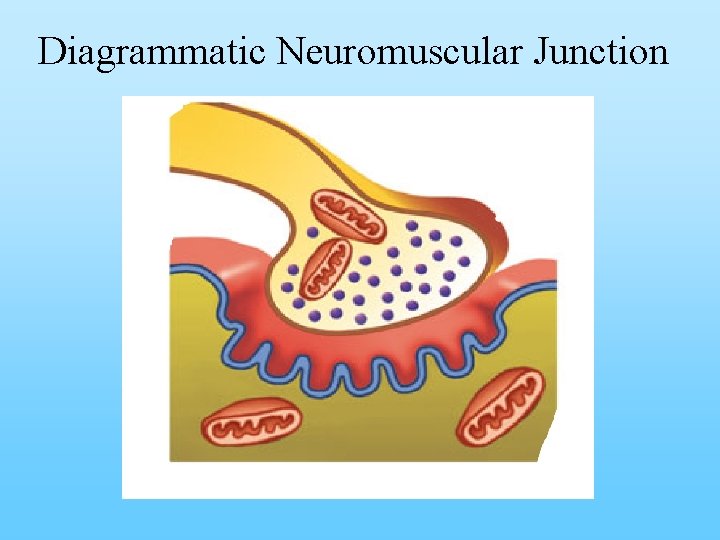
Diagrammatic Neuromuscular Junction
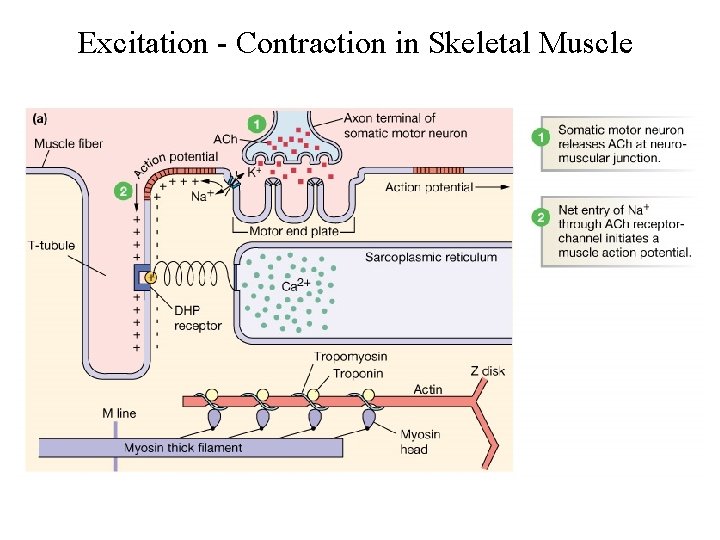
Excitation - Contraction in Skeletal Muscle
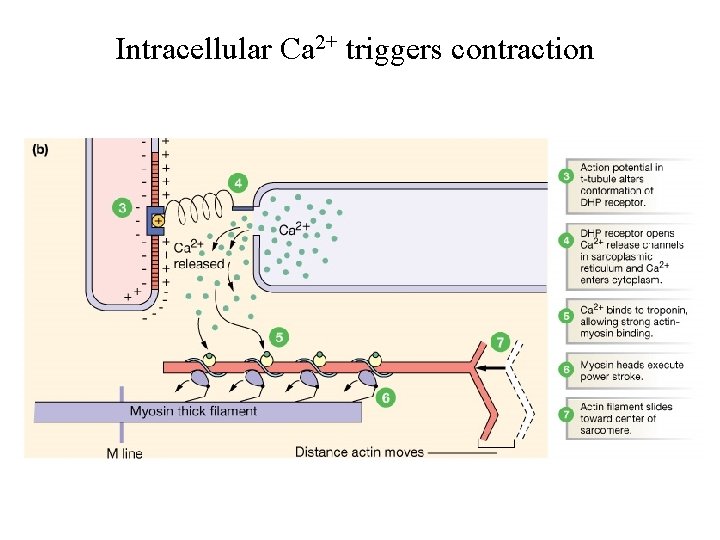
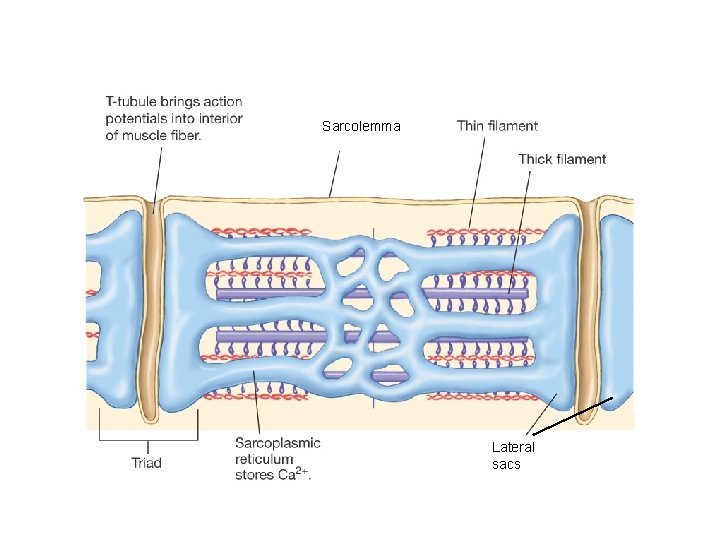
Intracellular Ca 2+ triggers contraction
Sarcolemma Lateral sacs
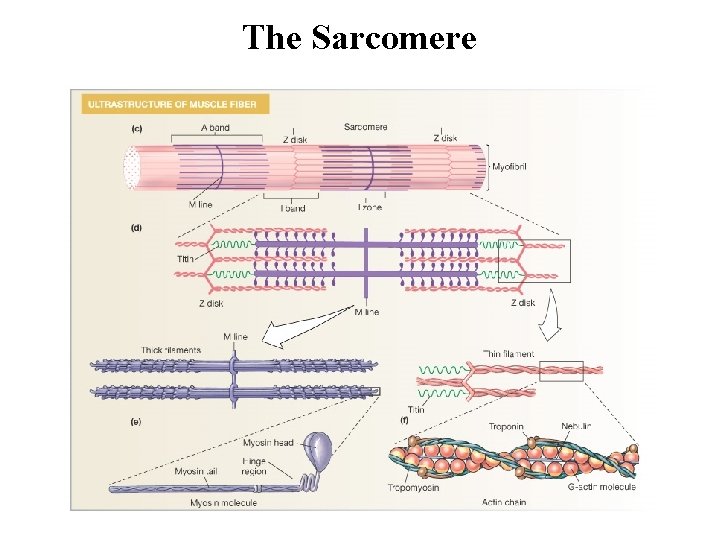
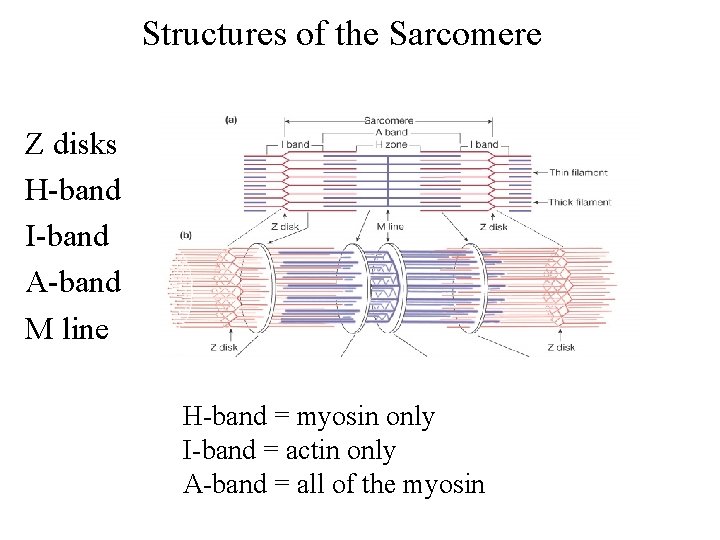
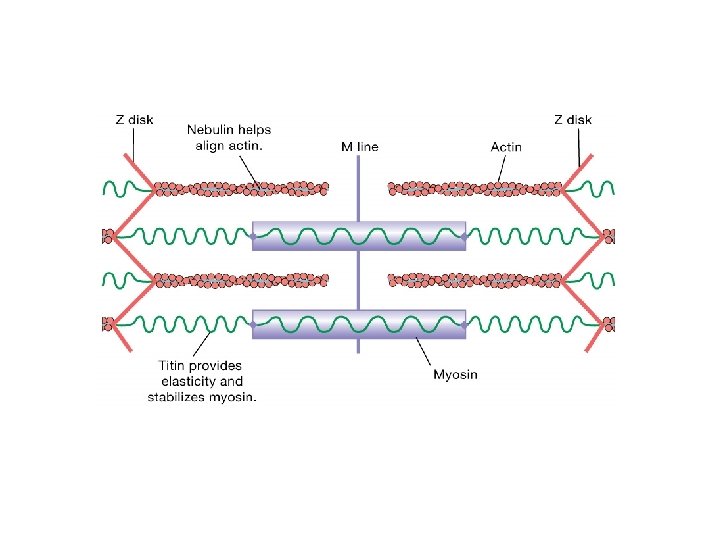
The Sarcomere
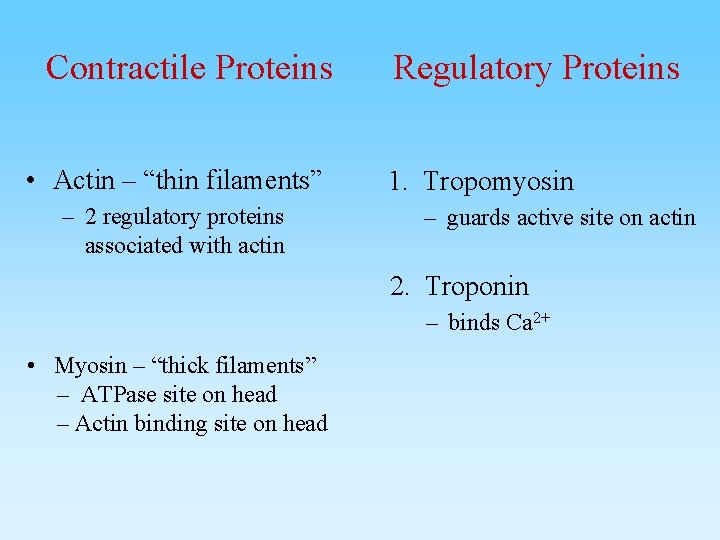
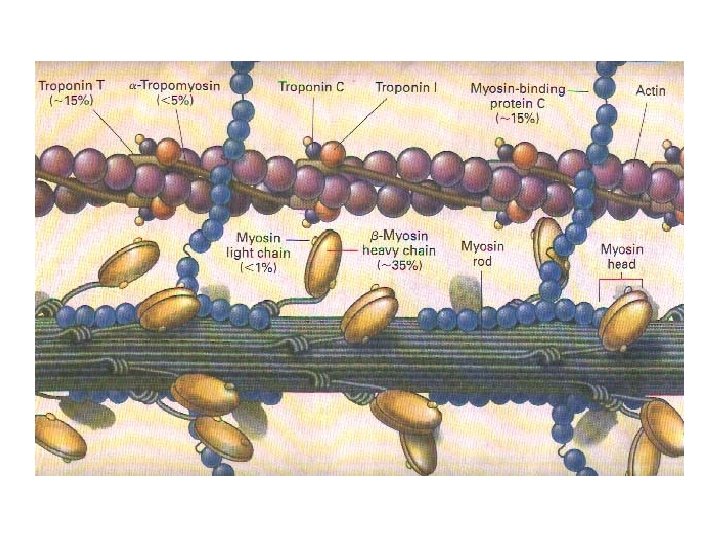
Contractile Proteins • Actin – “thin filaments” – 2 regulatory proteins associated with actin Regulatory Proteins 1. Tropomyosin – guards active site on actin 2. Troponin – binds Ca 2+ • Myosin – “thick filaments” – ATPase site on head – Actin binding site on head
Structures of the Sarcomere Z disks H-band I-band A-band M line H-band = myosin only I-band = actin only A-band = all of the myosin
Muscle Relaxation
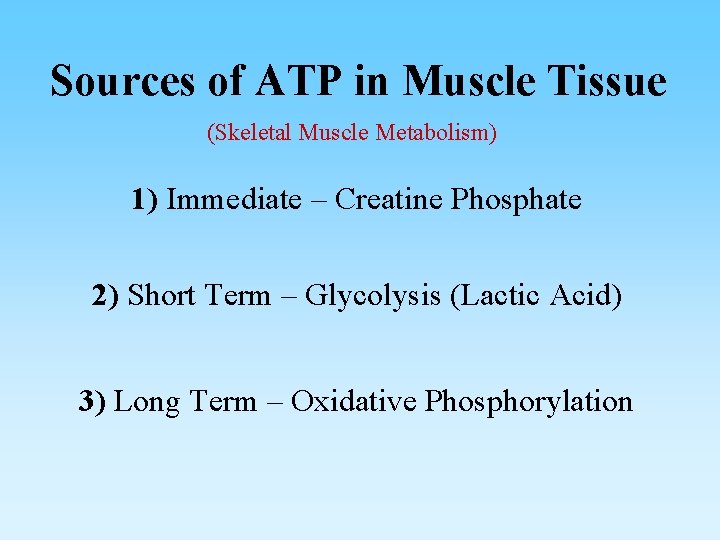
Sources of ATP in Muscle Tissue (Skeletal Muscle Metabolism) 1) Immediate – Creatine Phosphate 2) Short Term – Glycolysis (Lactic Acid) 3) Long Term – Oxidative Phosphorylation
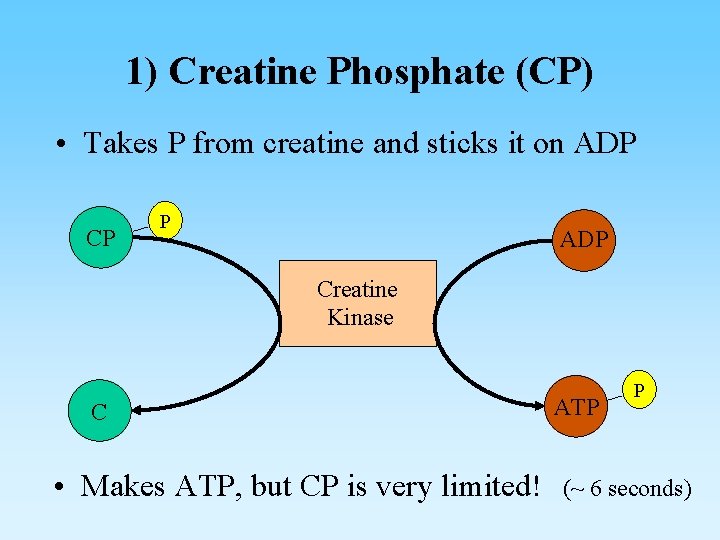
1) Creatine Phosphate (CP) • Takes P from creatine and sticks it on ADP CP P ADP Creatine Kinase C • Makes ATP, but CP is very limited! ATP P (~ 6 seconds)
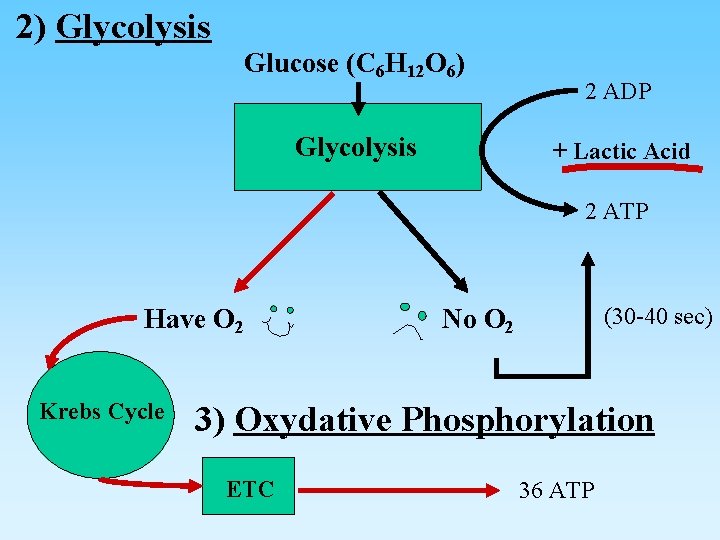
2) Glycolysis Glucose (C 6 H 12 O 6) Glycolysis 2 ADP + Lactic Acid 2 ATP Have O 2 Krebs Cycle (30 -40 sec) No O 2 3) Oxydative Phosphorylation ETC 36 ATP
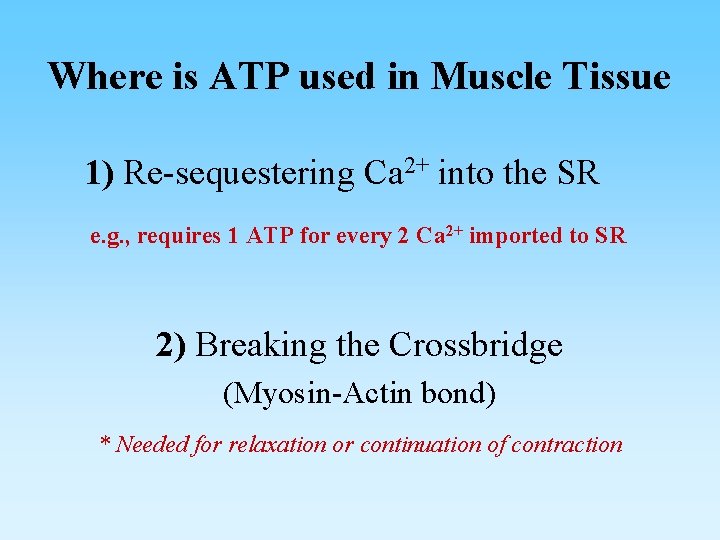
Where is ATP used in Muscle Tissue 1) Re-sequestering Ca 2+ into the SR e. g. , requires 1 ATP for every 2 Ca 2+ imported to SR 2) Breaking the Crossbridge (Myosin-Actin bond) * Needed for relaxation or continuation of contraction
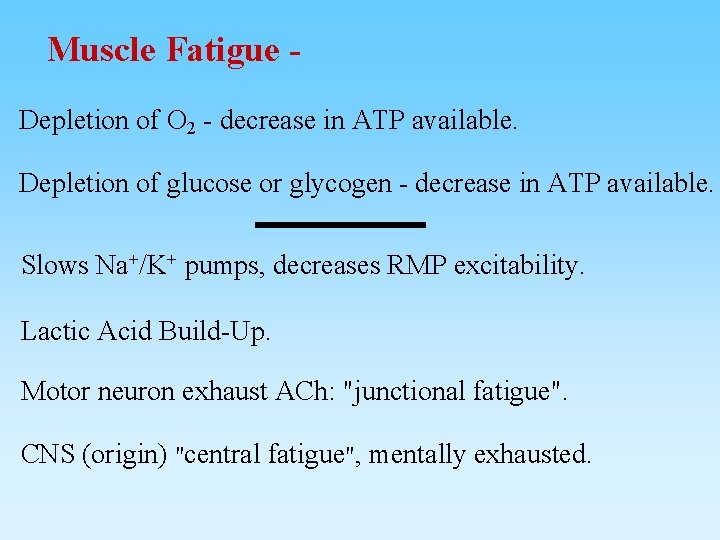
Muscle Fatigue Depletion of O 2 - decrease in ATP available. Depletion of glucose or glycogen - decrease in ATP available. Slows Na+/K+ pumps, decreases RMP excitability. Lactic Acid Build-Up. Motor neuron exhaust ACh: "junctional fatigue". CNS (origin) "central fatigue", mentally exhausted.
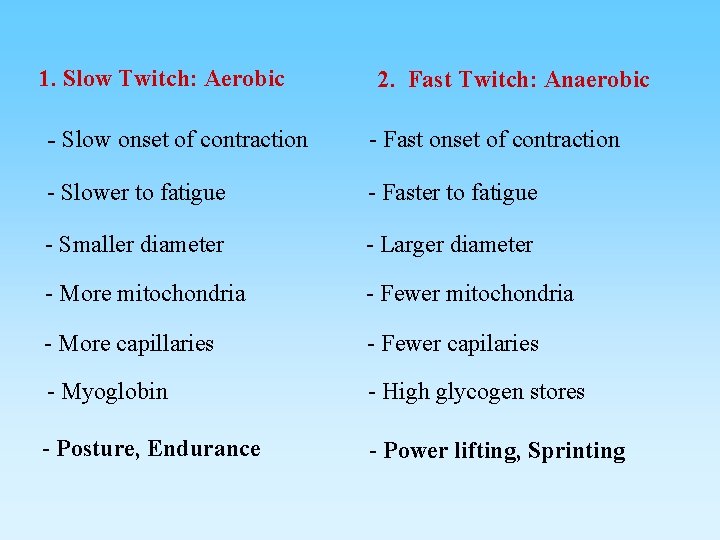
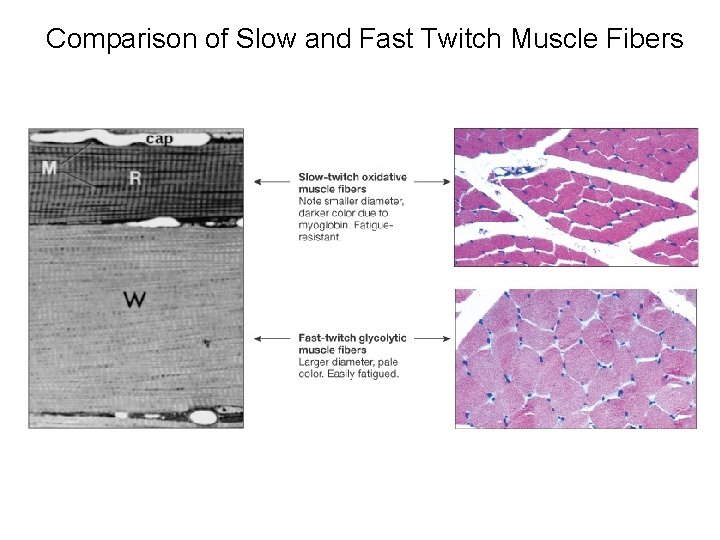
1. Slow Twitch: Aerobic 2. Fast Twitch: Anaerobic - Slow onset of contraction - Fast onset of contraction - Slower to fatigue - Faster to fatigue - Smaller diameter - Larger diameter - More mitochondria - Fewer mitochondria - More capillaries - Fewer capilaries - Myoglobin - High glycogen stores - Posture, Endurance - Power lifting, Sprinting
Comparison of Slow and Fast Twitch Muscle Fibers
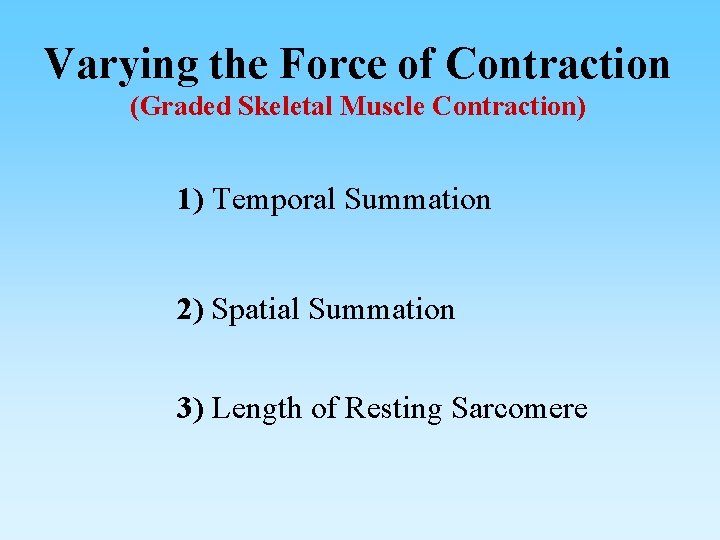
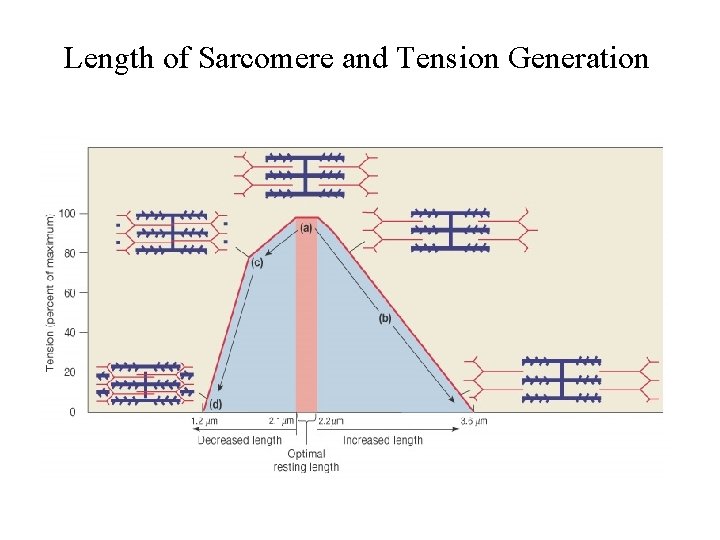
Varying the Force of Contraction (Graded Skeletal Muscle Contraction) 1) Temporal Summation 2) Spatial Summation 3) Length of Resting Sarcomere
Length of Sarcomere and Tension Generation