
3 Types of Chemical Bonds Ionic Bonds Metallic
3 Types of Chemical Bonds Ionic Bonds Metallic Bonds Covalent Bonds
The Ionic Bond
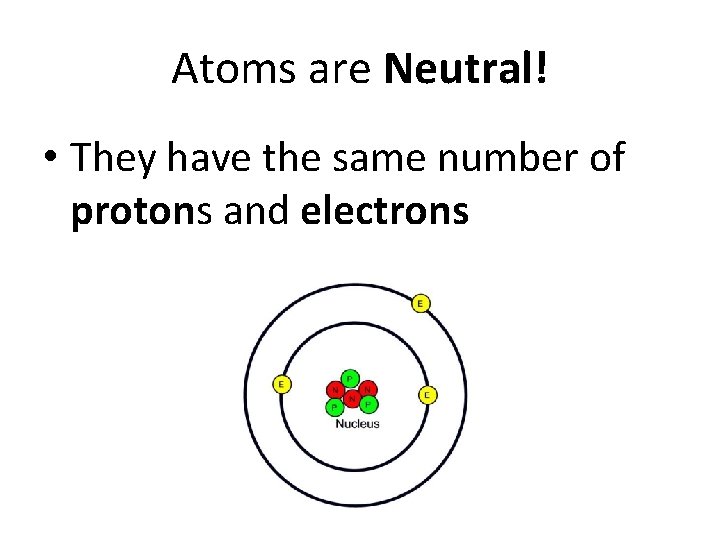
Atoms are Neutral! • They have the same number of protons and electrons
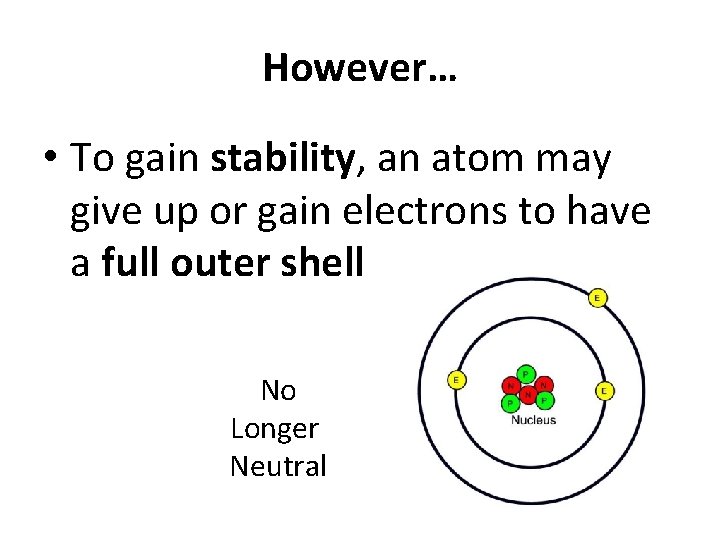
However… • To gain stability, an atom may give up or gain electrons to have a full outer shell No Longer Neutral
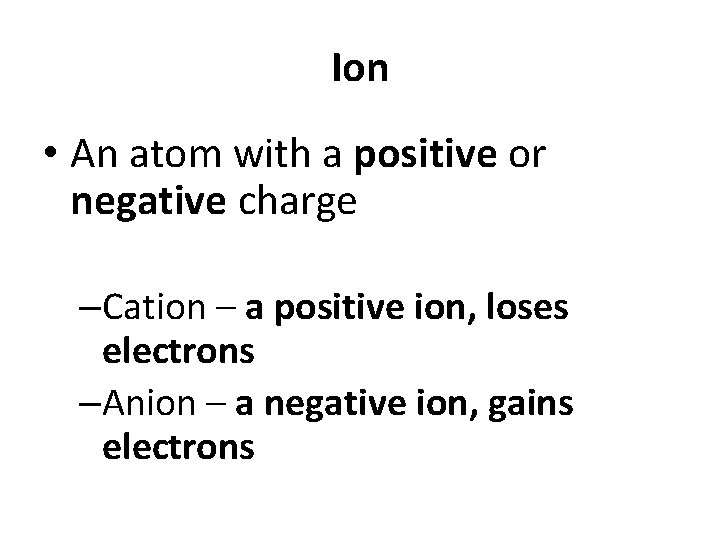
Ion • An atom with a positive or negative charge –Cation – a positive ion, loses electrons –Anion – a negative ion, gains electrons
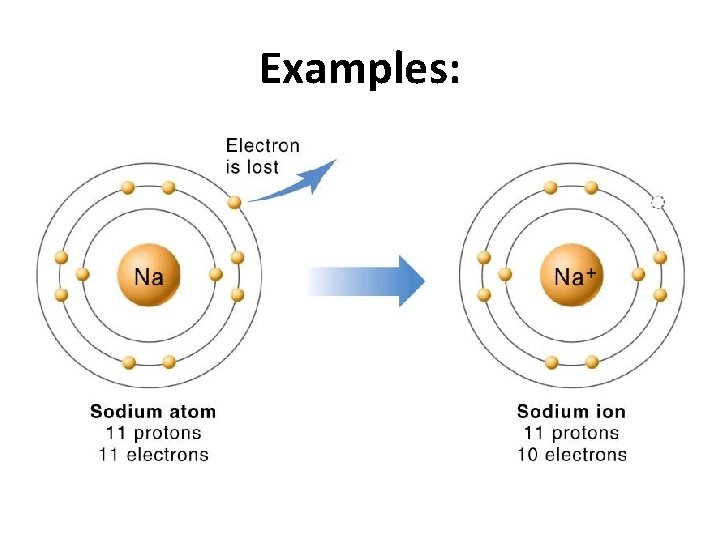
Examples:
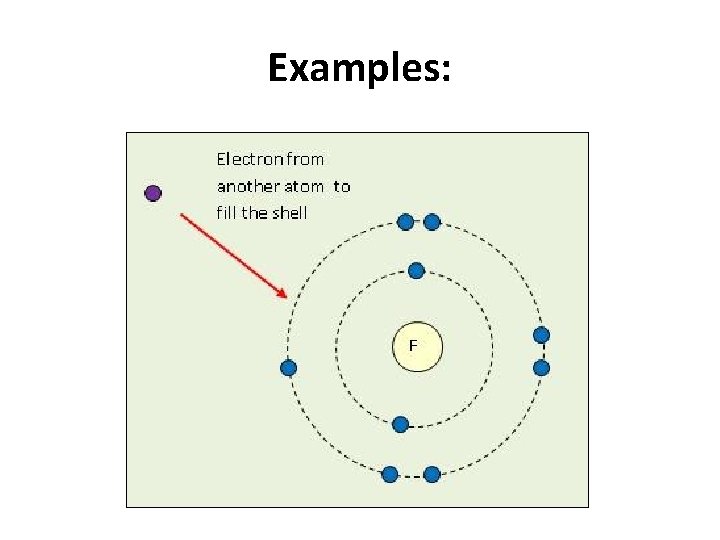
Examples:
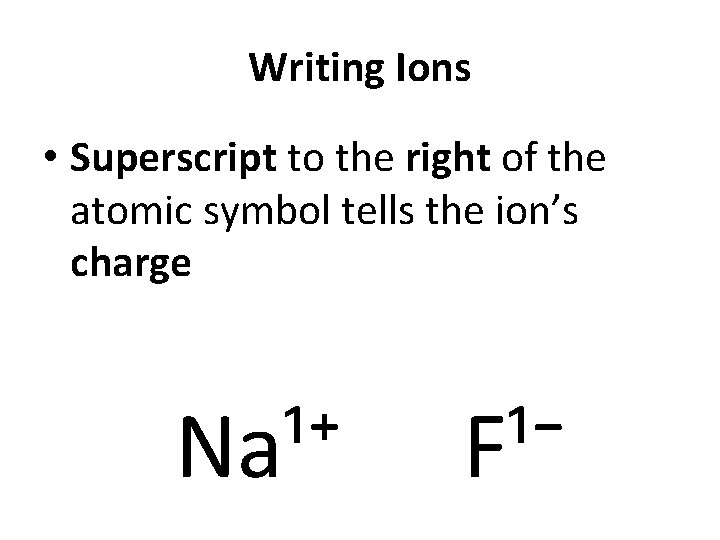
Writing Ions • Superscript to the right of the atomic symbol tells the ion’s charge Na¹⁺ F¹⁻
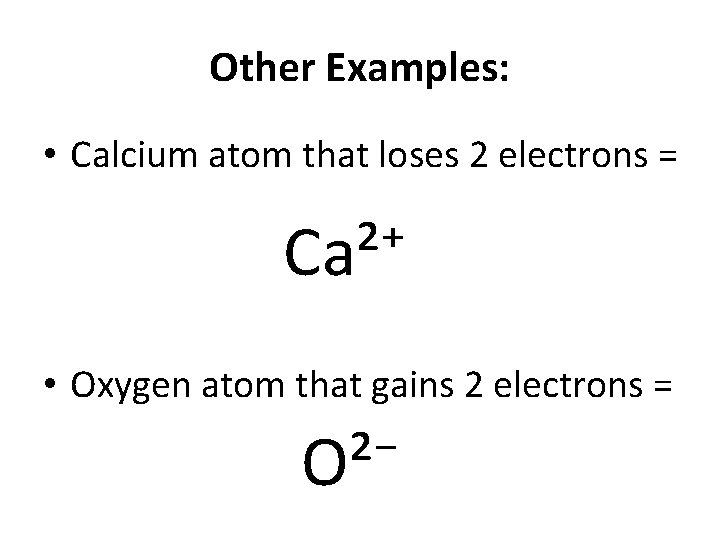
Other Examples: • Calcium atom that loses 2 electrons = Ca²⁺ • Oxygen atom that gains 2 electrons = O²⁻
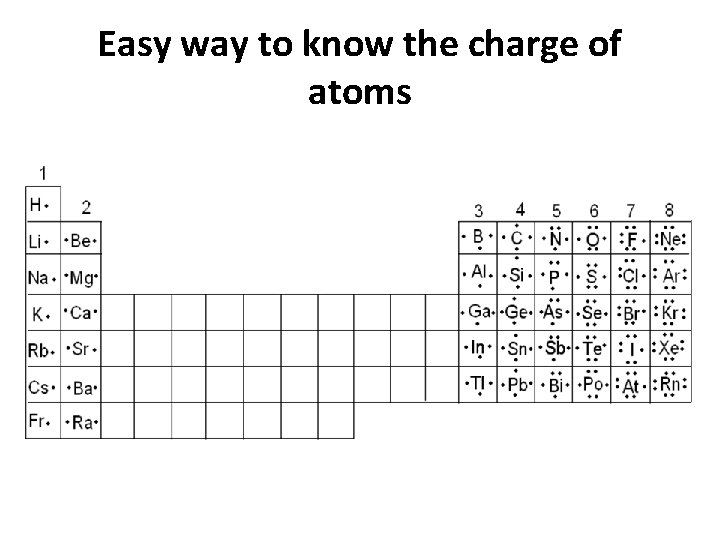
Easy way to know the charge of atoms
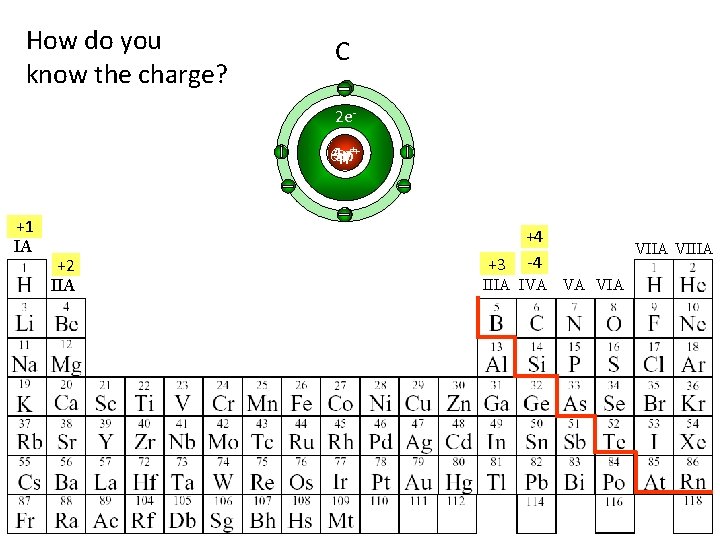
How do you know the charge? Be Li B C 2 e 3 p 4 p 6 p 5 p+++ +1 IA +2 IIA +3 +4 -4 IIIA IVA VA VIIA VIIIA
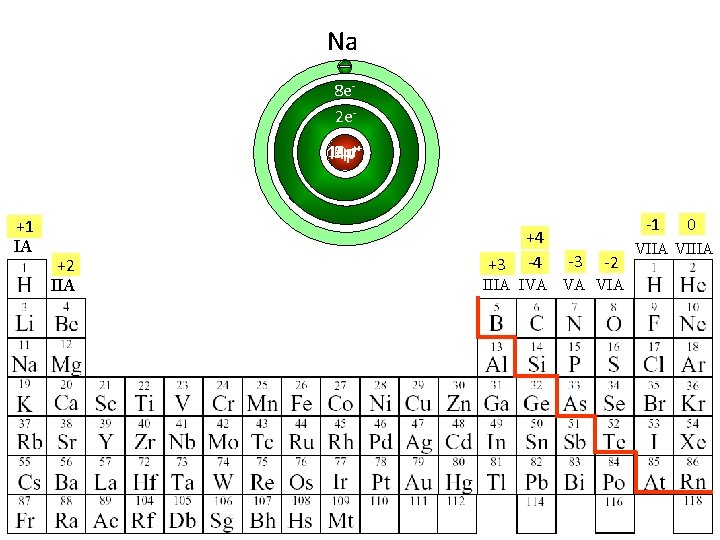
Ne Na O N F 8 e 2 e 8 p 10 p 7 p++ 9 p 11 p +1 IA +2 IIA +3 +4 -4 -1 -3 -2 IIIA IVA VA VIA 0 VIIA VIIIA
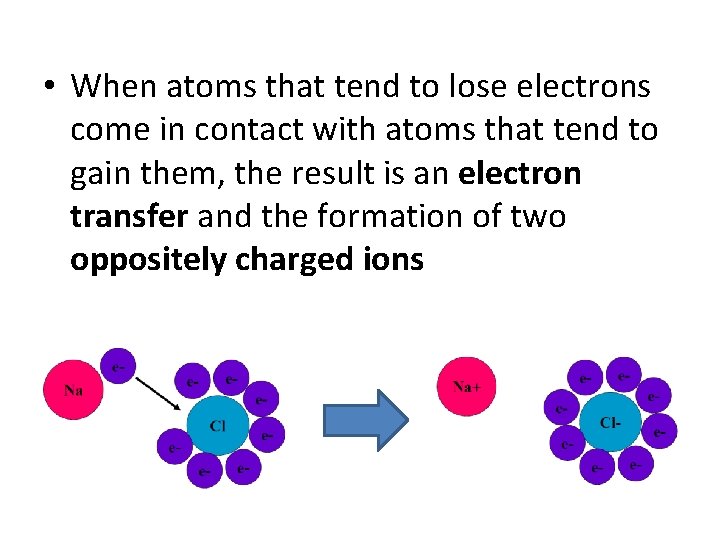
• When atoms that tend to lose electrons come in contact with atoms that tend to gain them, the result is an electron transfer and the formation of two oppositely charged ions
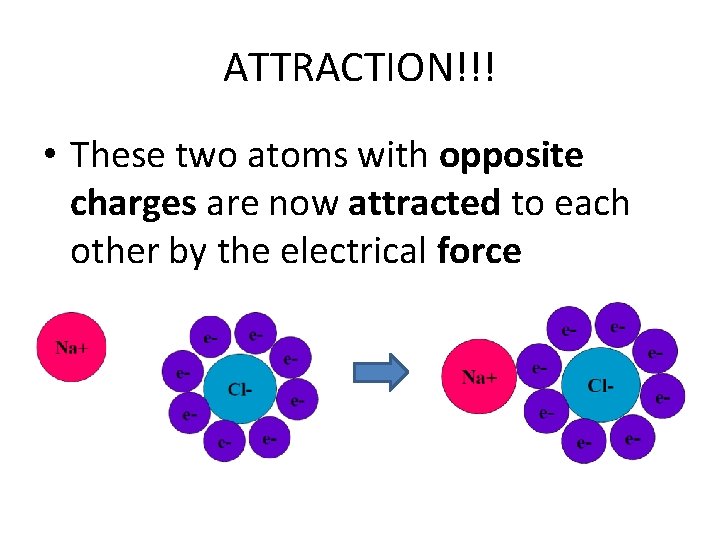
ATTRACTION!!! • These two atoms with opposite charges are now attracted to each other by the electrical force
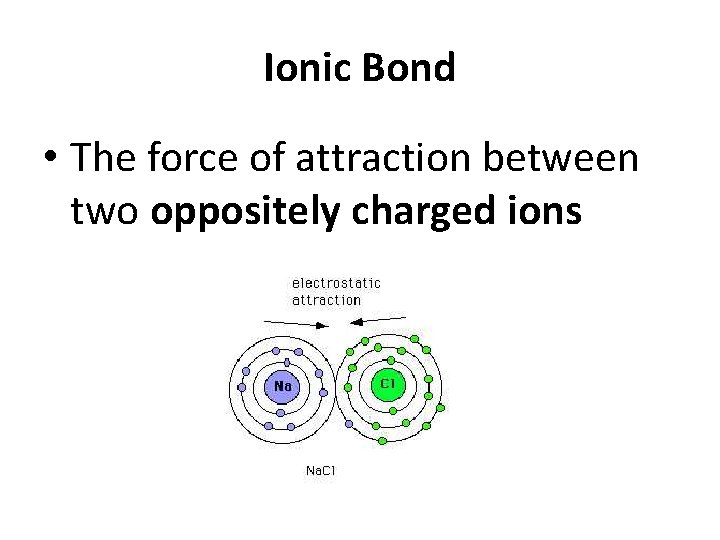
Ionic Bond • The force of attraction between two oppositely charged ions
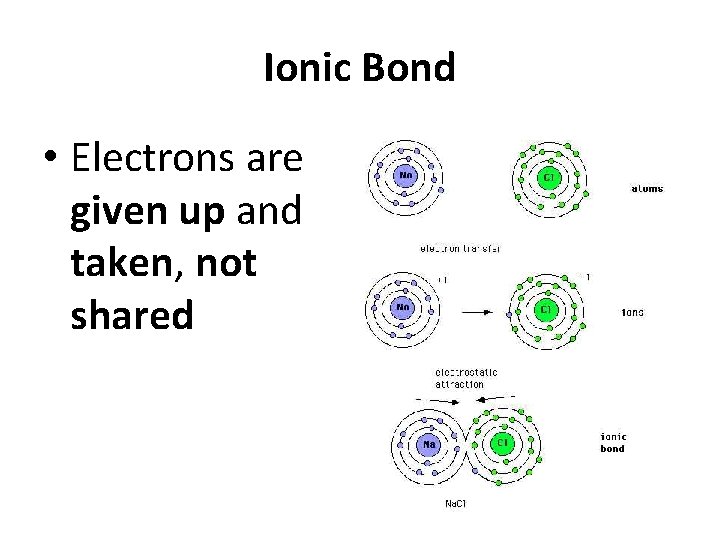
Ionic Bond • Electrons are given up and taken, not shared
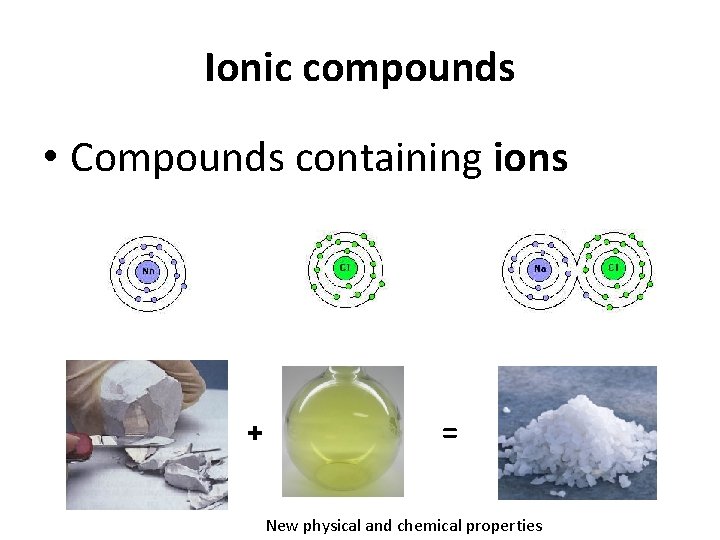
Ionic compounds • Compounds containing ions + = New physical and chemical properties
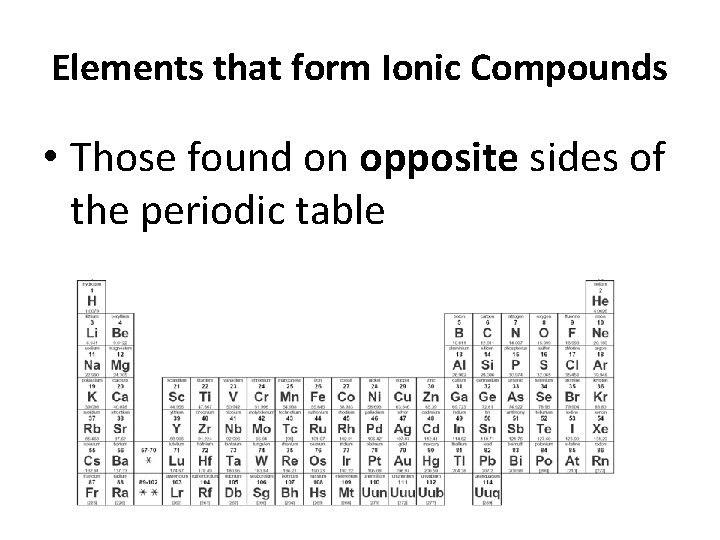
Elements that form Ionic Compounds • Those found on opposite sides of the periodic table
Rules for Naming Simple Ions 1. CATIONS – Borrow names from the element • EX: K+ = Potassium Ion • EX: Zn 2+= Zinc Ion – When an ELEMENT forms two or more ions, roman numeral indicate the charge • EX: Cu+ = Copper (I) ion • EX: Cu 2+ = Copper (II) ion
Rules for Naming Simple Ions 2. ANIONS – Name of Anion is also formed form the name of the elements name, but it ends with “IDE”!! • EX: Cl- Chloride Ion • EX: O 2 - Oxide Ion • EX: P 3 - Phosphide Ion
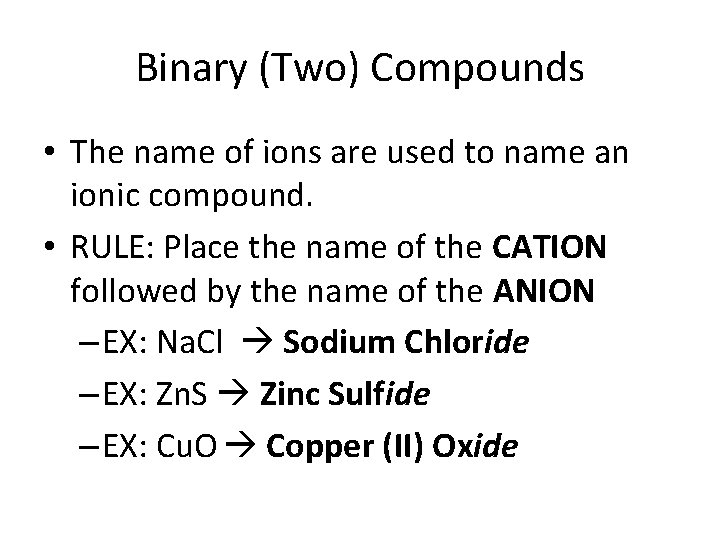
Binary (Two) Compounds • The name of ions are used to name an ionic compound. • RULE: Place the name of the CATION followed by the name of the ANION – EX: Na. Cl Sodium Chloride – EX: Zn. S Zinc Sulfide – EX: Cu. O Copper (II) Oxide
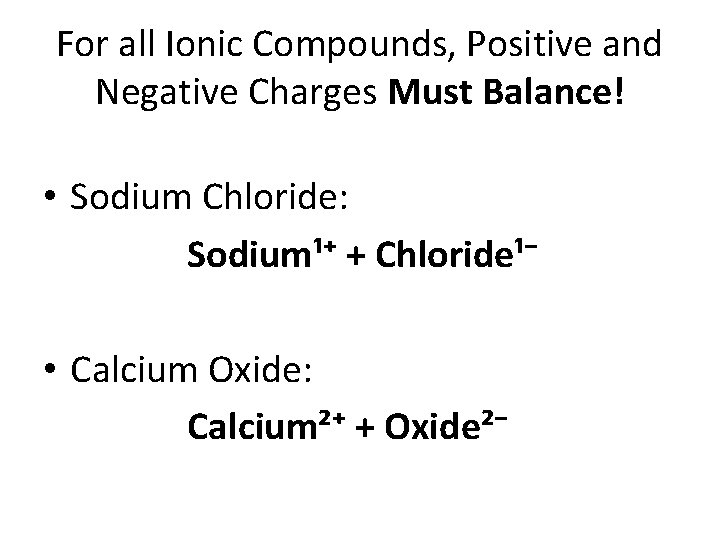
For all Ionic Compounds, Positive and Negative Charges Must Balance! • Sodium Chloride: Sodium¹⁺ + Chloride¹⁻ • Calcium Oxide: Calcium²⁺ + Oxide²⁻
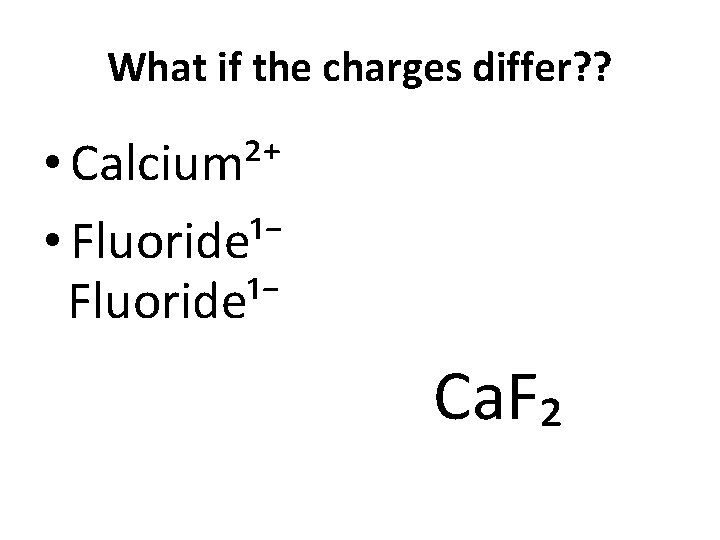
What if the charges differ? ? • Calcium²⁺ • Fluoride¹⁻ Ca. F₂
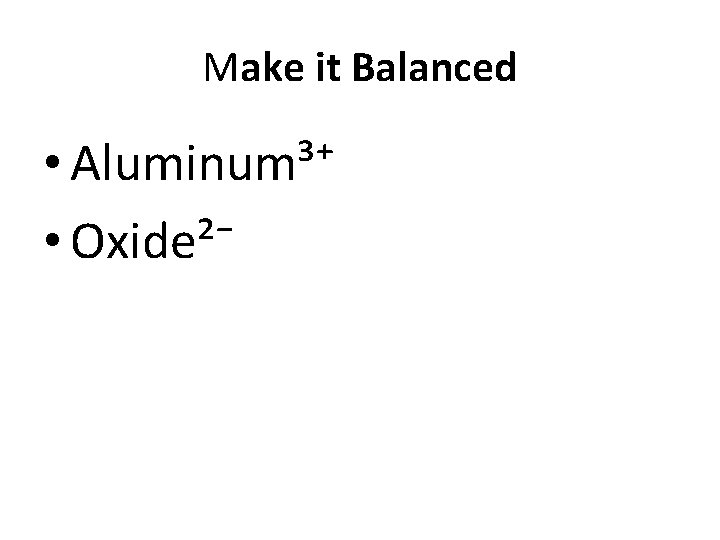
Make it Balanced • Aluminum³⁺ • Oxide²⁻
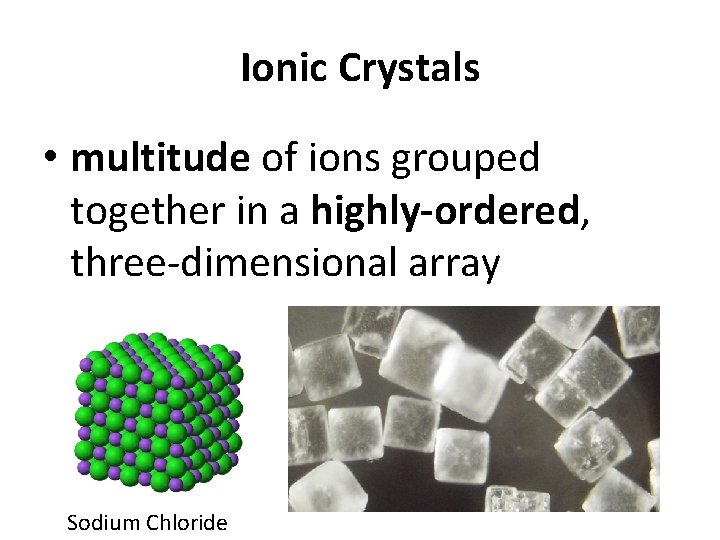
Ionic Crystals • multitude of ions grouped together in a highly-ordered, three-dimensional array Sodium Chloride
Worksheet Practice • Part 1: Write the charge of each ion and circle whether it is a cation or an anion • Aluminum’s charge _____ cation or anion • Lithium’s charge _____ cation or anion
Worksheet Practice • Part 2: Write out the names for the following ionic compounds. Remember cations keep their name, while anions change their suffix to “ide” • Sr. S ______________ • Ca. Cl₂ ______________
Worksheet Practice • Part 3: Write out the formulas for the following ionic compounds • Cesium bromide ________ • Barium oxide ________
- Slides: 28