
3 The Samuel Narratives 1 Sam 1 3
- Slides: 37
3. The Samuel Narratives: 1 Sam 1 -3 BOT 694: Exegesis of 1 & 2 Samuel
Introduction – Sam 1 -7 • “Every actor in the entire Samuel narrative, Hannah, Samuel, Saul, David, and the many lesser players, are all creatures of God’s sovereignty and agents of God’s intended future. These chapters disclose how it is that Yahweh reshapes Israel’s historical process for the sake of the new king and the coming kingdom. Interpretation that takes the whole narrative in context asks how this Samuel, who is a gift of God’s power, serves the coming kingdom. ” [Brueggemann, First and Second Samuel: Interpretation, 10]
The Birth of Samuel: 1. 1 -28 1. Form & Structure: • Type-scene = “The annunciation of birth of the hero to the barren wife (whose predicament may be highlighted, as in the case of Sarah and Hagar, Rachel and Leah, or here, by juxtaposition with a less-loved but fertile cowife. ” [Alter, The Art of Biblical Narrative, 82] • “At the same time, its location at the start of 1 Samuel gives its meaning added dimensions, and it is this sense of a beginning that will largely occupy our interest. . ” [Polzin, Samuel and the Deuteronomist, 18]
The Birth of Samuel: 1. 1 -28 • “The announcement of the birth of Samuel does not correspond to the pattern of birth announcements found else where. Birth announcements are found in Gen 16. 11 -12 (Ishmael), Gen 17. 15 -21, 21. 2 (Isaac), 1 Kgs 13. 2 (Josiah), Isa 7. 14 -17 (Immanuel), and 1 Chr 22. 9 -10 (Solomon). The form of these announcements includes: 1)declaration of the coming birth, 2)designation of his name, and 3)the role of the child in the future. Samuel’s birth follow a different pattern. Hannah is told by Eli that she would have a son, and Eli thus replaces the divine messenger. Hannah names the boy, for no name is given in the announcement. Nor is there a prediction of the child’s greatness. ” [Gnuse, The Dream Theophany of Samuel, 179 -180]
The Birth of Samuel: 1. 1 -28 • “. . . I suggest a close intentional correspondence between the first narrative of 1 Samuel 1 and the final narrative of 2 Samuel 24. In that latter narrative, we watch a transformation of David that corresponds, albeit in reverse order, to the transformation of Hannah in chapter 1. We have seen Hannah’s transformation from a voiceless woman of distress to a powerful voice of history-making. She is indeed a low one now exalted (2. 7). In 2 Samuel 24, however, David develops in the opposite direction. The narrative begins with the enigmatic ‘inciting’ of David by Yahweh (v. 1). . . As the narrative of 2 Samuel unfolds, however, ‘David’s heart smote him’ (v. 10). David confesses his sin in taking the census and admits that he has done foolishly. . . In the end, David is left with little royal power and no royal arrogance. This narrative surely has ‘a sense of an ending. ’” [Brueggemann, “ 1 Samuel 1 - A Sense of a Beginning, ” 231 -232
The Birth of Samuel: 1. 1 -28 2. Function: • “. . . the story in chapter 1 about how and why God agreed to give Hannah a son, Samuel, is an artistic prefiguring of the larger story in 1 Samuel about how and why God agreed to give Israel a king. ” [Polzin, 26] • “Yahweh stands at the center of each scene: 1. “The LORD has closed her womb” (vv. 5, 6) 2. “The God of Israel grant your petition” (v. 17) 3. “The LORD remembered her” (v. 19) 4. “The LORD has granted me my petition” (v. 27)” [Brueggemann, Interpretation, 15]
The Birth of Samuel: 1. 1 -28 1. 1 -2 Introduction: – “Elkanah is only mentioned in chaps. 1 -2 and in the geneological notices of 1 Chr 6: 12, 19 (EVV. 27, 34). His father’ name Jeroham is given in an alternate spelling in LXX (Jerahmeel). The name of Elkanah’s grandfather, Elihu, is spelled Eliel in 1 Chr 6. 19 (EVV. 34) and Eliab in 1 Chr 6. 12 (EVV. 27). . More important than these minor spelling variations is the fact that Samuel’s ancestor, Zuph, is identified as an Ephraimite in 1 Sam 1. 1 (ytrpa = Ephraimite also in Judg 12. 5 and 1 Kgs 11. 26). In 1 Chr, however, Samuel is classified as a Levite. ” [Klein, 5 -6] – “Lipinski has argued that the names of the two women signify their function in the story. Etymologically, Hannah means something like ‘charming, ’ reflecting the fact that she was the loved one; Peninnah may mean something like ‘prolific’ or ‘fecund, ’ corresponding to her role as the wife who bore children. ” [Klein, 6]
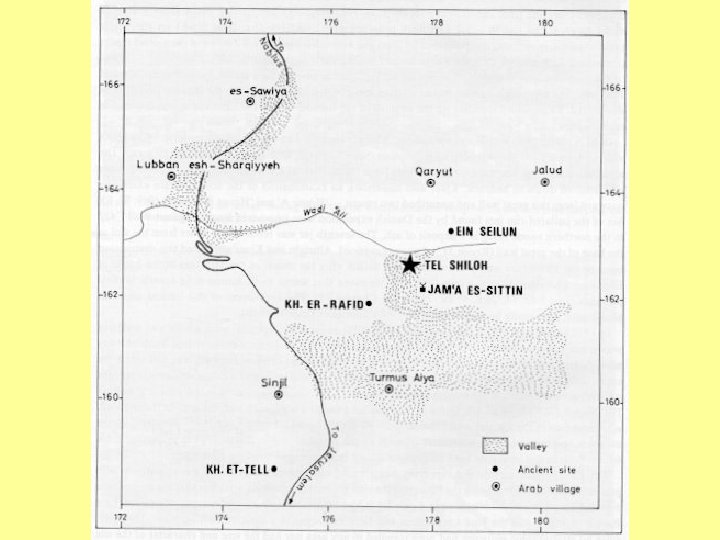
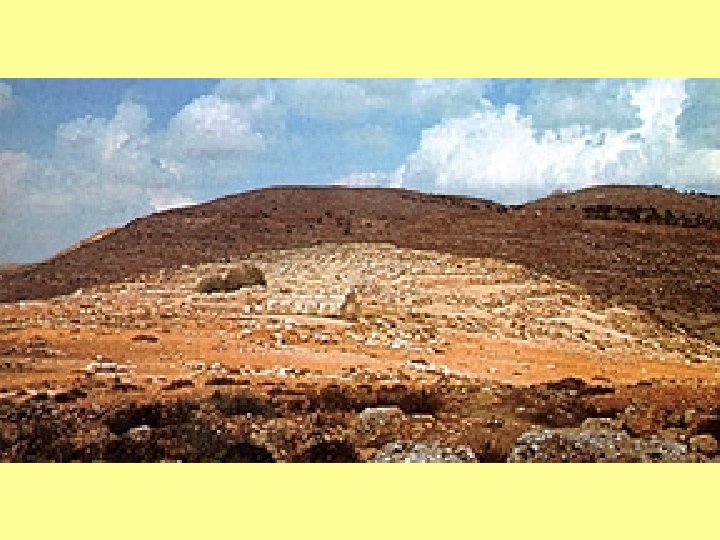
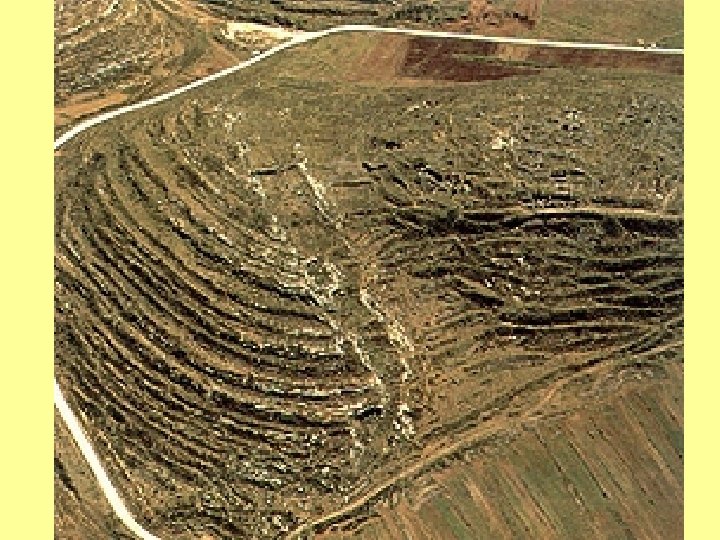
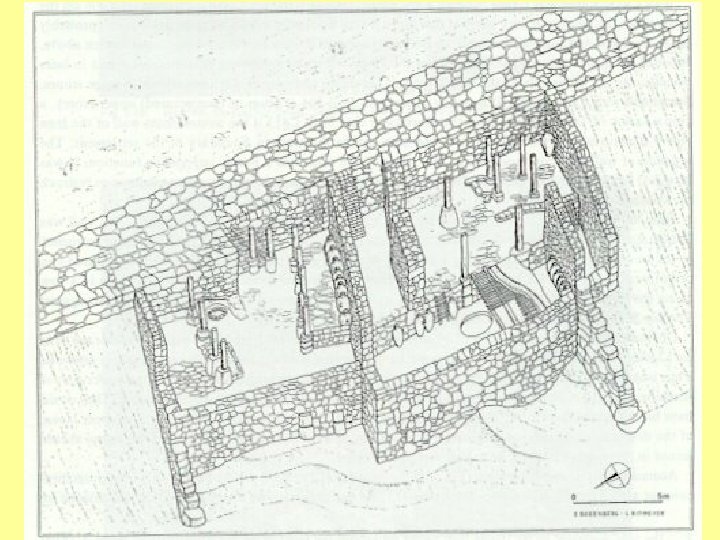
The Birth of Samuel: 1. 1 -28 1. 3 -8 Assertion of Barrenness: – Shiloh – Sanctuary Problem • “Possibly, 2 Sam 7. 6 -7 reflects an earlier Jerusalemite posture. It affirms that YHWH had always “roved in a tent and a tabernacle. . . among all the children if Israel, ” denying that YHWH had any permanent dwelling before he elected Zion (cf. Psalm 132). ” [Halpern, “Shiloh, ” ABD] • “Psalm 78. 60 speaks of the sanctuary of Shiloh as a ‘tent’ and ‘tabernacle, ’ and in view of its early date, confirms the assertion of Nathan’s oracle. ” [Cross, “The Priestly Tabernacle in the Light of Recent Research, ” Temples and High Places in Biblical Times, ed. A. Biran, 174]
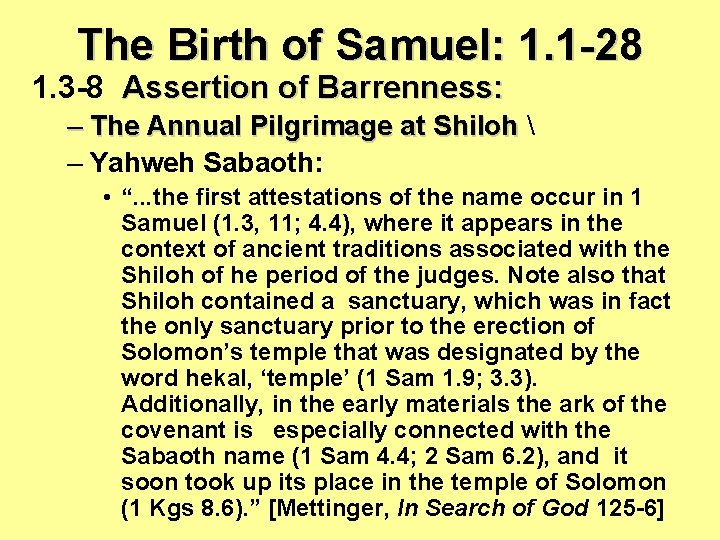
The Birth of Samuel: 1. 1 -28 1. 3 -8 Assertion of Barrenness: – The Annual Pilgrimage at Shiloh – Yahweh Sabaoth: • “. . . the first attestations of the name occur in 1 Samuel (1. 3, 11; 4. 4), where it appears in the context of ancient traditions associated with the Shiloh of he period of the judges. Note also that Shiloh contained a sanctuary, which was in fact the only sanctuary prior to the erection of Solomon’s temple that was designated by the word hekal, ‘temple’ (1 Sam 1. 9; 3. 3). Additionally, in the early materials the ark of the covenant is especially connected with the Sabaoth name (1 Sam 4. 4; 2 Sam 6. 2), and it soon took up its place in the temple of Solomon (1 Kgs 8. 6). ” [Mettinger, In Search of God 125 -6]
The Birth of Samuel: 1. 1 -28 1. 3 -8 Assertion of Barrenness: – Eli’s 2 Sons: • “Eli’s two sons, whose wickedness and death play significant roles in the following chapters, have Egyptian names. Hophni means ‘tadpole, ’ and is a rare name, unattested after the Middle Kingdom. Phinehas means ‘the Negro, ’ and is more common, being the name also for Aaron’s grandson (Num 25. 7). ” [Klein, 7] • “. . . this introduction of the Elides in conjunction with the description of Elkanah’s piety as the first instance in a series of contrasts drawn between Samuel (and Israel) and the Elides throughout chs. 1 -3. ” [Eslinger, 70]
The Birth of Samuel: 1. 1 -28 1. 3 -8 Assertion of Barrenness: – “a single portion equal to theirs. If this reading is correct, the narrator’s point is that Elkanah accords to Hannah a special distinction disproportionate to her barren status. ” [Mc. Carter, 60]
The Birth of Samuel: 1. 1 -28 1. 9 -18 A Lament and Priestly Response – “Three times in 1 Samuel (1. 9; 4. 13, 18) Eli the priest is described sitting on the seat ((al hakkisse 4)). Robert Polzin has argued that these references depict Eli as a royal figure. His failure predicts Israel’s subsequent failed kingship. While agreeing that the use of kisse 4) in this story is suggestive, Eli should be seen as a priestly figure who illegitimately occupied the kisse 4) that according to DH is reserved for Israel’s ideal king (Deut. 17. 18), a Davidide (2 Sam 7. 13). Thus, every incident in which Eli sits in the kisse 4) portrays the priest negatively. When he falls from the kisse 4), he is literally and metaphorically deposed from being Israel’s priest and leader. His place - but not the kisse 4) - is then taken by a prophet whom Eli had initially groomed to be a priest: Samuel. This prophet played a strategic role in David’s eventual occupation of the kisse 4). ” [Spina, F. A. , “Eli’s Seat: The Transition from Priest to Prophet in 1 Samuel 1 -4, ” JSOT, 62, 1994, 67 -75, N. B. abstract on page 75]
The Birth of Samuel: 1. 1 -28 1. 9 -18 A Lament and Priestly Response – “References to Hannah’s intercession are made four times in chap. 1 (vv. 10, 12, 26, 27) with an additional reference in 2. 1 MT. The only other person who intercedes in 1 Sam is Samuel himself (7. 5; 8. 6; 12. 19, 23). Hannah’s bitterness (cf. 2 Kgs 4. 27) is expressed by here many tears. ” [Klein, 8] – “The vow contained two points: (1) she would give the son she had prayed for to be the Lord’s all the days of his life, i. e. , would dedicate him to the Lord for a lifelong service. . . and (2) no razor should come upon his head, by which he was set apart as a Nazarite for his whole life. ” [Keil & Delitzsch, 24]
The Birth of Samuel: 1. 1 -28 1. 9 -18 A Lament and Priestly Response – Nazirite Vow – Numbers 6. 1 -21 – “Eli’s mistaken identification provides Hannah with the opportunity to proclaim her abstinence from alcoholic beverages, a basic requirement for a woman who would bear a Nazirite (cf. Judg 13. 4). ” [Eslinger, 78]
The Birth of Samuel: 1. 1 -28 1. 19 -20 Announcement of Birth – “Remembering in the religious terminology of Israel and other Northwest Semitic societies referred to the benevolent treatment of an individual or group by a god, often, as in this case, in response to a specific plea. ” [Mc. Carter, 62]
The Birth of Samuel: 1. 1 -28 1. 21 -28 “And they worshipped the Lord there. ” – Jephthah Parallel? – “Hannah seems to be stalling for time. Although her action is understandable and captures the reader’s sympathies, she is obliged, as she recognizes, to present Samuel as she vowed. ” [Eslinger, 87]
2. 1 -10 THE SONG OF HANNAH • Introduction: – “Hannah sings a very special song with reference to a concrete miracle. In doing so, however, she joins her voice to a song Israel has already long been singing. Israel is peculiarly a community of doxology. Its life consists in praise to God for what God has done and for what God characteristically continues to do. Thus Hannah sings no new song; she appropriates a song already known in Israel. ” [Brueggemann, Interpretation, 16]
2. 1 -10 THE SONG OF HANNAH • Introduction: – “Hannah sings a very special song with reference to a concrete miracle. In doing so, however, she joins her voice to a song Israel has already long been singing. Israel is peculiarly a community of doxology. Its life consists in praise to God for what God has done and for what God characteristically continues to do. Thus Hannah sings no new song; she appropriates a song already known in Israel. ” [Brueggemann, Interpretation, 16]
2. 1 -10 THE SONG OF HANNAH • Function: – “Both chs. 1 and 2. 1 -10 relate to Israelite politics, the basic subject matter of the books of Samuel. The song of Hannah according to Stoebe is a thematic introduction, by which ‘The entire subsequent story is presented as the outflow and manifestation of God’s wisdom (vv 2 -3)’. ” [Eslinger, 100] – “. . . the song of Hannah begins to prepare the reader for the future controversy over who shall rule in Israel - God and man. The poem directs us to the simple fact that Yahweh is the great leveler, the controller of human destiny. From this perspective the notion that a human king could rule and successfully guide Israel independent of Yahweh is nonsense. ” [Eslinger, 111]
2. 1 -10 THE SONG OF HANNAH • Function: – “Hannah’s song also bear some implications for the character of Samuel. He is born to the woman who believes in the necessity of pious submission and utter dependence on Yahweh. Samuel, the fruit of such faith, will continue to bear that torch throughout the following events. He is the living proof and will become the adamant exponent of the viewpoint expounded in Hannah’s song. ” [Eslinger, 110] – “Hannah’s song also serves as an appropriate introduction to the events of chs. 2 -3, which set up a contrast between the Elides and Samuel. ” [Eslinger, 112]
2. 1 -10 THE SONG OF HANNAH • “The structure of the poem is very simple. Four stanzas may be marked off: (1) The believer’s doxology; (2) Warning to the arrogant; (3) Yahweh’s government; (4) Confidence for the future. The meter regularly shows three accents to a line, except in one of two instances, where the text is probably at fault. ” [Smith, ICC, 14]
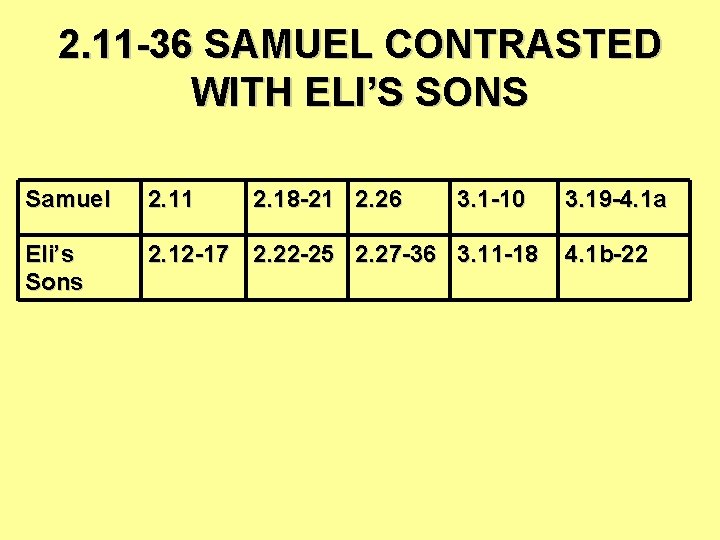
2. 11 -36 SAMUEL CONTRASTED WITH ELI’S SONS Samuel 2. 11 2. 18 -21 2. 26 3. 1 -10 Eli’s Sons 2. 12 -17 2. 22 -25 2. 27 -36 3. 11 -18 3. 19 -4. 1 a 4. 1 b-22
2. 11 -36 SAMUEL CONTRASTED WITH ELI’S SONS • “This narrative unit (2. 11 -4. 1 a) has two purposes: (1) to articulate the legitimacy of Samuel as “the leader” for Israel in the crisis to come and (2), conversely, to discredit the failed leadership of the house of Eli. We have seen in 1. 3 -28 that Samuel is a special gift from God (to Hannah) and a special gift back to God (from Hannah). The narrative of chapters 1 -3 wants us to understand that Samuel’s origin and his destiny are both peculiarly in God’s hand for God’s purpose. This account of Samuel’s rise to power (2. 11 -4. 1 a) is no ordinary historical report but is a witness to how God’s intent in Israel is implemented. Part of the working of God’s intent in Israel is the nullification of the old priesthood, which is accomplished through this narrative. ” [Brueggemann, Interpretation, 21 -22]
2. 11 -36 SAMUEL CONTRASTED WITH ELI’S SONS • “. . . they extorted quality meat from those bringing sacrifices. According to the priestly legislation in the Pentateuch, the clergy were to receive the breast and the right thigh of sacrificial animals (Lev 7. 28 -36) while, according to Deuteronomy, they were to receive the shoulder, the two cheeks (or jowls), and the stomach of any sacrificial ox or sheep (18. 3). At Shiloh, apparently, an alternate system was followed, in which the attendant would thrust a fork into the boiling pot and pull up for the priest whatever stuck to his fork. . The Shiloh attendants departed from this egalitarian local system by picking the best portions for themselves rather than relying on potluck, and also by including the fatty portions in their selections. Normally no one would eat the fat since it was to be burned for Yahweh (Lev 7. 23 -25, 31; 17. 6). The gravity of their offense is underscored by the note that this is how they treated all Israel (v 14), that is, the sacral confederation. ” [Klein, 25]
2. 11 -36 SAMUEL CONTRASTED WITH ELI’S SONS • “MT adds to the previous indictment of Eli’s sons the charge that they had sexual relations with the women who carried on menial tasks at the entrance to the Tent of Meeting. This criticism, borrowed from Ex 38. 8, may reflect conditions of a later time. ” [Klein, 26]
3. 1 -4. 1 a Samuel and the word of Yahweh • Dream Revelation: – 1 Sam 3. 2 [1 Kgs 3. 4 -5] “Dream revelations were frequently received in sanctuaries or at sacred sites. ” [Gnuse, 142] – 1 Sam 3. 3 [Gen 28. 11 -12; 15. 12] “Before theophany occurs, it is customary to indicate that the recipient is asleep. ” [Gnuse, 142] – 1 Sam 3. 3 [Gen 15. 11; 20. 3; 28. 11; 31. 24; 46. 2; Num 22. 8, 22; 1 Kgs 3. 5] “A reference to time is sometime mentioned. . Though 1 Samuel 3. 3 is vague, it gives some indication of the time when it states, ‘before the lamp of God went out. ’ Despite our inability to determine the precise meaning of this phrase, many feel that the reference is to a time just before dawn when the oil was almost consumed in the lamp. ” [Gnuse, 143 -144]
3. 1 -4. 1 a Samuel and the word of Yahweh • Dream Revelation: – 1 Sam 3. 2 [1 Kgs 3. 4 -5] “Dream revelations were frequently received in sanctuaries or at sacred sites. ” [Gnuse, 142] – 1 Sam 3. 3 [Gen 28. 11 -12; 15. 12] “Before theophany occurs, it is customary to indicate that the recipient is asleep. ” [Gnuse, 142] – 1 Sam 3. 3 [Gen 15. 11; 20. 3; 28. 11; 31. 24; 46. 2; Num 22. 8, 22; 1 Kgs 3. 5] “A reference to time is sometime mentioned. . Though 1 Samuel 3. 3 is vague, it gives some indication of the time when it states, ‘before the lamp of God went out. ’ Despite our inability to determine the precise meaning of this phrase, many feel that the reference is to a time just before dawn when the oil was almost consumed in the lamp. ” [Gnuse, 143 -144]
3. 1 -4. 1 a Samuel and the word of Yahweh • Theology of 1 Samuel 3: – “The most direct purpose of this chapter is to criticize the Elies for their abuse in Shiloh. ” [Gnuse, 156] – “Though the text is not a call narrative, it does elevate the boy Samuel to a role of importance. . Samuel arose as a charismatic prophet and covenant mediator in a time of crisis. Even though he is only called a prophet twice (1 Sam 3. 20, 9. 9), he is the father of the prophetic movement, founder of ecstatic prophecy. However, he is not a prophet in the later classical sense. ” [Gnuse, 156 -157]
3. 1 -4. 1 a Samuel and the word of Yahweh • Theology of 1 Samuel 3: – “It would be logical to see in Samuel both roles, prophet and priest, for this would solve the old dilemma of institutional authority and charismatic renewal. But there is no warrant in the text for that conclusion. Samuel may have been a trainee at Shiloh under Eli, but according to the story he never assumed Eli’s post. If he continued to function at Shiloh after the defeat, he did so without the ark, in which case he as exercising a prophetic function, but not a priestly function. Samuel’s critique through the word of the judgment is a paradigm for the later criticism of the prophetic movement against the hereditary priesthood. ” [Gnuse, 157]
3. 1 -4. 1 a Samuel and the word of Yahweh • Theology of 1 Samuel 3: – “The story indicates that Samuel succeeds Eli in function, but not in office. ” [Gnuse, 157]