
3 THE RISE OF HITLER AND THE NAZIS
- Slides: 43
3. THE RISE OF HITLER AND THE NAZIS L. O: TO UNDERSTAND THE IMPACT OF THE GREAT DEPRESSION ON GERMANY AND IDENTIFY THE WAYS IN WHICH THE NAZI PARTY EXPLOITED THE ECONOMIC AND POLITICAL PROBLEMS TO GAIN MORE SUPPORT. • HITLER AND THE GERMAN WORKERS’ PARTY. • CHANGES TO THE PARTY 1920 -22. • CAUSES, EVENTS AND RESULTS OF MUNICH PUTSCH, 1923. • REORGANISATION OF THE PARTY, 1924 -28. • IMPACT OF WALL STREET CRASH. NAZI METHODS TO WIN SUPPORT. • GOEBBELS AND PROPAGANDA AND THE WORK OF THE SA. • EVENTS OF 1932 TO JANUARY 1933 INCLUDING THE ROLE OF VON PAPEN, VON SCHLEICHER AND VON HINDENBURG. • NEED TO KNOW DETAILS OF POLITICAL DEVELOPMENTS FROM BRUNING TO PAPEN.
STARTER TASK ADD THESE EVENTS TO THE TIMELINE…. • Kapp Putsch rebellion • End of WW 1 • The Munich Putsch • Treaty of Versailles is signed • The Wall Street Crash • French invade the Ruhr • Germany allowed to join the League of Nations
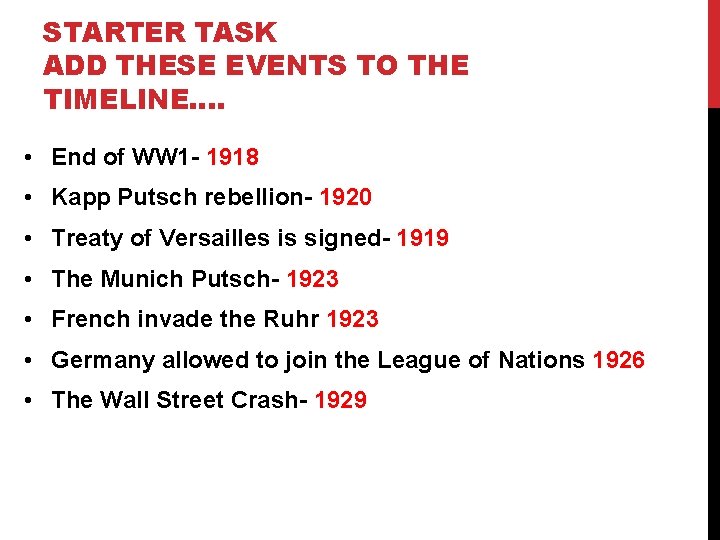
STARTER TASK ADD THESE EVENTS TO THE TIMELINE…. • End of WW 1 - 1918 • Kapp Putsch rebellion- 1920 • Treaty of Versailles is signed- 1919 • The Munich Putsch- 1923 • French invade the Ruhr 1923 • Germany allowed to join the League of Nations 1926 • The Wall Street Crash- 1929
HITLER AND THE GERMAN WORKERS’ PARTY
STARTER Brain storm as many words/ images that come to your mind when you hear ‘Nazis’ NAZIS
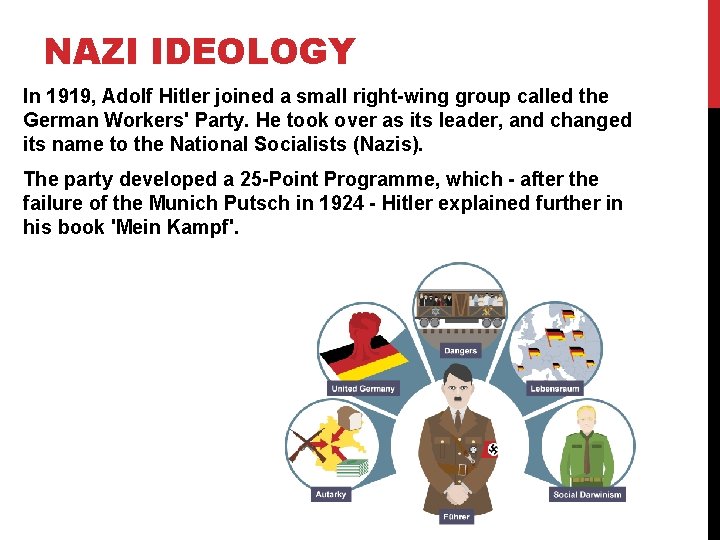
NAZI IDEOLOGY In 1919, Adolf Hitler joined a small right-wing group called the German Workers' Party. He took over as its leader, and changed its name to the National Socialists (Nazis). The party developed a 25 -Point Programme, which - after the failure of the Munich Putsch in 1924 - Hitler explained further in his book 'Mein Kampf'.
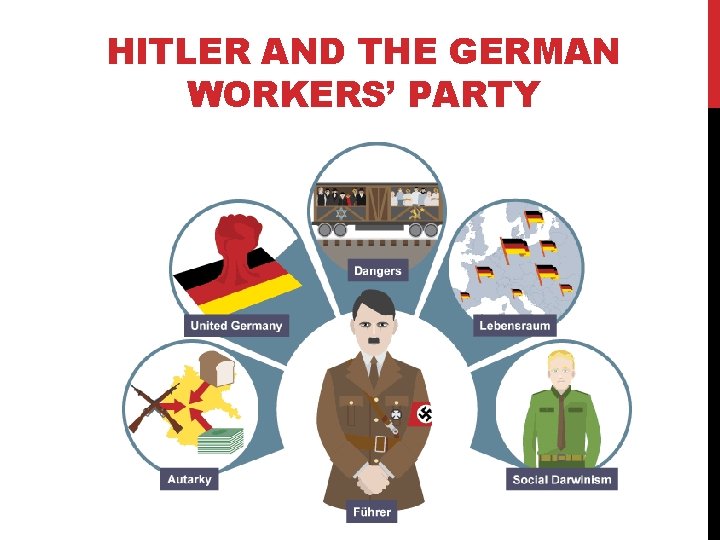
WHAT WAS THE NAZI IDEOLOGY? • Führer - the idea that there should be a single leader with complete power rather than a democracy. • Autarky - the idea that Germany should be economically selfsufficient. • A strong Germany - the Treaty of Versailles should be abolished and all German-speaking people united in one country. • Germany was in danger - from Communists and Jews, who had to be destroyed. • Lebensraum - the need for 'living space' for the German nation to expand. • Social Darwinism - the idea that the Aryan race was superior and Jews were 'subhuman'.
THE APPEAL OF THE NAZIS In the 1920 s, the Nazis tried to be all things to all people. The 25 -Point Programme had policies that were: • socialist - eg farmers should be given their land, pensions should improve, and public industries such as electricity and water should be owned by the state. • nationalist - all German-speaking people should be united in one country, the Treaty of Versailles should be abolished, and there should be special laws foreigners. • racist - Jews should not be German citizens and immigration should be stopped • fascist - a strong central government and control of the newspapers The Nazis did not appeal to: • working men who voted Communist • intellectuals such as students and university professors • They were popular with: • nationalists and racists • farmers • lower middle-class people such as plumbers and shopkeepers who were worried about the chaos Germany was in • rich people worried by the threat from Communism
CHANGES 1920 The 25 -Point Programme, February of 1920 The founder and leader of the DAP Anton Drexler and his right-hand man Adolf Hitler introduced the new 25 -Point Programme of the party. The main points were to: • Scrap the Treaty of Versailles • Expand Germany's borders to give its people lebensraum ('living space', i. e. more land to live in) • Deprive the Jews of German citizenship Other points included: • Destroying Communism • Making Germany great Drexler and Hitler made clear that the DAP were willing to use force and violence to achieve all this. Hitler was an energetic, passionate speaker. His public speaking started to attract larger numbers to meetings. • Many people were dissatisfied with the Weimar Republic in the period up to 1923. • Hitler's excellent and convincing oratory skills attracted supporters from the army, the police and small businesses. • Membership grew rapidly, to about 1, 100 in June of 1920.
QUICK QUIZ 1. What was the Nazi party originally called? 2. What was the book in which Hitler outlined his political ideas after the failure of the Munich Putsch in 1923? 3. What name did Hitler use for the single leader with complete power whom he said should control the German state? 4. What is the name for theory that only the fittest races would survive? 5. Which race was “untermensch” according to the Nazis?
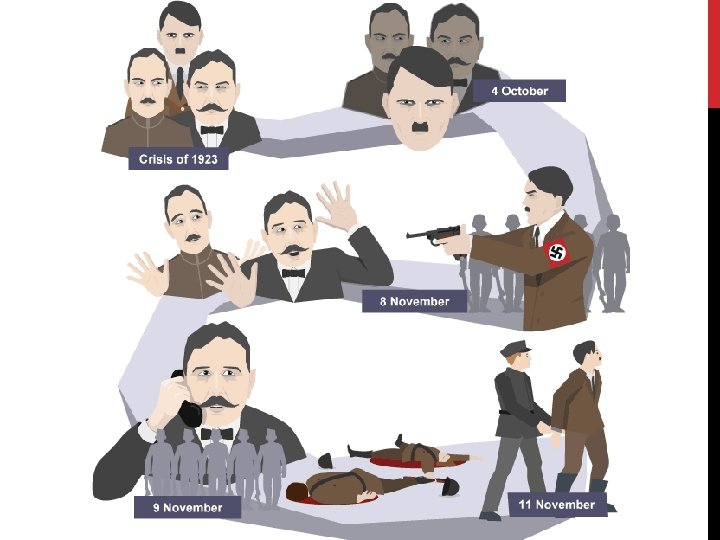
THE MUNICH PUTSCH, 1923 Summary At first, the Nazis were just a terrorist group. Hitler assembled a large group of unemployed young men and former soldiers, known as the stormtroopers (the SA), which attacked other political groups. Hitler hoped to take power by starting a revolution. During the crisis of 1923, therefore, Hitler plotted with two nationalist politicians - Kahr and Lossow - to take over Munich in a revolution. Hitler collected his stormtroopers and told them to be ready to rebel. But then, on 4 October 1923, Kahr and Lossow called off the rebellion. This was an impossible situation for Hitler, who had 3, 000 troops ready to fight. On the night of 8 November 1923, Hitler and 600 stormtroopers burst into a meeting that Kahr and Lossow were holding at the local Beer Hall. Waving a gun at them, Hitler forced them to agree to rebel - and then let them go home. The SA took over the army headquarters and the offices of the local newspaper. The next day, 9 November 1923, Hitler and his Nazis went into Munich on what they thought would be a triumphal march to take power. However, Kahr had called in police and army reinforcements. There was a short scuffle in which the police killed 16 Nazis. Hitler fled, but was arrested two days later.
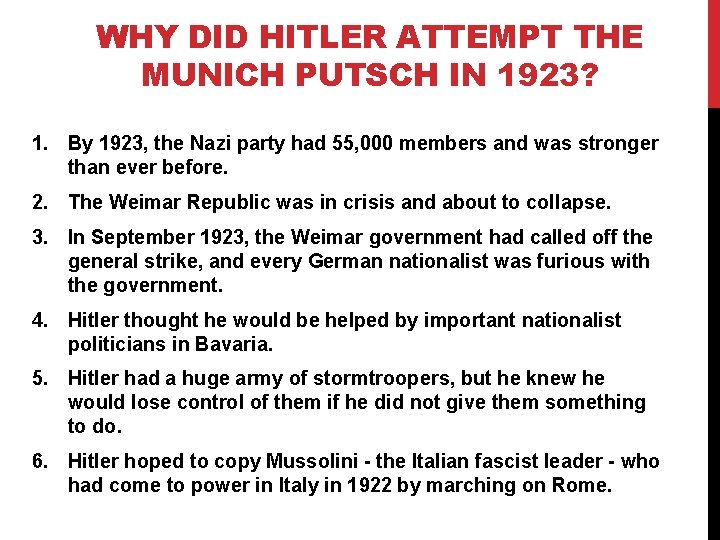
WHY DID HITLER ATTEMPT THE MUNICH PUTSCH IN 1923? 1. By 1923, the Nazi party had 55, 000 members and was stronger than ever before. 2. The Weimar Republic was in crisis and about to collapse. 3. In September 1923, the Weimar government had called off the general strike, and every German nationalist was furious with the government. 4. Hitler thought he would be helped by important nationalist politicians in Bavaria. 5. Hitler had a huge army of stormtroopers, but he knew he would lose control of them if he did not give them something to do. 6. Hitler hoped to copy Mussolini - the Italian fascist leader - who had come to power in Italy in 1922 by marching on Rome.
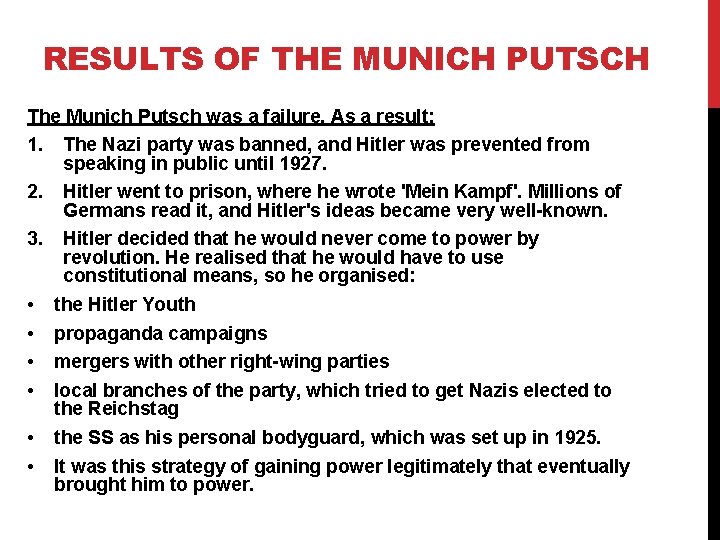
RESULTS OF THE MUNICH PUTSCH The Munich Putsch was a failure. As a result: 1. The Nazi party was banned, and Hitler was prevented from speaking in public until 1927. 2. Hitler went to prison, where he wrote 'Mein Kampf'. Millions of Germans read it, and Hitler's ideas became very well-known. 3. Hitler decided that he would never come to power by revolution. He realised that he would have to use constitutional means, so he organised: • • the Hitler Youth • • the SS as his personal bodyguard, which was set up in 1925. propaganda campaigns mergers with other right-wing parties local branches of the party, which tried to get Nazis elected to the Reichstag It was this strategy of gaining power legitimately that eventually brought him to power.
COMPLETE THE MUNICH PUTSCH SHEET… CAUSES EVENTS RESULTS
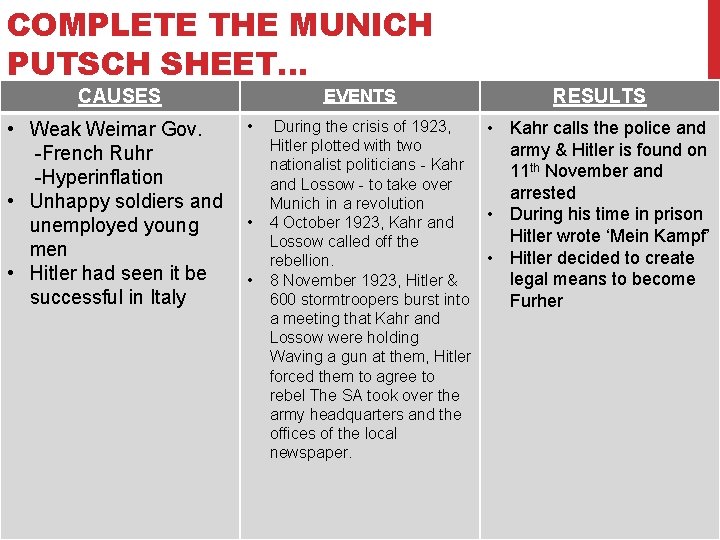
COMPLETE THE MUNICH PUTSCH SHEET… EVENTS CAUSES • Weak Weimar Gov. -French Ruhr -Hyperinflation • Unhappy soldiers and unemployed young men • Hitler had seen it be successful in Italy • • • During the crisis of 1923, • Hitler plotted with two nationalist politicians - Kahr and Lossow - to take over Munich in a revolution • 4 October 1923, Kahr and Lossow called off the • rebellion. 8 November 1923, Hitler & 600 stormtroopers burst into a meeting that Kahr and Lossow were holding Waving a gun at them, Hitler forced them to agree to rebel The SA took over the army headquarters and the offices of the local newspaper. RESULTS Kahr calls the police and army & Hitler is found on 11 th November and arrested During his time in prison Hitler wrote ‘Mein Kampf’ Hitler decided to create legal means to become Furher
STARTER TASK If this is the answer what could the question be? - Hyperinflation - 1923 - Golden 20’s
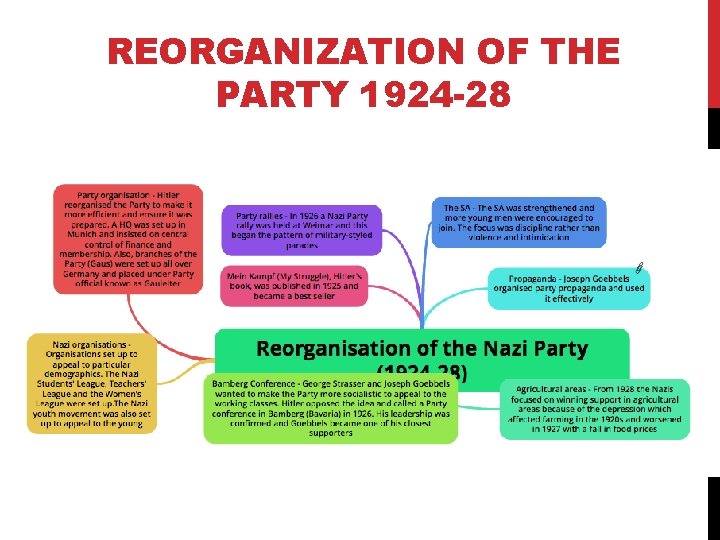
REORGANIZATION OF THE PARTY 1924 -28
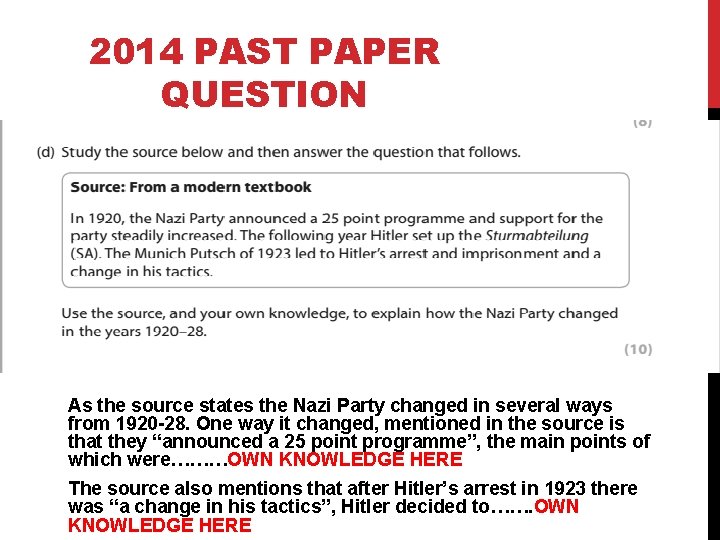
2014 PAST PAPER QUESTION As the source states the Nazi Party changed in several ways from 1920 -28. One way it changed, mentioned in the source is that they “announced a 25 point programme”, the main points of which were………OWN KNOWLEDGE HERE The source also mentions that after Hitler’s arrest in 1923 there was “a change in his tactics”, Hitler decided to……. OWN KNOWLEDGE HERE
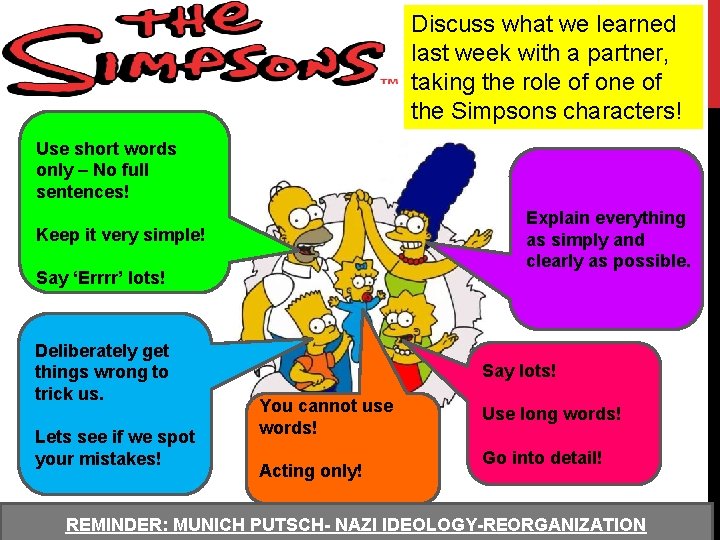
Discuss what we learned last week with a partner, taking the role of one of the Simpsons characters! Use short words only – No full sentences! Explain everything as simply and clearly as possible. Keep it very simple! Say ‘Errrr’ lots! Deliberately get things wrong to trick us. Lets see if we spot your mistakes! Say lots! You cannot use words! Acting only! Use long words! Go into detail! REMINDER: MUNICH PUTSCH- NAZI IDEOLOGY-REORGANIZATION
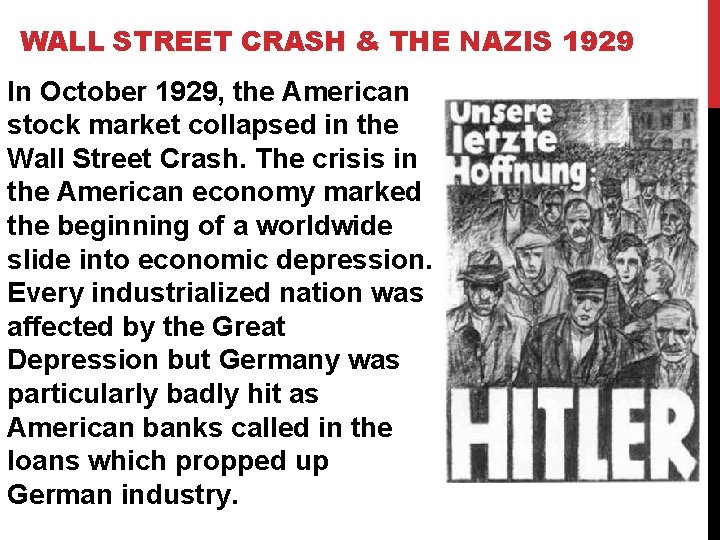
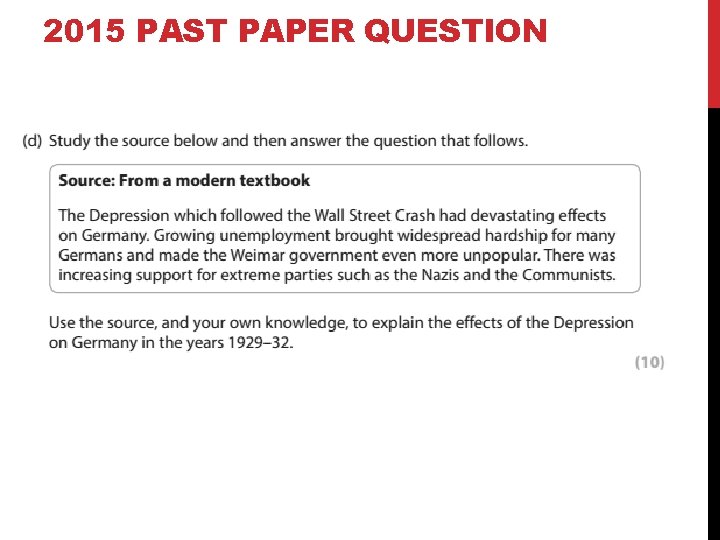
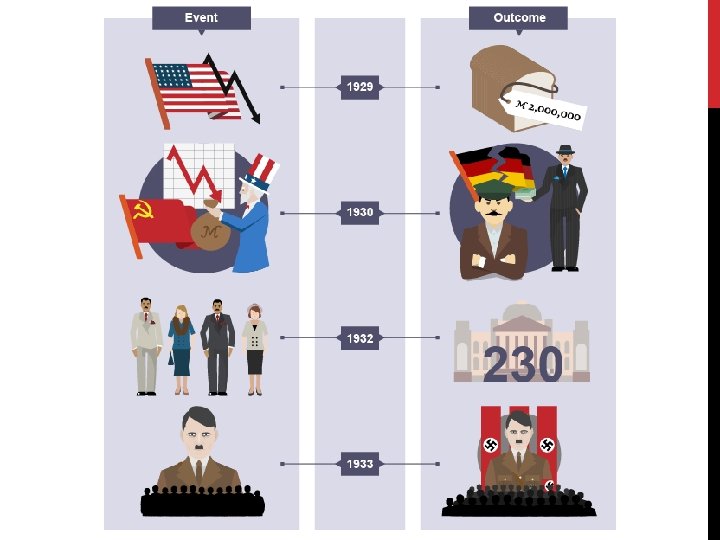
WALL STREET CRASH & THE NAZIS 1929 In October 1929, the American stock market collapsed in the Wall Street Crash. The crisis in the American economy marked the beginning of a worldwide slide into economic depression. Every industrialized nation was affected by the Great Depression but Germany was particularly badly hit as American banks called in the loans which propped up German industry.
1930 - 1931: THE TURN TO EXTREMISM The Great Depression quickly brought about a massive drop in world trade and German exports slumped. As German businesses closed en masse, millions of people lost their jobs. Unemployment in Germany rose from just under 2 million in 1929 to 3 million in 1930 and 4. 8 million in 1931. The Weimar government seemed entirely unable to deal with the effects of the Great Depression. Many Germans lost faith in the moderate political parties which had made up the Weimar government since the formation of the Republic and turned to extremist parties on both the left and right-wing for solutions. In the national elections of September 1930, the Nazi Party won 107 Reichstag seats to become the second largest party in the Reichstag after the SPD (social democrat party). In the same election, the KPD (communist party) won 77 seats.
MAKE NOTES USING THE FOLLOWING QUESTIONS: 1. Name two ways the Munich putsch was a failure for the Nazi party 2. Name two ways the Munich putsch was a success for the Nazi party 3. How did the Nazi party change after the Munich Putsch? 4. How did the Wall Street Crash help the Nazi party become more popular?
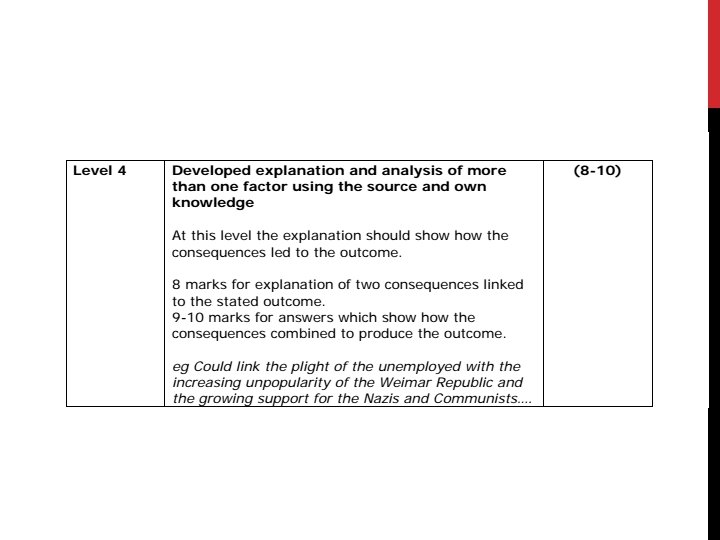
2015 PAST PAPER QUESTION
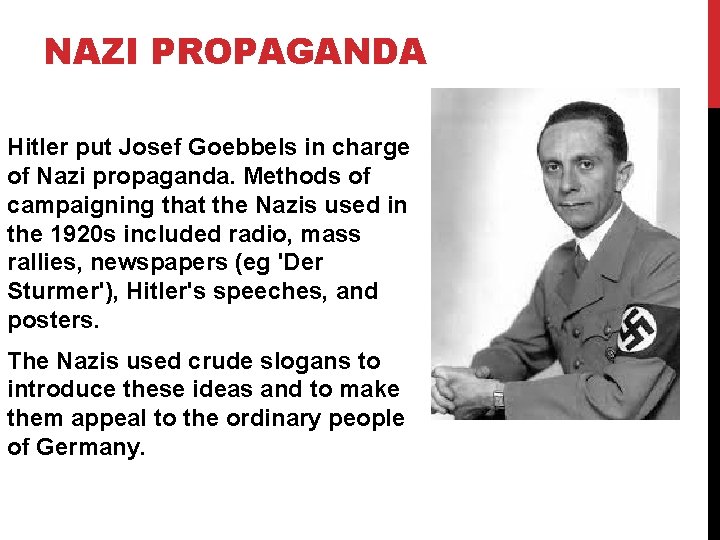
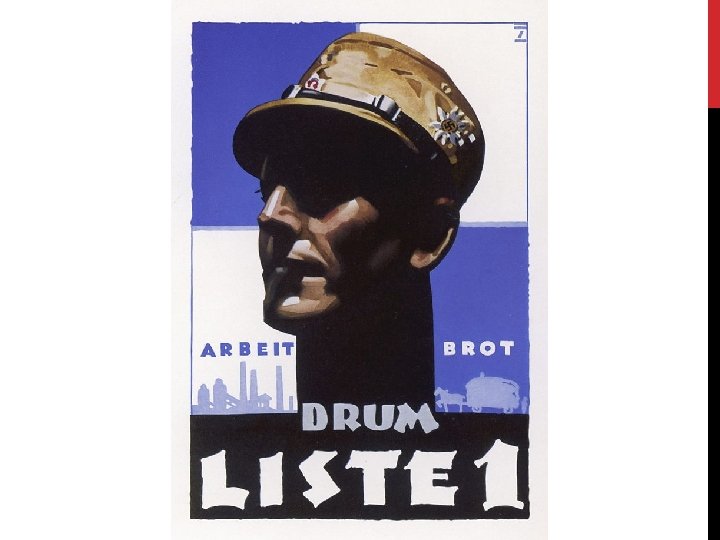
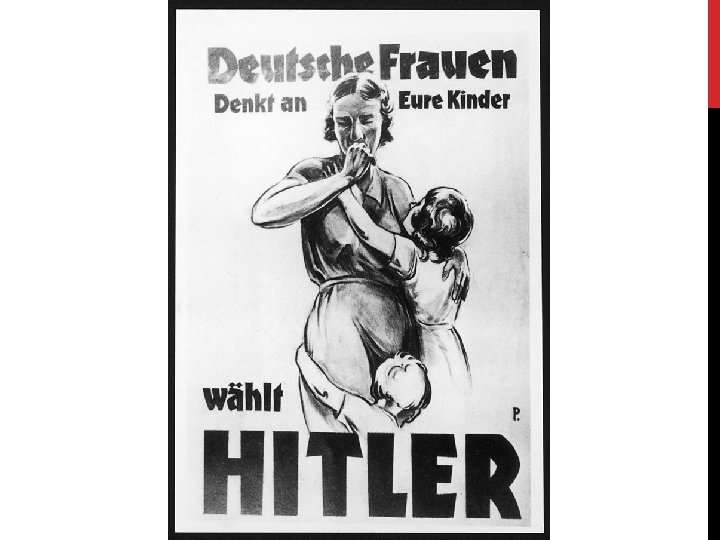
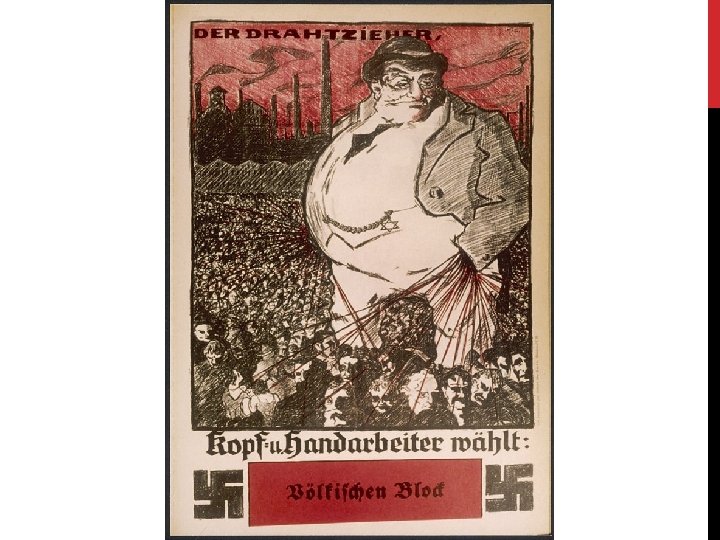
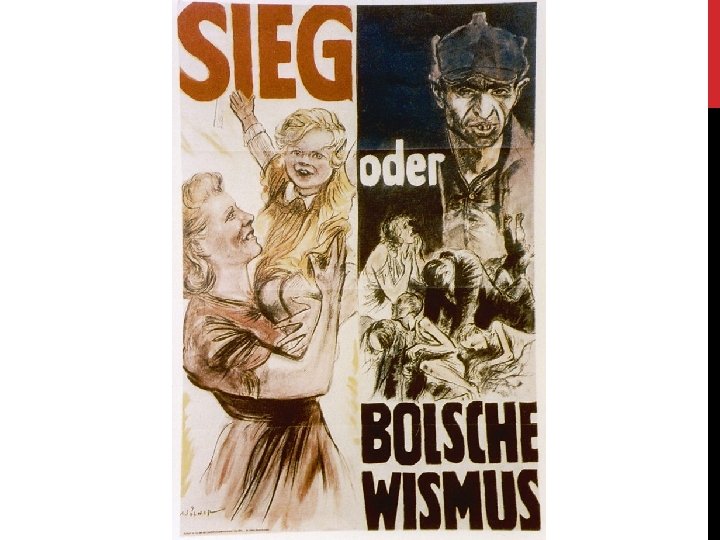
NAZI PROPAGANDA Hitler put Josef Goebbels in charge of Nazi propaganda. Methods of campaigning that the Nazis used in the 1920 s included radio, mass rallies, newspapers (eg 'Der Sturmer'), Hitler's speeches, and posters. The Nazis used crude slogans to introduce these ideas and to make them appeal to the ordinary people of Germany.
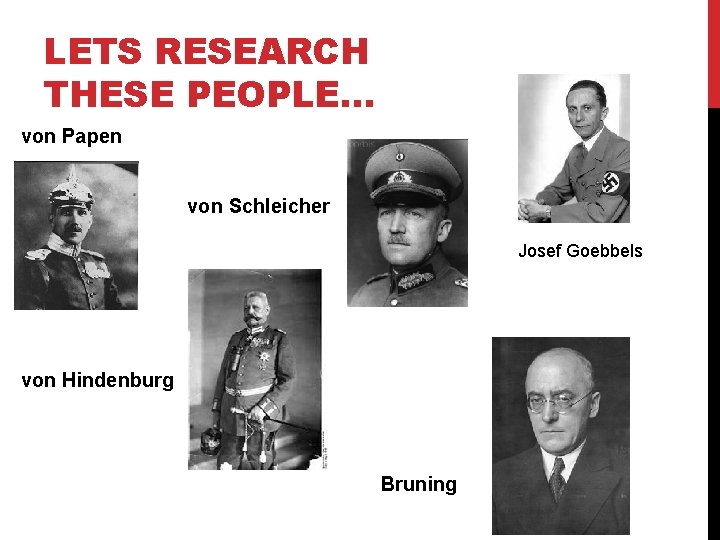
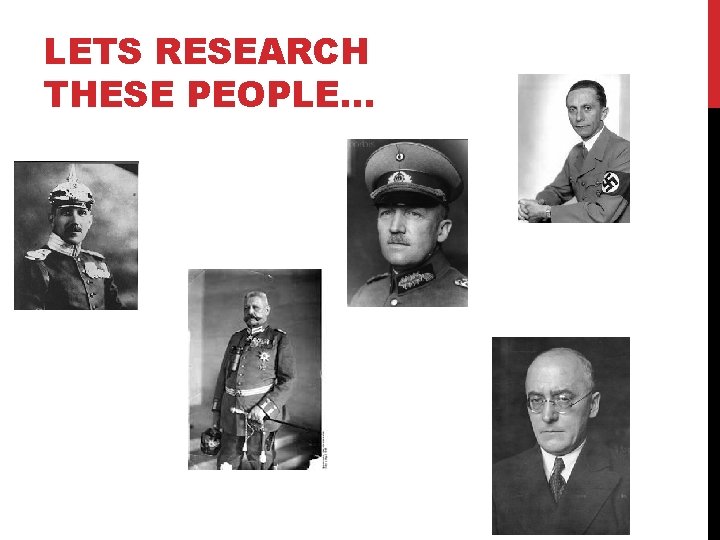
LETS RESEARCH THESE PEOPLE… von Papen von Schleicher Josef Goebbels von Hindenburg Bruning
HITLER Joins the NSDAP and helps appoint the 25 point plan 1923 leads Munich Putsch Is arrested Nov 1923 and goes to prison for 8 months – writes Mein Kampf Rethinks the NAZI plan and tries legal tactics Is an extremely talented speaker Uses events in Germany and out to help him rise to power and by 1933 is chancellor of Germany
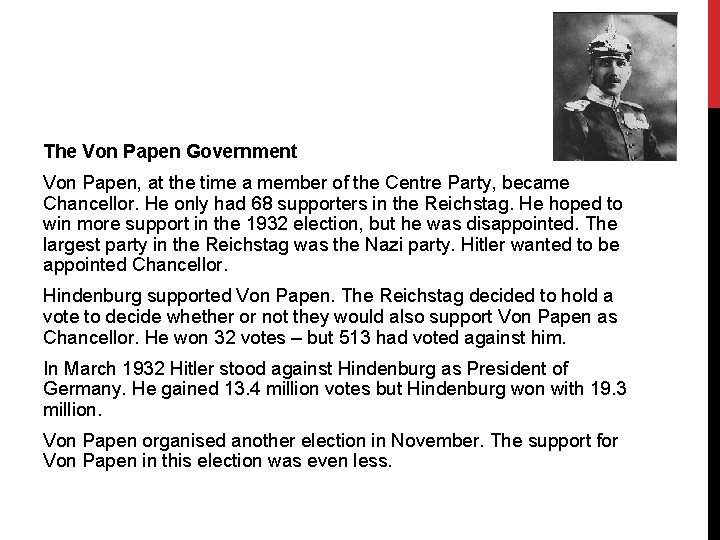
The Von Papen Government Von Papen, at the time a member of the Centre Party, became Chancellor. He only had 68 supporters in the Reichstag. He hoped to win more support in the 1932 election, but he was disappointed. The largest party in the Reichstag was the Nazi party. Hitler wanted to be appointed Chancellor. Hindenburg supported Von Papen. The Reichstag decided to hold a vote to decide whether or not they would also support Von Papen as Chancellor. He won 32 votes – but 513 had voted against him. In March 1932 Hitler stood against Hindenburg as President of Germany. He gained 13. 4 million votes but Hindenburg won with 19. 3 million. Von Papen organised another election in November. The support for Von Papen in this election was even less.
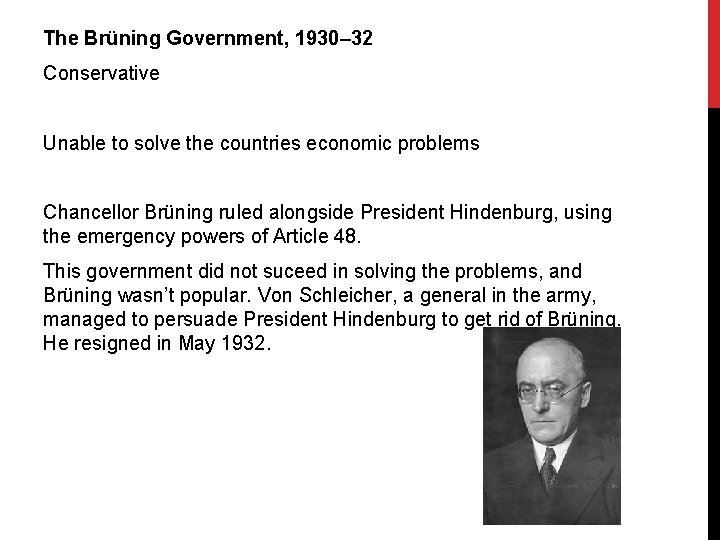
The Brüning Government, 1930– 32 Conservative Unable to solve the countries economic problems Chancellor Brüning ruled alongside President Hindenburg, using the emergency powers of Article 48. This government did not suceed in solving the problems, and Brüning wasn’t popular. Von Schleicher, a general in the army, managed to persuade President Hindenburg to get rid of Brüning. He resigned in May 1932.
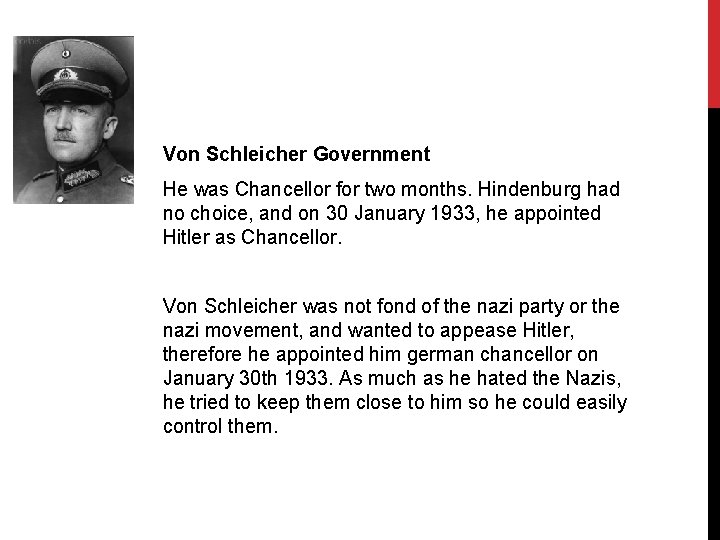
Von Schleicher Government He was Chancellor for two months. Hindenburg had no choice, and on 30 January 1933, he appointed Hitler as Chancellor. Von Schleicher was not fond of the nazi party or the nazi movement, and wanted to appease Hitler, therefore he appointed him german chancellor on January 30 th 1933. As much as he hated the Nazis, he tried to keep them close to him so he could easily control them.
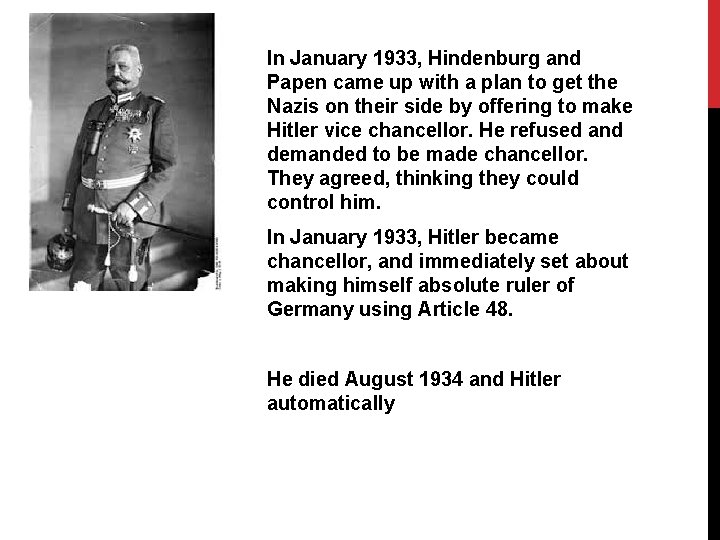
In January 1933, Hindenburg and Papen came up with a plan to get the Nazis on their side by offering to make Hitler vice chancellor. He refused and demanded to be made chancellor. They agreed, thinking they could control him. In January 1933, Hitler became chancellor, and immediately set about making himself absolute ruler of Germany using Article 48. He died August 1934 and Hitler automatically
HITLER’S RISE TO POWER Summary In 1929, the American Stock Exchange collapsed, and caused an economic depression. America called in all its foreign loans, which destroyed Weimar Germany. Unemployment in Germany rose to 6 million. The government did not know what to do. In July 1930 Chancellor Brüning cut government expenditure, wages and unemployment pay - the worst thing to do during a depression. He could not get the Reichstag to agree to his actions, so President Hindenburg used Article 48 to pass the measures by decree. Anger and bitterness helped the Nazis to gain more support. Many workers turned to communism, but this frightened wealthy businessmen, so they financed Hitler's campaigns. Many middle-class people, alarmed by the obvious failure of democracy, decided that the country needed a strong government. Nationalists and racists blamed the Treaty of Versailles and reparations. In 1928, the Nazis had only 12 seats in the Reichstag; by July 1932 they had 230 seats and were the largest party. The government was in chaos. President Hindenburg dismissed Brüning in 1932. His replacement - Papen - lasted six months, and the next chancellor - Schleicher - only lasted two months. Hindenburg had to use Article 48 to pass almost every law. In January 1933, Hindenburg and Papen came up with a plan to get the Nazis on their side by offering to make Hitler vice chancellor. He refused and demanded to be made chancellor. They agreed, thinking they could control him. In January 1933, Hitler became chancellor, and immediately set about making himself absolute ruler of Germany using Article 48.
REASONS WHY HITLER ROSE TO POWER 1. Hitler was a great speaker, with the power to make people support him. 2. The moderate political parties would not work together, although together they had more support than the Nazis. 3. The depression of 1929 created poverty and unemployment, which made people angry with the Weimar government. People lost confidence in the democratic system and turned towards the extremist political parties such as the Communists and Nazis during the depression. 4. The Nazi storm troopers attacked Hitler's opponents. 5. Goebbels' propaganda campaign was very effective and it won support for the Nazis. The Nazis targeted specific groups of society with different slogans and policies to win their support. 6. Hitler was given power in a seedy political deal by Hindenburg and Papen who foolishly thought they could control him. 7. German people were still angry about the Treaty of Versailles and supported Hitler because he promised to overturn it. 8. Industrialists gave Hitler money and support.
TASK: Reasons why Hitler rose to power by 1933 fall into three categories: • outside events/other factors • strengths of Hitler and the Nazi Party • weaknesses of other political parties To familiarise yourself with them, work out which reasons fall into which category. (page 157 in the text book will help) Now put them in order of importance. This is just your opinion, so there is no right or wrong answer, but make sure you have a reason for putting each factor in the ranking order you have chosen for it.
REVISION OF HOW HITLER AND THE NAZIS ROSE TO POWER • Hitler and the German Workers’ Party. • Changes to the party 1920 -22. • Causes, events and results of Munich Putsch, 1923. • Reorganisation of the Party, 1924 -28. • Impact of Wall Street Crash. • Nazi methods to win support. • Goebbels and propaganda and the work of the SA. • Events of 1932 to January 1933 including the role of von Papen, von Schleicher and von Hindenburg. • Need to know details of political developments from Bruning to Papen.
LETS RESEARCH THESE PEOPLE…