
3 The market for recreation leisure and tourism



- Slides: 24
3 The market for recreation, leisure and tourism products © John Tribe
© John Tribe
Learning outcomes • By the end of this session students should be able to: – identify a market and define the attributes of a perfect market – analyse the factors that affect the demand for a good or service – analyse the factors that affect the supply of a good or service – understand the concept of equilibrium price – analyse the factors that cause changes in equilibrium price – relate price theory to real world examples © John Tribe
Definitions • • Effective demand Ceteris paribus Markets Perfect market assumption – many buyers and sellers – perfect knowledge of prices throughout the market – rational consumers and producers basing decisions on prices – no government intervention – e. g. price control © John Tribe
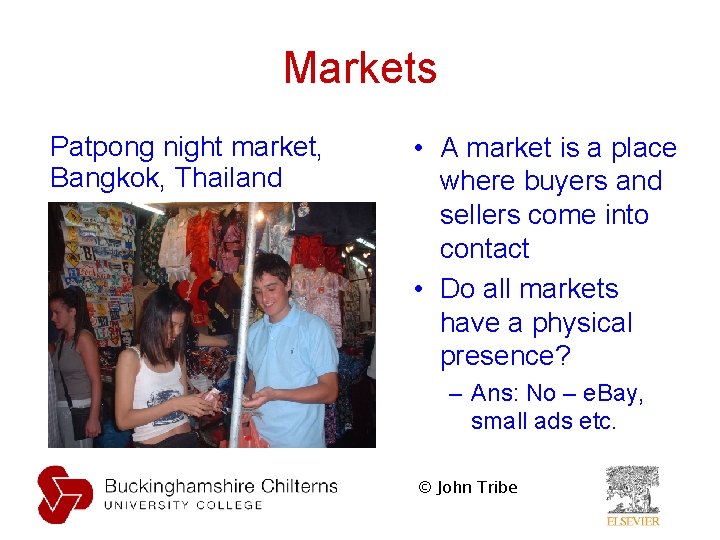
Markets Patpong night market, Bangkok, Thailand • A market is a place where buyers and sellers come into contact • Do all markets have a physical presence? – Ans: No – e. Bay, small ads etc. © John Tribe
• What is this picture? – Exchange rates • What does it illustrate? – Near perfect markets • Why? – Many buyers and sellers – Prices fluctuate freely according to demand supply © John Tribe
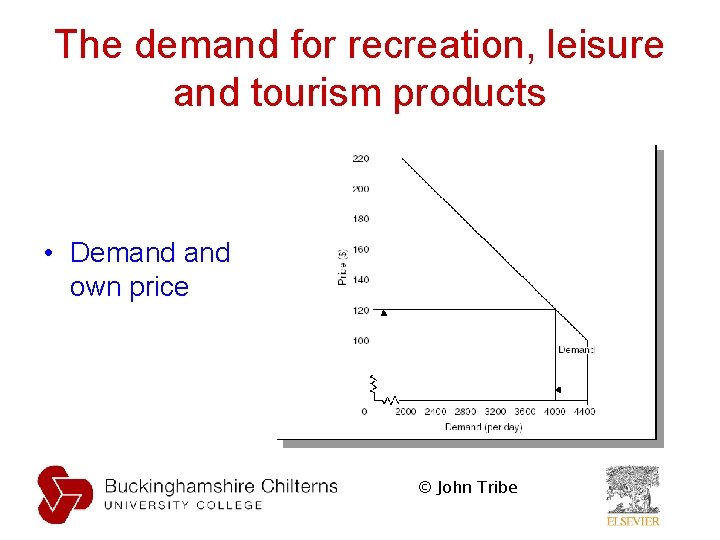
The demand for recreation, leisure and tourism products • Demand own price © John Tribe
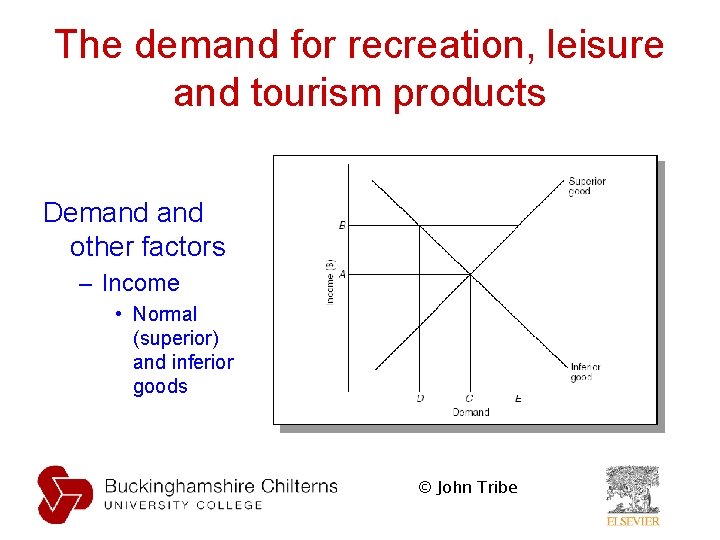
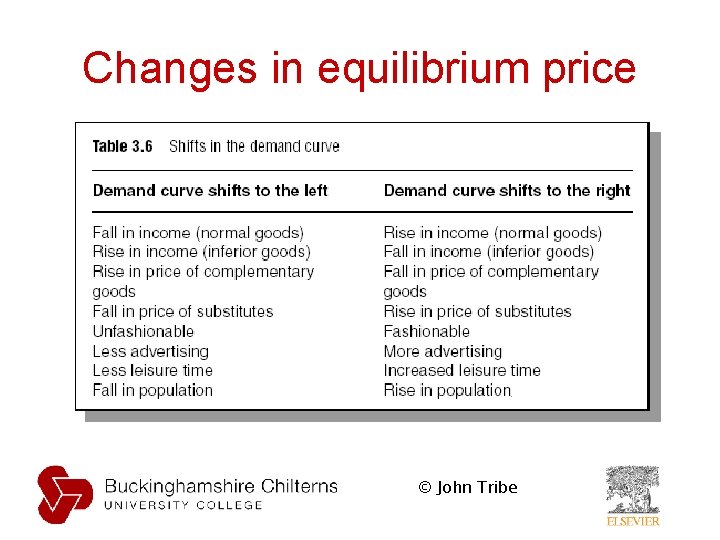
The demand for recreation, leisure and tourism products Demand other factors – Income • Normal (superior) and inferior goods © John Tribe
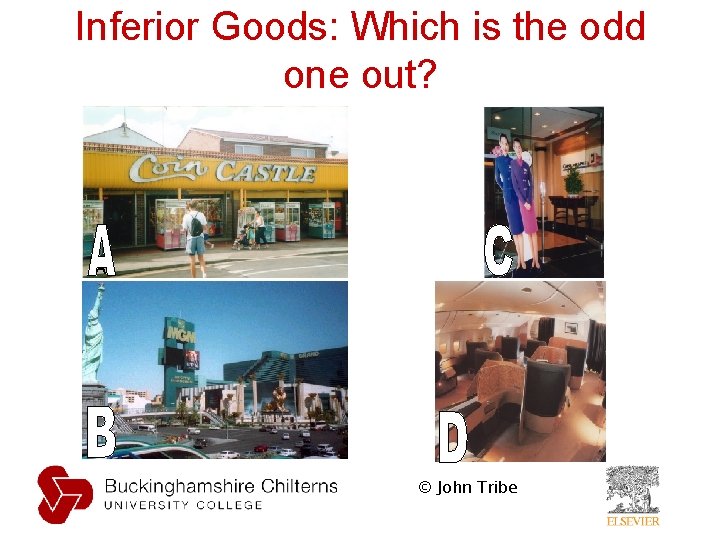
Inferior Goods: Which is the odd one out? A © John Tribe
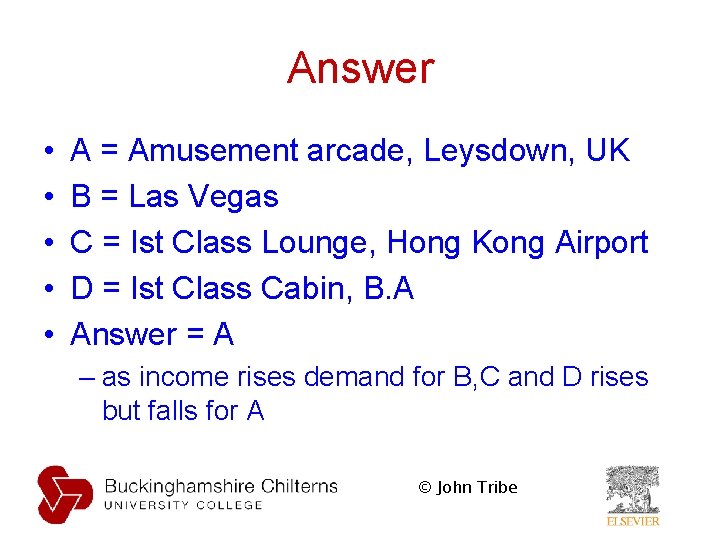
Answer • • • A = Amusement arcade, Leysdown, UK B = Las Vegas C = Ist Class Lounge, Hong Kong Airport D = Ist Class Cabin, B. A Answer = A – as income rises demand for B, C and D rises but falls for A © John Tribe
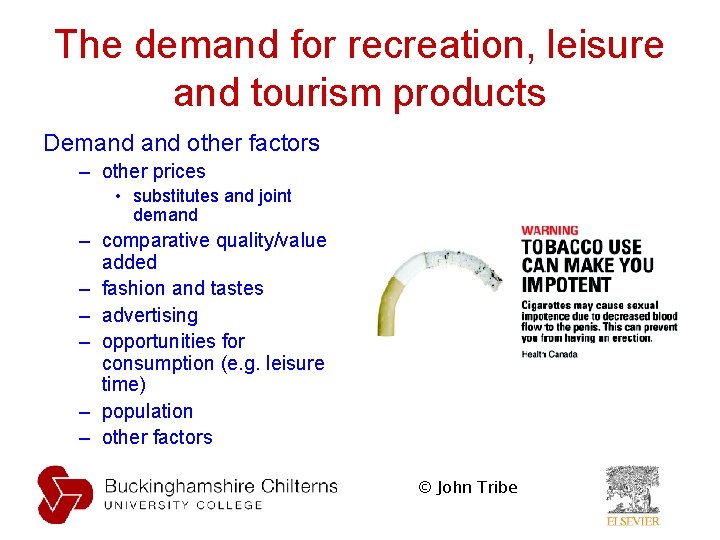
The demand for recreation, leisure and tourism products Demand other factors – other prices • substitutes and joint demand – comparative quality/value added – fashion and tastes – advertising – opportunities for consumption (e. g. leisure time) – population – other factors © John Tribe
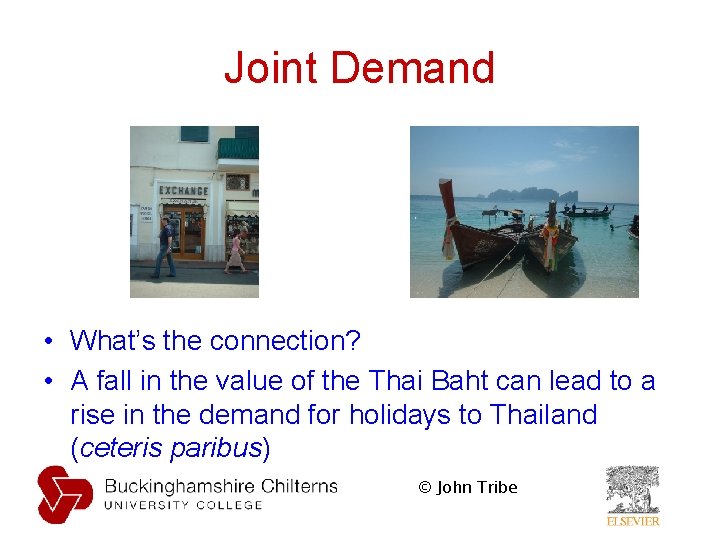
Joint Demand • What’s the connection? • A fall in the value of the Thai Baht can lead to a rise in the demand for holidays to Thailand (ceteris paribus) © John Tribe
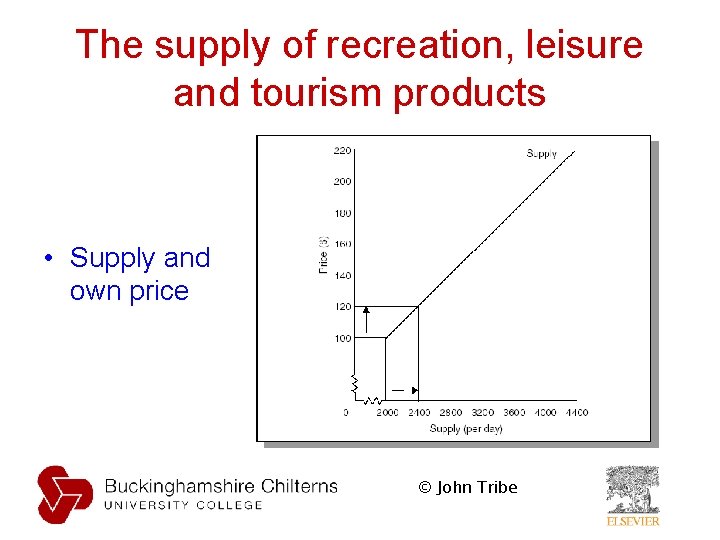
The supply of recreation, leisure and tourism products • Supply and own price © John Tribe
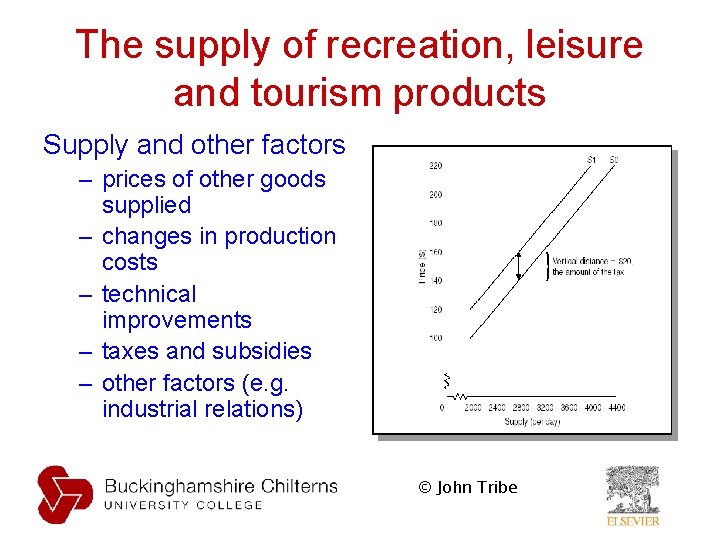
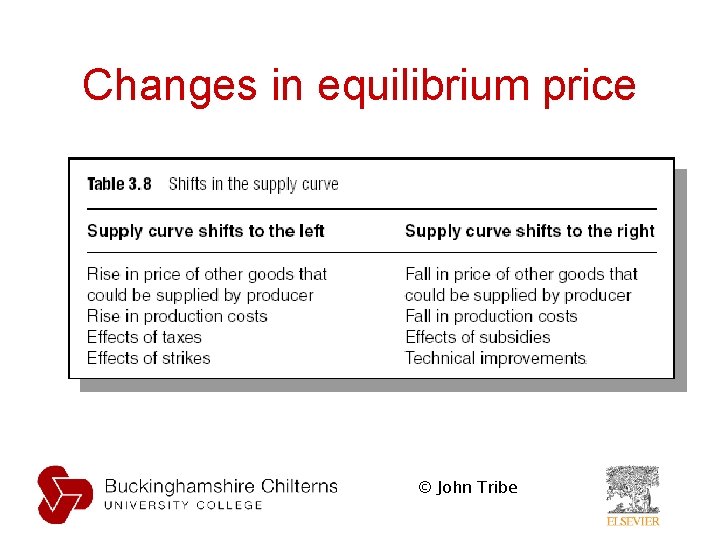
The supply of recreation, leisure and tourism products Supply and other factors – prices of other goods supplied – changes in production costs – technical improvements – taxes and subsidies – other factors (e. g. industrial relations) © John Tribe
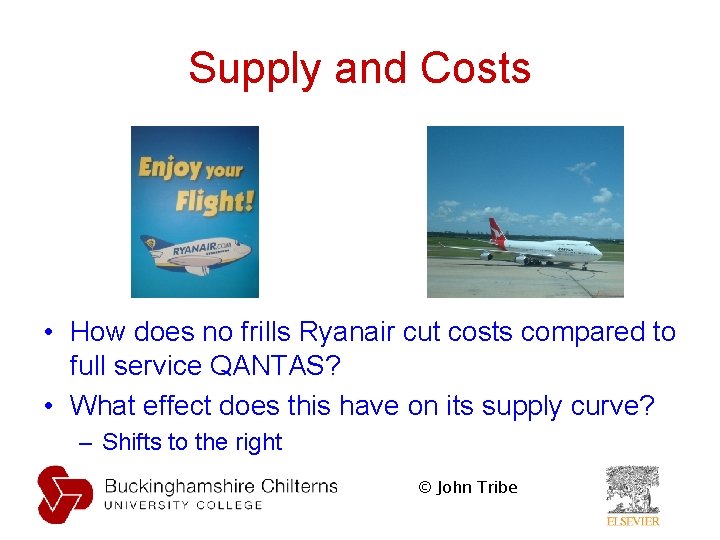
Supply and Costs • How does no frills Ryanair cut costs compared to full service QANTAS? • What effect does this have on its supply curve? – Shifts to the right © John Tribe
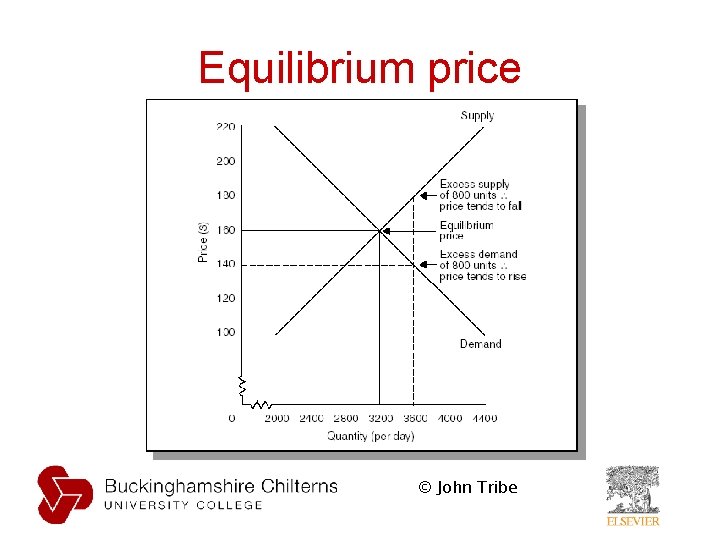
Equilibrium price © John Tribe
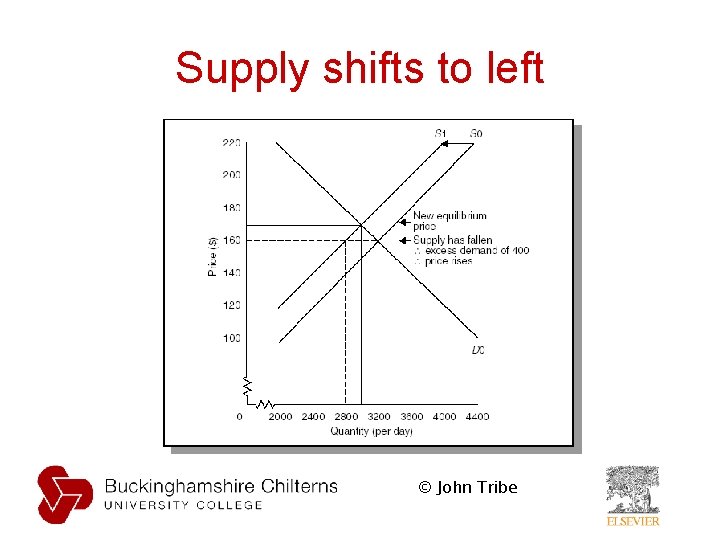
Changes in equilibrium price © John Tribe
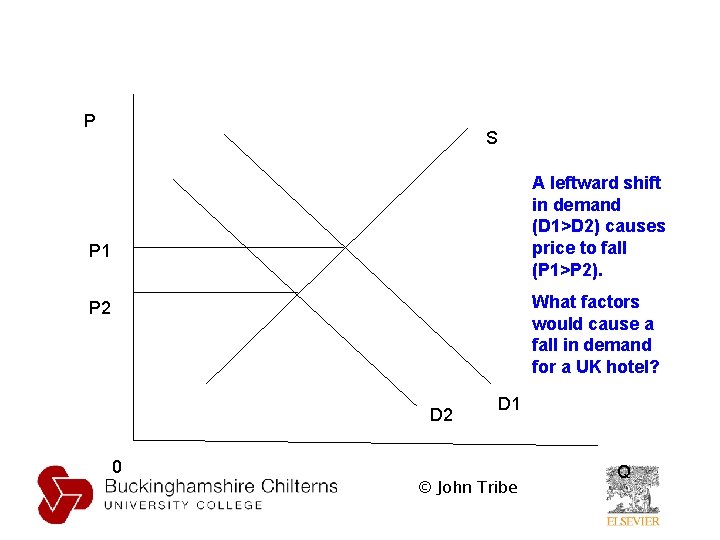
P S A leftward shift in demand (D 1>D 2) causes price to fall (P 1>P 2). P 1 What factors would cause a fall in demand for a UK hotel? P 2 D 2 0 D 1 © John Tribe Q
Changes in equilibrium price © John Tribe
Supply shifts to left © John Tribe
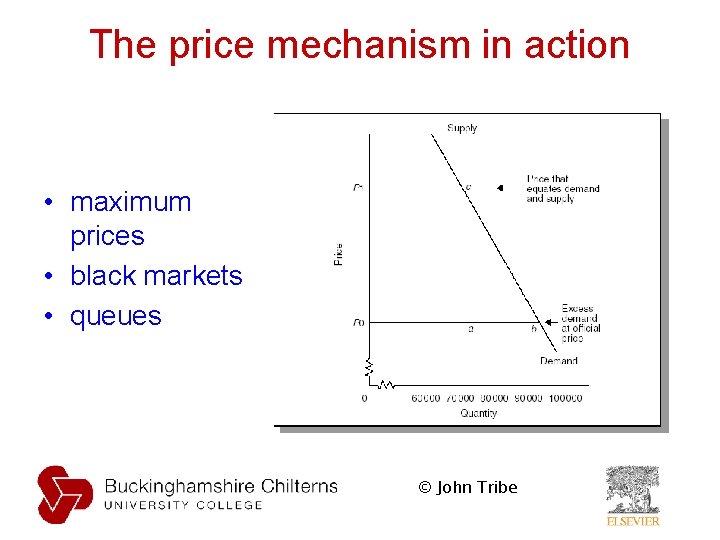
The price mechanism in action • maximum prices • black markets • queues © John Tribe
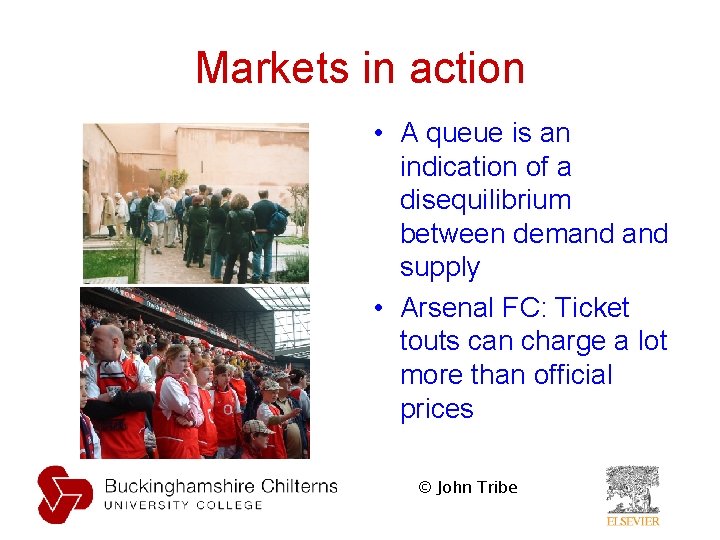
Markets in action • A queue is an indication of a disequilibrium between demand supply • Arsenal FC: Ticket touts can charge a lot more than official prices © John Tribe
Review of key terms • Effective demand – demand backed by cash. • Ceteris Paribus – all other things remaining unchanged • Perfect market – many buyers and sellers, rational players, perfect knowledge, no interference. • Normal good – demand rises as income rises (also called superior good). • Inferior good – demand falls as income rises. • Substitute – good that can replace good in question • Complement / Joint demand – good that is used with the good in question • Equilibrium price – where demand equals supply. © John Tribe
3 The market for recreation, leisure and tourism products: The End © John Tribe