
3 The Geography of Volcanoes Volcanic activity how

- Slides: 31
3 The Geography of Volcanoes Volcanic activity – how, why and where it occurs How volcanoes and their effects may be predicted Volcanic activity and its effects on the Irish landscape and worldwide
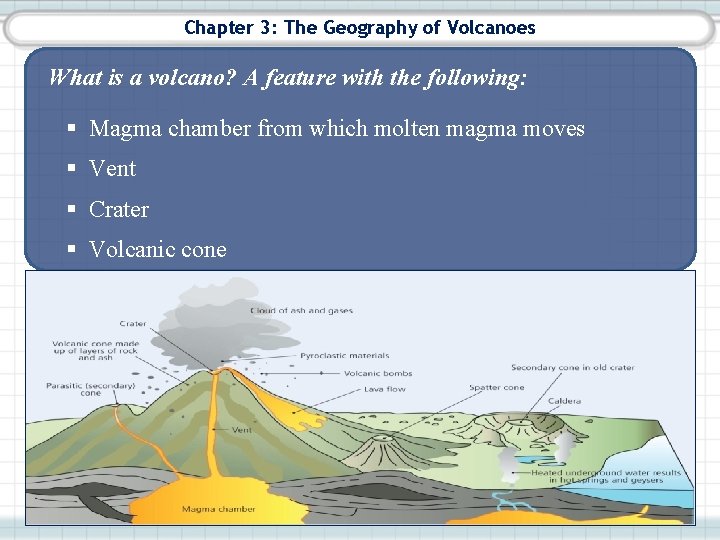
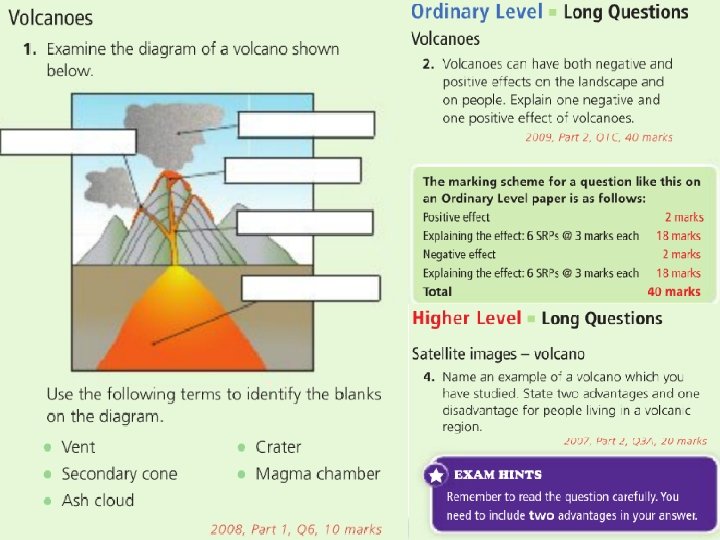
Chapter 3: The Geography of Volcanoes What is a volcano? A feature with the following: § Magma chamber from which molten magma moves § Vent § Crater § Volcanic cone
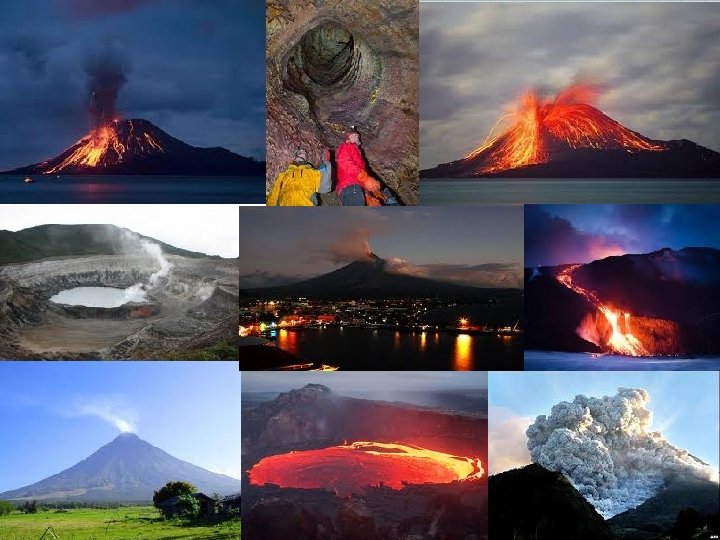
Write down the location of each volcano
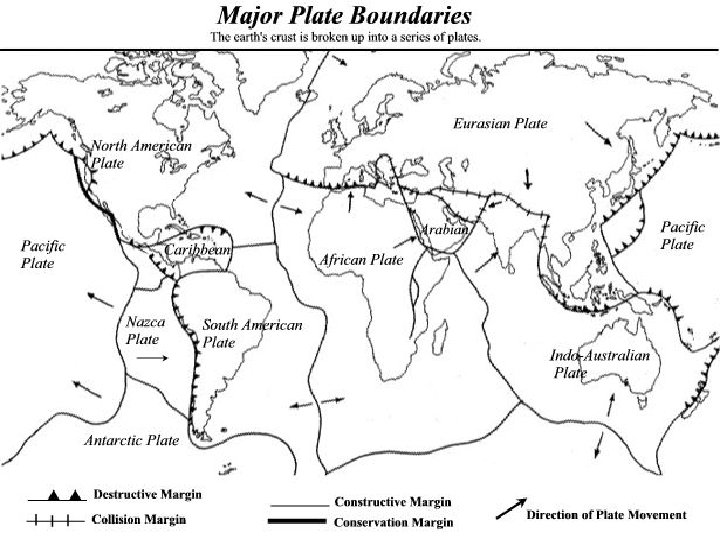
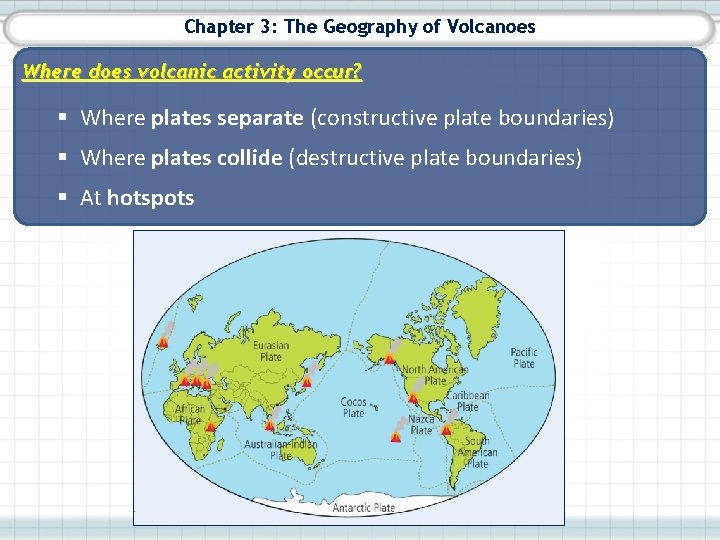
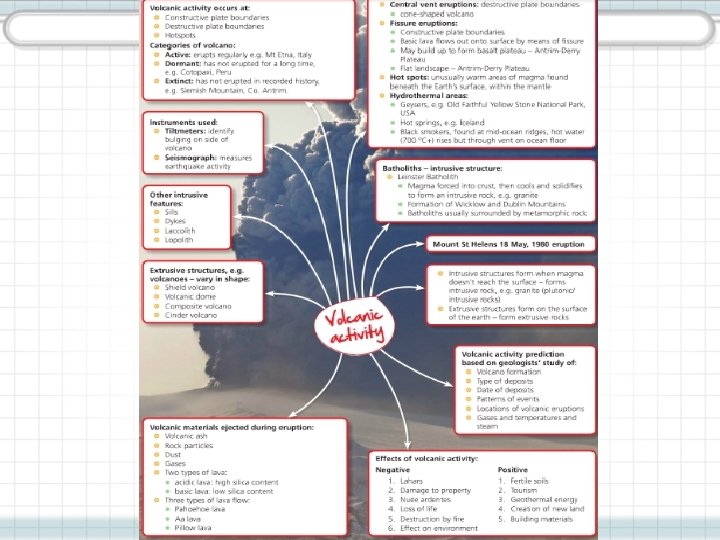
Chapter 3: The Geography of Volcanoes Where does volcanic activity occur? § Where plates separate (constructive plate boundaries) § Where plates collide (destructive plate boundaries) § At hotspots
Chapter 3: The Geography of Volcanoes Three stages in the ‘lifecycle’ of a volcano 1. Active 2. Dormant 3. Extinct
Chapter 3: The Geography of Volcanoes Causes of a volcanic eruption § Rock of subducted plates melts and forms molten magma § Molten magma pushes towards the surface and builds up in a magma chamber § Gases dissolved in magma expand § Causes the magma to rise § Magma forces its way up through cracks/fissures in the volcano § Reaches the surface, pressure is released and a volcanic eruption occurs
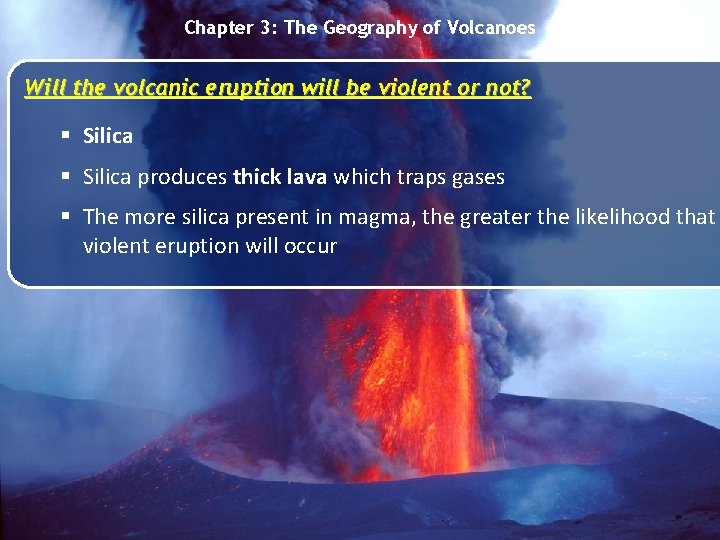
Chapter 3: The Geography of Volcanoes Will the volcanic eruption will be violent or not? § Silica produces thick lava which traps gases § The more silica present in magma, the greater the likelihood that violent eruption will occur
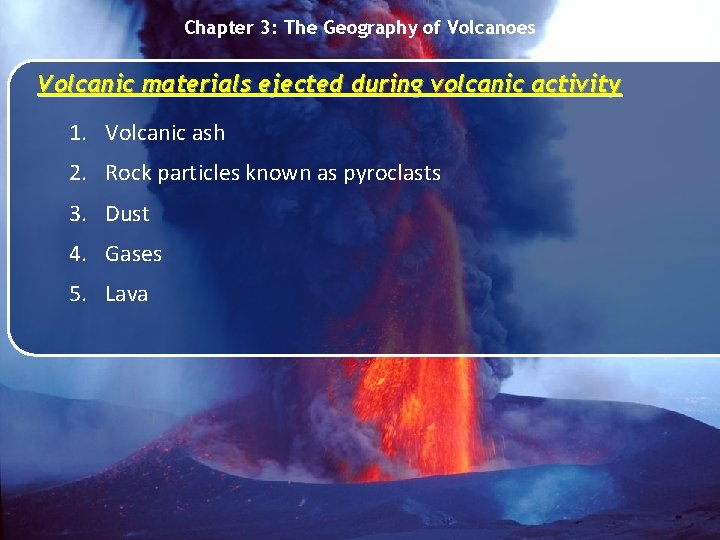
Chapter 3: The Geography of Volcanoes Volcanic materials ejected during volcanic activity 1. Volcanic ash 2. Rock particles known as pyroclasts 3. Dust 4. Gases 5. Lava
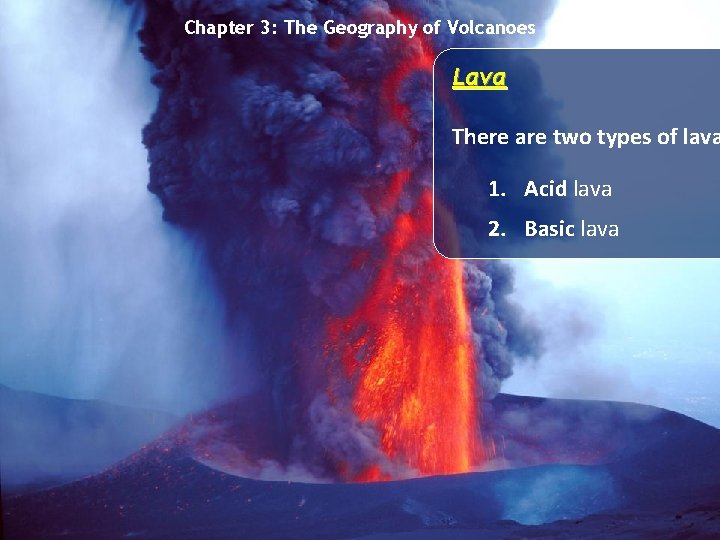
Chapter 3: The Geography of Volcanoes Lava There are two types of lava 1. Acid lava 2. Basic lava
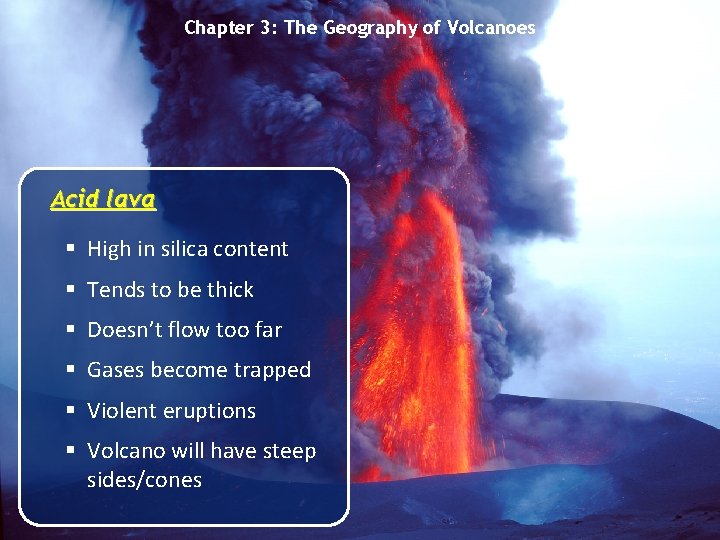
Chapter 3: The Geography of Volcanoes Acid lava § High in silica content § Tends to be thick § Doesn’t flow too far § Gases become trapped § Violent eruptions § Volcano will have steep sides/cones
Chapter 3: The Geography of Volcanoes Basic lava § Low in silica content § Tends to be runny § Flows greater distances § Gases escape § Eruptions gentler § Volcano will have gently sloping sides/cones
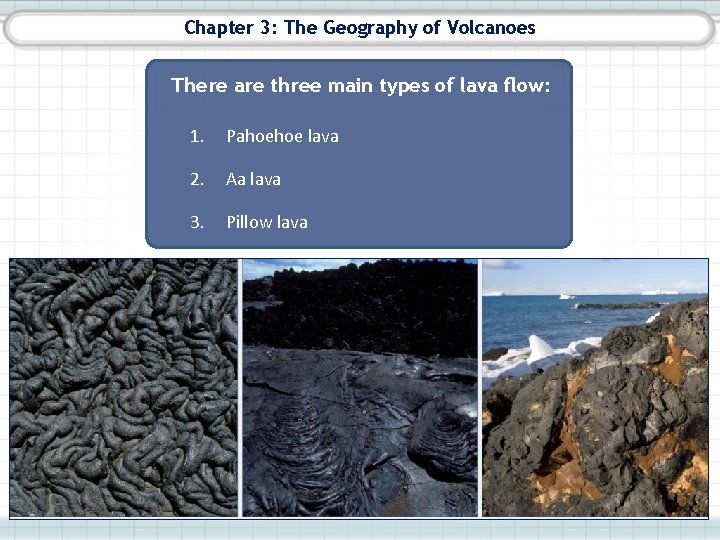
Chapter 3: The Geography of Volcanoes There are three main types of lava flow: 1. Pahoehoe lava 2. Aa lava 3. Pillow lava
Memory time
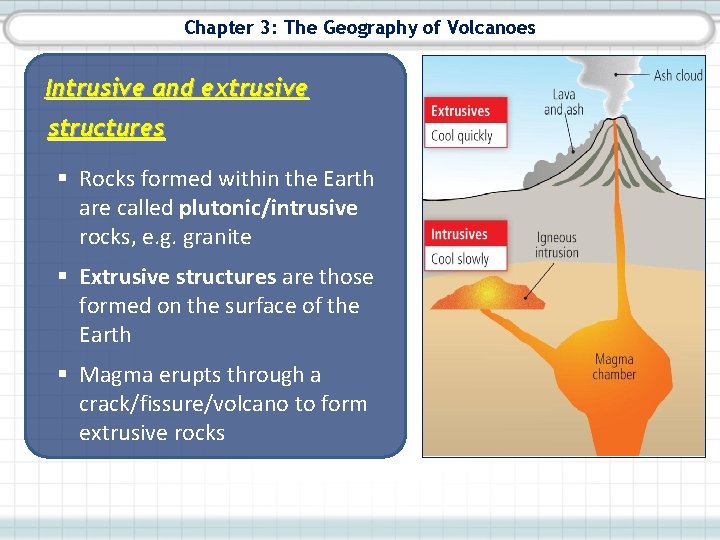
Chapter 3: The Geography of Volcanoes Intrusive and extrusive structures § Rocks formed within the Earth are called plutonic/intrusive rocks, e. g. granite § Extrusive structures are those formed on the surface of the Earth § Magma erupts through a crack/fissure/volcano to form extrusive rocks
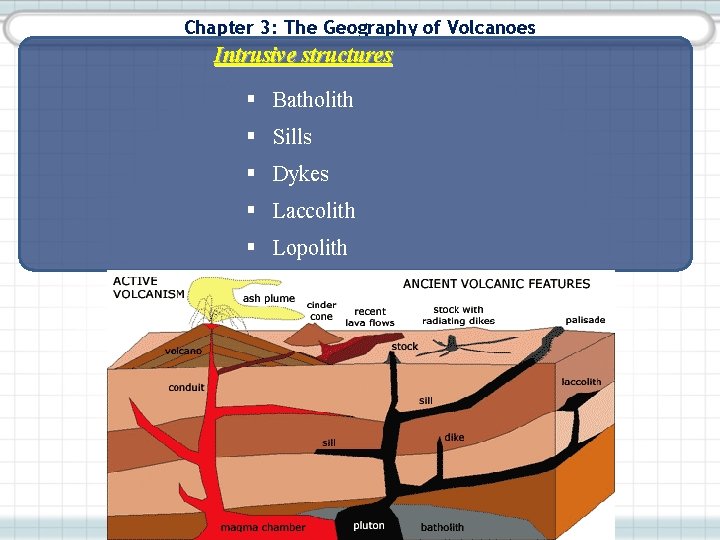
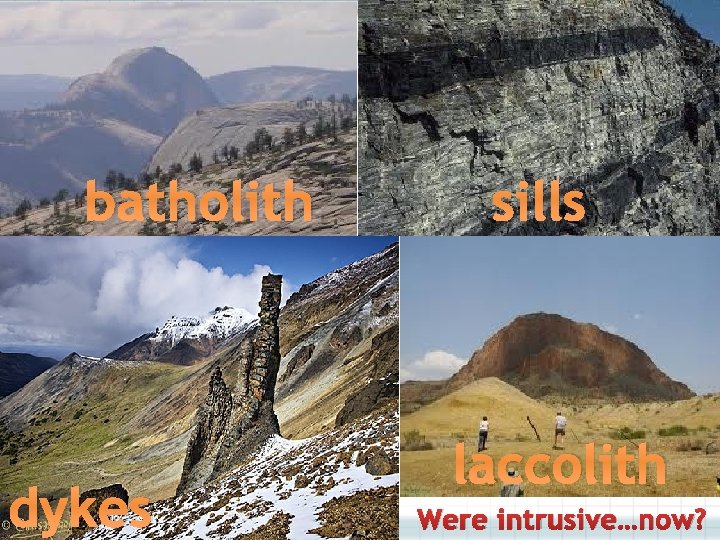
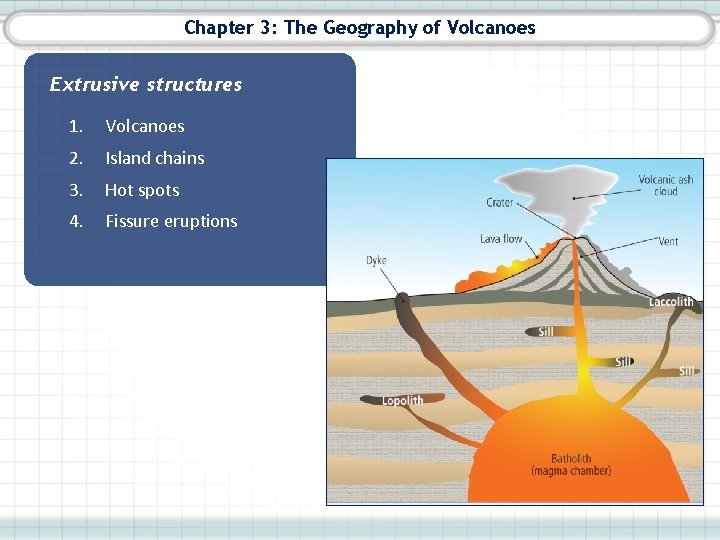
Chapter 3: The Geography of Volcanoes Intrusive structures § Batholith § Sills § Dykes § Laccolith § Lopolith
batholith dykes sills laccolith Were intrusive…now?
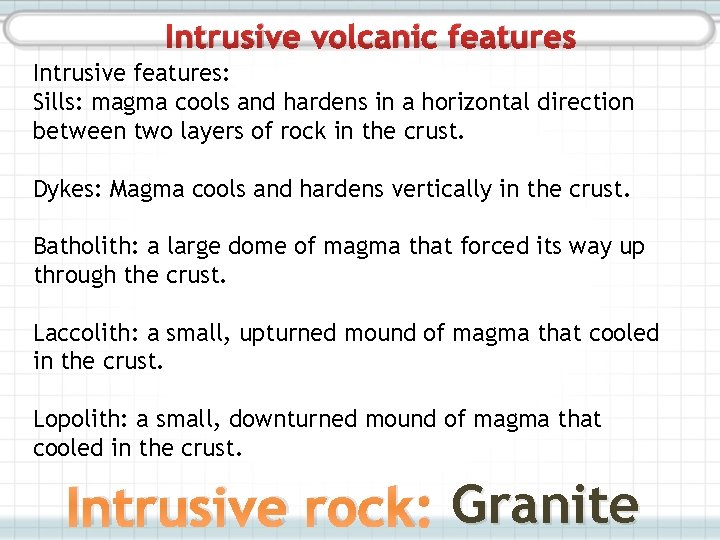
Intrusive volcanic features Intrusive features: Sills: magma cools and hardens in a horizontal direction between two layers of rock in the crust. Dykes: Magma cools and hardens vertically in the crust. Batholith: a large dome of magma that forced its way up through the crust. Laccolith: a small, upturned mound of magma that cooled in the crust. Lopolith: a small, downturned mound of magma that cooled in the crust. Intrusive rock: Granite
Chapter 3: The Geography of Volcanoes Extrusive structures 1. Volcanoes 2. Island chains 3. Hot spots 4. Fissure eruptions
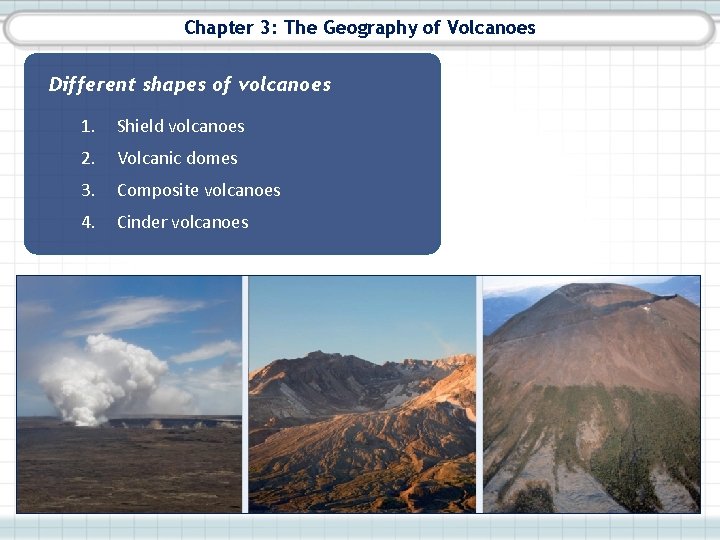
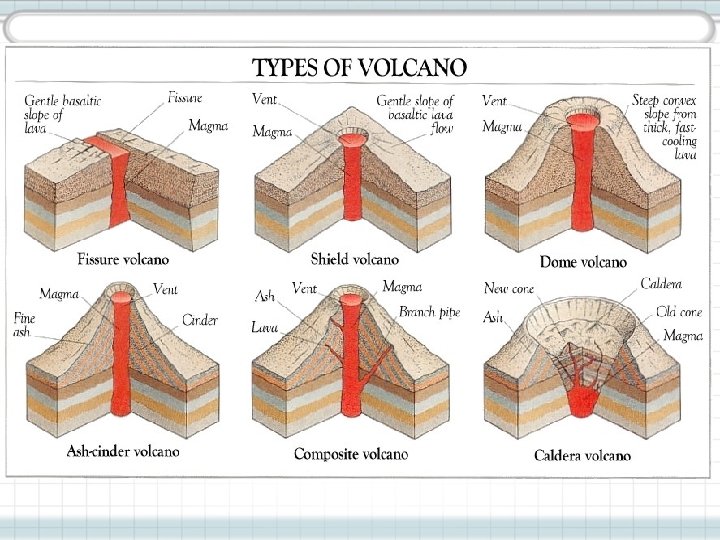
Chapter 3: The Geography of Volcanoes Different shapes of volcanoes 1. Shield volcanoes 2. Volcanic domes 3. Composite volcanoes 4. Cinder volcanoes
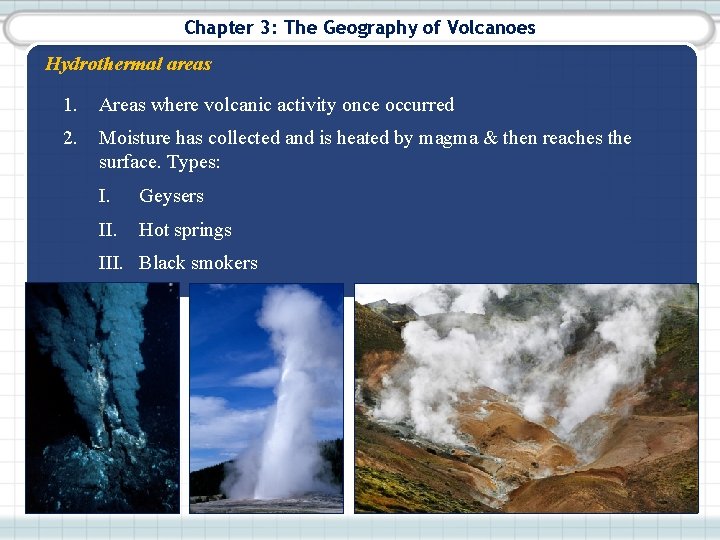
Chapter 3: The Geography of Volcanoes Hydrothermal areas 1. Areas where volcanic activity once occurred 2. Moisture has collected and is heated by magma & then reaches the surface. Types: I. Geysers II. Hot springs III. Black smokers
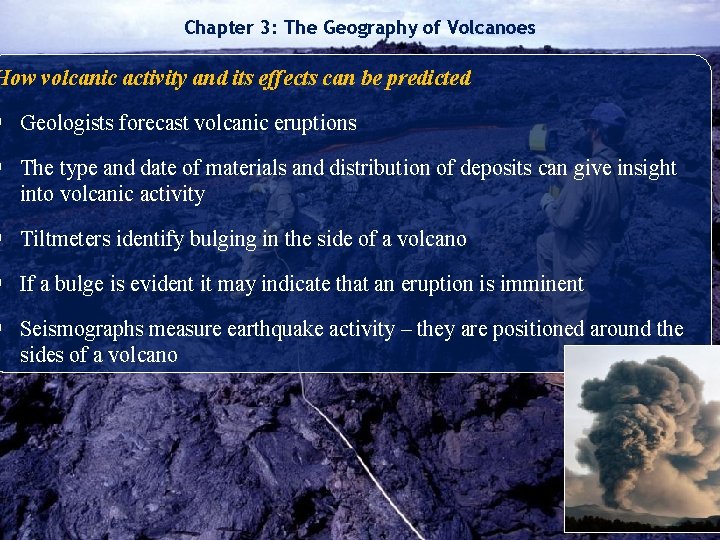
Chapter 3: The Geography of Volcanoes How volcanic activity and its effects can be predicted § Geologists forecast volcanic eruptions § The type and date of materials and distribution of deposits can give insight into volcanic activity § Tiltmeters identify bulging in the side of a volcano § If a bulge is evident it may indicate that an eruption is imminent § Seismographs measure earthquake activity – they are positioned around the sides of a volcano
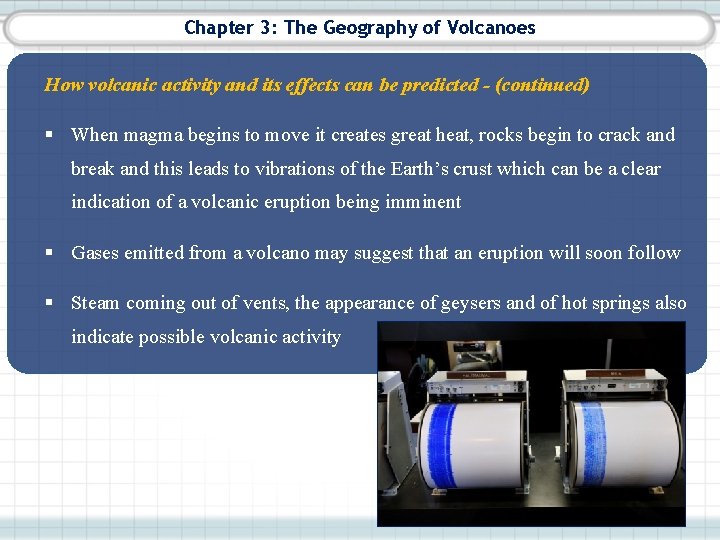
Chapter 3: The Geography of Volcanoes How volcanic activity and its effects can be predicted - (continued) § When magma begins to move it creates great heat, rocks begin to crack and break and this leads to vibrations of the Earth’s crust which can be a clear indication of a volcanic eruption being imminent § Gases emitted from a volcano may suggest that an eruption will soon follow § Steam coming out of vents, the appearance of geysers and of hot springs also indicate possible volcanic activity
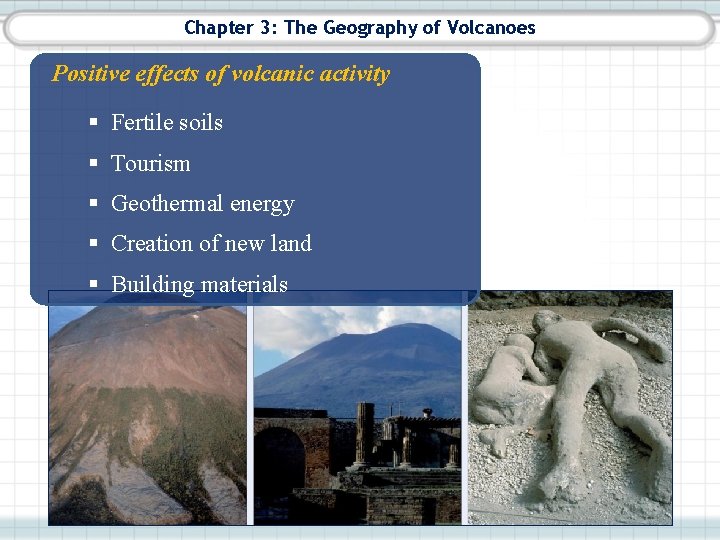
Chapter 3: The Geography of Volcanoes Positive effects of volcanic activity § Fertile soils § Tourism § Geothermal energy § Creation of new land § Building materials
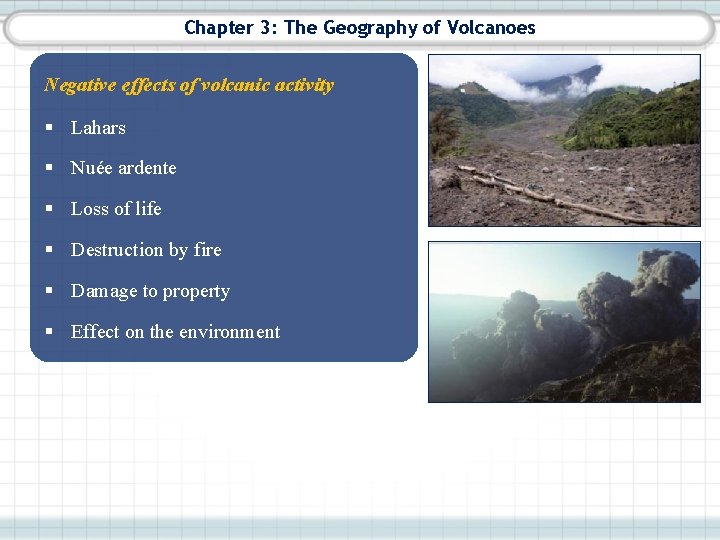
Chapter 3: The Geography of Volcanoes Negative effects of volcanic activity § Lahars § Nuée ardente § Loss of life § Destruction by fire § Damage to property § Effect on the environment
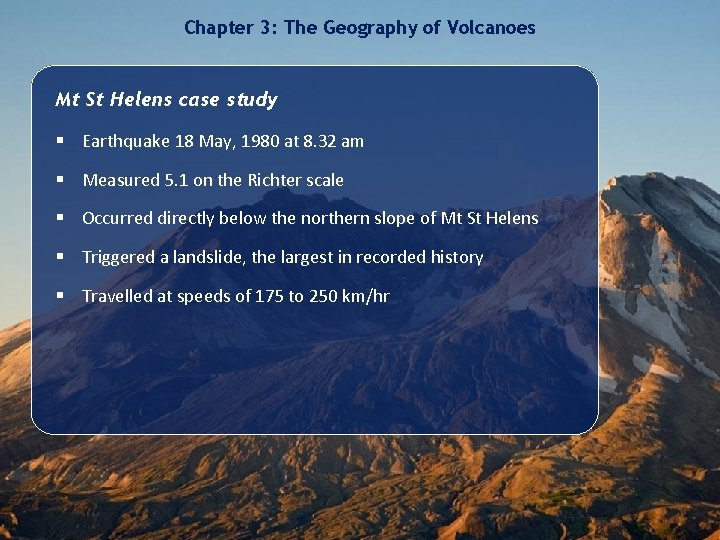
Chapter 3: The Geography of Volcanoes Mt St Helens case study § Earthquake 18 May, 1980 at 8. 32 am § Measured 5. 1 on the Richter scale § Occurred directly below the northern slope of Mt St Helens § Triggered a landslide, the largest in recorded history § Travelled at speeds of 175 to 250 km/hr
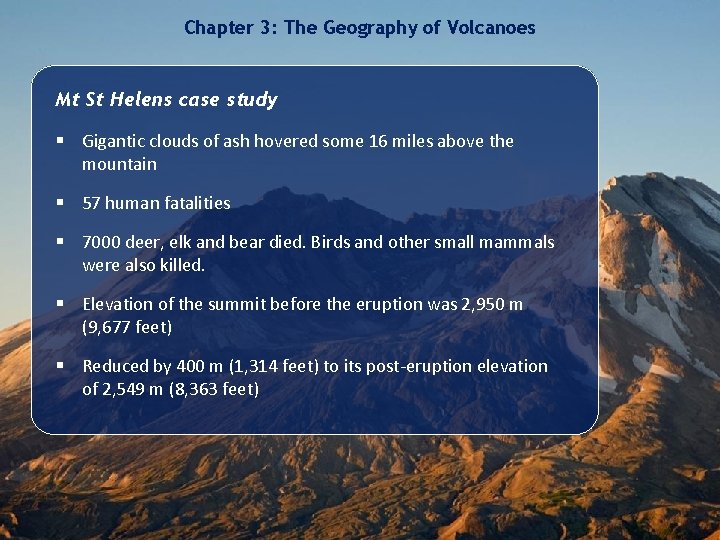
Chapter 3: The Geography of Volcanoes Mt St Helens case study § Gigantic clouds of ash hovered some 16 miles above the mountain § 57 human fatalities § 7000 deer, elk and bear died. Birds and other small mammals were also killed. § Elevation of the summit before the eruption was 2, 950 m (9, 677 feet) § Reduced by 400 m (1, 314 feet) to its post-eruption elevation of 2, 549 m (8, 363 feet)