
3 Tense and Aspect 1742171 Sung Mi Kim




- Slides: 39
3 Tense and Aspect 1742171 Sung Mi Kim
Forms of Tense and Aspect Meanings in Context Teaching Activity
Forms of Tense
1. Forms of tense § Tense § Present tense § Past tense Cf) The time line perspective
Forms of Aspect
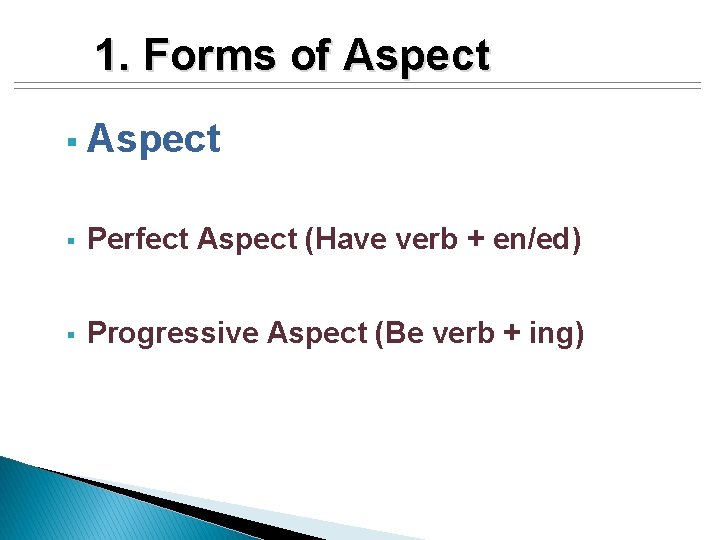
1. Forms of Aspect § Aspect § Perfect Aspect (Have verb + en/ed) § Progressive Aspect (Be verb + ing)
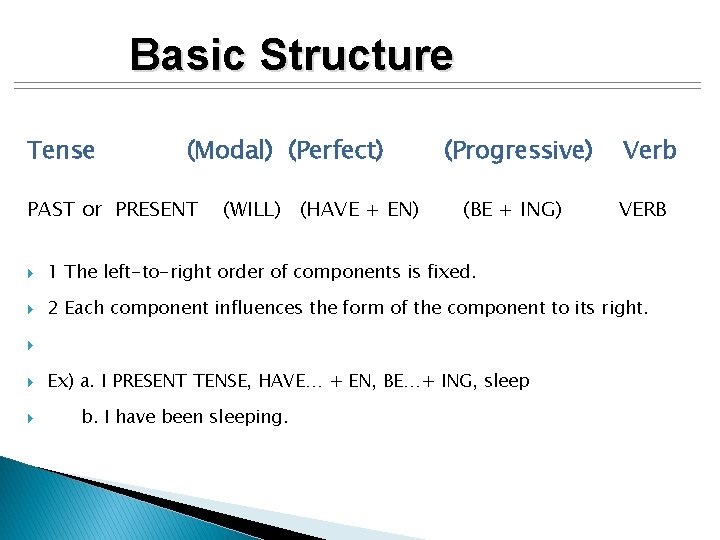
Basic Structure Tense (Modal) (Perfect) PAST or PRESENT (WILL) (HAVE + EN) (Progressive) (BE + ING) Verb VERB 1 The left-to-right order of components is fixed. 2 Each component influences the form of the component to its right. Ex) a. I PRESENT TENSE, HAVE… + EN, BE…+ ING, sleep b. I have been sleeping.
Meanings of Tense
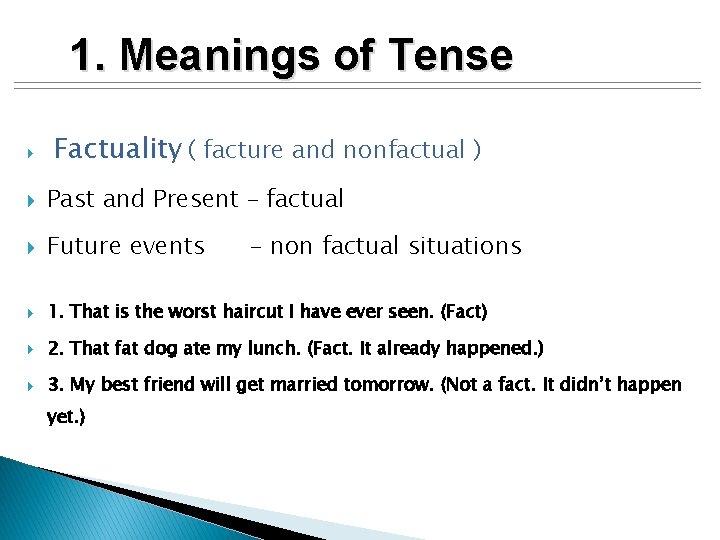
1. Meanings of Tense Factuality ( facture and nonfactual ) Past and Present – factual Future events 1. That is the worst haircut I have ever seen. (Fact) 2. That fat dog ate my lunch. (Fact. It already happened. ) 3. My best friend will get married tomorrow. (Not a fact. It didn’t happen yet. ) – non factual situations
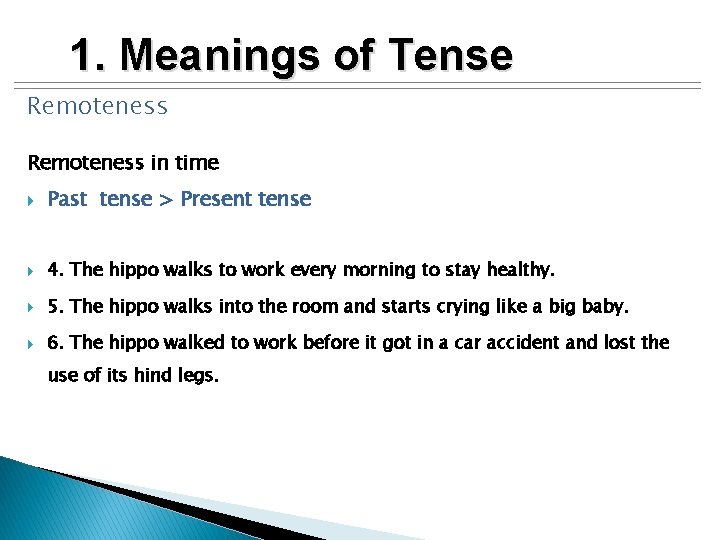
1. Meanings of Tense Remoteness in time Past tense > Present tense 4. The hippo walks to work every morning to stay healthy. 5. The hippo walks into the room and starts crying like a big baby. 6. The hippo walked to work before it got in a car accident and lost the use of its hind legs.
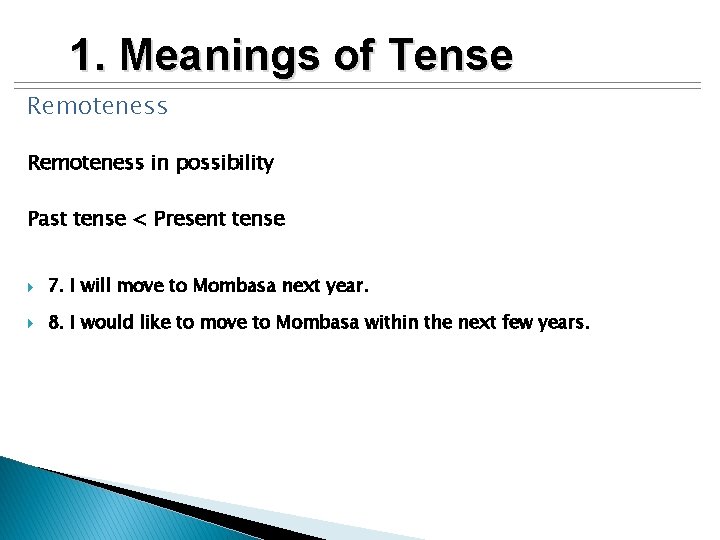
1. Meanings of Tense Remoteness in possibility Past tense < Present tense 7. I will move to Mombasa next year. 8. I would like to move to Mombasa within the next few years.
Meanings of Aspect
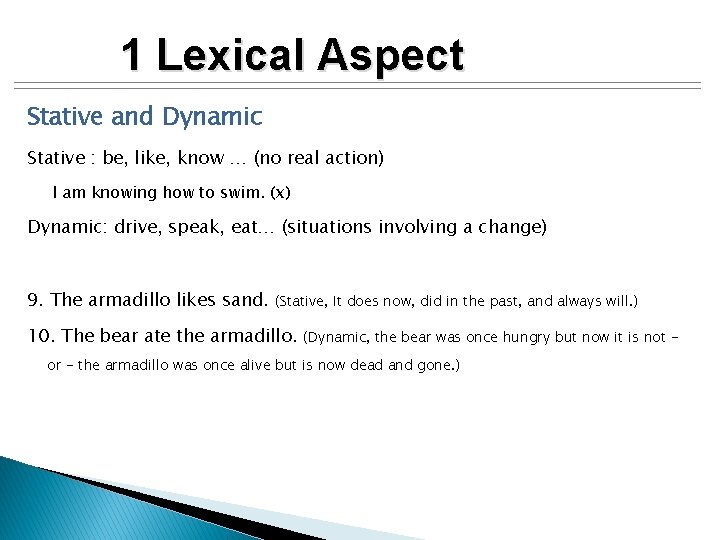
1 Lexical Aspect Stative and Dynamic Stative : be, like, know … (no real action) I am knowing how to swim. (x) Dynamic: drive, speak, eat… (situations involving a change) 9. The armadillo likes sand. (Stative, It does now, did in the past, and always will. ) 10. The bear ate the armadillo. (Dynamic, the bear was once hungry but now it is not - or - the armadillo was once alive but is now dead and gone. )
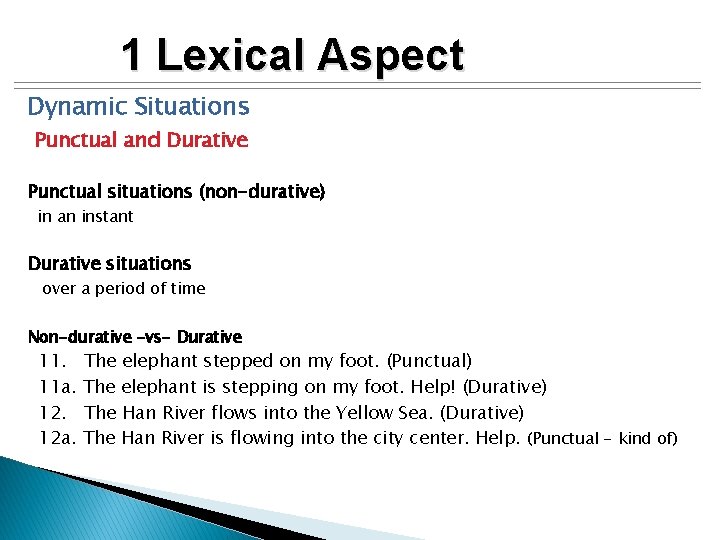
1 Lexical Aspect Dynamic Situations Punctual and Durative Punctual situations (non-durative) in an instant Durative situations over a period of time Non-durative -vs- Durative 11. 11 a. 12 a. The elephant stepped on my foot. (Punctual) The elephant is stepping on my foot. Help! (Durative) The Han River flows into the Yellow Sea. (Durative) The Han River is flowing into the city center. Help. (Punctual - kind of)
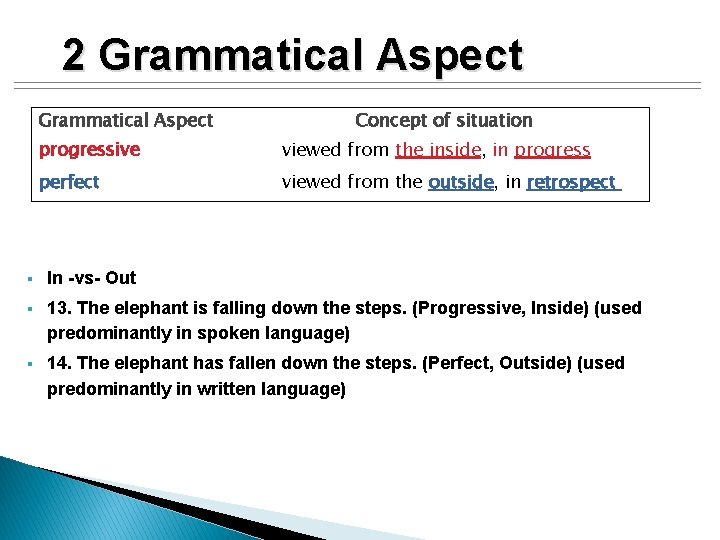
2 Grammatical Aspect Concept of situation progressive viewed from the inside, in progress perfect viewed from the outside, in retrospect § In -vs- Out § 13. The elephant is falling down the steps. (Progressive, Inside) (used predominantly in spoken language) § 14. The elephant has fallen down the steps. (Perfect, Outside) (used predominantly in written language)
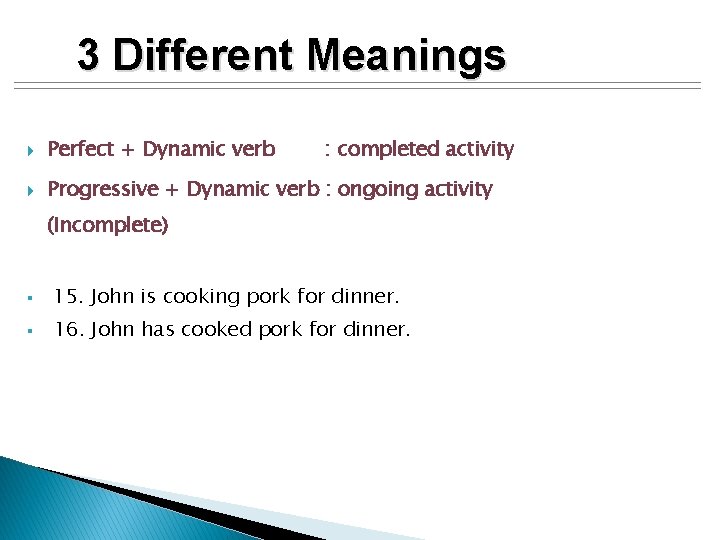
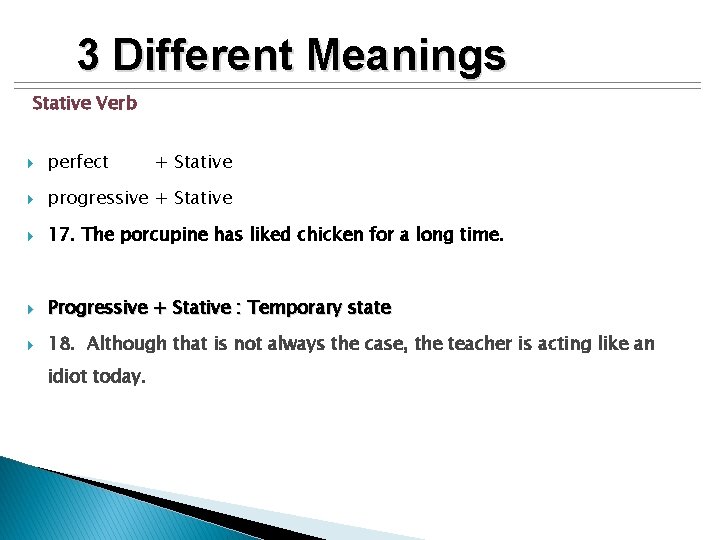
3 Different Meanings Perfect + Dynamic verb : completed activity Progressive + Dynamic verb : ongoing activity (Incomplete) § 15. John is cooking pork for dinner. § 16. John has cooked pork for dinner.
3 Different Meanings Stative Verb perfect progressive + Stative 17. The porcupine has liked chicken for a long time. Progressive + Stative : Temporary state 18. Although that is not always the case, the teacher is acting like an idiot today. + Stative
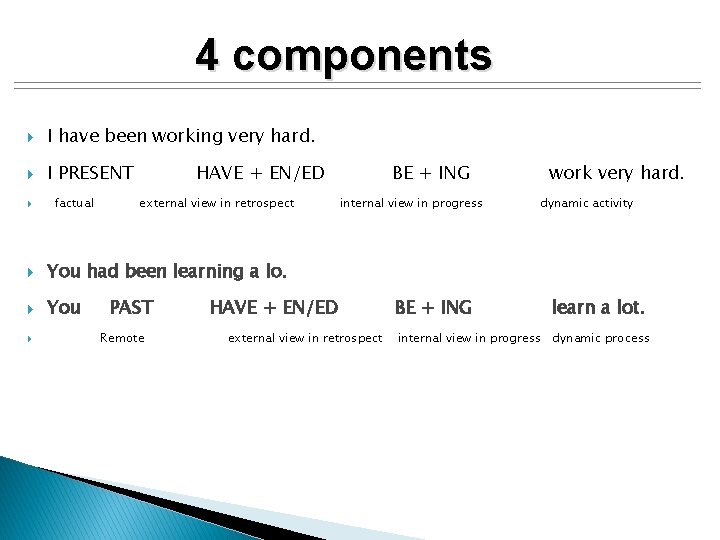
4 components I have been working very hard. I PRESENT factual HAVE + EN/ED external view in retrospect You had been learning a lo. You PAST Remote BE + ING internal view in progress HAVE + EN/ED external view in retrospect BE + ING work very hard. dynamic activity learn a lot. internal view in progress dynamic process
Meanings in Context
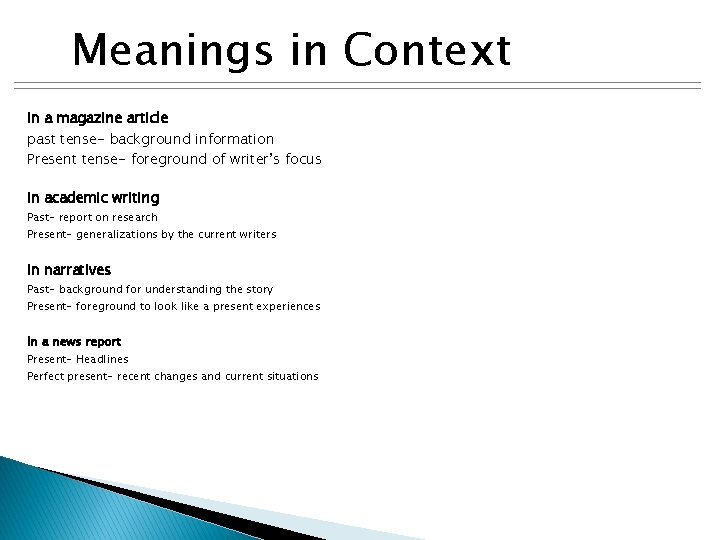
Meanings in Context In a magazine article past tense- background information Present tense- foreground of writer’s focus In academic writing Past- report on research Present- generalizations by the current writers In narratives Past- background for understanding the story Present- foreground to look like a present experiences In a news report Present- Headlines Perfect present- recent changes and current situations
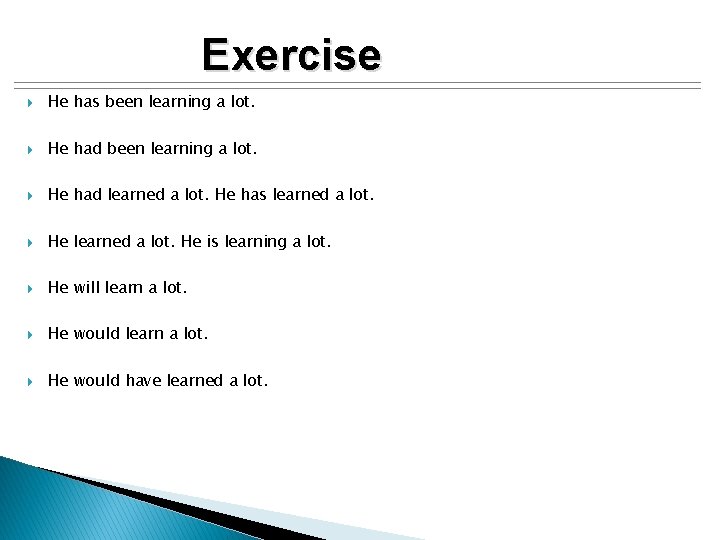
Exercise He has been learning a lot. He had learned a lot. He has learned a lot. He is learning a lot. He will learn a lot. He would have learned a lot.
Teaching Activity
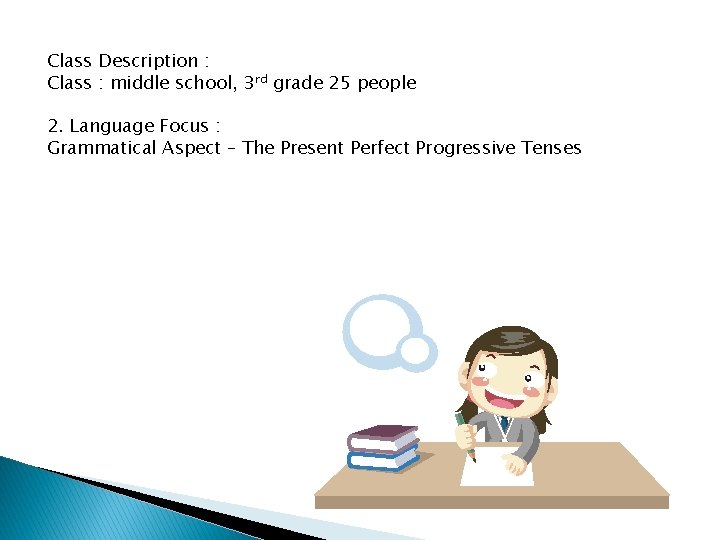
Class Description : Class : middle school, 3 rd grade 25 people 2. Language Focus : Grammatical Aspect – The Present Perfect Progressive Tenses
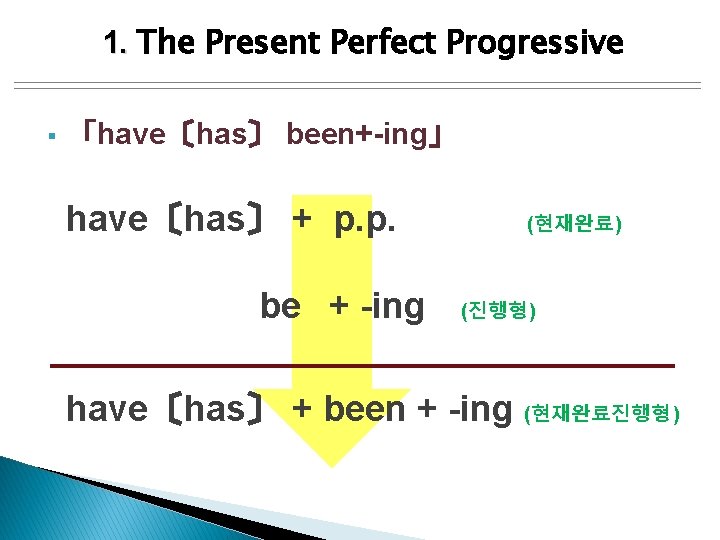
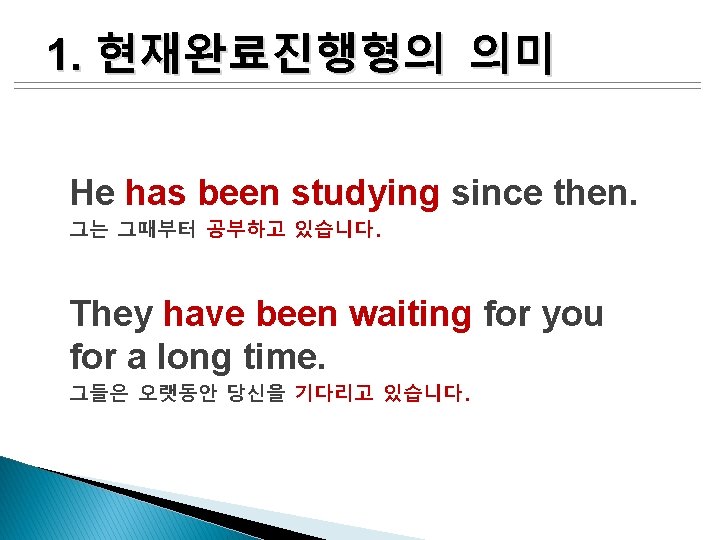
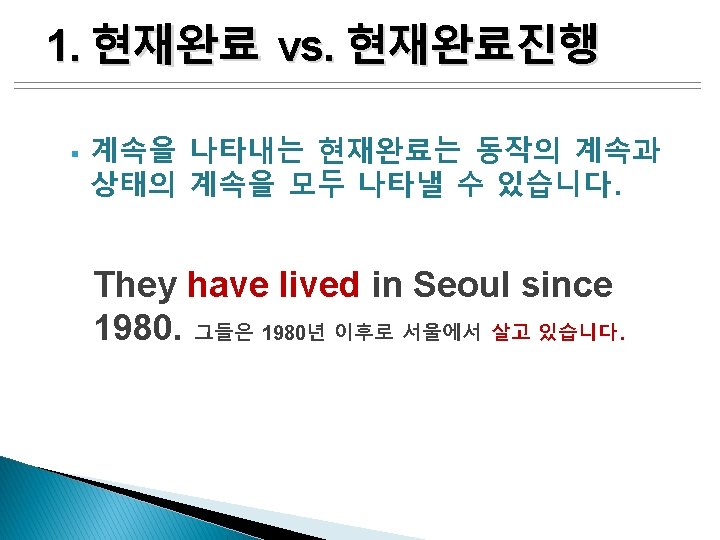
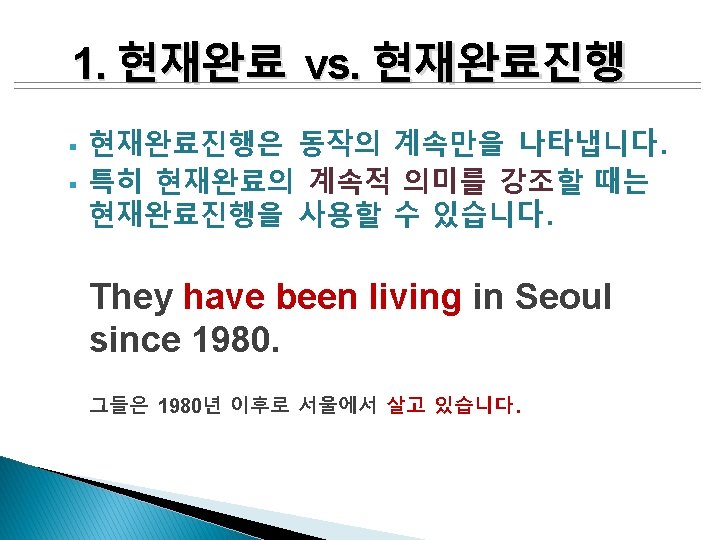
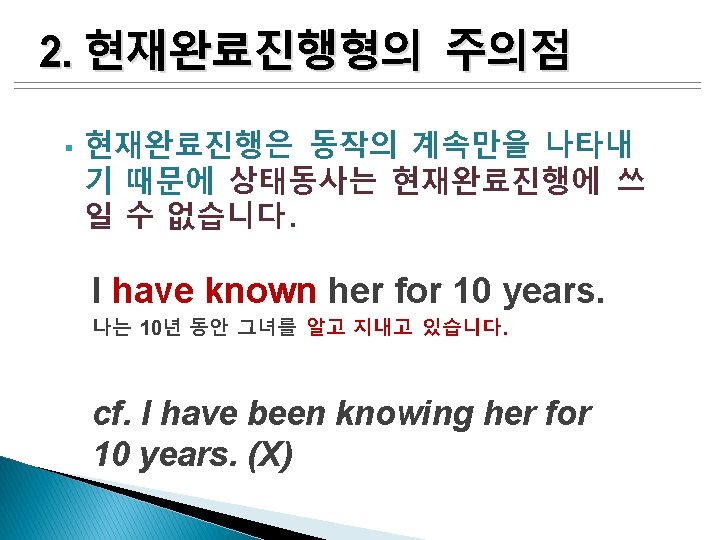
1. The Present Perfect Progressive 1. § 「have〔has〕 been+-ing」 have〔has〕 + p. p. (현재완료) be + -ing (진행형) have〔has〕 + been + -ing (현재완료진행형 )
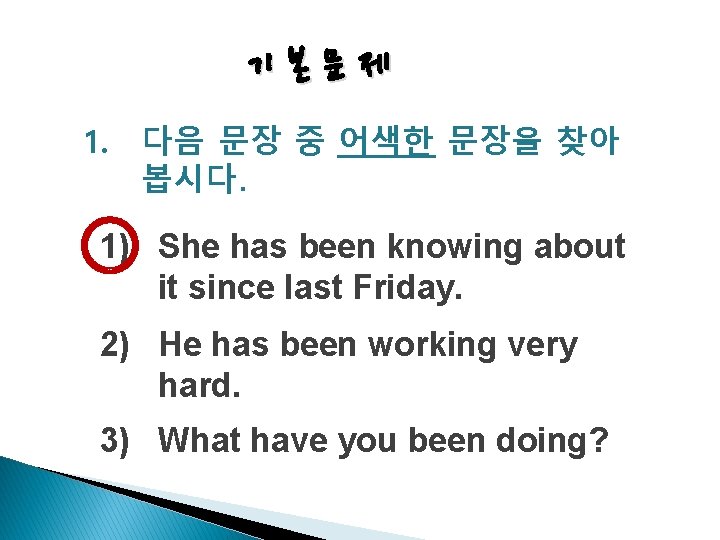
기본문제 1. 다음 문장 중 어색한 문장을 찾아 봅시다. 1) She has been knowing about it since last Friday. 2) He has been working very hard. 3) What have you been doing?
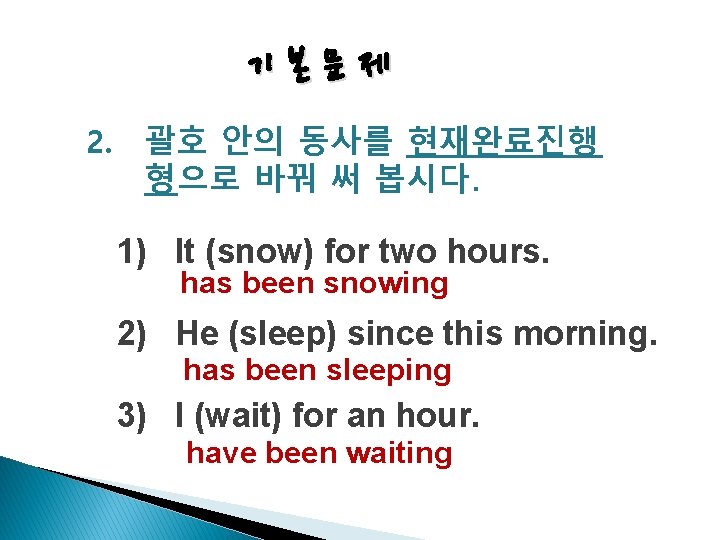
기본문제 2. 괄호 안의 동사를 현재완료진행 형으로 바꿔 써 봅시다. 1) It (snow) for two hours. has been snowing 2) He (sleep) since this morning. has been sleeping 3) I (wait) for an hour. have been waiting
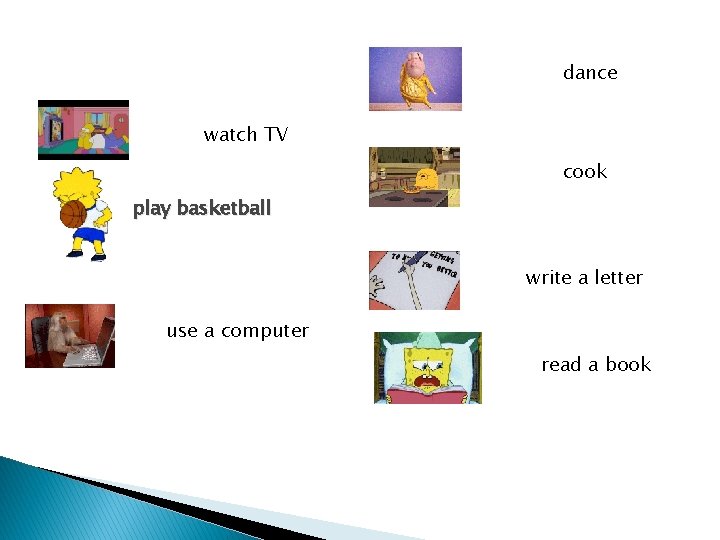
dance watch TV cook play basketball write a letter use a computer read a book
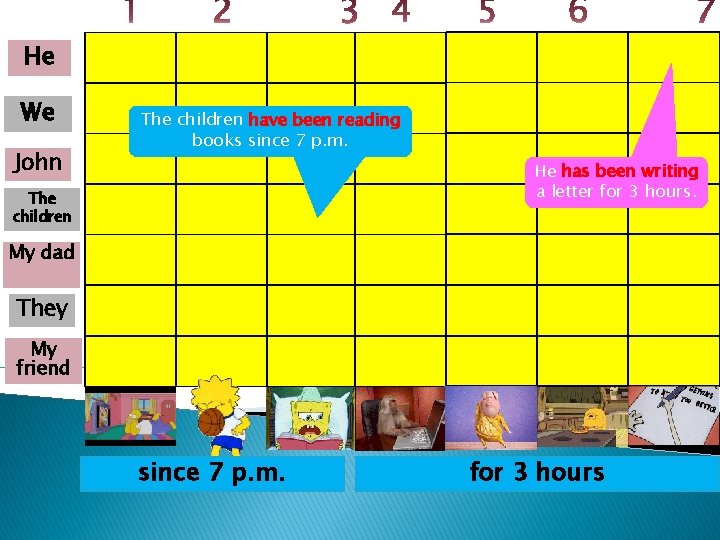
He We John The children have been reading books since 7 p. m. He has been writing a letter for 3 hours. The children My dad They My friend since 7 p. m. for 3 hours
He We John The children My dad They My friend since 7 p. m. for 3 hours
Thank you!