
3 Structures are either frame structures or shell
- Slides: 28
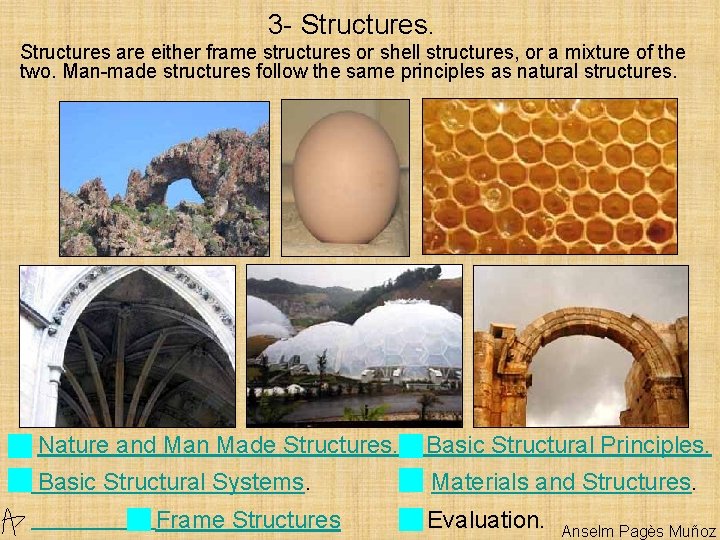
3 - Structures are either frame structures or shell structures, or a mixture of the two. Man-made structures follow the same principles as natural structures. Nature and Man Made Structures. Basic Structural Principles. Basic Structural Systems. Materials and Structures. Frame Structures Evaluation. Anselm Pagès Muñoz
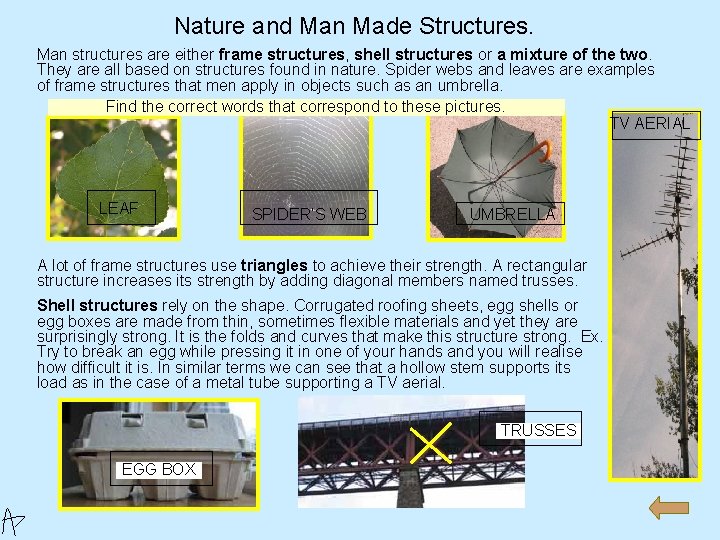
Nature and Man Made Structures. Man structures are either frame structures, shell structures or a mixture of the two. They are all based on structures found in nature. Spider webs and leaves are examples of frame structures that men apply in objects such as an umbrella. Find the correct words that correspond to these pictures. TV AERIAL LEAF SPIDER’S WEB UMBRELLA A lot of frame structures use triangles to achieve their strength. A rectangular structure increases its strength by adding diagonal members named trusses. Shell structures rely on the shape. Corrugated roofing sheets, egg shells or egg boxes are made from thin, sometimes flexible materials and yet they are surprisingly strong. It is the folds and curves that make this structure strong. Ex. Try to break an egg while pressing it in one of your hands and you will realise how difficult it is. In similar terms we can see that a hollow stem supports its load as in the case of a metal tube supporting a TV aerial. TRUSSES EGG BOX
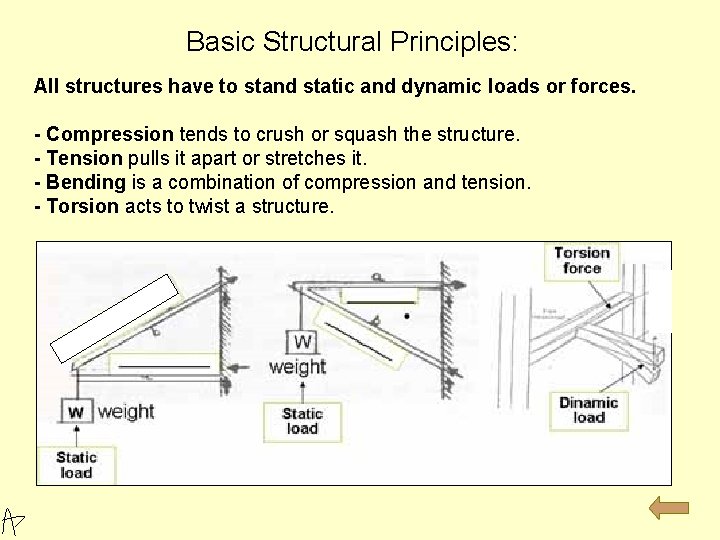
Basic Structural Principles: All structures have to stand static and dynamic loads or forces. - Compression tends to crush or squash the structure. - Tension pulls it apart or stretches it. - Bending is a combination of compression and tension. - Torsion acts to twist a structure.
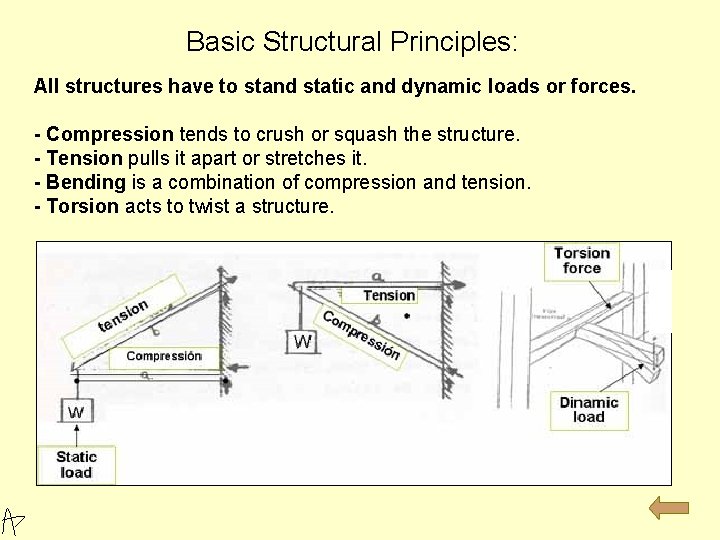
Basic Structural Principles: All structures have to stand static and dynamic loads or forces. - Compression tends to crush or squash the structure. - Tension pulls it apart or stretches it. - Bending is a combination of compression and tension. - Torsion acts to twist a structure. weight
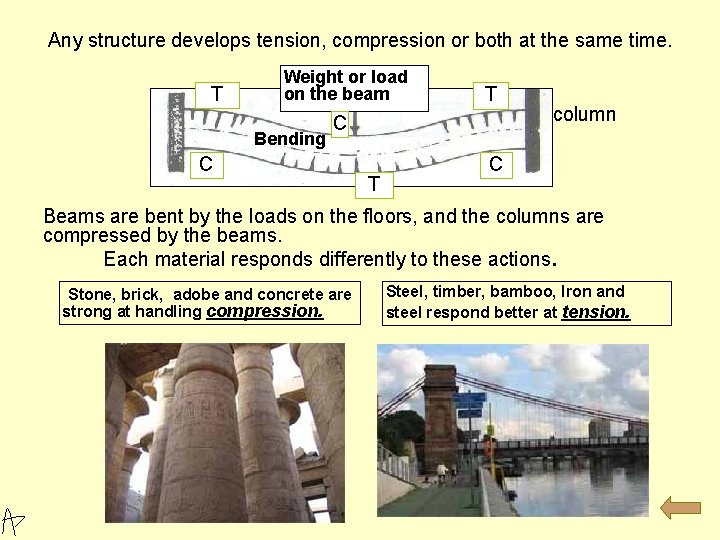
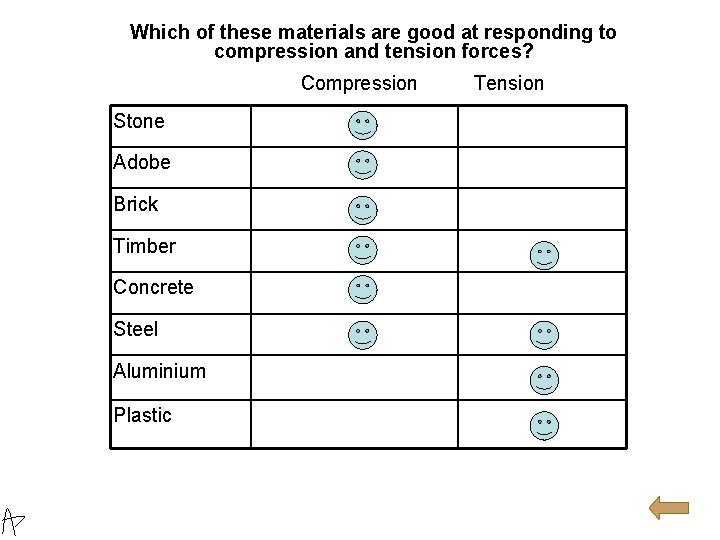
Any structure develops tension, compression or both at the same time. T Weight or load on the beam Bending T C C T column C Beams are bent by the loads on the floors, and the columns are compressed by the beams. Each material responds differently to these actions. Stone, brick, adobe and concrete are strong at handling compression. Steel, timber, bamboo, Iron and steel respond better at tension.
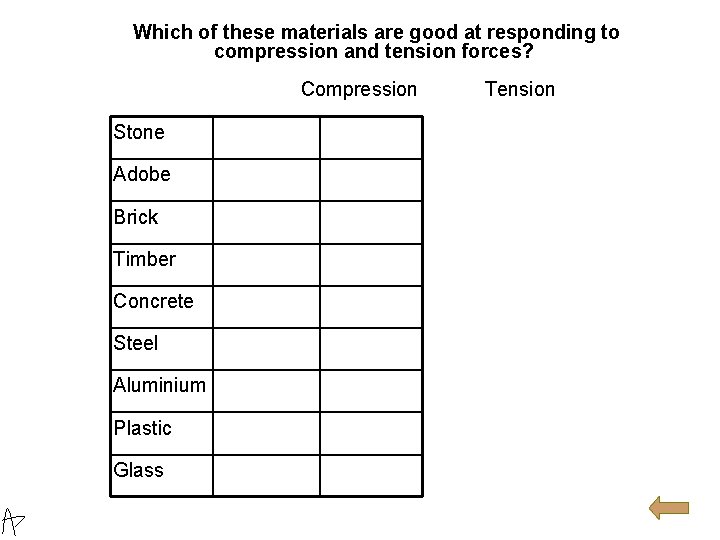
Which of these materials are good at responding to compression and tension forces? Compression Stone Adobe Brick Timber Concrete Steel Aluminium Plastic Glass Tension
Which of these materials are good at responding to compression and tension forces? Compression Stone Adobe Brick Timber Concrete Steel Aluminium Plastic Tension
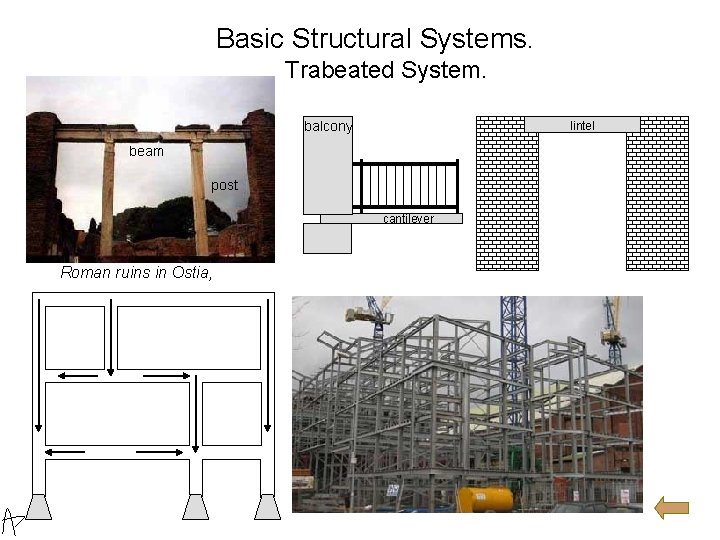
Basic Structural Systems. Trabeated System. balcony lintel beam post cantilever Roman ruins in Ostia,
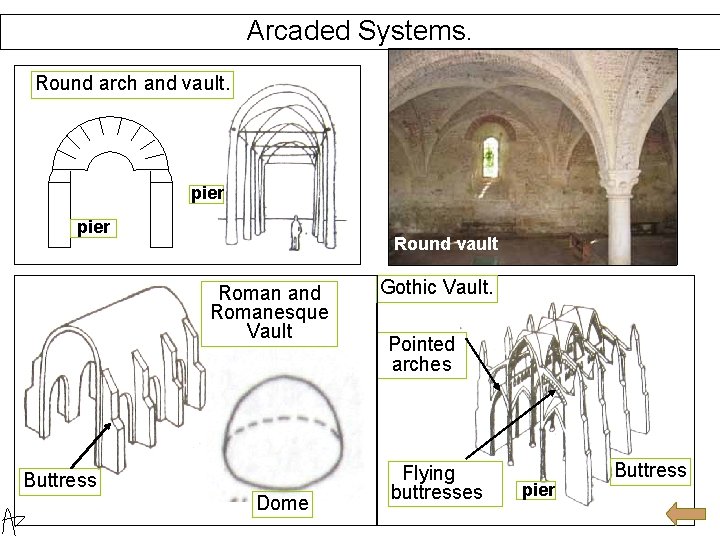
Arcaded Systems. Round arch and vault. pier Round vault Roman and Romanesque Vault Buttress Dome Gothic Vault. Pointed arches Flying buttresses pier Buttress
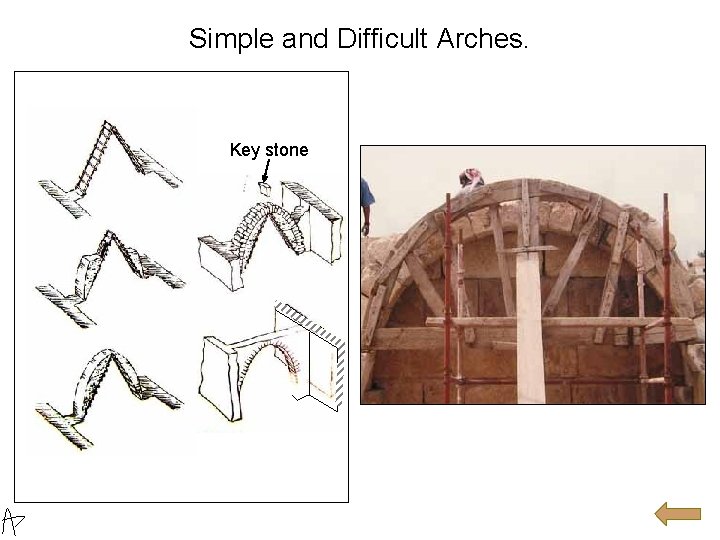
Simple and Difficult Arches. Key stone
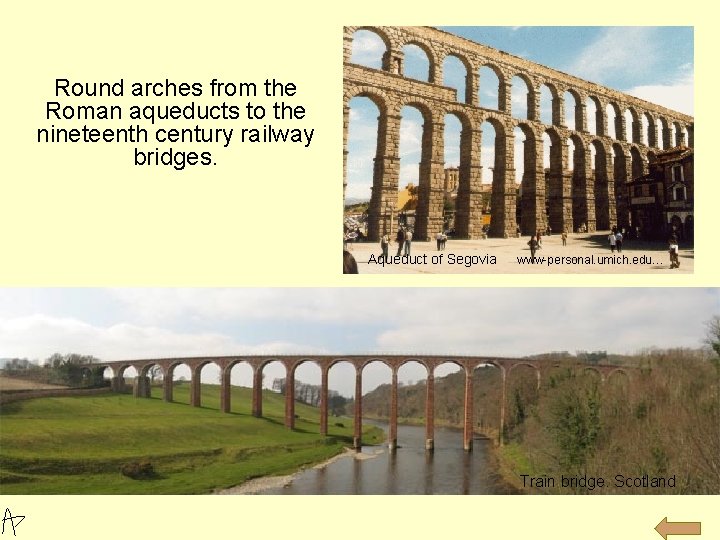
Round arches from the Roman aqueducts to the nineteenth century railway bridges. Aqueduct of Segovia www-personal. umich. edu… Train bridge. Scotland
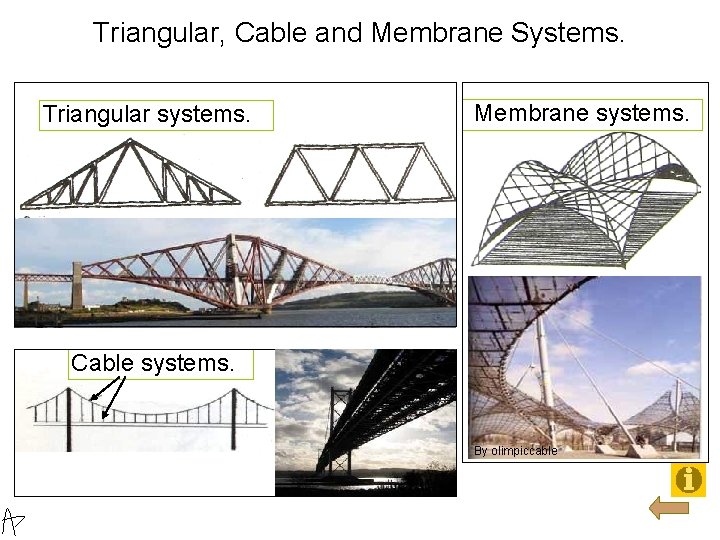
Triangular, Cable and Membrane Systems. Triangular systems. Membrane systems. Cable systems. By olimpiccable
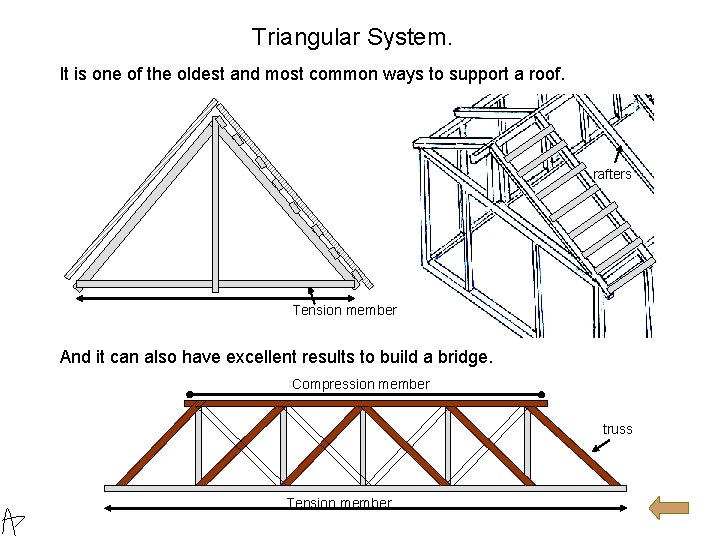
Triangular System. It is one of the oldest and most common ways to support a roof. rafters Tension member And it can also have excellent results to build a bridge. Compression member truss Tension member
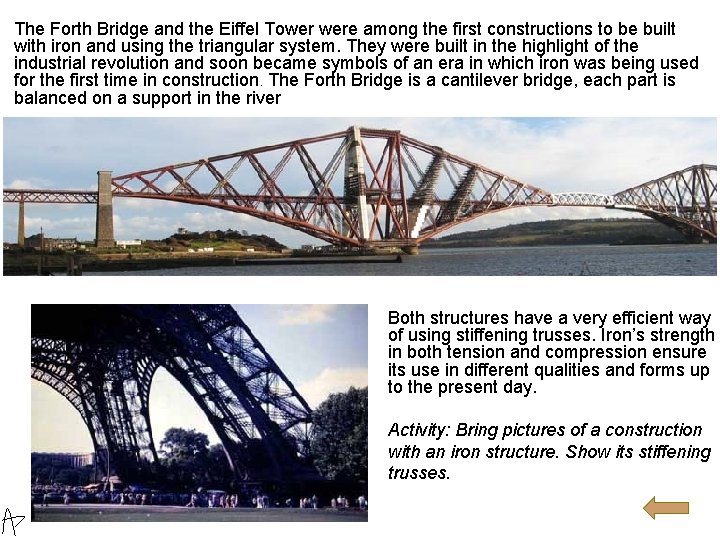
The Forth Bridge and the Eiffel Tower were among the first constructions to be built with iron and using the triangular system. They were built in the highlight of the industrial revolution and soon became symbols of an era in which iron was being used for the first time in construction. The Forth Bridge is a cantilever bridge, each part is balanced on a support in the river Both structures have a very efficient way of using stiffening trusses. Iron’s strength in both tension and compression ensure its use in different qualities and forms up to the present day. Activity: Bring pictures of a construction with an iron structure. Show its stiffening trusses.
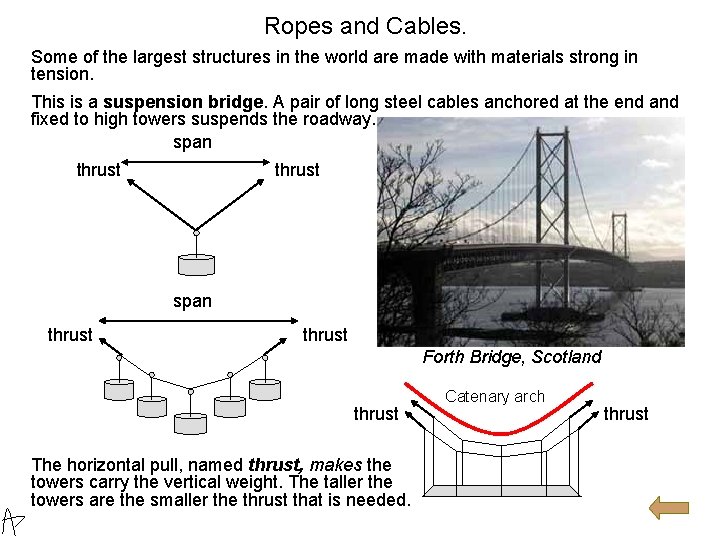
Ropes and Cables. Some of the largest structures in the world are made with materials strong in tension. This is a suspension bridge. A pair of long steel cables anchored at the end and fixed to high towers suspends the roadway. span thrust Forth Bridge, Scotland thrust The horizontal pull, named thrust, makes the towers carry the vertical weight. The taller the towers are the smaller the thrust that is needed. Catenary arch thrust
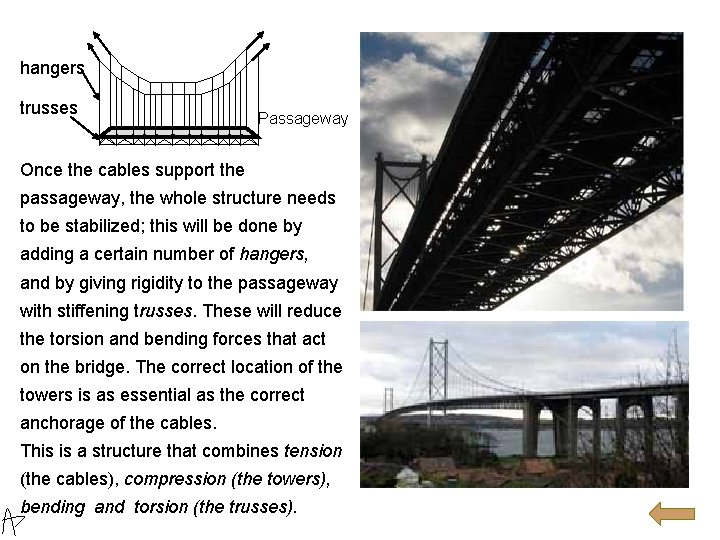
hangers trusses Passageway Once the cables support the passageway, the whole structure needs to be stabilized; this will be done by adding a certain number of hangers, and by giving rigidity to the passageway with stiffening trusses. These will reduce the torsion and bending forces that act on the bridge. The correct location of the towers is as essential as the correct anchorage of the cables. This is a structure that combines tension (the cables), compression (the towers), bending and torsion (the trusses).
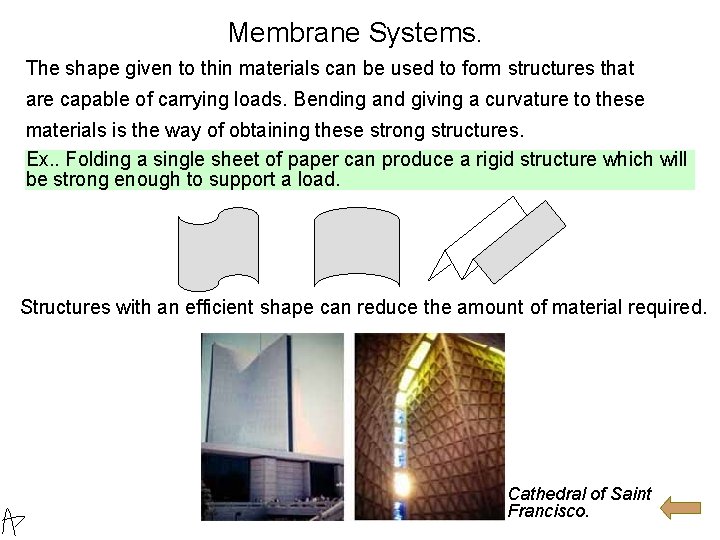
Membrane Systems. The shape given to thin materials can be used to form structures that are capable of carrying loads. Bending and giving a curvature to these materials is the way of obtaining these strong structures. Ex. . Folding a single sheet of paper can produce a rigid structure which will be strong enough to support a load. Structures with an efficient shape can reduce the amount of material required. Cathedral of Saint Francisco.
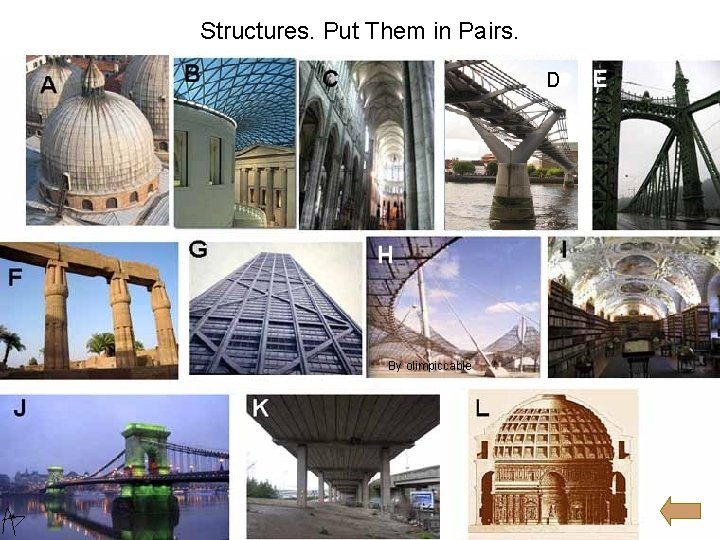
Structures. Put Them in Pairs. D By olimpiccable
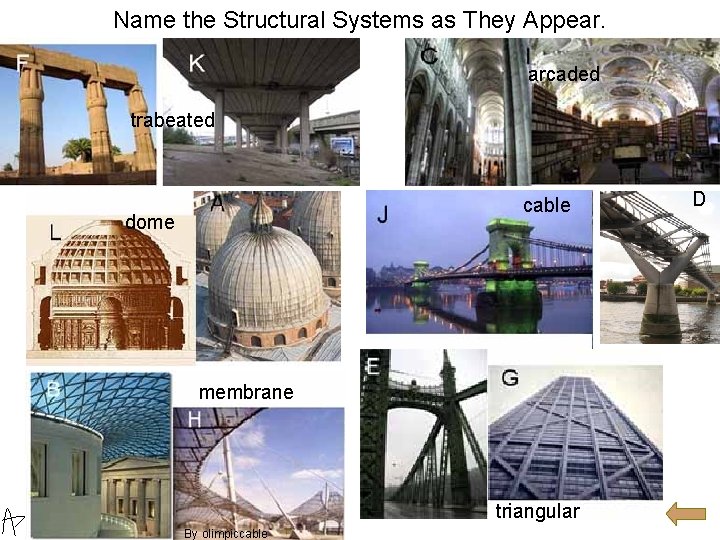
Name the Structural Systems as They Appear. arcaded trabeated cable dome membrane triangular By olimpiccable D
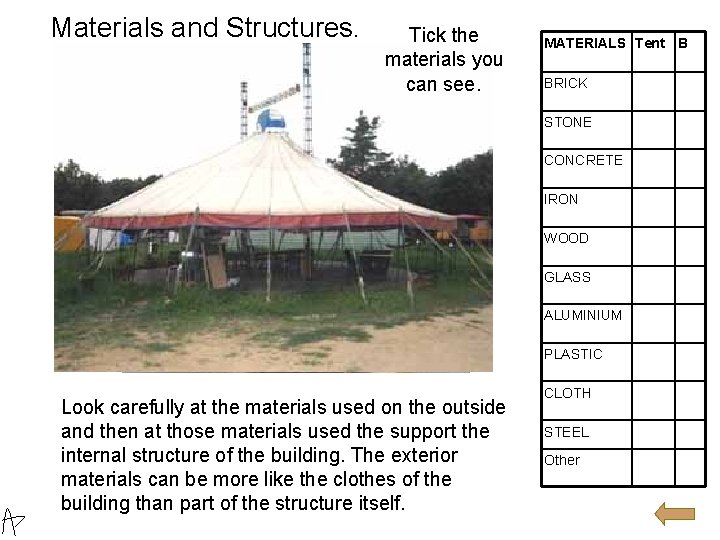
Materials and Structures. Tick the materials you can see. MATERIALS Tent B BRICK STONE CONCRETE IRON WOOD GLASS ALUMINIUM PLASTIC Look carefully at the materials used on the outside and then at those materials used the support the internal structure of the building. The exterior materials can be more like the clothes of the building than part of the structure itself. CLOTH STEEL Other
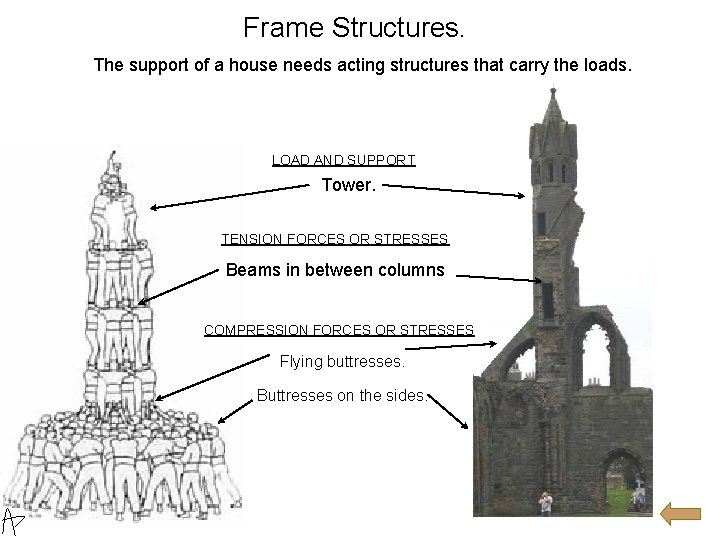
Frame Structures. The support of a house needs acting structures that carry the loads. LOAD AND SUPPORT Tower. TENSION FORCES OR STRESSES Beams in between columns COMPRESSION FORCES OR STRESSES Flying buttresses. Buttresses on the sides.
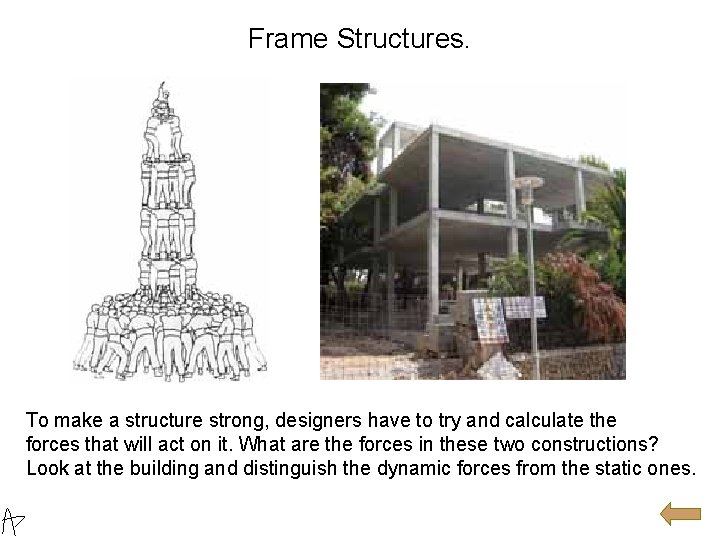
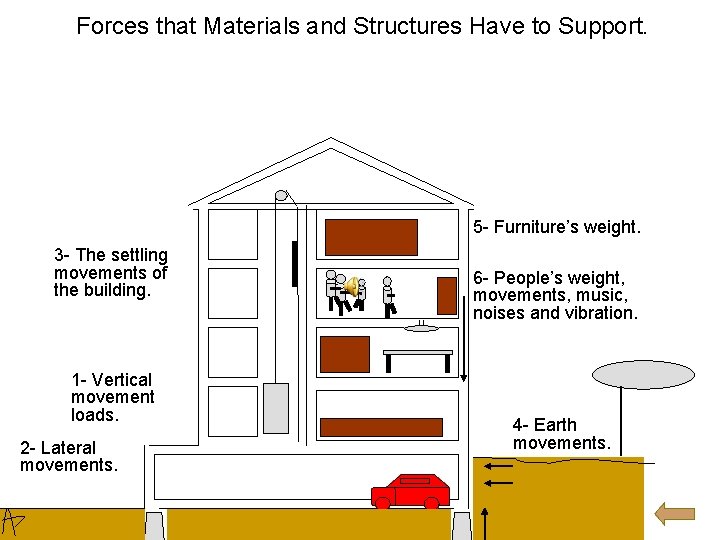
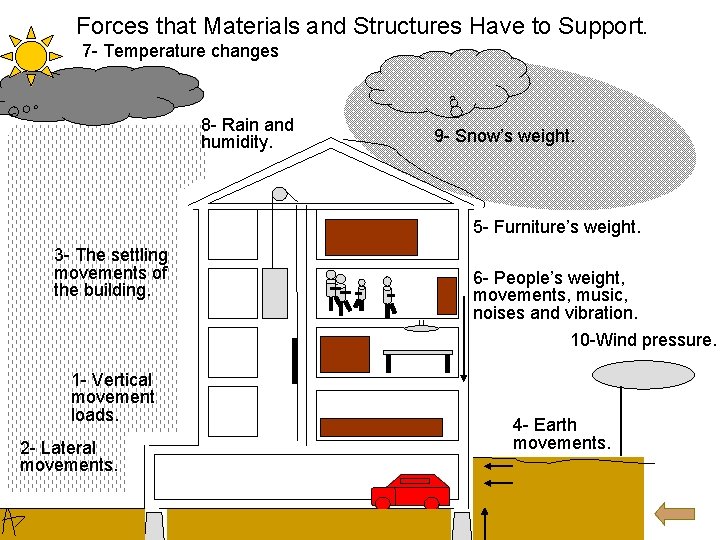
Frame Structures. To make a structure strong, designers have to try and calculate the forces that will act on it. What are the forces in these two constructions? Look at the building and distinguish the dynamic forces from the static ones.
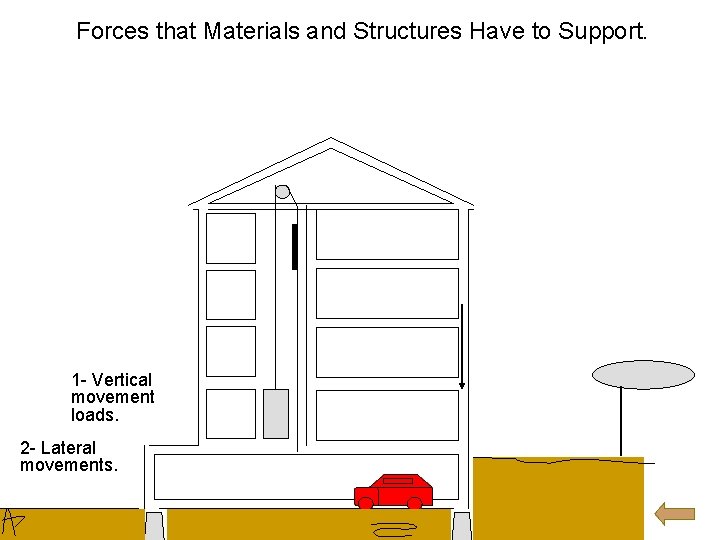
Forces that Materials and Structures Have to Support. 1 - Vertical movement loads. 2 - Lateral movements.
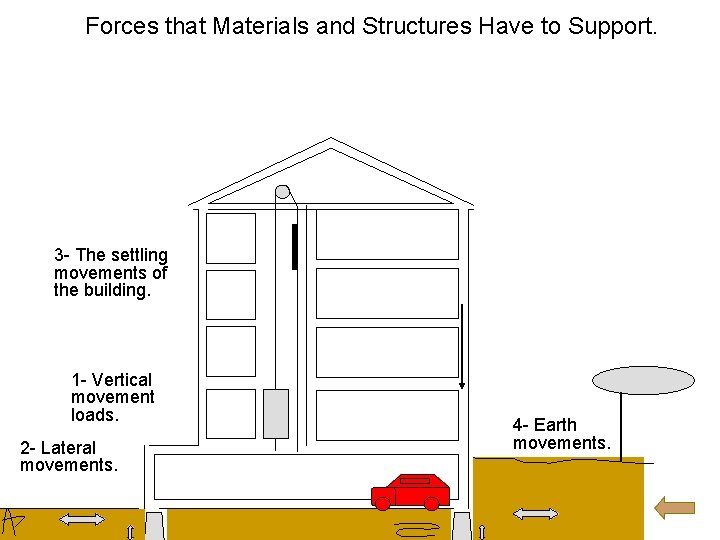
Forces that Materials and Structures Have to Support. 3 - The settling movements of the building. 1 - Vertical movement loads. 2 - Lateral movements. 4 - Earth movements.
Forces that Materials and Structures Have to Support. 5 - Furniture’s weight. 3 - The settling movements of the building. 1 - Vertical movement loads. 2 - Lateral movements. 6 - People’s weight, movements, music, noises and vibration. 4 - Earth movements.
Forces that Materials and Structures Have to Support. 7 - Temperature changes 8 - Rain and humidity. 9 - Snow’s weight. 5 - Furniture’s weight. 3 - The settling movements of the building. 6 - People’s weight, movements, music, noises and vibration. 10 -Wind pressure. 1 - Vertical movement loads. 2 - Lateral movements. 4 - Earth movements.
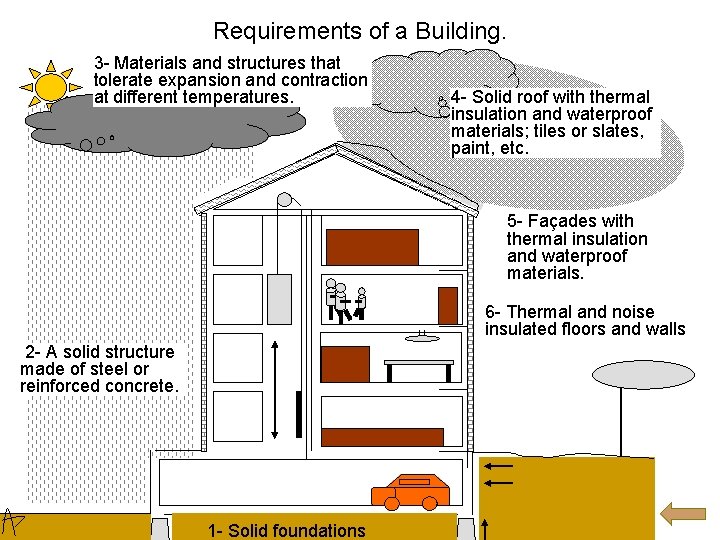
Requirements of a Building. 3 - Materials and structures that tolerate expansion and contraction at different temperatures. 4 - Solid roof with thermal insulation and waterproof materials; tiles or slates, paint, etc. 5 - Façades with thermal insulation and waterproof materials. 6 - Thermal and noise insulated floors and walls 2 - A solid structure made of steel or reinforced concrete. 1 - Solid foundations
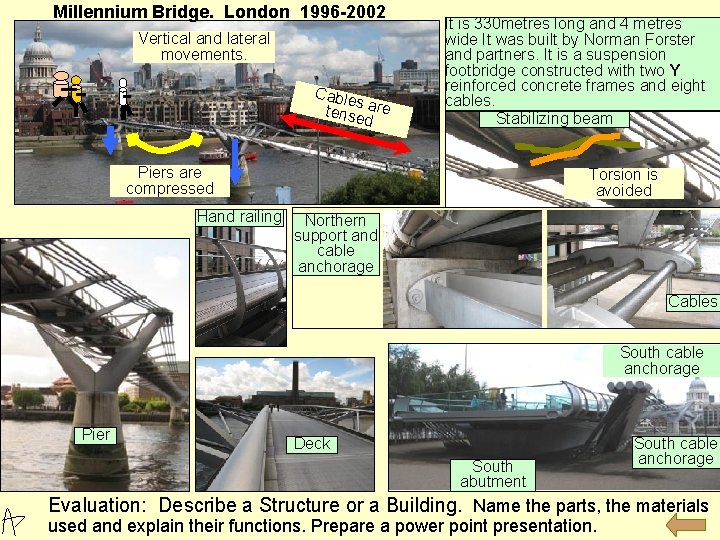
Millennium Bridge. London 1996 -2002 Vertical and lateral movements. Cable s tense are d It is 330 metres long and 4 metres wide It was built by Norman Forster and partners. It is a suspension footbridge constructed with two Y reinforced concrete frames and eight cables. Stabilizing beam Piers are compressed Hand railing Torsion is avoided Northern support and cable anchorage Cables South cable anchorage Pier Deck South abutment South cable anchorage Evaluation: Describe a Structure or a Building. Name the parts, the materials used and explain their functions. Prepare a power point presentation.