
3 rd Generation Networks Review of Cellular Wireless
- Slides: 36
3 rd Generation Networks • Review of Cellular Wireless Networks • UMTS
Cellular Wireless Network Evolution • First Generation: Analog – AMPS: Advance Mobile Phone Systems – Residential cordless phones • Second Generation: Digital – IS-54: North American Standard - TDMA – IS-95: CDMA (Qualcomm) – GSM: Pan-European Digital Cellular – DECT: Digital European Cordless Telephone
Cellular Evolution • Third Generation: T/CDMA – combines the functions of: cellular, cordless, wireless LANs, paging etc. – supports multimedia services (data, voice, video, image) – a progression of integrated, high performance systems: (a) GPRS (b) EDGE (c) UMTS
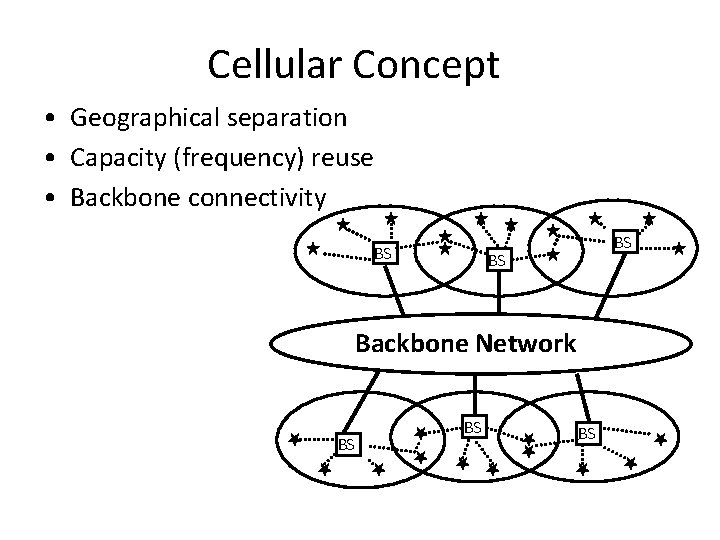
Cellular Concept • Geographical separation • Capacity (frequency) reuse • Backbone connectivity BS BS BS Backbone Network BS BS BS
Handoff • Handoff: Transfer of a mobile from one cell to another • Each base station constantly monitors the received power from each mobile. • When power drops below given threshold, base station asks neighbor station (with stronger received power) to pick up the mobile, on a new channel. • The handoff process takes about 300 msec.
GSM (Group Special Mobile) Pan European Cellular Standard Second Generation: Digital Frequency Division duplex (890 -915 MHz Upstream; 935 -960 MHz Downstream) 125 frequency carriers Carrier spacing: 200 Khz 8 channels per carrier (Narrowband Time Division) Speech coder: linear predictive coding (Source rate = 13 Kbps) Modulation: phase shift keying (Gaussian minimum shift keying) Multilevel, time division frame structure Slow frequency hopping to overcome multipath fading
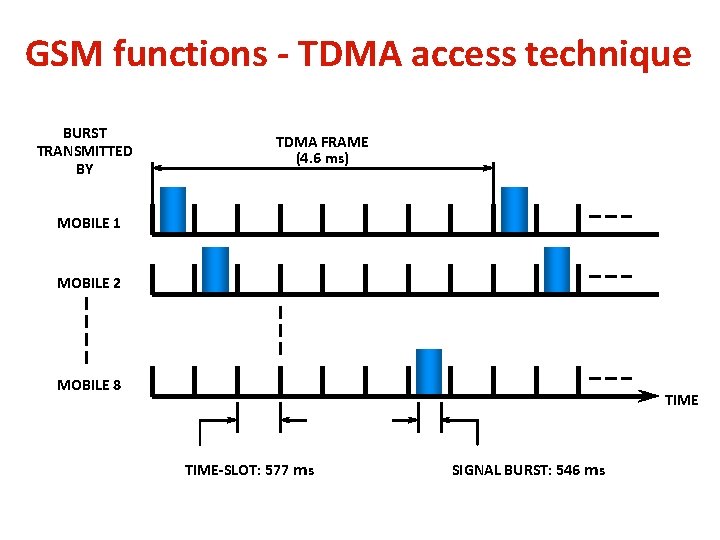
GSM functions - TDMA access technique BURST TRANSMITTED BY TDMA FRAME (4. 6 ms) MOBILE 1 MOBILE 2 MOBILE 8 TIME-SLOT: 577 ms SIGNAL BURST: 546 ms
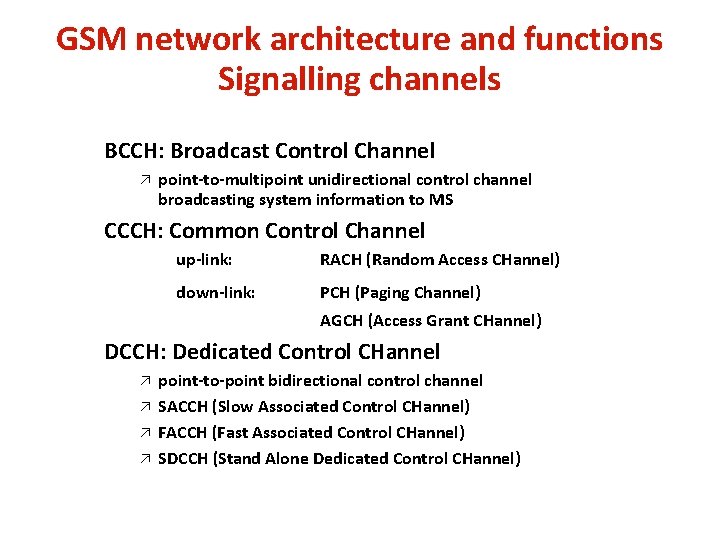
GSM network architecture and functions Signalling channels BCCH: Broadcast Control Channel ä point-to-multipoint unidirectional control channel broadcasting system information to MS CCCH: Common Control Channel up-link: RACH (Random Access CHannel) down-link: PCH (Paging Channel) AGCH (Access Grant CHannel) DCCH: Dedicated Control CHannel ä ä point-to-point bidirectional control channel SACCH (Slow Associated Control CHannel) FACCH (Fast Associated Control CHannel) SDCCH (Stand Alone Dedicated Control CHannel)
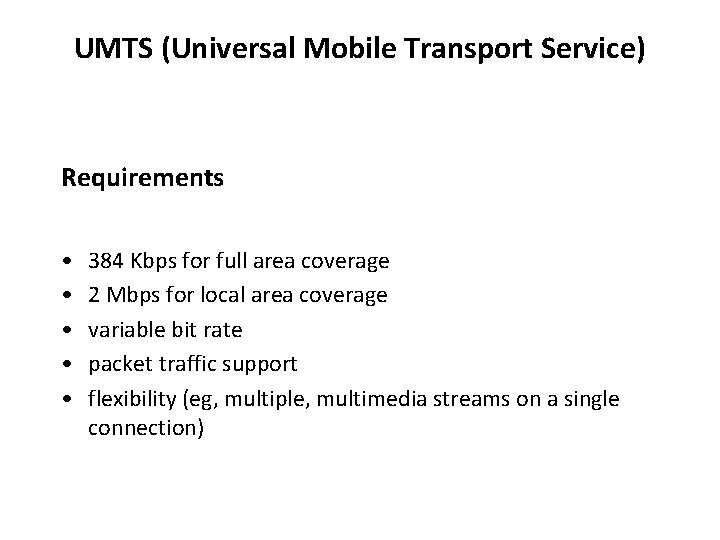
UMTS (Universal Mobile Transport Service) Requirements • • • 384 Kbps for full area coverage 2 Mbps for local area coverage variable bit rate packet traffic support flexibility (eg, multiple, multimedia streams on a single connection)
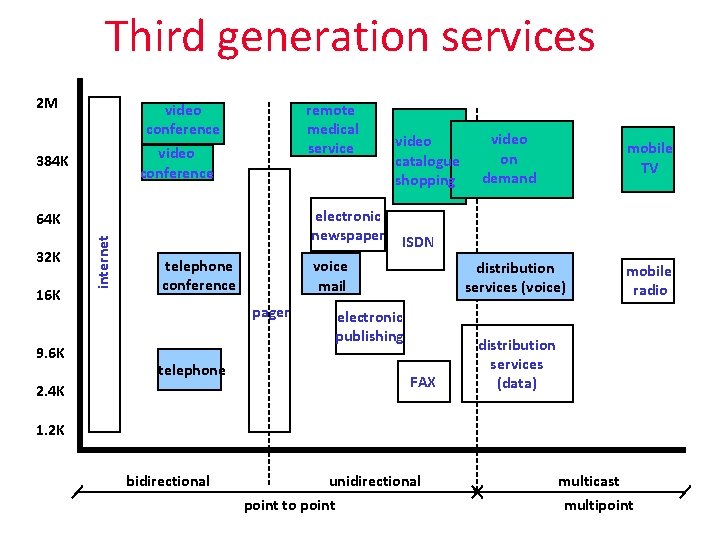
Third generation services 2 M video conference remote medical service video conference 384 K electronic newspaper 32 K 16 K 9. 6 K internet 64 K telephone conference 2. 4 K video on demand mobile TV ISDN voice mail pager telephone video catalogue shopping distribution services (voice) electronic publishing FAX mobile radio distribution services (data) 1. 2 K bidirectional unidirectional point to point multicast multipoint
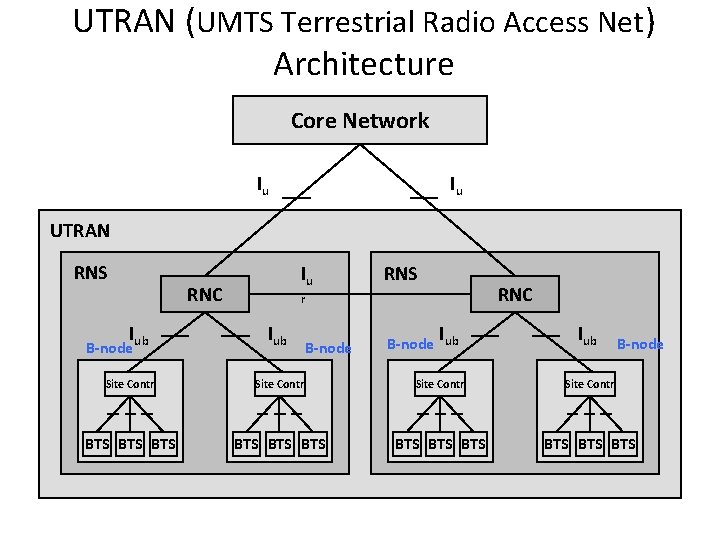
UTRAN (UMTS Terrestrial Radio Access Net) Architecture Core Network Iu Iu UTRAN RNS Iu RNC RNS r I Iub Site Contr BTS BTS BTS B-node ub B-node I B-node ub RNC Iub B-node
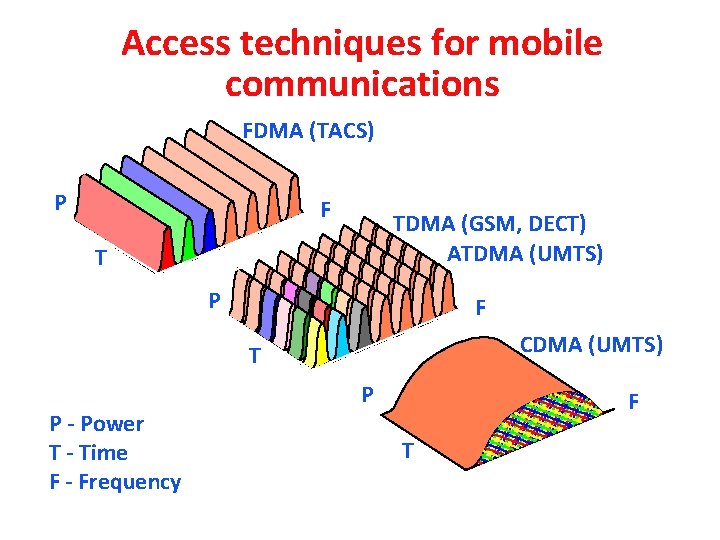
Access techniques for mobile communications FDMA (TACS) P F TDMA (GSM, DECT) ATDMA (UMTS) T P F CDMA (UMTS) T P - Power T - Time F - Frequency P F T
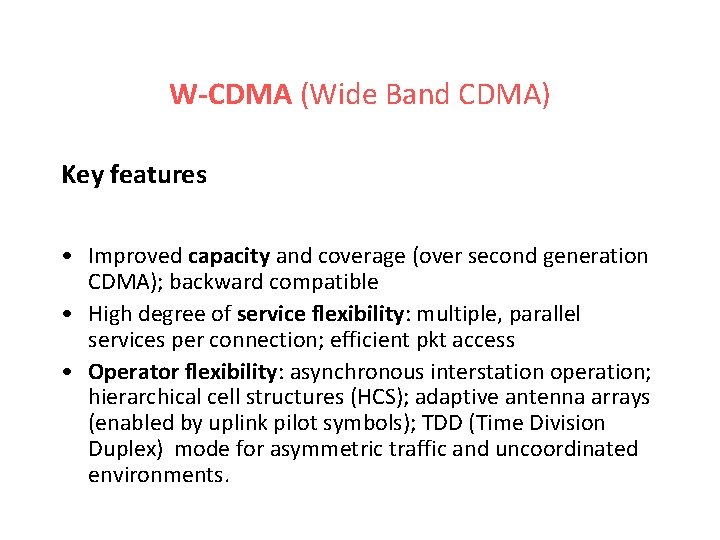
W-CDMA (Wide Band CDMA) Key features • Improved capacity and coverage (over second generation CDMA); backward compatible • High degree of service flexibility: multiple, parallel services per connection; efficient pkt access • Operator flexibility: asynchronous interstation operation; hierarchical cell structures (HCS); adaptive antenna arrays (enabled by uplink pilot symbols); TDD (Time Division Duplex) mode for asymmetric traffic and uncoordinated environments.
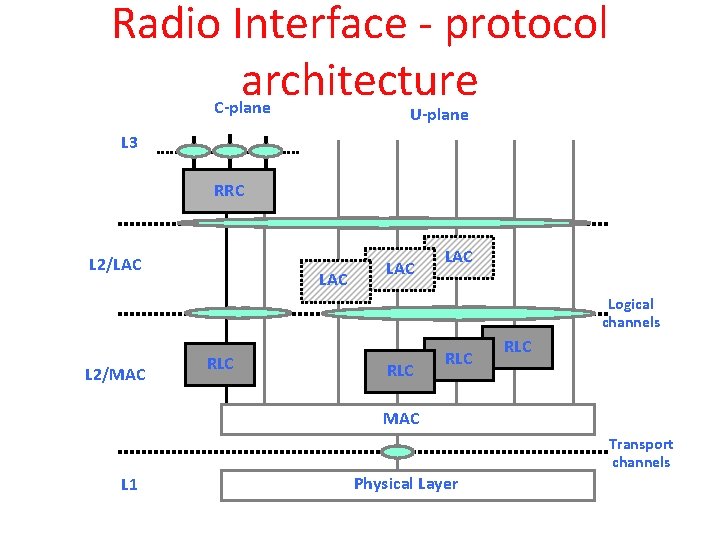
Radio Interface - protocol architecture C-plane U-plane L 3 RRC L 2/LAC LAC Logical channels L 2/MAC RLC RLC MAC Transport channels L 1 Physical Layer
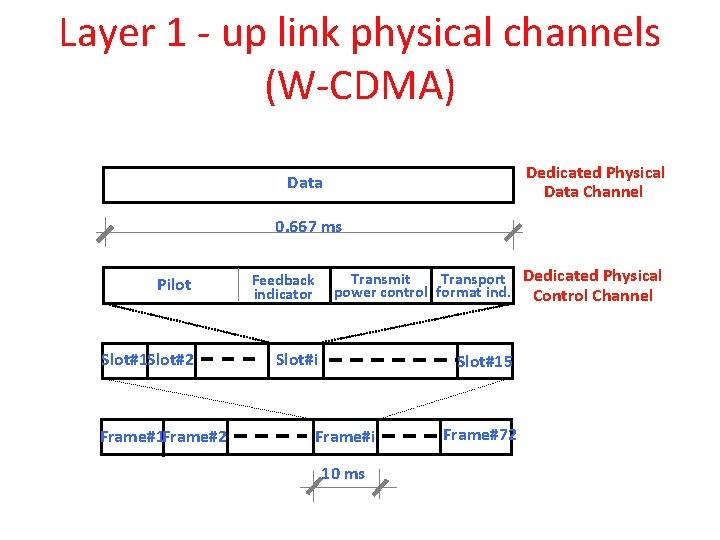
Layer 1 - up link physical channels (W-CDMA) Dedicated Physical Data Channel Data 0. 667 ms Transport Dedicated Physical Transmit power control format ind. Control Channel Pilot Feedback indicator Slot#1 Slot#2 Slot#i Frame#1 Frame#2 Slot#15 Frame#i 10 ms Frame#72
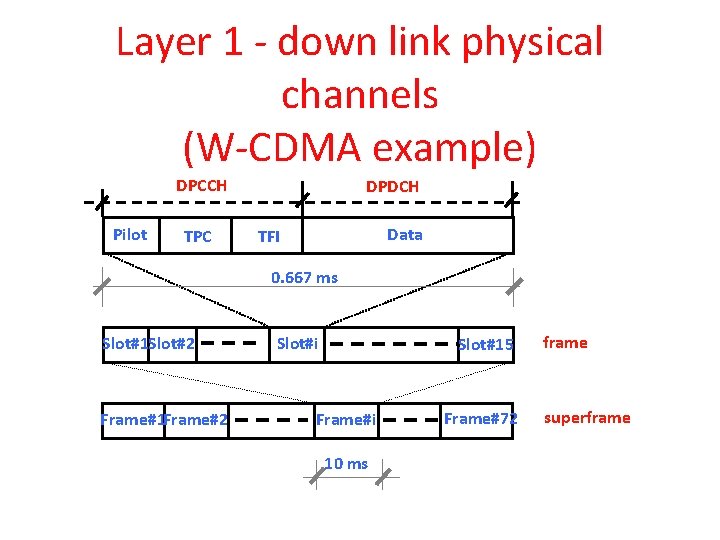
Layer 1 - down link physical channels (W-CDMA example) DPCCH Pilot TPC DPDCH Data TFI 0. 667 ms Slot#1 Slot#2 Frame#1 Frame#2 Slot#i Slot#15 Frame#i 10 ms Frame#72 frame superframe
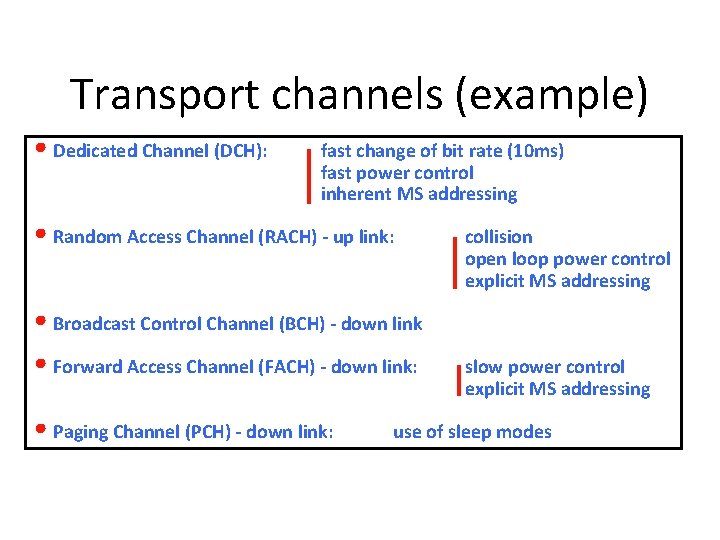
Transport channels (example) • Dedicated Channel (DCH): fast change of bit rate (10 ms) fast power control inherent MS addressing • Random Access Channel (RACH) - up link: • Broadcast Control Channel (BCH) - down link • Forward Access Channel (FACH) - down link: • Paging Channel (PCH) - down link: collision open loop power control explicit MS addressing slow power control explicit MS addressing use of sleep modes
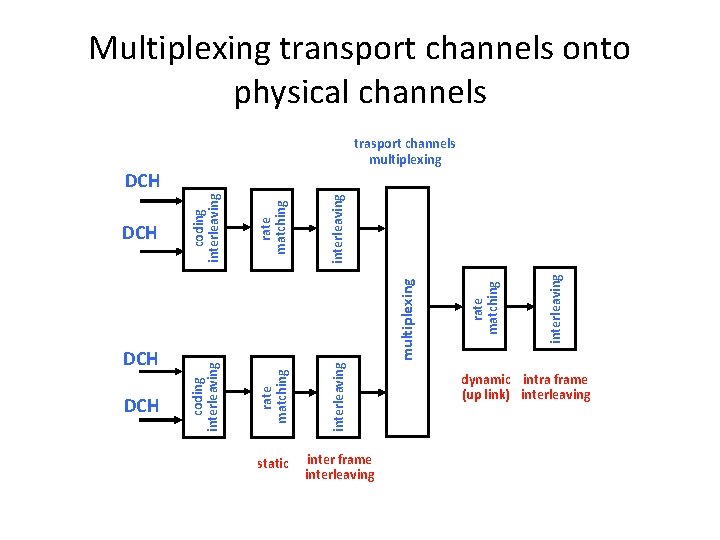
Multiplexing transport channels onto physical channels trasport channels multiplexing interleaving inter frame interleaving rate matching interleaving static multiplexing rate matching DCH coding interleaving DCH dynamic intra frame (up link) interleaving
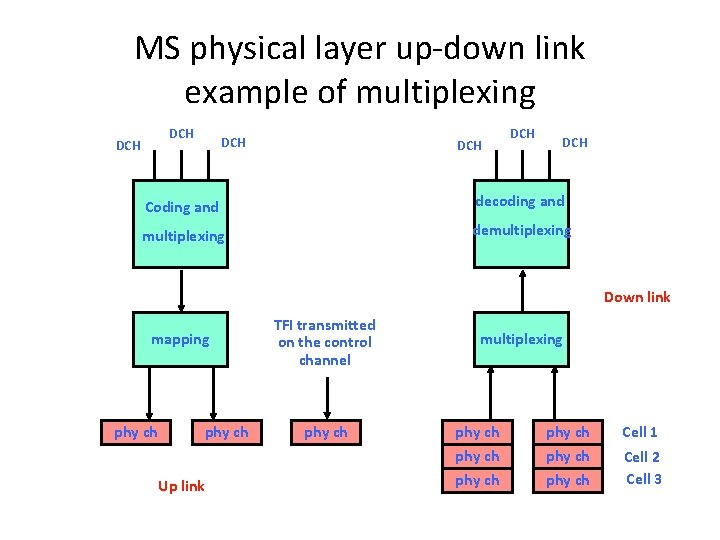
MS physical layer up-down link example of multiplexing DCH DCH DCH Coding and decoding and multiplexing demultiplexing Down link mapping phy ch Up link TFI transmitted on the control channel phy ch multiplexing phy ch phy ch Cell 1 Cell 2 Cell 3
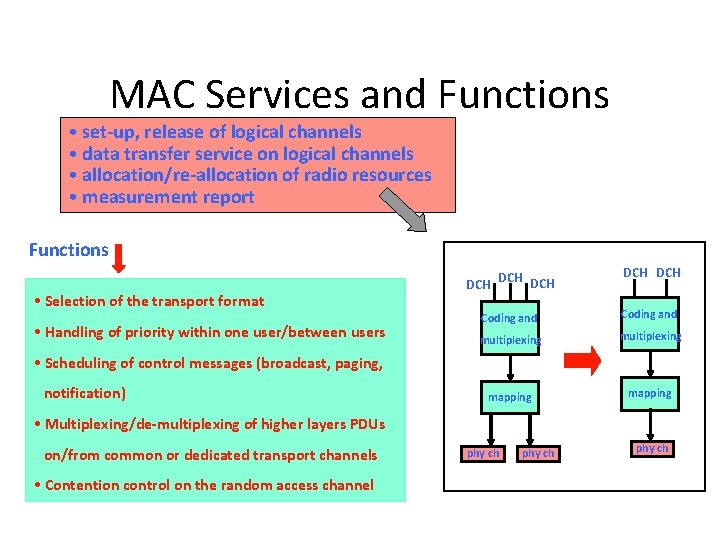
MAC Services and Functions • set-up, release of logical channels • data transfer service on logical channels • allocation/re-allocation of radio resources • measurement report Functions • Selection of the transport format • Handling of priority within one user/between users DCH DCH DCH Coding and multiplexing mapping • Scheduling of control messages (broadcast, paging, notification) • Multiplexing/de-multiplexing of higher layers PDUs on/from common or dedicated transport channels • Contention control on the random access channel phy ch
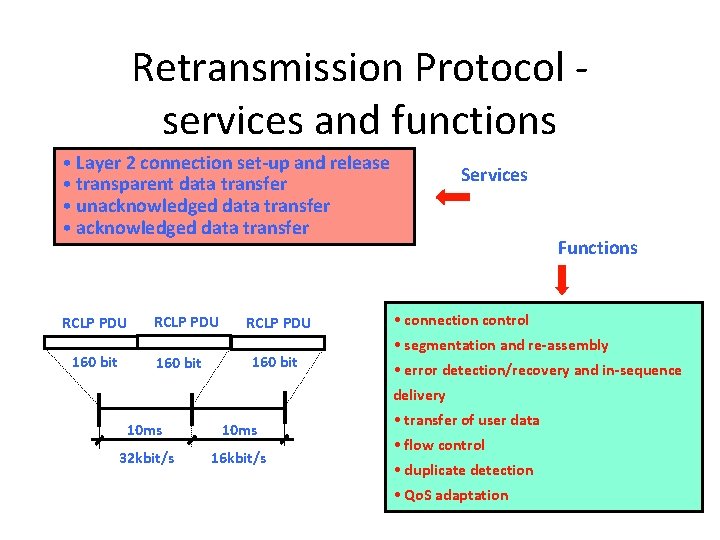
Retransmission Protocol services and functions • Layer 2 connection set-up and release • transparent data transfer • unacknowledged data transfer • acknowledged data transfer RCLP PDU 160 bit Services Functions • connection control • segmentation and re-assembly • error detection/recovery and in-sequence delivery 10 ms 32 kbit/s 16 kbit/s • transfer of user data • flow control • duplicate detection • Qo. S adaptation
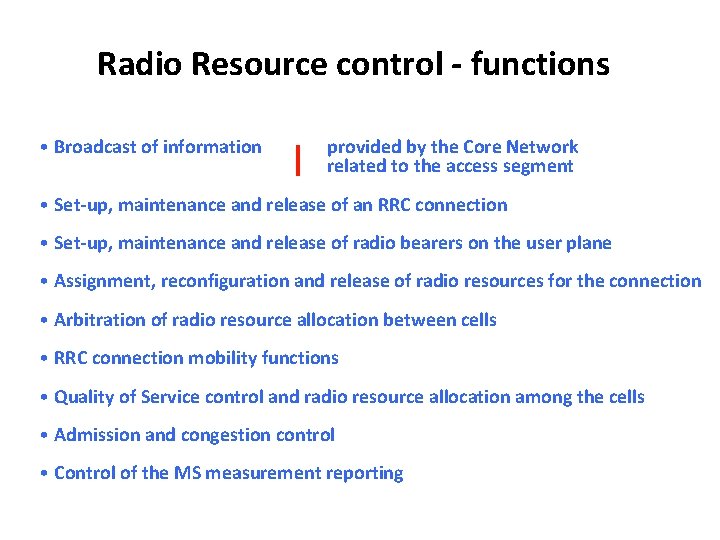
Radio Resource control - functions • Broadcast of information provided by the Core Network related to the access segment • Set-up, maintenance and release of an RRC connection • Set-up, maintenance and release of radio bearers on the user plane • Assignment, reconfiguration and release of radio resources for the connection • Arbitration of radio resource allocation between cells • RRC connection mobility functions • Quality of Service control and radio resource allocation among the cells • Admission and congestion control • Control of the MS measurement reporting
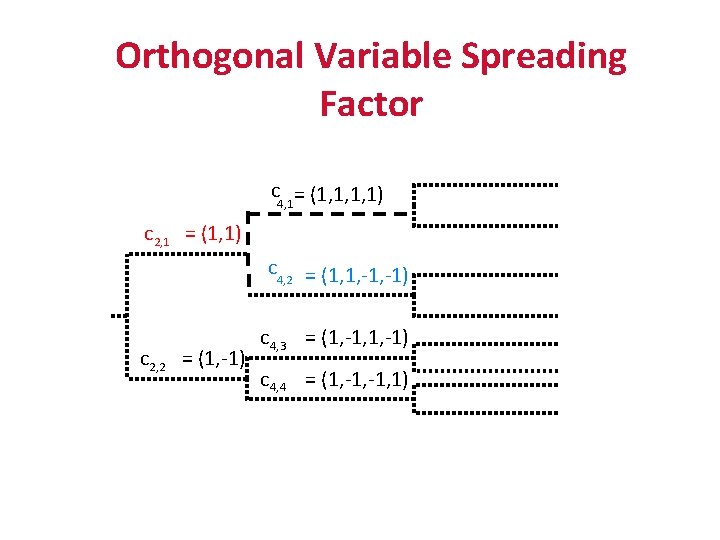
Orthogonal Variable Spreading Factor c = (1, 1, 1, 1) 4, 1 c 2, 1 = (1, 1) c 4, 2 = (1, 1, -1) c 2, 2 = (1, -1) c 4, 3 = (1, -1, 1, -1) c 4, 4 = (1, -1, 1)
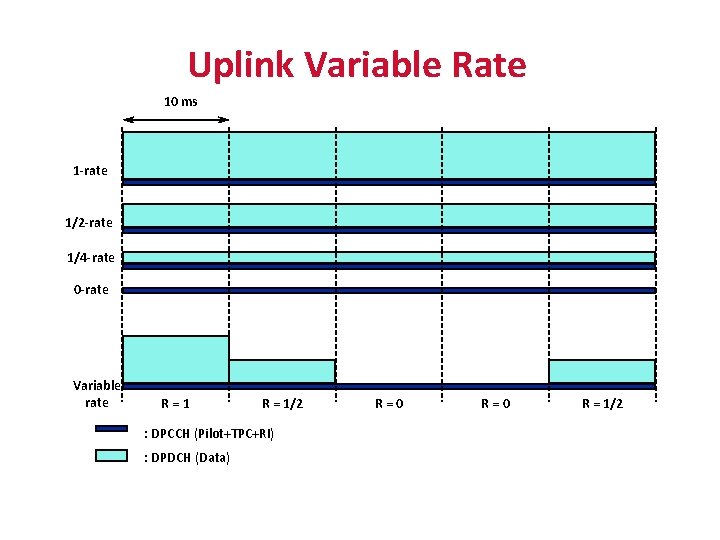
Uplink Variable Rate 10 ms 1 -rate 1/2 -rate 1/4 -rate 0 -rate Variable rate R=1 R = 1/2 : DPCCH (Pilot+TPC+RI) : DPDCH (Data) R=0 R = 1/2
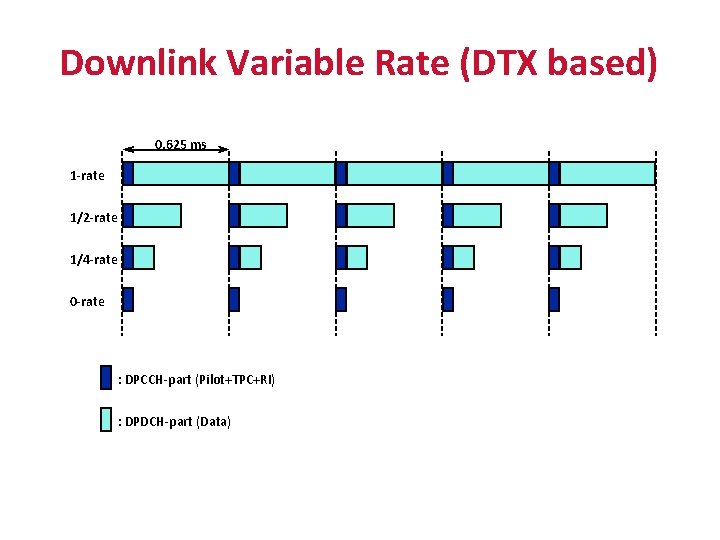
Downlink Variable Rate (DTX based) 0. 625 ms 1 -rate 1/2 -rate 1/4 -rate 0 -rate : DPCCH-part (Pilot+TPC+RI) : DPDCH-part (Data)
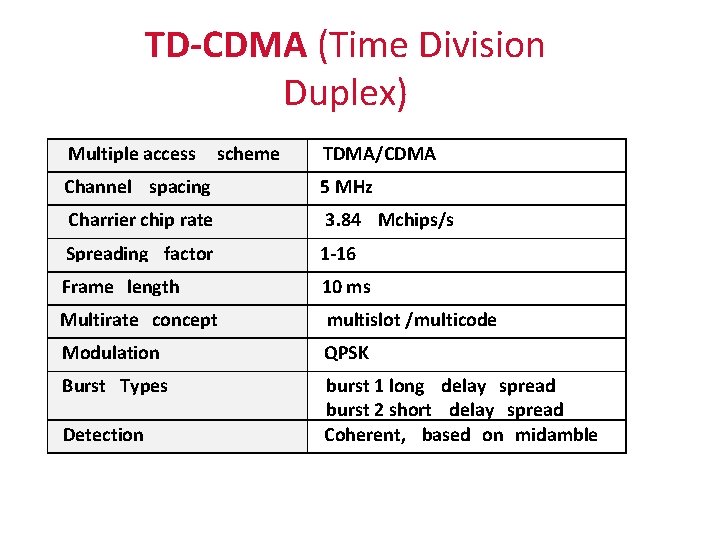
TD-CDMA (Time Division Duplex) Multiple access scheme TDMA/CDMA Channel spacing 5 MHz Charrier chip rate 3. 84 Mchips/s Spreading factor 1 -16 Frame length 10 ms Multirate concept multislot /multicode Modulation QPSK Burst Types burst 1 long delay spread burst 2 short delay spread Coherent, based on midamble Detection
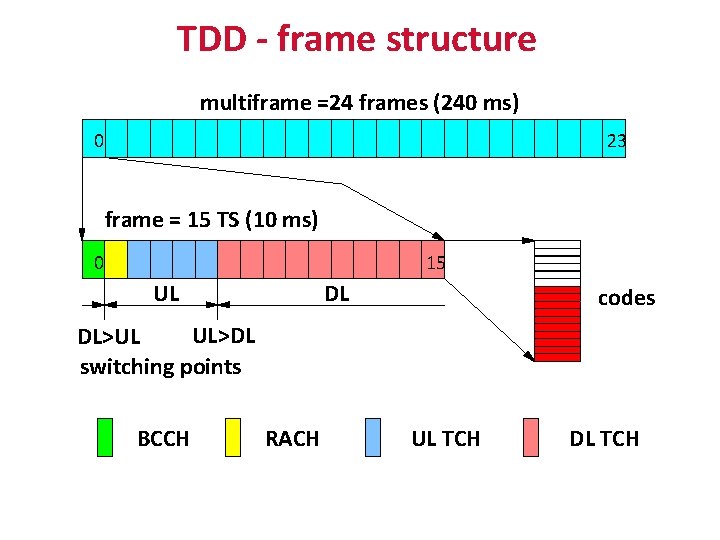
TDD - frame structure multiframe =24 frames (240 ms) 0 23 frame = 15 TS (10 ms) 0 15 UL DL codes UL>DL DL>UL switching points BCCH RACH UL TCH DL TCH
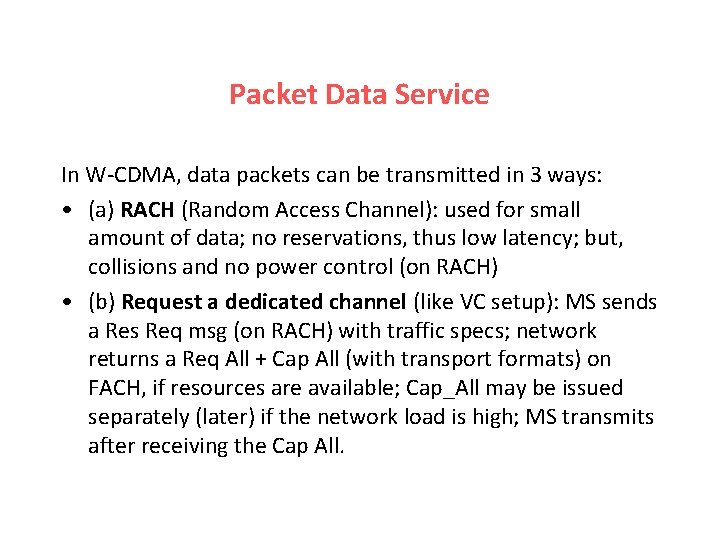
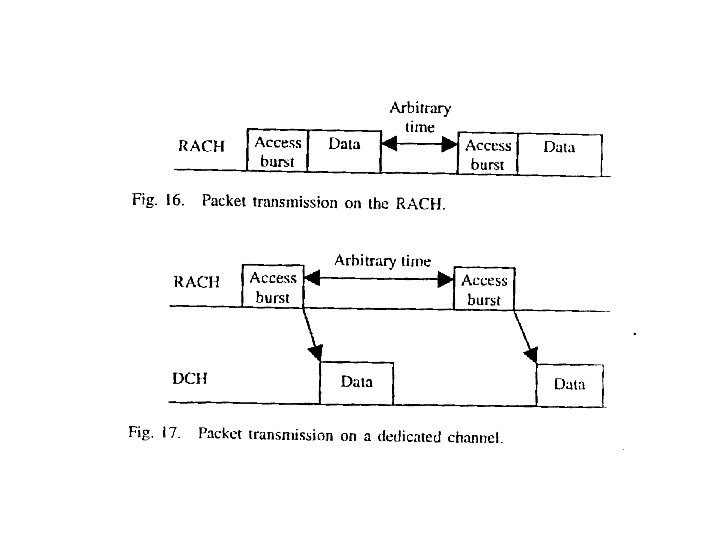
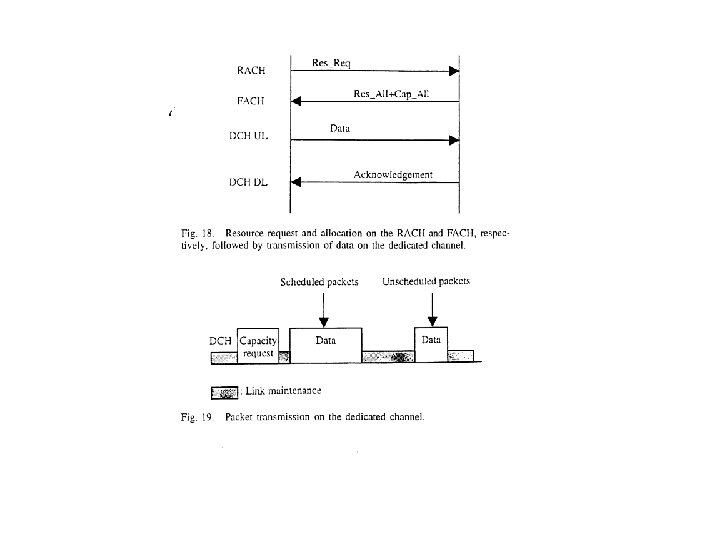
Packet Data Service In W-CDMA, data packets can be transmitted in 3 ways: • (a) RACH (Random Access Channel): used for small amount of data; no reservations, thus low latency; but, collisions and no power control (on RACH) • (b) Request a dedicated channel (like VC setup): MS sends a Res Req msg (on RACH) with traffic specs; network returns a Req All + Cap All (with transport formats) on FACH, if resources are available; Cap_All may be issued separately (later) if the network load is high; MS transmits after receiving the Cap All.
Packet Data Service • (c) use existing dedicated channel (before it expires): if a DCH was recently used, go ahead and tx the unscheduled pkt on that channel. If timer expired, the MS can still omit the Res Req and issue just the Cap All
Real time services • • MS issues Res_Req on RACH (or on DCH if it has one going) Network issues Res All (with TF parameters) MS starts transmission immediately (no wait for Cap_All) Network may later reduce/restore the TF depending on load fluctuations
Congestion Control • Congestion may occur even after careful admission control • without cong. control, mobiles tend to increase their tx power, to combat interference, thus aggravating the problem • solutions: (a) lower bit rate of users insensitive to delay; (b) perform interfrequency handovers ( c) remove connection(s) • congestion control remedies activated by load thresholds
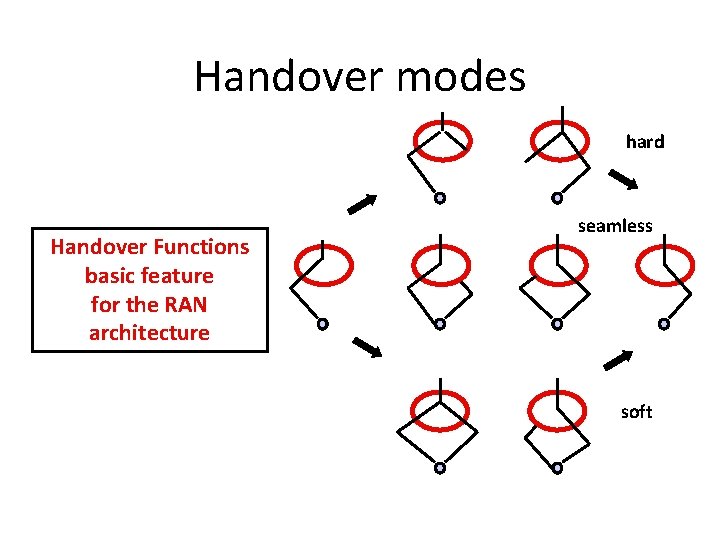
Handover modes hard Handover Functions basic feature for the RAN architecture seamless soft
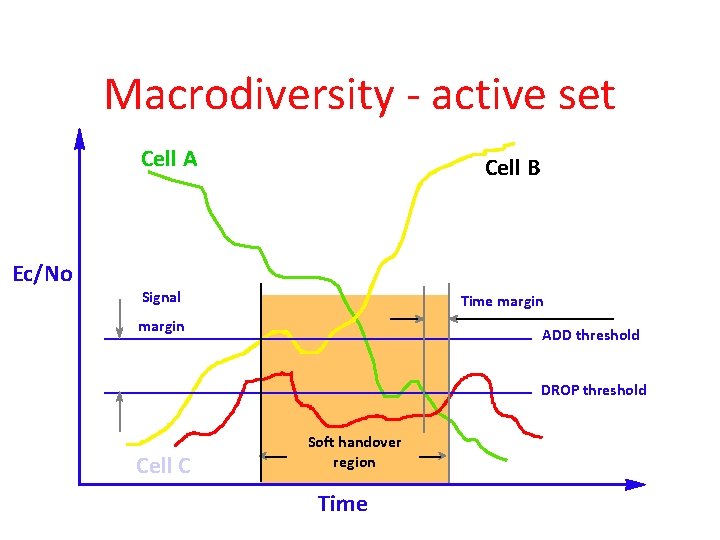
Macrodiversity - active set Cell A Ec/No Cell B Signal Time margin ADD threshold DROP threshold Cell C Soft handover region Time
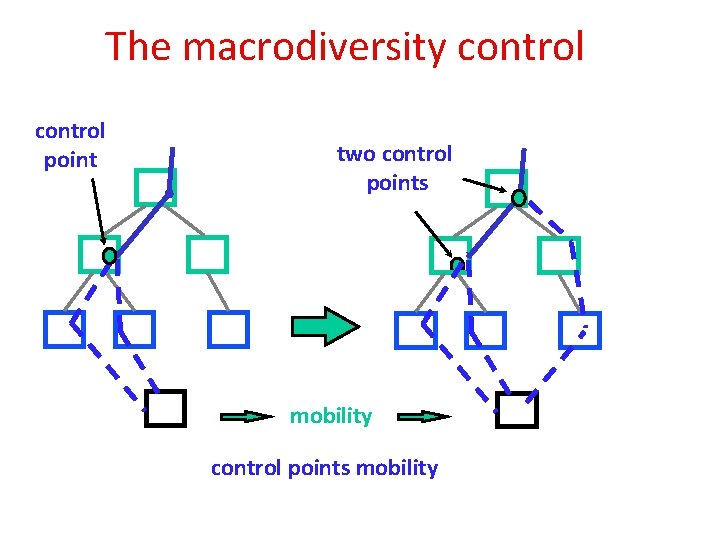
The macrodiversity control point two control points mobility