
3 Questions Economic Systems AP Microeconomics Need for
- Slides: 26
3 Questions & Economic Systems AP Microeconomics
Need for Economic Systems n Scarcity necessitates choices, how society organizes itself to address this problem is known as its economic system. n Every economic system must make these choices or answer these questions: – What to produce? – How to produce? – For whom to produce? § most controversial § and the one question that you will now confront. . .
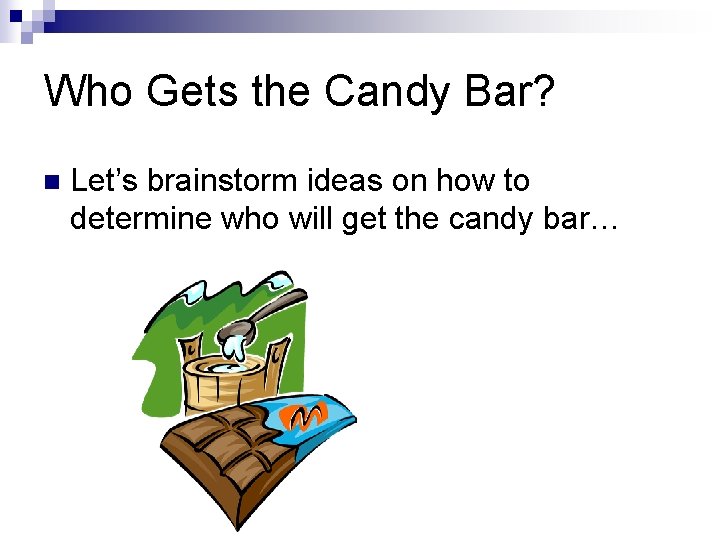
Who Gets the Candy Bar? n Let’s brainstorm ideas on how to determine who will get the candy bar…
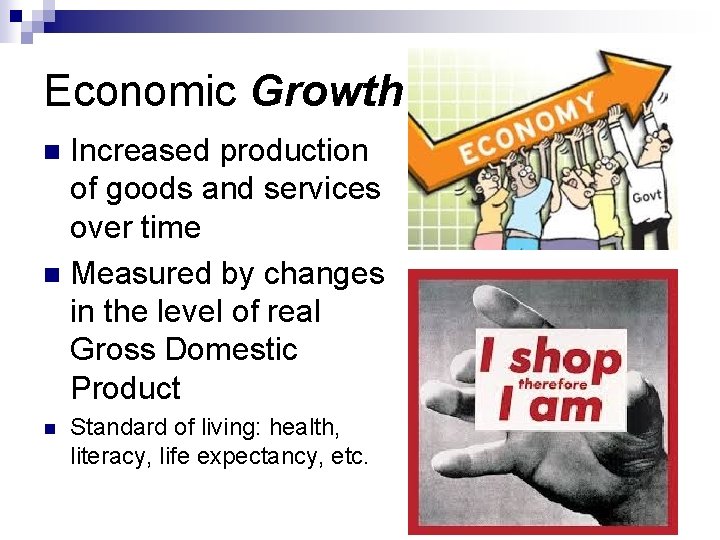
Economic Growth Increased production of goods and services over time n Measured by changes in the level of real Gross Domestic Product n n Standard of living: health, literacy, life expectancy, etc.
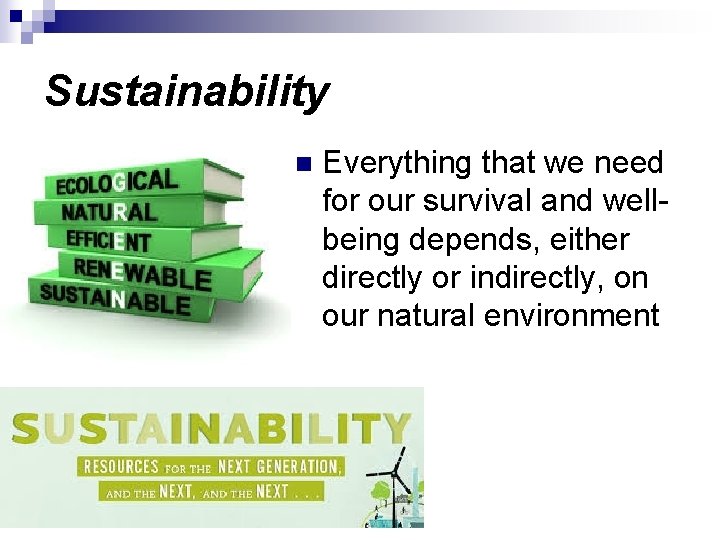
Sustainability n Everything that we need for our survival and wellbeing depends, either directly or indirectly, on our natural environment
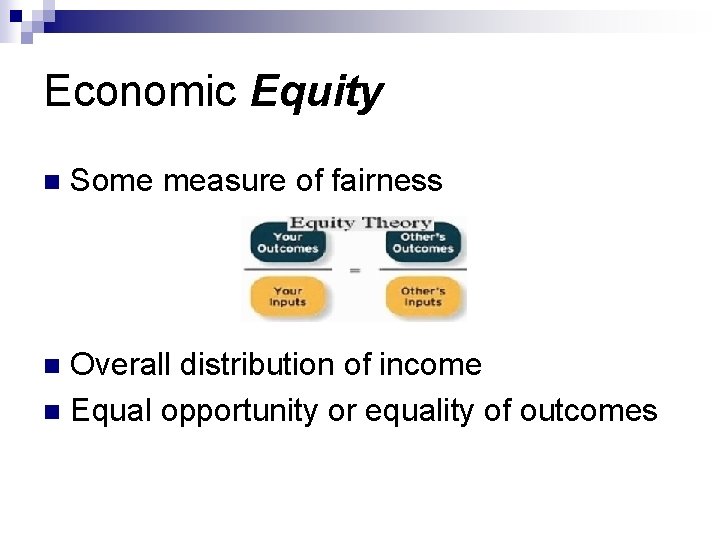
Economic Equity n Some measure of fairness Overall distribution of income n Equal opportunity or equality of outcomes n
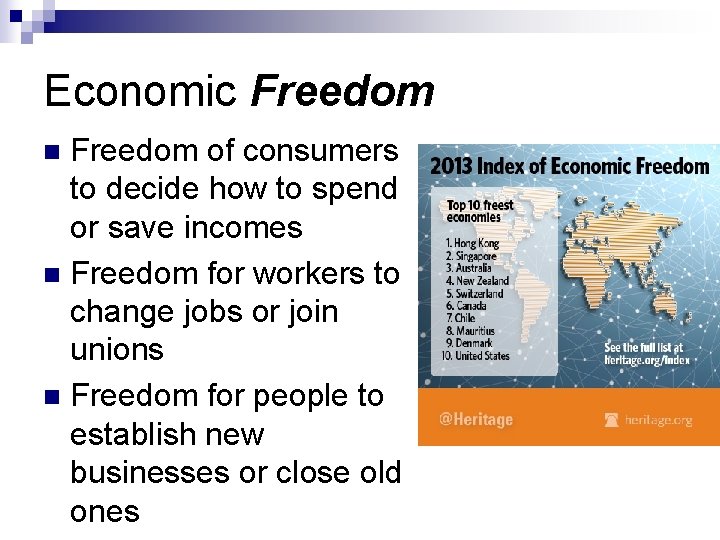
Economic Freedom of consumers to decide how to spend or save incomes n Freedom for workers to change jobs or join unions n Freedom for people to establish new businesses or close old ones n
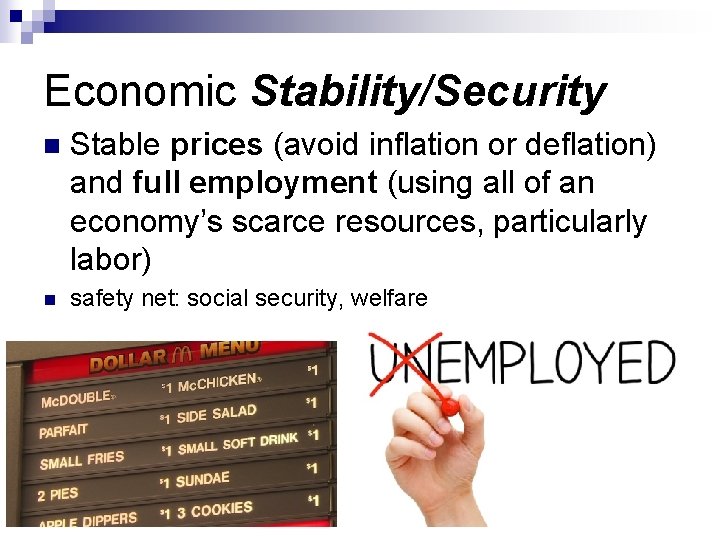
Economic Stability/Security n Stable prices (avoid inflation or deflation) and full employment (using all of an economy’s scarce resources, particularly labor) n safety net: social security, welfare
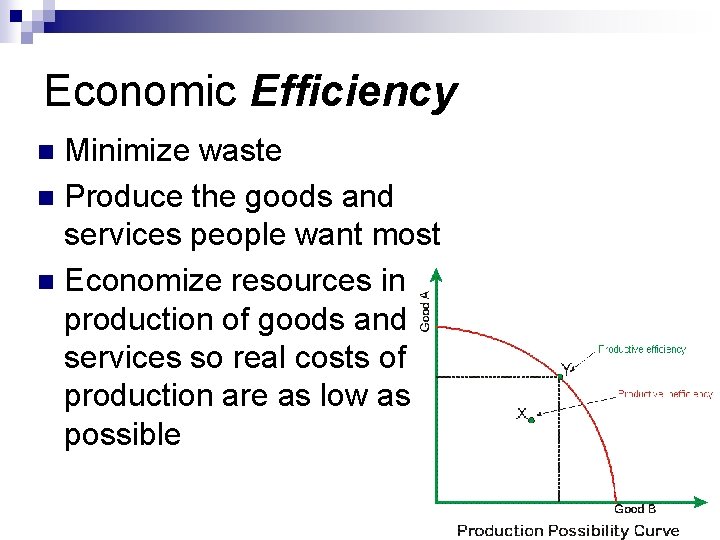
Economic Efficiency Minimize waste n Produce the goods and services people want most n Economize resources in production of goods and services so real costs of production are as low as possible n
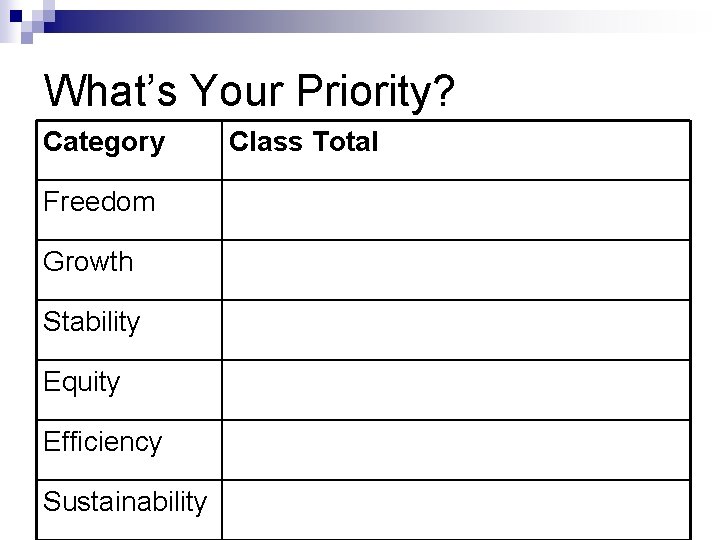
What’s Your Priority? Category Freedom Growth Stability Equity Efficiency Sustainability Class Total
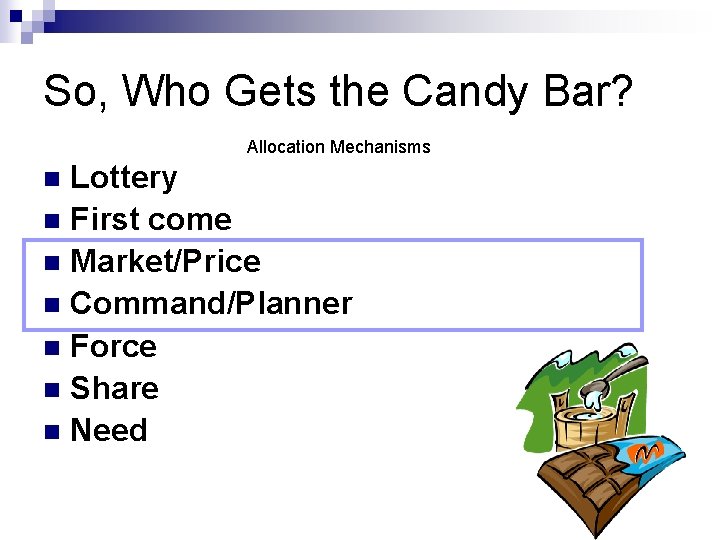
So, Who Gets the Candy Bar? Allocation Mechanisms Lottery n First come n Market/Price n Command/Planner n Force n Share n Need n
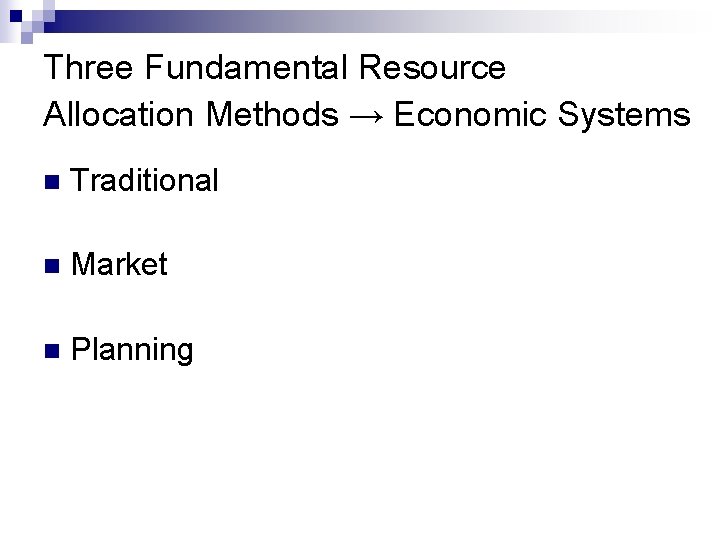
Three Fundamental Resource Allocation Methods → Economic Systems n Traditional n Market n Planning
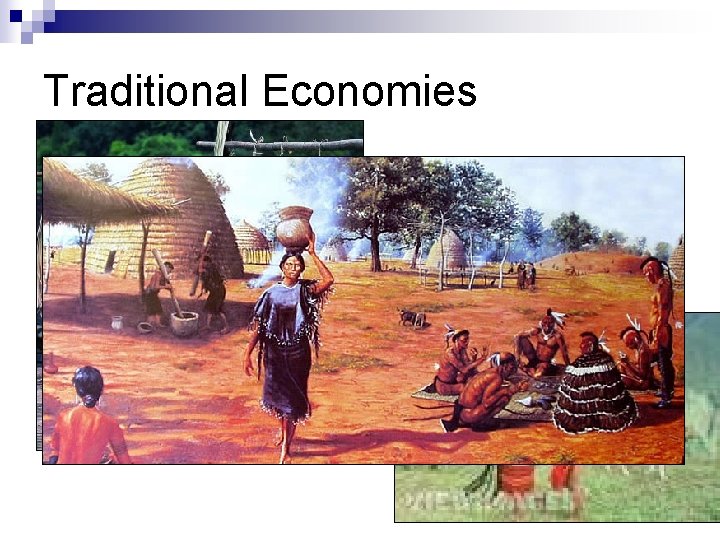
Traditional Economies
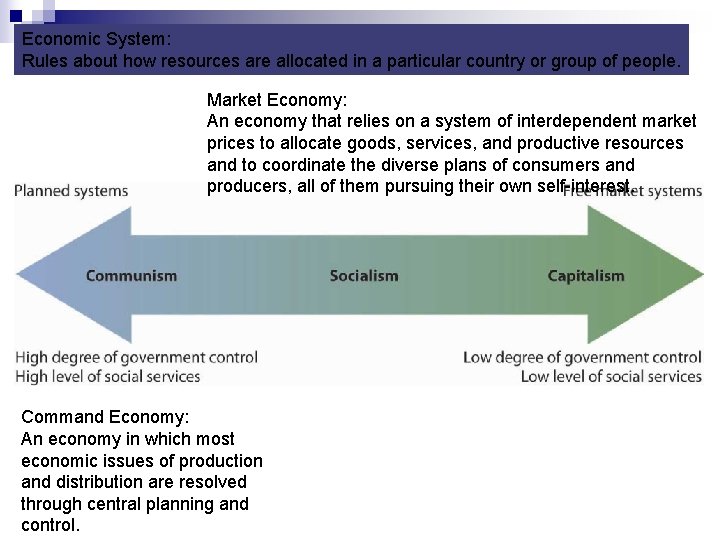
Economic System: Rules about how resources are allocated in a particular country or group of people. Market Economy: An economy that relies on a system of interdependent market prices to allocate goods, services, and productive resources and to coordinate the diverse plans of consumers and producers, all of them pursuing their own self-interest. Command Economy: An economy in which most economic issues of production and distribution are resolved through central planning and control.
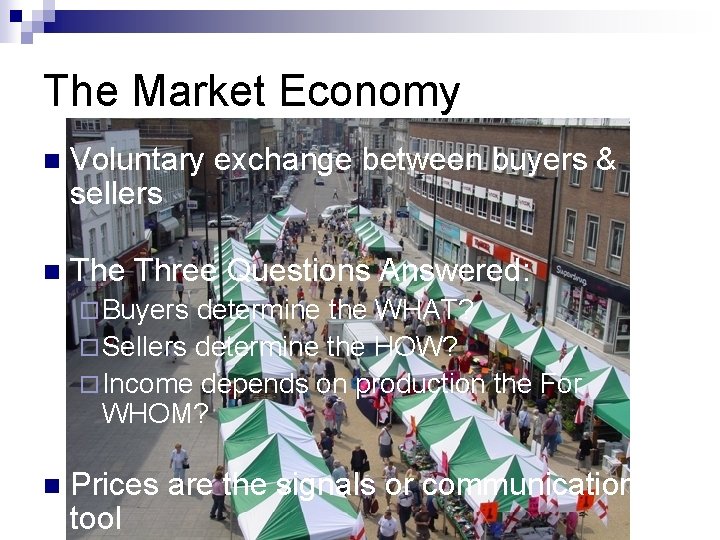
The Market Economy n Voluntary exchange between buyers & sellers n The Three Questions Answered: ¨ Buyers determine the WHAT? ¨ Sellers determine the HOW? ¨ Income depends on production the For WHOM? n Prices are the signals or communication tool
Characteristics of a Market Economy n Private property Freedom of enterprise and choice n Motive of self-interest n Competition n System of markets and prices n Limited government n Rule of law n
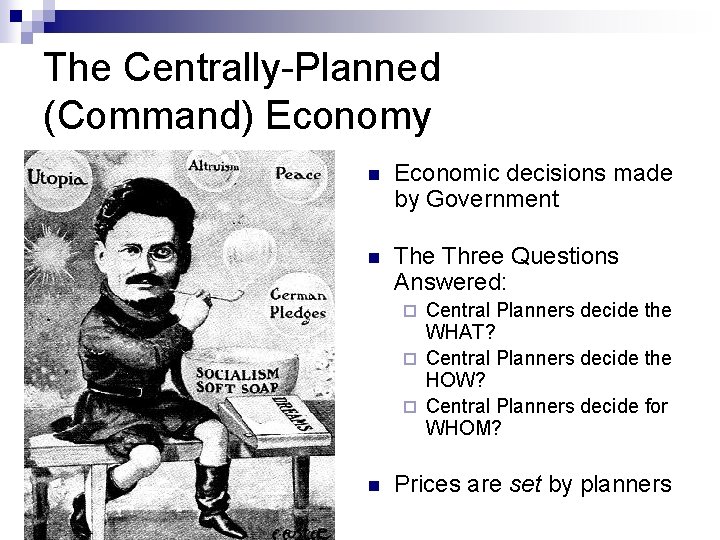
The Centrally-Planned (Command) Economy n Economic decisions made by Government n The Three Questions Answered: Central Planners decide the WHAT? ¨ Central Planners decide the HOW? ¨ Central Planners decide for WHOM? ¨ n Prices are set by planners
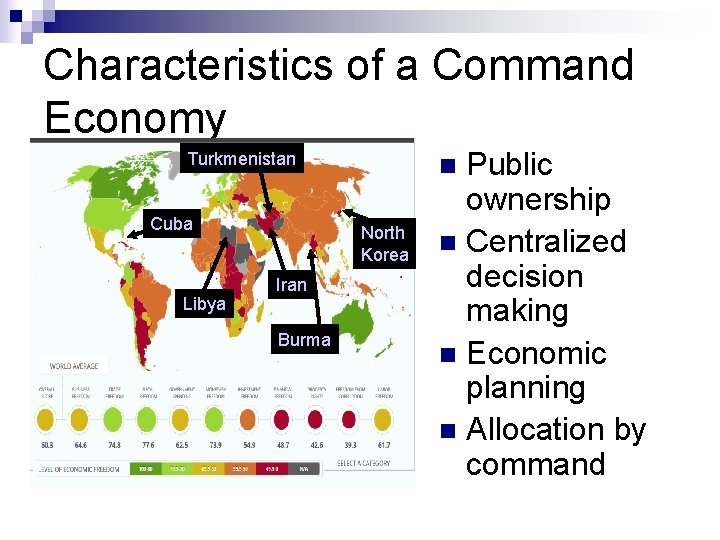
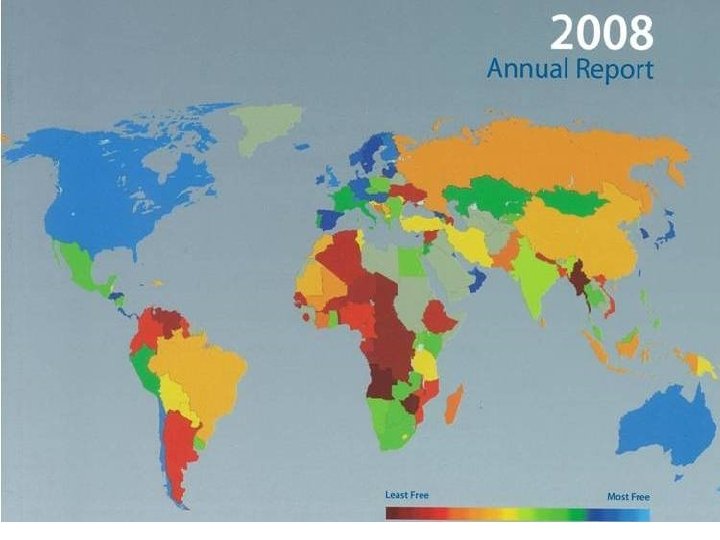
Characteristics of a Command Economy Turkmenistan Cuba Libya North Korea Iran Burma Public ownership n Centralized decision making n Economic planning n Allocation by command n
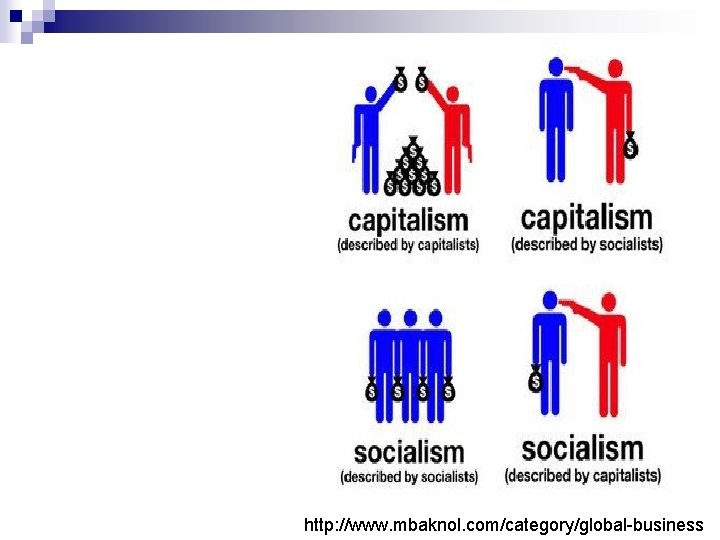
http: //www. mbaknol. com/category/global-business
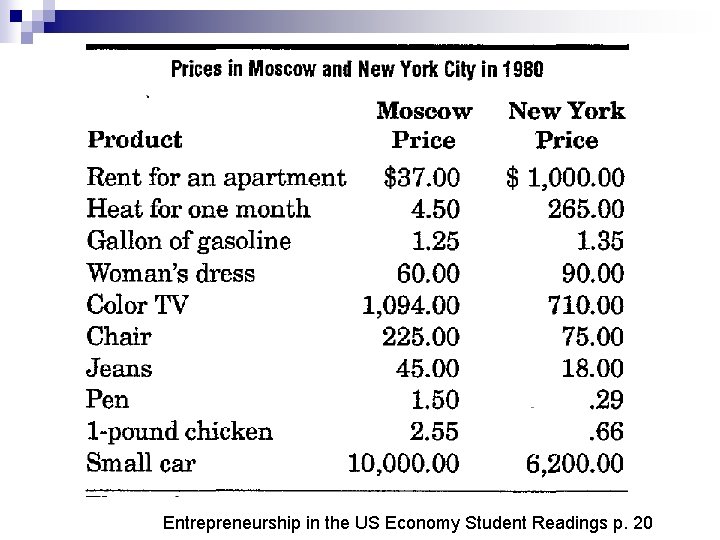
Entrepreneurship in the US Economy Student Readings p. 20
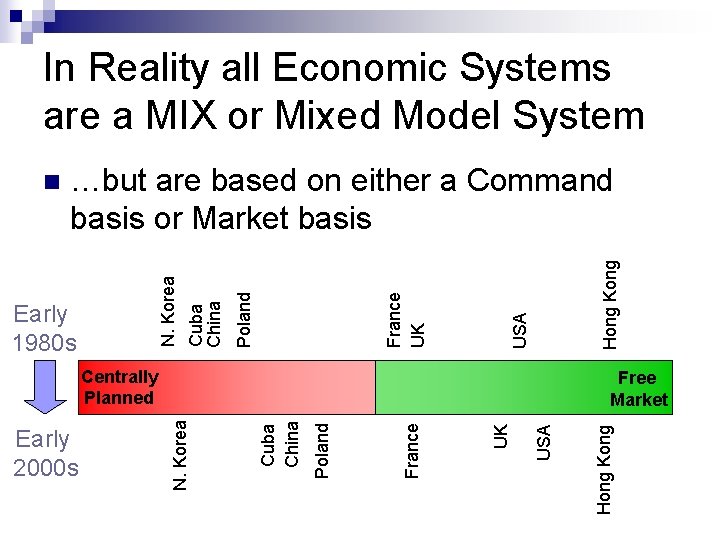
In Reality all Economic Systems are a MIX or Mixed Model System Hong Kong USA France UK Poland Centrally Planned USA UK France Poland Cuba China N. Korea Early 2000 s Free Market Hong Kong Early 1980 s Cuba China …but are based on either a Command basis or Market basis N. Korea n
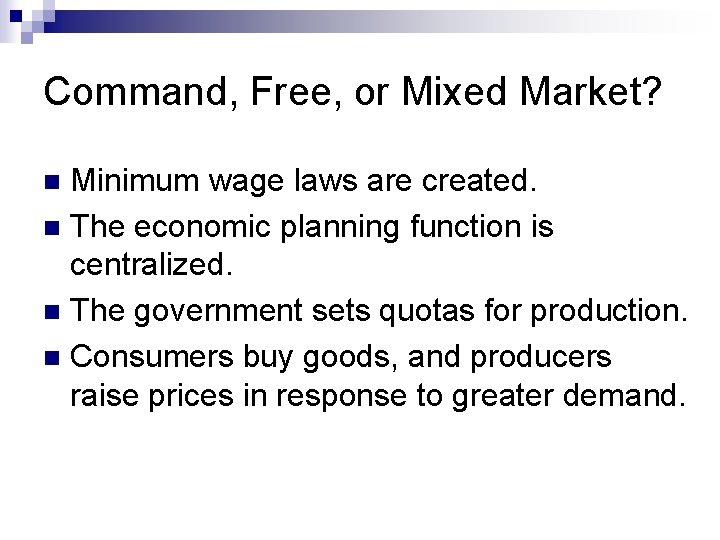
Command, Free, or Mixed Market? Minimum wage laws are created. n The economic planning function is centralized. n The government sets quotas for production. n Consumers buy goods, and producers raise prices in response to greater demand. n
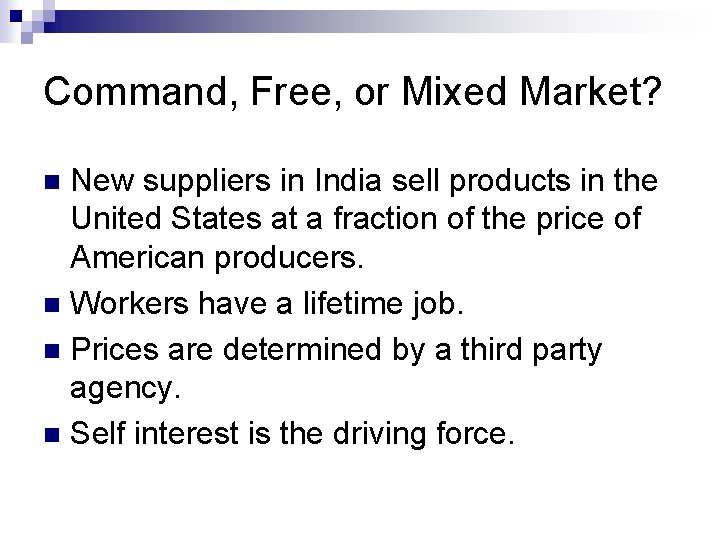
Command, Free, or Mixed Market? New suppliers in India sell products in the United States at a fraction of the price of American producers. n Workers have a lifetime job. n Prices are determined by a third party agency. n Self interest is the driving force. n
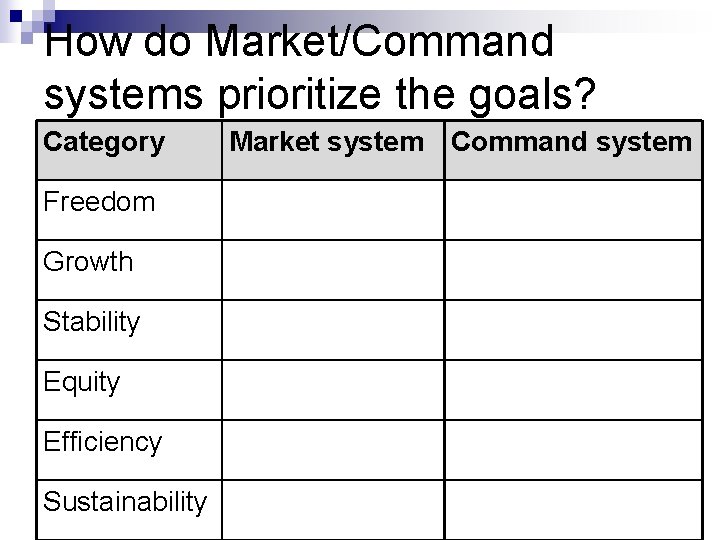
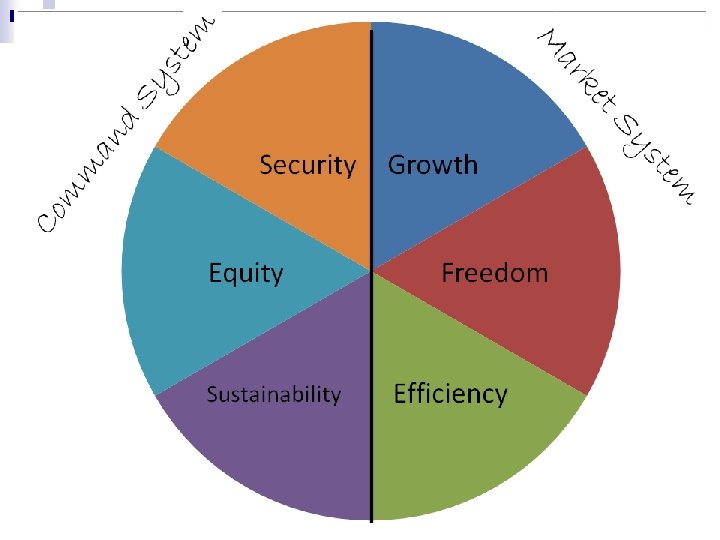
How do Market/Command systems prioritize the goals? Category Freedom Growth Stability Equity Efficiency Sustainability Market system Command system