
3 On the Grant Permission screen do not
- Slides: 3
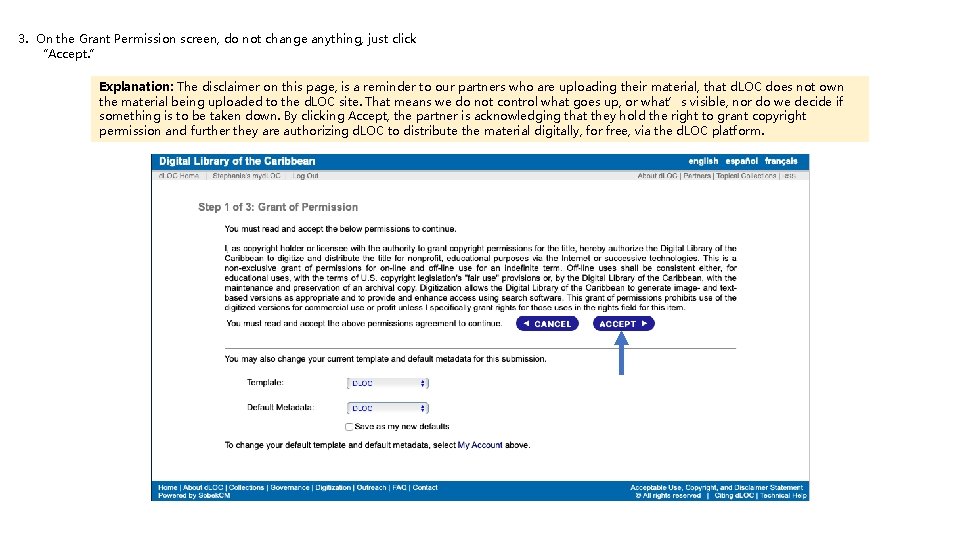
3. On the Grant Permission screen, do not change anything, just click “Accept. ” Explanation: The disclaimer on this page, is a reminder to our partners who are uploading their material, that d. LOC does not own the material being uploaded to the d. LOC site. That means we do not control what goes up, or what’s visible, nor do we decide if something is to be taken down. By clicking Accept, the partner is acknowledging that they hold the right to grant copyright permission and further they are authorizing d. LOC to distribute the material digitally, for free, via the d. LOC platform.
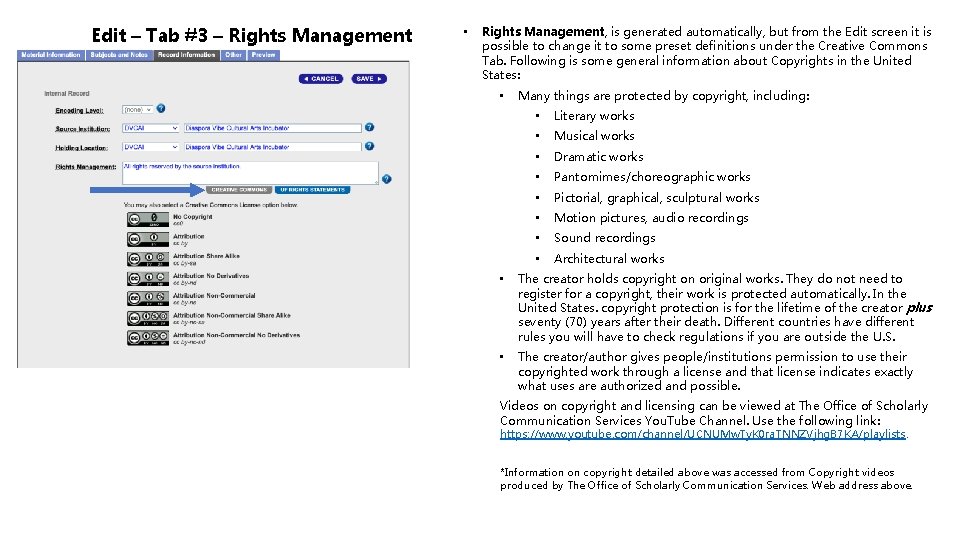
Edit – Tab #3 – Rights Management • Rights Management, is generated automatically, but from the Edit screen it is possible to change it to some preset definitions under the Creative Commons Tab. Following is some general information about Copyrights in the United States: • Many things are protected by copyright, including: • Literary works • Musical works • Dramatic works • Pantomimes/choreographic works • Pictorial, graphical, sculptural works • Motion pictures, audio recordings • Sound recordings • Architectural works • The creator holds copyright on original works. They do not need to register for a copyright, their work is protected automatically. In the United States. copyright protection is for the lifetime of the creator plus seventy (70) years after their death. Different countries have different rules you will have to check regulations if you are outside the U. S. • The creator/author gives people/institutions permission to use their copyrighted work through a license and that license indicates exactly what uses are authorized and possible. Videos on copyright and licensing can be viewed at The Office of Scholarly Communication Services You. Tube Channel. Use the following link: https: //www. youtube. com/channel/UCNUMw. Ty. K 0 ra. TNNZVjhg. B 7 KA/playlists. *Information on copyright detailed above was accessed from Copyright videos produced by The Office of Scholarly Communication Services. Web address above.
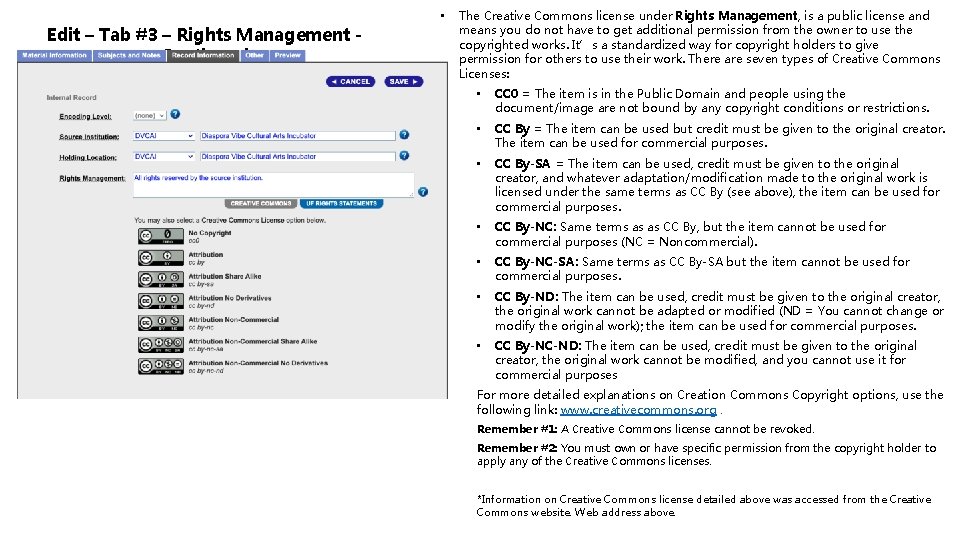
• Edit – Tab #3 – Rights Management Continued The Creative Commons license under Rights Management, is a public license and means you do not have to get additional permission from the owner to use the copyrighted works. It’s a standardized way for copyright holders to give permission for others to use their work. There are seven types of Creative Commons Licenses: • CC 0 = The item is in the Public Domain and people using the document/image are not bound by any copyright conditions or restrictions. • CC By = The item can be used but credit must be given to the original creator. The item can be used for commercial purposes. • CC By-SA = The item can be used, credit must be given to the original creator, and whatever adaptation/modification made to the original work is licensed under the same terms as CC By (see above), the item can be used for commercial purposes. • CC By-NC: Same terms as as CC By, but the item cannot be used for commercial purposes (NC = Noncommercial). • CC By-NC-SA: Same terms as CC By-SA but the item cannot be used for commercial purposes. • CC By-ND: The item can be used, credit must be given to the original creator, the original work cannot be adapted or modified (ND = You cannot change or modify the original work); the item can be used for commercial purposes. • CC By-NC-ND: The item can be used, credit must be given to the original creator, the original work cannot be modified, and you cannot use it for commercial purposes For more detailed explanations on Creation Commons Copyright options, use the following link: www. creativecommons. org. Remember #1: A Creative Commons license cannot be revoked. Remember #2: You must own or have specific permission from the copyright holder to apply any of the Creative Commons licenses. *Information on Creative Commons license detailed above was accessed from the Creative Commons website. Web address above.