
3 LECTUR Amino acid and Peptides DOCTOR Nabil
3 LECTUR : • Amino acid and Peptides • DOCTOR : • Nabil Amer • DONE BY : • Hamza Alzoubi • EDITED BY : • Ban Admat • PERIOD : • MID-TERM • DATE : • 1 -JUly-2018 • 3 -1
3 Learning Objectives 1. What are amino acids, and what is their three- dimensional structure? . What are the structures and properties of the individual amino acids? . Do amino acids have specific acid–base properties? 4. What is the peptide bond? 5. Are small peptides physiologically active? 3 -2
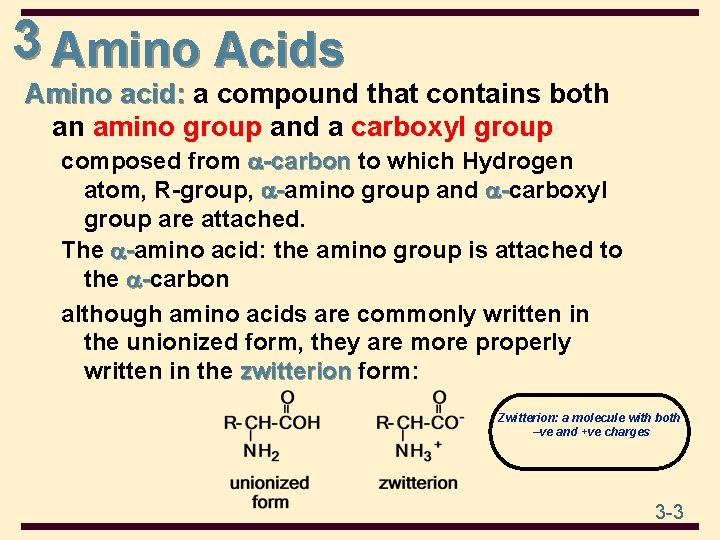
3 Amino Acids Amino acid: a compound that contains both Amino acid: an amino group and a carboxyl group composed from -carbon to which Hydrogen -carbon atom, R-group, -amino group and -carboxyl group are attached. The -amino acid: the amino group is attached to the -carbon although amino acids are commonly written in the unionized form, they are more properly written in the zwitterion form: zwitterion Zwitterion: a molecule with both –ve and +ve charges 3 -3

3 Chirality of Amino Acids With the exception of glycine, all protein-derived amino acids are chiral and have at least one asymmetric (chiral) carbon (normally the α-carbon) - α- carbon COO ׀ H - C - NH 3+ ׀ R 3 -4
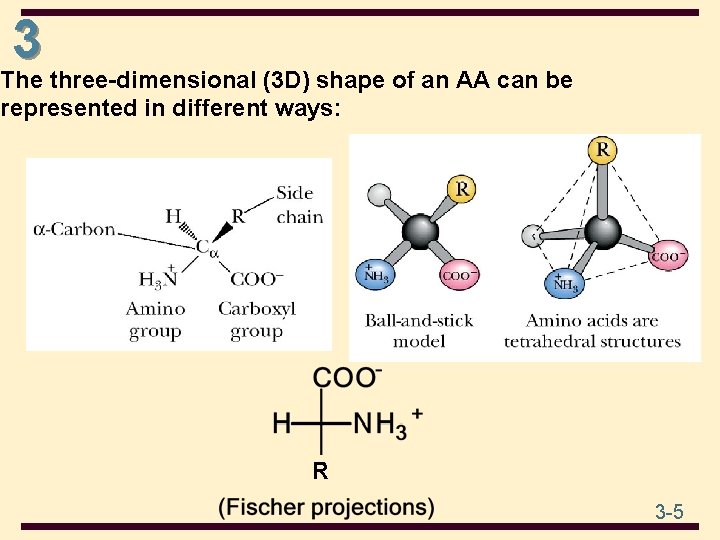
3 The three-dimensional (3 D) shape of an AA can be represented in different ways: R 3 -5
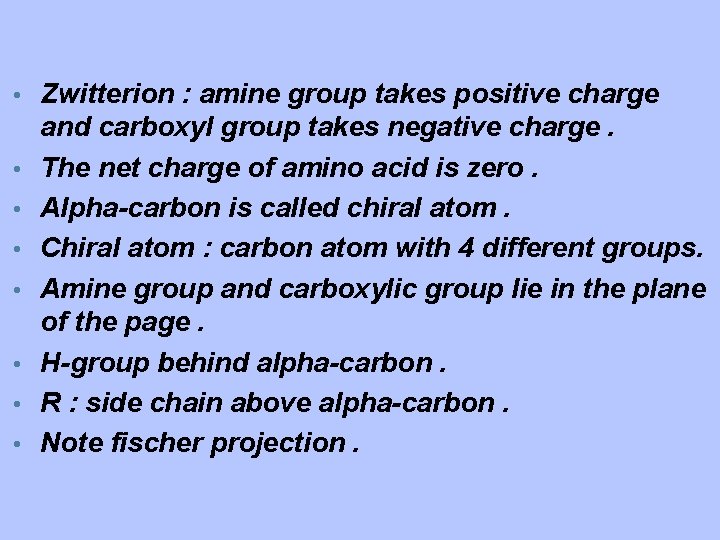
• Zwitterion : amine group takes positive charge • • and carboxyl group takes negative charge. The net charge of amino acid is zero. Alpha-carbon is called chiral atom. Chiral atom : carbon atom with 4 different groups. Amine group and carboxylic group lie in the plane of the page. H-group behind alpha-carbon. R : side chain above alpha-carbon. Note fischer projection.
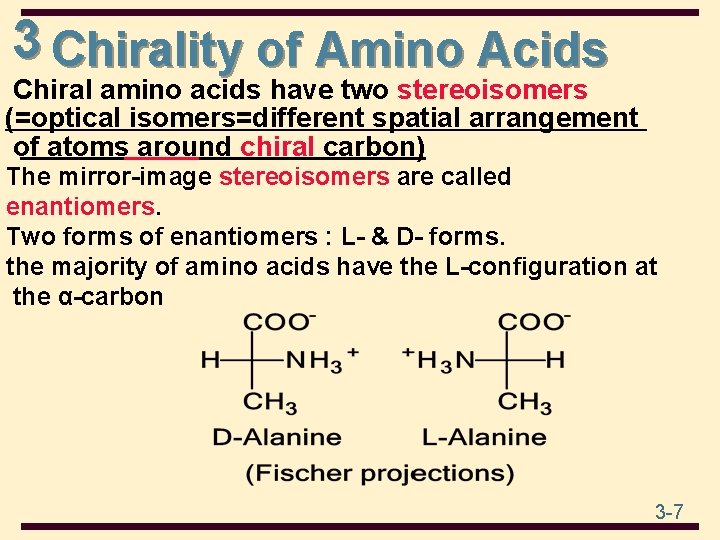
3 Chirality of Amino Acids Chiral amino acids have two stereoisomers (=optical isomers=different spatial arrangement of atoms around chiral carbon) The mirror-image stereoisomers are called enantiomers. Two forms of enantiomers : L- & D- forms. the majority of amino acids have the L-configuration at the α-carbon 3 -7
• Amino acids have two stereoisomers • • and are called enantiomers. This is important for carbohydrates ( rotation). We have two different configurations, which are L-form and D-form. These two are functionally different. Note alanine : amine group in right side (D-isomer) ; amine group in left ( L -isomer).

3 Comparison of the stereochemistry (3 D structure) of alanine and glyceraldehyde (Fischer projection formulas) 3 -9
��� ���� amino acids �sugars ����� �� • glyceraldehyde • Glyceraldehyde : ü D : hydroxyl group in right side ü L : hydroxyl group in left side. • Amino acids which are present in nature (naturally occurring) are L-amino acids, whereas naturally occurring sugars are Dsugars.
3 ** In most cases, D-amino acids are toxic. They occur in nature in antibiotics and bacterial cell walls. 3 -11
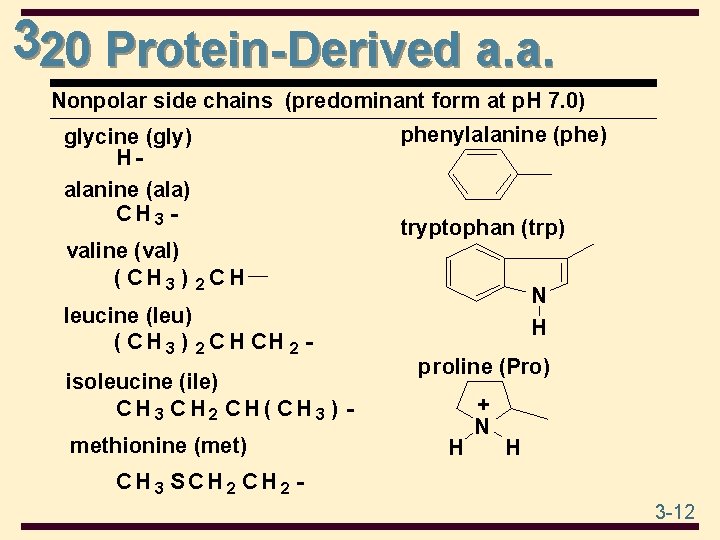
320 Protein-Derived a. a. Nonpolar side chains (predominant form at p. H 7. 0) glycine (gly) Halanine (ala) CH 3 valine (val) ( CH 3 ) 2 CH leucine (leu) ( C H 3 ) 2 C H CH 2 isoleucine (ile) CH 3 CH 2 CH( CH 3 ) methionine (met) phenylalanine (phe) tryptophan (trp) N H proline (Pro) H + N H C H 3 SC H 2 3 -12
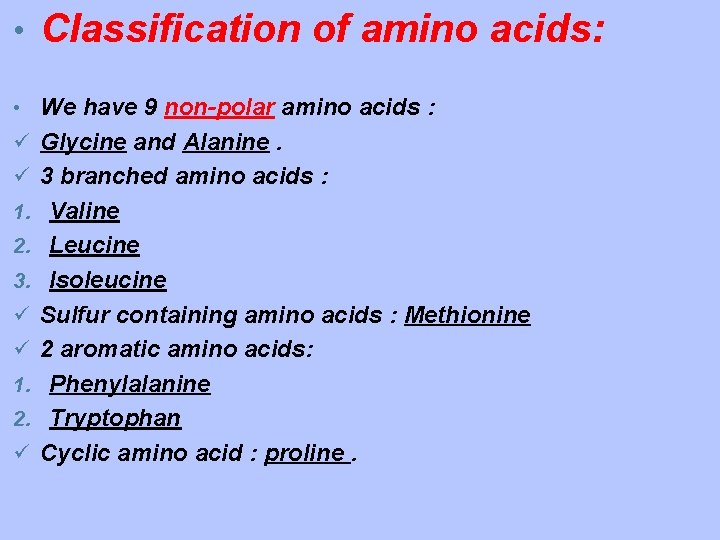
• Classification of amino acids: • We have 9 non-polar amino acids : ü Glycine and Alanine. ü 3 branched amino acids : 1. Valine 2. Leucine 3. Isoleucine ü Sulfur containing amino acids : Methionine ü 2 aromatic amino acids: 1. Phenylalanine 2. Tryptophan ü Cyclic amino acid : proline.
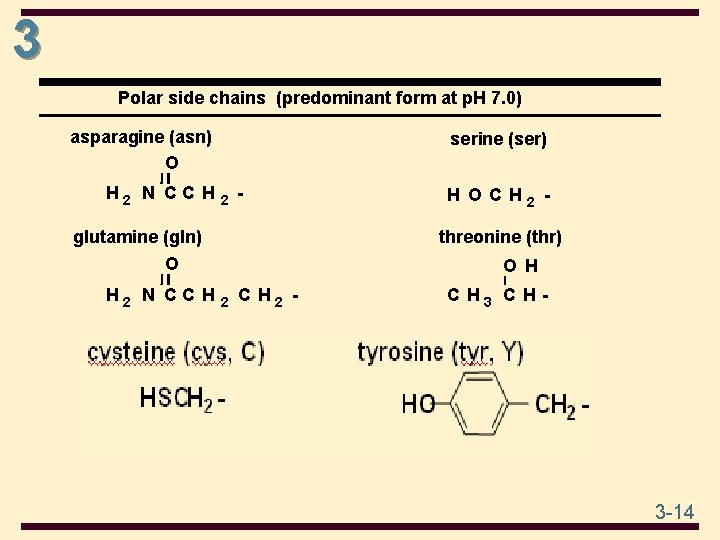
3 Polar side chains (predominant form at p. H 7. 0) asparagine (asn) O H 2 N CC H serine (ser) 2 - glutamine (gln) threonine (thr) O H 2 N CC H H O C H 2 - O H 2 C H 2 - C H 3 C H - 3 -14
• We have 6 polar amino acids : ü 3 hydroxyl containing amino acids: 1. Serine 2. Threonine 3. Tyrosine ( aromatic amino acid ) ü Asparagine and Glutamine (derived from asparatic acid and glutamic acid). ü Sulfur containing amino acid : cysteine.
3 3 -16
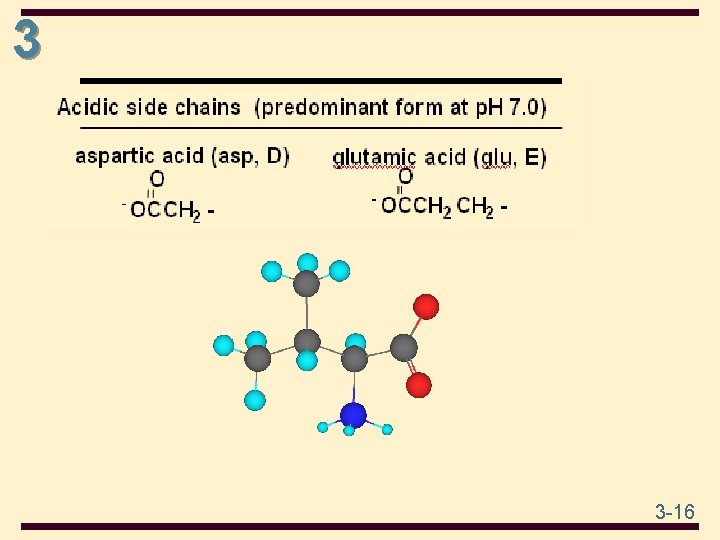
• Also we have other 5 amino acids: 3 basic and 2 acidic amino acids. • 2 Acidic amino acid : 1. asparatic acid. 2. glutamic acid. • 3 Basic amino acids Arginine 2. lysine 3. Histidine 1.
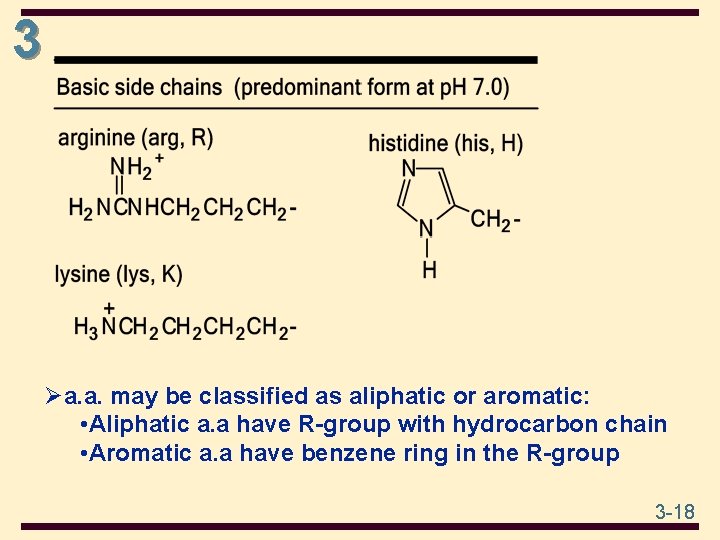
3 Øa. a. may be classified as aliphatic or aromatic: • Aliphatic a. a have R-group with hydrocarbon chain • Aromatic a. a have benzene ring in the R-group 3 -18
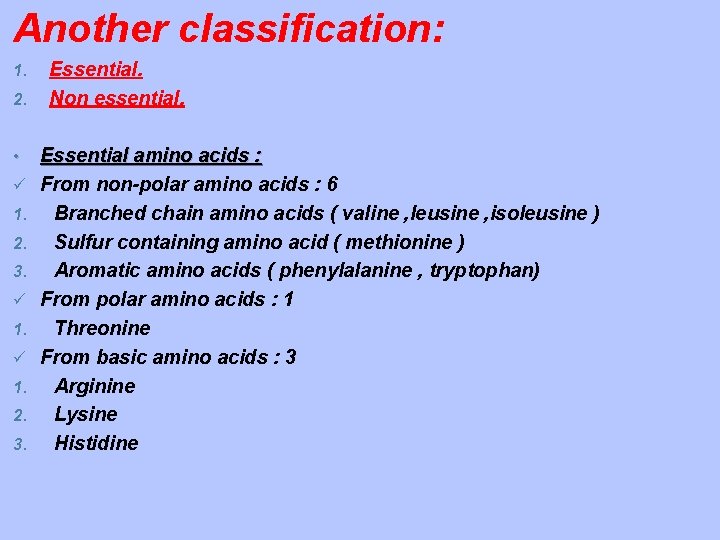
Another classification: 1. 2. • ü 1. 2. 3. Essential. Non essential. Essential amino acids : From non-polar amino acids : 6 Branched chain amino acids ( valine , leusine , isoleusine ) Sulfur containing amino acid ( methionine ) Aromatic amino acids ( phenylalanine , tryptophan) From polar amino acids : 1 Threonine From basic amino acids : 3 Arginine Lysine Histidine
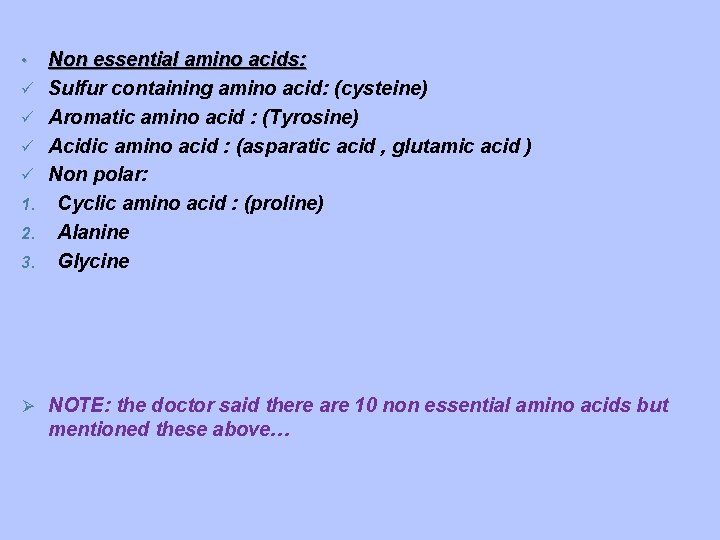
• ü ü 1. 2. 3. Non essential amino acids: Sulfur containing amino acid: (cysteine) Aromatic amino acid : (Tyrosine) Acidic amino acid : (asparatic acid , glutamic acid ) Non polar: Cyclic amino acid : (proline) Alanine Glycine Ø NOTE: the doctor said there are 10 non essential amino acids but mentioned these above…
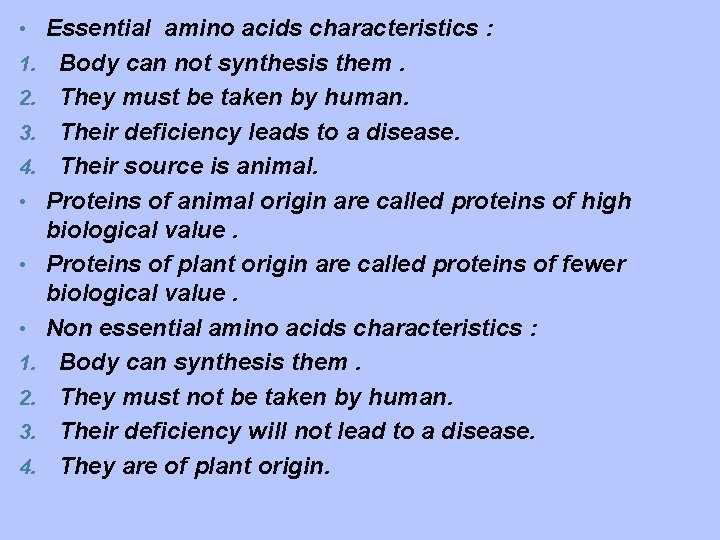
• Essential amino acids characteristics : 1. 2. 3. 4. • • • 1. 2. 3. 4. Body can not synthesis them. They must be taken by human. Their deficiency leads to a disease. Their source is animal. Proteins of animal origin are called proteins of high biological value. Proteins of plant origin are called proteins of fewer biological value. Non essential amino acids characteristics : Body can synthesis them. They must not be taken by human. Their deficiency will not lead to a disease. They are of plant origin.

3 1. 3 -letter abbreviation is used by doctor. 2. ������ 3 ���� 3 -22 Table 3 -1, p. 62
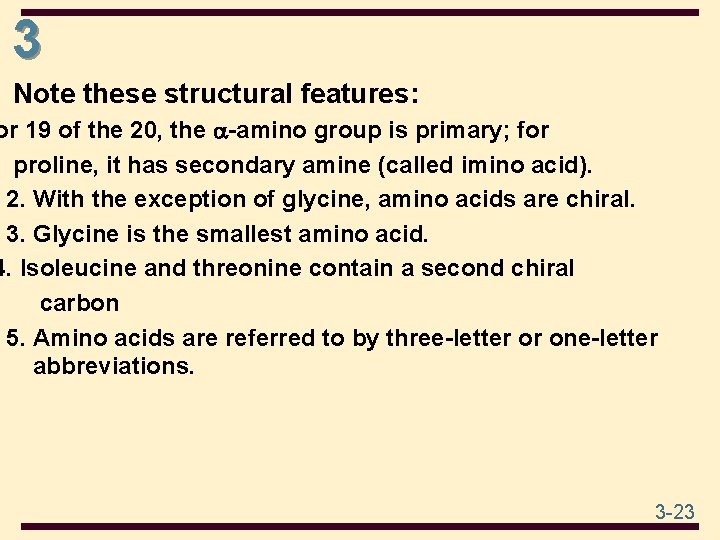
3 Note these structural features: or 19 of the 20, the -amino group is primary; for proline, it has secondary amine (called imino acid). 2. With the exception of glycine, amino acids are chiral. 3. Glycine is the smallest amino acid. 4. Isoleucine and threonine contain a second chiral carbon 5. Amino acids are referred to by three-letter or one-letter abbreviations. 3 -23
• Glycine is the smallest amino acid and has no D, L isomers because it has just alphacarbon , amine and carboxyl group and 2 hatom. • Glycine is non-chiral amino acid. • Chiral amino acid means optically active : this means we can have stereoisomer , L and D configuration , if we have a chiral atom.
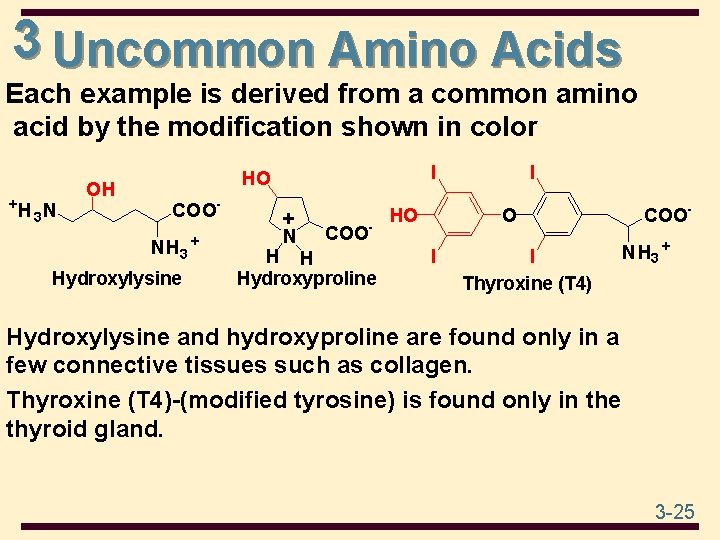
3 Uncommon Amino Acids Each example is derived from a common amino acid by the modification shown in color + OH H 3 N I HO COONH 3 Hydroxylysine + + N COO- H H Hydroxyproline HO I COO- O I I Thyroxine (T 4) NH 3 + Hydroxylysine and hydroxyproline are found only in a few connective tissues such as collagen. Thyroxine (T 4)-(modified tyrosine) is found only in the thyroid gland. 3 -25
• Modified amino acids : • In the body , after protein synthesis something called post • • -translational modification. . ������ amino acids �� ��� ���� • Note Lysine and Proline are added and OH group (hydroxylation) and become Hydroxylysine and Hydroxyproline respectively. Hydroxylysine and Hydroxyproline are called modified amino acids. Hydroxylysine and hydroxyproline require vitamin C for hydroxylation. Vitamin C deficiency (scurvy ����� ) does not lead to formation of Hydroxylysine and Hydroxyproline , so connective tissue will damage which causes bleeding and other issues.
● ● ü ü Thyroxin is modified amino acid by adding 4 iodine atoms ( tetra iodotyrosine ) Thyroid hormone properties : Very important for metabolism. As thyroxin increases , the basal metabolic rate increases , heart beat increases , cardiac output increases , the muscles become weakened because of excess protein catabolism , you can not sleep , swelling in your hand. All these symptoms for thyrotoxicosis. Thyrotoxicosis : excess of thyroid hormone in the body. . ﺍﻟﺦ. . neural infection , autoimmune diseases ● 1. 2. 3. 4. ● ● Deficiency of thyroxin : Slow basal metabolic rate. ﻛﺴﻞ ﻃﻮﻳﻠﻪ ﺳﺎﻋﺎﺕ ﺍﻟﻨﻮﻡ Cold Intolerance Very common. T 3 : modified amino acid. ( triiodotyrosine ) ����� ü
3 3 -28 p. 71 c
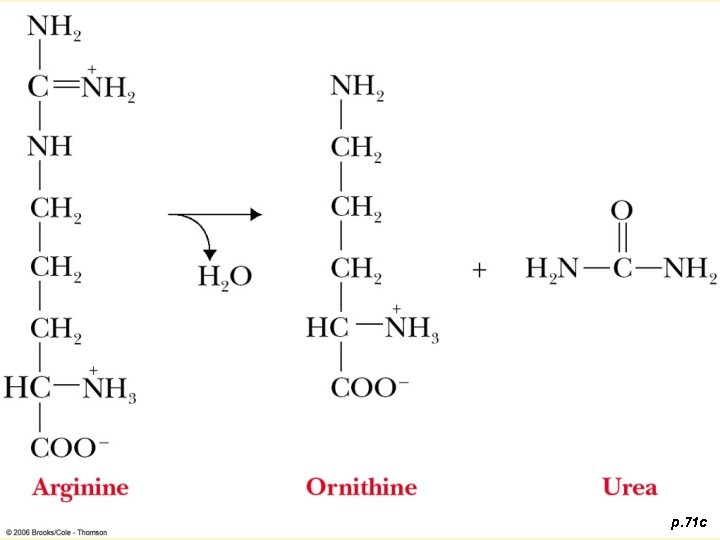
• Unusual Amino Acid : 1. Ornithine 2. Arginine • Amino acids that are present in the cycles metabolism but they are not components of proteins. • Ornithine exists in urea cycle. • NH 3 in the body will accumulate in the liver to convert it to urea then urea goes to kidney for excretion. • We will take it in details later.
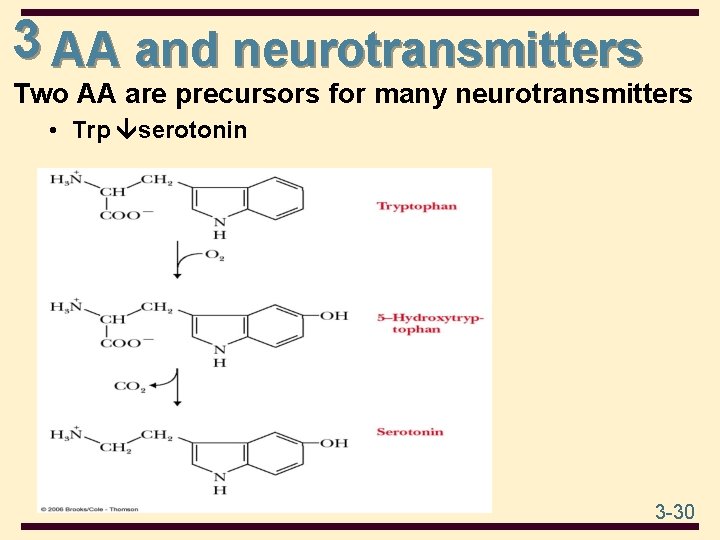
3 AA and neurotransmitters Two AA are precursors for many neurotransmitters • Trp serotonin 3 -30
3 The high concentration of tryptophan in milk protein may mildly elevate the levels of serotonin, which relaxes the brain. Serotonin is regarded as a chemical that is responsible for maintaining mood balance, and that a deficit of serotonin leads to depression. The tryptophan in milk might make you sleepy, whereas the tyramine in cheese should wake you up. 3 -31
• Neurotransmitters derived from amino acids : • Like serotonin. • Serotonin comes from tryptophan : 1. Oxidation of tryptophan. 2. Decarboxylation of 5 -hydroxytryptophan. 3. serotonin: ����� ����� , ������� ü. ����� �relaxation ���� ) ������ ��� ���� ��� ��� ��� ü ( ���� �� ������ tryptophan ����� ü
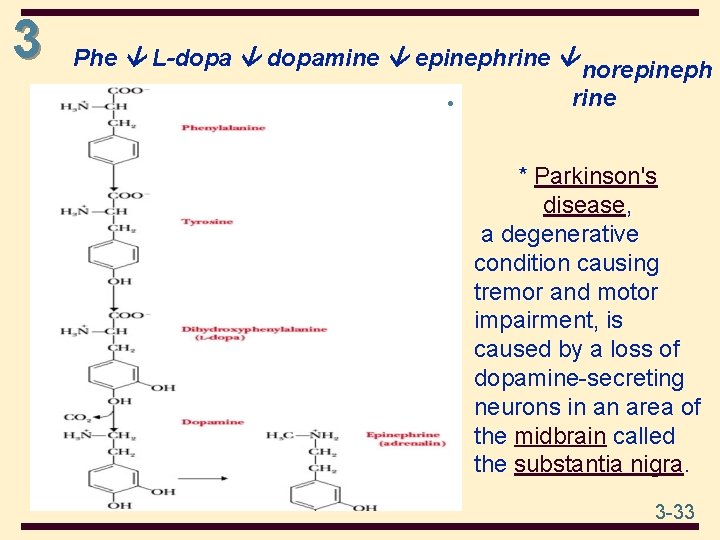
3 Phe L-dopa dopamine epinephrine norepineph • rine * Parkinson's disease, a degenerative condition causing tremor and motor impairment, is caused by a loss of dopamine-secreting neurons in an area of the midbrain called the substantia nigra. 3 -33
• Neurotransmitters derived from amino acids: • • • We will take them in third year in the last system (neuroscience). Other neurotransmitter are dopamine , epinephrine and norepinephrine. Derived from phenylalanine. Note the slide : phenylalanine is essential and tyrosine is not essential because it is synthesized from phenylalanine. Deficiency of phenylalanine hydroxylase leads to phenylketonuria (PKU) , is accumulation of phenylalanine , will causes problem in brain and heart. Note : Phe L-dopa dopamine epinephrine norepinephrine. • Parkinson's disease (������ ): ü Deficiency of dopamine. ü Deficiency of epinephrine and norepinephrine. ü Shaking : tremor. . ����� ��� �� ���� ü
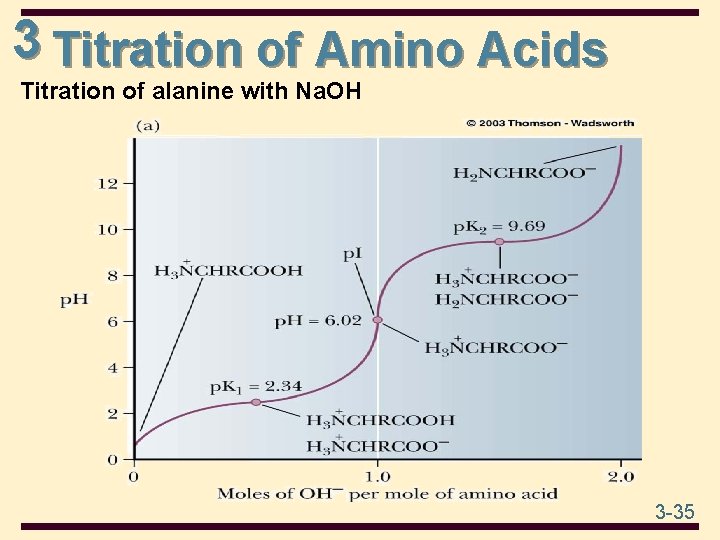
3 Titration of Amino Acids Titration of alanine with Na. OH 3 -35
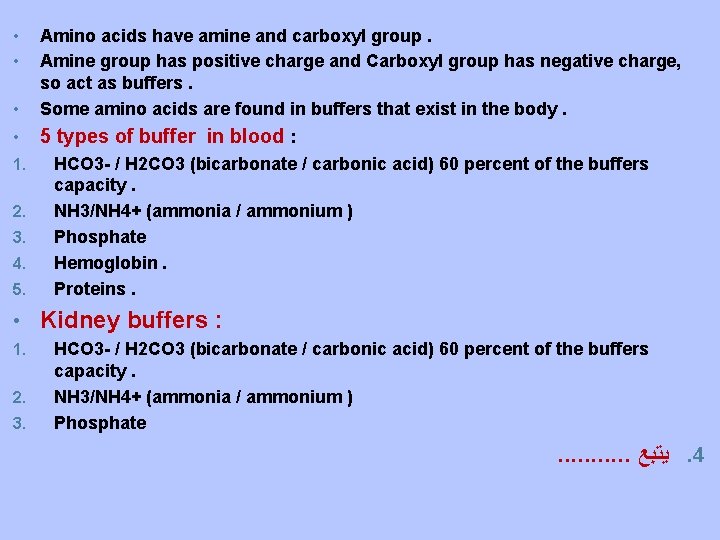
• Amino acids have amine and carboxyl group. Amine group has positive charge and Carboxyl group has negative charge, so act as buffers. Some amino acids are found in buffers that exist in the body. • 5 types of buffer in blood : • • 1. 2. 3. 4. 5. HCO 3 - / H 2 CO 3 (bicarbonate / carbonic acid) 60 percent of the buffers capacity. NH 3/NH 4+ (ammonia / ammonium ) Phosphate Hemoglobin. Proteins. • Kidney buffers : 1. 2. 3. HCO 3 - / H 2 CO 3 (bicarbonate / carbonic acid) 60 percent of the buffers capacity. NH 3/NH 4+ (ammonia / ammonium ) Phosphate . . . ﻳﺘﺒﻊ. 4
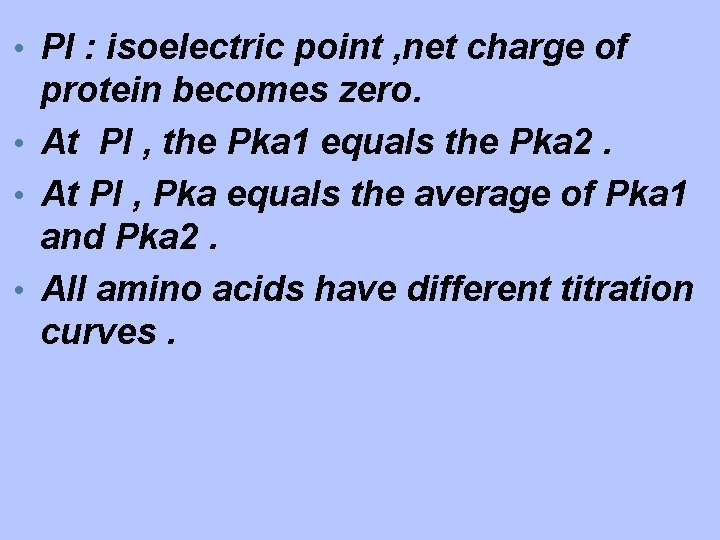
• PI : isoelectric point , net charge of protein becomes zero. • At PI , the Pka 1 equals the Pka 2. • At PI , Pka equals the average of Pka 1 and Pka 2. • All amino acids have different titration curves.
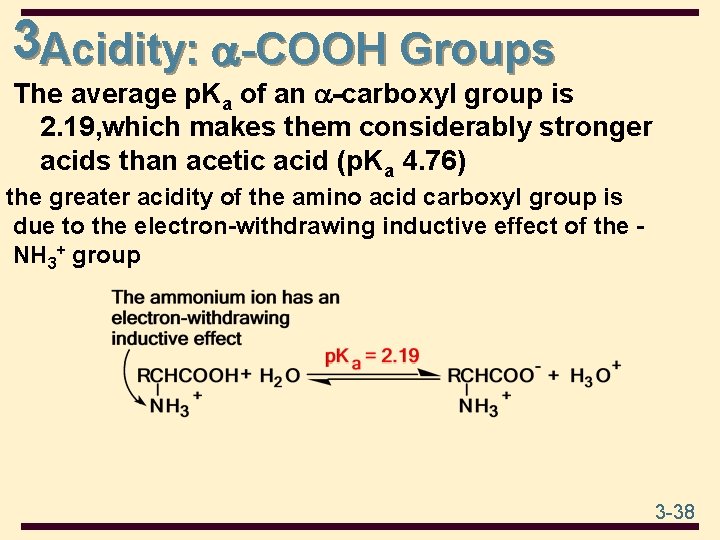
3 Acidity: -COOH Groups The average p. Ka of an -carboxyl group is 2. 19, which makes them considerably stronger acids than acetic acid (p. Ka 4. 76) the greater acidity of the amino acid carboxyl group is due to the electron-withdrawing inductive effect of the NH 3+ group 3 -38
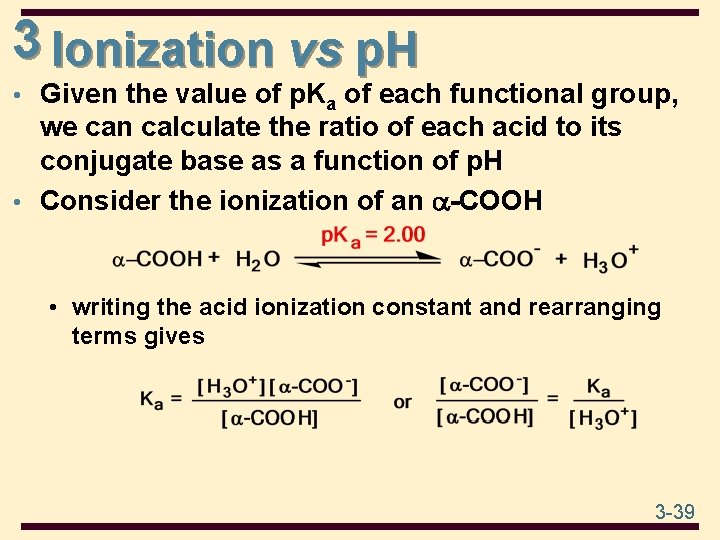
3 Ionization vs p. H • Given the value of p. Ka of each functional group, we can calculate the ratio of each acid to its conjugate base as a function of p. H • Consider the ionization of an -COOH • writing the acid ionization constant and rearranging terms gives 3 -39
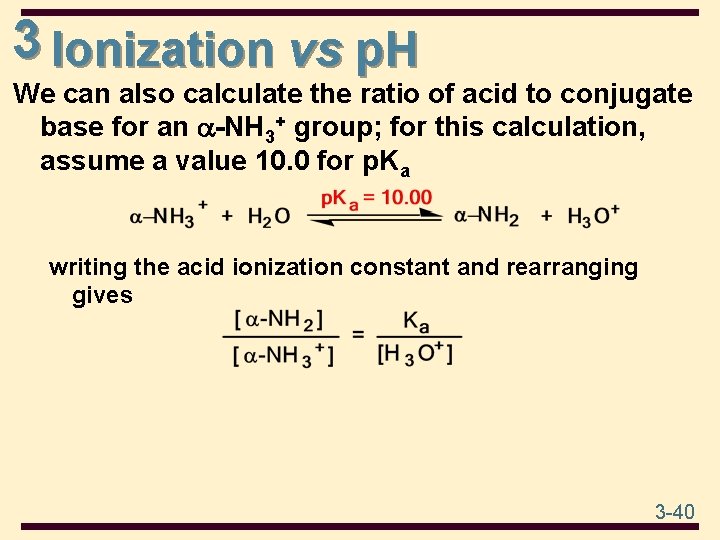
3 Ionization vs p. H We can also calculate the ratio of acid to conjugate base for an -NH 3+ group; for this calculation, assume a value 10. 0 for p. Ka writing the acid ionization constant and rearranging gives 3 -40
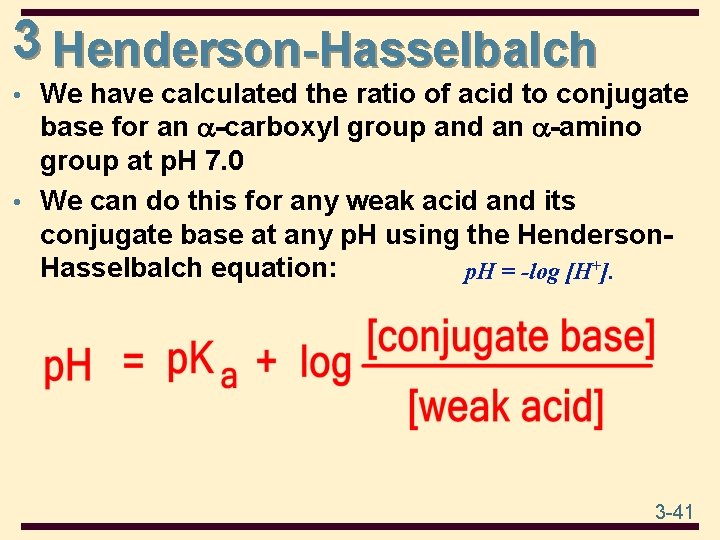
3 Henderson-Hasselbalch • We have calculated the ratio of acid to conjugate base for an -carboxyl group and an -amino group at p. H 7. 0 • We can do this for any weak acid and its conjugate base at any p. H using the Henderson. Hasselbalch equation: p. H = -log [H+]. 3 -41
• Henderson-Hasselbalch equation determines buffer 1. 2. Ø q q q system : What its composition Ratio of acid and base Remember : buffer system composed of weak acid and its conjugated base : (examples) Acetic acid / acetate Oxalic acid / oxalate Pyruvic acid / pyruvate Carbonic acid / carbonate Lactic acid / lactate
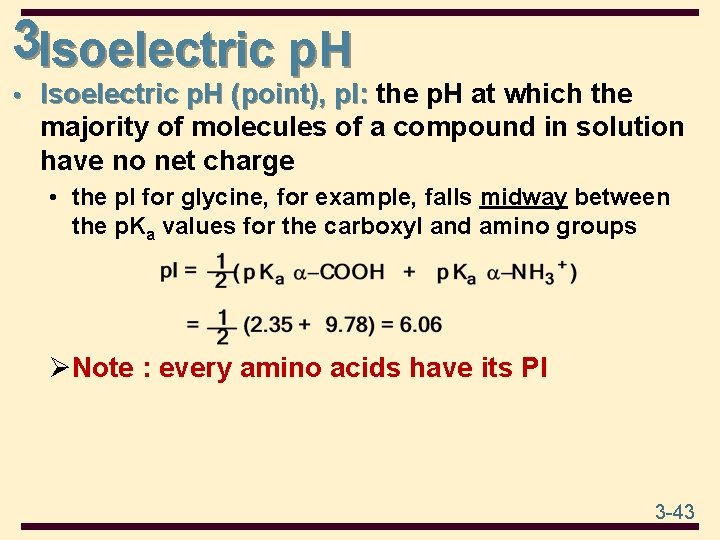
3 Isoelectric p. H • Isoelectric p. H (point), p. I: the p. H at which the Isoelectric p. H (point), p. I: majority of molecules of a compound in solution have no net charge • the p. I for glycine, for example, falls midway between the p. Ka values for the carboxyl and amino groups ØNote : every amino acids have its PI 3 -43
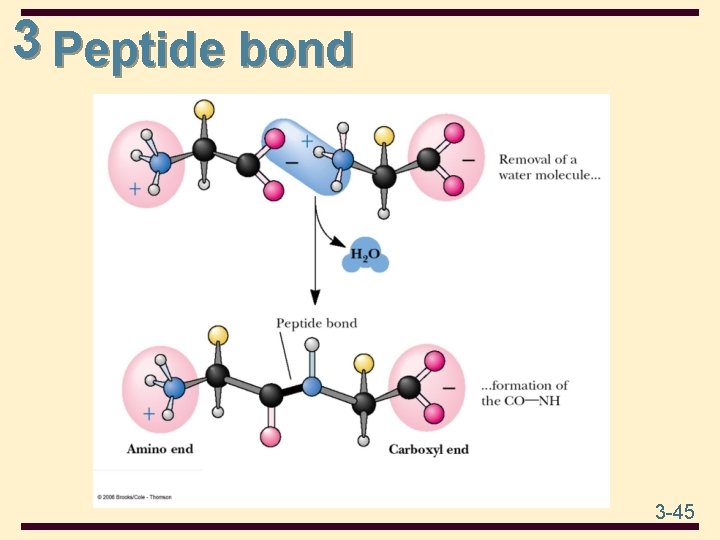
3 Peptide bond • In 1902, Emil Fischer proposed that proteins are long chains of amino acids joined by amide bonds to which he gave the name peptide bonds • Peptide bond: the special name given to the amide linkage between the -carboxyl group of one amino acid and the -amino group of another. 3 -44
3 Peptide bond 3 -45
3 Peptides peptides: the name given to a polymer of amino acids peptides joined by peptide bonds; they are classified by the number of amino acid residues in the chain: dipeptide: a molecule containing two amino acid dipeptide residues joined by a peptide bond tripeptide: a molecule containing three amino acids tripeptide joined by peptide bonds Oligopeptide: few amino acids ( LESS THAN 10 AA) Oligopeptide polypeptide: a macromolecule containing many amino polypeptide acids (normally >100) joined by peptide bonds protein: a biological macromolecule of molecular weight protein 5000 g/mol or greater, consisting of one or more polypeptide chains 3 -46
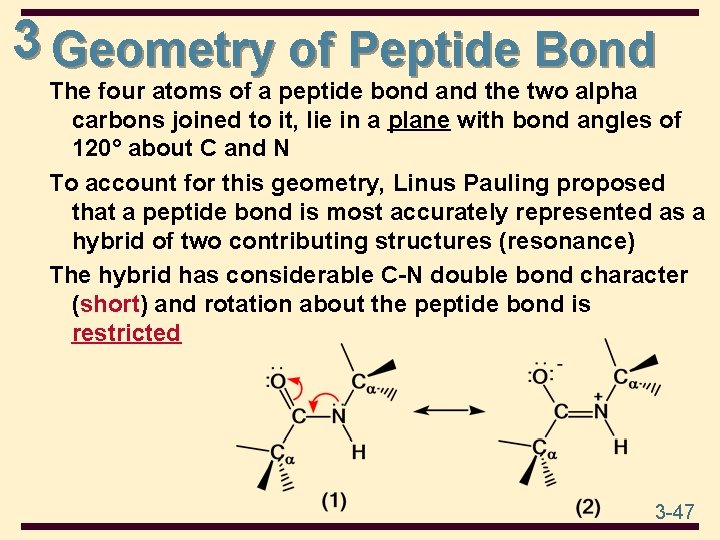
3 Geometry of Peptide Bond The four atoms of a peptide bond and the two alpha carbons joined to it, lie in a plane with bond angles of 120° about C and N To account for this geometry, Linus Pauling proposed that a peptide bond is most accurately represented as a hybrid of two contributing structures (resonance) The hybrid has considerable C-N double bond character (short) and rotation about the peptide bond is restricted 3 -47
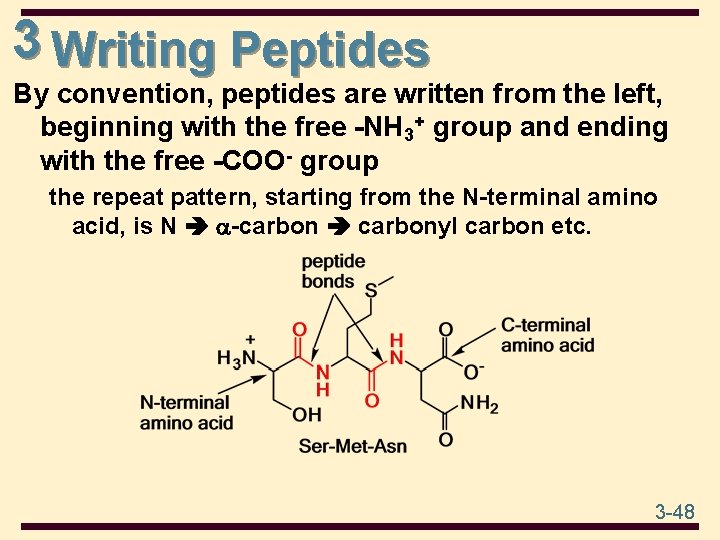
3 Writing Peptides By convention, peptides are written from the left, beginning with the free -NH 3+ group and ending with the free -COO- group the repeat pattern, starting from the N-terminal amino acid, is N -carbon carbonyl carbon etc. 3 -48
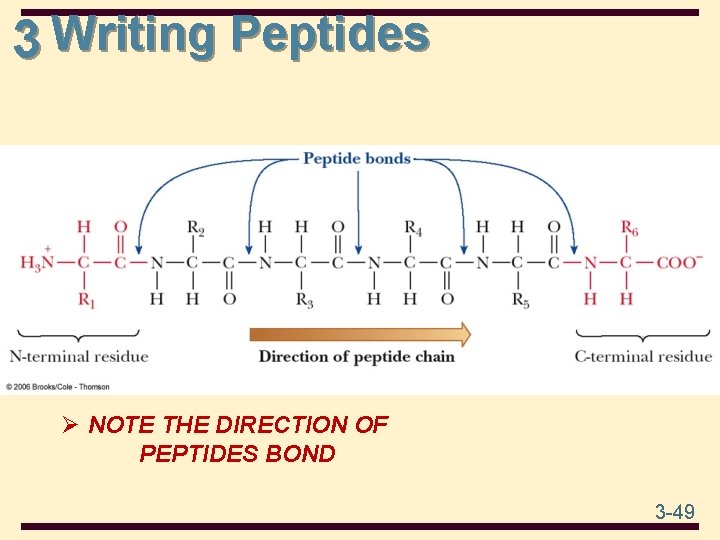
3 Writing Peptides Ø NOTE THE DIRECTION OF PEPTIDES BOND 3 -49
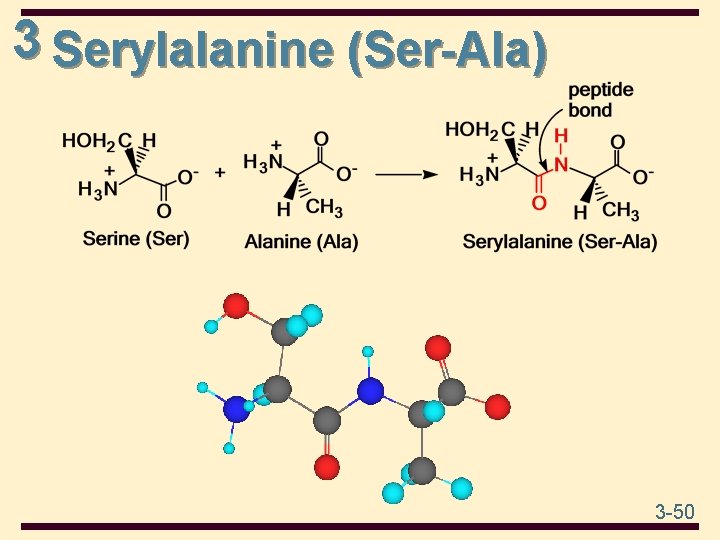
3 Serylalanine (Ser-Ala) 3 -50
• When we have 2 amino acids like serine and alanine , they make : • Ser + Ala serylalanine • Ala + Ser alanylserine
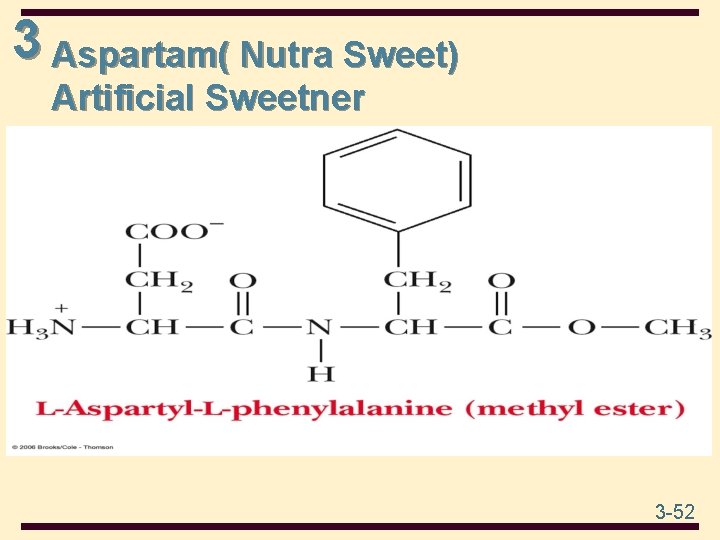
3 Aspartam( Nutra Sweet) Artificial Sweetner 3 -52
• Aspatam : composed of L- aspartic acid and Lphenylalanine. : ��� �� ������� �� ��� • ( ���. . ������� ) diet ��� �� ü ü Has dipeptide which make artificial sweetness. ü Has no calories ü Sweetness 200 time more than sugar.
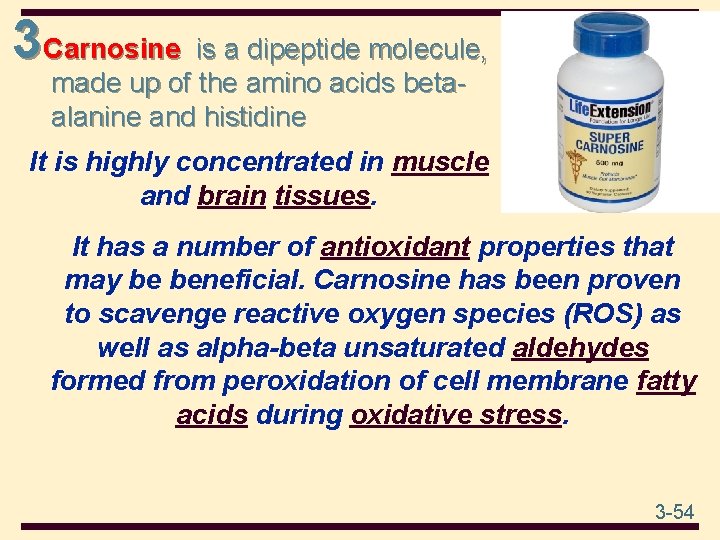
3 Carnosine is a dipeptide molecule, made up of the amino acids betaalanine and histidine It is highly concentrated in muscle and brain tissues. It has a number of antioxidant properties that may be beneficial. Carnosine has been proven to scavenge reactive oxygen species (ROS) as well as alpha-beta unsaturated aldehydes formed from peroxidation of cell membrane fatty acids during oxidative stress. 3 -54
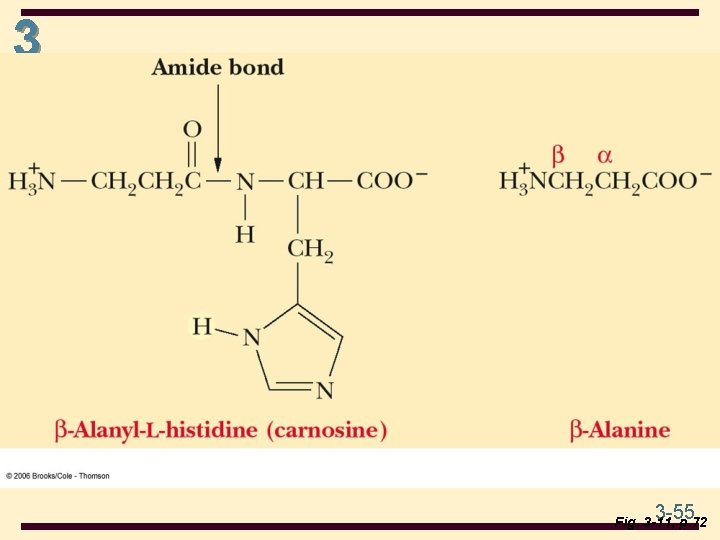
3 3 -55 Fig. 3 -11, p. 72
• Free radicles fight cells wall and damage it. • Vitamin A and B antioxidant. • Antioxidant prevent accumulation of free radicles.
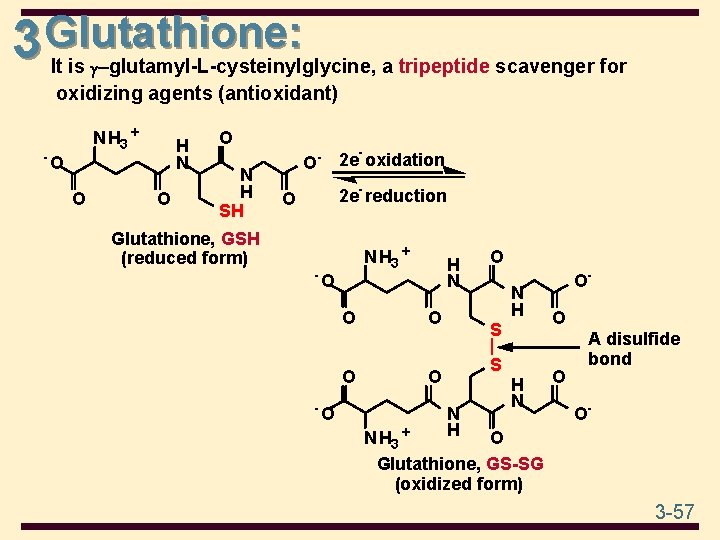
3 Glutathione: It is γ–glutamyl-L-cysteinylglycine, a tripeptide scavenger for oxidizing agents (antioxidant) - N H 3 + O O H N O O N H SH Glutathione, GSH (reduced form) O- 2 e oxidation 2 e- reduction O - N H 3 + O O O - O H N O O S S O N H H N OO O A disulfide bond O- O N H 3 + Glutathione, GS-SG (oxidized form) 3 -57
• Anther one is Glutathione : • Is composed of 3 amino acids ( glutamic acid , cysteine , glycine ). • Has 2 forms , oxidized and reduced form. • Antioxidant takes free radicles prevent hemolysis of RBCs. • Vitamin E , A and E are antioxidant
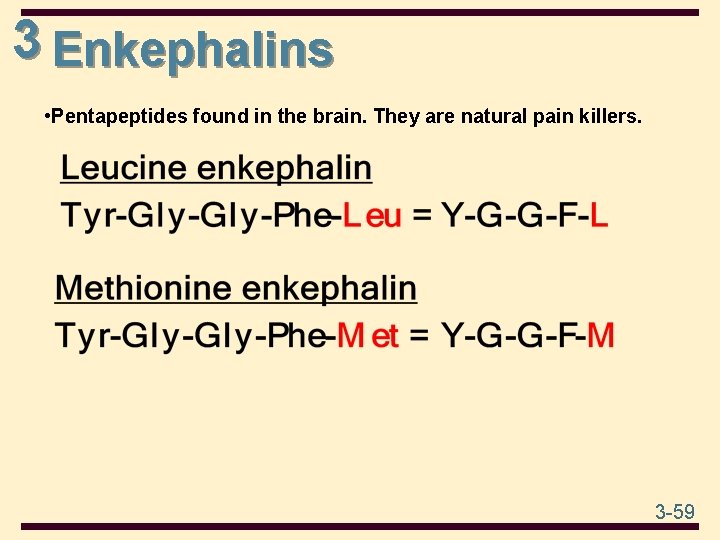
3 Enkephalins • Pentapeptides found in the brain. They are natural pain killers. 3 -59
• Leucine and methionine enkephalins in blood , naturally found in brain , called natural pain killers. • Function : ������� ���� �� ����� Ø �� ����. �� ��� ���� �� Ø morphine ���� ��� Ø
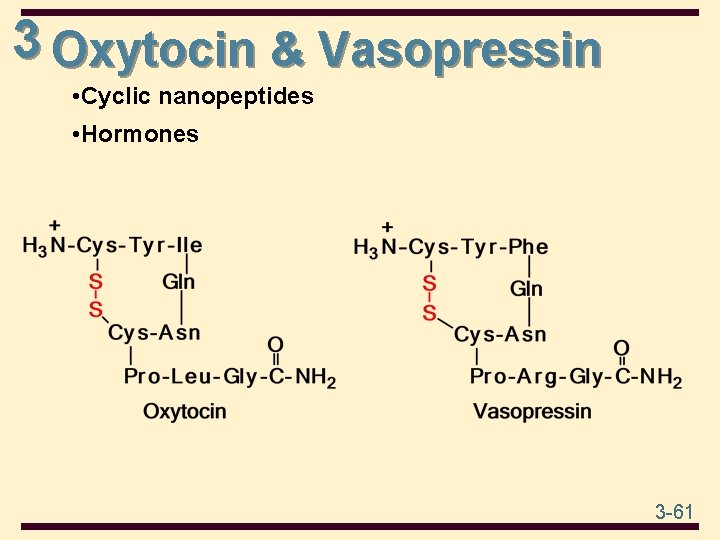
3 Oxytocin & Vasopressin • Cyclic nanopeptides • Hormones 3 -61
• Tow hormones are released from posterior pituitary gland. • ADH : antidiuretic hormone. ����� �� ������ ����� DIURETIC ��� • . . oxytocin ��� ( leu ) ���� ��� ü. ADH ��� (arg) ���� ��� ü
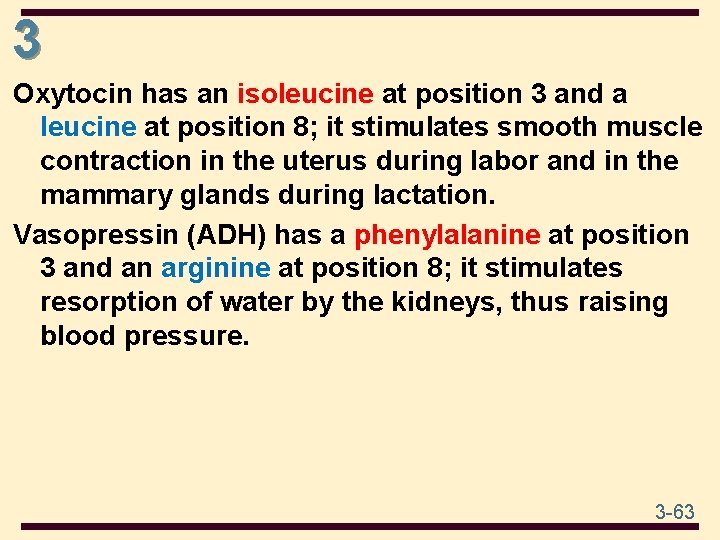
3 Oxytocin has an isoleucine at position 3 and a leucine at position 8; it stimulates smooth muscle contraction in the uterus during labor and in the mammary glands during lactation. Vasopressin (ADH) has a phenylalanine at position 3 and an arginine at position 8; it stimulates resorption of water by the kidneys, thus raising blood pressure. 3 -63
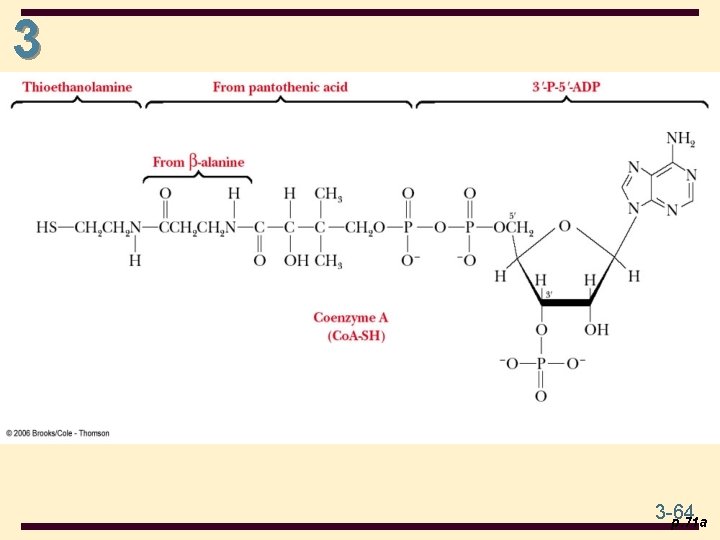
3 3 -64 p. 71 a
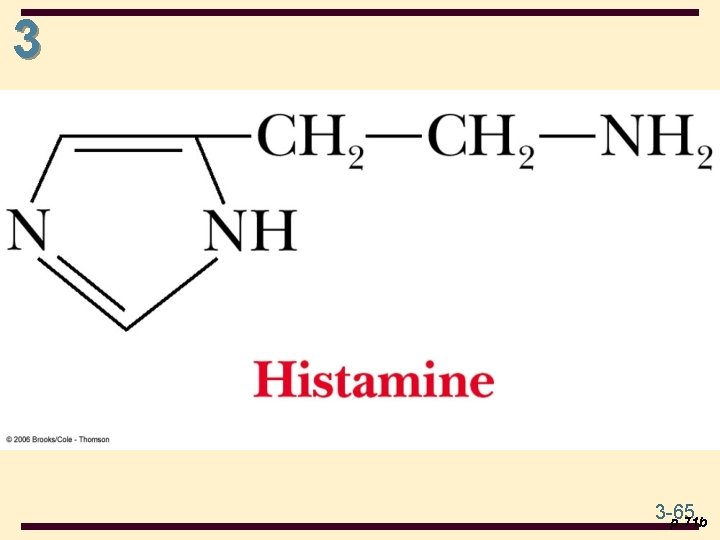
3 3 -65 p. 71 b
3 Histamine It is an organic nitrogenous compound involved in local immune responses as well as regulating physiological function in the gut and acting as a neurotransmitter. Histamine is involved in the inflammatory response 3 -66
• Responsible for allergy. • Responsible for swelling …etc. • Regulate HCL secretion in stomach. • Antihistamine prevents the effect of histamine.
3 If you are facing any problem or have any question , please don’t hesitate to ask. End 3 -68
- Slides: 68