
3 Domains of Life Chapter 13 AThe Protozoans
- Slides: 20
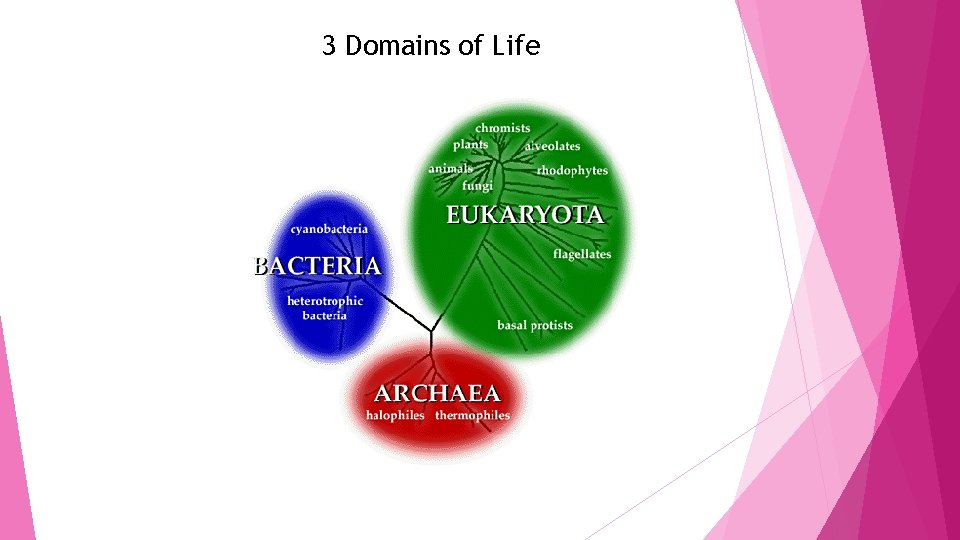
3 Domains of Life
Chapter 13 AThe Protozoans
Objectives How is kingdom Protozoa distinct (different) from other kingdoms? How do protozoans grow and reproduce? can protozoans be useful or harmful to humans and the environment?
13. 1 - Classifying Protozoans
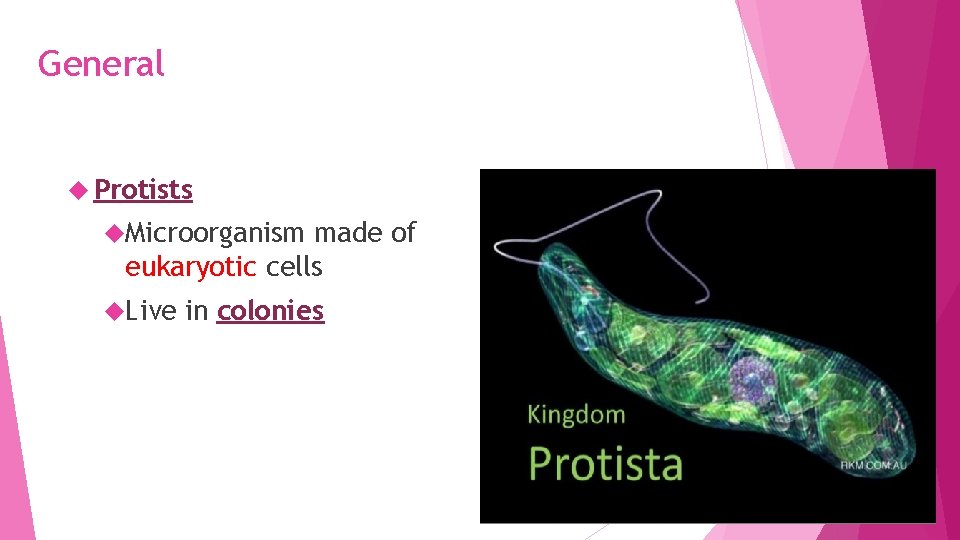
General Protists Microorganism made of eukaryotic cells Live in colonies
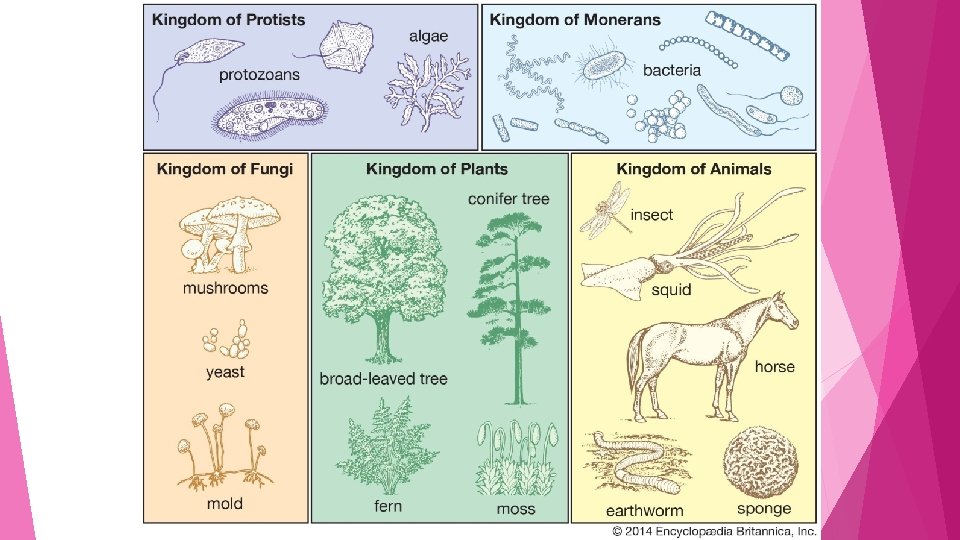
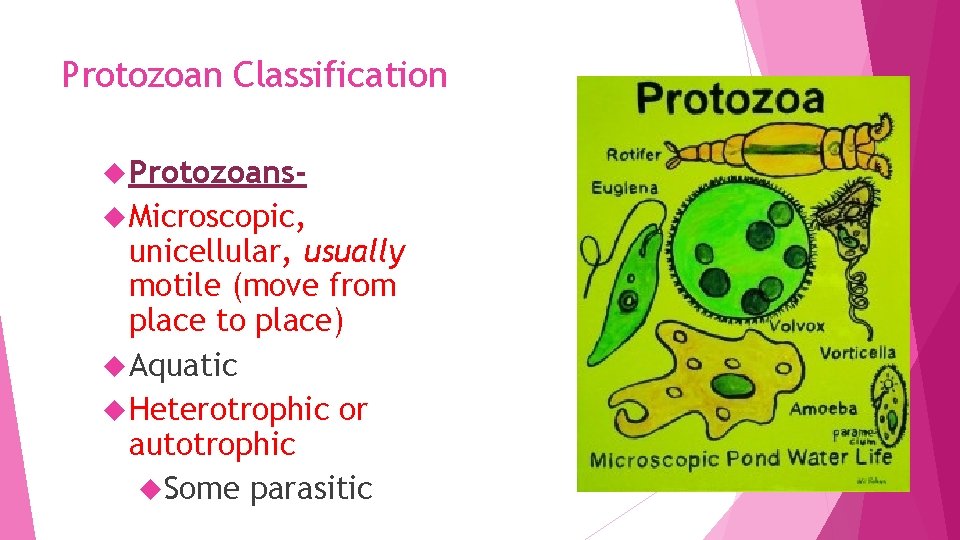
Protozoan Classification Protozoans Microscopic, unicellular, usually motile (move from place to place) Aquatic Heterotrophic or autotrophic Some parasitic
13. 2 - Structure of Protozoans
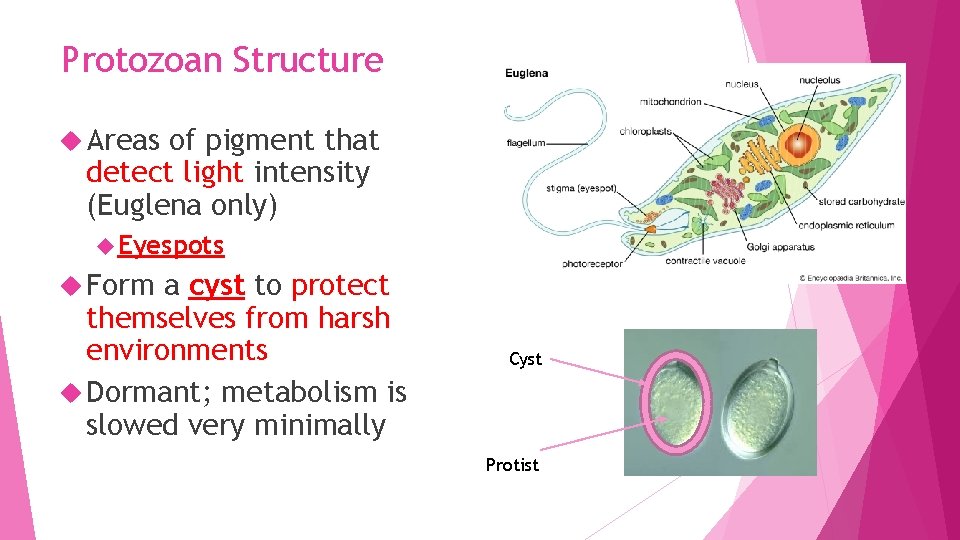
Protozoan Structure Areas of pigment that detect light intensity (Euglena only) Eyespots Form a cyst to protect themselves from harsh environments Dormant; metabolism is slowed very minimally Cyst Protist
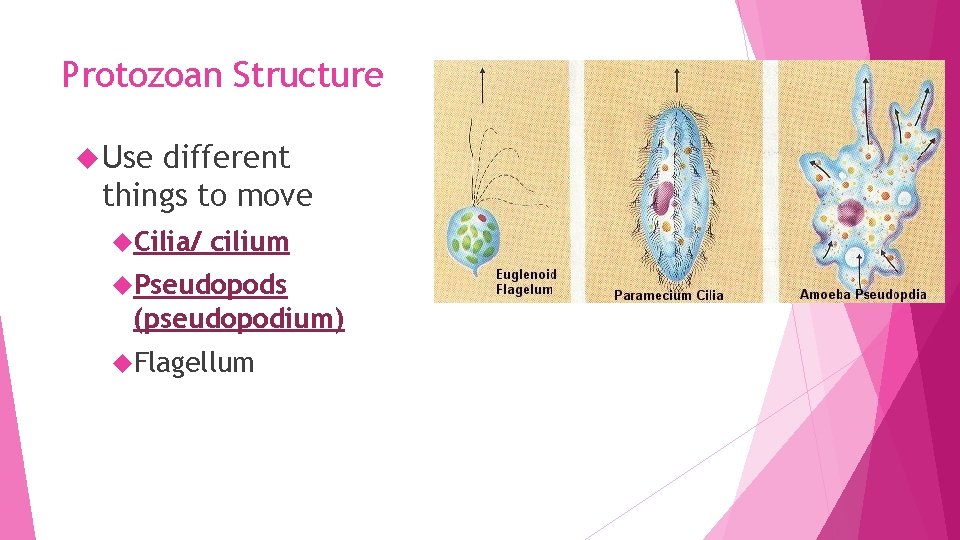
Protozoan Structure Use different things to move Cilia/ cilium Pseudopods (pseudopodium) Flagellum
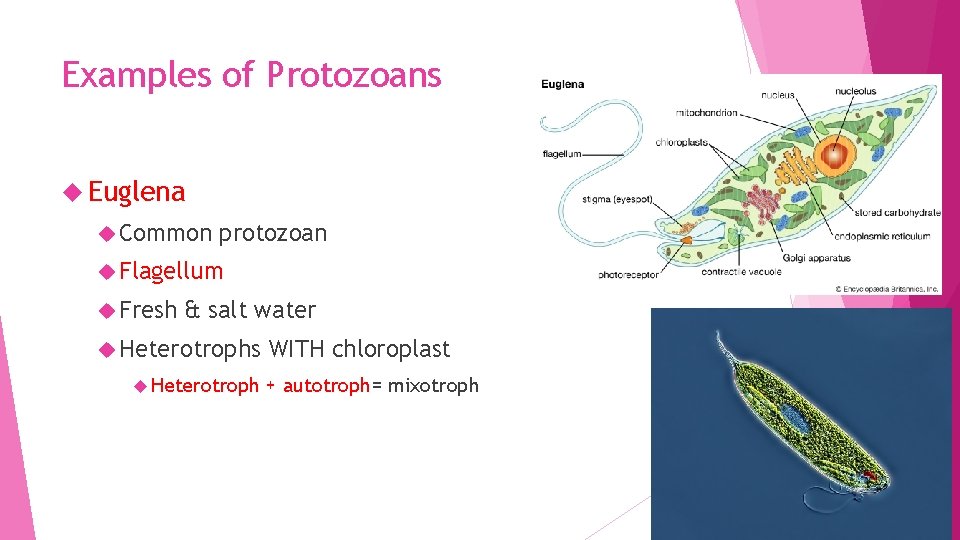
Examples of Protozoans Euglena Common protozoan Flagellum Fresh & salt water Heterotrophs Heterotroph WITH chloroplast + autotroph= mixotroph
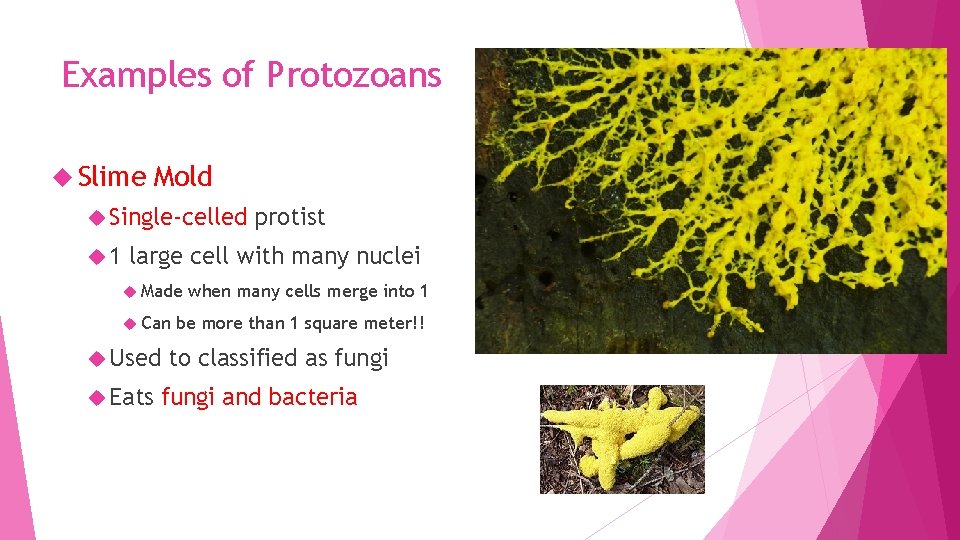
Examples of Protozoans Slime Mold Single-celled 1 protist large cell with many nuclei Made Can Used Eats when many cells merge into 1 be more than 1 square meter!! to classified as fungi and bacteria
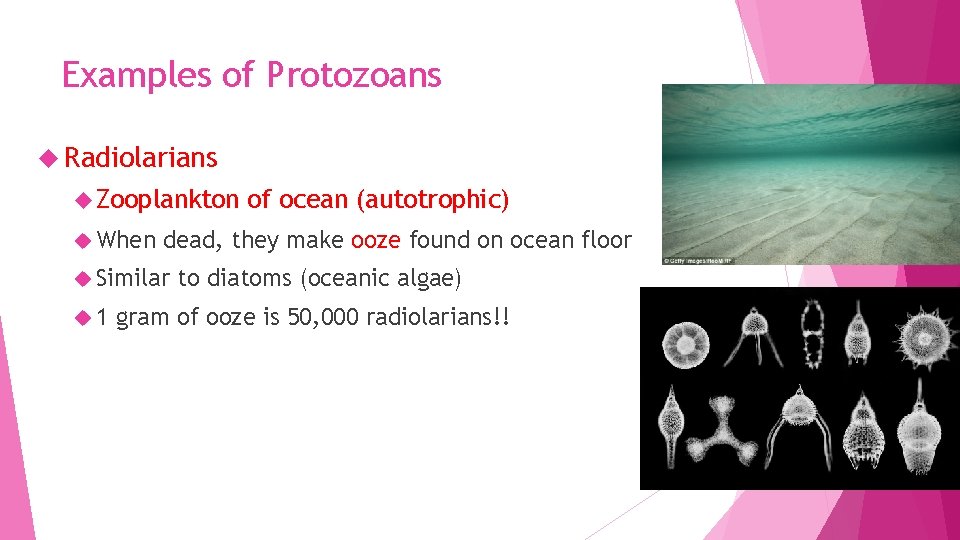
Examples of Protozoans Radiolarians Zooplankton When dead, they make ooze found on ocean floor Similar 1 of ocean (autotrophic) to diatoms (oceanic algae) gram of ooze is 50, 000 radiolarians!!
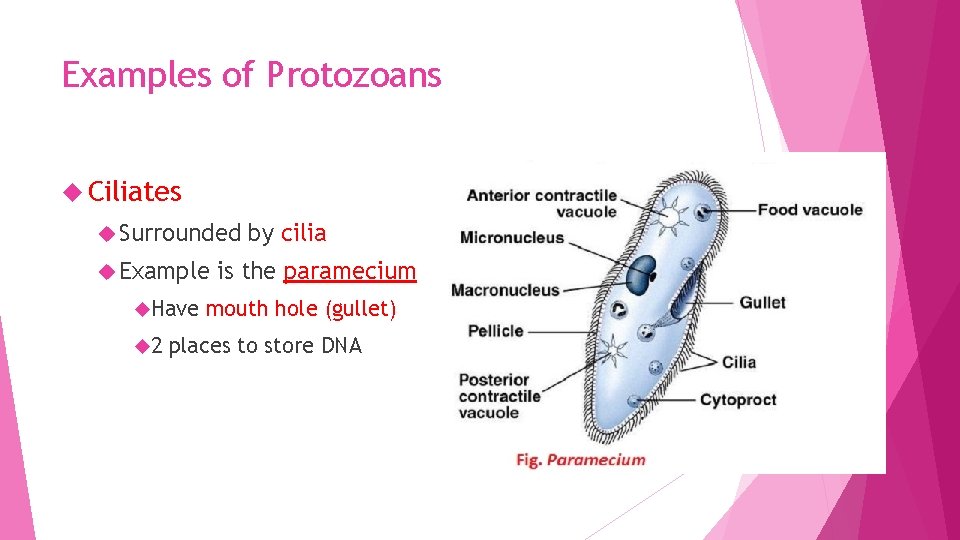
Examples of Protozoans Ciliates Surrounded Example Have 2 by cilia is the paramecium mouth hole (gullet) places to store DNA
13. 3 - Reproduction in Protozoans
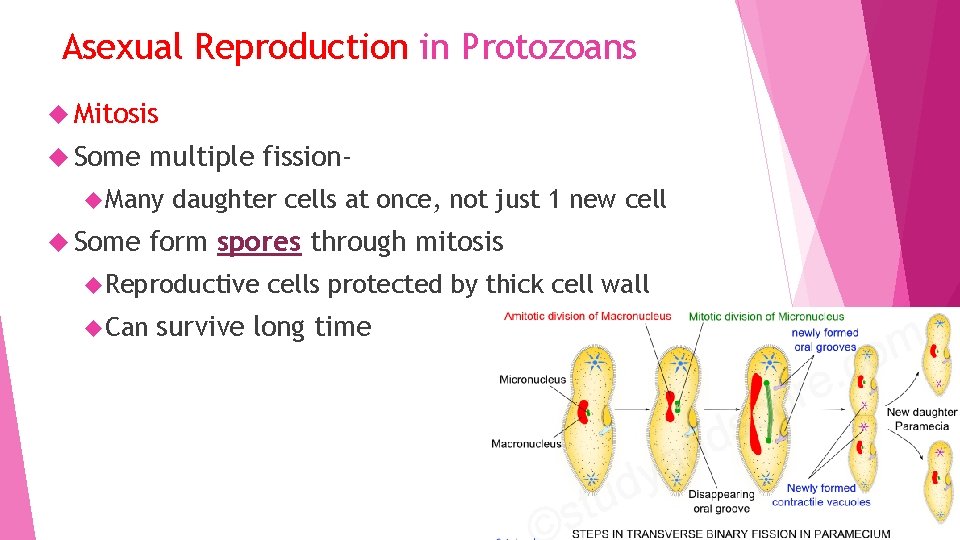
Asexual Reproduction in Protozoans Mitosis Some multiple fission- Many Some daughter cells at once, not just 1 new cell form spores through mitosis Reproductive Can cells protected by thick cell wall survive long time
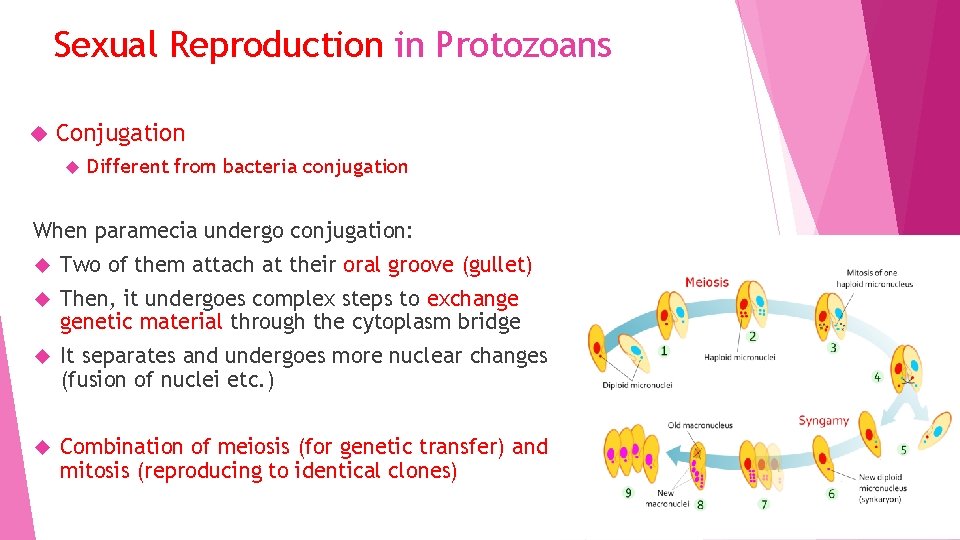
Sexual Reproduction in Protozoans Conjugation Different from bacteria conjugation When paramecia undergo conjugation: Two of them attach at their oral groove (gullet) Then, it undergoes complex steps to exchange genetic material through the cytoplasm bridge It separates and undergoes more nuclear changes (fusion of nuclei etc. ) Combination of meiosis (for genetic transfer) and mitosis (reproducing to identical clones)
13. 4 - How Protozoans Function in the Environment
Protozoans in the Environment Important in ocean (aquatic environment) Decomposers Key (break down) part in marine food chain by moving nutrients around ocean Keep bacteria from becoming too numerous
Protozoans in the Environment But can be parasites: (stealing nutrients off of a host) African Sleeping Sickness (Protozoan Trypanosoma) Malaria (Plasmodium falciparum) Or pathogens: (disease-causing) Giardia (cause diarrhea and dysentery in humans) Entamoeba (amoeba) (same as above)