
3 D Triangle MeshBased Edge Detection and Segmentation
3 D Triangle Mesh-Based Edge Detection and Segmentation Project #2 Seminar Presentation En. 600. 446 Spring 2015 Joshua You Mentors: Dr. Armand, Dr. Gordon, Captain Grant, Dr. Ryan Murphy
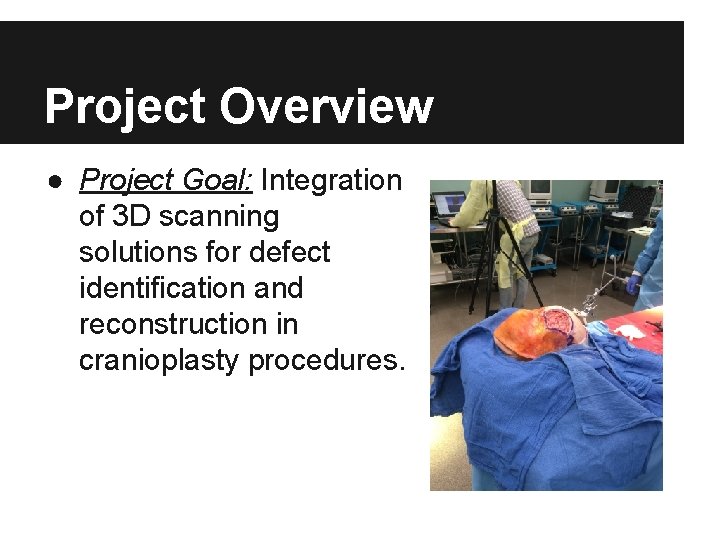
Project Overview ● Project Goal: Integration of 3 D scanning solutions for defect identification and reconstruction in cranioplasty procedures.
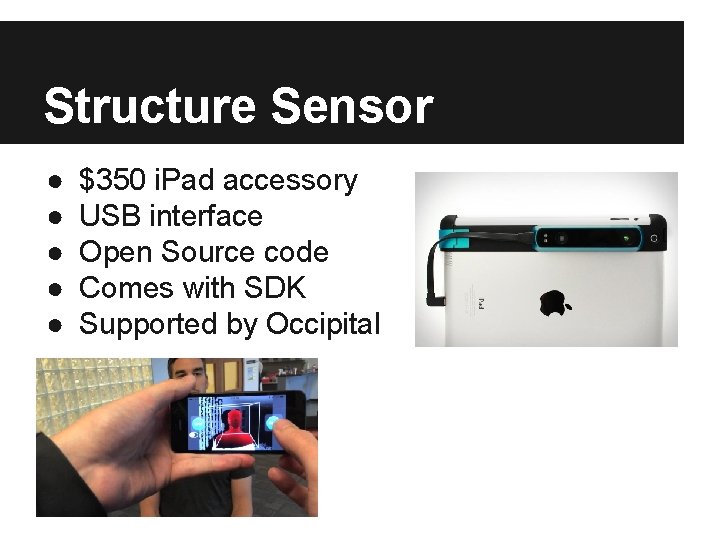
Structure Sensor ● ● ● $350 i. Pad accessory USB interface Open Source code Comes with SDK Supported by Occipital
Today’s Papers ● (1) Y. Sun, D. L. Page, J. K. Paik, A. Koschan, M. A. Abidi. Triangle Mesh-Based Edge Detection and Its Application to Surface Segmentation and Adaptive Surface Smoothing. Imaging, Robotics, and Intelligent Systems Laboratory. IEEE ICIP: 2002. ● (2) M. Kolomenkin, I. Shimshoni, A. Tal. On Edge Detection on Surfaces. Computer Vision and Pattern Recognition. IEEE Conference: 2767 -2774, 2009. ● (3) V. Vidal, F. Dupont. Robust Feature Line Extraction on CAD Triangular Meshes. International Conference on Computer Graphics Theory and Applications. GRAPP: 2011.
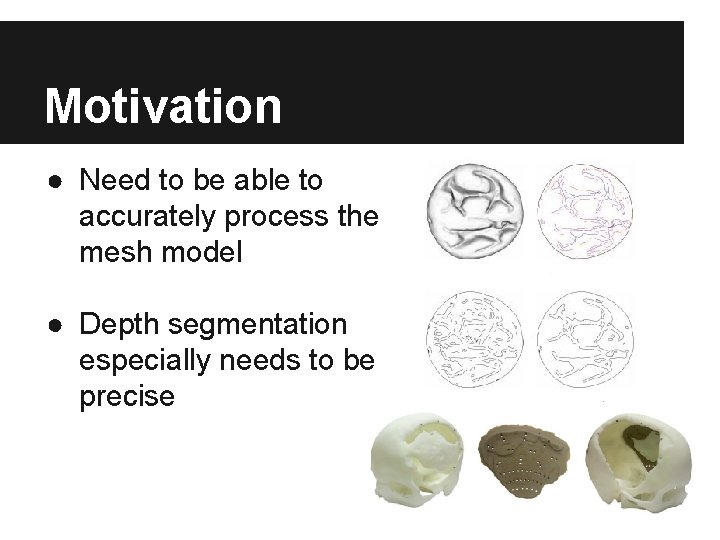
Motivation ● Need to be able to accurately process the mesh model ● Depth segmentation especially needs to be precise
Paper 1: Introduction ● Proposed in 2002 ● Proposes an edge detection algorithm for triangle meshes ● Uses edge strength to segment surfaces
Paper 1: Math Terminology ● Eigen analysis - “Method of simplifying coordinates” ● Geodesic - A curve whose tangent vectors remain parallel if they are transported along it ● Normal (Tensor) Voting - A way of estimating the orientation information and curvature of a surface at a given point
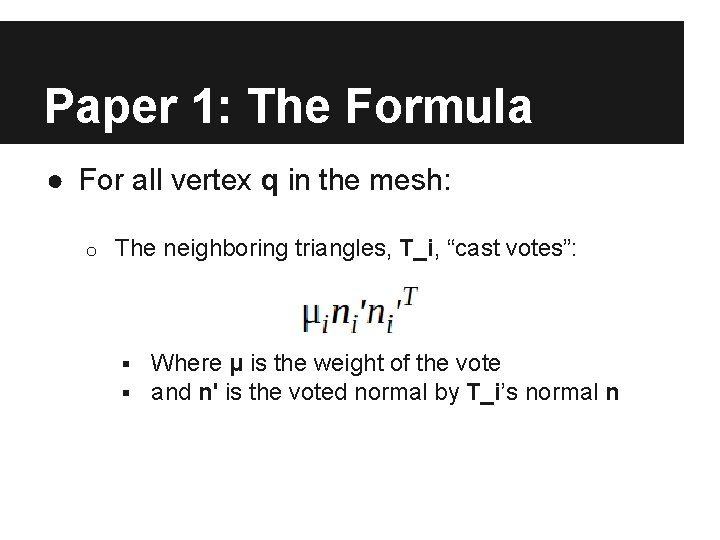
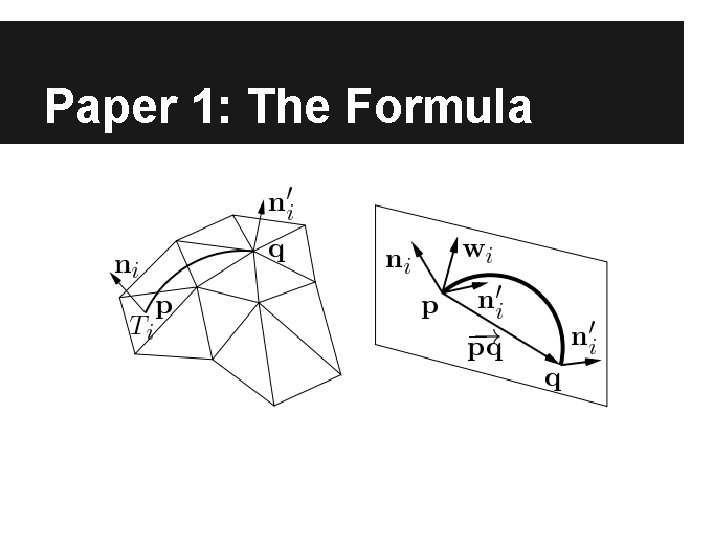
Paper 1: The Formula ● For all vertex q in the mesh: o The neighboring triangles, T_i, “cast votes”: § § Where μ is the weight of the vote and n' is the voted normal by T_i’s normal n
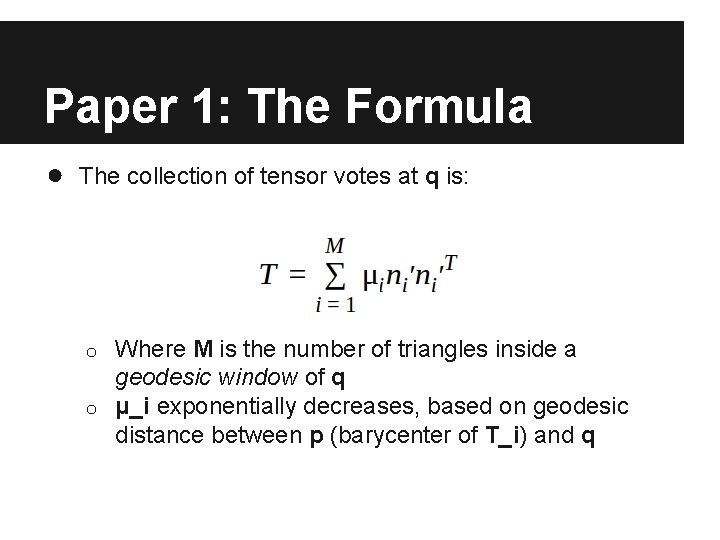
Paper 1: The Formula ● The collection of tensor votes at q is: Where M is the number of triangles inside a geodesic window of q o μ_i exponentially decreases, based on geodesic distance between p (barycenter of T_i) and q o

Paper 1: The Formula ● And, to find n_i', the voted normal: ● It is not clear what the ⋀ operator is o Pretty sure it’s just a tensor product: ⊗
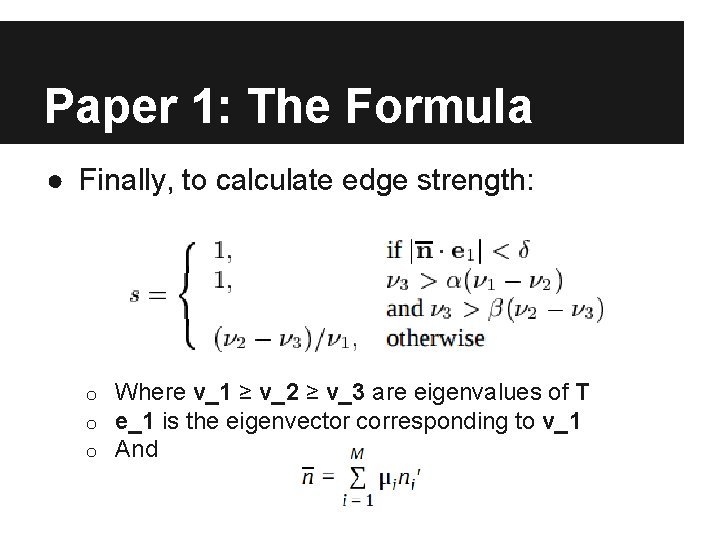
Paper 1: The Formula ● Finally, to calculate edge strength: o o o Where v_1 ≥ v_2 ≥ v_3 are eigenvalues of T e_1 is the eigenvector corresponding to v_1 And
Paper 1: The Formula
Paper 1: The Results
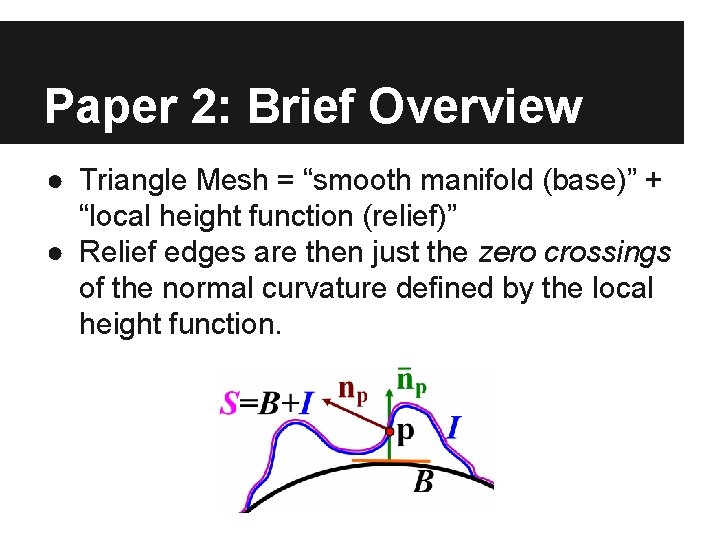
Paper 2: Brief Overview ● Triangle Mesh = “smooth manifold (base)” + “local height function (relief)” ● Relief edges are then just the zero crossings of the normal curvature defined by the local height function.
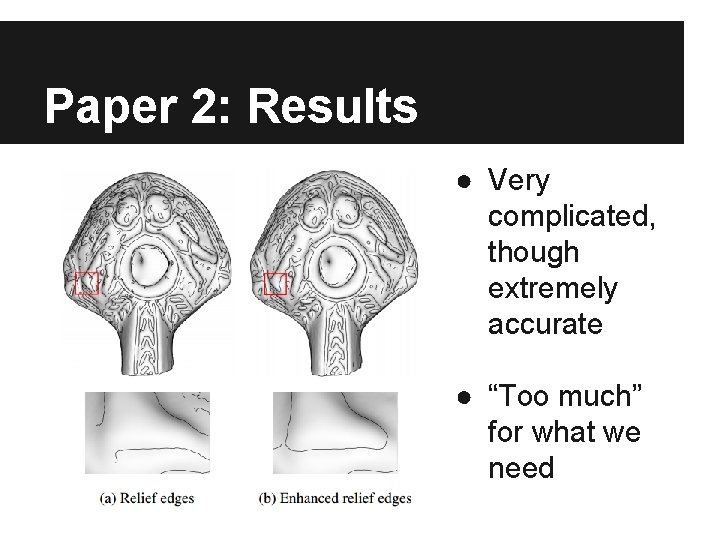
Paper 2: Results ● Very complicated, though extremely accurate ● “Too much” for what we need

Paper 3: Potential Addition ● Seems like a similar idea to what is proposed in paper 1 ● Talks about making system more robust by machine learning o Support Vector Machines

Questions?
- Slides: 17