
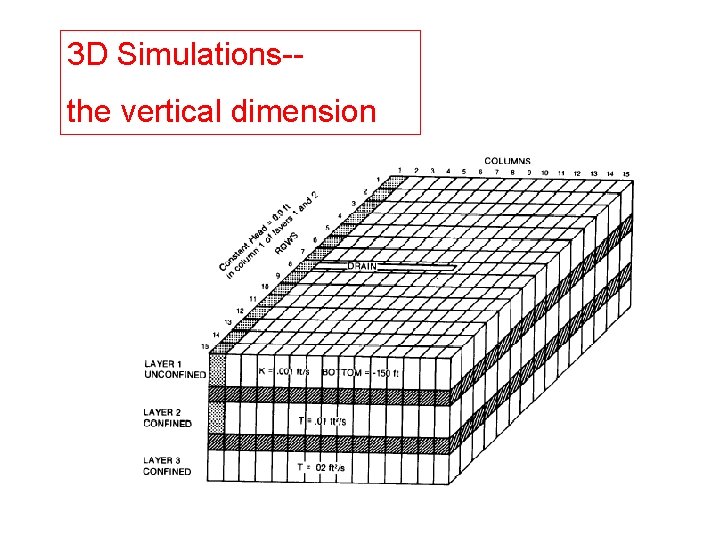
3 D Simulationsthe vertical dimension Representation of hydrogeologic

- Slides: 19
3 D Simulations-the vertical dimension
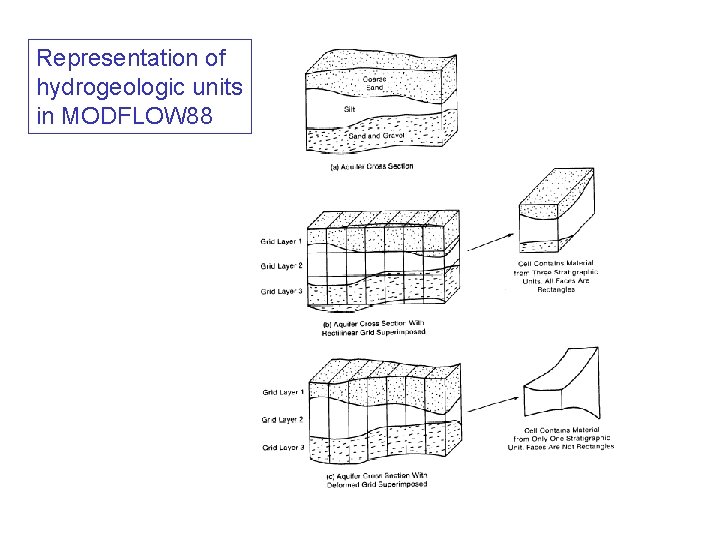
Representation of hydrogeologic units in MODFLOW 88
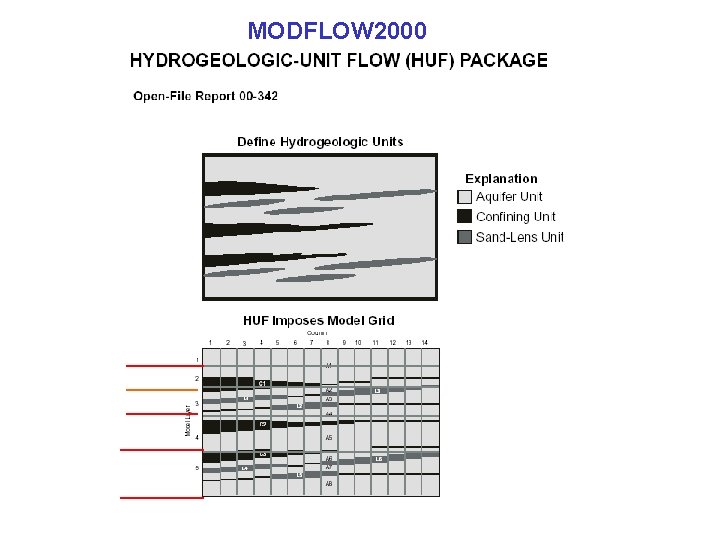
MODFLOW 2000
In MODFLOW, vertical flow between layers Is governed by vertical conductance.
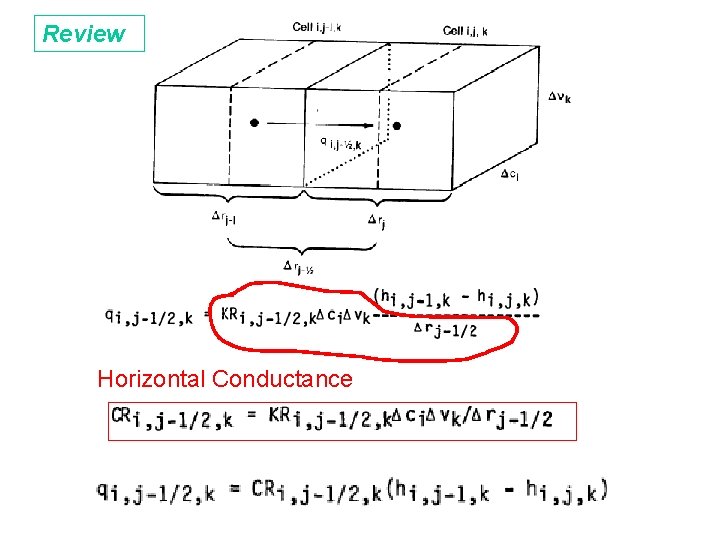
Review Horizontal Conductance
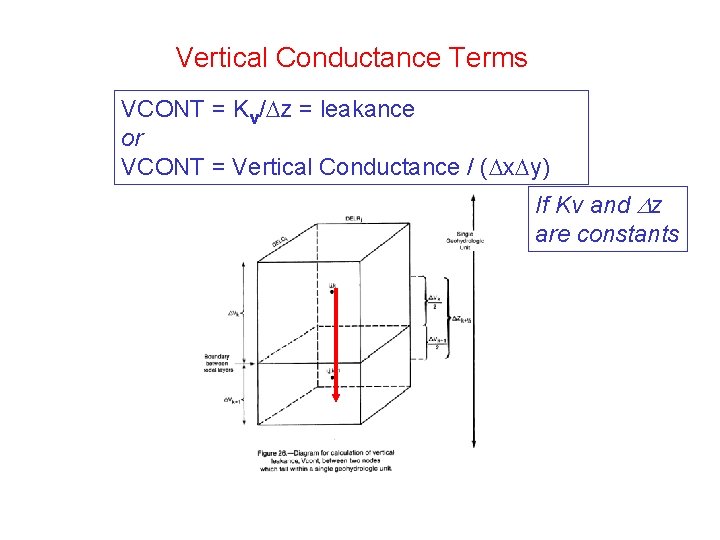
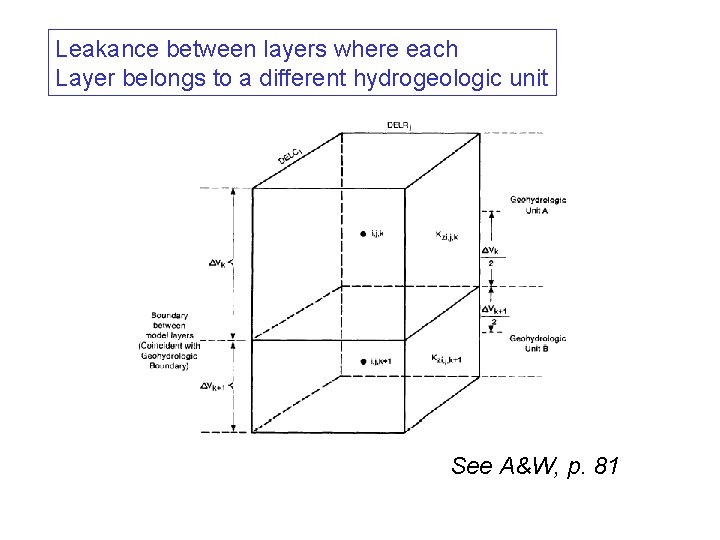
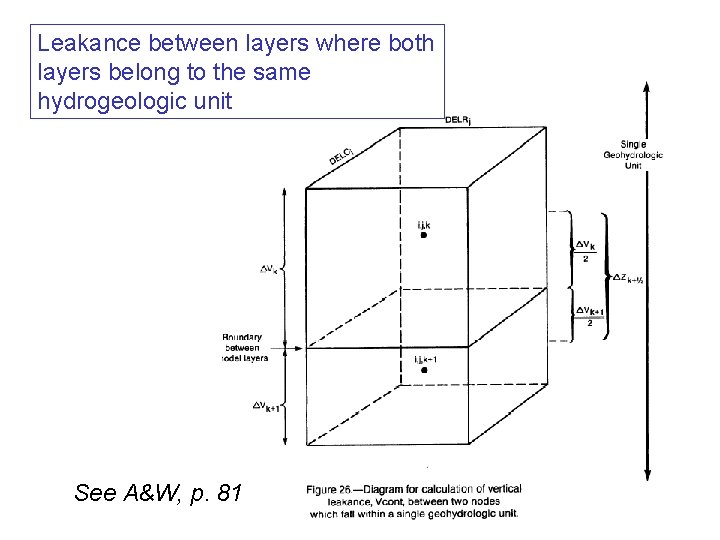
Vertical Conductance Terms VCONT = Kv/ z = leakance or VCONT = Vertical Conductance / ( x y) If Kv and z are constants
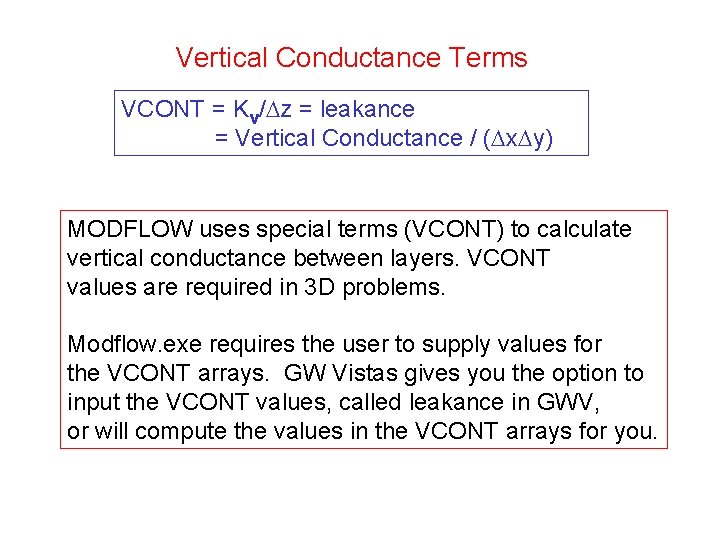
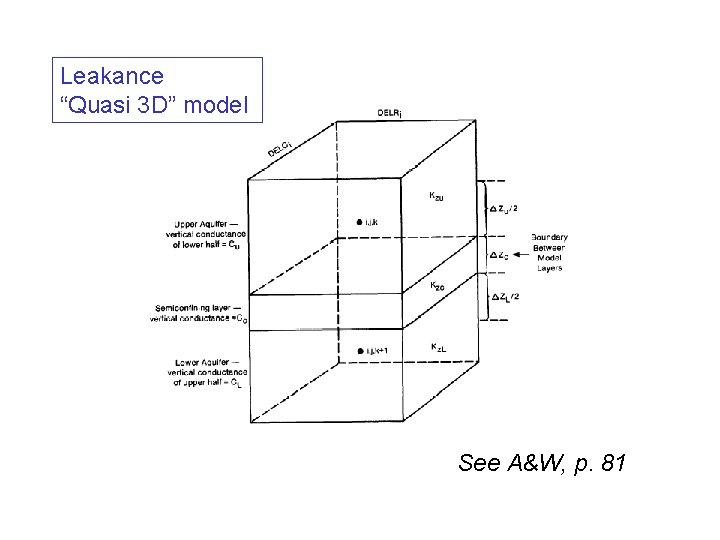
Vertical Conductance Terms VCONT = Kv/ z = leakance = Vertical Conductance / ( x y) MODFLOW uses special terms (VCONT) to calculate vertical conductance between layers. VCONT values are required in 3 D problems. Modflow. exe requires the user to supply values for the VCONT arrays. GW Vistas gives you the option to input the VCONT values, called leakance in GWV, or will compute the values in the VCONT arrays for you.
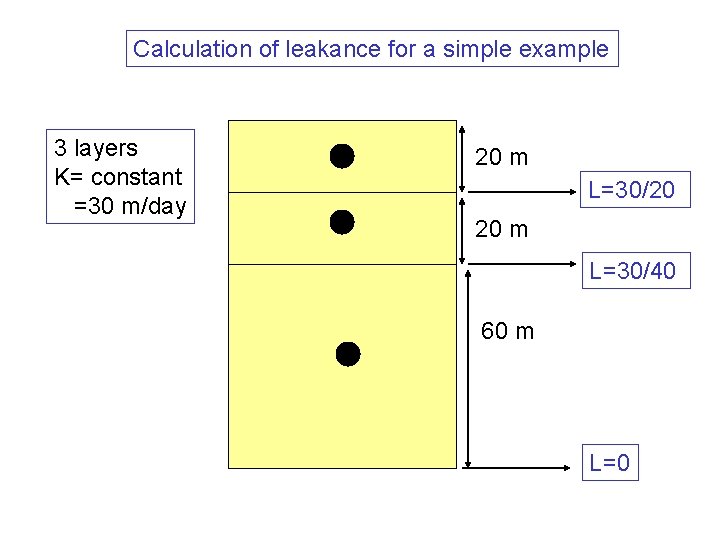
Calculation of leakance for a simple example 3 layers K= constant =30 m/day 20 m L=30/20 20 m L=30/40 60 m L=0
Leakance between layers where each Layer belongs to a different hydrogeologic unit See A&W, p. 81
Leakance between layers where both layers belong to the same hydrogeologic unit See A&W, p. 81
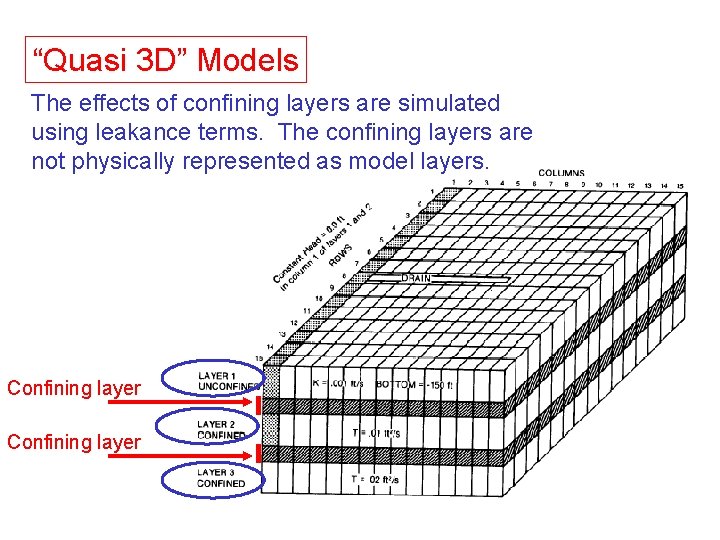
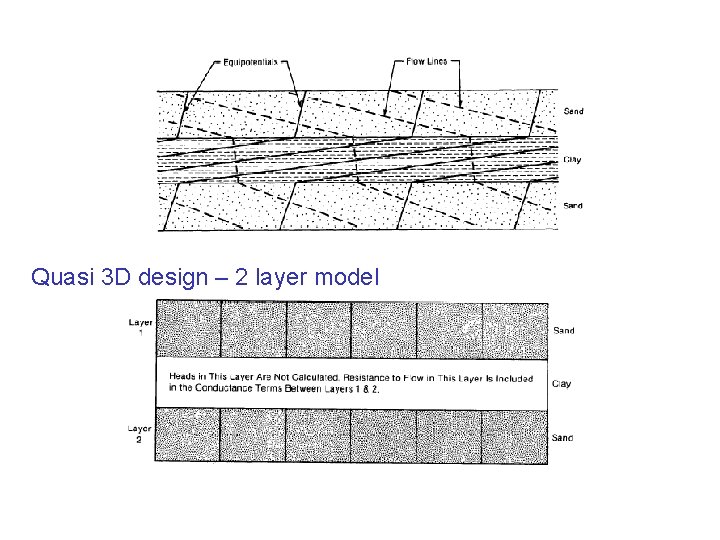
“Quasi 3 D” Models The effects of confining layers are simulated using leakance terms. The confining layers are not physically represented as model layers. Confining layer
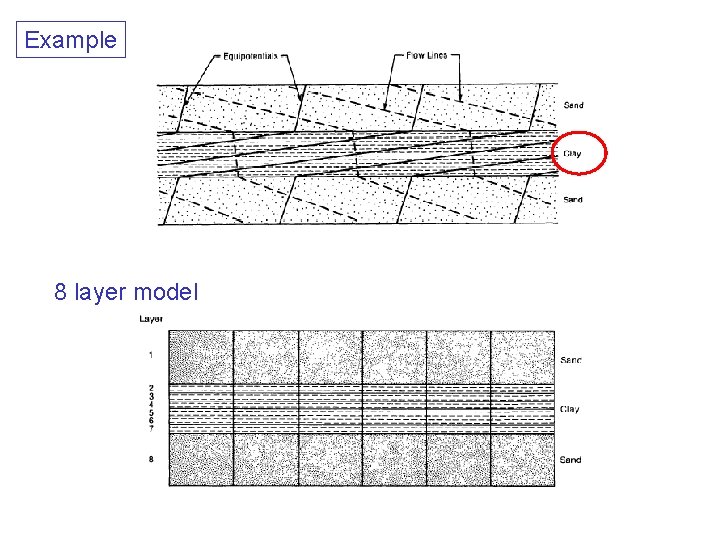
Example 8 layer model
Quasi 3 D design – 2 layer model
Leakance “Quasi 3 D” model See A&W, p. 81
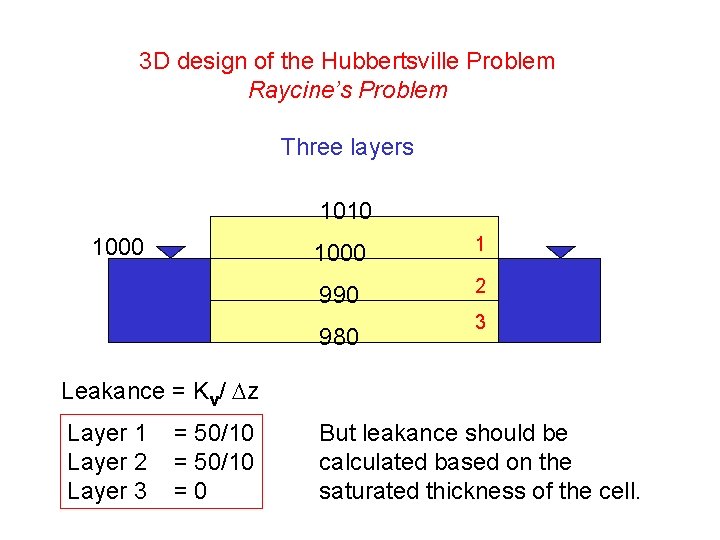
3 D design of the Hubbertsville Problem Raycine’s Problem Three layers 1010 1000 1 990 2 980 3 Leakance = Kv/ z Layer 1 Layer 2 Layer 3 = 50/10 =0 But leakance should be calculated based on the saturated thickness of the cell.
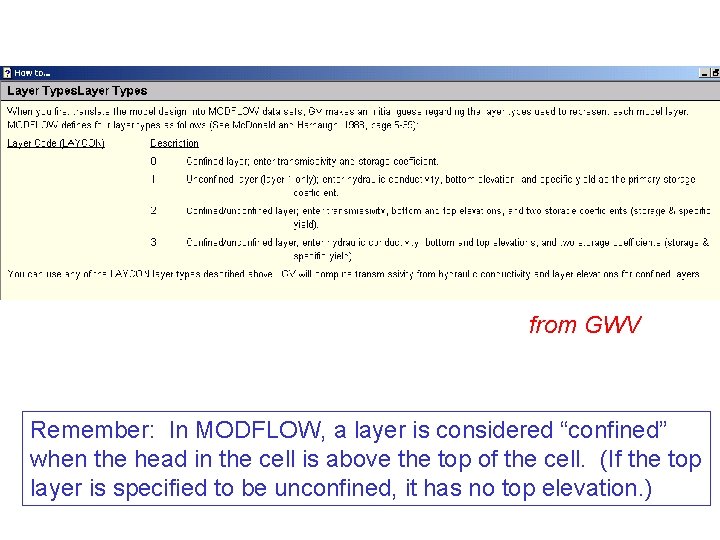
from GWV
from GWV Remember: In MODFLOW, a layer is considered “confined” when the head in the cell is above the top of the cell. (If the top layer is specified to be unconfined, it has no top elevation. )
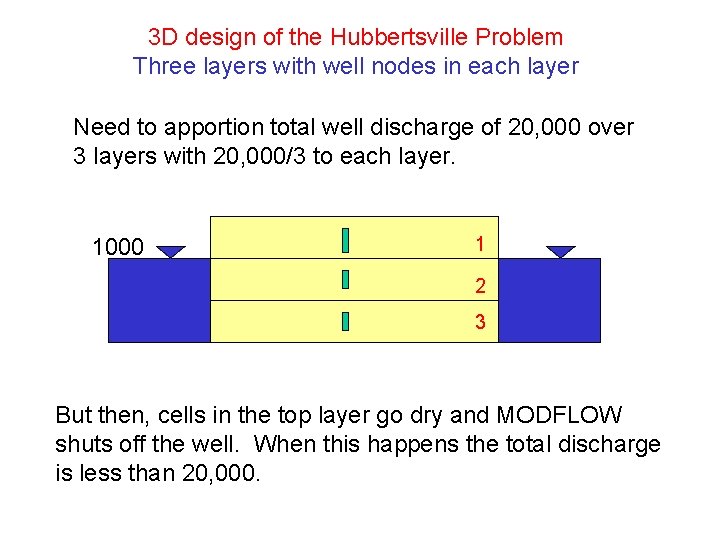
3 D design of the Hubbertsville Problem Three layers with well nodes in each layer Need to apportion total well discharge of 20, 000 over 3 layers with 20, 000/3 to each layer. 1000 1 2 3 But then, cells in the top layer go dry and MODFLOW shuts off the well. When this happens the total discharge is less than 20, 000.
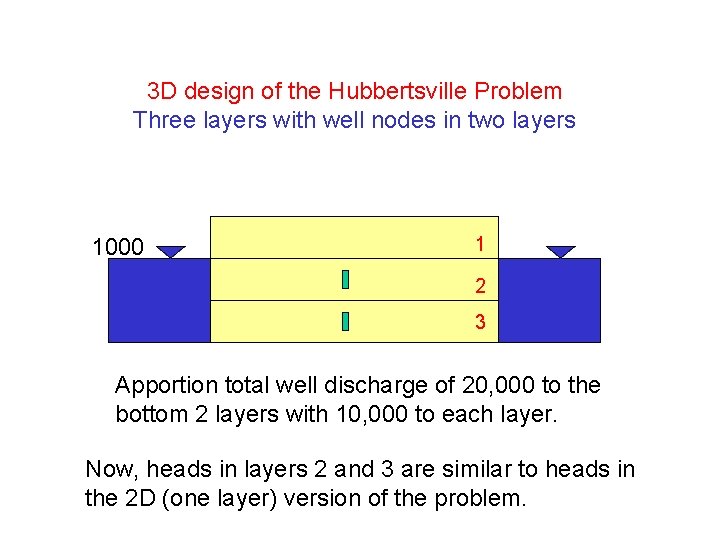
3 D design of the Hubbertsville Problem Three layers with well nodes in two layers 1000 1 2 3 Apportion total well discharge of 20, 000 to the bottom 2 layers with 10, 000 to each layer. Now, heads in layers 2 and 3 are similar to heads in the 2 D (one layer) version of the problem.