
3 D shapes have three dimensions length width
- Slides: 11
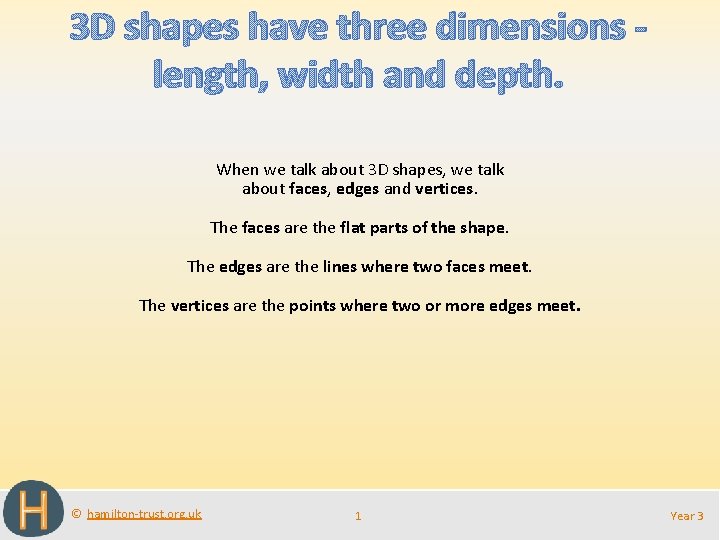
3 D shapes have three dimensions length, width and depth. When we talk about 3 D shapes, we talk about faces, edges and vertices. The faces are the flat parts of the shape. The edges are the lines where two faces meet. The vertices are the points where two or more edges meet. © hamilton-trust. org. uk 1 Year 3
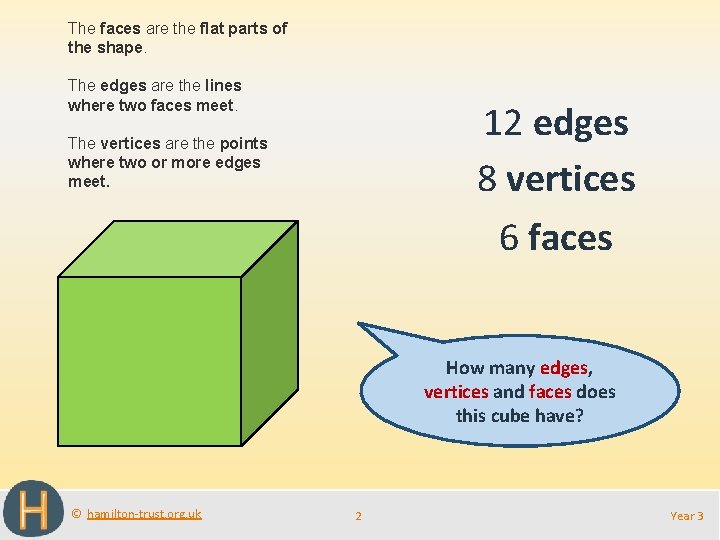
The faces are the flat parts of the shape. The edges are the lines where two faces meet. 12 edges 8 vertices 6 faces The vertices are the points where two or more edges meet. How many edges, vertices and faces does this cube have? © hamilton-trust. org. uk 2 Year 3
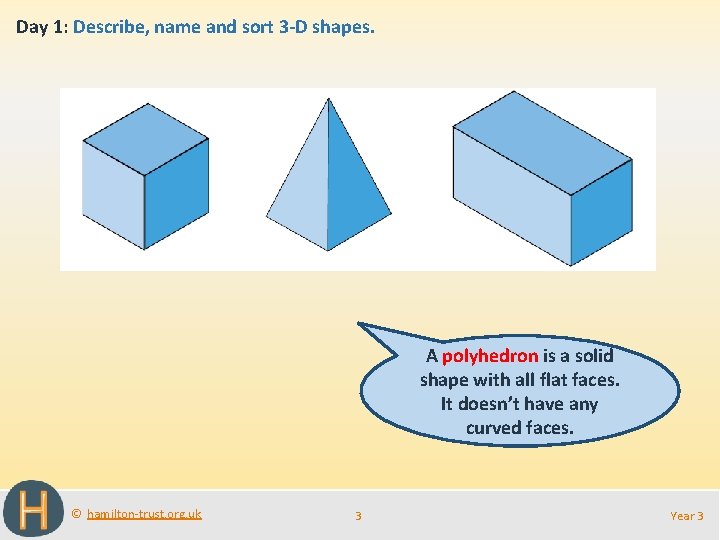
Day 1: Describe, name and sort 3 -D shapes. A polyhedron is a solid shape with all flat faces. It doesn’t have any curved faces. © hamilton-trust. org. uk 3 Year 3
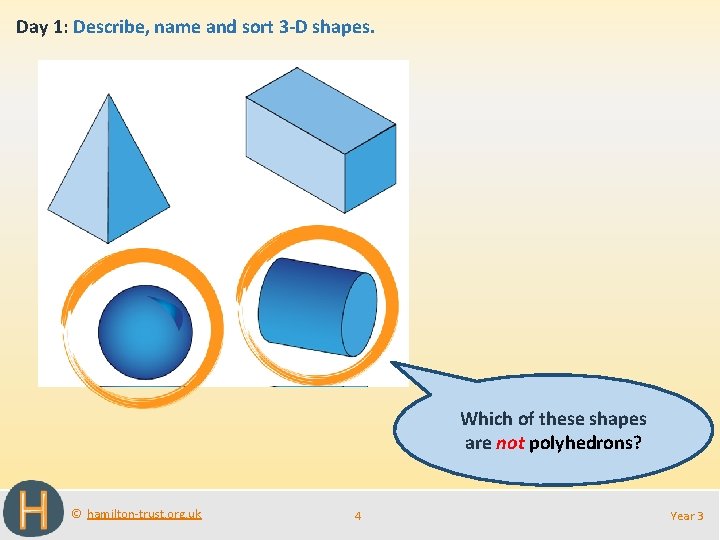
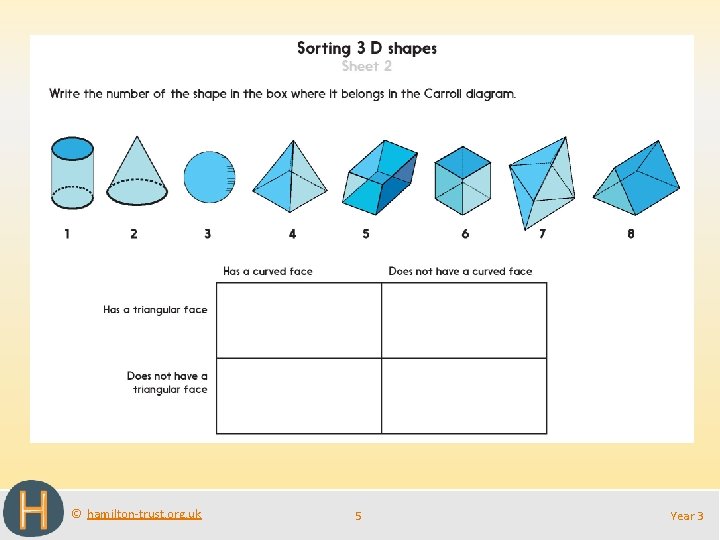
Day 1: Describe, name and sort 3 -D shapes. Which of these shapes are not polyhedrons? © hamilton-trust. org. uk 4 Year 3
© hamilton-trust. org. uk 5 Year 3
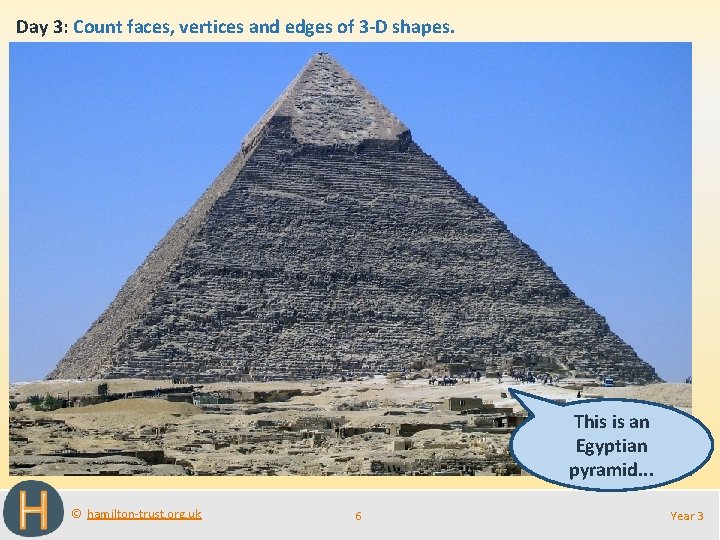
Day 3: Count faces, vertices and edges of 3 -D shapes. This is an Egyptian pyramid. . . © hamilton-trust. org. uk 6 Year 3
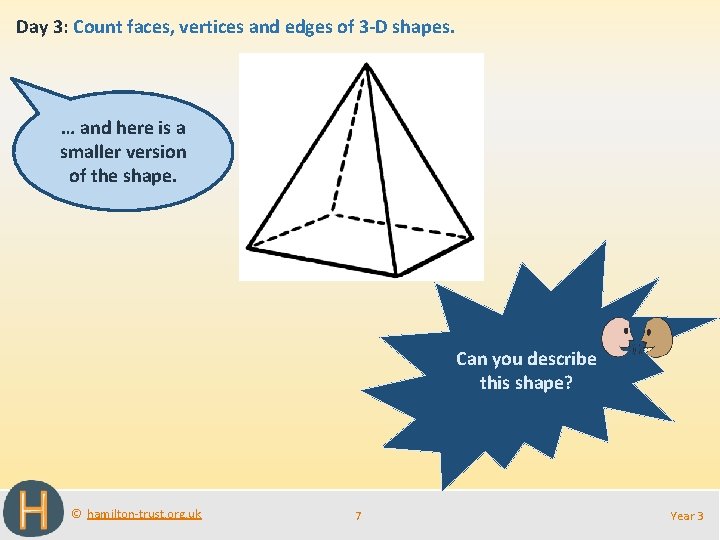
Day 3: Count faces, vertices and edges of 3 -D shapes. … and here is a smaller version of the shape. Can you describe this shape? © hamilton-trust. org. uk 7 Year 3
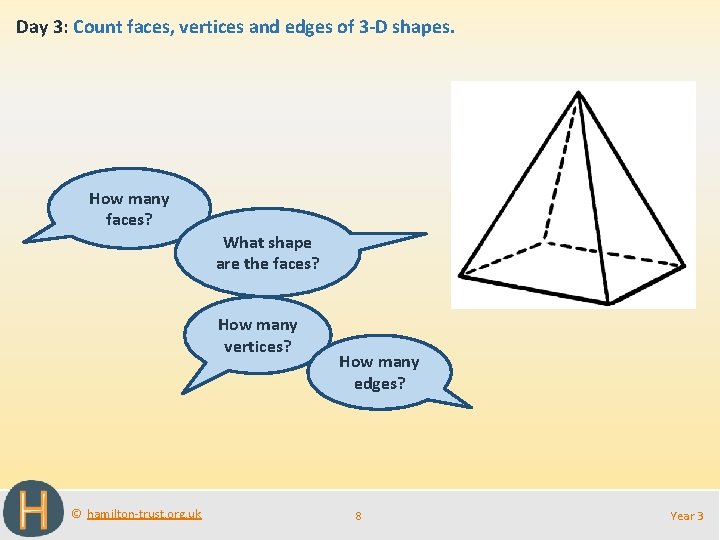
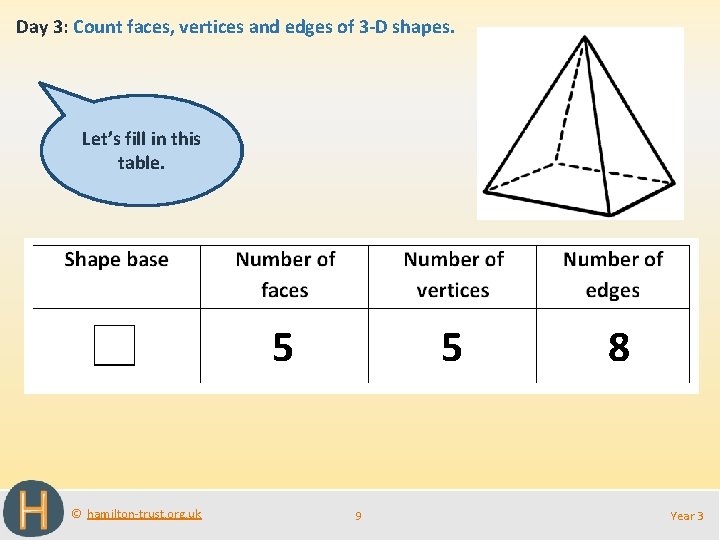
Day 3: Count faces, vertices and edges of 3 -D shapes. How many faces? What shape are the faces? How many vertices? © hamilton-trust. org. uk How many edges? 8 Year 3
Day 3: Count faces, vertices and edges of 3 -D shapes. Let’s fill in this table. 5 5 © hamilton-trust. org. uk 9 8 Year 3
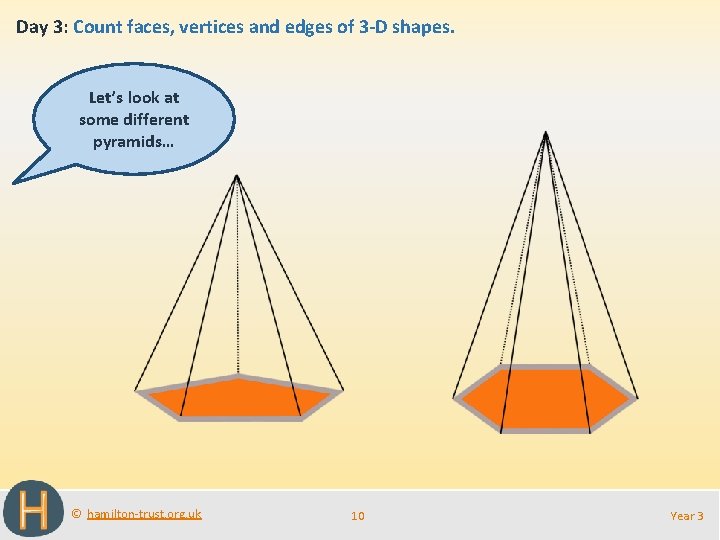
Day 3: Count faces, vertices and edges of 3 -D shapes. Let’s look at some different pyramids… © hamilton-trust. org. uk 10 Year 3
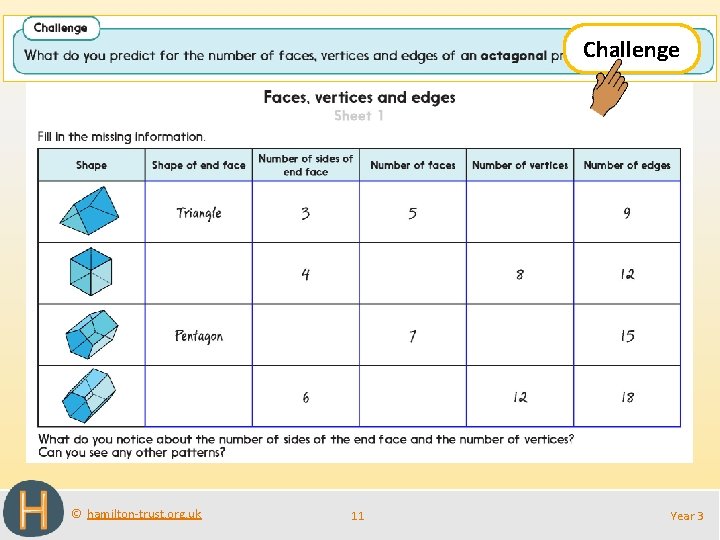
Challenge © hamilton-trust. org. uk 11 Year 3