
3 D Augmented Reality for MRIGuided Surgery Using


- Slides: 30
3 D Augmented Reality for MRI-Guided Surgery Using Integral Videography Autostereoscopic Image Overlay Hongen Liao, Takashi Inomata, Ichiro Sakuma and Takeyoshi Dohi Presented by Zhenzhou Shao 2/24/2011
Outline • Introduction • Material and Methods – System Configuration – IV Image Display and Overlay Device – Registration of Spatial 3 D Image in Patient – Software Alignment – Surgical Procedure • Experiment and Results • Conclusion
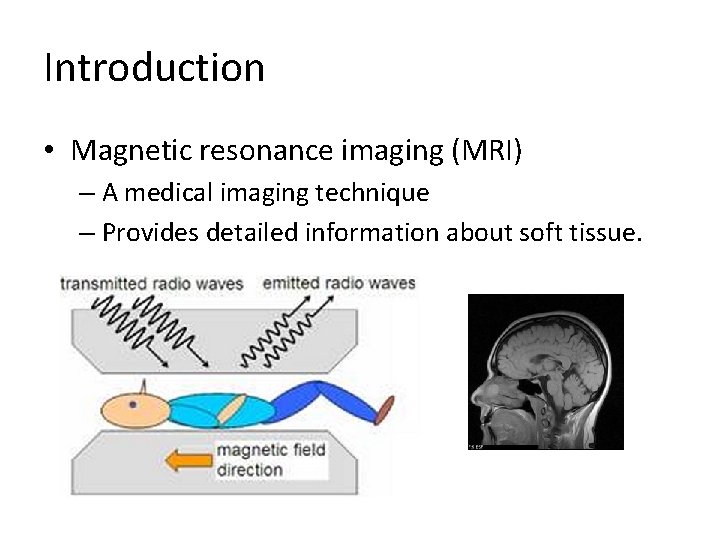
Introduction • Magnetic resonance imaging (MRI) – A medical imaging technique – Provides detailed information about soft tissue.
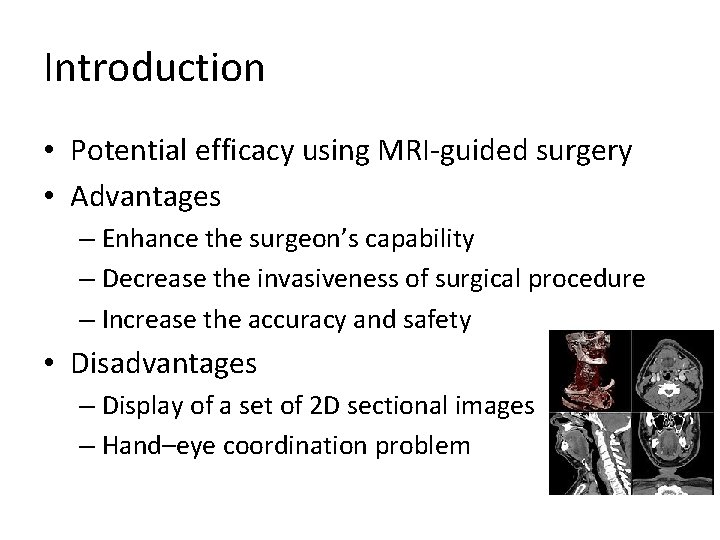
Introduction • Potential efficacy using MRI-guided surgery • Advantages – Enhance the surgeon’s capability – Decrease the invasiveness of surgical procedure – Increase the accuracy and safety • Disadvantages – Display of a set of 2 D sectional images – Hand–eye coordination problem
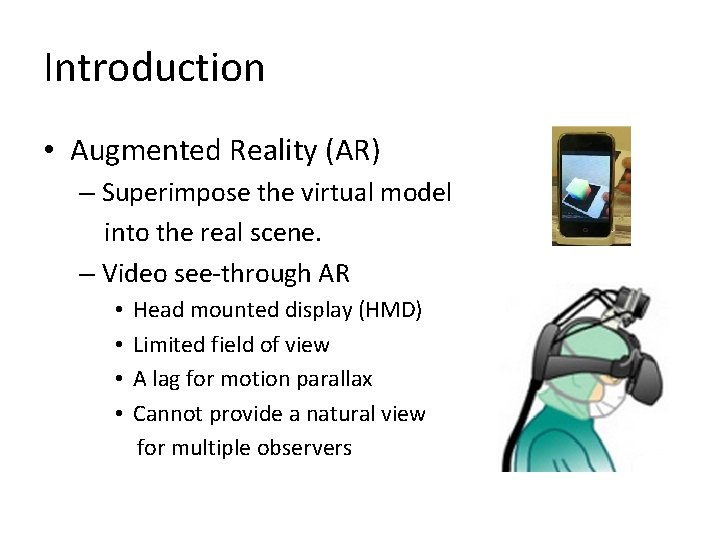
Introduction • Augmented Reality (AR) – Superimpose the virtual model into the real scene. – Video see-through AR • • Head mounted display (HMD) Limited field of view A lag for motion parallax Cannot provide a natural view for multiple observers
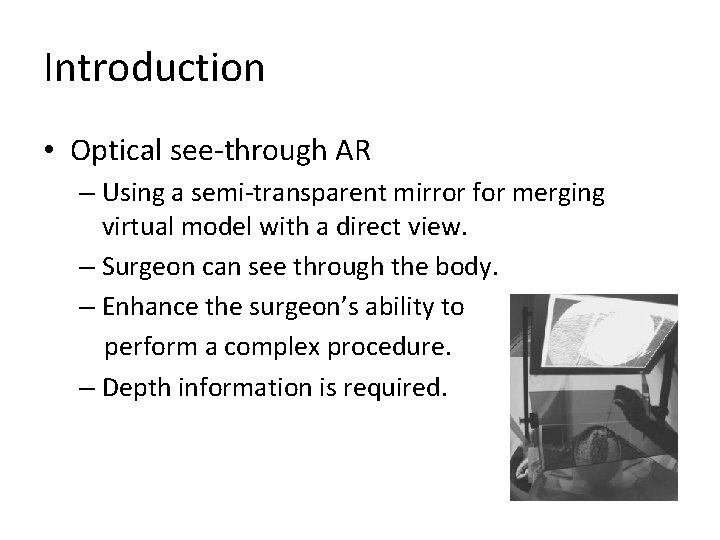
Introduction • Optical see-through AR – Using a semi-transparent mirror for merging virtual model with a direct view. – Surgeon can see through the body. – Enhance the surgeon’s ability to perform a complex procedure. – Depth information is required.
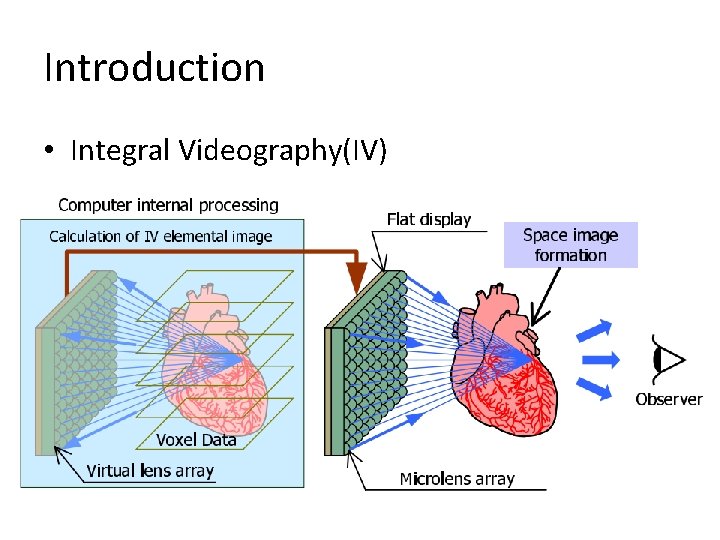
Introduction • Integral Videography(IV)
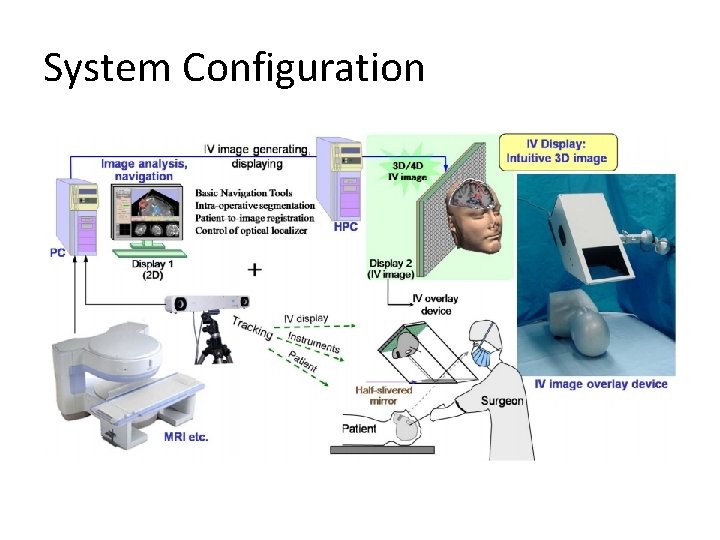
System Configuration
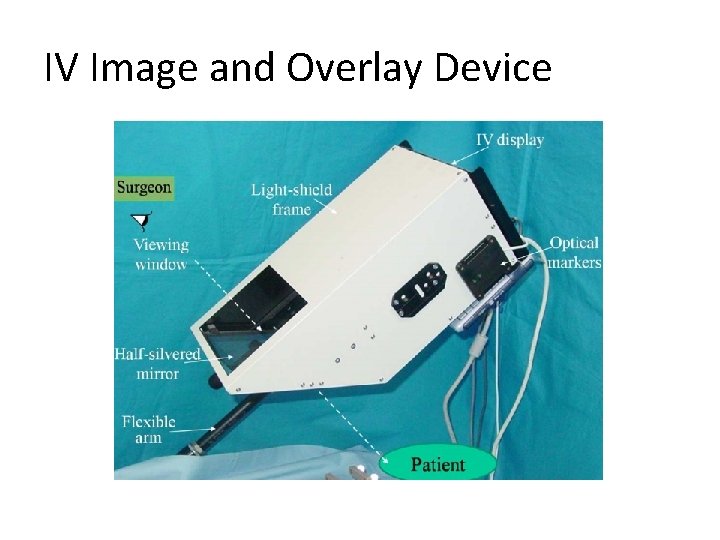
IV Image and Overlay Device
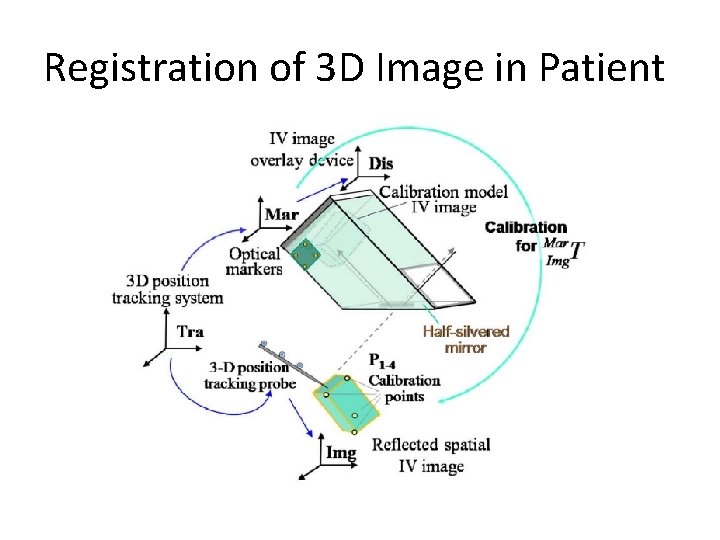
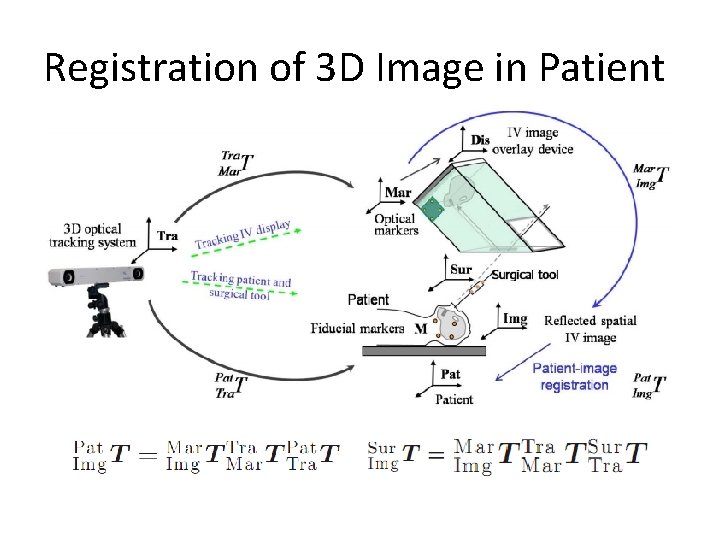
Registration of 3 D Image in Patient
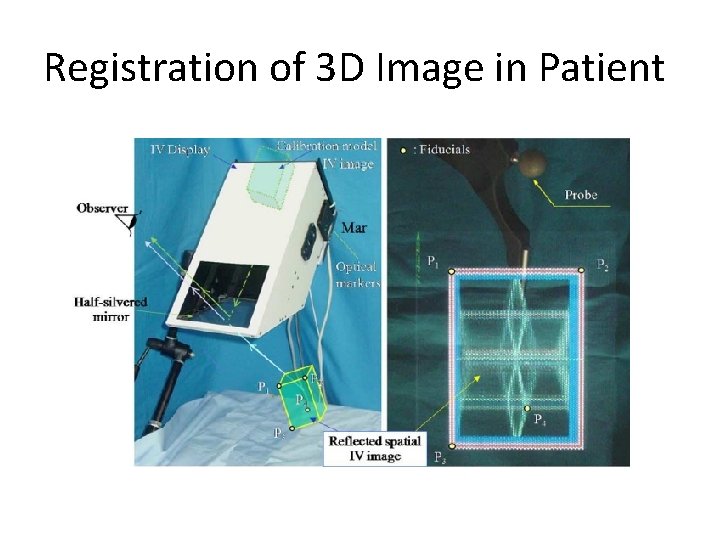
Registration of 3 D Image in Patient
Registration of 3 D Image in Patient
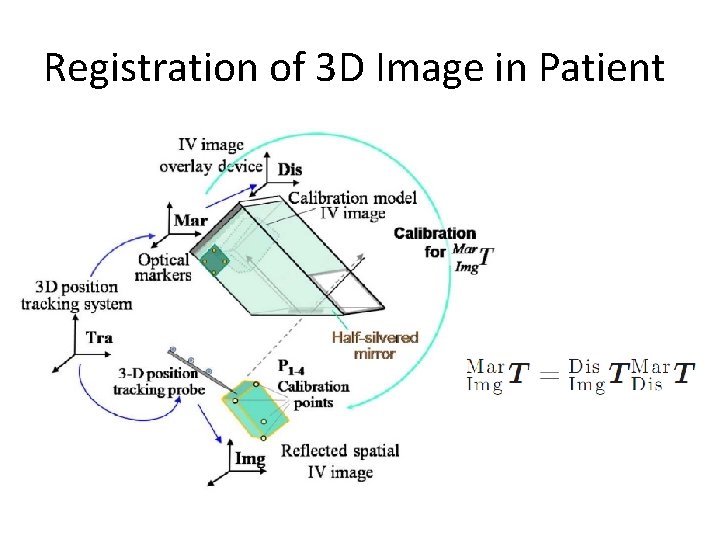
Registration of 3 D Image in Patient
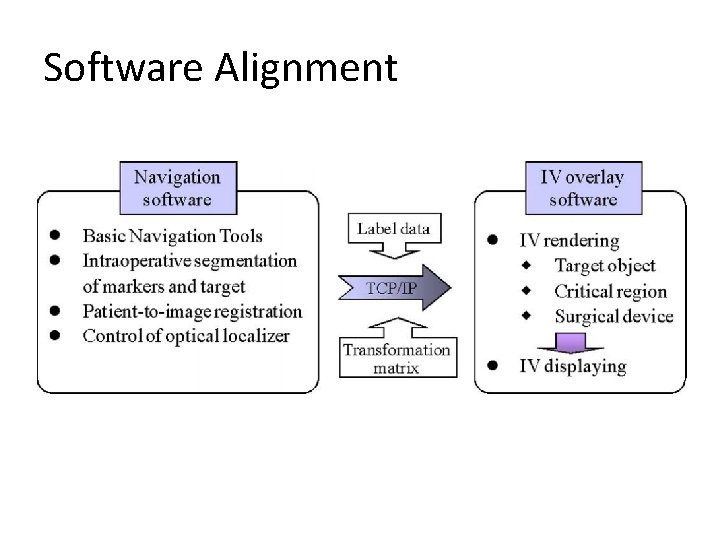
Software Alignment
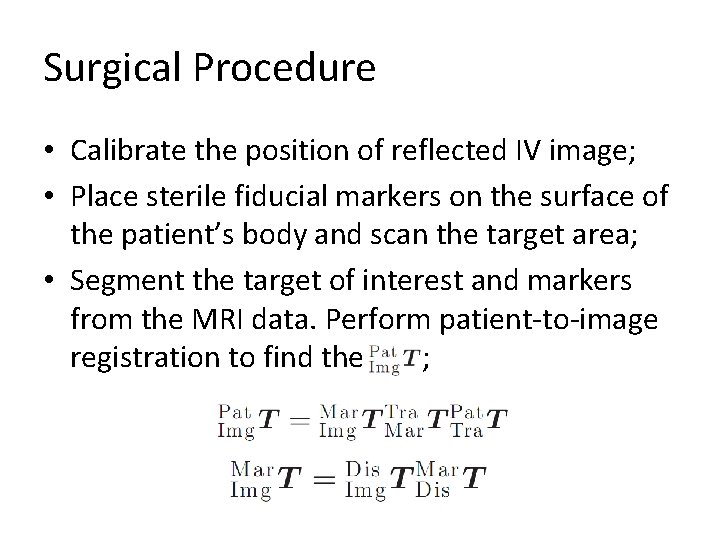
Surgical Procedure • Calibrate the position of reflected IV image; • Place sterile fiducial markers on the surface of the patient’s body and scan the target area; • Segment the target of interest and markers from the MRI data. Perform patient-to-image registration to find the ;
Surgical Procedure • Render the IV images and transfer them to the overlay device; • Perform the surgical treatment under the guidance of IV image overlay; • After finishing the treatment, translate the patient into the scanner again and confirm surgical result.
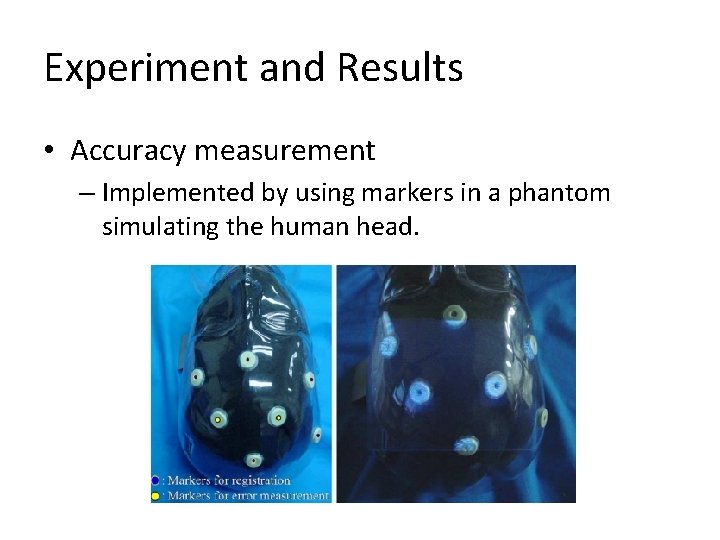
Experiment and Results • Accuracy measurement – Implemented by using markers in a phantom simulating the human head.
Accuracy measurement – Five markers for registration and two for error measurement. – Marker: 10 mm in external diameter and 3 mm in internal diameter. – The distance between the center of the actual marker and that of the spatial projected IV marker was measured as an overlay error. – The mean value of the error was 0. 90 mm, and the standard deviation was 0. 21 mm
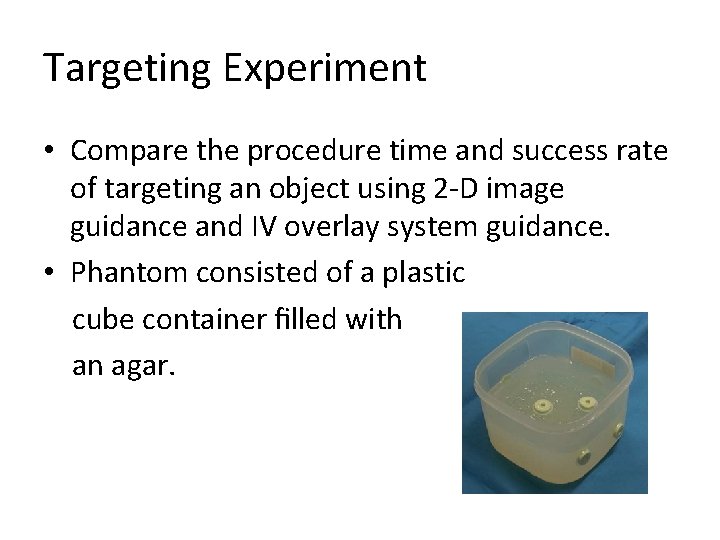
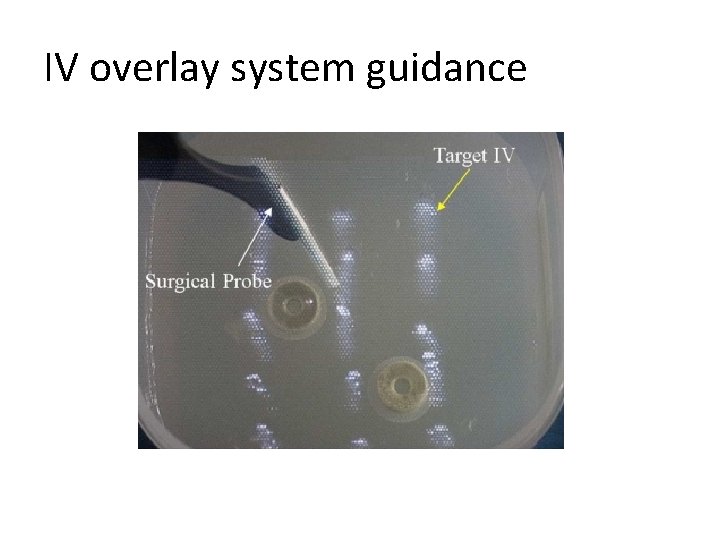
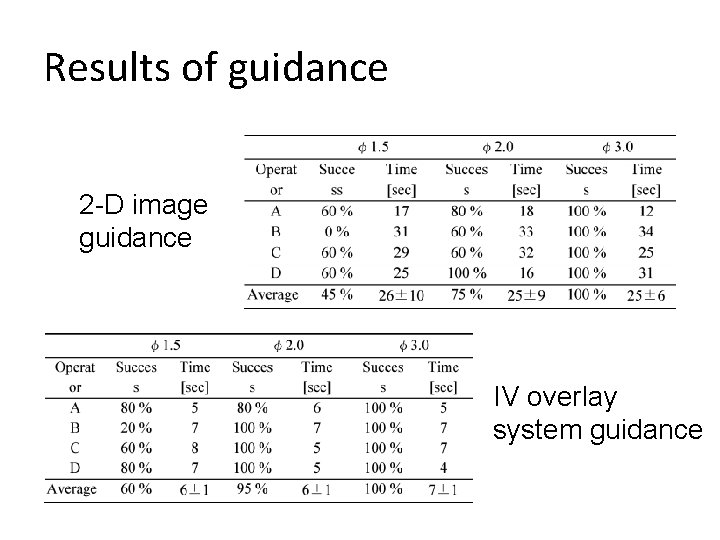
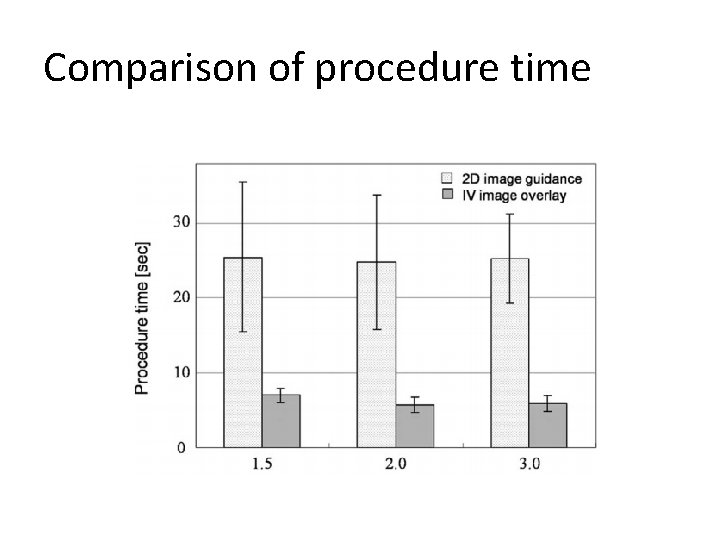
Targeting Experiment • Compare the procedure time and success rate of targeting an object using 2 -D image guidance and IV overlay system guidance. • Phantom consisted of a plastic cube container filled with an agar.
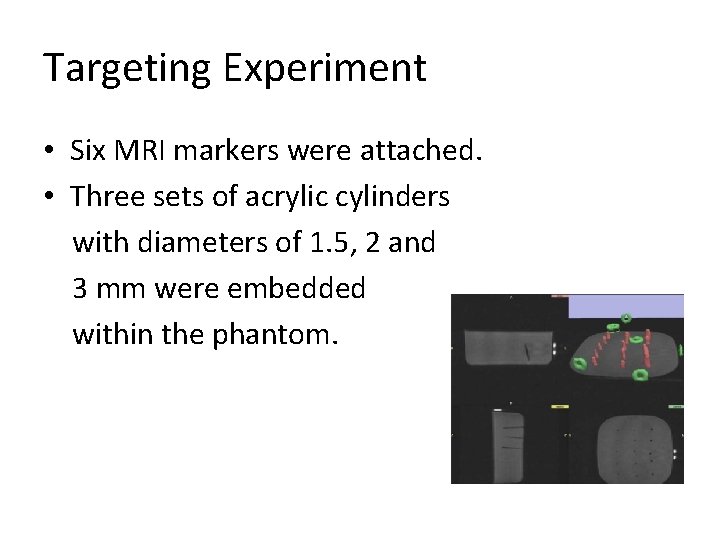
Targeting Experiment • Six MRI markers were attached. • Three sets of acrylic cylinders with diameters of 1. 5, 2 and 3 mm were embedded within the phantom.
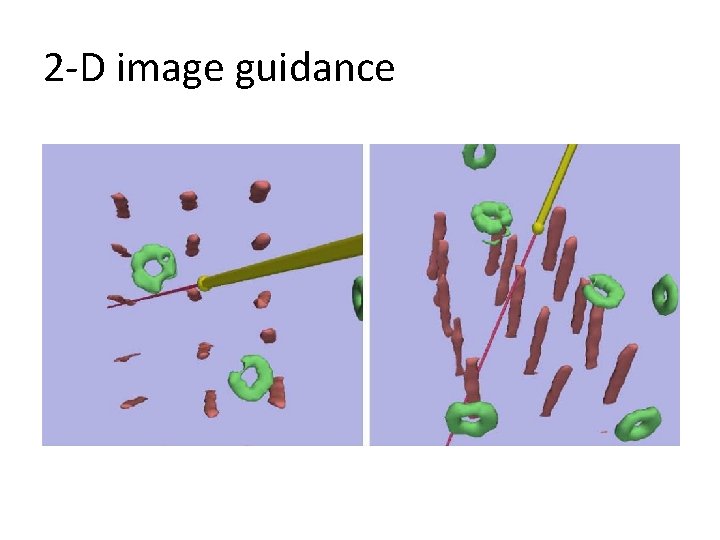
2 -D image guidance
IV overlay system guidance
Results of guidance 2 -D image guidance IV overlay system guidance
Comparison of procedure time
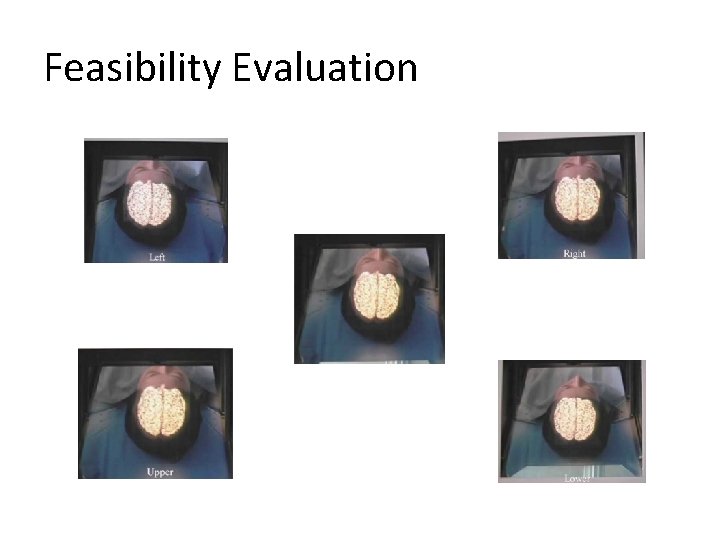
Feasibility Evaluation • Evaluate the feasibility by a volunteer test. • Scan brain using MRI. • Motion parallax could be generated due to the motion of an observer. • The motion parallax of IV autostereoscopic brain images combined with the volunteer’s head was taken from various directions.
Feasibility Evaluation
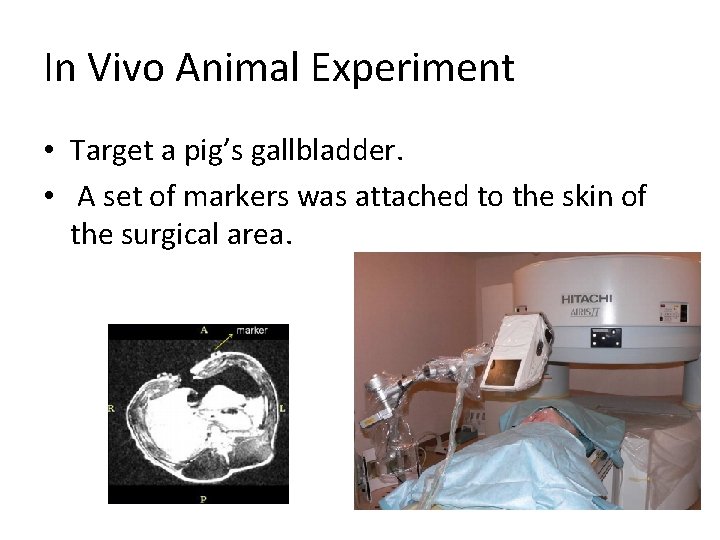
In Vivo Animal Experiment • Target a pig’s gallbladder. • A set of markers was attached to the skin of the surgical area.
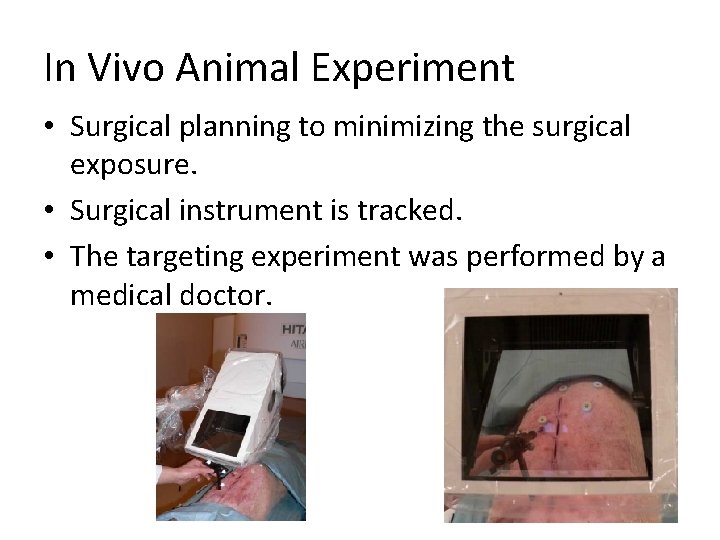
In Vivo Animal Experiment • Surgical planning to minimizing the surgical exposure. • Surgical instrument is tracked. • The targeting experiment was performed by a medical doctor.
Conclusion • An autostereoscopic image overlay system for MRIguided surgery is developed. • IV is employed to provide accurate 3 -D spatial images and reproduces motion. • A fast and accurate spatial image registration method was developed. • Safe, easy, and accurate surgical diagnosis and therapy.
• Questions?