
3 Communication and the Self 1 Understanding the


- Slides: 21
3 - Communication and the Self 1. Understanding the Self: Self-Concept 2. Valuing the Self: Self-Esteem 3. Presenting the Self: Image Management 4. Communicating the Self: Self-Disclosure
Reflection Who are you? How do you see yourself? How do others see you?
Self-Concept Composed of those stable ideas over the course of life/ how you believe you are most of the time Self-Concept or “Identity” is multifaceted, partly subjective, and enduring but changeable
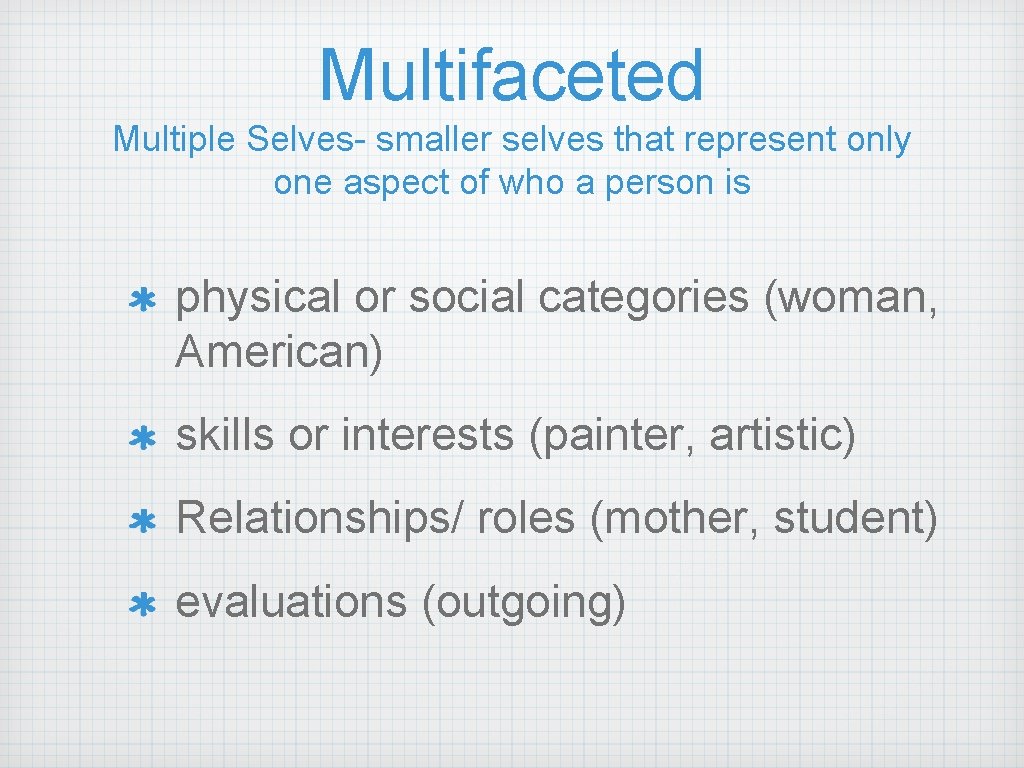
Multifaceted Multiple Selves- smaller selves that represent only one aspect of who a person is physical or social categories (woman, American) skills or interests (painter, artistic) Relationships/ roles (mother, student) evaluations (outgoing)
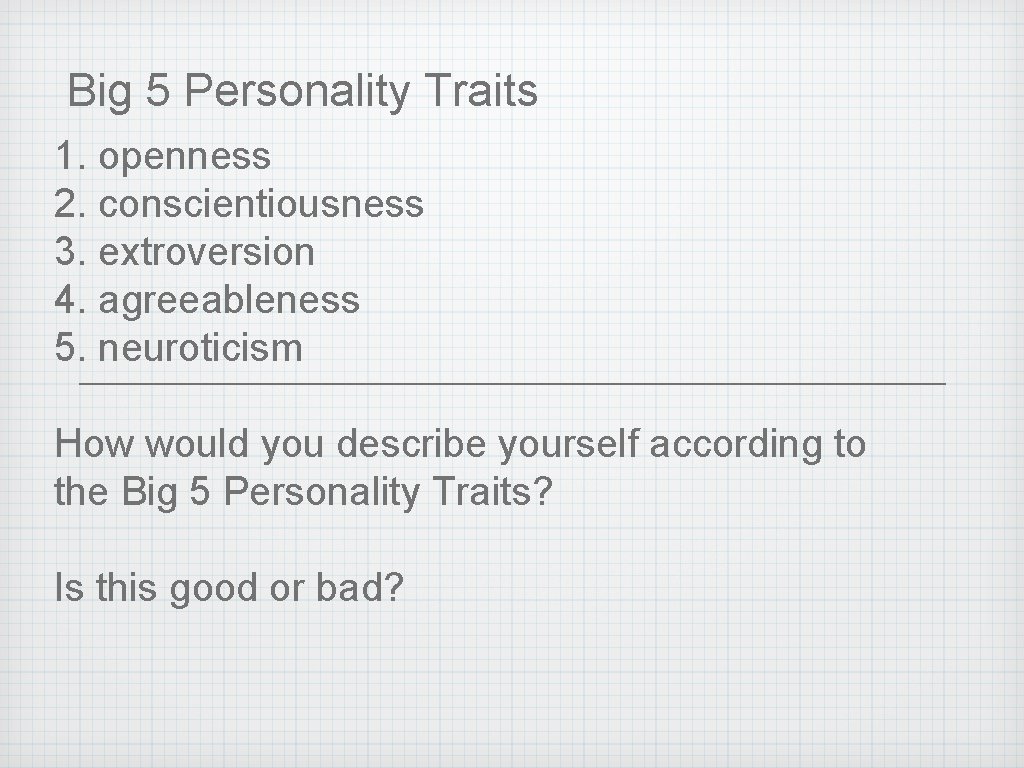
Big 5 Personality Traits 1. openness 2. conscientiousness 3. extroversion 4. agreeableness 5. neuroticism How would you describe yourself according to the Big 5 Personality Traits? Is this good or bad?
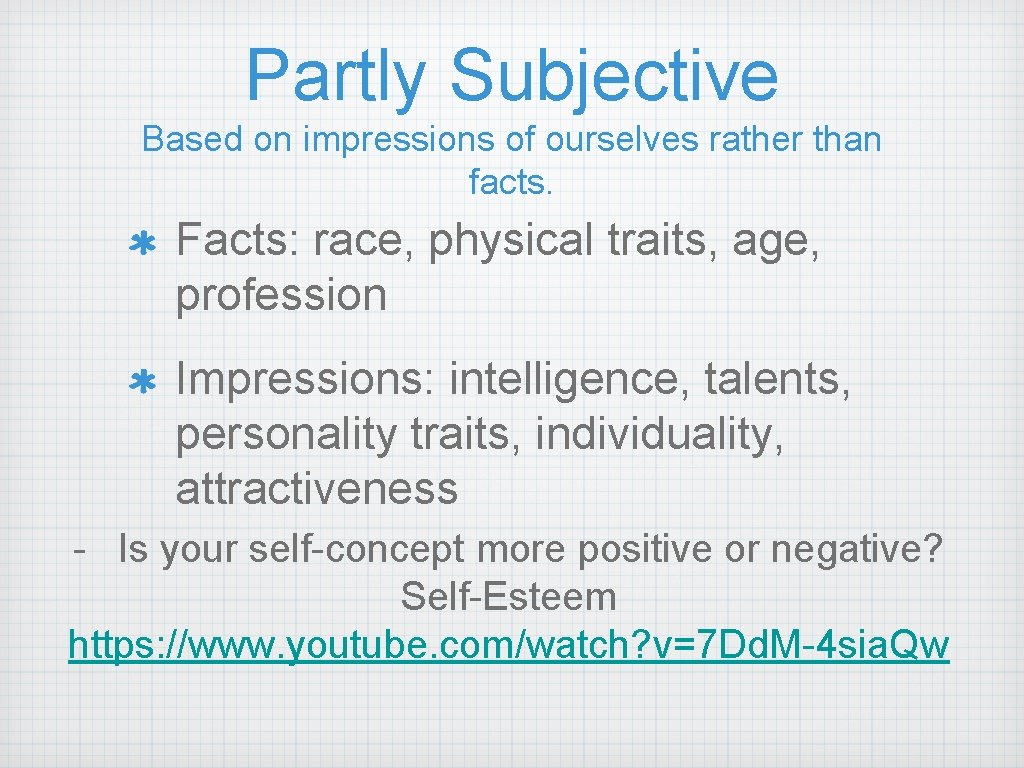
Partly Subjective Based on impressions of ourselves rather than facts. Facts: race, physical traits, age, profession Impressions: intelligence, talents, personality traits, individuality, attractiveness - Is your self-concept more positive or negative? Self-Esteem https: //www. youtube. com/watch? v=7 Dd. M-4 sia. Qw
Social Behavior High Self-Esteem more outgoing/ confident Low Self-Esteem antisocial/ social anxiety more aggressive loneliness/ depression more sexually active substitute interpersonal relationships w/ media initiate/ end relationships
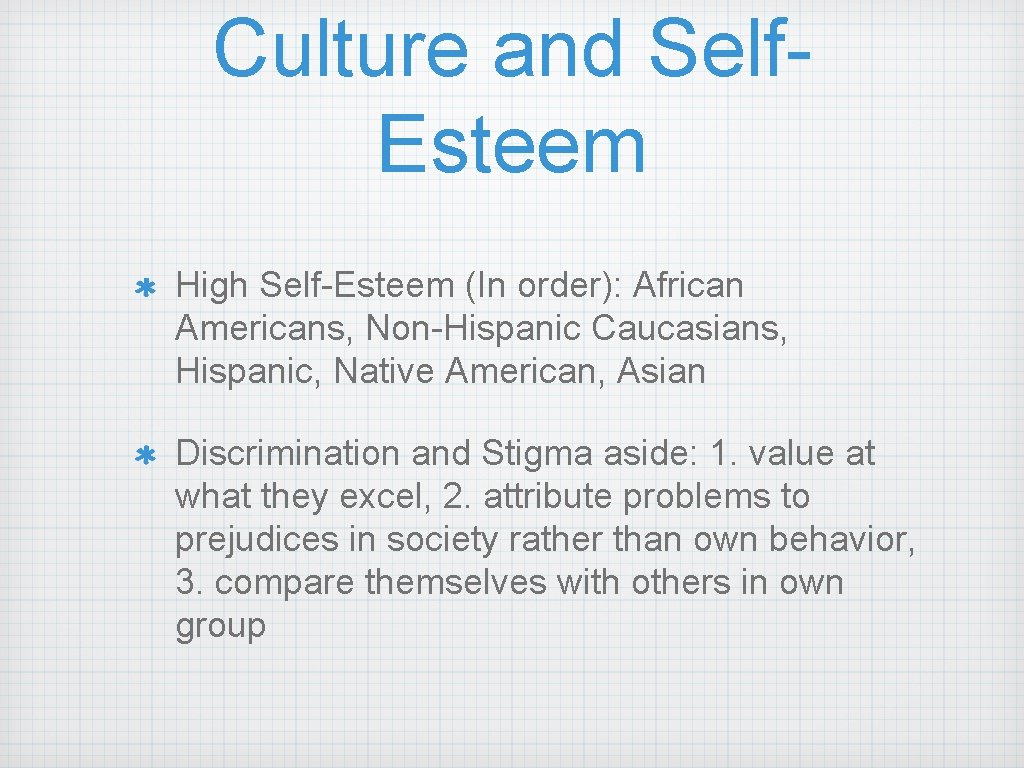
Culture and Self. Esteem High Self-Esteem (In order): African Americans, Non-Hispanic Caucasians, Hispanic, Native American, Asian Discrimination and Stigma aside: 1. value at what they excel, 2. attribute problems to prejudices in society rather than own behavior, 3. compare themselves with others in own group
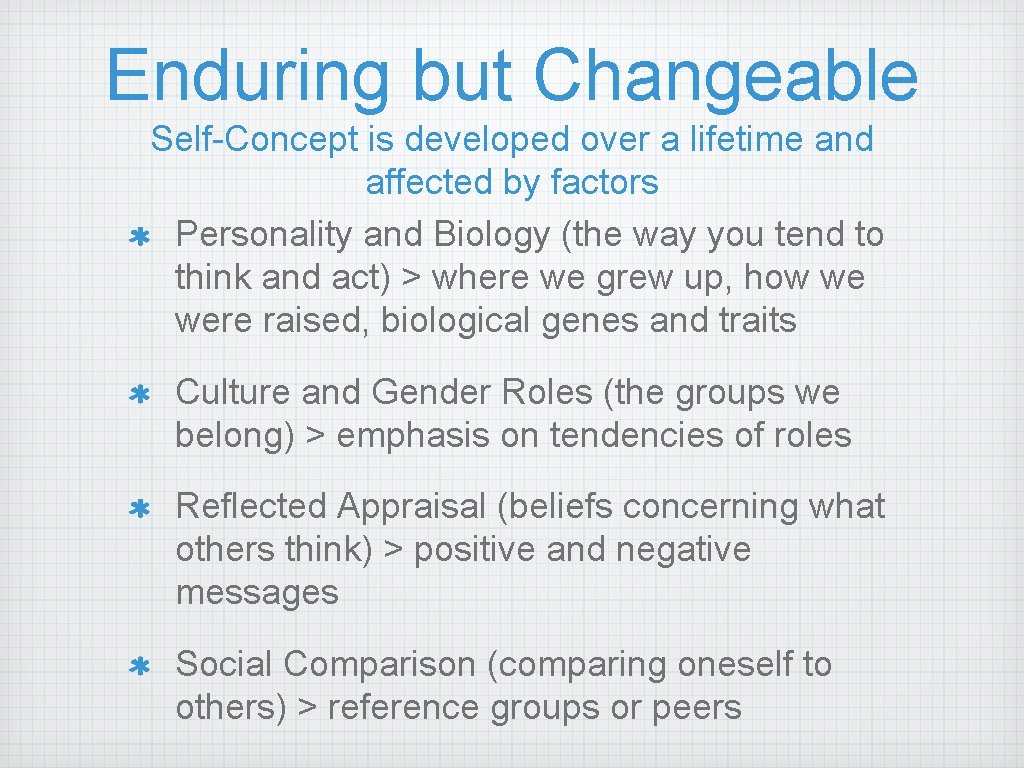
Enduring but Changeable Self-Concept is developed over a lifetime and affected by factors Personality and Biology (the way you tend to think and act) > where we grew up, how we were raised, biological genes and traits Culture and Gender Roles (the groups we belong) > emphasis on tendencies of roles Reflected Appraisal (beliefs concerning what others think) > positive and negative messages Social Comparison (comparing oneself to others) > reference groups or peers
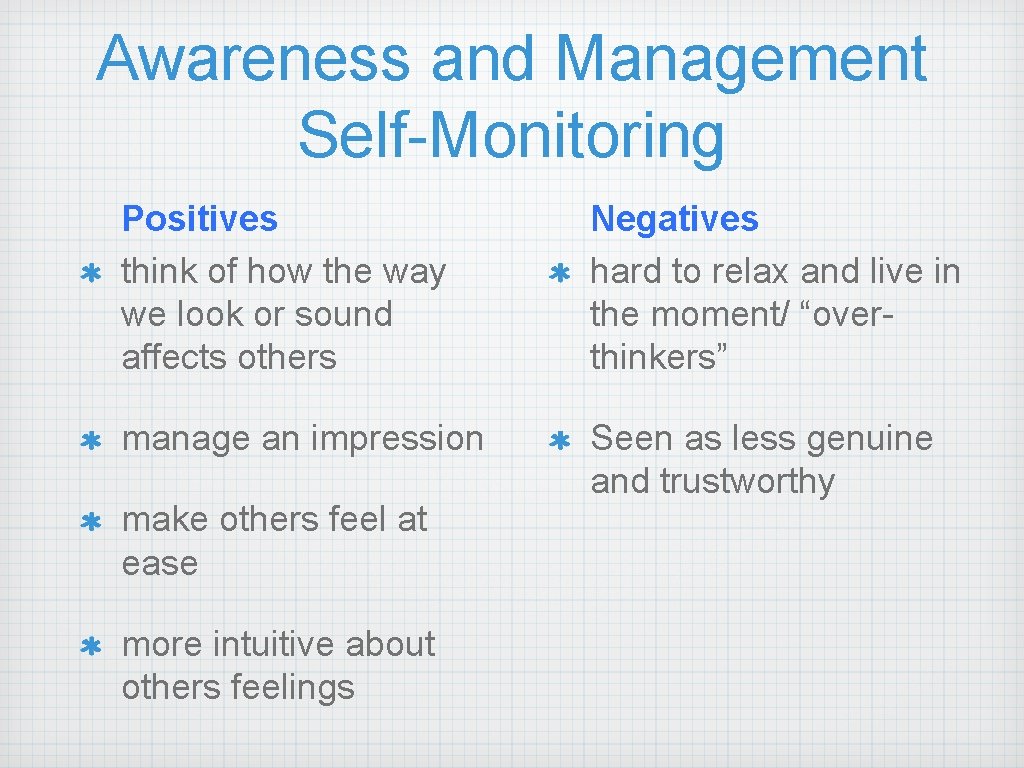
Awareness and Management Self-Monitoring Positives think of how the way we look or sound affects others Negatives hard to relax and live in the moment/ “overthinkers” manage an impression Seen as less genuine and trustworthy make others feel at ease more intuitive about others feelings
Awareness and Management Self-Fulfilling Prophecy A situation in which a prediction causes people to act and communicate in ways that make the prediction come true Expectations lead you to act in a certain way that alters the communication Example: Shy Co-worker/ Bad kid/ “Boys will be boys”
Seeing Ourselves and Others High Self-Esteem happier (individualistic) recognize and manage emotions (emotional intelligence) Low Self-Esteem more negative more judgmental more prejudices predictor of suicide
Performance is limited to social and emotional areas No support that self-esteem benefits academic performance or job performance Building self-esteem can lead to unsupported confidence
Activity • Perceptionhttps: //www. youtube. com/watch? v=o U 0 u. NGUxdyo
Presenting the Self: Image Management Image- the way one wishes to be seen or perceived by others Image Management- the process of projecting one’s desired public image
Managing Image Collaborative- A life story based on self-concept influenced by others Multiple Identities- The role exhibited in the context of others: friends, family, co-workers, acquaintances. (Invisible Medical Conditions) Complex- Competing goals/ creating narratives to preserve image
Managing Face- desired pubic image facework- behaviors used to project desired image face needs- components of desired image (fellowship, autonomy, and competence) fellowship face- need to feel liked and accepted autonomy- need to avoid feeling imposed upon by others competence- need to be respected and viewed as competent and intelligent face- threatening act- any behavior that threatens one or more face needs
Self-Disclosure Benefits Risks enhances relationships rejection and trust obligating others reciprocity hurting others emotional release violating others privacy/ gossip assistance to others
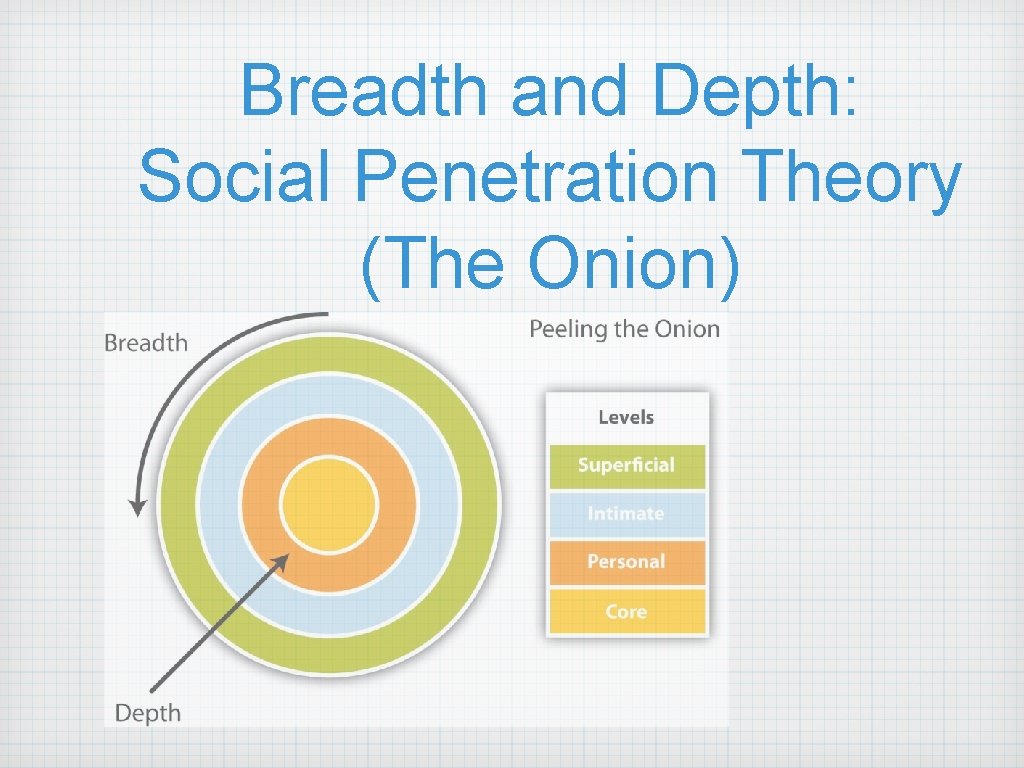
Breadth and Depth: Social Penetration Theory (The Onion)
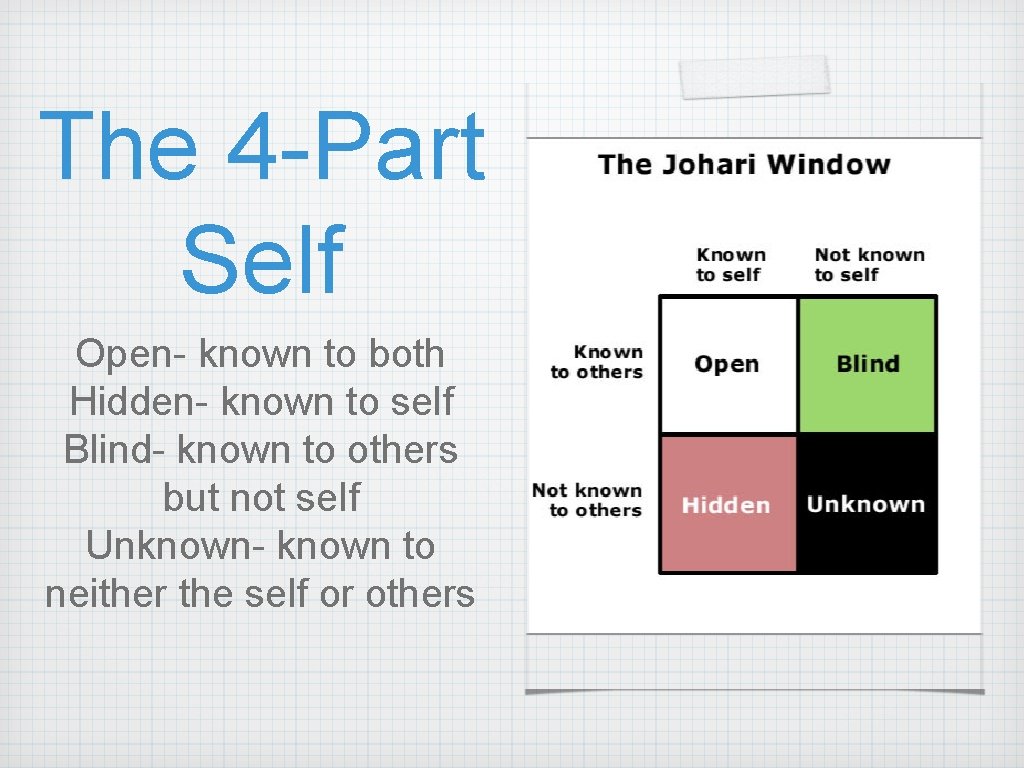
The 4 -Part Self Open- known to both Hidden- known to self Blind- known to others but not self Unknown- known to neither the self or others
Disclosing Online hyperpersonal- more personal in nature than if face-to-face Can be liberating or damaging Text trail postcyberdisclosure- regret or distress about info that they or others posted