
3 Classes down 2 more to go Myxini


- Slides: 16
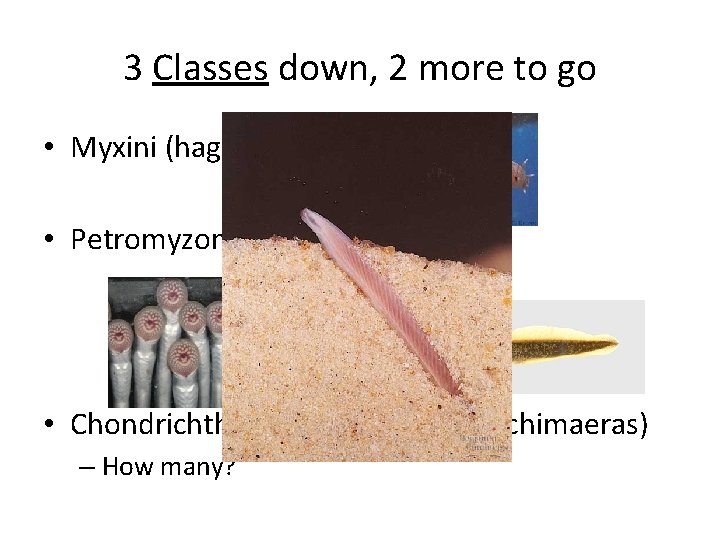
3 Classes down, 2 more to go • Myxini (hagfishes) • Petromyzontida (lampreys) • Chondrichthyes (sharks, rays and chimaeras) – How many?
What do you think? • Is the lancelet a fish? Fish-like characters of lancelets -myomeres -nerve cord -post-anal tail -notochord -pharyngeal slits (gills? ) *Compare to lamprey ammocoete
Where are we? Phylum Chordata Lancelets- Subphylum Cephalochordata Everything else- Subphylum Craniata
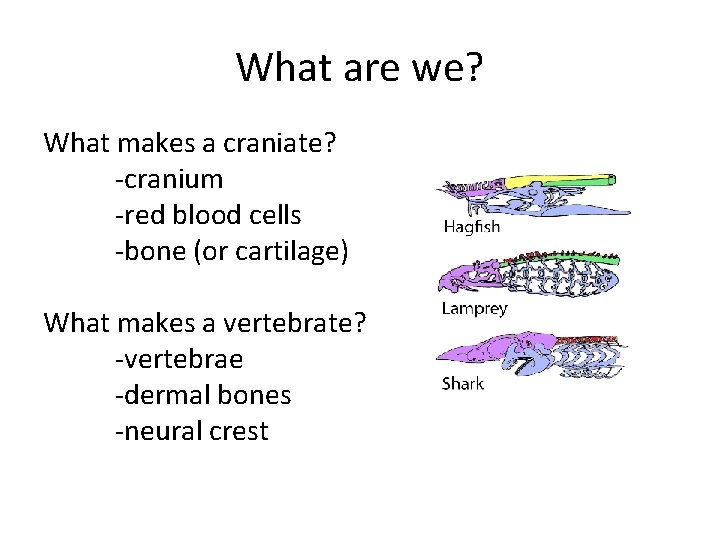
What are we? What makes a craniate? -cranium -red blood cells -bone (or cartilage) What makes a vertebrate? -vertebrae -dermal bones -neural crest
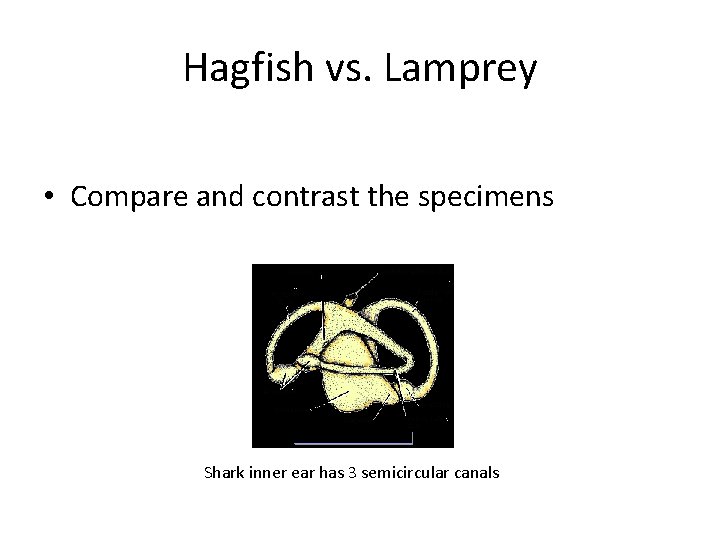
Hagfish vs. Lamprey • Compare and contrast the specimens Shark inner ear has 3 semicircular canals
How are they related? Cyclostome Hypothesis Vertebrate Hypothesis For now, lampreys considered basal to vertebrates But. . Compelling evidence exists that supports the cyclostome hypothesis Relationships are uncertain!
We covered the jawless fishes What next? . . . Jawed fishes Superclass Gnathostomata
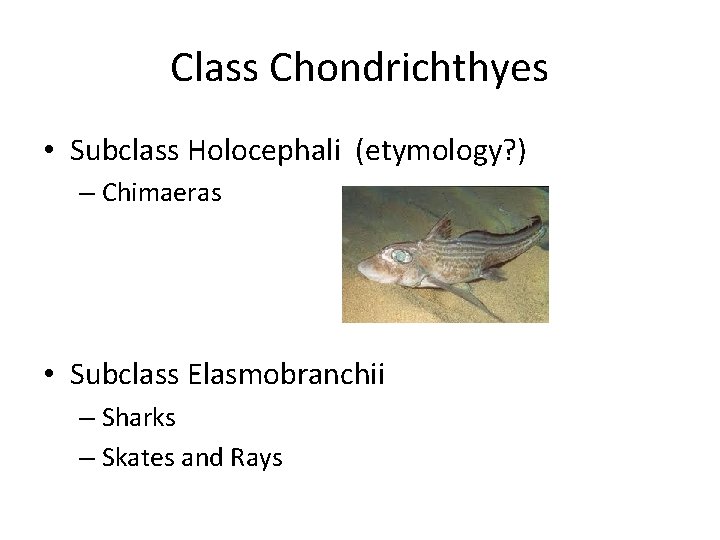
Class Chondrichthyes • Subclass Holocephali (etymology? ) – Chimaeras • Subclass Elasmobranchii – Sharks – Skates and Rays
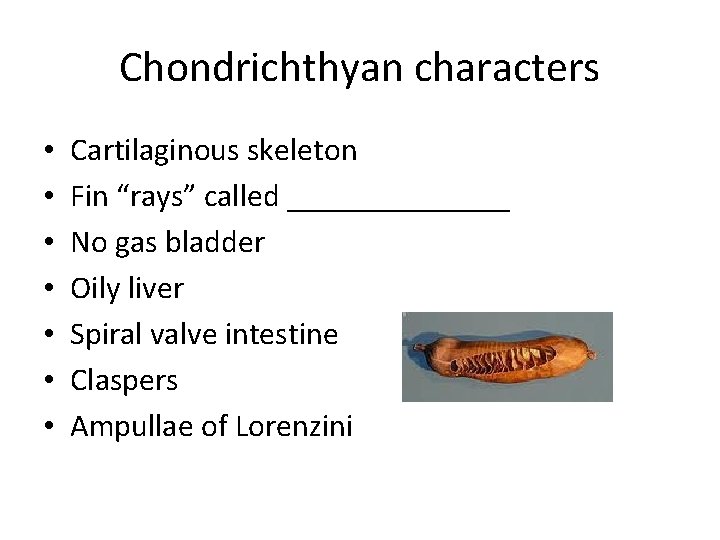
Chondrichthyan characters • • Cartilaginous skeleton Fin “rays” called _______ No gas bladder Oily liver Spiral valve intestine Claspers Ampullae of Lorenzini
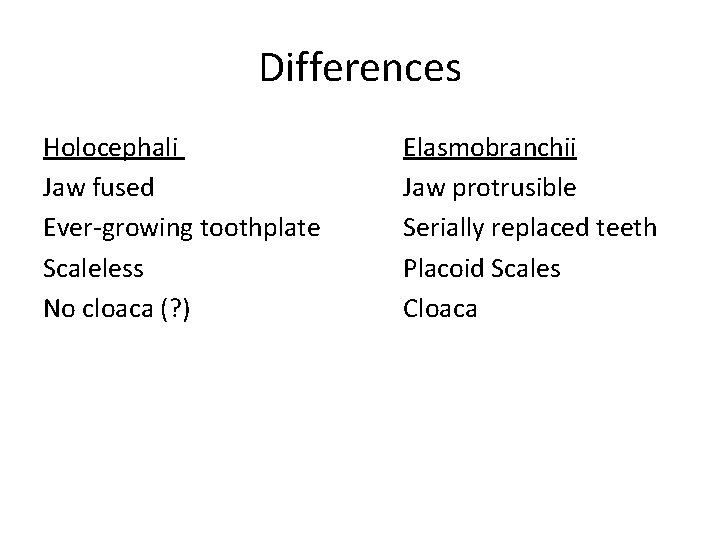
Differences Holocephali Jaw fused Ever-growing toothplate Scaleless No cloaca (? ) Elasmobranchii Jaw protrusible Serially replaced teeth Placoid Scales Cloaca
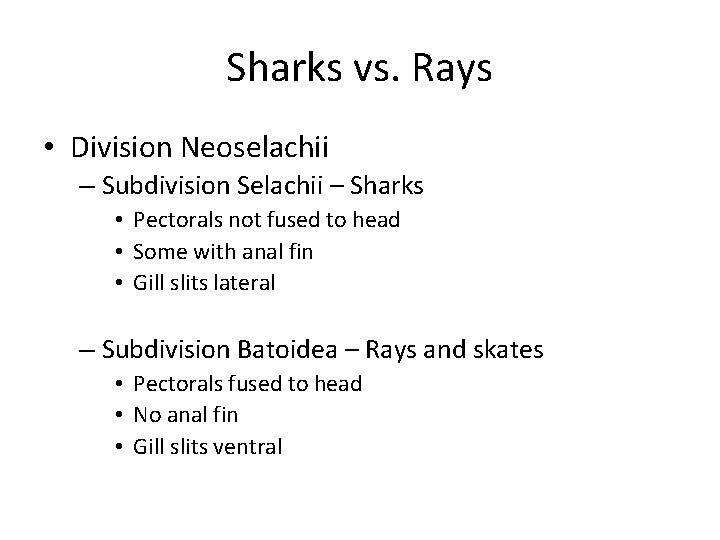
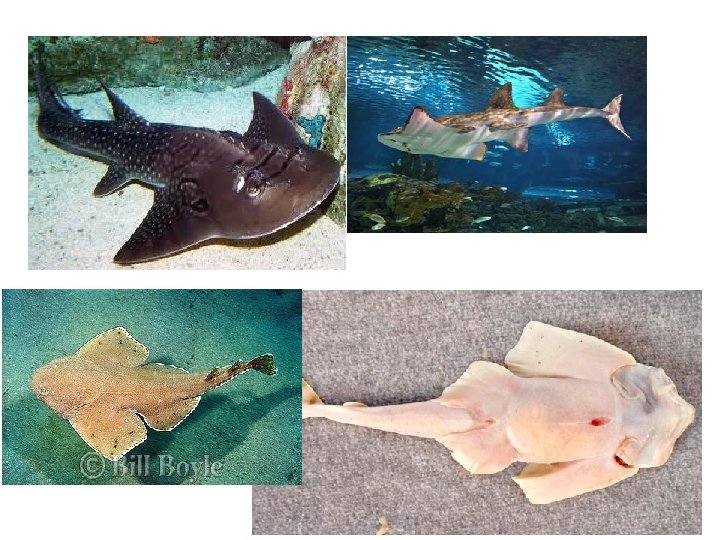
Sharks vs. Rays • Division Neoselachii – Subdivision Selachii – Sharks • Pectorals not fused to head • Some with anal fin • Gill slits lateral – Subdivision Batoidea – Rays and skates • Pectorals fused to head • No anal fin • Gill slits ventral
Videos • http: //animal. discovery. com/videos/mutual-of -omahas-wild-kingdom-manta-rayfingerprints. html http: //www. youtube. com/watch? v=rs. FVDm. Fv. Rbg
Shark Lab 1. What does Gnathostomata mean? And what taxonomic level is it? 2. How do you tell gender of shark, ray or chimaera? 3. How do you tell a shark apart from a ray (harder than you may think)? 4. Terms (what they are and what they look like): palatoquadrate, ceratotrichia, Ampullae of lorenzini, placoid scales 5. Know how to identify all orders (families for Myliobatiformes). Know names of representative families. 6. 2 differences between Holocephali and Elasmobranchii