
3 Cells The Living Units Part B Membrane
3 Cells: The Living Units: Part B
Membrane Transport: Active Processes � Two types of active processes: ◦ Active transport ◦ Vesicular transport � Both use ATP to move solutes across a living plasma membrane
Active Transport � Requires carrier proteins (solute pumps) � Moves solutes against a concentration gradient � Types of active transport: ◦ Primary active transport ◦ Secondary active transport
Primary Active Transport � Energy from hydrolysis of ATP causes shape change in transport protein so that bound solutes (ions) are “pumped” across the membrane
Primary Active Transport � Sodium-potassium pump (Na+-K+ ATPase) ◦ Located in all plasma membranes ◦ Involved in primary and secondary active transport of nutrients and ions ◦ Maintains electrochemical gradients essential for functions of muscle and nerve tissues
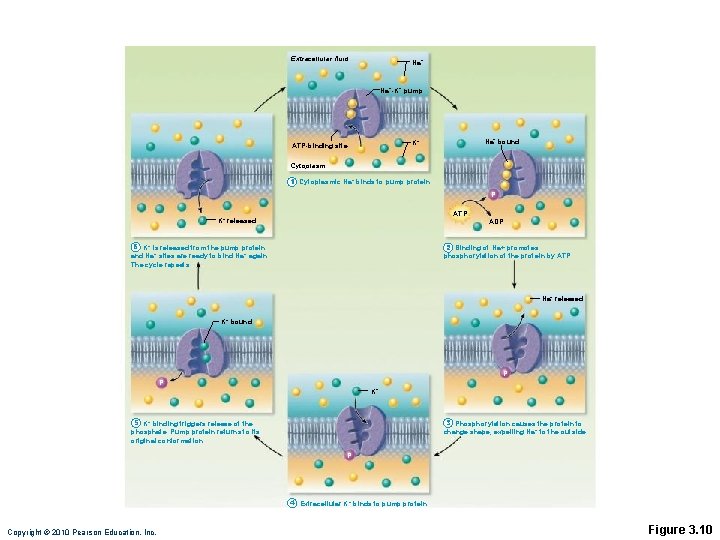
Extracellular fluid Na+-K+ pump Na+ bound K+ ATP-binding site Cytoplasm 1 Cytoplasmic Na+ binds to pump protein. P ATP K+ released ADP 6 K + is released from the pump protein and Na+ sites are ready to bind Na + again. The cycle repeats. 2 Binding of Na+ promotes phosphorylation of the protein by ATP. Na+ released K+ bound P Pi K+ 5 K + binding triggers release of the phosphate. Pump protein returns to its original conformation. 3 Phosphorylation causes the protein to change shape, expelling Na+ to the outside. P 4 Extracellular K+ binds to pump protein. Copyright © 2010 Pearson Education, Inc. Figure 3. 10
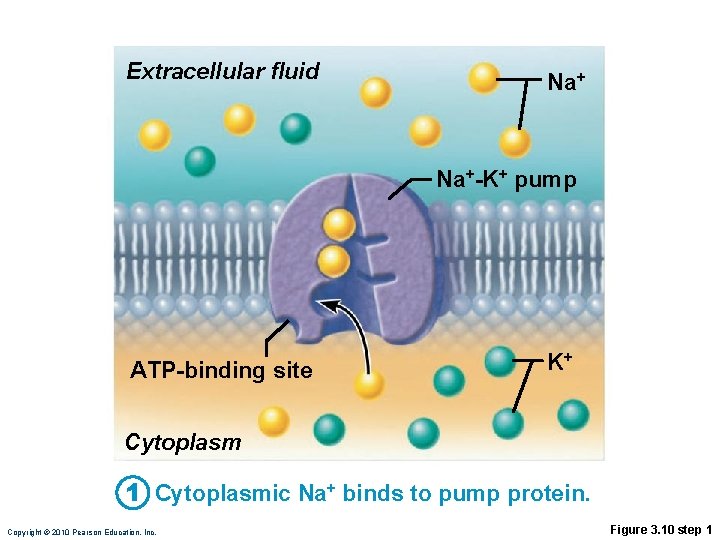
Extracellular fluid Na+-K+ pump ATP-binding site K+ Cytoplasm 1 Cytoplasmic Na+ binds to pump protein. Copyright © 2010 Pearson Education, Inc. Figure 3. 10 step 1
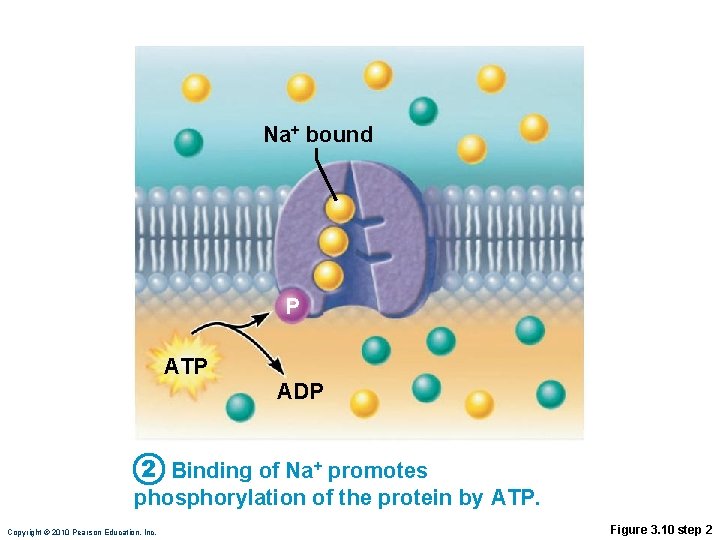
Na+ bound P ATP ADP 2 Binding of Na+ promotes phosphorylation of the protein by ATP. Copyright © 2010 Pearson Education, Inc. Figure 3. 10 step 2
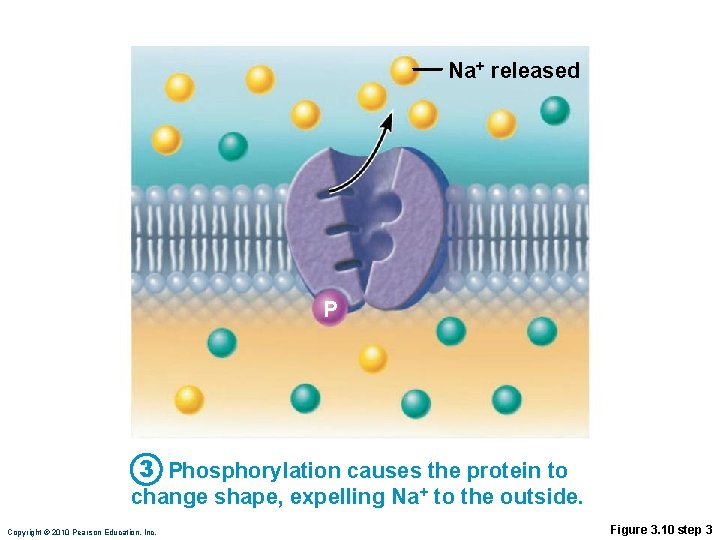
Na+ released P 3 Phosphorylation causes the protein to change shape, expelling Na+ to the outside. Copyright © 2010 Pearson Education, Inc. Figure 3. 10 step 3
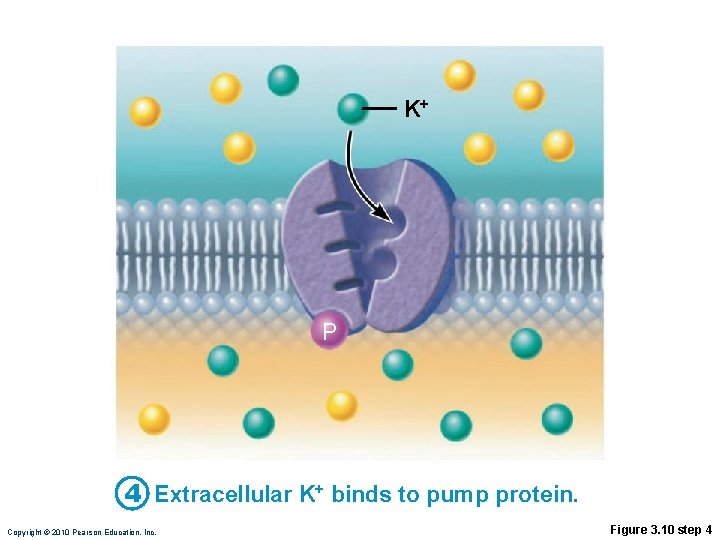
K+ P 4 Extracellular K+ binds to pump protein. Copyright © 2010 Pearson Education, Inc. Figure 3. 10 step 4
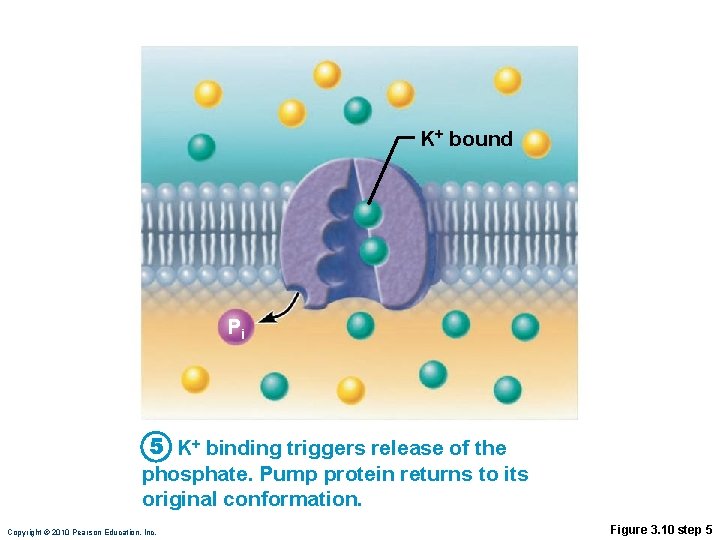
K+ bound Pi 5 K+ binding triggers release of the phosphate. Pump protein returns to its original conformation. Copyright © 2010 Pearson Education, Inc. Figure 3. 10 step 5
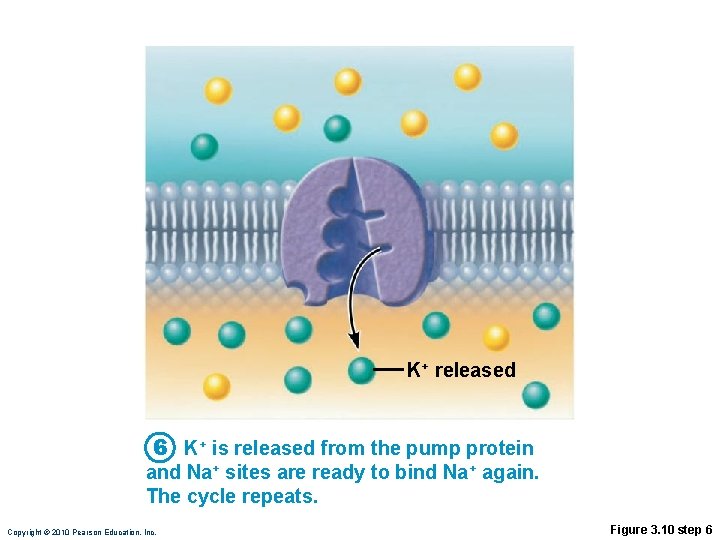
K+ released 6 K+ is released from the pump protein and Na+ sites are ready to bind Na+ again. The cycle repeats. Copyright © 2010 Pearson Education, Inc. Figure 3. 10 step 6
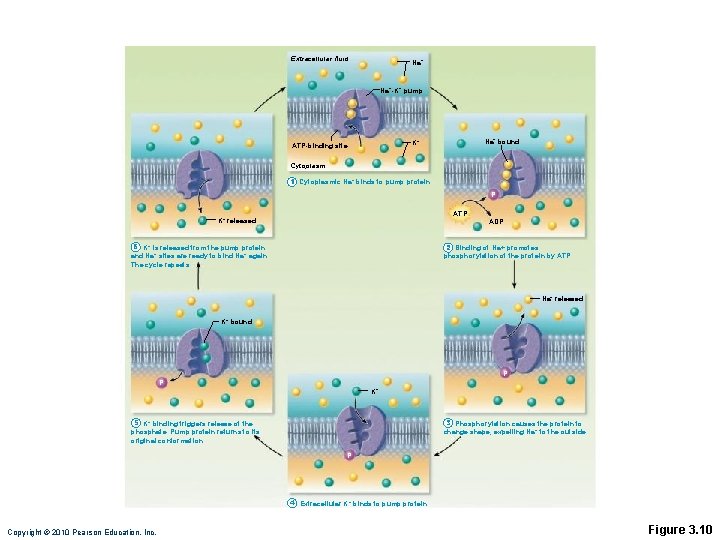
Extracellular fluid Na+-K+ pump Na+ bound K+ ATP-binding site Cytoplasm 1 Cytoplasmic Na+ binds to pump protein. P ATP K+ released ADP 6 K + is released from the pump protein and Na+ sites are ready to bind Na + again. The cycle repeats. 2 Binding of Na+ promotes phosphorylation of the protein by ATP. Na+ released K+ bound P Pi K+ 5 K + binding triggers release of the phosphate. Pump protein returns to its original conformation. 3 Phosphorylation causes the protein to change shape, expelling Na+ to the outside. P 4 Extracellular K+ binds to pump protein. Copyright © 2010 Pearson Education, Inc. Figure 3. 10
Secondary Active Transport � Depends on an ion gradient created by primary active transport � Energy stored in ionic gradients is used indirectly to drive transport of other solutes
Secondary Active Transport � Cotransport—always substance at a time transports more than one ◦ Symport system: Two substances transported in same direction ◦ Antiport system: Two substances transported in opposite directions
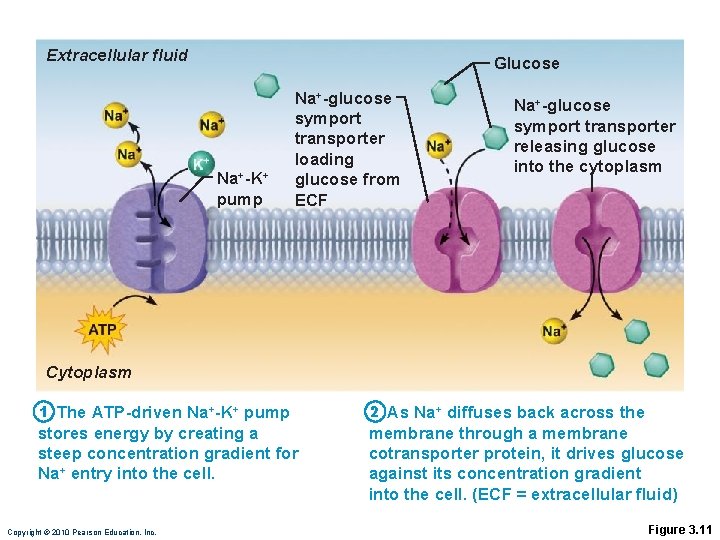
Extracellular fluid Glucose Na+-K+ pump Na+-glucose symport transporter loading glucose from ECF Na+-glucose symport transporter releasing glucose into the cytoplasm Cytoplasm 1 The ATP-driven Na+-K+ pump 2 As Na+ diffuses back across the stores energy by creating a steep concentration gradient for Na+ entry into the cell. membrane through a membrane cotransporter protein, it drives glucose against its concentration gradient into the cell. (ECF = extracellular fluid) Copyright © 2010 Pearson Education, Inc. Figure 3. 11
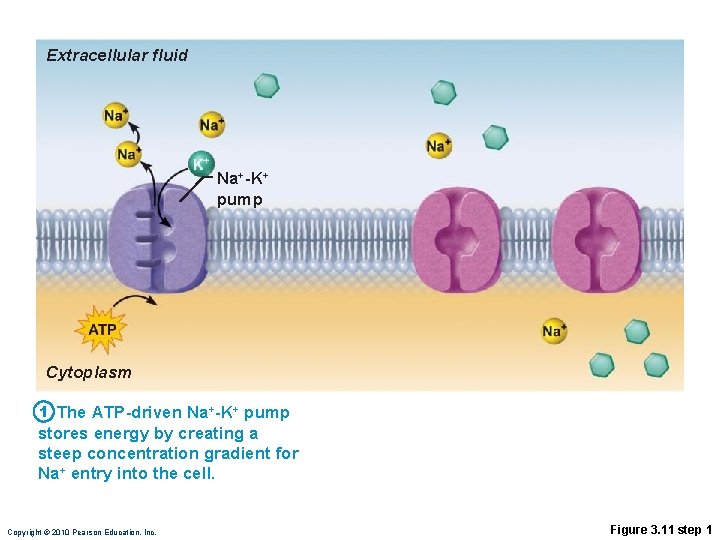
Extracellular fluid Na+-K+ pump Cytoplasm 1 The ATP-driven Na+-K+ pump stores energy by creating a steep concentration gradient for Na+ entry into the cell. Copyright © 2010 Pearson Education, Inc. Figure 3. 11 step 1
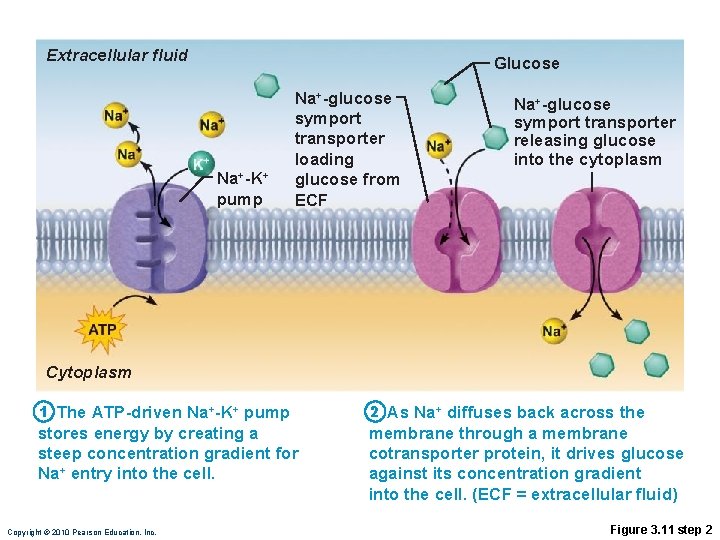
Extracellular fluid Glucose Na+-K+ pump Na+-glucose symport transporter loading glucose from ECF Na+-glucose symport transporter releasing glucose into the cytoplasm Cytoplasm 1 The ATP-driven Na+-K+ pump 2 As Na+ diffuses back across the stores energy by creating a steep concentration gradient for Na+ entry into the cell. membrane through a membrane cotransporter protein, it drives glucose against its concentration gradient into the cell. (ECF = extracellular fluid) Copyright © 2010 Pearson Education, Inc. Figure 3. 11 step 2
Vesicular Transport � Transport of large particles, macromolecules, and fluids across plasma membranes � Requires cellular energy (e. g. , ATP)
Vesicular Transport � Functions: ◦ Exocytosis — transport out of cell ◦ Endocytosis — transport into cell ◦ Transcytosis — transport into, across, and then out of cell ◦ Substance (vesicular) trafficking—transport from one area or organelle in cell to another
Endocytosis and Transcytosis � Involve formation of protein-coated vesicles � Often receptor mediated, therefore very selective
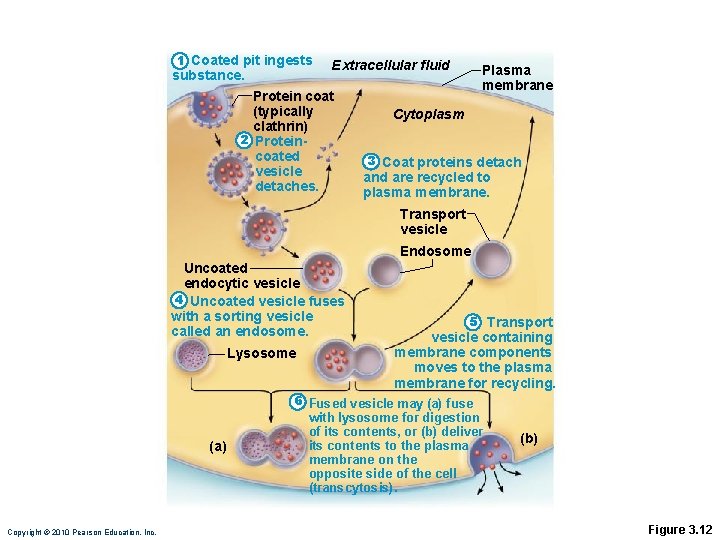
1 Coated pit ingests substance. Extracellular fluid Protein coat (typically clathrin) 2 Proteincoated vesicle detaches. Plasma membrane Cytoplasm 3 Coat proteins detach and are recycled to plasma membrane. Transport vesicle Endosome Uncoated endocytic vesicle 4 Uncoated vesicle fuses with a sorting vesicle called an endosome. Lysosome 5 Transport vesicle containing membrane components moves to the plasma membrane for recycling. 6 Fused vesicle may (a) fuse (a) Copyright © 2010 Pearson Education, Inc. with lysosome for digestion of its contents, or (b) deliver its contents to the plasma membrane on the opposite side of the cell (transcytosis). (b) Figure 3. 12
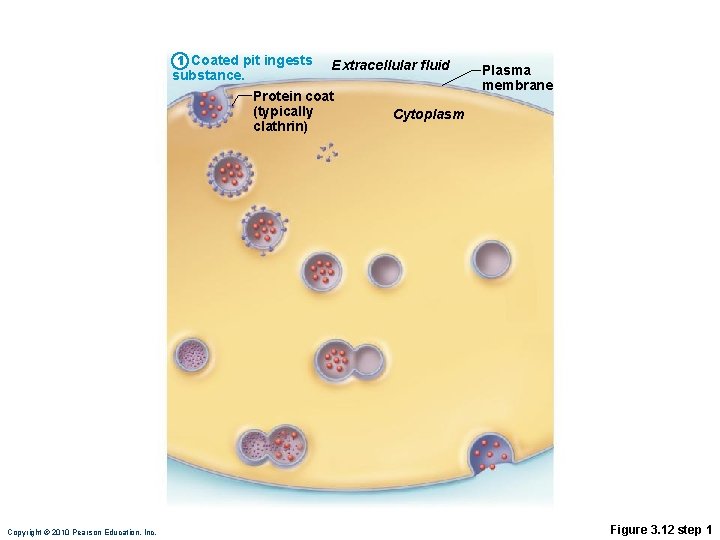
1 Coated pit ingests substance. Extracellular fluid Protein coat (typically clathrin) Copyright © 2010 Pearson Education, Inc. Plasma membrane Cytoplasm Figure 3. 12 step 1
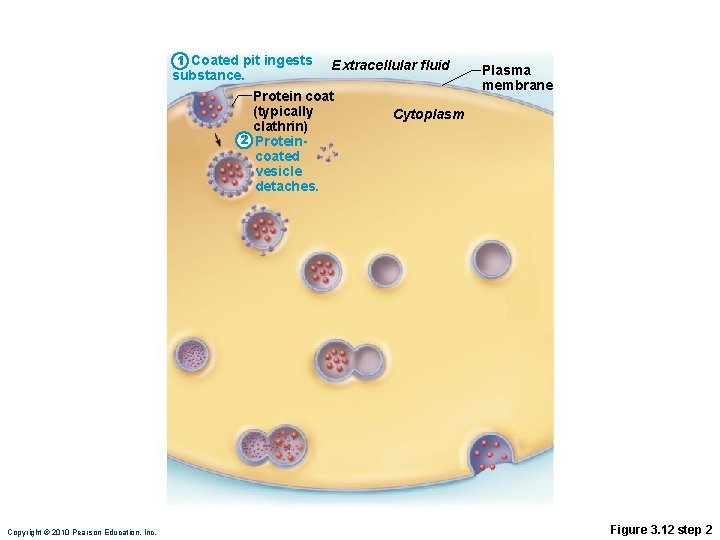
1 Coated pit ingests substance. Extracellular fluid Protein coat (typically clathrin) 2 Proteincoated vesicle detaches. Copyright © 2010 Pearson Education, Inc. Plasma membrane Cytoplasm Figure 3. 12 step 2
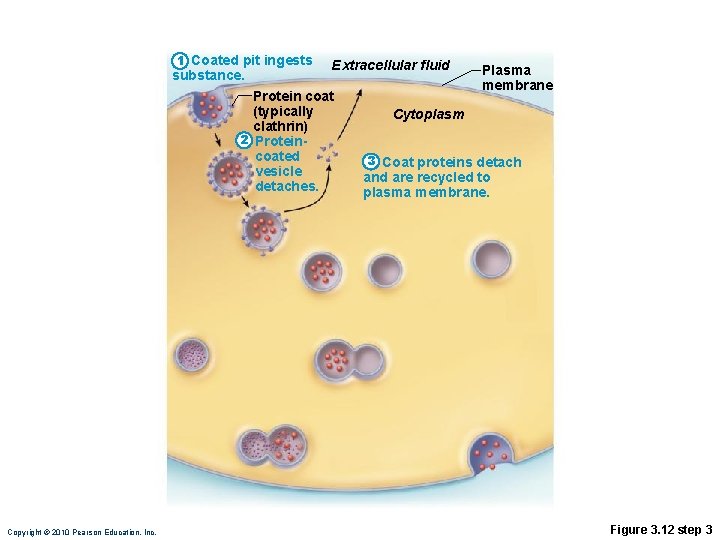
1 Coated pit ingests substance. Extracellular fluid Protein coat (typically clathrin) 2 Proteincoated vesicle detaches. Copyright © 2010 Pearson Education, Inc. Plasma membrane Cytoplasm 3 Coat proteins detach and are recycled to plasma membrane. Figure 3. 12 step 3
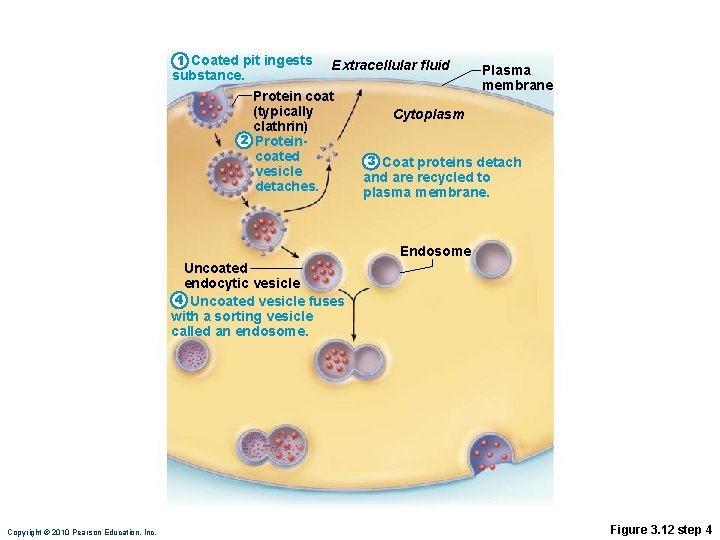
1 Coated pit ingests substance. Extracellular fluid Protein coat (typically clathrin) 2 Proteincoated vesicle detaches. Plasma membrane Cytoplasm 3 Coat proteins detach and are recycled to plasma membrane. Endosome Uncoated endocytic vesicle 4 Uncoated vesicle fuses with a sorting vesicle called an endosome. Copyright © 2010 Pearson Education, Inc. Figure 3. 12 step 4
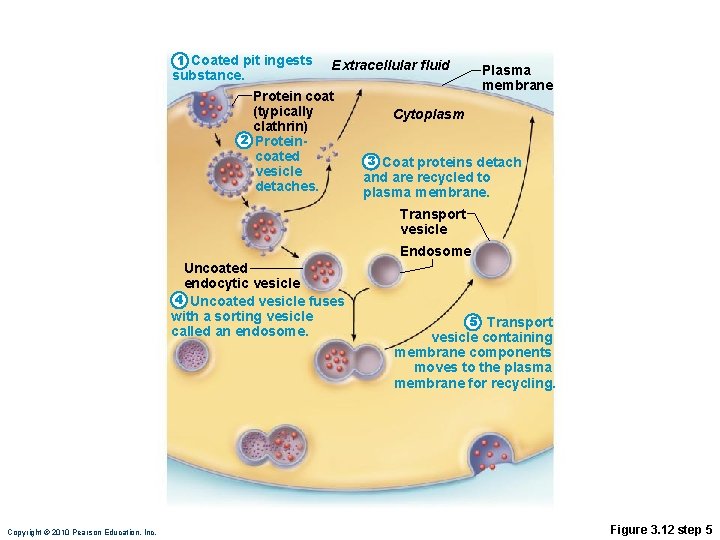
1 Coated pit ingests substance. Extracellular fluid Protein coat (typically clathrin) 2 Proteincoated vesicle detaches. Plasma membrane Cytoplasm 3 Coat proteins detach and are recycled to plasma membrane. Transport vesicle Endosome Uncoated endocytic vesicle 4 Uncoated vesicle fuses with a sorting vesicle called an endosome. Copyright © 2010 Pearson Education, Inc. 5 Transport vesicle containing membrane components moves to the plasma membrane for recycling. Figure 3. 12 step 5
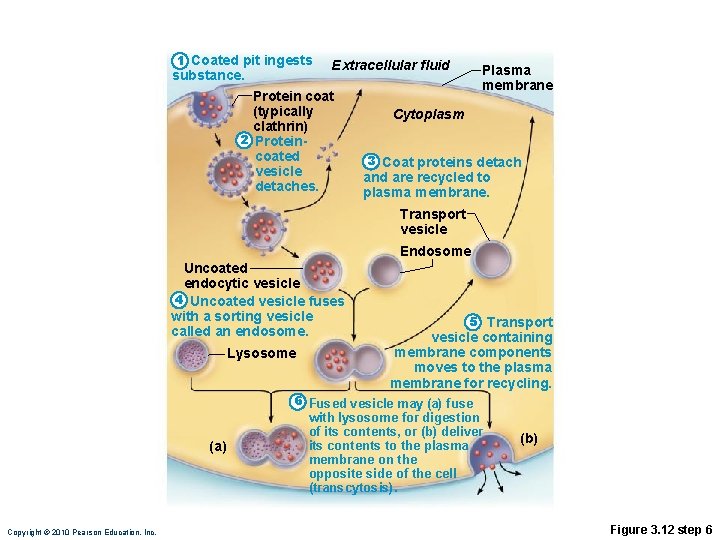
1 Coated pit ingests substance. Extracellular fluid Protein coat (typically clathrin) 2 Proteincoated vesicle detaches. Plasma membrane Cytoplasm 3 Coat proteins detach and are recycled to plasma membrane. Transport vesicle Endosome Uncoated endocytic vesicle 4 Uncoated vesicle fuses with a sorting vesicle called an endosome. Lysosome 5 Transport vesicle containing membrane components moves to the plasma membrane for recycling. 6 Fused vesicle may (a) fuse (a) Copyright © 2010 Pearson Education, Inc. with lysosome for digestion of its contents, or (b) deliver its contents to the plasma membrane on the opposite side of the cell (transcytosis). (b) Figure 3. 12 step 6
Endocytosis � Phagocytosis—pseudopods engulf solids and bring them into cell’s interior ◦ Macrophages and some white blood cells
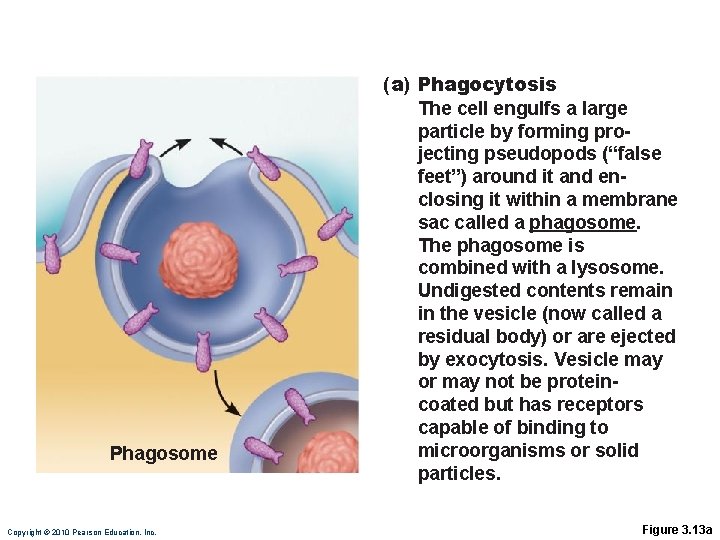
Phagosome Copyright © 2010 Pearson Education, Inc. (a) Phagocytosis The cell engulfs a large particle by forming projecting pseudopods (“false feet”) around it and enclosing it within a membrane sac called a phagosome. The phagosome is combined with a lysosome. Undigested contents remain in the vesicle (now called a residual body) or are ejected by exocytosis. Vesicle may or may not be proteincoated but has receptors capable of binding to microorganisms or solid particles. Figure 3. 13 a
Endocytosis � Fluid-phase endocytosis (pinocytosis)— plasma membrane infolds, bringing extracellular fluid and solutes into interior of the cell ◦ Nutrient absorption in the small intestine
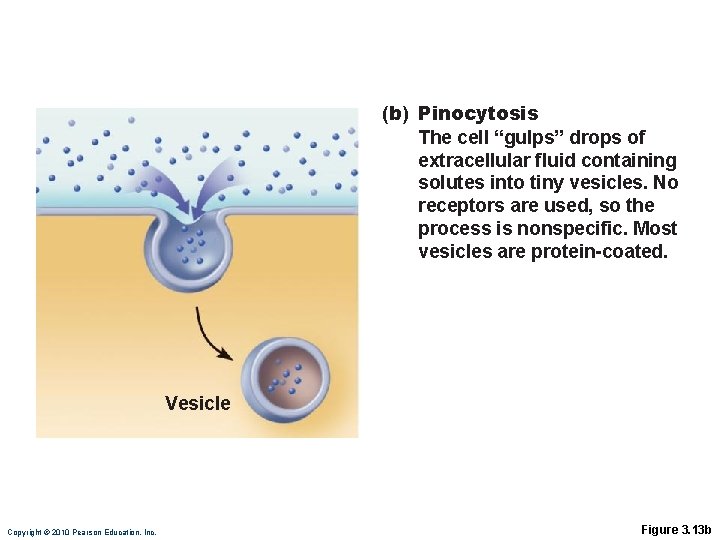
(b) Pinocytosis The cell “gulps” drops of extracellular fluid containing solutes into tiny vesicles. No receptors are used, so the process is nonspecific. Most vesicles are protein-coated. Vesicle Copyright © 2010 Pearson Education, Inc. Figure 3. 13 b
Endocytosis � Receptor-mediated endocytosis — clathrin coated pits provide main route for endocytosis and transcytosis ◦ Uptake of enzymes low-density lipoproteins, iron, and insulin
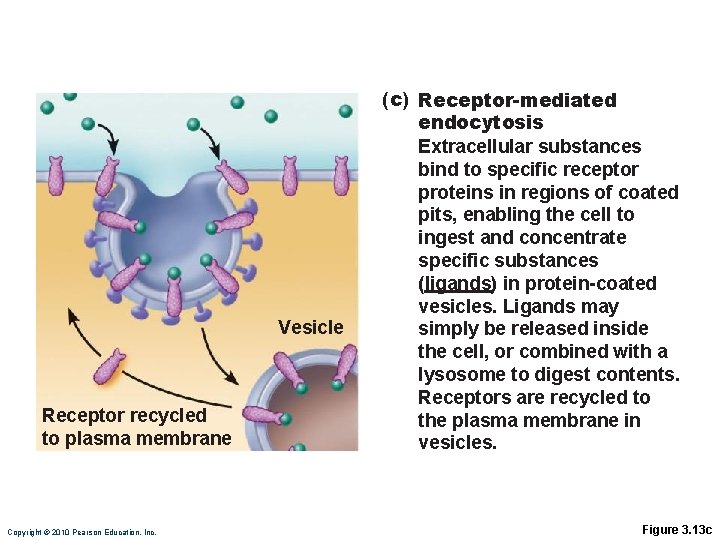
Vesicle Receptor recycled to plasma membrane Copyright © 2010 Pearson Education, Inc. (c) Receptor-mediated endocytosis Extracellular substances bind to specific receptor proteins in regions of coated pits, enabling the cell to ingest and concentrate specific substances (ligands) in protein-coated vesicles. Ligands may simply be released inside the cell, or combined with a lysosome to digest contents. Receptors are recycled to the plasma membrane in vesicles. Figure 3. 13 c
Exocytosis � Examples: ◦ ◦ Hormone secretion Neurotransmitter release Mucus secretion Ejection of wastes
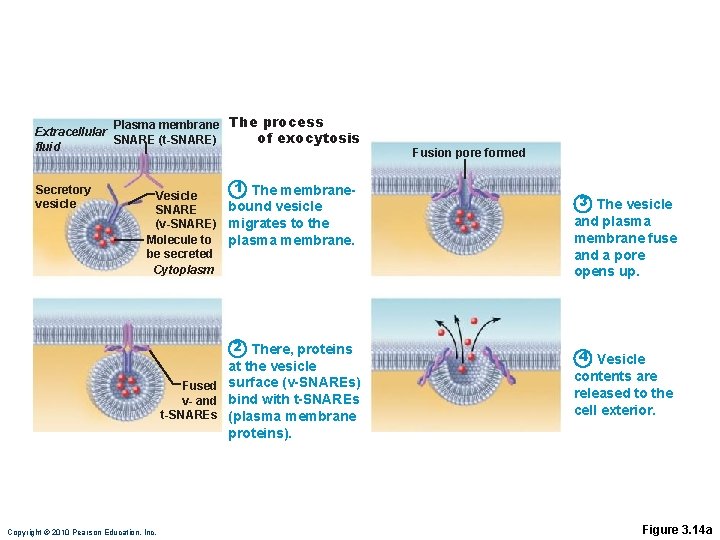
Plasma membrane The process Extracellular of exocytosis SNARE (t-SNARE) fluid Secretory vesicle 1 The membrane. Vesicle bound vesicle SNARE (v-SNARE) migrates to the Molecule to plasma membrane. be secreted Cytoplasm 2 There, proteins at the vesicle Fused surface (v-SNAREs) v- and bind with t-SNAREs (plasma membrane proteins). Copyright © 2010 Pearson Education, Inc. Fusion pore formed 3 The vesicle and plasma membrane fuse and a pore opens up. 4 Vesicle contents are released to the cell exterior. Figure 3. 14 a
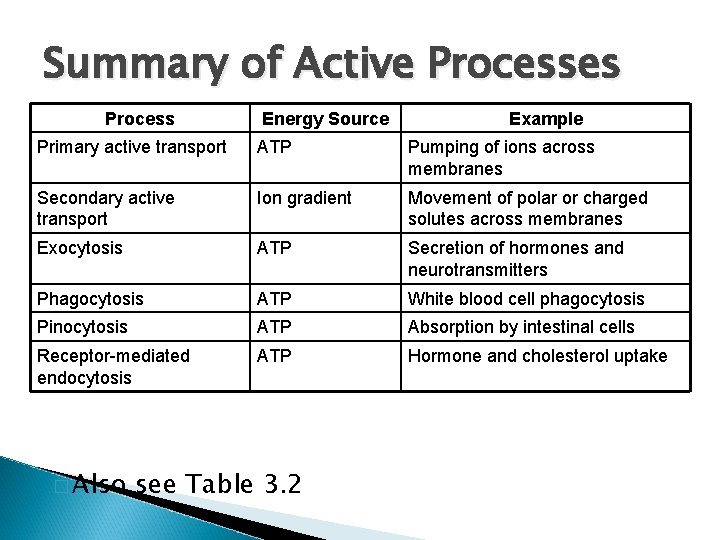
Summary of Active Processes Process Energy Source Example Primary active transport ATP Pumping of ions across membranes Secondary active transport Ion gradient Movement of polar or charged solutes across membranes Exocytosis ATP Secretion of hormones and neurotransmitters Phagocytosis ATP White blood cell phagocytosis Pinocytosis ATP Absorption by intestinal cells Receptor-mediated endocytosis ATP Hormone and cholesterol uptake � Also see Table 3. 2
- Slides: 37