
3 Cells and Tissues PART A Power Point
- Slides: 24
3 Cells and Tissues PART A Power. Point® Lecture Slide Presentation by Jerry L. Cook, Sam Houston University ESSENTIALS OF HUMAN ANATOMY & PHYSIOLOGY EIGHTH EDITION ELAINE N. MARIEB Copyright © 2006 Pearson Education, Inc. , publishing as Benjamin Cummings
Cells and Tissues § Carry out all chemical activities needed to sustain life § Cells are the building blocks of all living things § Tissues are groups of cells that are similar in structure and function Copyright © 2006 Pearson Education, Inc. , publishing as Benjamin Cummings
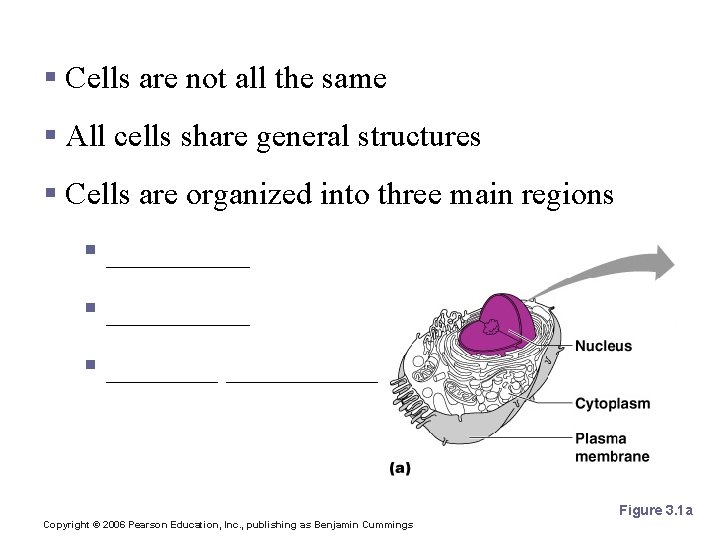
Anatomy of the Cell § Cells are not all the same § All cells share general structures § Cells are organized into three main regions § __________ Figure 3. 1 a Copyright © 2006 Pearson Education, Inc. , publishing as Benjamin Cummings
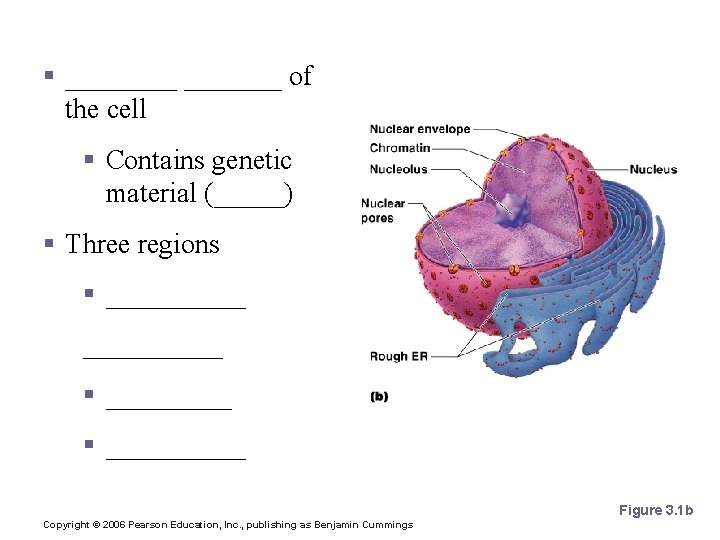
The Nucleus § _______ of the cell § Contains genetic material (_____) § Three regions § __________ Figure 3. 1 b Copyright © 2006 Pearson Education, Inc. , publishing as Benjamin Cummings
Nucleoli § Nucleus contains one or more nucleoli § Sites _____ production § Ribosomes then migrate to the cytoplasm through ________ § The singular of nucleoli is _____ Copyright © 2006 Pearson Education, Inc. , publishing as Benjamin Cummings
Chromatin § Composed of _______ and _____ § Scattered throughout the nucleus § Chromatin condenses to form _____ when the cell divides Copyright © 2006 Pearson Education, Inc. , publishing as Benjamin Cummings
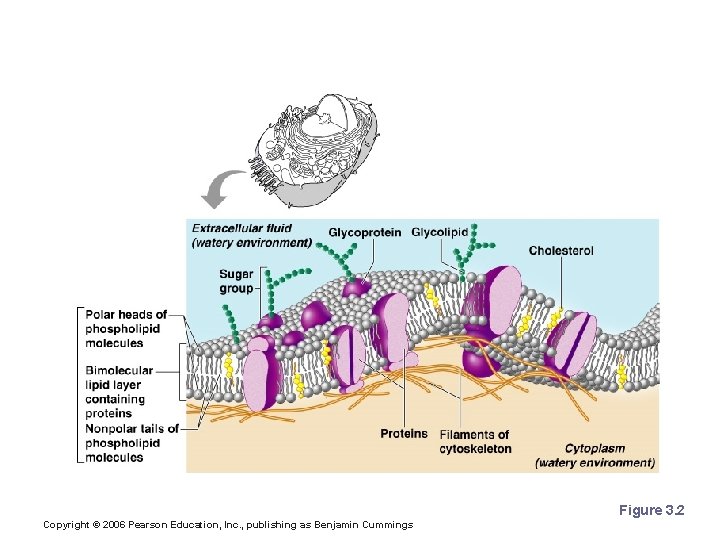
Plasma Membrane § Barrier for cell contents § Double phospholipid layer (______) § ______ heads § ______ tails § Also contains protein, _______, and ________ PRESS TO PLAY MEMBRANE STRUCTURE ANIMATION Copyright © 2006 Pearson Education, Inc. , publishing as Benjamin Cummings
Plasma Membrane Figure 3. 2 Copyright © 2006 Pearson Education, Inc. , publishing as Benjamin Cummings
Cytoplasm § Material outside the nucleus and inside the plasma membrane § _____ § Fluid that suspends other elements § _____ § Metabolic machinery of the cell § Inclusions § Non-functioning units Copyright © 2006 Pearson Education, Inc. , publishing as Benjamin Cummings
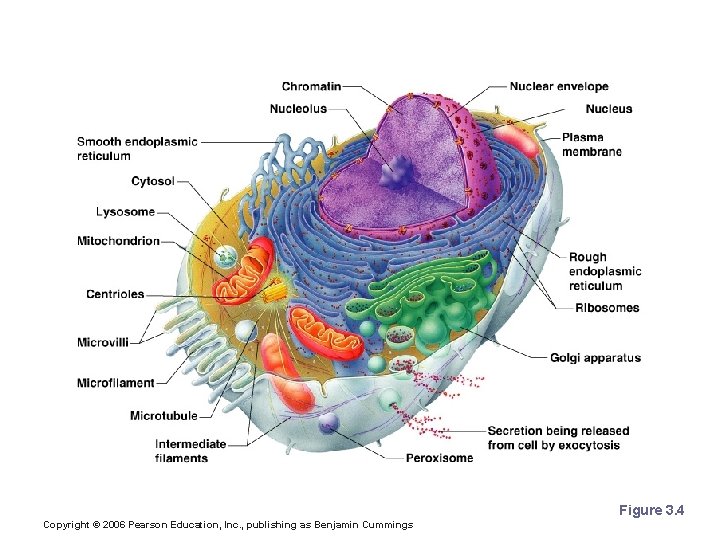
Cytoplasmic Organelles Figure 3. 4 Copyright © 2006 Pearson Education, Inc. , publishing as Benjamin Cummings
Cytoplasmic Organelles § Ribosomes § Made of ______ and ______ § Sites of _____ synthesis § Found at two locations § Free in the _____ § Attached to____endoplasmic reticulum Copyright © 2006 Pearson Education, Inc. , publishing as Benjamin Cummings
Cytoplasmic Organelles § _________(ER) § Fluid-filled _____ for carrying substances § Two types of ER § Rough Endoplasmic Reticulum § Studded with_____ § Site where building materials of cellular membrane are formed § Smooth Endoplasmic Reticulum § Functions in _____ synthesis and breakdown, ____ metabolism, and _______of drugs Copyright © 2006 Pearson Education, Inc. , publishing as Benjamin Cummings
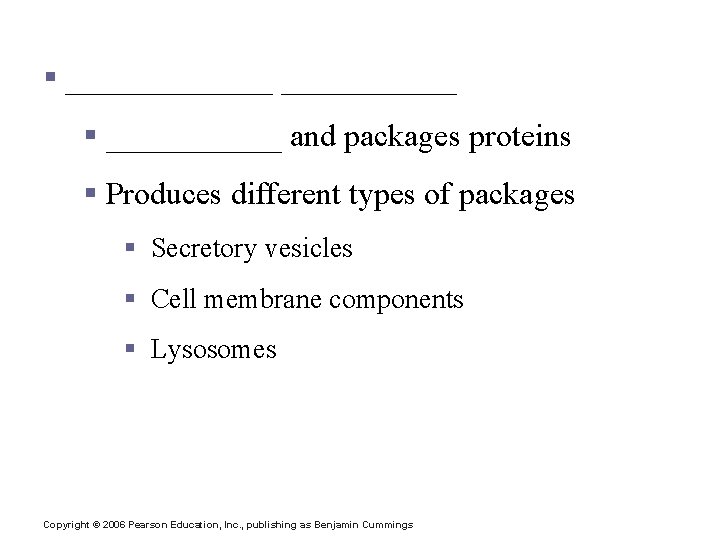
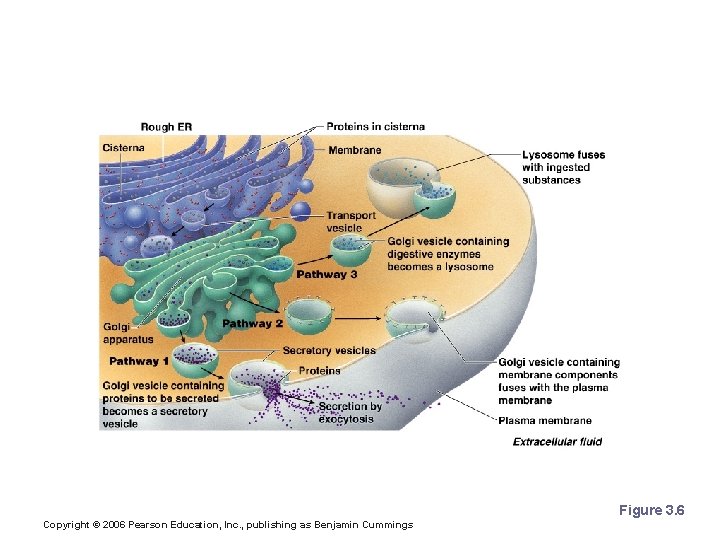
Cytoplasmic Organelles § _______ § ______ and packages proteins § Produces different types of packages § Secretory vesicles § Cell membrane components § Lysosomes Copyright © 2006 Pearson Education, Inc. , publishing as Benjamin Cummings
Golgi Apparatus Figure 3. 6 Copyright © 2006 Pearson Education, Inc. , publishing as Benjamin Cummings
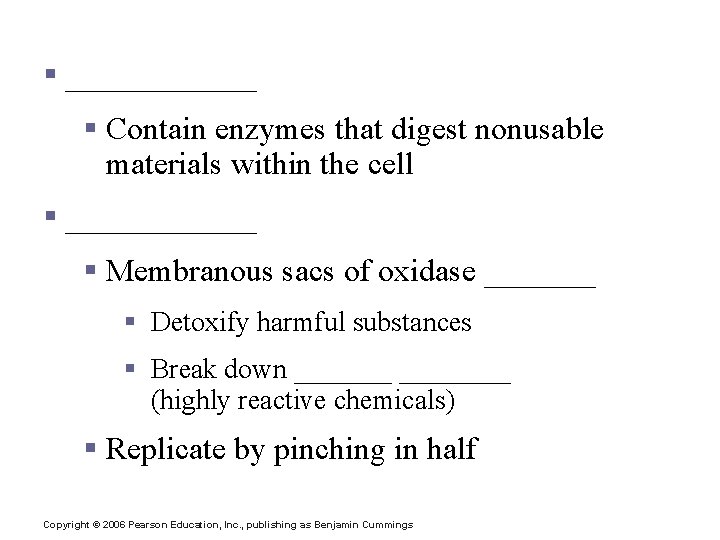
Cytoplasmic Organelles § ______ § Contain enzymes that digest nonusable materials within the cell § ______ § Membranous sacs of oxidase _______ § Detoxify harmful substances § Break down ________ (highly reactive chemicals) § Replicate by pinching in half Copyright © 2006 Pearson Education, Inc. , publishing as Benjamin Cummings
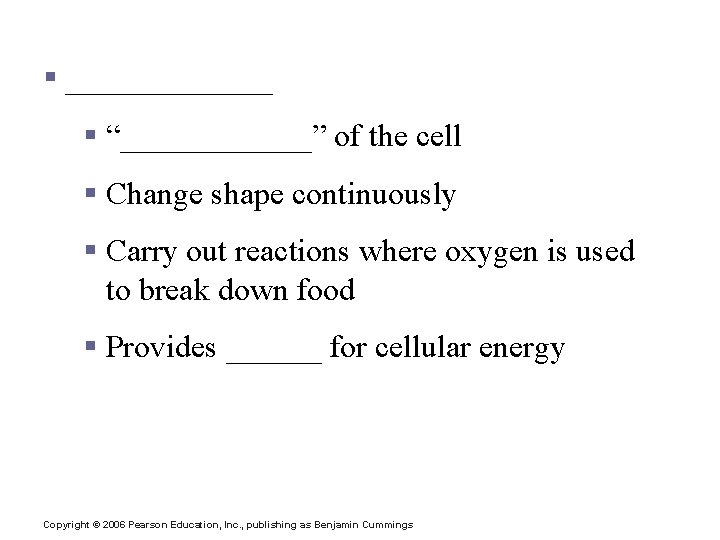
Cytoplasmic Organelles § _______ § “______” of the cell § Change shape continuously § Carry out reactions where oxygen is used to break down food § Provides ______ for cellular energy Copyright © 2006 Pearson Education, Inc. , publishing as Benjamin Cummings
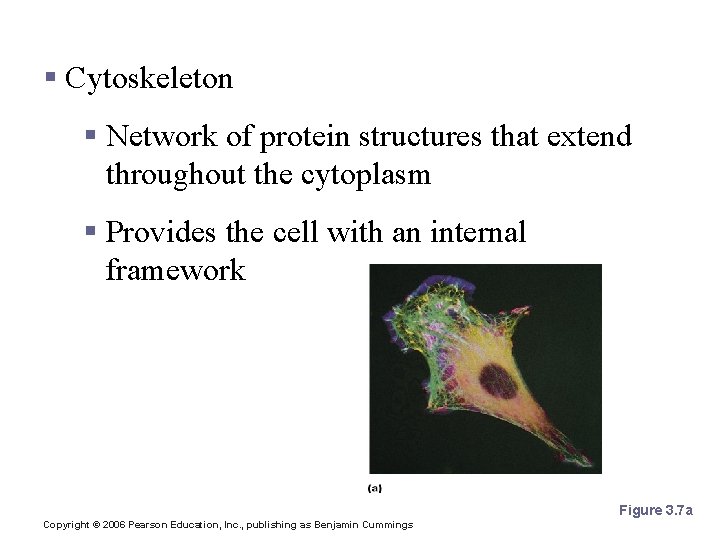
Cytoplasmic Organelles § Cytoskeleton § Network of protein structures that extend throughout the cytoplasm § Provides the cell with an internal framework Figure 3. 7 a Copyright © 2006 Pearson Education, Inc. , publishing as Benjamin Cummings
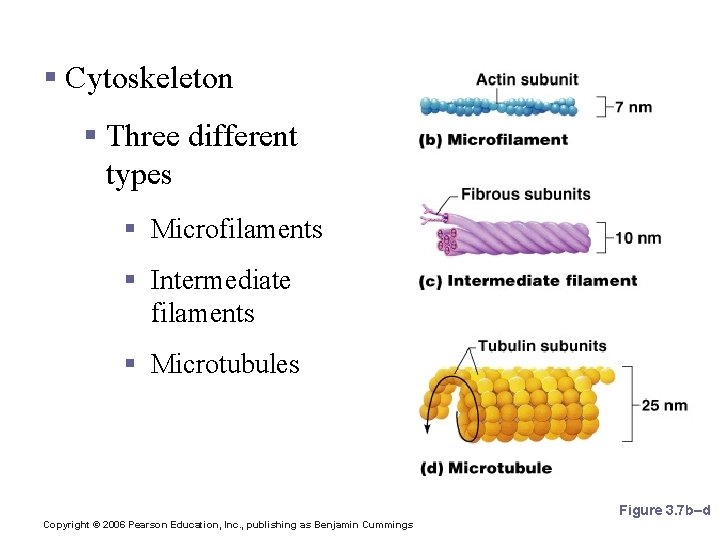
Cytoplasmic Organelles § Cytoskeleton § Three different types § Microfilaments § Intermediate filaments § Microtubules Figure 3. 7 b–d Copyright © 2006 Pearson Education, Inc. , publishing as Benjamin Cummings
Cytoplasmic Organelles § Centrioles § Rod-shaped bodies made of microtubules § Direct formation of ____ spindle during cell division (_____) Copyright © 2006 Pearson Education, Inc. , publishing as Benjamin Cummings
Cellular Projections § Not found in all cells § Used for movement § ____ moves materials across the cell surface Ex: ______ § ______ propels the cell Ex: ______ Copyright © 2006 Pearson Education, Inc. , publishing as Benjamin Cummings
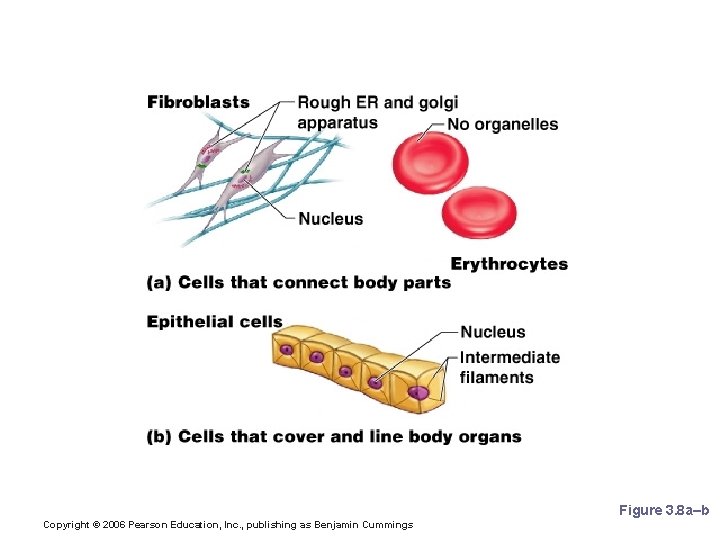
Cell Diversity Figure 3. 8 a–b Copyright © 2006 Pearson Education, Inc. , publishing as Benjamin Cummings
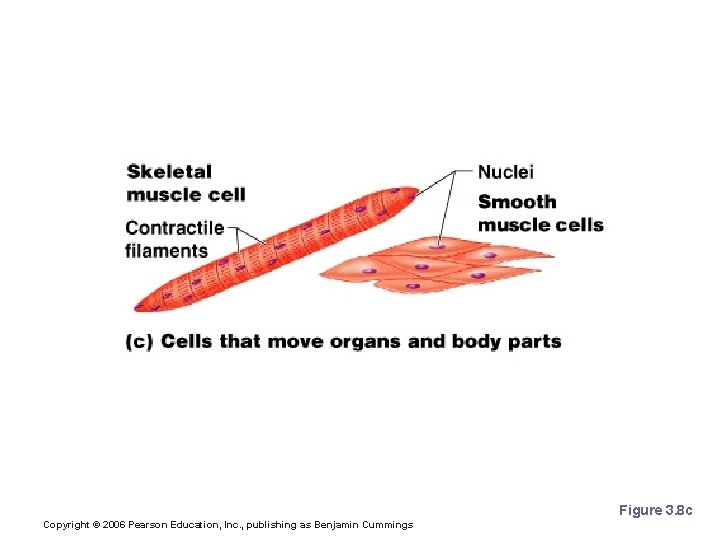
Cell Diversity Figure 3. 8 c Copyright © 2006 Pearson Education, Inc. , publishing as Benjamin Cummings
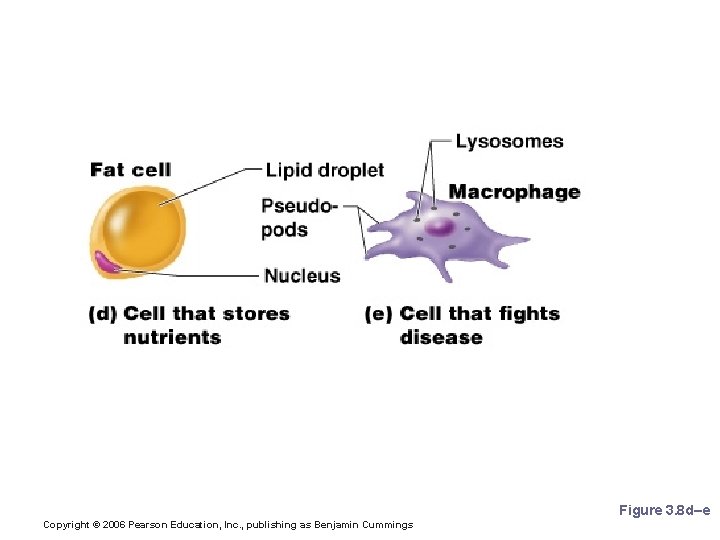
Cell Diversity Figure 3. 8 d–e Copyright © 2006 Pearson Education, Inc. , publishing as Benjamin Cummings
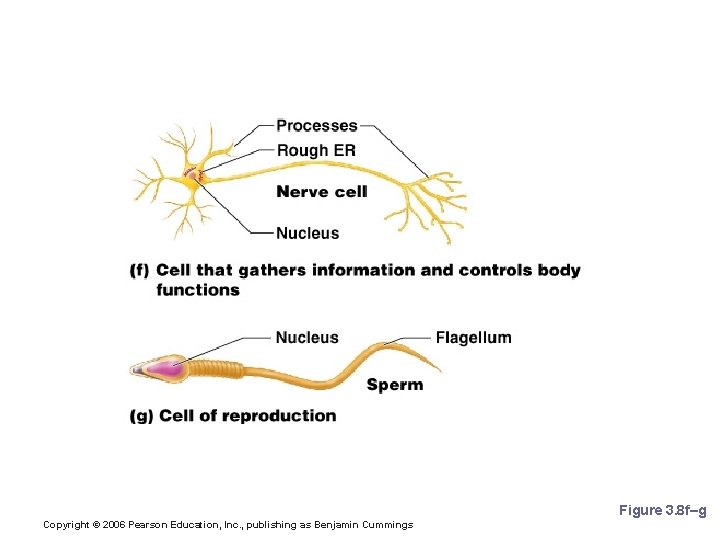
Cell Diversity Figure 3. 8 f–g Copyright © 2006 Pearson Education, Inc. , publishing as Benjamin Cummings